
Olivia Waxman in Time Magazine:
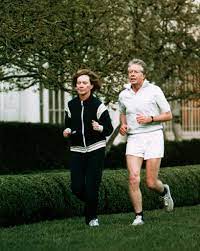 As Jimmy Carter, America’s longest-living president, turns 99 on Oct. 1, his grandson shares what he believes is the secret to his grandfather’s long life: exercise. “If he got to a new city that he had never been to before, whether there was Secret Service or not, he would say, ‘Hey, is there a bike?’” Jason Carter, a lawyer and former Georgia state senator, told TIME in a video chat on Sept. 28. He says his grandfather would always make time to jog around places he visited, and when he couldn’t jog anymore as he got older, he switched to riding a bike. Jimmy Carter also used to play tennis every day. “Stay active,” Jason says.
Jason jokes that the one sport that the 39th U.S. President and Nobel Peace Prize winner didn’t excel at was fishing, recalling a time when they were fishing for grouper and his grandfather couldn’t catch any fish. He made his grandson switch sides with him on the boat to see if that would change his luck. But while Jason Carter attributes his grandfather’s longevity to an active lifestyle, he believes Jimmy Carter might have a different answer. Jason thinks that his grandfather would say that the secret to his long life is his wife of 77 years, Rosalynn Carter. In 2015, the former President said, “The best thing I ever did was marry Rosalynn. That’s the pinnacle of my life.”
More here.
 A Food and Drug Administration (FDA) advisory committee met last week to discuss human trials of artificial wombs, which could one day be used to keep extremely premature, or preterm, infants alive. Artificial wombs have been tested with animals, but never in human clinical trials. The FDA has not approved the technology yet, but the advisory panel discussed the available science, as well as the clinical risks, benefits and ethical considerations of testing artificial wombs with humans.
 One night in 1981, in the middle of bath time, Marty Gonzalez noticed a strange glow that seemed to emanate from inside one of the eyes of her 9-month-old daughter, Marissa. “It was really bizarre,” Gonzalez recalls. “It looked like a cat’s eye — like I could see all the way through.” Though Marissa’s pediatrician in Long Beach, Calif., assured Gonzalez it was nothing, she sought another opinion. While teaching her sixth-grade class, Gonzalez anxiously awaited news from her mother, who had taken Marissa to see a pediatric ophthalmologist. By lunchtime, with still no word from her mom, Gonzalez called the doctor directly. “I think it’s cancer,” the doctor told her.
 Amy Kapczynski, Reshma Ramachandran and Christopher Morten in Boston Review:
 Jeffrey C. Isaac in LA Review of Books:
 Alvin Camba in Phenomenal World:
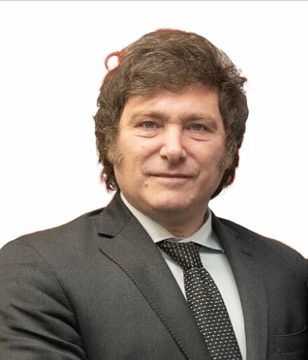 William Callison in Sidecar:
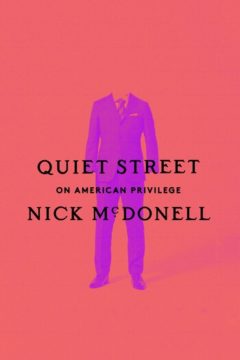 IN HIS 1980 ESSAY ON THE AMERICAN SCENE, “Within the Context of No Context,” George W. S. Trow supplies an anecdote from Harvard in the early 1960s. During an art history class on the Dutch masters, a Black student described Rembrandt as “‘belonging’ to the white students in the room.” The white students totally agreed with this. “They acknowledged that they were at one with Rembrandt,” Trow writes. “They acknowledged their dominance. They offered to discuss, at any length, their inherited power to oppress.”
 Not long ago our mother died, or at least her body did—the rest of her remained obstinately alive. She took a considerable time to die and outlasted the nurses’ predictions by many days, so that those of us who had been summoned to her bedside had to depart and return to our lives.
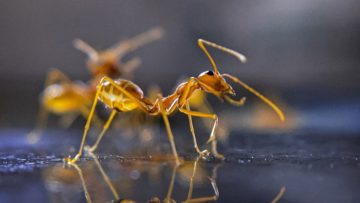 Picture this: the setting sun paints a cornfield in dazzling hues of amber and gold. Thousands of corn stalks, heavy with cobs and rustling leaves, tower over everyone—kids running though corn mazes; farmers examining their crops; and robots whizzing by as they gently pluck ripe, sweet ears for the fall harvest.
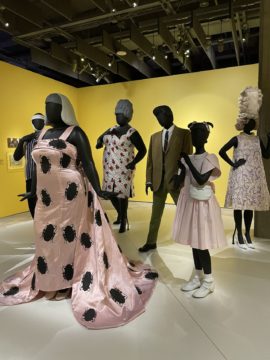 John Waters was kicked out of NYU film school for smoking marijuana. Even that incubator for original filmmakers couldn’t handle him. Now, among people I know, announcing yourself as a graduate of NYU film school is a shorthand for being an uppity, social-climbing brat (I should know, I’m one of them). It’s so much cooler to be John Waters. He’s a degenerate and an iconoclast, making even the most daring artists look like uninspired conformists. In fact, I don’t know anyone who dislikes John Waters. If I did, I would think it was an easy tell that they were boring and had bad sex.
 A string of job postings from high-profile training data companies, such as
  Deep in Pakistan’s countryside, Sindhi Chhokri and her teenage brother Toxic Sufi are raising a few eyebrows.
 In 1978, Kathy Kleiner was asleep in her bed at the Chi Omega sorority house at Florida State University when serial killer Ted Bundy entered through an unlocked door. After attacking two of her sorority sisters, Bundy found Kathy’s door also unlocked.
  We asked young scientists this question: If you could introduce any two scientists, regardless of where and when they lived, whom would you choose, and how would their collaboration change the course of history? Read a selection of the responses here. Follow NextGen Voices on social media with hashtag #NextGenSci.
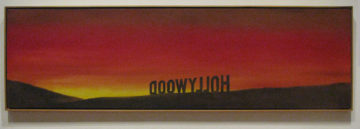 In a past life, he was an arsonist. A bold accusation, I realize, but nobody makes that many paintings, drawings, and photographs of fire without some buried lust for the real deal. By the time I left “Ed Ruscha / Now Then,” an XXL retrospective at moma comprising some two hundred works produced between the Eisenhower years and the present, I had lost count of the burning things, which are as lowbrow as a diner and as la-di-da as the Los Angeles County Museum of Art. The title of Ruscha’s 1964 photo series, “Various Small Fires and Milk,” could have been, minus the milk, a reasonable title for the exhibition itself, if he hadn’t painted various large ones, too.