
From BBC News:
 The 20-year-old has become one of the world’s best-known campaigners against climate change. She first learned about climate change when she was eight. At the age of 11 or 12, she started suffering from depression, according to her father, Svante: “She stopped talking… she stopped going to school,” he said. Around the same time she was diagnosed with Asperger’s syndrome, a form of autism.
In summer 2018, aged 15, Ms Thunberg held the first “School Strike for Climate” outside the Swedish parliament. The protest was widely covered the international media, and hundreds of thousands of young people across the world joined her Fridays For Future strikes. Mr Thunberg says Greta became “much happier” after she started campaigning. She has described her autism diagnosis as a “superpower” which has helped motivate her protests. “Being different is a gift,” she told the BBC. “If I would’ve been like everyone else, I wouldn’t have started this school strike, for instance.”
More here.
 Hamas’ attack on Israel this weekend—including the indiscriminate murder of Israelis—has led to a spiraling of an already dire situation in the region. The recent declaration of war, and the subsequent military actions in Gaza, has set off a crisis in an already calamitous conflict, particularly for the 2 million Gazans—half of whom are children—who have been living in one of the mostly densely populated places on Earth. The
  A blood draw is one the most mundane clinical tests. It can also be a Rosetta stone for decoding genetic information and linking DNA typos to health and disease. This week,
  The short film is a neglected form of American entertainment, prevalent — you can find them most anywhere, and pretty much every filmmaker
  Imagine a nanocrystal so minuscule that it behaves like an atom.
  Dread gives way to the cold stab of terrible certainty as it hits you: they aren’t people. They’re bots. The Internet is all bots. Under your nose, the Internet of real people has gradually shifted into a digital world of shadow puppets. They look like people, they act like people, but there are no people left. Well, there’s you and maybe a few others, but you can’t tell the difference, because the bots wear a million masks. You might be alone, and have been for a while. It’s a horror worse than blindness: the certainty that your vision is clear but there is no genuine world to be seen.
 The federal government believes that the threat of violence and major civil disturbances around the 2024 U.S. presidential election is so great that it has quietly created a new category of extremists that it seeks to track and counter:
 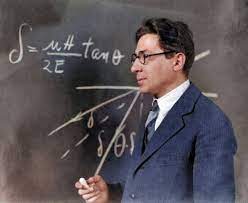 On July 16, 1945, J. Robert Oppenheimer stood in the Jornada del Muerto desert in New Mexico, watching a second sunrise—that caused by the detonation of the world’s first nuclear explosion, marking the dawn of the atomic age. Standing by his side was I.I. Rabi, another Jewish physicist. “It was a vision,” Rabi later said of that explosion. “Then, a few minutes afterward, I had gooseflesh all over me when I realized what this meant for the future of humanity.” If Oppenheimer was the Jewish father of the bomb, it had a large assortment of Jewish uncles (and at least one aunt, Lise Meitner), including Edward Teller, Leo Szilard, Niels Bohr, Felix Bloch, Hans Bethe, John von Neuman, Rudolf Peierls, Franz Eugene Simon, Hans Halban, Joseph Rotblatt, Stanislav Ulam, Richard Feynman, and Eugene Wigner.
 NEARLY ALL REVOLUTIONS
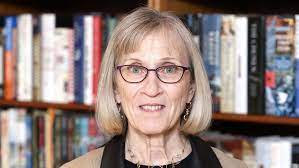 The 2023 Sveriges Riksbank Prize in Economic Sciences — the ‘economics Nobel’ — has been awarded to economic historian Claudia Goldin at Harvard University in Cambridge, Massachusetts, “for having advanced our understanding of women’s labour market outcomes”. Goldin’s work has helped to explain why women have been under-represented in the labour market for at least the past two centuries, and why even today they continue to earn less than men on average (by around 13%).
 Jhumpa Lahiri, 56, is the author and translator of three story collections, including the Pulitzer prize-winning Interpreter of Maladies, and three novels,
 To catch a glimpse of the subatomic world’s unimaginably fleet-footed particles, you need to produce unimaginably brief flashes of light. Anne L’Huillier, Pierre Agostini and Ferenc Krausz have shared the
  H
H Debates about the representation of African Americans circulated throughout the 1920s—what kinds of depictions should be encouraged, who should be responsible for them, and what role black artists had in responding to negative descriptions and uplifting the race. These themes served as the subject of
  A
A