
Benji Jones in Vox:
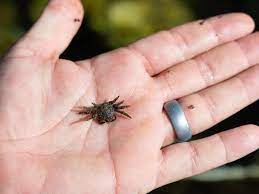 With giant pincers and rough, spider-like legs, Caribbean king crabs don’t look like your typical heroes. Yet these crustaceans may be key to solving one of the world’s most pressing environmental problems: the decline of coral reefs. In recent decades, warming seas, diseases, and other threats have wiped out half of the world’s corals and 90 percent of those in Florida. And this past summer, the problem accelerated. A devastating heat wave struck the Caribbean, pushing the reef in the Florida Keys — the largest in the continental US — closer to the brink of collapse. The decline of coral reefs is an enormous problem for wildlife and human communities. Reefs not only provide habitat for as much as a quarter of all marine life, including commercial fish, but they also help safeguard coastal communities during severe storms. Simply put, we need coral reefs.
Coral reefs, meanwhile, need crabs.
Lucky for them, help is on the way. Scientists are in the process of building a crab army — hundreds of thousands of crustaceans strong — that they’ll unleash on Florida’s reefs, giving this ailing ecosystem a tool to fight back.
More here.
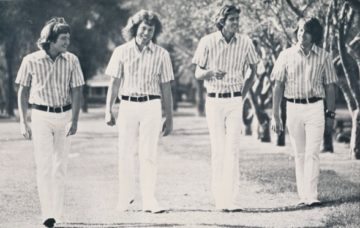 BRIAN WILSON HAS BEEN DEAF IN HIS RIGHT EAR since childhood. He mixed the Beach Boys’ albums, including Pet Sounds, in mono because he couldn’t hear them any other way. “It was sort of like being robbed of something, some pleasure of life,” he said in 1976. “I’m not complaining, but it’s a little bit of a setback.” I think the deafness might explain why the left side of his mouth reaches up when he speaks, like he’s addressing his good ear. (The affect has become more pronounced with age, but it’s visible in footage from the 1960s.) “I got one ear left and your big loud voice is killin’ it,” Brian yelled at his father and former band manager, Murry Wilson, during 1965’s “Help Me, Rhonda” recording session. Murry, drunk but not untrue to his sober form, had been berating the guys for almost forty minutes as they tried to get down the vocals.
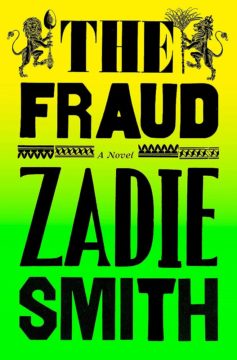 Zadie Smith’s first historical novel spins a tangled web around the knotty case of the Tichborne claimant, a long-running legal saga that divided Victorian Britain. The book’s title, The Fraud, ostensibly refers to Arthur Orton, a butcher who, in 1866, claimed (falsely, in the eyes of the law) that he was Sir Roger Tichborne, an aristocratic heir long presumed lost at sea. Yet in Smith’s crowded narrative – crafted to imply that the much-debated phenomena of polarisation and disinformation are hardly new – the frauds multiply, the titular slur clinging to everything from writing novels (for Smith, always a suspicious enterprise) to neoliberal economics.
 Biological organisms are paradigmatic emergent systems. That atoms of which they are made mindlessly obey the local laws of physics; even cells and organs do their individual jobs without explicitly understanding the larger whole of which they are a part. And yet the system as a whole functions beautifully, with apparent purpose and function. How do the small parts come together to form the greater whole? I talk with biophysicist Rosemary Braun about what we’re learning about collective behavior within organisms from the modern era of huge biological datasets, especially crucial aspects like timekeeping (with bonus implications for dealing with jet lag).
 There’s a game people like to play online. In fact, there’s an
  T
T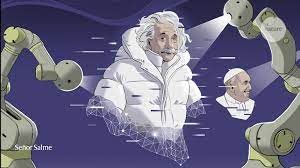 This June, in the political battle leading up to the 2024 US presidential primaries, a series of images were released showing Donald Trump embracing one of his former medical advisers, Anthony Fauci. In a few of the shots, Trump is captured awkwardly kissing the face of Fauci, a health official reviled by some US conservatives for promoting masking and vaccines during the COVID-19 pandemic.
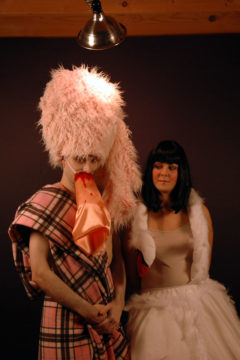 Despite his Yale education and his patrician tone, Barney has a working-class sensibility; watch
 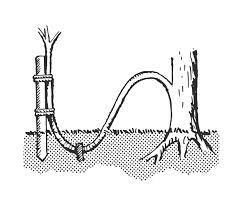 Marcottage could be a possible metaphor for translation. This work of provoking what plants, and perhaps also books, already know how to do, what in fact they most deeply want to do: actively creating the conditions for a new plant to root at some distance from the original, and there live separately: a “daughter-work” robust enough in its new context to throw out runners of its own, in unexpected directions, causing the network of interrelations to grow and complexify.
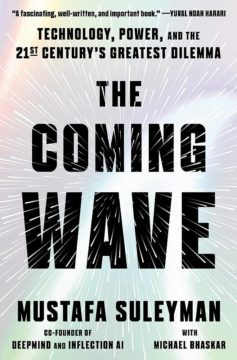 Mustafa Suleyman, a co-founder of DeepMind and former vice president for AI products and policy at Google, offers some deep thoughts in his just-released book, “The Coming Wave: Technology, Power and the 21st Century’s Greatest Dilemma” (written with Michael Bhaskar).
 Evidence of continuities between animal communication and human language continued to mount. The sequencing of the Neanderthal genome in 2010 suggested that we hadn’t significantly diverged from that lineage, as the theory of a “human revolution” posited. On the contrary, Neanderthal genes and those of other ancient hominins persisted in the modern human genome, evidence of how intimately we were entangled. In 2014, Jarvis found that the
  Surgeons in Baltimore have transplanted the heart of a genetically altered pig into a man with terminal heart disease who had no other hope for treatment, the University of Maryland Medical Center announced on Friday. It is the