
Philip Ball in Nature:
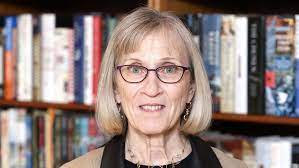 The 2023 Sveriges Riksbank Prize in Economic Sciences — the ‘economics Nobel’ — has been awarded to economic historian Claudia Goldin at Harvard University in Cambridge, Massachusetts, “for having advanced our understanding of women’s labour market outcomes”. Goldin’s work has helped to explain why women have been under-represented in the labour market for at least the past two centuries, and why even today they continue to earn less than men on average (by around 13%).
Although such inequalities are widely recognized, they present a puzzle for economic models because they represent not just a potential injustice, but also what economists call a market inefficiency. Women seem to be both under-utilized and under-incentivized in the labour force, even though those in high-income countries typically now have a higher educational level than do men. Goldin brought history to bear on this question through rigorous forensic analysis of how changes in women’s participation in the labour force have been influenced by social, political and technological change over the past two centuries. “The strength of her work comes from combining careful and innovative historical data with insights from economic theories of wage determination, employment, discrimination and the political economy,” says economist Claudia Olivetti at Dartmouth College in Hanover, New Hampshire.
More here.
 Jhumpa Lahiri, 56, is the author and translator of three story collections, including the Pulitzer prize-winning Interpreter of Maladies, and three novels,
 To catch a glimpse of the subatomic world’s unimaginably fleet-footed particles, you need to produce unimaginably brief flashes of light. Anne L’Huillier, Pierre Agostini and Ferenc Krausz have shared the
  H
H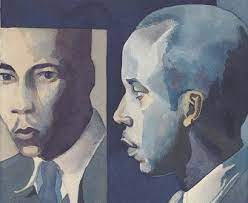 Debates about the representation of African Americans circulated throughout the 1920s—what kinds of depictions should be encouraged, who should be responsible for them, and what role black artists had in responding to negative descriptions and uplifting the race. These themes served as the subject of
  A
A A Food and Drug Administration (FDA) advisory committee met last week to discuss human trials of artificial wombs, which could one day be used to keep extremely premature, or preterm, infants alive. Artificial wombs have been tested with animals, but never in human clinical trials. The FDA has not approved the technology yet, but the advisory panel discussed the available science, as well as the clinical risks, benefits and ethical considerations of testing artificial wombs with humans.
 One night in 1981, in the middle of bath time, Marty Gonzalez noticed a strange glow that seemed to emanate from inside one of the eyes of her 9-month-old daughter, Marissa. “It was really bizarre,” Gonzalez recalls. “It looked like a cat’s eye — like I could see all the way through.” Though Marissa’s pediatrician in Long Beach, Calif., assured Gonzalez it was nothing, she sought another opinion. While teaching her sixth-grade class, Gonzalez anxiously awaited news from her mother, who had taken Marissa to see a pediatric ophthalmologist. By lunchtime, with still no word from her mom, Gonzalez called the doctor directly. “I think it’s cancer,” the doctor told her.
 Amy Kapczynski, Reshma Ramachandran and Christopher Morten in Boston Review:
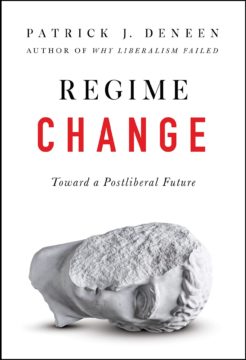 Jeffrey C. Isaac in LA Review of Books:
 Alvin Camba in Phenomenal World:
 William Callison in Sidecar:
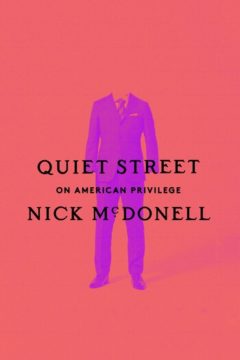 IN HIS 1980 ESSAY ON THE AMERICAN SCENE, “Within the Context of No Context,” George W. S. Trow supplies an anecdote from Harvard in the early 1960s. During an art history class on the Dutch masters, a Black student described Rembrandt as “‘belonging’ to the white students in the room.” The white students totally agreed with this. “They acknowledged that they were at one with Rembrandt,” Trow writes. “They acknowledged their dominance. They offered to discuss, at any length, their inherited power to oppress.”
 Not long ago our mother died, or at least her body did—the rest of her remained obstinately alive. She took a considerable time to die and outlasted the nurses’ predictions by many days, so that those of us who had been summoned to her bedside had to depart and return to our lives.
 Picture this: the setting sun paints a cornfield in dazzling hues of amber and gold. Thousands of corn stalks, heavy with cobs and rustling leaves, tower over everyone—kids running though corn mazes; farmers examining their crops; and robots whizzing by as they gently pluck ripe, sweet ears for the fall harvest.
 John Waters was kicked out of NYU film school for smoking marijuana. Even that incubator for original filmmakers couldn’t handle him. Now, among people I know, announcing yourself as a graduate of NYU film school is a shorthand for being an uppity, social-climbing brat (I should know, I’m one of them). It’s so much cooler to be John Waters. He’s a degenerate and an iconoclast, making even the most daring artists look like uninspired conformists. In fact, I don’t know anyone who dislikes John Waters. If I did, I would think it was an easy tell that they were boring and had bad sex.