
Leron Barton in Newsweek:
 Many use the word solidarity when describing a bond with friends, coworkers, and teammates, but I like to apply the word when describing a fight for shared interests between different types of people, whether it be the battle against racism, LGBTQ+ rights, and labor—solidarity speaks of unity. “When one wins, we all win. When one dies, we all die.” Those words from older activists echo loud today. As a Black man in America, I feel empathy for the people of Palestine. I stand with them. Like millions around the world, I have been focused on the war between Israel and Hamas. What started out as a retaliation for the rocket attack by Hamas on southern Israel during the Jewish holiday Simchat Torah has turned into a barrage of gunfire, bombs, and the potential destruction of Gaza.
As I watched the news and read reports about the conditions in Gaza, I said to myself, “This is another reason to be xenophobic and bigoted towards people in the Middle East.” I began learning about what I would refer to as “The Conflict” years ago. I would always sit with my Grandfather and watch news reports about the 75-year-old battle in Palestine. My family members would comment “It is sad what’s going on over there. They are taking their land.” Later, I read The Case For Israel by Alan Dershowitz, as well as essays and interviews by Palestinian scholars and activists such as Zena Agha. I wanted to read “both sides” to get an understanding of what was happening.
More here.
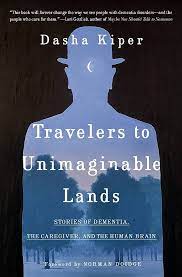 Travelers to Unimaginable Lands is that rarity: true biblio-therapy. Lucid, mature, wise, with hardly a wasted word, it not only deepens our understanding of what transpires as we care for a loved one with Alzheimer’s, it also has the potential to be powerfully therapeutic, offering the kind of support and reorientation so essential to the millions of people struggling with the long, often agonizing leave-taking of loved ones stricken with the dreaded disease. The book is based on a profound insight: the concept of “dementia blindness,” which identifies a singular problem of caring for people with dementia disorders—one that has generally escaped notice but, once understood, may make a significant difference for many caregivers.
 A
A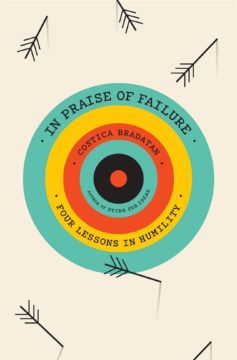 JULIEN CROCKETT: I want to start with a quote from the end of your book where you discuss the final stage of life—death—and what happens with the failures we accumulate along the way:
 Husserl’s The Crisis of European Sciences and Transcendental Phenomenology is widely regarded as both his most accessible and most influential work, written under the shadow of fascist ideology looming over Europe. Based on lectures given in 1935 at Charles University and the German University in Prague, Husserl opens by addressing the ‘Crisis? What crisis?’ question that many in the audience must have been asking themselves:
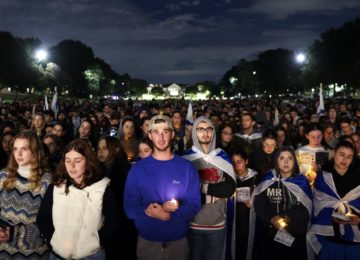 Disputes arising from geopolitical crises occur in numerous social settings, but colleges are especially vulnerable. First, campuses by their nature are (or should be) spaces for robust debate on contested topics, strongly protected by free-speech norms. Second, students and faculty represent diverse nationalities, religions, cultures, and belief systems. Third, college leaders are expected by many to express opinions on political and social issues on behalf of the institution.
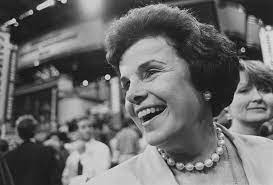 In her prime, there was no one—no man or woman, no one wearing Team Red or Blue, no one brandishing centrist or progressive labels—who could rival Dianne Feinstein. She knew what it was like to lose; even before arriving in Washington, she had two failed bids for San Francisco mayor and one for California governor under her belt, not to mention the trauma of finding her friends immediately after a former colleague assassinated them in San Francisco City Hall back in 1978, all of which informed her desire to make the wins she did notch count all the more.
 ChatGPT, the AI language model capable of mirroring human conversation, may be better than a doctor at following recognized treatment standards for clinical depression, and without any of the gender or social class biases sometimes seen in the primary care doctor-patient relationship, finds research published in the open access journal Family Medicine and Community Health. However, further research is needed into how well this technology might manage severe cases as well as potential risks and
  About
About  Rich, high-fat foods such as ice cream are loved not only for their taste, but also for the
 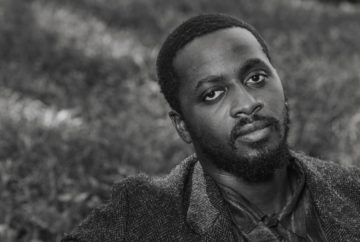 Even in the wilting heat of a late-stage New York summer, Adjei-Brenyah cuts a striking figure; a security guard pulls away from corralling unruly tweens just to compliment his hat, a trilby in rich forest green. The guard probably has no reason to know that this elegant, soft-spoken man who quite literally would not hurt a fly is the same one who’s published two of the most explosive and unlikely literary sensations of the past five years—the astonishing 2018 story collection
 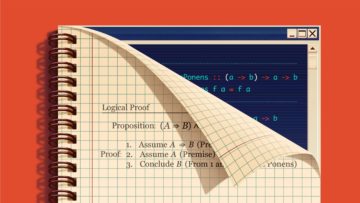 Some scientific discoveries matter because they reveal something new — the double helical structure of DNA, for example, or the existence of black holes. However, some revelations are profound because they show that two old concepts, once thought distinct, are in fact the same. Take James Clerk Maxwell’s equations showing that electricity and magnetism are two aspects of a single phenomenon, or general relativity’s linking of gravity with a curved space-time.
 Hamas’s random
  AI is developing rapidly. ChatGPT has become the
 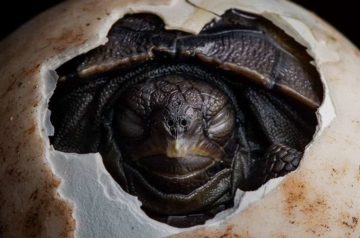 When Charles Darwin made the famous voyage that took him to the Galapagos, he marveled at the giant tortoises that lumbered across the islands. He tried to ride them. He ate their flesh. He followed the paths they created in their ponderous travels. And he mused at their differing shapes on different islands, insights that helped steer him toward his theory of evolution by natural selection.
 For years, Alzheimer’s conferences were like the obituary pages in the local newspaper: It’s where clinicians and researchers in the field went to find out the names of the latest promising drugs to die. Between 1998 and 2017 alone, 146 clinical trials of new Alzheimer’s drugs failed.