Helena Cobban in Boston Review:
Just days before October 7, President Joe Biden’s national security advisor, Jake Sullivan, was radiating confidence that Washington had effectively brought all of West Asia’s long-roiling conflicts under control. Washington could now, he believed, accelerate the pivot of attention, forces, and funding toward what had long topped Biden’s agenda: containing Chinese power in East Asia. Then came the Hamas-led attack on Israel and Israel’s onslaught on Gaza. By late January, Sullivan was flying to Bangkok to plead with top Chinese diplomat Wang Yi for help in defusing the sharp, Gaza-spurred conflict that had erupted in the globally vital waterway of the Red Sea. (Wang politely blew him off.)
Over the past four months, the United States has become increasingly isolated on the world stage. In October and again in November, the United States vetoed resolutions at the UN Security Council that called for an immediate ceasefire in Gaza on the grounds that they did not condemn Hamas. Then, on December 12, a special session of the UN General Assembly—where no country has veto power—voted 153 to 10, with 23 abstentions, in favor of a ceasefire resolution that made no mention of condemning Hamas. Those supporting the resolution included the BRICS group of nations (Brazil, Russia, India, China, and South Africa), nearly all the other nations of the Global South, and some West European states, including France and Spain. The only states that joined the United States and Israel in voting against it were Austria, Czechia, Guatemala, Liberia, Paraguay, Papua New Guinea, and the tiny countries of Micronesia and Nauru.
More here.

 Language is a universal and democratic fact cutting across all human societies: no human group is without it, and no language is superior to any other. More than race or religion, language is a window on to the deepest levels of human diversity. The familiar map of the world’s 200 or so nation-states is superficial compared with the little-known map of its 7,000 languages. Some languages may specialise in talking about melancholy, seaweed or atomic structure; some grammars may glory in conjugating verbs while others bristle with syntactic invention. Languages represent thousands of natural experiments: ways of seeing, understanding and living that should form part of any meaningful account of what it is to be human.
 C
C “Carson McCullers: A Life” is a necessary book, though. It builds on Carr’s work and considers newly released material, including letters and journals and, most tantalizingly, transcripts of McCullers’s late-life psychiatric sessions with the female doctor who would become her lover and gatekeeper. It has been seven years since McCullers (1917-67) had her
 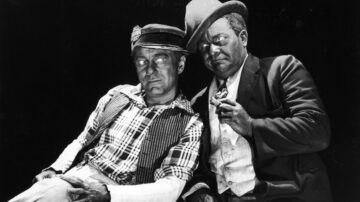 Blackface isn’t just about painting one’s skin darker or putting on a costume. It invokes a racist and painful history. The origins of blackface date back to the minstrel shows of mid-19th century. White performers darkened their skin with polish and cork, put on tattered clothing and exaggerated their features to look stereotypically “black.” The first minstrel shows mimicked enslaved Africans on Southern plantations, depicting black people as lazy, ignorant, cowardly or hypersexual, according to the Smithsonian’s National Museum of African American History and Culture (NMAAHC). The performances were intended to be funny to white audiences. But to the black community, they were demeaning and hurtful.
 The mesmerizing performance from Academy Award-nominated actress and singer Andra Day in
  Panpsychism is the view that consciousness is a fundamental and ubiquitous feature of the physical world. It is the view that the basic building blocks of the physical universe – perhaps fundamental particles – have incredibly simple forms of experience, and that the very sophisticated experience of the human or animal brain is rooted in, derived from, more rudimentary forms of experience at the level of basic physics. Panpsychism has received a lot of attention of late. The world of academic philosophy has been rocked by the conversion of one of the most influential materialists of the last thirty years, Michael Tye, to a form of panpsychism (
 Throughout cinematic history, legendary Black actors have shattered barriers and