Richard Cohen in Lapham’s Quarterly:
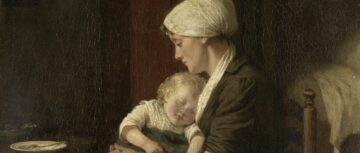 William Ewart Gladstone was Britain’s prime minister four times between 1868 and 1894, a member of Parliament for more than sixty years, a brilliant and passionate orator, an accomplished writer, and an indefatigable social reformer. Lord Kilbracken, his private secretary, estimated that if a figure of 100 could represent the energy of an ordinary man and 200 that of an exceptional one, Gladstone’s energy would be represented by a figure of at least 1,000.
…There are over a dozen common forms of energy, as usually itemized, from chemical, gravitational, and electromagnetic to nuclear, thermal, and wind. It is a formidable register—but human energy rarely appears in such listings. When set against those other categories, what do we mean by the term, anyway? The word energy itself comes from the ancient Greek ἐνέργεια, meaning “activity.” Aristotle said it was a condition that describes the capacity to do work. More recently, human energy has been similarly defined as the amount of stamina, vigor, or “juice” a person has to engage in a particular activity. None of this, unfortunately, takes us very far. There is obviously a difference between a person full of gusto and joie de vivre and a person with significant actual productivity. Marcel Proust spent much of his adult life lying in bed, but his masterwork, À la recherche du temps perdu, has 1,267,069 words in it, double the number in War and Peace. Voltaire spent eighteen hours a day writing or dictating to secretaries, eventually completing an output covering two thousand works; he sustained himself by drinking, so it was said, fifty cups of coffee a day. But while such prodigious feats are all about get-up-and-go, it is not something, a chemical reaction, but someone who has to do the getting up and going.
More here.

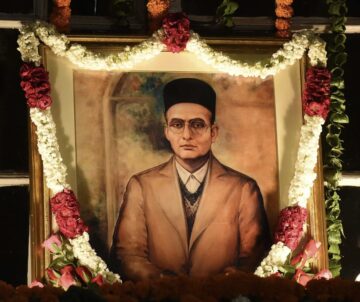 To understand Narendra Modi’s India, it is instructive to grasp the ideas of the Hindu Right’s greatest ideologue, the world of British colonial India in which they emerged, and the historical feebleness of the present regime.
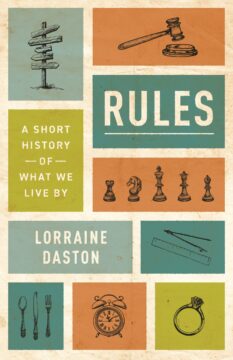 In the 1969 postscript to The Structure of Scientific Revolutions, Thomas Kuhn distinguished two different senses in which ‘paradigm’, the technical term his book popularised, had been used. On the one hand, a paradigm denoted the ‘entire constellation of beliefs, values, techniques, and so on shared by the members of a given community’. In this first sense, paradigm was employed sociologically, an application Kuhn regretted in retrospect. ‘Disciplinary matrix’ became his preferred locution for the shared commitments defining a specific scientific community.
 O
O Who here comes from a savage race?” Professor James Shapiro shouted at his students.
 Today, says Thomas, ‘it feels difficult just to look at a Gauguin painting, without being told what to think’. The instructions tell us that he was ‘a sexual predator in life and a colonialist in his art’. Thomas’s aim is not to launder Gauguin’s reputation or undo recent decades of feminist art history and postcolonial studies but to eliminate some of the anachronism that inevitably arises when the past is examined, and judged, by contemporary mores.
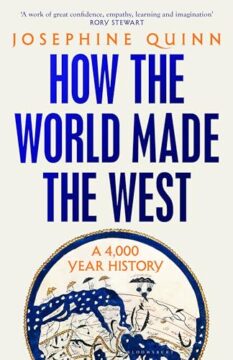 “Western civilisation” would not exist without its Islamic, African, Indian and Chinese influences. To understand why, Quinn takes us back in time, beginning at the bustling port of Byblos in Lebanon in about 2000BC. It was the middle of the bronze age, which “inaugurated a new era of regular long-distance exchange”. Carbon dating techniques applied to recent archaeological findings provide compelling evidence about just how “globalized” the Mediterranean already was, 4,000 years ago. Welsh copper went to Scandinavia, and Cornish tin as far as Germany, for the forging of bronze weapons. Beads of Baltic amber, found in the graves of Mycenaean nobles, were made in Britain. A thousand years later, trade up and down the Atlantic seaboard meant that “Irish cauldrons became especially popular in northern Portugal”.
 A
A What made
  Cousin marriage rates are high in many countries today. We provide the first estimate of the effect of such marriages on the life expectancy of offspring. By studying couples married over a century ago, we observe their offspring across the lifespan. Using US genealogical data to identify children whose parents were first cousins, we compare their years of life to the offspring of their parents’ siblings. We find that marrying a cousin leads to more than a three-year reduction in offspring life expectancy. This effect is strikingly stable across time, despite large changes in life expectancy and economic environment.