
Philip Ball in Quanta:
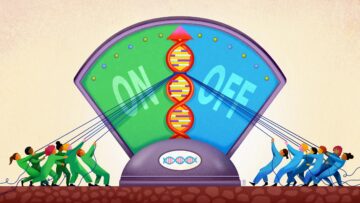 Initially, it was suspected that gene regulation was a simple matter of one gene product acting as an on/off switch for another gene, in digital fashion. In the 1960s, the French biologists François Jacob and Jacques Monod first elucidated a gene regulatory process in mechanistic detail: In Escherichia coli bacteria, when a repressor protein binds to a certain segment of DNA, it blocks the transcription and translation of an adjacent suite of genes that encode enzymes for digesting the sugar lactose. This regulatory circuit, which Monod and Jacob dubbed the lac operon, has a neat, transparent logic.
But gene regulation in complex metazoans — animals like humans, with complex eukaryotic cells — doesn’t generally seem to work this way. Instead, it involves a gang of molecules, including proteins, RNAs and pieces of DNA from throughout a chromosome, that somehow collaborate to control the expression of a gene.
More here.
 Pakistan is a vast country of 231.4 million people. It’s one of only nine countries in the world with nuclear weapons. It’s located in South Asia, which is now one of the world’s most dynamic and fast-growing regions. It has generally favorable relationships with both the United States and China. It has a long coastline in a generally peaceful region of the ocean. It has plenty of talented people, as evidenced by the fact that Pakistani Americans, on average,
  Much of the attention being paid to generative AI systems has focused on how they replicate the pathologies of already widely deployed AI systems, arguing that they centralise power and wealth, ignore copyright protections,
  József Debreczeni’s memoir of the Nazi death camps, translated into English from Hungarian for the first time, frequently echoes Edgar’s claim. After being moved from “the capital of the Great Land of Auschwitz” to one of the networks of sub-camps, Eule, he discovers that he is to be moved again: “Surely I couldn’t end up in a place much worse, I thought – and how tragically wrong I was.” By the end of his remarkable set of observational writings, the word “worse” has lost all meaning; comparing the depths of human experiences of depravity and suffering feels obscene in itself. Is typhoid worse than starvation? Is being crushed to death while mining a subterranean tunnel worse than wasting away in a pool of one’s own filth?
 What a document dump!
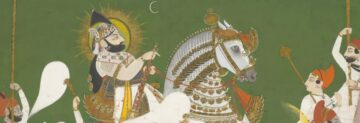 We find similar ideas of a transcendent ego in both Kant and the Upanishads. We find a rejection of free will in Schopenhauer and Ramana Maharshi. What should we make of this overlap between Western and Indian philosophy? Chakravarthi Ram-Prasad argues both became gripped by the same question.
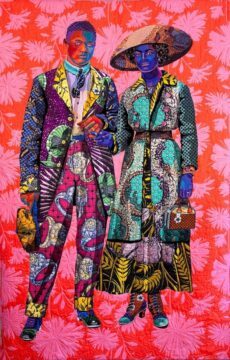 Brooklyn-based artist
 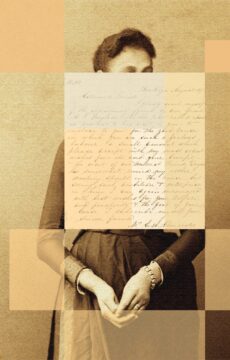 Elizabeth Amelia Gloucester appeared in the census for the final time on June 8, 1880. The census enumerators who crisscrossed Brooklyn Heights were no doubt surprised to find a wealthy Black woman presiding over Remsen House, the grand boarding hotel not far from Brooklyn City Hall that served the white professional classes. Ms. Gloucester was a pillar of the
  Since its inception with the
  Instruments deployed in the ocean starting in 2004
  THE CANARY ISLANDS—