
Because the question of good and evil has been tormenting us since the moment
we plucked a fruit from the tree of knowledge, perhaps it’s worthwhile to remind
ourselves that there have been people who didn’t take to heart that pair of
opposite notions. For them, as for Jelaluddin Rumi, nonattachment meant simply
that you could lie down in a meadow.
Out beyond ideas of wrongdoing and rightdoing,
there is a field. I’ll meet you there.
When the soul lies down in the grass,
the world is too full to talk about.
Ideas, language, even the phrase each other
doesn’t make any sense.
by Jelaluddin Rumi
translated by Coleman Barks and John Moyne
from A Book of Luminous Things
Harvest Books, 1996
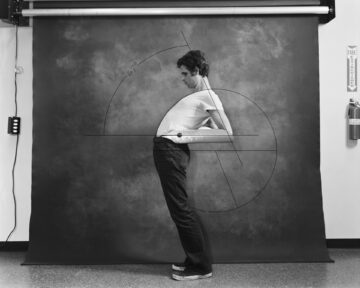 Robert Cumming, a pioneering wizard of West Coast photo-conceptualism, died in 2021, at the age of seventy-eight. He achieved brief semi-stardom in the nineteen-eighties, when he mounted solo exhibitions at both moma and the Whitney, but he failed to achieve the kind of lasting fame accorded to his close contemporaries in the L.A. scene, like Ed Ruscha, the master of deadpan Pop, or John Baldessari, Ruscha’s wackier counterpart, or even Cumming’s close friend and studio-mate William Wegman. Posthumously, though, Cumming has been experiencing a much deserved mini-revival. At Jean-Kenta Gauthier gallery, in Paris, a recent three-part series of exhibitions amounted to something like a retrospective. A new book, “Very Pictorial Conceptual Art,” edited by the writer and curator David Campany, collects Cumming’s photographic work from 1968 until 1980. The filmmaker Noah Rosenberg is making a feature-length documentary on Cumming, “On Closer Inspection,” a truncated version of which screened during this year’s Paris Photo art fair.
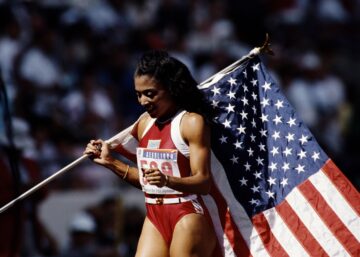 For much of the late 19th and early 20th centuries, Black athletes were forbidden from competing as professional athletes. But trailblazers like Jackie Robinson and Althea Gibson slowly chipped away at color barriers in American sports and opened up the floodgates for today’s stars to thrive.
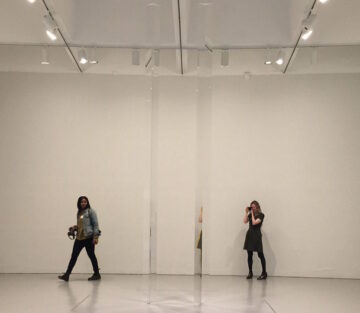 Robert Irwin died a few months ago. He was 95 years old, so this was not a great tragedy. I didn’t know the man personally, but I have the sense that he lived a good and fulfilled life. He was quite famous within the more or less refined corners of the international artworld. He’ll probably always be most associated with the so-called Light and Space Movement that emerged in California, more properly southern California, in the late 1960s. Judy Chicago also did important works from within the Light and Space sensibility. James Turrell. Mary Corse. If these names mean anything to you. Quite fine if they don’t.
 On Sunday, a report from the
 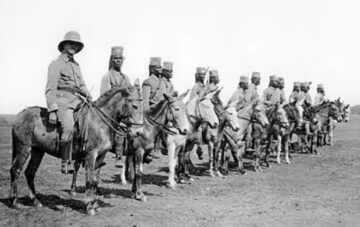 I first came across Friedrich Schiller and his work in the aftermath of the revolution in Zanzibar in January 1964. Among the victorious insurgents was a left-leaning group called the Umma Party. There is a long tale to be told about the formation of this group and its fate. In the early 1960s, members of the Umma, right under the eyes of the British colonial administration, went off to Cuba for military training. The connection with Cuba meant that the Umma had friends and supporters in the Soviet bloc of nations. After the revolution, the group had significant influence in the new power-balance in the government. It was no doubt through the influence of the Umma faction, as well as through expediency, that the post-revolutionary government invited or accepted the fraternal assistance of the ‘socialist’ group of nations.
 Cancer cells
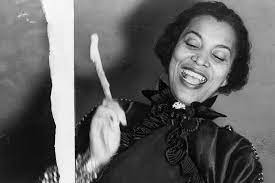 On this page, you will be introduced to 15 black authors that will have their names forever ingrained in history and their books read by millions worldwide.
 Generative artificial intelligence is a headspace and a technology—as much an event playing out in our minds as it is a material reality emerging at our fingertips. Fast and fluent, AI writing and image-making machines inspire in us visions of doomsday or a radiant posthuman future. They raise existential questions about themselves and ourselves. And, not least, they should lead us to reconsider certain neglected thinkers of recent intellectual history.
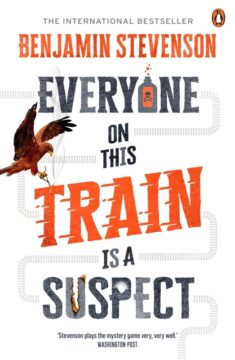 It’s the Australian Mystery Writers’ Festival and debut author Ernest Cunningham is one of the participating writers. Cunningham arrives at the festival—hosted on the Ghan, the famous train that goes from Darwin to Adelaide—following the publication of his memoir Everyone in My Family Has Killed Someone (also, the title of author Benjamin Stevenson’s novel that first introduces Cunningham) and is, having signed a six-figure advance, now stuck trying to find an idea for a novel.
 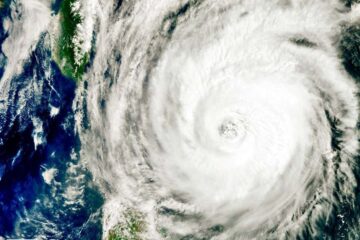 In the past decade, five tropical storms had wind speeds so high that they should have been classified as “category 6” storms, according to an analysis that suggests the hurricane scale may need to be updated as rising temperatures fuel stronger storms.
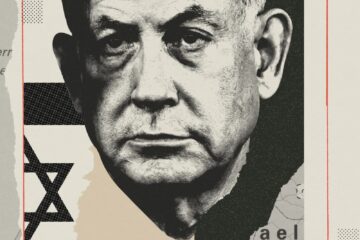 One bright day in April 1956, Moshe Dayan, the one-eyed chief of staff of the Israel Defense Forces (IDF), drove south to Nahal Oz, a recently established kibbutz near the border of the Gaza Strip. Dayan came to attend the funeral of 21-year-old Roi Rotberg, who had been murdered the previous morning by Palestinians while he was patrolling the fields on horseback. The killers dragged Rotberg’s body to the other side of the border, where it was found mutilated, its eyes poked out. The result was nationwide shock and agony.
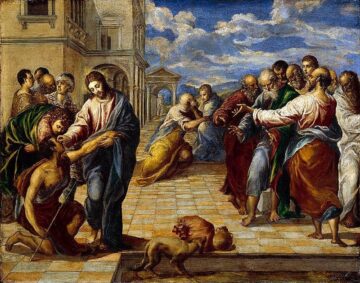 Here are four ideas I have long nurtured as suspicions for what makes the most productive people quite so successful, inspired by a recent conversation I had that I’m hoping to bring to you soon. Many people will have aspects of more than one of these criteria—Beethoven, for example.
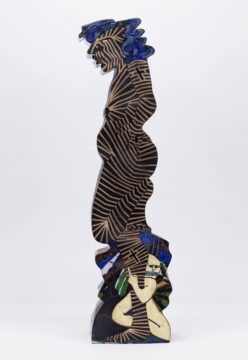 In honor of Black History Month, Artsy is featuring the work of 28 Black artists who are not as widely known or celebrated as some of their historical or contemporary peers. This list is meant to shine a light on artists who have prominence within institutions, but are often excluded from mainstream conversations meant to amplify overlooked Black artists or canonize them as leading figures of art history.