
Anna Della Subin at the LRB:
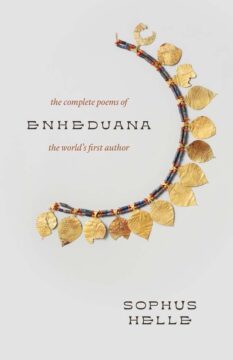 The earliest known author was married to the moon. In the 1920s, in the shadow of an anti-colonial uprising against British rule in Mesopotamia, the archaeologists Leonard and Katharine Woolley dug up the ruins of the ancient city of Ur in present-day Iraq. Near a ziggurat they unearthed evidence of the life and verse of the Sumerian priestess Enheduana. She was the daughter of Sargon of Akkad, said to have created the world’s first empire around 2300 bce, when he forced dozens of independent city-states, from the Mediterranean to the Persian Gulf, to acquiesce to his rule. In an act of religious imperialism, Sargon installed his daughter as ruler over E-kishnugal, the temple in Ur dedicated to the moon god, Nanna. As was customary for the role, she was ritually married to Nanna and acted as the mortal embodiment of his wife, the astral goddess Ningal. Enheduana managed the complex affairs of the temple and wrote poems, among them a collection of temple hymns that sought to accomplish in verse what her father did with axes and spears: to unify the resistant cities of the new empire into a coherent whole.
more here.
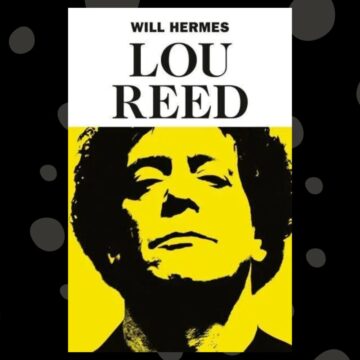 To write about Lou Reed is to fight with Lou Reed. It is difficult to say, however, who started what, and there is more than a little evidence that the sourness of rock males and their broadsheets were a somewhat common culprit. It feels inaccurate to blame any single party (even Jann Wenner). In 2018, Hat and Beard Press released My Week Beats Your Year: Encounters With Lou Reed, a collection of 36 tussles that range in character from amicable slap-boxing to tearful negotiations. Sometimes Reed is responding in nasty bad faith when being asked anodyne questions about his Poe adaptation; other times, he’s fielding provocative tabloid nonsense about the “greasers” who “get off” to his music. It’s a bad soup. Howard Sounes, who published The Life of Lou Reed: Notes from the Velvet Underground in 2019, told me over the phone recently that “the problem isn’t with the journalists; the problem is with him.” Sounes never had the chance to interview Reed, who died in 2013, but among the people who knew him, Sounes noted, “the word that kept coming up was ‘prick.’”
 There are certain images that slither past good taste and politics and sink their teeth straight into the subconscious. For instance: a man dressed in a tuxedo and a Ronald Reagan mask, using a gasoline pump as a flamethrower. He is torching his getaway vehicle and taking his time; the scene isn’t shot in slow motion, but I always remember it that way. In about thirty seconds, a cop will tackle him, prompting a long foot chase, but for now he waves his weapon like a kid with a sparkler on New Year’s Eve. We can’t see his expression, but Reagan’s face is grinning, and I’d like to imagine that the face underneath is, too. Don’t all bad guys dream of being children again?
 Everyone knows politics makes people crazy. But what kind of crazy? Which page of the DSM is it on?
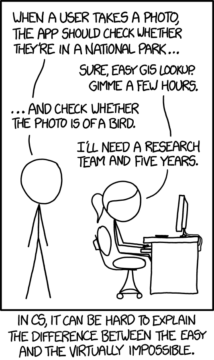 Last week, Austria-based Swarovski Optik
 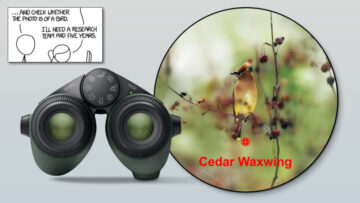 The binoculars, aimed mostly at bird watchers, gain their ability to identify birds from the
  Sathnam Sanghera’s Empireworld tells the story of Bartram and Kew as part of a nuanced, complicated account of the British empire’s impact on the world as we know it, and it is a story that is strikingly, remarkably alive to the contradictions inherent in its telling. For example, the technologies that facilitated the transporting of the plants and seeds that changed the English landscape and accelerated modern plant science also drove the large-scale cultivation of indigo, sugar cane, and rubber, and thereby determined the destinies of countless thousands of enslaved and indentured labourers in British-owned plantations across the world. And these enterprises, leading as they did to the kind of large-scale ecological destruction whose effects are still felt today, also created a need for conservation movements and environmental activism. Neither global communication, nor global cuisines, would be the same without any of this.
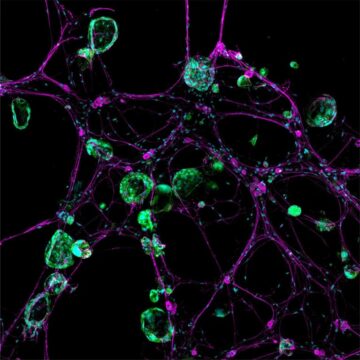 Lightning bolts of lime green flashed chaotically across the computer screen, a sight that stunned cancer neuroscientist Humsa Venkatesh. It was late 2017, and she was watching a storm of electrical activity in cells from a human brain tumour called a glioma. Venkatesh was expecting a little background chatter between the cancerous brain cells, just as there is between healthy ones. But the conversations were continuous, and rapid-fire. “I could see these tumour cells just lighting up,” says Venkatesh, who was then a postdoctoral researcher at Stanford University School of Medicine in Stanford, California. “They were so clearly electrically active.”
 As we embark on
  Last week, a
 Neuralink was founded in 2016 by
 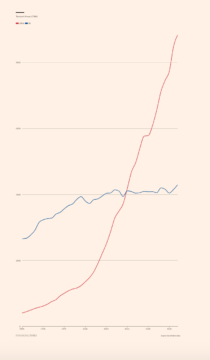 As data from the IEA confirm, the scale of China’s green energy push in the last couple of years dwarfs the much ballyhooed green energy programs in the West – NextGenEU, IRA etc.
 There was a brief period in the later part of the Covid-19 pandemic, between the moment when Glenn Youngkin swept into the Virginia governorship and the full political return of Donald Trump, when I became convinced that American liberalism was headed for a truly epochal defeat in 2024.
 M
M