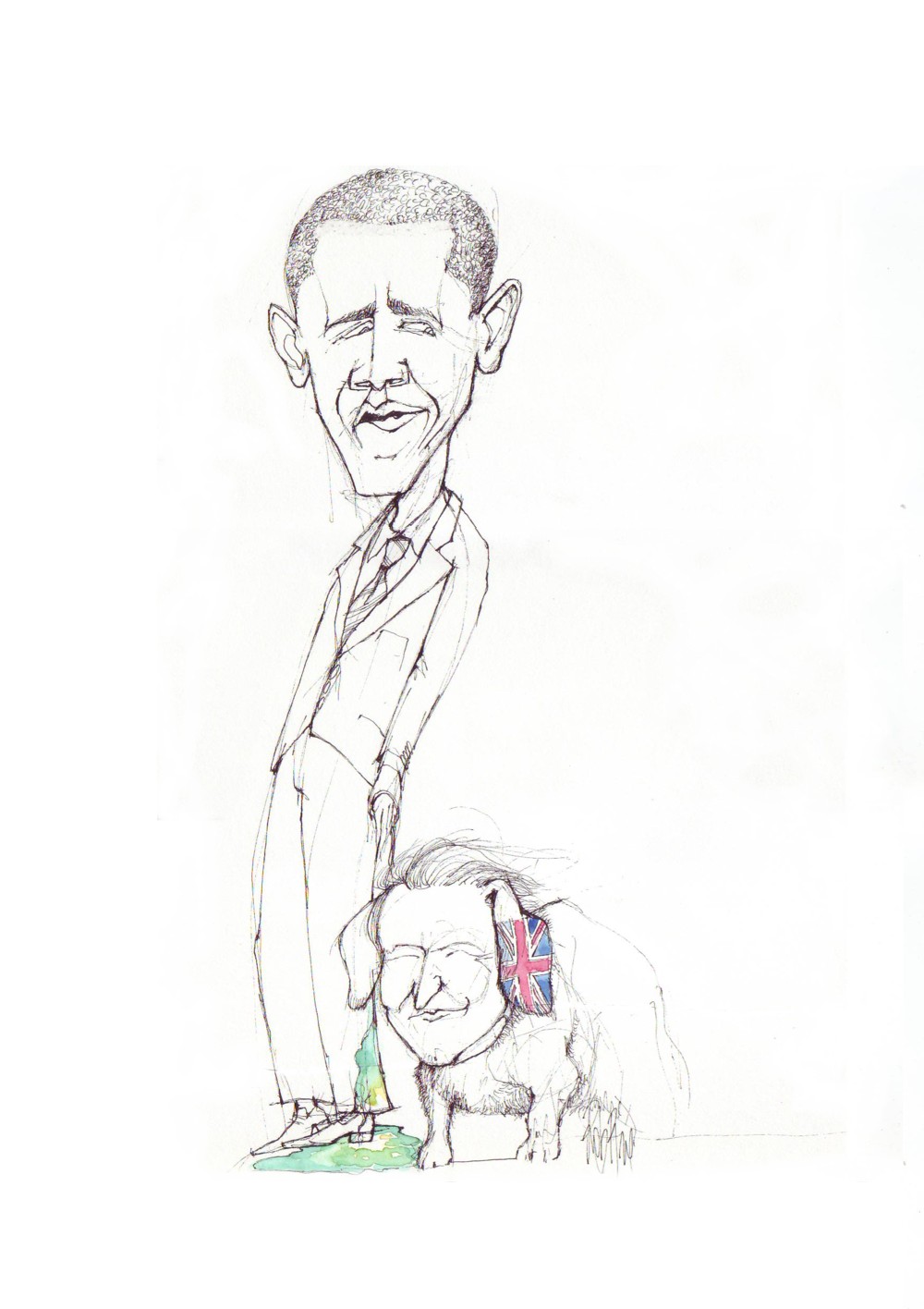
Experimental Error: Don’t Try This at Home

From Science:

RubenExperimentalerror_160x160_jpg In the terrible 2004 film Godsend, Robert De Niro plays a sinister obstetrician who helps a couple clone their dead son but secretly manipulates “intangibles” in the fetus so that the new child will show traits of his own dead son, who happened to be evil. While uncovering this well-thought-out and plausible scheme, the boy's father (Greg Kinnear) interviews a nanny the obstetrician once hired. “He was a doctor?” the father asks, and she replies, “A baby doctor, yeah.” Then she leans closer and whispers her suspicion: “Only … he seemed more like a scientist to me.”

For me, as a scientist, when I watched the movie, those words weren't exactly the ominous bombshell the screenwriter probably intended. It was as though the nanny had said, “Only … he sometimes ate Corn Flakes.” Her comment made me consider how the public views scientists — and how universal that perception must be for a screenwriter to presume that “scientist” is a zinger of an insult. (Maybe I should try that sometime. “Hey, jerk! Your mother is a synthetic chemist!”) We are distrusted, feared, but most of all, misunderstood. We work, after all, in one of the only two professions that idiomatically follow the word “mad” — the other such profession being “hatter.”

More here.

Wednesday Poem

Liverpool Disappears for a Billionth of a Second

Shorter than the blink inside a blink
the National Grid will sometimes make, when you’ll
turn to a room and say: Was that just me?

People sitting down for dinner don’t feel
their chairs taken away/put back again
much faster that that trick with tablecloths.

A train entering the Olive Mount cutting
shudders, but not a single passenger
complains when it pulls in almost on time.

The birds feel it, though, and if you see
starlings in shoal, seagulls abandoning
cathedral ledges, or a mob of pigeons

lifting from a square as at gunfire,
be warned it may be happening, but then
those sensitive to bat-squeak in the backs

of necks, who claim to hear the distant roar
of comets on the turn – these may well smile
at a world restored, in one piece; though each place

where mineral Liverpool goes wouldn’t believe
what hit it: all that sandstone out to sea
or meshed into the quarters of Cologne.

I’ve felt it a few times when I’ve gone home,
if anything, more often now I’m old
and the gaps between get shorter all the time.

by Paul Farley
from Tramp in Flames
publisher: Picador, London, 2006

Large Hadron Collider not large enough, say scientists who want a Humongous Hadron Collider

Emma Vandore in the Christian Science Monitor:

ScreenHunter_02 Jul. 28 12.59 Scientists behind the European particle collider aimed at uncovering the secrets of the universe pushed Monday to build an even bigger machine — with money and partners from around the world.

Instead of whirling atoms in giant rings, as existing colliders in Switzerland and the United States do, scientists want a new-generation machine that will shoot them straight.

Particle physicists gathering in Paris on Monday for the most important conference in their field say a linear atom blaster is needed to complement what existing colliders are telling scientists about the universe, inching them closer to understanding why we are here.

Mel Shochet, a professor at the University of Chicago, said “this is by far the most exciting time” in his particle physics career.

Speaking at a Paris news conference, Shochet said “exciting new phenomena” would be seen first by existing colliders “and then followed up in great detail” by future machines, he said at a Paris press conference.

Depending on who wants to host it — and how much they are willing to pay — the next-generation collider could potentially be built anywhere in the world — with Japan, Russia, the U.S. and Switzerland all possible hosts for the most advanced project.

More here.

Scientists Fallen Among Poets

20100716_NewtonBlake400

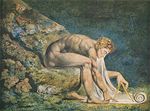
When one mentions the Romantics, poetry and not science is the first thing that comes to mind. The iconic Romantic image of the scientist is William Blake’s highly unflattering Newton (1795), a color print finished in watercolor, hanging in London’s Tate Gallery. The scientist appears as a heroic nude, imposingly muscled like a triumphant warrior. However, the figure’s pose is a far cry from the virile address of Michelangelo’s David or Cellini’s Perseus. Newton sits on a rock ledge, folded over so that his chest rests on his knees — an attitude that, assumed for more than thirty seconds, would serve as an acute stress position under enhanced interrogation. With a geometrician’s compass he is inscribing a semicircle within a triangle, and he embodies the mathematical order in which he is rapt. The muscles outlining his back ribs form a perfect row of rhomboids; an equilateral triangle set on its vertex and a larger triangle that caps the first define the junction of his hip and lower back; his left hand drops from his wrist at a right angle, quite uncomfortably, it would seem, and the fingers of that hand are bent to form a triangle along with one leg of the compass that they hold, so that the hand appears to be of a piece with the instrument; his left foot protrudes from beneath the ledge he is sitting on, as though he were riveted to matter; and he is clearly oblivious to everything but the figure he is drawing, the calculations he is making. What Newton cannot see is the spectacular iridescence of the immense rock he is perched on, and the tremulous darkness of the night sky that one would expect to entrance a natural philosopher, as it clearly does the artist. The appropriate amazement at nature’s magnificence is far beyond poor Newton. He is a grind, without imagination, without insight, without a chance of ever understanding what he is supposed to be doing on this earth.

more from Algis Valiunas at The New Atlantis here.

afam

20100714_americanfolkartmuseum_250x375

The American Museum of Folk Art American Folk Art Museum is one of my favorite museums in America. It’s also one of my least favorites. I love the museum because it’s committed to showing so-called “outsider art,” which I would define as art so visionary that the “real” art world can’t process it without relegating it to this ridiculous niche. (All great art is visionary; all great artists are in some way self-taught.) I hate the museum because its horrendous building smothers the art and vision contained within. And now the institution faces a new challenge: Last week brought the sad, startling news that curator Brooke Davis Anderson has been snatched up as Deputy Director for Curatorial Planning at the ambitious Los Angeles County Museum of Art. In the last decade as AFAM’s curator, Anderson, a brilliant scholar, organized extraordinary exhibitions of Martin Ramirez, Henry Darger, and Adolf Wolfli — three of the greatest artists of the 20th century. Come September, LA’s gain will be New York’s loss. (This, by the way, makes the fourth such coup, after Anne Philbin leaving the Drawing Center to become Director of the Hammer, Michael Govan departing Dia to work as Director of LACMA, and Jeffrey Deitch being named Director of LA MoCA.)

more from Jerry Saltz at New York Magazine here.

Mieczyslaw Weinberg

Bignow

If someone were to tell me that there is a Soviet composer of whom I’ve barely heard, who composed 26 symphonies and 17 string quartets, many of which deserve to be in the standard repertoire, my first reaction would probably be to assume they meant Nikolay Myaskovsky – that modest, noble-minded ‘musical conscience of Moscow’ who composed 27 symphonies and 13 quartets, some of which do speak with a unique and treasurable voice. But if that same informant said no, it’s someone entirely different, then I should probably have to stifle a groan. What, yet another ‘neglected genius’? Presumably one of those countless moderate or eccentric talents who deserved a better roll of the dice but who is never going to be more than a footnote in musical history? And even if I should come to share my enthusiast’s point of view, isn’t life too short to add such a quantity of must-know music to the in-tray? And if those are my hypothetical reactions – as a supposed specialist in the field – what can I expect when I’m the one trying to do the persuading? Well, if you are reading this essay, I suppose I can at least count on your curiosity.

more from David Fanning at Sign and Sight here.

Tuesday, July 27, 2010

One State/Two States: Rethinking Israel and Palestine

Danny Rubinstein in Dissent:

Against the background of Barack Obama’s attempt to defend the idea of “two states for two peoples” in Israel/Palestine, consider a recent talk given by the Palestinian Sufian Abu-Zayda. Abu-Zayda is fifty years old. He was born in the Jabalya refugee camp in northern Gaza, the largest of the Palestinian camps, and he is considered the Palestinian spokesman most fluent in Hebrew, which he learned during the fourteen years that he spent in an Israeli prison on charges of participating in terrorist activities. After his release in 1993, he was one of the senior Fatah leaders in Gaza and was appointed to various positions in the Palestinian government. Among other activities he has been active in the Israeli-Palestinian Geneva Initiative, in which moderates from both sides argue that it is possible to find a just two-state solution.

It was quite surprising, therefore, that Abu-Zayda, in his talk to an Israeli audience, announced that he had changed his mind. Like other Palestinians who spoke to the Israeli media over the last months, he was responding to Prime Minister Benjamin Netanyahu’s speech at Bar Ilan University—itself a response of sorts to President Obama’s June 2009 speech at the University of Cairo. With some drama, Netanyahu had agreed that a Palestinian state should be established in territory of the Land of Israel to the west of the Jordan River. This was a significant change for Netanyahu, whose roots are in the nationalist movement that has given up its earlier slogan—“There are two banks to the Jordan, this one is ours, and so is that one”—but that still demands Israeli rule in the “Greater” Land of Israel west of the Jordan. Commentators talked of a “fissure” on the Israeli Right; it was widely believed that as long as Ben Zion Netanyahu is still alive, his son wouldn’t dare rebel against the nationalist traditions of the family.

But what might have seemed unbelievable a short time ago has become a reality. Netanyahu, at the head of the nationalist, right-wing government with members like Benny Begin (son of Menachem Begin) who have consistently rejected all concessions, has accepted the idea of a Palestinian state.

In his talk at Tel Aviv University, Abu-Zayda responded to what the prime minister had said: “Many thanks to Benjamin Netanyahu. After twenty years of the peace process [since the Madrid Conference in 1991], and after the mutual recognition of Israel and the PLO [in the Oslo Accords], he finally agrees to a Palestinian state.” There was irony in his voice as he continued, “Do you think you are doing us a favor when you agree to two states? No favor at all. From my side, from the Palestinians’ side—let there be one state, not two…. I was introduced to you as Sufian Abu-Zayda from the Jabalya camp, but I’m not from Jabalya. I might have been born there, but my family had been exiled in 1948 from a village named “Breer,” where Kibbutz Bror Hayill now stands, near the Gaza border. If there will be one state, I’ll be happy to rent or buy a house near the kibbutz and live there.” And then Abu-Zayda said in a loud voice, “You are doing yourselves a favor by establishing two states, not us.”

He isn’t alone in his opinion.

Slowed Food Revolution

100706_rogers_leadHeather Rogers in The American Prospect:

Morse Pitts has been cultivating the same land in New York's Hudson Valley for 30 years. His operation, Windfall Farms, is the very picture of local, sustainable agriculture. From early spring to late fall, the farm's 15 acres are luxuriant with snap peas, squash, mint, kale, and Swiss chard. Its greenhouses burst with sun gold tomatoes and an array of baby greens. Pitts, who is in his 50s and is tall with gray hair, doesn't use chemical fertilizers or pesticides or any genetically modified seeds. He cultivates biodiversity, not just vegetables.

Twice a week, he hauls his produce 65 miles south to Manhattan to sell at the lucrative Union Square farmers market. His converted school bus runs on biodiesel he makes from used vegetable oil, which he is also trying to use to power his greenhouses. Pitts does a brisk trade; demand for his produce is high, and the way he farms is increasingly valued. Since the mid-1990s the number of farmers markets has shot up 300 percent, and the organic sector has seen annual double-digit expansion.

But despite having no mortgage debt (he inherited the place), a ready market, and loyal customers, Pitts wants to leave his farm. His town recently rezoned the area as industrial, and if he wants to cultivate soil that's not surrounded by industry and its attendant potential for water and air pollution, he has to move. The problem is, he can't afford to.

Aside from the standard instability farmers must endure — bad weather, pests, disease, and the vagaries of the market — holistic and organic growers face great but often overlooked economic hardship. They must shoulder far higher production costs than their conventional counterparts when it comes to everything from laborers to land. Without meaningful support from the U.S. Department of Agriculture, their longevity hangs in the balance. In the meantime, the USDA showers billions on industrial agriculture. Growers who've gone the chemical, mechanized route have ready access to reasonable loans, direct subsidy payments to get through tough years, and crop insurance, plus robust research, marketing, and distribution resources. Whether organic and holistic growers raise crops, like Pitts does, or grass-fed, free-range livestock, they must contend with circumstances made harder by a USDA rigged to favor industrial agriculture and factory food.

Clear and Hold

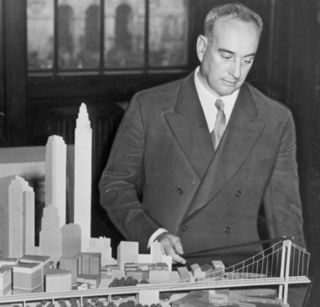
Walker_35.4_moses Casey Walker reviews Roberta Brandes Gratz's The Battle for Gotham: New York in the Shadow of Robert Moses and Jane Jacobs, in the Boston Review:

For half a century, rich men have talked about building a stadium at the tangled intersection of Flatbush and Atlantic Avenues in Brooklyn. Walter O’Malley hoped to construct a stadium for his Brooklyn Dodgers there, but Robert Moses—New York’s “master builder,” the bureaucrat through whom nearly all of the city’s major projects ran—refused to play nice. O’Malley took his ball and went home; the Dodgers decamped for Los Angeles in 1958.

But last March a new stadium project broke ground at Flatbush and Atlantic, where I live, and it promises to bring Brooklyn its first major sports franchise since the Dodgers’ departure—the NBA’s New Jersey Nets. In the 50 years since O’Malley’s stadium was thwarted, much has changed in the head-butting politics of American city building—and much has not.

Walk down Atlantic Avenue from Flatbush as I often do—carefully, because panel vans and car services menace pedestrians from all sides—and you will be in the footprint of the projected arena, the Barclays Center, anchor of the 22-acre Atlantic Yards project. Atlantic Yards is a familiar urban story: surrounding neighborhoods are braced for upheaval; architects have come and gone; redesigns have been announced, lambasted, tweaked, disowned; lawsuits multiply like kudzu; millions of dollars are all but blowing through the air; and the likely date of actual completion is anyone’s guess (Forest City Ratner, the developer, contends the Barclays Center will be finished by 2011, but the Web site does not give a timetable for the rest of the project).

Though I have closely followed the Atlantic Yards scuffle for years, I barely know what the project is anymore, what it will look like, or what it will contain. My guess is you would find city officials who are similarly unsure.

The Culture of Sex

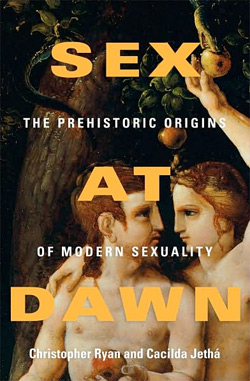
ID_BS_CRISP_DAWN_AP_001 Jessa Crispin reviews Sex at Dawn: The Prehistoric Origins of Modern Sexuality by Christopher Ryan and Cacilda Jethá, in The Smart Set:

I largely agree with the thesis that we have built our relationships around ideas that are actually toxic — that lifelong monogamy is not only an achievable goal but the absolute ideal, that infidelity must be met with swift divorce or else you are a doormat, that deviation from this template means there is something wrong with you. Yet while reading Sex at Dawn I was angry, frustrated, and bored, not to mention bewildered that grown adults striving to be taken seriously would write in a never ending torrent of puns — the names of the chapters alone (from “Who’s Your Daddies?” to “Mommies Dearest”) are a table of contents of horrors. Their simplistic ideas, their denial of the dark side of sexuality, seemed no better than my junior high belief in the brutal force of male sexuality. The truth lies somewhere between “men oppress women with their uncontrollable needs” and “women oppress men with their socially constructed monogamous love.”

Ryan and Jethá are not just writing a book of anthropology — they want to change modern marriage. They are not researchers, but a psychologist and a psychiatrist, respectively. Their idea of real world application, then, will say a lot about the book as a whole, as it reveals their agenda. Men need sex. Lots of it. With lots of different women. And this final chapter of the book tilts the balance heavily. Young men, newly charged with hormones, need sex in order to keep from becoming violent. As an example, they mention a society in which a special house is established so adolescent boys and girls can engage in sex freely. (Never mind the studies that report that early sexualization of girls is harmful to them, such as Harold Leitenberg’s study that showed the younger girls started having sex, the more likely they were to engage in drug and alcohol use and suffer from depression. Ryan and Jethá don’t mention those.) And for women who are not comfortable with the idea of allowing their husbands to fool around on the side, the authors have some guilt for them:

Monogamy itself seems to drain away a man’s testosterone… Researchers have found that men with lower levels of testosterone are more than four times as likely to suffer from clinical depression, fatal heart attacks, and cancer when compared to other men their age with higher testosterone levels.

They continue, “We know that many female readers aren’t going to be happy reading this, and some will be enraged by it, but for most men, sexual monogamy leads inexorably to monotony.” And death, apparently. Despite their evidence that women’s orgasms and sexual needs are fulfilled by multiple partners, one after the other, there is no corresponding “Men aren’t going to like hearing this, but your wives are going to need to bang the entire German World Cup team — this is what she needs it to be fully orgasmic.”

A Man Outside: John A Hall’s Biography of Ernest Gellner

Bilde Scott McLemee in The National:

It is easy to imagine why Ernest Gellner would be one of the universally known figures in Anglophone intellectual life. A polymath whose work ranged across anthropology, history, philosophy, and sociology, his mind wrestled with an encyclopedia’s worth of nagging questions about nationalism, modernity, civil society, imperialism, Islam, psychoanalysis, ethics and epistemology. “I am not a donkey,” he liked to say, borrowing a line from Max Weber, “and I don’t have a field.”

He wrote clearly and trenchantly, with brio and dry wit. Clearly these were not among the qualities that had rubbed off on him from Weber (let alone from Immanuel Kant, another of the master-thinkers defining the horizons of his work). By my count, roughly half of Gellner’s almost two dozen books are collections of essays – a wry running commentary on half a century of public intellectual life following the Second World War: existentialism, structuralism, the thaws and re-freezings of the Soviet bloc, and the varieties of dissident enthusiasm in the West… These pieces revisit the themes and preoccupations of his monographic works, and retain their vitality, well after the original polemical targets have been forgotten.

All of this, to repeat, should explain Gellner’s monumental prominence – except for the fact that he has no such prominence. There are Foucauldians aplenty and Rortyans by the score – and even the occasional stray Marcusean, tending the flame. But of Gellnerians, there is scarcely a trace. Not that Gellner has been completely forgotten. His work remains central to debates on the nature of nationalism. But only with John Hall’s intellectual biography do we have a suitable treatment of Gellner’s work as a whole, seen on its own very large scale.

Khaled: The King Of Rai

Banning Eyre at NPR:

ScreenHunter_01 Jul. 27 19.26 He was born Khaled Hadj Brahim in 1960 in the Mediterranean port city of Oran — or “Crazyville,” as he once called it. Oran marks an intersection of cultures, a place where Spanish, Moroccan, French, Arabic, American, Berber, Jewish and gypsy ideas and idioms collided. Khaled came of age during the lull between two bloody conflicts: the 1950s war that freed Algeria from French colonialism; and the religiously fueled civil war of the 1990s. In a land torn apart by intolerance and violence, Khaled stood out as an artist who embraced openness and peace.

Khaled was also a bad boy, a playboy and a partier, even rejecting the polite traditions of Algeria's poetry. When a traditional Oranese poet wants to describe love, Khaled once explained to me, the poet will speak in metaphor — for example, about a pigeon. Khaled says he prefers to take a different approach.

“When I sing rai,” Khaled said, “I talk about things directly: I drink alcohol, I love a woman, I am suffering. I speak to the point.”

More here.

Ecology: A world without mosquitoes

From Nature:

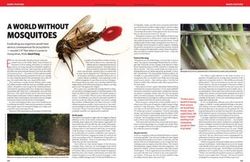
Mos Every day, Jittawadee Murphy unlocks a hot, padlocked room at the Walter Reed Army Institute of Research in Silver Spring, Maryland, to a swarm of malaria-carrying mosquitoes (Anopheles stephensi). She gives millions of larvae a diet of ground-up fish food, and offers the gravid females blood to suck from the bellies of unconscious mice — they drain 24 of the rodents a month. Murphy has been studying mosquitoes for 20 years, working on ways to limit the spread of the parasites they carry. Still, she says, she would rather they were wiped off the Earth. That sentiment is widely shared. Malaria infects some 247 million people worldwide each year, and kills nearly one million. Mosquitoes cause a huge further medical and financial burden by spreading yellow fever, dengue fever, Japanese encephalitis, Rift Valley fever, Chikungunya virus and West Nile virus. Then there's the pest factor: they form swarms thick enough to asphyxiate caribou in Alaska and now, as their numbers reach a seasonal peak, their proboscises are plunged into human flesh across the Northern Hemisphere.

So what would happen if there were none? Would anyone or anything miss them? Nature put this question to scientists who explore aspects of mosquito biology and ecology, and unearthed some surprising answers.

More here.

Translating Stories of Life Forms Etched in Stone

Sean B. Carroll in The New York Times:

Sean In 1909, Charles Walcott, a paleontologist and secretary of the Smithsonian Institution, discovered one of the greatest and most famous fossil troves high in the Canadian Rockies on Burgess Pass in British Columbia. The slabs of Burgess Shale that Walcott excavated contained the earliest known examples at the time of many major animal groups in the fossil record, in rocks that were about 505 million years old. Walcott’s discovery was further evidence of the so-called Cambrian Explosion — the apparently abrupt appearance of complex animals in the fossil record within the Cambrian Period, from about 542 to 490 million years ago. Although not seen before on the scale documented in the Burgess Shale, the emergence of trilobites and other animals in the Cambrian was familiar to paleontologists, and had troubled Charles Darwin a great deal.

The difficulty posed by the Cambrian Explosion was that in Darwin’s day (and for many years after), no fossils were known in the enormous, older rock formations below those of the Cambrian. This was an extremely unsettling fact for his theory of evolution because complex animals should have been preceded in the fossil record by simpler forms. In “On the Origin of Species,” Darwin posited that “during these vast, yet quite unknown, periods of time, the world swarmed with living creatures.” But he admitted candidly, “To the question why we do not find records of these vast primordial periods, I can give no satisfactory answer.”

More here.

A Jungle Tiananmen

Hearn-01-thumbnail

It was several days after the deaths in Bagua, and we were in a tiny car flying down a washboard gravel road—some left-of-nowhere oil company throughway punched into the Peruvian Amazon—when the paramilitary cops flagged us down. Everybody in the back was asleep: Plinio leaning on Alcides, Alcides—snoring—leaning on me. I elbowed Plinio. There are three rules for reporting in the Amazon: 1) add two screwups to every plan; 2) there is no such thing as a “little problem”; and 3) you never—ever—go in without an Indian guide. Plinio was mine. He was wiping sleep from his eyes as the cop, in military pants tucked into black boots, approached the car, a machine gun over his soldier. I wanted to go home. “It is routine,” Plinio said. “It is the state of emergency. He’s checking our IDs. Just remember our story.” He meant to remember the lie we’d concocted: that my partner, Duncan, and I were making a documentary about the Amazon’s threatened biodiversity. In fact, we were there investigating the impact of Peru’s booming oil industry on the forest’s indigenous villages. Many people don’t realize that Peru controls most of the Amazon’s headwaters—a massive chunk of the rainforest second only to Brazil’s portion—or that Peru’s past two pro-business presidents have bet the ranch on the area’s oil-rich energy lodes.

more from Kelly Hearn at VQR here.

the song that levels us

38110_446391507847_538727847_6045672_4548330_n

The memorable, artless clarity of the Happy Birthday song is the essence of its genius. So with all its deliberate simplicity, it’s funny that the Happy Birthday song is a little bit hard to sing. We’ve all experienced this. As the end of each phrase gets progressively higher, you are, average singer, taken outside your comfortable vocal range, so that by the time you get to the third “birthday” (and it’s the “birth” note that’s the biggest problem) you’re practically in eunuch territory. Luckily, this high note happens quickly and only once so you can jump down from it safely and finish the song within the more gentle territory of the second line. (As opposed to “The Star-Spangled Banner,” for instance, a virtuoso song that nobody sings, a high-note holocaust which forces you to start really high from the get-go and keep singing higher and higher until you miraculously finish or implode.) We might think of this as the great flaw in “Happy Birthday to You.” To be fair, though, the “birth” note is not a problem inherent in the song. It’s starting “Happy Birthday to You” in a key that is too high which spells disaster. But here’s the thing: Because the song is always sung spontaneously, by a random group with (usually) uneven musical abilities, the key is always too high. The distance between the lowest note in the Happy Birthday song and the highest is eight steps and they happen, in that third line, right next to each other. That’s a whole octave leap. I’ve guesstimated that .0001 percent of the world’s population can make this octave leap. And yet we all sing it, time and again, debasing ourselves. Why? Because it’s funny. Every time. If you have Pavarotti in your gang, it makes no difference. “Happy Birthday to You” makes the collective sound terrible and, in doing so, makes everyone laugh. I’ve decided that the octave leap, the most curious part of the Happy Birthday song, is its finest element. “Happy Birthday to You” is disarming. It levels us.

more from Stefany Anne Golberg at The Smart Set here.

smartopus

Octopus__1279912444_3032

Perhaps the most unlikely hero to emerge from this summer’s World Cup was Paul the octopus, a lightly spotted invertebrate living in an aquatic center in Germany. Paul earned worldwide fame for successfully “predicting” the winner of eight out of eight soccer games, including the final match. Before each game, Paul’s keepers would place two food-filled boxes, each of which was decorated with one team’s national flag, in the creature’s tank. Whichever box Paul ate from first was considered to be his pick. The octopus nailed it all eight times. Though Paul’s success seems mainly to have been luck — evidence for psychic sports forecasting ability in octopuses is, well, somewhat lacking — if you were looking to consult a brainy animal, you could do worse than an octopus. Research is increasingly revealing that there’s something sophisticated going on inside the octopus’s soft and squishy head. The critters, it seems, are surprisingly smart.

more from Emily Anthes at The Boston Globe here.

Monday, July 26, 2010

The Borges behind the fiction: Colin Marshall talks to Latin American fiction translator Suzanne Jill Levine

Suzanne Jill Levine is a noted translator of creative, innovative, adventurous Latin American Fiction from authors like Guillermo Cabrera Infante, Severo Sarduy, and Manuel Puig. She’s also a professor at the University of California, Santa Barbara and the general editor and co-translator of Penguin Classics’ five new volumes of nonfiction and poetry from widely respected Argentine writer Jorge Luis Borges: On Writing, On Mysticism, On Argentina, The Sonnets, and Poems of the Night. Her own book The Subversive Scribe: Translating Latin American Fiction has been recently reissued by Dalkey Archive. Colin Marshall originally conducted this interview on the public radio program and podcast The Marketplace of Ideas. [MP3] [iTunes]
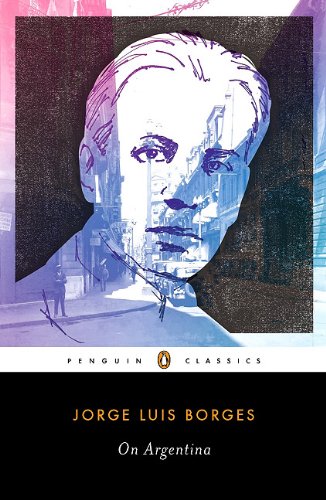
Levine2 Purely as a reader of Latin American fiction, leaving aside all the issues of translation for one moment, where does Borges reside in the Latin American fiction map in your mind, relating to all the other authors you’ve read?

He has often been called the father of the Latin American novel. Certainly the new Latin American novel, as of the mid-20th century. I think that’s very correct; that’s a good way of putting it. I hate to use biological or patriarchal terms here, but he truly was such an amazing inventor, such an amazing adventurer in the world of literature, that his ideas, his concepts, his way into literature really inspired all these writers. He directly inspired García Márquez, but even the generation before that: Julio Cortázar, Bioy Casares. So many writers were impacted by Borges and his way of dealing with literature and writing.

What’s interesting about him is that he really was first a poet, and always considered himself a poet. I think his approach to writing, no matter whether it’s fiction, poetry, essays, is in some ways poetry. I think that’s what makes the Latin American novel what it was, so special, so innovative. It was how it was dealing with language, how it was renewing language. That’s what made it exciting, bringing in these obviously new genres like magical realism, of which Borges is definitely a precursor.

Borges inspired those older than him, he’s inspired so many younger, he continues to inspire, people haven’t stopped going back to him. He has a bigger audience than ever, arguably. Is it the poetry that causes this? Is it his use of language, specifically, that people find in Borges that draws them to it?

He really is, conceptually, a revolutionary, and I think he just invented a way of looking at literature that was always there, except he made us conscious of it. He made us aware of it. For example, people have said, “Well, Borges invented the World Wide Web.” In a way, you could say he has.

That’s a bold claim.

It’s a bold claim. Borges invented the notion that we are all inside the text. The text is everything and there’s no originality — of course, he’s one of the most original writers there is! He’s also so paradoxical. People are intrigued by the paradoxes that come up time and again in Borges. And yet, his paradoxes are as old as Socrates, and even older. It’s just that he knew how to bring all of culture in to the 20th century. At first, he kind of rejected it. In On Writing, my anthology, the very first statement is the Ultra Manifesto — remember, he was an Ultraist.

Two or three years after being an Ultraist, he rejected the posturing of the avant-garde, but he says here something I really think sums up who he is. He says, “Two aesthetics exist: the passive aesthetic of mirrors and the active aesthetic of prisms. Guided by the former, art turns into a copy of the environment’s objectivity or the individual’s psychic history.” There, of course, he sums up all of realism, no? “Guided by the latter, art is redeemed, makes the world into its instrument and forges, beyond spatial and temporal prisons, a personal vision.” That’s Borges. This idea of this “personal vision”: he says here, “Let’s throw out everything and start anew,” but what he actually discovers is, “Let’s take in it all and start anew!” And that’s why people love him. They can always start from anywhere and start anew. I think that’s what is so Borgesian.

It can sound rarefied to someone who hasn’t read Borges. We talk about how much he’s getting into his works, and what sounds like very intellectual concepts he uses. Yet he touches such a wide range of readers. It seems like the way he uses these ideas and the way he uses these techniques couldn’t be that rarefied. How does he get such a wide appeal?

It’s true; it’s not that rarefied. It’s sort of the way he says things. People are suddenly struck by a new way of looking at things. It’s not so much what he says; it’s how he says it. Another text in On Writing, which nobody has read before in English — and even very few people in Spanish — is this 1926 text. Here, the guy was like 26, he was very young. It’s called “Stories from Turkestan”. He basically announces magical realism way before anybody was talking about it. And in the most concrete terms! This is what makes him delightful.

Look what he says here: “The essence of the stories from Turkestan is generosity, a virtue of the plains and the shepherds.” He goes on to say, “Time, in these chimerical stories of Turkestan, not only expands but has the loose shape of dreams.” It’s the way he makes language so concrete. Even though he’s writing prose, it’s poetry in the way he uses images in such a concrete way. I think he brings home these concepts with his taste for language, his ability to make language speak.

What was your first encounter with Borges’ work?

Way back. I went to Spain when I was a young student, and then when I got back to college my senior year, the professors were talking about Borges. This is, like, in the late sixties. I already was aware of Borges, like many of us who were studying Spanish and Latin American literature. But then I met this wonderful critic who became a very important influence in my early life as a literary critic, as a scholar, and as a writer, really. His name was Emir Rodriguez Monegal. He was a Uruguayan critic, also a professor at Yale, who really brought Borges home to all of us. He was somebody who discovered him at age fifteen. The first book I actually engaged with in a more specific way was an early work of fiction of his called The Universal History of Infamy. Which was hysterical, because it’s this tiny book with seven short stories, and he’s calling it the universal history of crime, basically! You have to be draw to this.

Read more »