The Evolution of Cooperation

Mungermulticell_HL Dave Munger in Seed:

Suppose you were imprisoned in a room with no food supply except for a huge trough of maple syrup. How long do you think you could survive? Sure, the syrup would provide plenty of energy for basic bodily functions, but it would perhaps be only a few months until scurvy or other nasty diseases of malnutrition ravaged your body. Without the ability to somehow produce vitamins and amino acids necessary for survival, consuming a food composed of just sugar and a few minerals likely wouldn’t sustain you for even a year.

Yet many animals do survive on very limited diets, and they have no more ability than you do to produce the basic building blocks of life. Last week, microbiology researcher Ryan Kitko pointed out that the candy-stripe leafhopper thrives while consuming only the xylem and phloem of plants—sap. So how do sap-sucking insects like leafhoppers and aphids survive? Kitko points to two studies on a type of leafhopper commonly known as sharpshooters. Researchers found cells in sharpshooters that were jam-packed with bacteria, which converted the raw materials from sap into the vitamins and amino acids the insects need to survive.

The glassy-winged sharpshooter has two different resident bacteria, each of which creates different nutrients for the host insect from its base diet of plant sap. The bacteria are transmitted directly from the mother to her eggs, so young insects hatch with all the apparatus they need to live on plant sap alone. The bacteria, in turn, have very limited genomes. They wouldn’t be able to survive without the host insects to provide protection and a ready supply of food. In fact, the two bacteria that provide nutrients for the sharpshooter themselves have complementary genomes, each having lost formerly essential sections of their genome now found in the other. The bacteria not only produce nutrients for the host, but also depend on each other’s presence to get the nutrients they themselves need.

Rescuing the Enlightenment from its Exploiters

Todorov Tim Black reviews Tzvetan Todorov's In Defence of the Enlightenment, in Spiked:

While the Enlightenment, ‘one of the most important shifts in the history of man’ as one recent account put it, has certainly had its detractors, who blame it for anything from the Holocaust to soulless consumerism, it now also has a veritable army of self-styled heirs. Militant secularists, New Atheists, advocates of evidence-based policy, human rights champions… each constituency in their turn will draw justification from the intellectual emanations of that period beginning roughly towards the end of the seventeenth century and culminating – some say ending – in the 1789 French Revolution and its aftermath. And each in their turn will betray it.

It is not deliberate treachery. This is no reactionary dissimulation – it is more impulsive than that. Still, in the hands of the neo-Enlightened, from the zealously anti-religious to the zealously pro-science, something strange has happened. Principles that were central – albeit contested – to the Enlightenment have been reversed, turned in on themselves. Secularism, as we have seen recently in the French government’s decision to ban the burqa, has been transformed from state toleration of religious beliefs into their selective persecution; scientific knowledge, having been emancipated from theology, has now become the politician’s article of faith; even freedom itself, that intregral Enlightenment impulse, has been reconceived as the enemy of the people. As the Enlightened critics of Enlightenment naivete would have it, in the symbolic shapes of our ever distending guts and CO2-belching cars, we may be a little too free.

Published in France in 2006, but only recently translated into English, philosopher Tzvetan Todorov’s In Defence of Enlightenment is, in short, a corrective. And insofar as it offers a polite but stern rebuke to those who distort the Enlightenment project, often in its own specious name, it is a welcome corrective at that.

Not the Messiah

20100720_2010+28critics_lead1_wAlain de Botton on Auguste Comte in New Statesman:

One of the most fruitless questions that can be asked of religions is whether or not they are “true”. For the sake of argument and the flow of this article, let us simply assume from the start that they aren't true in the supernatural sense. For a certain kind of atheist, this is the end of the story; but for those of a more ethnographic bent, it is clearly only a beginning. If we made up our gods to serve psychological needs, a study of these deities will tell us a crucial amount about what we require to preserve our sanity and balance, and will raise intriguing questions about how we are fulfilling the needs to which religions once catered.

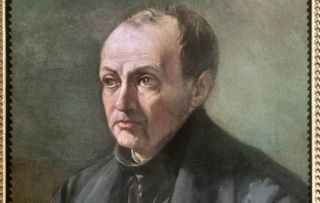
Although we tend to think of atheists as not only unbelieving but also hostile to religion, there is a minor tradition of atheistic thinkers who have attempted to reconcile suspicion of religion with a sympathy for its ritualistic aspects. The most important and inspirational of these investigations was by the visionary, eccentric and only intermittently sane French 19th-century sociologist Auguste Comte.

Comte's thinking on religion had as its starting point a characteristically blunt observation that, in the modern world, thanks to the discoveries of science, it would no longer be possible for anyone intelligent or robust to believe in God. Faith would henceforth be limited to the uneducated, the fanatical, women, children and those in the final months of incurable diseases. At the same time Comte recognised, as many of his more rational contemporaries did not, that a secular society devoted solely to financial accumulation and romantic love and devoid of any sources of consolation, transcendent awe or solidarity would be prey to untenable social and emotional ills.

Comte's solution was neither to cling blindly to sacred traditions, nor to cast them collectively and belligerently aside, but rather to pick out their more relevant and secular aspects and fuse them with certain insights drawn from philosophy, art and science. The result, the outcome of decades of thought and the summit of Comte's intellectual achievement, was a new religion: a religion for atheists, or, as he termed it, a religion of humanity.

Changing Places

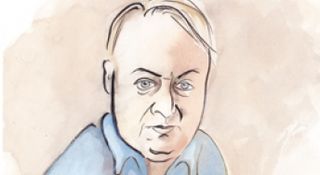
Guttenplanhitchens_hp_0D.D. Guttenplan on Christopher Hitchens, in the Nation:

Permit me, as the English say, to declare an interest. I was first told the story of the death of Yvonne Hitchens by her oldest son on the weekend of April 8, 1989. Christopher and his wife, Eleni, put us up at their house in Washington on our way to an abortion rights march. Abortion was a touchy subject with the Hitchenses, and not just because Eleni was pregnant with their second child. There had been a party in the afternoon, but the atmosphere was hardly festive. Our hosts seemed to be attempting, with limited success, to suppress a long-running quarrel. (It can't have been much more than a month later that Christopher left Eleni for Carol Blue, whom he eventually married.) As the house slowly emptied I found myself alone with Christopher, who, either because he noticed my distracted air or wanted to change the subject, soon elicited the fact that I'd spent an earlier part of the day visiting my mother in the hospital where she was undergoing treatment for cancer.

I was feeling both anxious and guilty. Christopher's response was to sit me down, fill our glasses and tell me about being summoned to Athens too late to talk his mother out of taking her life. I wasn't making notes—his apotheosis as a world-historical figure and scourge of the believers was many years in the future—so I can't recall exactly how he introduced the topic. Nor can I recall all the sordid details, though I did come away knowing that his mother's suicide in 1973 had marked him in ways he generally preferred not to consider. What I can recall was my sense of a man whose life seemed, on many levels, to be a kind of performance, allowing himself to be “off,” and to offer the only consolation he could: not cheerfulness, not competitive misery, but an acknowledgment that sometimes life just sucks. If any more evidence on that question were needed, in recent weeks the Internet has buzzed with the news that Hitchens is undergoing treatment for cancer of the esophagus, a disease, as ABC announced with barely restrained glee, “associated with smoking and drinking, habits Hitchens extolled as virtues.”

The pathetic circumstances of Yvonne Hitchens's last days have been told many times, and to many journalists. After a long, passionless marriage to a midranking officer in the Royal Navy, himself forcibly retired and working as a bookkeeper in a boys' boarding school, Yvonne fell in love with a former Anglican priest, only to have both their lives end in a suicide pact far from home. When I say that those last days have never been told so movingly, or with such filial tenderness, as in the pages of Hitch-22, you may think I am hardly an impartial witness. Fair enough. But where Hitchens is concerned, neutrality is liable to be in short supply.

How Puritans became capitalists

From The Boston Globe:

Books Even in down times like these, America’s economy remains remarkably productive, by far the world’s largest. At its base is a distinctive form of market-driven capitalism that was championed and shaped in Puritan era Boston. But the rise of Boston’s economy contains a deep contradiction: The Puritans whose ethic dominated New England hated worldly things. Market pricing was considered sinful, and church communities kept a watchful, often vengeful eye on merchants. How could people who loathed market principles birth a modern market economy? That question captivated Mark Valeri after he read sermons by the fiery revivalist Jonathan Edwards that included detailed discussions of economic policy. Edwards turned out to be part of a progression of ministers who led their dour and frugal flocks down a road that would bring fabulous riches, and ultimately give rise to a culture seen as a symbol of material excess.

In his new book, ”Heavenly Merchandize,” Valeri, professor of church history at Union Theological Seminary in Richmond, finds that the American economy as we know it emerged from a series of important shifts in the relationship between the Colonies and England, fomented by church leaders in both London and early Boston. In the 1630s, religious leaders often condemned basic moneymaking practices like lending money at interest; but by the 1720s, Valeri found, church leaders themselves were lauding market economics. Valeri says the shift wasn’t a case of clergymen adapting to societal changes–he found society changed after the ministers did, sometimes even decades later. Even the more open-minded ministers, however, would have been scandalized by some aspects of the modern system they helped create–particularly the idea that investors would allow their desire for profits to make decisions that would harm the broader economy.

More here.

McSweeney’s mix CD for the Obama era

From Salon:

Md_horiz My uncle Steve hates Barack Obama. There, I’ve said it: I’ve relayed in public the secret that we hush at family gatherings, the reason our family cannot openly celebrate and discuss the Obamas at Christmastime the way other black families do. Let me be explicit about what I am saying. When I use the word “hate,” I mean that my uncle — an African American man in his 50s who grew up in the segregated South, in Arkansas, a hundred miles from the National Guard’s 1957 standoff with nine black students outside an all-white school — this man, who ate at segregated diners, played in all-black athletic leagues, and went to all-black schools — despises the first black president of the United States. The reasons are varied: Sometimes he seems simply jealous, envious that a brother has come around in his lifetime who is — how can I put it? — superbadder than he will ever be. But my uncle, who works in Springfield, Ill., believes that Obama is just another politician with questionable ethics. He claims if the walls could talk about the real goings-on behind closed doors, Barack Obama would be in jail, and not in the White House. I must admit that I see most of the mysterious alliances or inconsistencies that pundits, scholars and my uncle cite as Obama’s failures as signs that Obama decided to go to Washington to get things done. I have no delusions about American politics. I need Obama to be a complex freedom fighter, not a saint.

That said, black folks everywhere are still figuring out what to make of this new era. In the midst of all this, I set out to compile a musical State of the Union address for the 2010 Believer music issue that embodies the spirit of these times we’re living in. We’re huddled around the TV, watching “The Boondocks” and wondering what to make of a song (from Season 3) called “Dick Riding Obama.” Some of us certainly laugh, and afterward we talk. Some of us really do feel that gross sections of the black community, and black artists in particular, are ill-informed and exploiting Obama’s platform — they are, in essence, dick-riding Obama — while others in the community are pissed-off, wondering what white folks think, and imagine they're happily whistling that little ditty. Perhaps, most important, some of us find it totally irresponsible for a black artist to make art that insinuates anything bad, dark or untoward about Obama and his legacy, while others feel it’s the black artist’s role to share his true feelings, to tell the truth to the world — right now! — precisely as he sees it, politics and niceties be damned.

More here.

Sunday Poem

Adolescence II

Although it is night, I sit in the bathroom, waiting.
Sweat prickles behind my knees, the baby-breasts are alert.
Venetian blinds slice up the moon; the tiles quiver in pale strips.

Then they come, the three seal men with eyes as round
As dinner plates and eyelashes like sharpened tines.
They bring the scent of licorice. One sits in the wash bowl,

One on the bathtub edge; one leans against the door.
“Can you feel it yet?” they whisper.
I don't know what to say, again. They chuckle,

Patting their sleek bodies with their hands.
“Well, maybe next time.” And they rise,
Glittering like pools of ink under moonlight,

And vanish. I clutch at the ragged holes
They leave behind, here at the edge of darkness.
Night rests like a ball of fur on my tongue.

by Rita Dove

the hunchback did it

0

Bolaño wrote a preface to Antwerp in 2002 when he found out it was finally being published. He called the preface, “Total Anarchy: Twenty-Two Years Later.” The “total anarchy” is a reference to a piece of paper tacked over Bolaño’s bed in those days, the late 70s. He’d asked a Polish friend to write ‘total anarchy’ on the scrap of paper in Polish. Maybe there is another connection to our Sophie Podolski here, our suicidal Belgian muse? This preface is like a little drink of water for the dying men who read Antwerp, I suppose. Bolaño seems to tell you a thing or two in the preface, explain the context within which he wrote his opaque novel. I read the preface three times before I realized it was a trick. He says, “I wrote this book for the ghosts, who, because they’re outside of time, are the only ones with time.” That’s a joke, man, it’s just a joke. Dead people are the only ones with time enough to sort this novel out. You’d have to be dead, and in possession of infinite time, to figure out if the hunchback really did it and what movie they are watching on that sheet hung between the trees at the campground. I think the hunchback did do it. I’m just not sure what he did.

more from me at The Owls here.

Saturday, July 31, 2010

An Agnostic Manifesto

From Slate:

Atheist Faith-based atheism? Yes, alas. Atheists display a credulous and childlike faith, worship a certainty as yet unsupported by evidence—the certainty that they can or will be able to explain how and why the universe came into existence. (And some of them can behave as intolerantly to heretics who deviate from their unproven orthodoxy as the most unbending religious Inquisitor.)

Faced with the fundamental question: “Why is there something rather than nothing?” atheists have faith that science will tell us eventually. Most seem never to consider that it may well be a philosophic, logical impossibility for something to create itself from nothing. But the question presents a fundamental mystery that has bedeviled (so to speak) philosophers and theologians from Aristotle to Aquinas. Recently scientists have tried to answer it with theories of “multiverses” and “vacuums filled with quantum potentialities,” none of which strikes me as persuasive. (For a review of the centrality, and insolubility so far, of the something-from-nothing question, I recommend this podcast interview with Jim Holt, who is writing a book on the subject.)

Having recently spent two weeks in Cambridge (the one in the United Kingdom) on a Templeton-Cambridge Fellowship, being lectured to by believers and nonbelievers, I found myself feeling more than anything unconvinced by certainties on either side. And feeling the need for solidarity and identity with other doubters. Thus my call for a revivified agnosticism. Our T-shirt will read: I just don't know.

More here.

Not a Day Over Infinity

Abraham Verghese in The New York Times:

Vergese-popup In his remarkable Pulitzer Prize-­winning book, “The Beak of the Finch,” Jonathan Weiner followed Peter and Rosemary Grant, biologists who had spent years studying birds in the Galápagos Islands. Their work showed that finches evolve rapidly in response to changes in the food supply, a discovery that ran counter to Darwin’s idea that natural selection operates only very slowly. Weiner’s portrait of this scientific couple worked well as a narrative portal to that story of evolutionary biology.

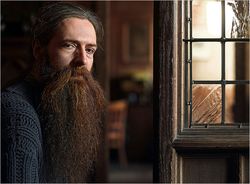
In his new book, “Long for This World,” Weiner makes similar use of another brilliant theoretical scientist, the English gerontologist Aubrey de Grey, a tireless proselytizer for radical life extension. But unlike the Grants, de Grey emerges on the page as someone who can be taken only in small doses. “Medievally thin and pale,” as Weiner puts it, with a luxuriant beard that recalls “Father Time before his hair turned gray” or “Timothy Leary unbound,” he is given to provocative statements that can turn into sermons. Nevertheless, with de Grey as his main character, Weiner explores the fractured, fuzzy science and pseudoscience of immortality.

“This is a good time to be a mortal,” Weiner writes, noting that life expectancy in the developed world is about 80 years, and improving. Yet evolution has equipped us with bodies and instincts designed only to get us to a reproductive age and not beyond. “We get old because our ancestors died young,” Weiner writes. “We get old because old age had so little weight in the scales of evolution; because there were never enough Old Ones around to count for much in the scales.” The first half of life is orderly, a miracle of “detailed harmonious unfolding” beginning with the embryo. What comes after our reproductive years is “more like the random crumpling of what had been neatly folded origami, or the erosion of stone. The withering of the roses in the bowl is as drunken and disorderly as their blossoming was regular and precise.”

More here.

Saturday Poem

The Map

Land lies in water; it is shadowed green.
Shadows, or are they shallows, at its edges
showing the line of long sea-weeded ledges
where weeds hang to the simple blue from green.
Or does the land lean down to lift the sea from under,
drawing it unperturbed around itself?
Along the fine tan sandy shelf
is the land tugging at the sea from under?

The shadow of Newfoundland lies flat and still.
Labrador's yellow, where the moony Eskimo
has oiled it. We can stroke these lovely bays,
under a glass as if they were expected to blossom,
or as if to provide a clean cage for invisible fish.
The names of seashore towns run out to sea,
the names of cities cross the neighboring mountains
–the printer here experiencing the same excitement
as when emotion too far exceeds its cause.
These peninsulas take the water between thumb and finger
like women feeling for the smoothness of yard-goods.

Mapped waters are more quiet than the land is,
lending the land their waves' own conformation:
and Norway's hare runs south in agitation,
profiles investigate the sea, where land is.
Are they assigned, or can the countries pick their colors?
–What suits the character or the native waters best.
Topography displays no favorites; North's as near as West.
More delicate than the historians' are the map-makers' colors.

by Elizabeth Bishop

a gastro-structuralist’s dream

32329b3a-9b8f-11df-8239-00144feab49a-1

There’s not much I won’t or can’t eat. I’ve eaten crocodile in Holland; barbied kangaroo at Uluru and mountain oysters in Wyoming. But tongue has always tested my gag reflex. Lambs’ tongues are a particular problem because, since they are pretty much the same size as our own, one stands a fair chance of biting the former rather than the latter. Given that tongues are dense with cell receptors (50 to 100 for each so-called bud), the experience can be acutely painful and bloody. But there’s another telling aspect to my lingophobia, which is to do with the separate, but connected, functions of the tongue that precludes the possibility of consumption. Biting one’s tongue is an act expressing pre-emptive remorse in the mouth. It’s the threat of damaging or mutilating that multi-tasking organ, the instrument of utterance and consumption, that is at the root (not to pun) of my tongue anxiety, I suppose. Do any of us really want to eat our own words? La langue, the word and the idea, is, of course, a gastro-structuralist’s dream, especially when allied to the palate; though the connection between language and eating seems not to have occurred to Ferdinand de Saussure (1857-1913), the founding father of modern linguistics who first posited a distinction between la langue (a system of language) and la parole (speech or individual utterances). Saussure never seems to have reflected on the fact that it is the elemental experience of taste, registered on the tongue’s cell receptors, which gives rise in the infant to sound communication; and that, further evolved, is the defining characteristic of what distinguishes humans from dumb beasts.

more from Simon Schama at the FT here.

bottomless belly button II

Bodyworld

“There are many types of genres,” declares the busy spine of Dash Shaw’s monumental 2008 graphic novel, “Bottomless Belly Button” (Fantagraphics: 720 pp., $29.99) “This is: family comedy/drama/horror/mystery/romance.” It’s as much taxonomical cheat sheet as it is a boast: in being so reductive, Shaw also broadcasts his ambition. Formally inventive and emotionally acute, “Bottomless Belly Button” indeed proves to be all those things: as fascinating and affecting a depiction of family ties as Jonathan Franzen’s “The Corrections” or Wes Anderson’s “The Royal Tenenbaums.” Set at a beachside house, the story is centered on a couple’s decision to divorce, after four decades of marriage. Their three grown children (including one who sees himself, and whom we see, as a frog) visit to spend a final week together. But Shaw doesn’t jump right into the thick of the drama, comedy and the rest. “Bottomless Belly Button” begins with deconstructions and instructions. The book is “not for children”; it consists of three parts, and we are advised to “take breaks from reading between them.” A primer of draftsman’s terms shows us stippling, hatching and three-point perspective. “There are many types of sand,” states an omniscient narrator. “The cloud of sand when it’s poured out of a shoe. Spotty sand stuck to a naked back. Hard sand. Cracked sand when you apply pressure with your heel. Pee on sand: it suddenly goes dark. Sand sifted out of a bathing suit. Mud sand.” Each type is illustrated, a single panel per page; later Shaw will do a similar introduction to the types of water. Shaw calls attention to his artistry right as we are about to forget it, swept up in the story that follows.

more from Ed Park at the LAT here.

let there be artificial light

Royte-articleInline

One dark and electrically stormy night, the lights blinked out in our rented Maine cabin. Lacking candles or a flashlight, my mother knew just what to do: she poured the hamburger grease from a frying pan into a teacup, then tore a few dangling strands of cotton from the open knee of my bell-bottom jeans. She set the wick in the fat and struck a match. A teenager at the time, I’d never been quite so impressed with parental competence. The lights eventually came back on, and I forgot about the burger lamp until reading Jane Brox’s “Brilliant: The Evolution of Artificial Light,” which takes us from fat to fluorescence and on into the future (beyond the bulb, that is). The book starts off promisingly, in the dim past. Forty thousand years ago, by the caves of Lascaux, our ancestors made lamps of animal fat puddled in hollowed-out stone. Wicks were twisted lichen or moss. In ­other places at other times, humans lighted their way with corralled fireflies, torches of burning pine knots, or dried salmon on a stick. When Shetland Islanders needed a lamp, Brox writes, “they’d affix a petrel carcass to a base of clay, thread a wick down its throat, and set it alight.” These early flames were not brilliant; they smoked, gave off foul odors and required constant tending. No wonder folks went to bed as soon as their work was done. Millenniums passed. Improvements — in wicks, vessels, fuels and ways to ignite them — came slowly, though somewhat less so for some: “The wealthy and powerful have always been the first to acquire new kinds of light and have always had more of it than others,” Brox writes.

more from Elizabeth Royte at the NYT here.

Friday, July 30, 2010

Down to the Last Cream Puff

41fwYQvDYxL._SL500_AA300_ Steven Shapin reviews Au Revoir to All That: The Rise and Fall of French Cuisine by Michael Steinberger in the LRB:

Alice B. Toklas wrote her Cookbook, she said, ‘for America’, partly to explain the ‘delicacy and poignancy’, the perfect balance, of French cooking. (Alice’s recipe for boeuf bourguignon doesn’t have Julia’s rigour, but then Julia doesn’t have Alice’s recipe for hash brownies.) For another American Alice, a year in France in the 1960s was transformative. A single dinner in a Brittany restaurant changed everything for her, and, through her, for much of America: ‘I’ve remembered this dinner a thousand times … I learned everything in France.’ When she got back to Berkeley, Alice Waters opened Chez Panisse as a homage to French cuisine and last year France returned the favour when she joined Julia Child in the Légion d’honneur.

And so France has a unique power to let Americans down. One of the first and most influential of the disappointed was Adam Gopnik. Writing in the New Yorker in 1997, Gopnik asked whether there was ‘a crisis in French cooking’. The question was rhetorical. ‘The muse of cooking’ had abandoned France and, shockingly, ‘migrated across the ocean to a spot in Berkeley, with occasional trips to New York and, of all places, Great Britain’. What good was a mother who had to take cooking lessons from her own daughters? In 2003, coinciding with American outrage over France not joining the Iraq invasion (remember the wonderfully rechristened ‘Freedom fries’?), the New York Times Magazine announced the stunning news that ‘Barcelona, not Paris, is now the vanguard capital of Europe, not least because of its wildly experimental cooking … Something happened in France – they ran out of gas.’ The excellent American food and wine writer Michael Steinberger now follows Gopnik and the New York Times, concerned that haute cuisine has gone to pot. The disappointment is clear; its cause is not so clear. Is the problem that French cooking is not what it was, or that it is? In Casablanca, Bogie reminded Ingrid Bergman that ‘We’ll always have Paris.’ Now, it’s not so certain we will.

The basic cause of France’s falling behind is a failure to innovate. For Gopnik, ‘one of the principles of high French cooking’ is a commitment not just to intensity but to innovation, making things ‘far more original than anyone can imagine’. Combinations, preparations, tastes which are not just very good but very new – things to eat that expand your vocabulary of tastes. That’s why high cooking is supposed to be an art, like a painting that shows you a horse in a way you’ve never thought to look at a horse before and changes your subsequent perceptions of horses. And French haute cuisine was long supposed to be like the winner of a horse race, not to be the fastest, but to be the most innovative.

That’s pretty much Steinberger’s position too.

Phytoplankton Population Drops 40 Percent Since 1950

Phytoplankton-population_1 Lauren Morello and ClimateWire in Scientific American:

The microscopic plants that form the foundation of the ocean’s food web are declining, reports a study published July 29 in Nature.

The tiny organisms, known as phytoplankton, also gobble up carbon dioxide to produce half the world’s oxygen output—equaling that of trees and plants on land.

But their numbers have dwindled since the dawn of the 20th century, with unknown consequences for ocean ecosystems and the planet’s carbon cycle.

Researchers at Canada’s Dalhousie University say the global population of phytoplankton has fallen about 40 percent since 1950. That translates to an annual drop of about 1 percent of the average plankton population between 1899 and 2008.

The scientists believe that rising sea surface temperatures are to blame.

“It’s very disturbing to think about the potential implications of a century-long decline of the base of the food chain,” said lead author Daniel Boyce, a marine ecologist.

They include disruption to the marine food web and effects on the world’s carbon cycle. In addition to consuming CO2, phytoplankton can influence how much heat is absorbed by the world’s oceans, and some species emit sulfate molecules that promote cloud formation.

A Normal Man in a Not So Normal World

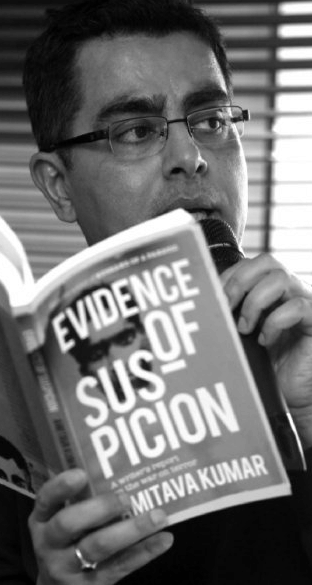
Amitava Kumar in The Caravan:

ScreenHunter_02 Jul. 30 20.42 On a warm July morning, I boarded the London Tube to Boston Manor station. The southbound Piccadilly Line, represented by a Navy Blue line on my map, would terminate at Heathrow airport. My stop came a few stations before the line ended.

The people I had come to meet were waiting outside in a car, and after introductions had been made, we drove to a store to buy meat and beer for lunch. The man who was driving was in his early 30s. He wore a stylish shirt and dark glasses. His name was Aryian Singh, but he later told me that this wasn’t what he had been named at birth. He had changed his name after he had come out of prison. When I questioned him about his job, he said he was working on a couple of film projects but didn’t provide details. I noticed that there were small scars on his face. I later learned that a couple of them were from injuries inflicted by his mother when he was a kid—once, his mother had smashed his face with a milk bottle.

The man whose face I was now watching in the rearview mirror interested me. His name change and the reason for it wasn’t what one has come to expect as a staple of Indian fiction about diasporic lives—Samiullah changing to Sam or a Madhu becoming Maddy, one pining for the neem tree outside his ancestral home and the other for her mother’s cardamom-scented fish curry. In those stories, particularly those written in the US, the only crime a human seems capable of is forgetting to write a letter home. Or if there are transgressions they seem to have blossomed out of a fantasy spun out in a garden called a creative writing MFA programme. But Aryian Singh’s story appeared to be different.

More here.

The Burqa and the Body Electric

Feisal G. Mohamed in the New York Times:

Burqaface2th In her post of July 11, “Veiled Threats?” and her subsequent response to readers, Martha Nussbaum considers the controversy over the legal status of the burqa — which continues to flare across Europe — making a case for freedom of religious expression. In these writings, Professor Nussbaum applies the argument of her 2008 book “Liberty of Conscience,” which praises the American approach to religious liberty of which Roger Williams, one of the founders of Rhode Island Colony, is an early champion.

Williams is an inspiring figure, indeed. Feeling firsthand the constraint of religious conformism in England and in Massachusetts Bay, he developed a uniquely broad position on religious toleration, one encompassing not only Protestants of all stripes, but Roman Catholics, Jews and Muslims. The state, in his view, can legitimately enforce only the second tablet of the Decalogue — those final five commandments covering murder, theft, and the like. All matters of worship covered by the first tablet must be left to the individual conscience.

Straightforward enough. But in the early years of Rhode Island, Williams faced quite a relevant challenge.

More here.