Wednesday Poem

Belongings

If my heart were a mud pie baking on a slate plate,
the ants regaling me with news of home—

You are coming. You are gone.
This way, this way. Follow along…

If my heart were a popsicle stick stuck to the white bin,
purply kissing the assertion that some things are past use.

If I were the forced rush of water
breaking into brightness.

If everything I once knew
tucked itself back into the book.

If the clocktick double-timed me.

If I were the dim of light-rimmed shades.

The hum of the mower too distant
to speak my name distinctly.

That yellow heat. That green endurance.

If my flower ripened to seed.

If the beetle's lace undressed me.

If the dark under the pillow kept its promises.

by Lisa King

The Muslims in the Middle

William Dalrymple in the New York Times:

17dalrymple-articleInline President Obama's eloquent endorsement on Friday of a planned Islamic cultural center near the World Trade Center, followed by his apparent retreat the next day, was just one of many paradoxes at the heart of the increasingly impassioned controversy.

We have seen the Anti-Defamation League, an organization dedicated to ending “unjust and unfair discrimination,” seek to discriminate against American Muslims. We have seen Newt Gingrich depict the organization behind the center — the Cordoba Initiative, which is dedicated to “improving Muslim-West relations” and interfaith dialogue — as a “deliberately insulting” and triumphalist force attempting to built a monument to Muslim victory near the site of the twin towers.

Most laughably, we have seen politicians like Rick Lazio, a Republican candidate for New York governor, question whether Imam Feisal Abdul Rauf, the principal figure behind the project, might have links to “radical organizations.”

The problem with such claims goes far beyond the fate of a mosque in downtown Manhattan. They show a dangerously inadequate understanding of the many divisions, complexities and nuances within the Islamic world — a failure that hugely hampers Western efforts to fight violent Islamic extremism and to reconcile Americans with peaceful adherents of the world’s second-largest religion.

More here.

Why are American writers so good at coming-of-age novels?

From The Guardian:

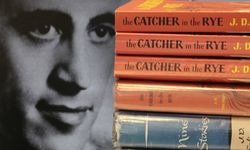
JD-Salingers-The-Catcher--001 I dearly love a good coming-of-age story. The genre's very existence implies that at some point In Real Life, all shy, scabby teenagers will grow into the boots of mature self-possession, developing skins thicker than silk pocket squares and generally drawing themselves up to their full heights. There's hope for me yet.

Lately, I've read several – some funny, some desperately sad, some both – of a very high standard. Repellently prodigious Simon Rich, already a writer for Saturday Night Live despite looking barely old enough to shave, recently produced a first novel, Elliot Allagash, the beginning of which made me laugh so much over breakfast that a mushroom fell off the end of my helplessly jigging fork into my coffee. The resultant scald didn't stop me wholeheartedly enjoying the adventures of Elliot, black-hearted adolescent puppet-master, and geeky narrator Seymour Herson, subject of his machinations. Wealthy beyond the dreams of Croesus' and Midas' love-child, Elliot offers to buy Seymour high-school popularity, basketball fame and the class presidency, and does so by labyrinthine and atrocious means, stomping on the deserving as he goes. It's not pure whimsy – Seymour eventually, and touchingly, wises up to the soul-corroding side-effects of Elliot's vendettas – rather, it's a fantastically ingenious and unique approach to the tale of a turning worm (empowered by a puff adder).

More here.

Attack of the ancient ‘zombie’ ants

From Nature:

News_2010_415_zombie_ant Researchers claim to have found the first evidence of 'zombie' ants in the fossil record. They have matched peculiar cuts on a 48-million-year-old fossil leaf with the 'death bites' made by modern ants infected by a fungal parasite. The research is published today in Biology Letters1. The leaf was part of a group of fossilized leaves and plants unearthed recently from the Messel Pit in Germany's Rhine Rift Valley — an area famous for the discovery, in 2009, of Ida, a well-preserved primate fossil touted as a human ancestor (see 'Reunion of fossil halves splits scientists'). Initially, the fossil plants and leaves did not raise much interest and they were stored for years at the Smithsonian Institution's National Museum of Natural History in Washington DC.

The idea of examining the fossil record for evidence of the distinctive bite marks came to David Hughes, a behavioural ecologist at Harvard University in Cambridge, Massachusetts, as he was sitting in on a palaeobotany undergraduate course. He had just returned from fieldwork in southern Thailand where he had been studying fungal parasites infecting carpenter ants and controlling their behaviour. “Could this parasitic relationship have evolved much earlier in Earth's history?” he asked himself. So Hughes talked to Conrad Labandeira, a palaeoecologist at the Smithsonian's National Museum of Natural History. It turned out that Labandeira had seen strange markings on a fossil leaf and had been puzzled by the specimen for years. “This was a serendipitous discovery when a project on modern insect ecology crossed paths with a long-running palaeontology programme on the Messel Shale,” says Labandeira.

More here.

Tuesday, August 17, 2010

I Never Went to Blanes

PazimageDiego Trelles Paz in n+1 (Ttranslated from the Spanish by Carolina De Robertis):

The first time I read Roberto Bolaño’s The Savage Detectives I was 22 years old. I lived in Lima on a miserable salary and the only thing I was doing with my life, other than getting drunk to the point of senselessness, was reading and writing, imitating and attempting, as well as throwing myself against the door each time my literary style proved to be nothing more than a pale and clumsy echo of the voices of writers who’d influenced me: a kind of polyphonic collage of Vargas Llosa with Ribeyro, Onetti with Puig.

Anagrama’s gray edition cost exactly 78 soles. I remember this clearly as it was the period in which I’d go to Quilca Avenue in Downtown Lima and literally submerge myself in a pile of Populibros and Comida Peruana manuals to salvage books by classical authors that cost no more than 8 soles. Thanks to Oveja Negra and Seix Barral, an underpaid and curious young man such as myself could, in Lima, read Céline and Faulkner and Carson McCullers and García Márquez for 40 soles.

So the mere idea of spending 78 soles on this anonymous Chilean’s fat novel not only seemed idiotic and insane, but also, in terms of physical health, would deprive me for a week of the inexpensive fare at the restaurant where I regularly ate. On the other hand, there were two powerful factors that complicated my decision. The first was the absolute devotion that The Savage Detectives had generated in a friend of mine, the only person in the world who introduced me to books and authors that seemed essential to my future as a writer. The second, without a doubt, was the fantastic title, so appealing and precise, so Welles and so Godard, which I immediately associated with Sam Peckinpah’s The Wild Bunch, translated into Spanish as La pandilla salvaje, which uses cowboys to speak of solidarity and codes of honor and friendship among delinquent friends.

In summary: I decided to buy it and devoured those 78 soles in a single day, and that didn’t matter one bit: I read it again and again, and talked about it and recommended it to others. I wrote a masters thesis about the novel and, in addition, went to Mexico in search of the diffuse shadow of a promiscuous female poet who resembled María Font.

What did I like about Bolaño’s novel?

In formal terms, it was clear to me that his prose, while apparently simple, has a restrained and suggestive lyricism and a powerful musicality that are very different than what the authors of the “Boom” produced.

Being There: Delhi

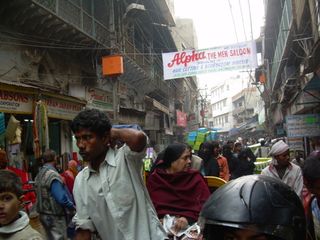
DelhileadSimon Cox in More Intelligent Life:

I first visited Delhi ten years ago, drawn not by the city but by one of its citizens. I had fallen in love with a Dilliwalli I met at university in America two years before. It was past time I saw her in her “native place”, as Indians put it.

We visited the usual tombs, markets, shrines and gardens, including the domed presidential palace on Raisina Hill that once housed the viceroy. Our trip coincided with a visit by the wives (they were all wives) of the British High Commission. They cooed and fussed, like previous owners checking up on the new landlords. One even looked for dust under the carpet. It was a relief to escape into the palace’s Mughal Gardens, where a tiny Dilliwalla peed on the lawn while his parents smiled helplessly.

Delhi can be grand, but it is rarely solemn. The people can be rude, but never cold. Earlier this year I returned to Raisina Hill to watch India’s military bands beat the retreat, overseen by members of the camel cavalry. After the last bugle was sounded and the last bagpipe squeezed, a switch was flicked, and Delhi’s imposing imperial buildings, strung with bulbs, lit up like a Christmas decoration.

Visitors to Delhi often see a faded glory, like a grand carpet collecting dust. The city is casually littered with history, much of it neglected or buried under the paraphernalia of the present. But Delhi’s past will surely be overshadowed by its future. There are three times as many Indians alive today as there were at Independence in 1947, and Delhi is home to over 16m of them. Over the next three decades India should begin to regain the economic clout it lost over three centuries. To visit Delhi in a mood of nostalgia, then, is to close your eyes to history in the making.

Human Rights in History

Samuel Moyn in The Nation:

A mere thirty-three years ago, on January 20, 1977, Jimmy Carter inaugurated his presidency by proclaiming from the Capitol steps, “Because we are free we can never be indifferent to the fate of freedom elsewhere…. Our commitment to human rights must be absolute.” Most people had never heard of “human rights.” Except for Franklin Delano Roosevelt in a couple of passing references, no president had really mentioned the concept, and it never had gained much traction around the world either. Carter's words sparked an intense debate at every level of government and society, and in political capitals across the Atlantic Ocean, about what it would entail to shape a foreign policy based on the principle of human rights.

The concept of rights, including natural rights, stretches back centuries, and “the rights of man” were a centerpiece of the age of democratic revolution. But those droits de l'homme et du citoyen meant something different from today's “human rights.” For most of modern history, rights have been part and parcel of battles over the meanings and entitlements of citizenship, and therefore have been dependent on national borders for their pursuit, achievement and protection. In the beginning, they were typically invoked by a people to found a nation-state of their own, not to police someone else's. They were a justification for state sovereignty, not a source of appeal to some authority—like international law—outside and above it.

In the United States, rights were also invoked to defend property, not simply to defend women, blacks and workers against discrimination and second-class citizenship. The New Deal assault on laissez-faire required an unstinting re-examination of the idea of natural rights, which had been closely associated with freedom of contract since the nineteenth century and routinely defended by the Supreme Court. By the 1970s, rights as a slogan for democratic revolution seemed less pressing, and few remembered the natural rights of property and contract that the New Deal had once been forced to challenge. Carter was free to invoke the concept of rights for purposes it had never before served. (Arthur Schlesinger Jr. once called on future historians to “trace the internal discussions…that culminated in the striking words of the inaugural address.” No one, however, yet knows exactly how they got there.)

The Downfall of India’s Kidney Kingpin

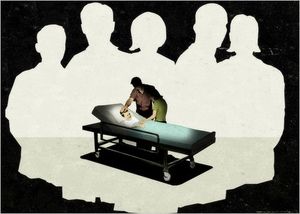
KidneyYudhijit Bhattacharjee in Discover:

Eleni Dagiasi flew from Athens to Delhi in January 2008 on a mission to save her life. With her husband, Leonidas, she took a taxi from the airport past sparkling multiplexes and office buildings to a guesthouse in the booming exurb of Gurgaon. A kitchen staff was on hand, the rooms had cable, and there was a recreation area with billiards, providing patients with creature comforts while kidney transplants were arranged. Over the next week, as her operation was scheduled, Dagiasi went to a makeshift hospital for dialysis. Then one night, while she was watching TV with her husband, a chef turned off the lights and urged everyone to leave. Shortly afterward, 10 policemen stormed in. “We were too stunned to react,” says Leonidas Dagiasis, a former fisherman who borrowed money from his employer to finance the trip. The couple and other guests were hauled off for questioning. The Gurgaon hospital, it turned out, was the hub of a thriving black market in kidneys. The organs were harvested from poor Indian workers, many of whom had been tricked or forced into selling the organ for as little as $300.

The mastermind, India’s Central Bureau of Investigation (CBI) charged, was Amit Kumar—a man who performed the surgeries with no more formal training than a degree in ayurveda, the ancient Indian system of medicine. In a career spanning two decades, Kumar had established one of the world’s largest kidney trafficking rings, with a supply chain that extended deep into the Indian countryside. Some of his clients were from India. Many came from Greece, Turkey, the Middle East, Canada, and the United States.

At parties in India and abroad, Kumar introduced himself as one of India’s foremost kidney surgeons, said Rajiv Dwivedi, a CBI investigator based in Delhi. The claim wasn’t entirely illegitimate: Investigators estimate that Kumar has performed hundreds of successful transplants, a practice so lucrative that he was able to finance Bollywood movies and had to fend off extortion threats from the Mumbai mafia. Two weeks after the police crackdown in Gurgaon, Kumar was arrested at a wildlife resort in Nepal and brought back to India, where he now awaits trial.

Kumar’s operation was a microcosm of the vast, shadowy underworld of transplant trafficking that extends from the favelas of São Paulo to the slums of Manila. The tentacles of the trade crisscross the globe, leaving no country untouched, not even the United States, as evidenced by the July 2009 arrest of a New York rabbi who has been charged with arranging illegal transplants in this country by bringing in poor Israelis to supply kidneys.

In defence of equality

From Prospect Magazine:

Spirit In our book The Spirit Level, Kate Pickett and I demonstrated that, first, many problems which are more prevalent lower down the social ladder are worse in societies with bigger income differences, and second, that almost everyone would benefit from reduced inequality. To some, however, these seem impossible notions. Writing in the August 2010 edition of Prospect, Matthew Sinclair from the Taxpayers Alliance claimed our research was “simply untrue.”

Sinclair believes he has spotted statistical sleights of hand that hundreds of fellow academics who reviewed our research papers for numerous journals have failed to detect. Decades of peer-reviewed epidemiological research, funded by research councils have, he imagines, been torn to shreds by Christopher Snowdon—author of The Spirit Level Delusion. While Snowdon is described as a “public health researcher,” in actual fact he has no public health qualifications and appears never to have published research in a peer-reviewed journal. Instead, his main contribution to public health is a diatribe against tobacco control and a denial of the ill effects of second-hand smoke.

More here.

Coping With Crises Close to Someone Else’s Heart

From The New York Times:

Pix Over the last few years, my family has weathered our share of crises. First our younger daughter was hospitalized for a week with Kawasaki disease, a rare condition in children that involves inflammation of the blood vessels, and spent several months convalescing at home. Soon after she recovered, our older daughter landed in the hospital with anorexia, which proved to be the start of a yearlong fight for her life. Somewhere in the middle of that process, my mother-in-law was given a diagnosis of advanced lung cancer, and died less than 11 months later. So we’ve had plenty of opportunities to observe not only how we dealt with trauma but how our friends, family and community did, too. For the most part, we were blessed with support and love; friends ran errands for us, delivered meals, sat in hospital waiting rooms, walked, talked and cried with us.

But a couple of friends disappeared entirely.

More here.

all glass and rubber?

8971-004-4ACCFE59

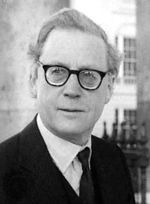
Seven years after his death, Hugh Trevor-Roper’s reputation is still a cauldron of discord. He would have enjoyed that. Steaming in the mix are the resentments of those he expertly wounded, the awe of colleagues at the breadth and depth of his learning, dismay at his serial failures to complete a full-length work of history, delight in the Gibbonian wit and elegance of his writing and – still a major ingredient – Schadenfreude over his awful humiliation in the matter of the Hitler diaries. In his lifetime, nobody was sure how to take him. Those who supposed they had his measure soon found that they were wrong. The fogeyish camorra who ran Peterhouse in the 1980s chose him as master because they assumed he was a semi-Fascist ultra like themselves. But, as the Cambridge historian Michael Postan put it, ‘They are such fools: they thought they were electing a Tory and never realised that they were electing a Whig.’ Mrs Thatcher imagined that the scholar who had written The Last Days of Hitler would share her hostility to a reunified Germany. But at the infamous Chequers meeting on Germany in 1990, Trevor-Roper faced her down and tore her arguments to pieces.

more from Neal Ascherson at the LRB here.

evil churchill

HARI-articleLarge

Winston Churchill is remembered for leading Britain through her finest hour — but what if he also led the country through her most shameful one? What if, in addition to rousing a nation to save the world from the Nazis, he fought for a raw white supremacy and a concentration camp network of his own? This question burns through Richard Toye’s superb, unsettling new history, “Churchill’s Empire” — and is even seeping into the Oval Office. George W. Bush left a big growling bust of Churchill near his desk in the White House, in an attempt to associate himself with Churchill’s heroic stand against fascism. Barack Obama had it returned to Britain. It’s not hard to guess why: his Kenyan grandfather, Hussein Onyango Obama, was imprisoned without trial for two years and tortured on Churchill’s watch, for resisting Churchill’s empire. Can these clashing Churchills be reconciled? Do we live, at the same time, in the world he helped to save and the world he helped to trash? Toye, one of Britain’s smartest young historians, has tried to pick through these questions dispassionately. Churchill was born in 1874 into a Britain that was coloring the map imperial pink, at the cost of washing distant nations blood-red. He was told a simple story: the superior white man was conquering the primitive dark-skinned natives, and bringing them the benefits of civilization.

more from Johann Hari at the NYT here. (h/t Ruchira)

slow reading

Slow-reading-006

If you’re reading this article in print, chances are you’ll only get through half of what I’ve written. And if you’re reading this online, you might not even finish a fifth. At least, those are the two verdicts from a pair of recent research projects – respectively, the Poynter Institute’s Eyetrack survey, and analysis by Jakob Nielsen – which both suggest that many of us no longer have the concentration to read articles through to their conclusion. The problem doesn’t just stop there: academics report that we are becoming less attentive book-readers, too. Bath Spa University lecturer Greg Garrard recently revealed that he has had to shorten his students’ reading list, while Keith Thomas, an Oxford historian, has written that he is bemused by junior colleagues who analyse sources with a search engine, instead of reading them in their entirety. So are we getting stupider? Is that what this is about? Sort of.

more from Patrick Kingsley at The Guardian here.

Monday, August 16, 2010

perceptions

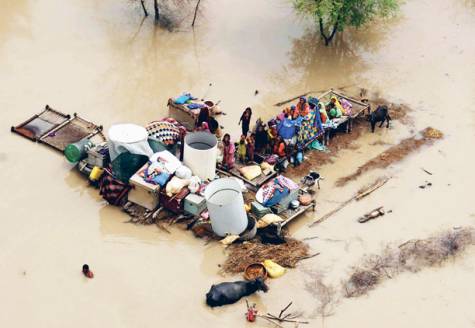
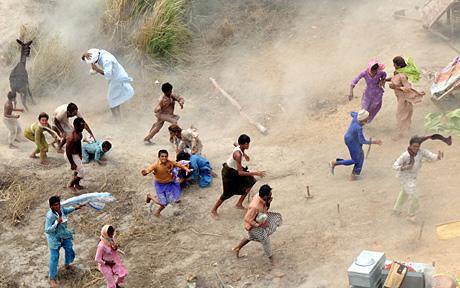
Pannu Aqil, sindh province

Disastrous flooding in Pakistan. Pannu Aqil, Sindh Province.

Aerial view taken from army helicopter distributing food.

Jet stream
Effects of jet stream contributing to the flooding.

More here, here, and here.

“… the United Nations rated the floods in Pakistan as the greatest humanitarian crisis in recent history with more people affected than the South-East Asian tsunami and the recent earthquakes in Kashmir and Haiti combined.”

Please help however you can here and here.

Sunday, August 15, 2010

Health Care, Uncertainty and Morality

Uwe E. Reinhardt discusses Kenneth Arrow's thoughts on the health care market, over at the NYT's Economix:

In last week’s post I discussed Kenneth Arrow’s exploration of whether special characteristics set health care apart from other commodities — whether it had a “moral dimension.” The post generated a lively set of commentaries.

Professor Arrow, a Nobel laureate, explored in the early 1960s what the characteristics would be of a perfectly competitive market for an ordinary commodity, how the medical care industry deviated from those characteristics and what aspects of health care might explain these deviations.

He concluded that virtually all the special features of the medical care industry — the role of nonprofit institutions; the expectation that physicians, although vendors of medical services, would always put the interests of their patients above their own self-interest; professional licensing and many other forms of government regulation — could “be explained as social adaptations to the existence of uncertainty in the incidence of disease and in the efficacy of treatment.”

This uncertainty has several aspects.

First, physicians may not agree on the medical condition causing the symptoms the patient presents.

Second, even if physicians agree in their diagnoses, they often do not agree on the efficacy of alternative responses — for example, surgery or medical management for lower-back pain.

Third, information on both the diagnosis of and the likely consequences of treatment are asymmetrically allocated between the sell-side (providers) and the buy-side (patients) of the health care market. The very reason that patients seek advice and treatment from physicians in the first place is that they expect physicians to have vastly superior knowledge about the proper diagnosis and efficacy of treatment. That makes the market for medical care deviate significantly from the benchmark of perfect competition, in which buyers and sellers would be equally well informed.

Plagiarism is a Big Moral Deal

The_Cake_is_a_Lie Lindsay Beyerstein over at Focal Point responds to Stanley Fish:

Stanley Fish argues that plagiarism is not a “big moral deal” because the taboo against passing off someone else's work as your own is just an arbitrary disciplinary convention.

Fish asserts that “the rule that you not use words that were first uttered or written by another without due attribution is less like the rule against stealing, which is at least culturally universal, than it is like the rules of golf.”

Let's concede this point for the sake of argument. The rules of golf are morally neutral. There's nothing inherently virtuous about playing the ball where it lies, that's just what the rule-makers decided would make for the best game. Many of the rules of golf could be rewritten with no moral consequences. There's nothing morally special about 18 holes vs. 19 holes.

However, even within golf, some rule changes would be morally loaded. You couldn't add a morally neutral human sacrifice rule. Rule changes that unfairly disadvantaged certain players would also be a moral issue. The controversy might not get much play outside the golfing world, but it would still be moral principles at stake.

Once you accept a set of rules for golf and start playing with other people who agree to those rules, deliberately breaking the rules to gain an advantage is cheating. Like stealing, cheating is universally frowned upon.

Adam Smith

41SurNdXiWL._SL500_AA300_ Iain McLean reviews Nicholas Phillipson's Adam Smith: An Enlightened Life, in the FT:

The Scottish Enlightenment remains extraordinary. A nation of a million souls that had known starvation, theocracy, and civil war in living memory, produced from 1730 onwards a constellation of intellectual stars, of whom two – the close friends David Hume and Adam Smith – are among the greatest minds of modern times. Eighteenth-century Scotland had four (briefly five) universities, albeit tiny, to England’s two. Thought was freer than in Oxford, which Smith hated after his time at Balliol between 1740 and 1746. Scottish schools were also said to be better than England’s (though this claim is more dubious).

Edinburgh historian Nicholas Phillipson has been studying this explosion of genius all his life, and is a trustworthy guide to the life of Adam Smith.

But there is a problem. Smith was remarkably quiet and cautious. On his deathbed, he asked two friends to burn almost all his manuscripts. They did. Just over 300 letters to or from him survive.

By his own account a “slow, a very slow workman”, he published only two full-length books: the Theory of Moral Sentiments in 1759 and The Wealth of Nations in 1776. He comes to life only at a few dramatic moments, especially in 1776. In that year Hume died. Smith’s brave eulogy showed that an atheist could live and die as nobly as a Christian.

But, less bravely, Smith refused to publish his friend’s Dialogues on Natural Religion, in spite of Hume’s deathbed request.

Why did the author of TheTheory of Moral Sentiments, which derives its morality from what would seem right to an impartial spectator, refuse his best friend’s deathbed request?

Basil Davidson: Africa Salutes You

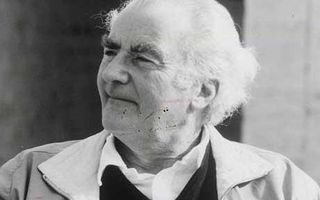
Davidson_1681957c I missed the death of Basil Davidson last month. Theo-Ben Gurirab in New Era:

I write this belated obituary to remember Basil Davidson. Basil David-son died on July 09, 2010. Regrettably I only discovered the sad news reading newspapers on the plane coming home on July 22, 2010.

In his obituary, Ca-meron Duodu, who understands and writes in English language better than the natives, said this about Basil Davidson: “The written history of Africa may be divided into two main schools of thought, ‘Before Basil Davidson and After Basil Davidson’.” For me that very much sums up the life, times and contributions of Basil Davidson concerning Africa and its stellar place in human civilisation.

The truth and honesty always know best at the end of the day. Basil Davidson understood that. He wanted human footprints and memories of antiquity to remain open to the succeeding generations of the whole world. By the time sanity crops up, irreparable damage in the form of death, destruction and darkness becomes overwhelming putting our common humanity asunder.

This year, on February 26, 2010, Africa remembered the infamous Berlin Conference for the Scramble of Africa convened by the German Chancellor von Bismarck in 1884-1885. That was 125 years ago. Namibia became a German colony. The first genocide of the 20th century actually took place here in Namibia and not in Europe!

Between 70 and 100 million Africans died, dispossessed or were exiled as slaves to the Americas. Colonisation of Africa left horrendous legacies of dehumanisation and untold injustices that continue to retard Africa’s industrialisation. That fact also buried the social progress and humanism Europeans found as invaders in Africa.

To add insult to injury and worst of it all, British historian Hugh Trevor Roper would still say in 1963 that “perhaps in the future, there will be some African history to teach. But at present there is none.”

Another British citizen, Basil Davidson, knew better not only the negative impact of the racist Berlin Conference, but the nature of the pre-meditated lies to cover up the heinous crimes committed in Africa and those that negatively affected the African Diaspora. We know the truth.