Debt and America’s Decline

Pa3461c_thumb3Mario Margiocco in Project Syndicate:

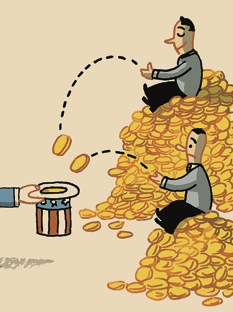
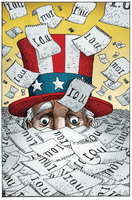
Italians and other Europeans have serious problems addressing their own national debts, public and private, so it may seem immodest for a European to discuss America’s growing and grave debt problem. But the fiscal realities on both sides of the Atlantic nowadays are very similar, and only lingering trust in the promise of America keeps alive the expectation among some Europeans that some grand American coup de théâtre will resolve the country’s dire debt situation.

Of course, many Americans recognize the scale of the country’s debt burden. Admiral Mike Mullen, Chairman of the Joint Chiefs of Staff and thus America’s highest ranking military officer, recently said, “The greatest danger to American security comes from the national debt.” Four Americans out of ten agree with him, whereas less than three in ten deem terrorism or Iran more dangerous.

America’s Great Power status has always been tied to its level of debt. Indeed, it was the absence of debt that marked the United States’ emergence as a world power between 1914 and 1917. The US went from owing $3 billion (mostly to Great Britain) to being a net creditor for about the same amount, thanks to $6 billion in war credits given to the Western Allies. A further $3 billion in credits for European post-war reconstruction cemented America’s status as the world’s premier creditor nation, with its surplus equal to roughly 8% of GNP at the time.

This shift meant that the US had essentially replaced Britain as the heart of the world’s financial and monetary system. Previously, thanks to the gold standard and Britain’s political stability, the City of London had been the world’s key source of capital and financial guarantees for more than a century.


Monster Movement

ID_NC_MEIS_FROG_AP_001 Morgan Meis in The Smart Set:

I came across the frog rabbit in the basement of the Petit Palais in Paris. A medium-sized plaster sculpture, the frog rabbit is a hairless beast with a pointy reptilian nose, rabbit ears, long talon-like toes, and a stubby rabbit tail with no fur. He is a monster, though it is unclear whether he bodes something evil or merely something strange.

Jean Carriès sculpted “The Frog with Rabbit Ears” in 1891, a couple of years before he met an early death at the hands of an obscure lung ailment the likes of which regularly robbed the world of starving young artists in those days. It was, after all, the fashion: a little art and then a terrible death. It is particularly unfortunate that Carriès wasn't given a few more years. He was hard at work on his unfinished masterpiece, “Monumental Door.” When finished, it would have been a giant door sculpted with endless grotesque faces and misshapen figures. Looking at the fragments Carriès completed before his death, we can be sure that the door would have been magnificent, a testament to Jean Carriès' dark vision and extraordinary craftsmanship.

Instead, Jean Carriès died and his art was largely forgotten. Looking back at the art of Carriès today is a reminder that the movement we now call Art Nouveau (Jugendstil in the German world) was diverse. Art Nouveau is often described, and not unjustly, as a movement that tried to bring organic form back to the plastic arts. This was most obvious and startling, perhaps, in architecture and design, where the hard lines and sharp angles of building materials such as iron and concrete were made to bend and flow like plants.

The Great American Tradition of Questions

From PakStudyLibrary:

Mir%20Ibrahim%20Rahman Mir Ibrahim Rahman has joined the distinguished ranks of alumni awarded the Robert F Kennedy Public Service Award from Harvard University, one of the top centres of learning in the world. Mir is the first Muslim and only the second individual from South Asia to have received this Award. Twenty-nine-year old Mir Ibrahim Rahman is the grandson of the late Mir Khalil-ur-Rahman, the founder of the Jang and Geo Groups, the nephew of Group Chairman, Jang Group Mir Javed Rahman, and the son of Group Chief Executive and Editor-in-Chief, Jang and Geo Group Mir Shakil-ur-Rahman.

Professor of Business Ethics at Babson College James Hoopes, who was Mir Ibrahim’s tutor, said that his former student’s address at the Harvard graduation ceremony was not only an honour but was also one of the best speeches he had heard on the occasion. “He was able to capture the spirit of the current global confusion in a manner that the world needs to hear. In my 40-year career, Ibrahim is the student I feel the proudest about. I believe he possesses a unique combination of practical leadership qualities, intellectual profundity and ideological depth.” He added that his relationship with Mir Ibrahim has now reached a point where “not only do I teach him but I also learn from him. I intend to write a book on leadership in the next few years and if Ibrahim permits me, I would like to mention him in my book so that others too can learn from him.”

Here is the brilliant speech:

So today as I stand here before you… I have some questions my grandfather would have wanted me to ask.

I am not advocating that Iran should have the right to nuclear weapons but I am asking why isn’t there a debate. Why a place like Harvard can hold a debate in the middle of the Forum on Iran, without a proper Iranian point of view presented?

I am not saying that Israel, as well as Islamic dictatorships and illegitimate rulers for that matter, should not be out rightly supported by the US, but I am asking why there is no debate about the measure of that support and the costs of that support to the US and to the World.

At times I feel that due to political correctness/politeness, and not just ideology, America avoid many real political issues.

I am curious why US mainstream media portrays Socialism as a bad word – as bad as communism? I am not saying the US, like all industrialized nations, should provide healthcare to its citizens, but I am asking why the difference between socialism and communism isn’t debated by the media?

I am not saying the US should not spend $3 trillion in the Iraq/Afghanistan wars or that its annual military annual budget should not be more than the entire world combined, but why isn’t there proper national debate about what is the return on investment?

I am not asking the country which has the highest rate of lawsuits per capita, and that believes in its accountability system, why it isn’t suing those responsible for an illegal war against Iraq, leading to millions of deaths, but I am asking why isn’t this issue being debated at least?

I am not saying that ‘Joe the plumber’ should know about every corner of the world better than he does his 1992 world series baseball statistics but I am wondering whose interest it is serving for the average American to be one of the most ill informed world citizens in this age of globalization.

I am not saying that the American political system is no longer the ideal representative system to balance efficiency with fairness, but should you not debate how effective a representative system can be where its average congressman just to get re-elected has to raise between $10,000-30,000… a week! (and where 95% of congressmen are re-elected!)

I am not saying that DC should not have 40,000+ lobbyist spending 4 billion dollars a year, but why isn’t there a debate whether one of the reason you don’t see as much corruption in American politics compared to other country’s is because you have legalized corruption/bribery – aka as lobbying. (some preliminary research shows that up to 70% of discretionary budget is linked to lobbyists!)

Read the full transcript here.

Jonathan Franzen picks up the torch for US literary tradition

From The Guardian:

Jonathan-Franzen-005 Last week an event took place that hasn't occurred since 2000: a living author appeared on the cover of Time magazine. The recipient of this accolade was novelist Jonathan Franzen, best known – until now – for his multi-generational epic about a midwestern family, The Corrections, which came out in the week of 9/11 and was one of the most talked about (and bestselling) novels of the last decade.

It has taken Franzen nine years to complete his follow-up, Freedom, which is about to be published in the US. (It doesn't hit UK bookshops until late September.) Understandably, Franzen hasn't significantly departed from the template that served him so well last time. The novel is another multi-generational epic that microscopically examines the tensions within an outwardly successful but inwardly unhappy midwestern family. There are striking plot similarities: both books feature get-rich-quick schemes and copious extra-marital affairs. It has been suggested, in fact, that the main difference between the two is that, while the family in The Corrections had three children, the family at the centre of Freedom – the Berglunds – have just two. Time's decision to make Franzen its cover star is intriguing, for reasons both obvious and less straightforward. Ever since The Corrections appeared, Franzen, who is 50, has been regarded as one of America's most important novelists, a leading member of the generation down from the “old guard” of Philip Roth, Saul Bellow and John Updike that dominated US fiction from the 1950s until at least 2000. The appearance of a new novel by him, especially after such a long absence, is a major literary event, which it is appropriate for Time to honour.

More here.

Thursday, August 19, 2010

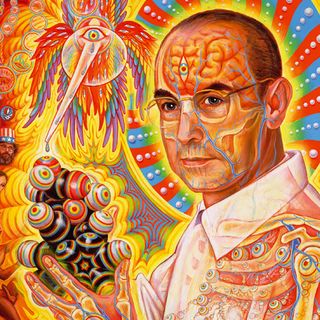
Two New Scientific Studies Reveal Hallucinogens Are Good for Your Mental Health

500x_lsdhoffmanAnnalee Newitz in io9:

LSD and ketamine, two powerful hallucinogens, are also potential cures for depression, OCD, and anxiety. Two studies published this week, in Science and Nature, confirm that hallucinogenic drugs stimulate healthy brain activity, even promoting the growth of neurons.

Ketamine and depression

The study in Science, released today, focused entirely on the drug ketamine. Used frequently as an animal sedative, ketamine can also be used to sedate humans and is also taken recreationally because of its hallucinogenic and euphoric effects. Molecular psychiatrist Nanxin Li and colleagues dosed rats with modest amounts of ketamine, and observed that the drug boosted signaling between neurons in the brain, and even led to healthy growth of synapses. (Chronic depression can be linked to inhibited synaptic growth.) Ultimately, they concluded that ketamine might be useful in treating depression because it increases brain activity instantly – so there is no need to wait weeks or months for the drug to take effect.

LSD and OCD

In the journal Nature Reviews Neuroscience, Franz X. Vollenweider and Michael Kometer gave a broad overview of research into hallucinogens over the past half century. They gathered together research from hundreds of studies on how hallucinogens like LSD, psilocybin, and ketamine affect the brains of healthy people – as well as people suffering from depression and other disorders.

Last Chance for Pakistan

AP10081108447_jpg_470x427_q85 Ahmed Rashid in the NYRB blog:

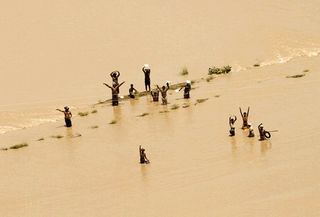
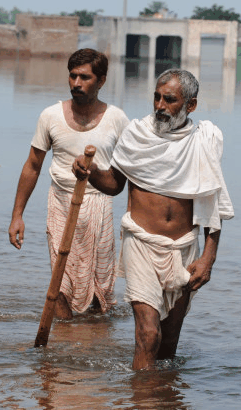
Though it has received only moderate attention in the western press, the torrential flooding of large swaths of Pakistan since late July may be the most catastrophic natural disaster to strike the country in half a century. But even greater than the human cost of this devastating event are the security challenges it poses. Coming at a time of widespread unrest, growing Taliban extremism, and increasingly shaky civilian government, the floods could lead to the gravest security crisis the country—and the region—has faced. Unless the international community takes immediate action to provide major emergency aid and support, the country risks turning into what until now has remained only a grim, but remote possibility—a failed state with nuclear weapons.

Since the upper reaches of the Indus and other rivers in Northern Pakistan first flooded their banks over three weeks ago, the floods have spread to many other parts of the country, submerging dozens of villages, killing thousands, uprooting some 20 million people, and leaving millions of poor children and infants at terrible risk of exposure to water-borne diseases. But the next few months could be even worse, as the collapse of governance and growing desperation of flooded areas leads to increasing social and ethnic tensions, terrible food shortages, and the threat that large parts of the country, now cut off from Islamabad, will be taken over by the Pakistani Taliban and other extremist groups.

A key part of the security problem lies in the already precarious situation of the regions most affected. The floods and heavy rain have caused the worst damage in the poorest and least literate areas of the country where extremists and separatist movements thrive: this includes the northern region, near Afghanistan, but also parts of Balochistan and Sindh provinces in the south. By contrast, central Punjab, the country’s richest region, with incomes and literacy about double that of other parts of the country, has been relatively unscathed by the disaster. The longstanding resentment by ethnic groups in the smaller provinces against Punjab is thus likely to increase.

Soak The Very, Very Rich

James Surowiecki in The New Yorker:

100816_r19912_p233 The fight on Capitol Hill over whether to extend the Bush tax cuts is about many things: deficit reduction, economic stimulus, supply-side ideology. But at its core is a simple question: who counts as rich? The Obama Administration’s answer is that you’re rich if you make more than two hundred thousand dollars a year as an individual or two hundred and fifty thousand dollars a year as a household, and therefore you should have your taxes raised. Conservatives suggest that this threshold is far too low, and argue that Obama would be taxing mostly small-business owners, or the people a Fox News host has referred to as “the so-called rich,” rather than fat plutocrats. You might think this isn’t really much of a debate. An annual income of two hundred and fifty thousand dollars puts you in the top three per cent of American households, and is more than four times the national median. You’re rich, and a small tax increase isn’t going to rock your world.

Good luck convincing people of this, though.

More here.

Scott Atran – For Friends and Faith

From Salman Hameed's blog, Irtiqa:

Scott Atran was our Science & Religion Lecture Series speaker at Hampshire College on March 25th. His topic looked at political, religious, and social motivations for violence. In particular, he looked at motivations of suicide bombers and the conflict in the Middle East. If you want to know how terrorism cells are formed, check out his long and detailed description of the group that was responsible for the terrible 2004 Madrid train bombings (you have to be patient to get all the details). This is all the more relevant when we are all trying to understand the transformation of Faisal Shahzad, a seemingly well-settled immigrant from Pakistan, into the Time Square bomber. This is a thought-provoking talk even if you end up disagreeing with his conclusions. Here is the video of his talk For Friends and Faith: Understanding the Paths and Barriers to Political Violence (video of Q&A and abstract for his talk is below). Enjoy!

And here is the Q & A:

The Ground Zero Mosque’s Missing Muslims

Amitava Kumar in Vanity Fair:

ScreenHunter_03 Aug. 19 18.48 A few weeks after the attacks of September 11, I was sitting one night in a car on a street in Lahore. I was waiting to be contacted by a member of a jihadi group that, not long afterward would go on to murder the Wall Street Journal reporter Daniel Pearl. Outside, a row of bright lights lit up the stalls of flower-sellers. The driver of the car, Qasim, a slight man with a thin mustache, turned to ask me where I lived. On hearing my answer, he said, “The Americans are the true Muslims.” I didn’t understand this. He said, “They have read and really understood the message of the Qu’ran.” This was even more baffling. But Qasim went on to explain his point. He said, “The Americans treat their workers in the right way. They pay them overtime.”

Ah, overtime! Fair wages, just working conditions, true democracy. Where in this debate about the construction of a mosque in New York City, in the contrary assertions about militancy and peace, is there any evidence of Qasim’s plain sense of his religion and his appreciation for the American people?

Where, in other words, is common sense?

We were first told in the press that the mosque was going to be built on Ground Zero. Then we learned that it was actually more than two blocks away. It was clarified that it wasn’t even going to be simply a mosque, nor would its membership be limited to Muslims. In fact, the building was going to house a community center with a basketball court and a culinary school. Accuracy and truth lay buried deep under the routine invocations of hallowed ground.

What does this “hallowed ground” really look like?

More here.

A Lifetime, Washed Away

Daniyal Mueenuddin in The New York Times:

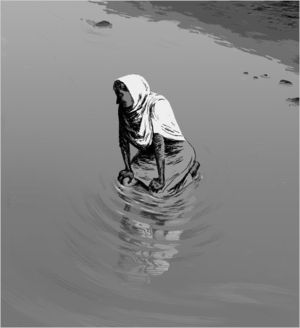
Flood I found most pitiful a family gathered around a prostrate brown-and-white brindled cow. The father told me that the cow had been lost in the water for four days, and the previous night it had clambered up on another section of the levee, a mile away. The people of this area recognize their cattle as easily as you or I recognize a cousin or neighbor — they sleep with their animals around them at night, and graze them all day; their animals are born and die near them. Someone passing by told the family that their cow had been found, and the father went and got it and led it to their little encampment.

In the early morning the cow had collapsed, and I could see it would soon be dead. Its eyes were beginning to dull, as the owner squatted next to it, sprinkling water into its mouth, as if it were possible to revive it. Its legs were swollen from standing in water, and its chest and torso were covered with deep cuts and scrapes, sheets of raw flesh where branches rushing past must have hit it. The rest of the family sat nearby on a string bed, resigned, waiting for the end. This was their wealth, but when it died they would tip it into the water and let it float away to the south. Through the past few days they had seen it all, houses collapsed, trees uprooted, grain spoiled, and this was just one more blow. Driving back to my farm, which has (so far) been spared from the flood, an image of the cow’s ordeal kept coming to me: splashing through the flood for hours and hours, at dusk or in the blank overcast night, with nothing around it but a vast expanse of water stretching away, an image of perfect loneliness. It must have found high ground, waited there as the water rose, then set off again, driven by hunger. In the immensity of the unfolding tragedy, this littler one, this moment of its death, seemed comprehensible to me, significant.

It is difficult to convey the scope of what was lost by those who had labored with ax and shovel to bring this land under cultivation. Fifty years ago, the area was all savanna, waving fields of reeds and elephant grass running for a thousand miles on both sides of the river. As a boy, I hunted there for partridge, walking among a line of beaters, the tall grasses so dense that I was invisible to the next man only 10 feet away. This was wild country.

More here.

Thursday Poem

The Life Cycle of the Common Man
………………………………….

Roughly figured, this man of moderate habits,
This average consumer of the middle class,
Consumed in the course of his average life span
Just under half a million cigarettes,
Four thousand fifths of gin and about
A quarter as much vermouth; he drank
Maybe a hundred thousand cups of coffee,
And counting his parents’ share it cost
Something like half a million dollars
To put him through life. How many beasts
Died to provide him with meat, belt and shoes
Cannot be certainly said.
………………………………..But anyhow,
It is in this way that a man travels through time,
Leaving behind him a lengthening trail
Of empty bottles and bones, of broken shoes,
Frayed collars and worn out or outgrown
Diapers and dinnerjackets, silk ties and slickers.
……………………………………

Read more »

Why do we yawn, and why is yawning contagious

From Seed:

Yawningdurg_HL Everyone knows yawning is contagious. If you yawn, someone else will probably yawn shortly thereafter. As I did the research for this column, I noticed that nearly every article about yawning pointed out that just reading the article itself could make you yawn. Even your dog will yawn if it sees you yawning. That last observation has been confirmed scientifically, in an elegant experiment discussed last week by psychology graduate student Jason Goldman. Ramiro Joly-Mascheroni, Atsushi Senju, and Alex Shepherd had an experimenter visit dogs in their homes and yawn as the dogs looked on. In 21 of the 29 dogs tested, the dog yawned after seeing the human yawn. In a control condition, the experimenter made a yawning motion with his mouth but didn’t make other yawning gestures and sounds. Under these circumstances none of the dogs yawned. The research was published in Biology Letters. Goldman points out that yawning has been observed in many species of vertebrates, including dogs, cats, chimpanzees, and birds. But why do we yawn? Does it serve any real purpose (besides, perhaps, subtly hinting to a conference presenter that his or her allotted speaking time has elapsed)?

The biologist who blogs as “Grrlscientist” points to a pair of studies that seem to support one explanation: Yawns help cool the brain. Andrew Gallup, who led both studies, says the brain is more efficient when cooler, so if yawns allow us to cool our brains, then they may allow us to think more clearly. In one study, researchers had humans hold either cold towels or warm towels to their foreheads: people yawned more frequently when exposed to the warm towels. In the second study, budgerigars (parakeets) were observed in environments of varying temperatures. When the temperature was warmer, the budgerigars yawned more frequently, suggesting they might be using yawns to cool off. At extremely high temperatures, yawning again decreased, perhaps because yawns don’t help when the temperature is too warm.

More here.

Cheatin’ Hearts Get Stuck With the Kids

From Science:

Sn-birds Why cooperate when you can be selfish? Many animal behaviors are self-centered and apparently evolved to pass on an individual's genes to future generations. Yet cooperative breeding, in which some members of a group help others to raise their young, has evolved independently many times, especially in birds and insects. A new study of birds concludes that parents get more help when they are sexually faithful to each other. Cooperation has been called an evolutionary paradox, and cooperative breeding is relatively rare, with members of only 3% to 10% of bird species helping to raise one another's young. Among the apes, only humans are cooperative breeders, although monkeys such as marmosets and tamarins do it, too.

In the 1960s, British biologist William Hamilton proposed that natural selection could favor cooperation if individuals pass on their own genes by helping relatives raise offspring. But Hamilton argued that cooperation can arise only if such helpers are closely related to recipients and if the benefits outweigh the costs. Over the past few years, Jacobus Boomsma, an evolutionary biologist at the University of Copenhagen, has argued that strict monogamous behavior, such as an ant queen mating for life, spurred the evolution of cooperative breeding in some social insects. Monogamy helps fulfill Hamilton's conditions, because all siblings are equally related to each other and to each parent. Promiscuity, on the other hand, leads to many half-siblings and lowers the relatedness of individuals in a group.

More here.

Wednesday, August 18, 2010

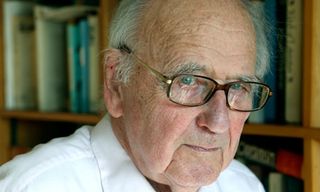
Frank Kermode, 1919-2010

Frank-Kermode-006Alison Flood in the Guardian:

Widely acclaimed as Britain’s foremost literary critic, Sir Frank Kermode died yesterday in Cambridge at the age of 90.

The London Review of Books, for which the critic and scholar wrote more than 200 pieces, announced his death this morning. Kermode inspired the founding of the magazine in 1979, after writing an article in the Observer calling for a new literary magazine.

Prominent in literary criticism since the 1950s, Kermode held “virtually every endowed chair worth having in the British Isles”, according to his former colleague John Sutherland, from King Edward VII professor of English literature at Cambridge to Lord Northcliffe professor of modern English literature at University College London and professor of poetry at Harvard, along with honorary doctorates from universities around the world. He was knighted in 1991, the first literary critic to be so honoured since William Empson.

A renowned Shakespearean, publishing Shakespeare’s Language in 2001, Kermode’s books range from works on Spenser and Donne and the memoir Not Entitled to last year’s Concerning EM Forster.

His publisher, Alan Samson, at Weidenfeld & Nicolson said Kermode would probably be most remembered for The Sense of An Ending, his collection of lectures on the relationship of fiction to concepts of apocalyptic chaos and crisis, first published in 1967, as well as for Romantic Image, a study of the Romantic movement up until WB Yeats.

Samson published Kermode’s most recent book, Concerning EM Forster, last year. Forster, who also died aged 90, gave the Clark lectures at Cambridge in 1927, which led to his seminal book of literary criticism, Aspects of the Novel. Kermode delivered the Clark lectures 80 years later, in 2007, and worked with Samson to turn them into a book. The pair had been discussing a further title, about TS Eliot, following a lecture Kermode gave at the British library, but “now this will never happen, sadly”, said Samson.

[H/t: David Schneider]

F&*@ing Old

Simon Critchley and Jamieson Webster in The Incongruous Quarterly (via bookforum):

Nearly 500 years later [after Juan Ponce de Leon searched for the fountain of youth], hundreds upon hundreds of thousands of aging Americans scamper like lemmings to seek eternal youth in Florida. Nowhere expresses this quest better than The Villages retirement community in Lady Lake. We went there by chance recently on the way back from a disastrous canoeing trip with family. Perhaps that trip was the first sign of things to come – what you haven’t mastered should be left alone, particularly with respect to nature.

The Villages was designed by the same people who themed Universal Studios, in nearby Orlando. One can only marvel at the artifice: a virtual geriatric theme park. Ironically, invoking the de Leon heritage, you enter through Spanish colonial fake stucco gates with painted-on signs of aging – cracks, cement weathering, evidence of brick beneath the plaster, and spray-on rust for the replica cannons and cannon balls. It is a strange, childless world of vibrant seniors where visitors younger than 19 can only stay for a maximum of 30 days a year. The Fountain of Youth, it seems, can only be quaffed by eliminating all traces of the young. Walking around The Villages one realizes that the price of paradise is a perverse withdrawal from the world.

Now, rural Central Florida is a rather inhospitable, unforgiving environment, something we encountered on our little excursion – a swamp of slow-moving rivers banked by seemingly ancient Cyprus trees and an alligator every cubic meter of water. After miles and miles of country road, The Villages arises out of this backwater like a beacon of strip-mall light, replete with every modern convenience. With 40,000 homes, 70,000 residents – expected to pass 100,000 before long, 34 golf courses, 9 country clubs, 2 Disneyesque downtown squares replete with bars, restaurants, shopping, movie theaters, and, of course, many, many real estate offices, The Villages appears to be the epicenter of a new way for old living.

Our family had visited an old friend there recently, a woman in her 60s who had moved to The Villages from south Miami and couldn’t be happier. Why? After a lifetime of failing at the singles scene, winding up alone in her 50s with three cats and an administrative job at a university, she retired to The Villages and found herself with a date almost every other night.

Militants Overtake India as Top Threat, Says Pakistan’s ISI

OB-JP181_0816pa_F_20100816170933 Tom Wright and Siobhan Gorman in the WSJ:

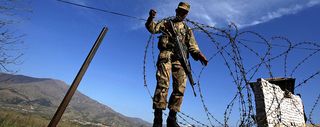
Pakistan's main spy agency says homegrown Islamist militants have overtaken the Indian army as the greatest threat to national security, a finding with potential ramifications for relations between the two rival South Asian nations and for the U.S.-led war in Afghanistan.

A recent internal assessment of security by the Inter-Services Intelligence, Pakistan's powerful military spy agency, determined that for the first time in 63 years it expects a majority of threats to come from Islamist militants, according to a senior ISI officer.

The assessment, a regular review of national security, allocates a two-thirds likelihood of a major threat to the state coming from militants rather than from India or elsewhere. It is the first time since the two countries gained independence from Britain in 1947 that India hasn't been viewed as the top threat. Decades into one of the most bitter neighborly rivalries in modern history, both countries maintain huge troop deployments along their Himalayan border.

“It's earth shattering. That's a remarkable change,” said Bruce Hoffman, a counterterrorism specialist and professor at Georgetown University. “It's yet another ratcheting up of the Pakistanis' recognition of not only their own internal problems but cooperation in the war on terrorism.”

Stop talking about the mosque; start doing something to help Pakistan

Peter Feaver in Foreign Policy:

ScreenHunter_02 Aug. 18 19.14 Al Qaeda has sought to turn a broad civil war within the Muslim world into a war between Islam and the infidels (everyone else). If al Qaeda ever succeeded in that aim, our prospects for success would dim considerably. In fact, as President Bush and his advisors made clear within hours of the 9/11 attacks, and as leaders from both parties have emphasized repeatedly ever since — and as most Americans have accepted to a remarkable degree — the United States has not viewed the war on terror as a war against Islam. On the contrary, Americans have expended considerable blood and treasure to help protect Muslim victims of al Qaeda and other like-minded terrorist groups. And American leaders have sought, wherever possible, to reach out to the Muslim world and highlight America's long tradition of religious freedom and unrivaled record as a society that welcomes and integrates immigrants from all walks of life.

President Obama has made this particular aspect of the ideological struggle a personal priority of his and he deserves some credit for doing so.

Yet, all of the focus on the Ground Zero mosque controversy may now be having the ironic effect of distracting us from a much more important and much more urgent issue in that ideological struggle: the vast humanitarian crisis caused by the floods in Pakistan. The human toll is staggering, and that alone ought to be enough to prompt an outpouring of generosity from the American people.

But if you are not moved by the human suffering, perhaps the national-security concerns will prompt you into action. Pakistan is at the epicenter of the war on terror, and it is hard to see how that larger struggle will turn out well if the Pakistani state collapses and the society plunges into anarchy.

More here.

A Conversation with Christopher Hitchens

Jeffrey Goldberg in The Atlantic:

Last week, I spent a delightful afternoon (and evening, actually) with Hitch at his Dupont Circle HQ. We talked mainly about the Middle East, good vs. evil, the existence or non-existence of God — the usual sorts of things — and we'll be posting some of those conversations as well in the coming days. But here's a short video of our discussion about sickness and theology. As a bonus, Martin Amis makes a very special guest appearance:

Nonsense about Mars from Pakistan’s Business Recorder

Salman Hameed in his blog Irtiqa:

Mars Business Recorder – Pakistan's biggest financial daily – confirms that little knowledge, when combined with pre-existing religious beliefs, can be a source of a major embarrassment (hat tip to Muhammad Akbar Hussain and Zakir Thaver). This story also upsets me personally as the Business Recorder idiocy is related to astronomy. Okay, I don't want to make you wait any longer. Here is the headline: “Signs of the Day of Judgement: NASA confirms the possibility of sun rising from the West”
So first you notice that the story is about religion – rather than science. Second, there is a clear desire to seek an affirmation of a religious claim from science. Third, the source of authority regarding this lies in the West – in this case (and quite often) NASA (even though there is no mention of NASA in the story itself). Nidhal Guessoum recently attended a whole meeting dedicated to finding science in the Qur'an – and you can read his posts here and here.
But what is this bold claim, in a major newspaper, based upon? Well, as it turns out, it is based upon a gross misunderstanding of how planets of our solar system appear to move in the sky. Muslim astronomers, a thousand years ago, had a better understanding of astronomy than these editors of Business Recorder in the 21st century.
More here.