The Hidden History of the Espionage Act

George-sylvester-viereck-1

On July 24, 1915, the World War was raging in Europe and the belligerents were vying for the sympathy of the neutral United States. In Lower Manhattan, on a Sixth Avenue elevated train, Secret Service agents were tailing George Sylvester Viereck, a German propagandist and a mysterious companion of his—who was, unbeknown to the agents, Heinrich F. Albert, an attaché in the German Embassy. When Viereck got off at 23rd Street, one agent followed him; Albert continued on to 50th Street, where he suddenly looked up from his newspaper, noticed he had reached his stop, and hurried off the car, leaving behind a brown briefcase that the second agent promptly seized. A chase ensued, but the purloined bag ultimately made it to Treasury Secretary William McAdoo, who shared it with President Woodrow Wilson. The documents that Wilson and McAdoo beheld detailed a sweeping secret campaign, linked to high-ranking German officials, of espionage, sabotage, and propaganda. There were plans to take over American newspapers, bankroll films, send hired lecturers on the Chautauqua circuit, and create pseudo-indigenous movements to agitate on behalf of pro-German policies. More disturbing were schemes to provoke strikes in armaments factories; to corner the supply of liquid chlorine, an ingredient in poison gas, in order to keep it from Allied hands; even to acquire the Wright Brothers’ Aeroplane Company and use its patents on Germany’s behalf.

more from David Greenberg at Slate here.

The Adventures of an Accidental Prison Librarian

Escaperoute2__1293207938_3185-1

Every day, for the almost two years I worked as a staff librarian at the Suffolk County House of Correction at South Bay, the pattern was the same: Seconds after they were released from their units, inmates would not walk, they would run — as though catapulted — towards the prison’s library. Many inmates, especially those in a hurry, arrived with some specific order of business. They would grab a book of case law, or they’d check out a newspaper or magazine and take a seat at the library’s long table. They might disappear into the labyrinth of bookshelves. Many would line up to speak with me. They’d pose legal questions, talk about their families and health concerns, describe their spiritual and educational quests. Time and resources were short, and the needs were urgent. The library was a site of activity, of perpetual motion. In the public debate about our penal system, prison libraries tend to be a point of controversy. Some critics worry that tax money is misspent on coddling convicted felons. Some go further, and stoke public fear that prison libraries are giving violent convicts access to materials that will incite them. The concept of books in prison has been contentious since at least the 19th century, when prison chronicler Enoch Cobb Wines wrote that some government officials considered prison libraries to be “of doubtful influence.”

more from Avi Steinberg at the Boston Globe here.

In Pursuit of a Mind Map, Slice by Slice

From The New York Times:

Brain Dr. Jeff Lichtman likes his brains sliced thin — very, very thin. Dr. Lichtman and his team of researchers at Harvard have built some unusual contraptions that carve off slivers of mouse brains as part of a quest to understand how the mind works. Their goal is to run slice after minuscule slice under a powerful electron microscope, develop detailed pictures of the brain’s complex wiring and then stitch the images back together. In short, they want to build a full map of the mind.

The field, at a very nascent stage, is called connectomics, and the neuroscientists pursuing it compare their work to early efforts in genetics. What they are doing, these scientists say, is akin to trying to crack the human genome — only this time around, they want to find how memories, personality traits and skills are stored.

They want to find a connectome, or the mental makeup of a person.

More here.

Denis Dutton, 9 February 1944 – 28 December 2010

ScreenHunter_01 Dec. 28 13.27 I am saddened to report that I just received an email from Sonia Dutton, Denis's daughter, informing me that her beloved father has died. Denis had been battling prostate cancer for some time. He was 66 years old. For those of you who are not familiar with Denis's work, I will simply quote from his Wikipedia entry:

Denis Dutton was an academic, web entrepreneur and libertarian media commentator/activist. He was a professor of philosophy at the University of Canterbury in Christchurch, New Zealand. He was also a co-founder and co-editor of the websites Arts & Letters Daily, ClimateDebateDaily.com and cybereditions.com.

Dutton was from Los Angeles, California and was educated at the University of California, Santa Barbara. He taught at several US universities before emigrating to New Zealand: the University of California, Santa Barbara and the University of Michigan–Dearborn. From 2008 to 2010 he was the acting head of the Philosophy school at Canterbury.

He was one of the founding members of New Zealand Skeptics.

Arts & Letters Daily, of which Denis was the founder and longtime editor, was one of the main inspirations for my starting 3 Quarks Daily. Indeed, the “Daily” in our own name comes in imitation of Denis's site, which had set the gold standard that we have aspired to match in our own curating of slightly different intellectual content on the web. Despite the fact that we were competitors of sorts, Denis was kind and supportive to me personally, and added 3QD to the “favorite websites” section of A & L Daily within weeks after I had started this site in 2004 (and we retain that honor to this day).

Over the years, Denis and I corresponded frequently about various subjects, including the Dutton School which he started in India (my mother started a school in Pakistan, so this was a common interest), his academic work, and, of course, our websites. He once called 3QD “a brilliant web resource and a terrific accomplishment,” which gave me quite a thrill. We often linked to his work and reviews of his work here at 3QD, and also engaged his work more directly, such as when my nephew Asad Raza wrote a critical review of his book The Art Instinct, and I defended Denis in the comments section. In his writing and thinking, Denis was inventively provocative, erudite, and always forward-looking. In addition to A & L Daily and the other similar websites which he started, I always enjoyed looking at his personal website which often contained great gems of reading material.

One of the many instantiations of his sharp sense of humor was the Bad Writing Contest that he started while editor of Philosophy and Literature, a journal put out by Johns Hopkins University Press since 1977. I quote Wikipedia again:

In 1998, the contest awarded first place to University of California-Berkeley Professor Judith Butler, for a sentence which appeared in the journal diacritics:

The move from a structuralist account in which capital is understood to structure social relations in relatively homologous ways to a view of hegemony in which power relations are subject to repetition, convergence, and rearticulation brought the question of temporality into the thinking of structure, and marked a shift from a form of Althusserian theory that takes structural totalities as theoretical objects to one in which the insights into the contingent possibility of structure inaugurate a renewed conception of hegemony as bound up with the contingent sites and strategies of the rearticulation of power.

Dutton said, “To ask what this means is to miss the point. This sentence beats readers into submission and instructs them that they are in the presence of a great and deep mind. Actual communication has nothing to do with it.” Butler challenged the charges of academic pedantry and obscurantism in the pages of the New York Times and the affair briefly became a cause célèbre in the world of academic theorists.

Denis also clearly understood that to run a successful website devoted to curating intellectual content on the web, one must first marry a woman named Margit. That he understood this and acted upon it before I did gave him a headstart and left me trying to catch up! (In other words, by sheer coincidence, we both married women with the not-exactly-common name Margit.)

On behalf of everyone at 3 Quarks Daily I extend my deepest sympathies to Margit, Sonia, and Ben.

Monday, December 27, 2010

Sunday, December 26, 2010

Cuban medics in Haiti put the world to shame

Castro's doctors and nurses are the backbone of the fight against cholera.

Nina Lakhani in The Independent:

Haiti_523319t They are the real heroes of the Haitian earthquake disaster, the human catastrophe on America's doorstep which Barack Obama pledged a monumental US humanitarian mission to alleviate. Except these heroes are from America's arch-enemy Cuba, whose doctors and nurses have put US efforts to shame.

A medical brigade of 1,200 Cubans is operating all over earthquake-torn and cholera-infected Haiti, as part of Fidel Castro's international medical mission which has won the socialist state many friends, but little international recognition.

Observers of the Haiti earthquake could be forgiven for thinking international aid agencies were alone in tackling the devastation that killed 250,000 people and left nearly 1.5 million homeless. In fact, Cuban healthcare workers have been in Haiti since 1998, so when the earthquake struck the 350-strong team jumped into action. And amid the fanfare and publicity surrounding the arrival of help from the US and the UK, hundreds more Cuban doctors, nurses and therapists arrived with barely a mention. Most countries were gone within two months, again leaving the Cubans and Médecins Sans Frontières as the principal healthcare providers for the impoverished Caribbean island.

More here.

Sunday Poem

“The lives of men would be universal hell without the gnat of morality
—all praise to the God of Gnats.” –Roshi Bob

Housing Shortage

I tried to live small.
I took a narrow bed.
I held my elbows to my sides.
I tried to step carefully
And to think softly
And to breathe shallowly
In my portion of air
And to disturb no one.

Yet see how I spread out and I cannot help it.
I take to myself more and more, and I take nothing
That I do not need, but my needs grow like weeds,
All over and invading; I clutter this place
With all the apparatus of living.
You stumble over it daily.

And then my lungs take their fill.
And then you gasp for air.

Excuse me for living,
But, since I am living,
Given inches, I take yards,
Taking yards, dream of miles,
And a landscape, unbounded
And vast in abandon.

You too dreaming the same.

by Naomi Replansky
from No More Masks
Anchor Books, 1973

The new 20-somethings: Why won’t they grow up?

From Salon:

Kids This is a difficult time to be a young adult in America. As one passage from the new book “Not Quite Adults,” by Richard Settersten and Barbara Ray, aptly sums it up: “After two decades on Easy Street,” they write, “young adults awoke in early 2009 to a new nickname, Generation R, for 'recession.' All too suddenly, the party was over and only the hangover lay ahead.” As of April 2010, the unemployment rate for 20- to 24-year-olds stood at 17.2 percent, nearly double the national average. One half of 18- to 24-year-olds have not left home, a 37 percent increase since 1970. And it’s not just the fresh-out-of-college set: 30 percent of 25- to 34-year-olds live with their parents.

With its telling subtitle: “Why 20-Somethings Are Choosing A Slower Path To Adulthood, And Why It’s Good for Everyone,” Settersten and Ray's book gathers eight years of MacArthur Foundation research and hundreds of personal interviews to take the pulse of America’s young adults. Yes, more of them are living at home, delaying other big-person milestones like marriage and child-rearing. But while they sleep in their childhood bedrooms, they are also paying off debt, experimenting with careers and preparing for the time when they are ready to leave the nest and enter a hyper-competitive economy that doesn’t take kindly to failings and missteps.

More here.

The Trouble With Autobiography

From Smithsonian:

Theroux-at-home-in-Hawaii-631 I was born, the third of seven children, in Medford, Massachusetts, so near to Boston that even as a small boy kicking along side streets to the Washington School, I could see the pencil stub of the Custom House Tower from the banks of the Mystic River. The river meant everything to me: it flowed through our town, and in reed-fringed oxbows and muddy marshes that no longer exist, to Boston Harbor and the dark Atlantic. It was the reason for Medford rum and Medford shipbuilding; in the Triangular Trade the river linked Medford to Africa and the Caribbean—Medford circulating mystically in the world.

My father noted in his diary, “Anne had another boy at 7:25.” My father was a shipping clerk in a Boston leather firm, my mother a college-trained teacher, though it would be 20 years before she returned to teaching. The Theroux ancestors had lived in rural Quebec from about 1690, ten generations, the eleventh having migrated to Stoneham, up the road from Medford, where my father was born. My father’s mother, Eva Brousseau, was part-Menominee, a woodland people who had been settled in what is now Wisconsin for thousands of years. Many French soldiers in the New World took Menominee women as their wives or lovers.

More here.

Saturday, December 25, 2010

The Structuralist

1292264773kirsch_121310_380px Adam Kirsch in The Tablet:

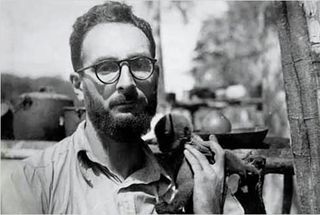
In Claude Lévi-Strauss: The Poet in the Laboratory (Penguin Press, $29.95), Patrick Wilcken has written the biography not just of a man, but of an intoxicating intellectual moment. This was the moment of structuralism, a new way of thinking about human culture that emerged in France in the 1950s and enjoyed a worldwide vogue. The literary critic Roland Barthes, the cultural historian Michel Foucault, the psychoanalyst Jacques Lacan—all were structuralists of one sort or another, and all declared their indebtedness to Claude Lévi-Strauss, the founder of “structural anthropology.” Half a century later, all these names are still by-words for strenuous difficulty and theoretical sophistication; though they are classics by now, they retain the acrid perfume of the avant-garde. When people express contempt or dismay about “French theory,” it is usually the structuralists they have in mind.

It is a wonderful irony, then, that this most cutting-edge and Parisian of movements can be traced to a moment of epiphany in a primitive Indian village in western Brazil. In 1936, Lévi-Strauss and his wife Dina led an anthropological expedition to study the indigenous peoples of this region, at that time barely accessible from the big cities of Brazil’s Atlantic coast. One of the tribes they visited was the Bororo, and though Lévi-Strauss spent just three weeks with them, Bororo culture and myth would lie at the heart of his work for the next 60 years.

What fascinated Lévi-Strauss was not the picturesque elements of Bororo life—what Wilcken calls “the fetishized objects of the Western imagination: penis sheaths, multicolored headdresses, nose feathers, lip ornaments and body paint.” Rather, he became obsessed with the way the Bororo village was laid out.

Carl Schmitt’s Hamlet or Hecuba

TELOS153_MEDDavid Pan and Julia Reinhard Lupton in Telos:

If recent discussions of Schmitt in these pages have made a broad case for the centrality of culture for his thinking, the current issue both specifies and generalizes this approach. The specificity derives from our focus on one key text by Schmitt that is often passed over but is in fact crucial for understanding his work. The generality is a result of the breathtaking sweep of issues that this text opens up for the contributors to this issue: the relation of sovereignty to popular will, the ontological status of modernity, the role of myth in society, the representational structure of human existence, the relation of art and theology to the public sphere. These discussions take our understanding of Schmitt into new directions that draw out not just the aesthetic and cultural aspects of his thought, but also reveal the import of his methods for fundamental questions of epistemology and ontology. He arrives at such questions through the consideration of a single exemplary case: Shakespeare's Hamlet.

His critical intervention has led to an increasing engagement by Renaissance scholars with Schmitt's work over the last decade. In the work of scholars such as Victoria Kahn, Anselm Haverkamp, and Kathleen Biddick, the example of Schmitt never functions as a simple template that would assert the isomorphism of religion and politics, but rather as an invitation to an impasse. What is it about politics that finds itself bound up in the person of the sovereign, the drama of the decision, and the state of exception even while regrounding the rule of law and the legitimacy of a constitution? What is it about politics that remains distinct from the content of ethics, economics, and culture while nonetheless bearing on them? Finally, what is it about politics that both courts and resists theology, catching civic and religious life in an impossible dance of failed separation and catastrophic rapprochement, the Scylla and Charybdis instanced by secularization on the one hand and fundamentalism on the other?

Thomas Bernhard, the Alienator

Peck-t_CA0-articleInline Dale Peck reviews Thomas Bernhard's My Prizes, in the NYT:

For the sympathetic Anglophone charged with reviewing newly translated texts by the Austrian playwright and novelist Thomas Bernhard, the task is a paradoxically onerous one. Put aside the near certainty that Bernhard would have disparaged anything you might say about his work — not just disparaged it, but attacked it with an acid-tongued rant that eviscerated your words, your intellect and your pathetic petit-bourgeois existence. You still have to deal with the almost overwhelming ambition, common to Bernhard fans, to correct his woeful stature in the English-speaking world, as well as the equally oppressive realization that opportunities for doing so are fast running out.

The 21 years since Bernhard died after a lifelong battle with tuberculosis have witnessed a slow but steady trickle of translations, including Old Masters, The Loser and Extinction, which, with Woodcutters, form a loose tetralogy (or, in the formulation of the Bernhard scholar Gitta Honegger, a classical trilogy to which Old Masters is appended as satyr play). These four books, along with “Concrete,” “Yes,” “Wittgenstein’s Nephew” and the five-volume memoir “Gathering Evidence” — oh, and the plays, the plays! — together constitute what some people, this writer included, regard as the most significant literary achievement since World War II. Despite this, Bernhard’s international reputation has never solidified in the manner of a W. G. Sebald, Christa Wolf or Peter Handke, let alone the three most recent German-language writers to receive the Nobel Prize in Literature, Günter Grass, Elfriede Jelinek and Herta Müller — all of whom, one wants to say with a dash of Bernhardian bile, are vastly inferior talents when compared with the master.

All the more urgent, then, for one of those reputation-making panegyrics akin to that with which D. H. Lawrence resuscitated Herman Melville. But how to write it, when most of what’s left of Bernhard’s oeuvre would appear to be ephemera and juvenilia?

The Fading Dream of Europe

Istanbul_Herzau_blog_jpg_470x427_q85 Orhan Pamuk in the NYRB blog:

That Turkey and other non-Western countries are disenchanted with Europe is something I know from my own travels and conversations. A major cause of the strain in relations between Turkey and the EU was most certainly the alliance that included a sector of the Turkish army, leading media groups, and nationalist political parties, all combining in a successful campaign to sabotage negotiations over entry into the EU. The same alliance was responsible for the prosecutions launched against me and many writers, the shooting of others, and the killing of missionaries and Christian clerics. There are also the emotional responses whose significance can best be explained by the example of relations with France. Over the past century, successive generations of the Turkish elite have faithfully taken France as their model, drawing on its understanding of secularism and following its lead on education, literature, and art. So to have France emerge over the past five years as the country most vehemently opposed to the idea of Turkey in Europe has been heartbreaking and disillusioning. It is, however, Europe’s involvement in the war in Iraq that has caused the keenest disappointment in non-western countries, and in Turkey, real anger. The world watched Europe being tricked by Bush into joining this illegitimate and cruel war, while showing immense readiness to be tricked.

When looking at the landscape of Europe from Istanbul or beyond, the first thing one sees is that Europe generally (like the European Union) is confused about its internal problems. It is clear that the peoples of Europe have a lot less experience than Americans when it comes to living with those whose religion, skin color, or cultural identity are different from their own, and that many of them do not warm to the prospect: this resistance to outsiders makes Europe’s internal problems all the more intractable. The recent discussions in Germany on integration and multiculturalism—particularly its large Turkish minority—are a case in point.

As the economic crisis deepens and spreads, Europe may be able, by turning in on itself, to postpone its struggle to preserve the culture of the “bourgeois” in Flaubert’s sense of the word, but that will not solve the problem.

A Question of Character

Kennedy_35.6_tocquevilleDavid M. Kennedy reviews Claude Fischer's Made in America: A Social History of American Culture and Character, in The Boston Review:

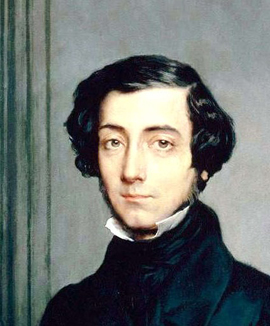
From that comparative perspective and in that relatively homogeneous cultural setting, a gifted group of scholars, including some eminent historians, seriously interrogated an idea first elaborated by Tocqueville in Democracy in America: not merely the American state, but American society as a whole, exhibits characteristics that define a distinctive national identity.

Gunnar Myrdal, in An American Dilemma (1944), found those defining characteristics in the “American Creed,” a cluster of values concerning equality, freedom, fairness, and individual dignity, which he posited as the birthright of even the most bigoted redneck, and therefore a reliable platform on which to build a claim for racial justice. Daniel Boorstin’s trilogy, The Americans (1958–1973), emphasized the workings of a resilient, adaptive, un-dogmatic practicality, a commonsensical, can-do spirit nurtured on the frontier but eventually pervading the entire society. Louis Hartz, in The Liberal Tradition in America (1955), offered a virtuoso dilation on Tocqueville’s great insight that “the Americans were born free, instead of becoming so.” The absence of a feudal phase in American historical development, Hartz said, arrested the familiar European historical dialectic and attenuated the range of political and ideational disagreement in America (just as many contemporary commentators have suggested that the absence of a historical experience equivalent to the Reformation or the Enlightenment has given modern Islamic cultures their own distinctive caste). H. Richard Niebuhr found the roots of America’s peculiarly vigorous and fissile religious behavior in the absence of an established church and in the traits bred among an egalitarian people spreading over a large territory. David Potter, the most intellectually rigorous and influential of these several authors, claimed in People of Plenty (1954) that an unusual degree of material abundance had shaped distinctively American institutions, behaviors, values, and habits, including advertising, mobility, consumerism, and even notably indulgent child-rearing practices. Henry Nash Smith, in Virgin Land (1950), found a set of myths about physical space and individual autonomy, however dubiously rooted in documentable historical reality, to be nevertheless-powerful influences on the society’s enduring belief structures. David Riesman’s The Lonely Crowd (1950) introduced the term “other-directed” to define a peculiarly American personality type, formed by constant interaction with others in a society where ranks were indeterminate and people were therefore chronically anxious about status, identity, and self-worth. Seymour Martin Lipset described American society as a prototype for modernity itself in The First New Nation (1963), compared American and Canadian national identities in Continental Divide (1989), and summed up a lifetime of thinking about national character in American Exceptionalism (1996). Both Robert Bellah, in Habits of the Heart (1985), and more recently Robert Putnam, in Bowling Alone (2000), have argued that unbridled individualism—a term coined by Tocqueville to describe the historical novelty of the American mindset—had by the late twentieth century dangerously undermined civic engagement and possibly threatened the society’s integrity.

Read more »

The Top 10 Science Stories of 2010

Top-10-science-stories-of-2010_1_thumb From the editors of Scientific American:

Year-end lists inevitably leave room for debate and criticism, and ours is no exception. It was an eventful year, and we relied on voting among Scientific American editors to cull our candidates. Any of these notable achievements were certainly worthy but didn't make the final cut. The runners-up were:

• The discovery in South Africa of a new hominid, called Australopithecus sediba, that could be a lost member of our family tree

• The emergence of hydraulic fracturing, or “fracking,” a controversial way to recover natural gas trapped in deep rocks

• The detection of an atmosphere of a “super-Earth” and other signs of potentially habitable worlds around other stars

Art, Ethics and Christmas

Nick Smyth in Yeah, Okay, But Still:

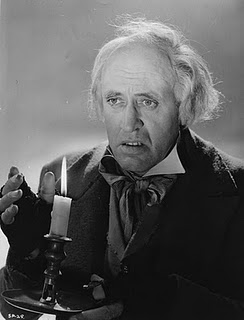
Alastair-Sim On Christmas Eve, millions upon millions of Americans sat down to watch A Christmas Carol and It’s a Wonderful Life, just as they did in 2009, 2008 and so on back into the decades. They found themselves captivated; weeping and laughing, alternating between righteous anger and warm-hearted approval. Many walked away from their television screens with a deep sense of moral strength, knowing in their hearts that that an insatiable lust for money will destroy a person and his community, certain beyond a doubt that greedy, irresponsible lending practices are the scourge of individuals and societies alike.

Hang on…“Insatiable lust for money?” “Greedy, irresponsible lending practices?” Haven’t those phrases been in the headlines recently?

~

In recent years, many have argued that the narrative arts—theatre, film and literature—are a great boon to the development of an ethical personality. Martha Nussbaum is perhaps the most respected advocate of this basic kind of position, arguing (in “Love’s Knowledge”) that to read a novel just is to exercise our capacity for ethical judgment. Michael DePaul summarizes this idea when he suggests that literature can “supply the kind of experience needed to develop a person’s faculty of moral judgment”. It has been said that a heartfelt engagement with those arts expands our imaginative horizons, engages our emotions of sympathy, and allows us to see the world through other eyes. We project ourselves into the lives of others, and this broadening of perspective makes us more sensitive and empathic.

More here.

Faith and Modernity

From The New York Times:

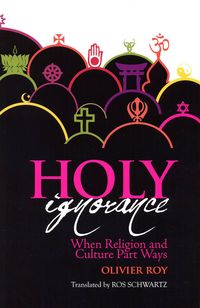
Roy_HI_2010 Every winter Fox News, seeking to stir up anger through the land, uncovers evidence of a war on Christmas. Secular humanists ignorant of religion and hostile to its traditions, someone in the studio will declare, want us to say “Happy Holiday” or give Kwanzaa equal standing. But Christmas, as its name suggests, is about Christ. These enemies of Christianity will stop at nothing to get their way. Not even Santa Claus is sacred to them. Actually, as the brilliant French social scientist Olivier Roy points out in “Holy Ignorance,” it is those defending Christmas who are not being true to their traditions and teachings. There are no Christmas dinners in the Bible, which is why America’s Puritans, strict adherents of what that venerated text offers, never sat down by the raging fire awaiting St. Nick; indeed, they briefly banned Christmas in Massachusetts. Yule as we celebrate it today owes more to Charles Dickens than to Thomas Aquinas. Our major solstice holiday is what Roy calls a “cultural construct” rather than a sectarian ceremony, which explains why Muslims buy halal turkeys and Jews transformed Hanukkah into a gift-giving occasion. Mistakenly believing that Christmas is sacred, those who defend it find themselves propping up the profane. The Christ they want in Christmas is a product not of Nazareth but of Madison Avenue.

Over the past few years, a number of theories have been offered about the rise of fundamentalism. Roy proposes the most original — and the most persuasive. Fundamentalism, in his view, is a symptom of, rather than a reaction against, the increasing secularization of society. Whether it takes the form of the Christian right in the United States or Salafist purity in the Muslim world, fundamentalism is not about restoring a more authentic and deeply spiritual religious experience. It is instead a manifestation of holy ignorance, Roy’s biting term meant to characterize the worldview of those who, having lost both their theology and their roots, subscribe to ideas as incoherent as they are ultimately futile. The most important thing to know about those urging the restoration of a lost religious authenticity is that they are sustained by the very forces they denounce.

More here.

What Did Jesus Do?

Adam Gopnik in The New Yorker:

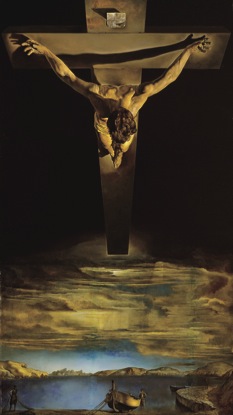
Jesus When we meet Jesus of Nazareth at the beginning of the Gospel of Mark, almost surely the oldest of the four, he’s a full-grown man. He comes down from Galilee, meets John, an ascetic desert hermit who lives on locusts and wild honey, and is baptized by him in the River Jordan. If one thing seems nearly certain to the people who read and study the Gospels for a living, it’s that this really happened: John the Baptizer—as some like to call him, to give a better sense of the original Greek’s flat-footed active form—baptized Jesus. They believe it because it seems so unlikely, so at odds with the idea that Jesus always played the star in his own show: why would anyone have said it if it weren’t true? This curious criterion governs historical criticism of Gospel texts: the more improbable or “difficult” an episode or remark is, the likelier it is to be a true record, on the assumption that you would edit out all the weird stuff if you could, and keep it in only because the tradition is so strong that it can’t plausibly be excluded. If Jesus says something nice, then someone is probably saying it for him; if he says something nasty, then probably he really did.

So then, the scholars argue, the author of Mark, whoever he was—the familiar names conventionally attached to each Gospel come later*—added the famous statement of divine favor, descending directly from the heavens as they opened. But what does the voice say? In Mark, the voice says, “You are my Son, whom I love; with you I am well pleased,” seeming to inform a Jesus who doesn’t yet know that this is so. But some early versions of Luke have the voice quoting Psalm 2: “You are my Son; today I have begotten you.” Only in Matthew does it announce Jesus’ divinity to the world as though it were an ancient, fixed agreement, not a new act.

More here.

Friday, December 24, 2010

When it comes to counting calories, a mind is a terrible thing to your waist

From Scientific American:

Fatuous-fantasies_1 Yiddish literature includes numerous stories about the mythical village of Chelm, filled with people who, well, let’s put it this way: they are not likely to graduate first in their Yeshiva class. One such tale involves befuddled carpenters who could not figure out why, no matter how many times they cut additional pieces off the ends of a board, it was still too short. Oy. Now new research shows that when it comes to food, most people are honorary citizens of Chelm. Investigator Alexander Chernev, for one, has discovered that many people believe they can cut a meal’s calorie count by an ingenious method—adding more food! Oy.

Chernev, who investigates consumer behavior at Northwestern University’s Kellogg (snap, crackle, pop) School of Management, spends an inordinate amount of time around hamburgers for a guy who’s not managing a McDonald’s. Publishing in the Journal of Consumer Psychology, he explains that people act as if healthful foods have “halos”—their healthfulness extends to the rest of the meal. Vegetables and fruit: big halos. Angel food cake: no halo. Go figure. Here is where the mind applies cockamamie calculus to meals. Eaters consider a food’s health­fulness to be related to how “fattening” it is. “Because healthier meals are perceived to be less likely to promote weight gain,” Chernev writes, “people erroneously assume that adding a healthy item to a meal decreases its potential to promote weight gain.” More is less, more or less.

More here.