Vanishing Act

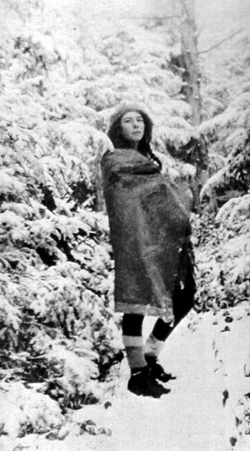
Barbara4-thumb-250x451-1795 Paul Collins in Lapham's Quarterly:

In a New Hampshire apartment during the winter of 1923, this typewritten notice was fastened squarely against a closed door:

NOBODY MAY COME INTO THIS ROOM IF THE DOOR IS SHUT TIGHT (IF IT IS SHUT NOT QUITE LATCHED IT IS ALL RIGHT) WITHOUT KNOCKING. THE PERSON IN THIS ROOM IF HE AGREES THAT ONE SHALL COME IN WILL SAY “COME IN,” OR SOMETHING LIKE THAT AND IF HE DOES NOT AGREE TO IT HE WILL SAY “NOT YET, PLEASE,” OR SOMETHING LIKE THAT. THE DOOR MAY BE SHUT IF NOBODY IS IN THE ROOM BUT IF A PERSON WANTS TO COME IN, KNOCKS AND HEARS NO ANSWER THAT MEANS THERE IS NO ONE IN THE ROOM AND HE MUST NOT GO IN.

REASON. IF THE DOOR IS SHUT TIGHT AND A PERSON IS IN THE ROOM THE SHUT DOOR MEANS THAT THE PERSON IN THE ROOM WISHES TO BE LEFT ALONE.

Through the door could be heard furious clacking and carriage returns: the sound, in fact, of an eight-year-old girl writing her first novel.

In 1923, typewriters were hardly a child’s plaything, but to those following the family of critic and editor Wilson Follett, it was a grand educational experiment. He’d already written of his daughter Barbara in Harper’s, describing a girl who by the age of three was consumed with letters and words. “She was always seeing A’s in the gables of houses and H’s in football goalposts,” he recalled. One day she’d wandered into Wilson’s office and discovered his typewriter.

“Tell me a story about it,” she demanded.

This was Barbara’s way of asking for any explanation, and after he demonstrated the wondrous machine, she took to it fiercely. A typewriter, her parents realized, could unleash a torrential flow of thoughts from a gifted child who still lacked the coordination to write in pencil.

“In a multitude of ways,” Wilson Follett reported, “we become more and more convinced of the expediency of letting the typewriter be, so far as a machine can, the center and genesis of the first processes.”

By five, Barbara was being homeschooled by her mother, and writing a tale titled The Life of the Spinning Wheel, the Rocking-Horse, and the Rabbit. Her fascination with flowers and butterflies bloomed from her typewriter into wild and exuberant poems and fairy tales. By 1922, at the age of seven, she was versifying upon music…

[H/t: Jennifer Ouellette]

Parallel Universes

Vijay_Iyer10229_span3 Vijay Iyer in Jazz Times:

Lately I’ve been pulled into discussions about three disparate issues, each with its own frame of reference: the dire economic climate and its effect on the arts, the abundance of jazz education programs, and the obvious significance of social networking sites in our lives. On the surface they don’t really have much to do with each other, but if we consider them together we might better understand America’s current jazz climate.

In summer 2009 I was enlisted to debate the conservative arts critic Terry Teachout about the supposed problem of declining “participation in the arts” among Americans. Some doomsday figures from the National Endowment for the Arts seemed to show that “jazz audiences” were getting both older and scarcer. Upon examination of the data, which, of course, was collected during a recession, Teachout still concluded that the problem was jazz’s fault. He speculated that we musicians had abandoned our audience in moving the music toward an esoteric art and away from populist entertainment. (I suppose he meant to include Charlie Parker, Thelonious Monk, John Coltrane, Charles Mingus, Sonny Rollins, Max Roach, Anthony Braxton and all those other culprits in his accusations.)

I saw this as a reactionary, blame-the-victim argument. The reality is that public and institutional support for the arts in the U.S. has systematically declined over the last 30 years. Meanwhile, as the top 1 percent of private earners amassed unprecedented amounts of increasingly tax-free wealth, they mostly failed to invest in the production, presentation, preservation and infrastructure of jazz.

Which brings us to today’s America: not enough gigs to go around and almost no jazz on television or radio or even onstage, if you don’t live in a major city.

On Early Warning Signs

Sugiharacrit_HS George Sugihara in Seed Magazine:

At a closed meeting held in Boston in October 2009, the room was packed with high-flyers in foreign policy and finance: Henry Kissinger, Paul Volcker, Andy Haldane, and Joseph Stiglitz, among others, as well as representatives of sovereign wealth funds, pensions, and endowments worth more than a trillion dollars—a significant slice of the world’s wealth. The session opened with the following telling question: “Have the last couple of years shown that our traditional finance/risk models are irretrievably broken and that models and approaches from other fields (for example, ecology) may offer a better understanding of the interconnectedness and fragility of complex financial systems?”

Science is a creative human enterprise. Discoveries are made in the context of our creations: our models and hypotheses about how the world works. Big failures, however, can be a wake-up call about entrenched views, and nothing produces humility or gains attention faster than an event that blindsides so many so immediately.

Examples of catastrophic and systemic changes have been gathering in a variety of fields, typically in specialized contexts with little cross-connection. Only recently have we begun to look for generic patterns in the web of linked causes and effects that puts disparate events into a common framework—a framework that operates on a sufficiently high level to include geologic climate shifts, epileptic seizures, market and fishery crashes, and rapid shifts from healthy ecosystems to biological deserts.

The main themes of this framework are twofold: First, they are all complex systems of interconnected and interdependent parts. Second, they are nonlinear, non-equilibrium systems that can undergo rapid and drastic state changes.

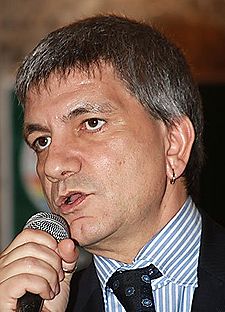
Nichi Vendola, the Italian Obama

225px-Nichi_VendolaChase Madar in Le Monde Diplomatique (photo from Wikipedia):

Silvio Berlusconi’s gift for the battuta – wisecrack – has been a great help to his political career. But there are limits. He tried to bounce back from the revelation that he intervened to secure the release from prison of a 17-year old Moroccan bellydancer, “Ruby Heartstealer”, who had been at his private parties, by saying “it’s better to go crazy over beautiful girls than be gay”. This did not go over well and in no way blocked public disgust with his “bunga-bunga” lifestyle. The crack was aimed at the Italian left’s new star, Nichi Vendola.

Nichi Vendola is the governor of Apulia, heel of the peninsular boot, one of Italy’s poorest and most socially conservative regions. That it should elect (and re-elect) a governor with a background in the Rifondazione Comunista (RC, Communist Refoundation party) which he helped found in 1991 (1), but is also openly gay, is counterintuitive, even if Vendola is a professed Catholic. He is now one of Italy’s most popular politicians and may lead a coalition of left and centre-left parties in the national elections of 2013. He is a charismatic scrapper, and has the Italian right worried.

Vendola can use the battuta, too. In November he enraged the rightwing governor of prosperous, northern Lombardy by declaring it the most “mobbed-up” region in Italy. (That a southerner would criticise the north for its failure to control the ’Ndrangheta and Camorra is a novelty.) Reversing decades of anti-communist Stalin-baiting, Vendola condemns Berlusconi for embracing Vladimir Putin and the “business is business” approach to buying energy from authoritarian states like Russia and Libya. When asked if he might become the first gay prime minister, Vendola confides that there has already been one, whose identity he has sworn never to tell. He easily quotes the 19th century poet Giacomo Leopardi, and the poet and filmmaker Pier Paolo Pasolini – another gay Catholic leftist and subject of Vendola’s undergraduate thesis in literature – and also the New Testament and his former bishop, Don Tonino Bello, who in is the process of being beatified.

A Demos poll last November found Vendola was the best-liked politician in Italy, more popular than either leader of the largest centre-left parties, the Partito Democratico and Italia dei Valori.

The Real Reason That the Bailouts May Not Work

Mark-blyth Mark Blyth in The Huffington Post:

A recent WSJ article on banks in trouble focused on the fact that many of these banks were TARP recipients: QED, TARP was bad and the bailouts didn't work. While state bashing is nothing new in the pages of the WSJ, it's worth remembering what the bailouts were actually designed to do: stop the global payments system freezing up. It was not designed to bailout some community lender in the West who got in over their heads in commercial real estate. It is also worth putting these prospective failures in perspective. The median size of these banks was $439 million. Compare that to the balance sheet of Bank of America and the combined $4.2 billion tied up in these banks is a drop in the bucket. Moreover, while 98 failing banks seem a lot, we should remember that between 1985 and 1992 2109 banks failed, so let's not get too excited about this most recent spate of casualties.

So why the focused attention on these relatively normal events? Perhaps the answer lies in the continuing campaign played so deftly by the banks and their allies to turn the largest ever private sector failure into a public sector failure, thereby getting themselves off the hook for the mess that they made. To take just two examples, the minority report of the Financial Crisis Commission blamed Fannie and Freddie for the crisis, despite the fact that the crisis hit over 20 countries and yet only one of them has Fannie and Freddie. Similarly, the global banking crisis has been turned into a crisis of profligate sovereigns, sidestepping the fact that the debt bloating states' balance sheets are bailout costs and lost revenues, not runaway social programs. Mere facts, it seems, can't compete with a good ideology. However, the WSJ may be more right than they know. The bailouts may not ultimately work, but for an entirely different set of reasons.

Also see Mark's piece in Triple Crisis, here

.

Thursday Poem

Atlas Moth

This giant atlas moth’s broad wings
could be the map of China.

Here are two Great Walls. And there
on the Manchurian tip of each forewing

are dragon heads to scare off predators.
But what are those windows in the map,

where crystal scales let in the light?
As if earth’s skin has windows

and at certain times of the evening
they open. The newly emerged atlas

perches on my hand, and it trembles –
like a new world, warming up for its first flight.

by Pascale Petit
from The Treekeeper’s Tale
publisher: Seren, Bridgend, © 2008

Gathering Storm: Walter Benjamin remains difficult to classify

From Tablet:

Benj In the last five years, more than 300 books and articles on Walter Benjamin have appeared in English alone. Not bad for a man who was virtually forgotten when he committed suicide in 1941.

It’s always been hard to pin Benjamin down. Aberrant Marxist, heretical Jew, maverick social theorist, deconstructive spirit—he has been many things to many people. It is equally hard to describe what he did, in part because Americans don’t really make intellectuals like him. Benjamin, whose most important work was written in Berlin during the ’20s and then in Paris during the ’30s, wasn’t just a book reviewer, although he wanted to be the best one in Germany. He was hardly a journalist, but a good deal of his considerable production was written for newspapers. He was not a philosopher, but he is treated like one. To use a quaint expression, he was a man of letters. Even that does not do him justice.

More here.

Lucky Foods for the New Year

From Smithsonian:

New-Years-food-jubakos-631 My Italian grandfather was known to eat a lot of strange things: pickled eels, tripe and anything slimy that would be considered disgusting to most children. For New Year’s Day his favorite food was a giant gelatinous sausage called cotechino, cut into sections and smeared with mustard. My brother and I joked that the sausage must have been made from the worst of the pig, like the eyes.

As an adult, I developed a taste for cotechino (which contains plenty of pig fat, but no eyeballs), and have learned that this delicacy, and pork in general, is often considered a propitious food to eat at the beginning of the year. Many of our holiday customs go back to when we were an agrarian society. “In many parts of Europe, pigs were easier to grow than cows because they take up less space and eat anything,” says Janet Chrzan, a nutritional anthropologist at the University of Pennsylvania. “And pigs were slaughtered around the time of the winter solstice.” Food has always been a powerful symbol, especially during rites of passage, such as the start of a new year. “It’s hard to know which came first – the belief in the food being lucky, or the tradition of eating it because it was available, and then attaching meaning to it,” says food historian and author Andrew F. Smith.

More here.

Wednesday, December 29, 2010

Hug it out, bitch

Fuentes110103_560

The emos who hang out in Mexico City’s Insurgentes Circle, distant relations of our own kohl-eyed musical mopes, face constant harassment from corrupt police and local punks. Some of them have also been forced to contend with the intrusive questions of a handsome, weathered, impeccably dressed gentleman of 82 who occasionally likes to listen, uncomprehending, to their lingo. “They invent language all the time,” says Carlos Fuentes, Mexico’s most prominent author, who still spends hours wandering the vast plazas and narrow alleys of his country’s capital. “It’s a language I, at times, cannot understand.” Destiny and Desire is the 24th novel by Fuentes, one of the architects of the sixties’ “Latin American Boom” in literature (along with friends “Gabo” García Márquez, Julio Cortázar, and 2010 Nobel laureate Mario Vargas Llosa). The novel is a tracking shot of modern Mexico City as seen through the eyes of two ambitious frenemies, Josué and Jericó (Cain and Abel is the working archetype), caught in the swirl of dirty politics, narco-trafficking, and a burgeoning telecommunications monopoly. Its more surreal touches—potent symbolism, magic, long polemics, and disorienting leaps in time—bring to mind the best of Latin Boomer lit, including Fuentes’s own classic, The Death of Artemio Cruz, published in English in 1964. It also showcases Fuentes’s need to stay current in his ninth decade—as in the incongruous phrase “Hug it out, bitch,” which telegraphs Jericó’s mysterious international activities.

more from Boris Kachka at New York Magazine here.

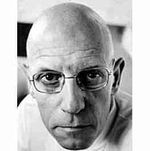
foucault and W

Foucault

In the late 1960s, George Bush Jr was at Yale, branding the asses of pledges to the Delta Kappa Epsilon fraternity with a hot coathanger. Michel Foucault was at the Societé française de philosophie, considering the question, ‘What is an author?’ The two, needless to say, never met. Foucault may have visited Texas on one of his lecture tours, but Junior, as far as it is known, never took his S&M revelry beyond the Ivy League – novelists will have to invent a chance encounter in a basement club in Austin. Moreover, Junior’s general ignorance of all things, except for professional sports, naturally extended to the nation known as France. On his first trip to Paris in 2002, Junior, now president of the United States, stood beside Jacques Chirac at a press conference and said: ‘He’s always saying that the food here is fantastic and I’m going to give him a chance to show me tonight.’ Foucault found his theories embodied, sometimes unconvincingly, in writers such as Proust or Flaubert. He died in 1984, while Junior was still an ageing frat boy, and didn’t live to see this far more applicable text. For the questions that he, even then, declared hopelessly obsolete are the very ones that should not be asked about Decision Points ‘by’ George W. Bush (or by ‘George W. Bush’): ‘Who really spoke? Is it really he and not someone else? With what authenticity or originality? And what part of his deepest self did he express in his discourse?’

more from Eliot Weinberger at the LRB here.

undoing the “reign of non-mediation,”

SAQ-cover

Matthew Engelke is right: religion is about mediation. Ironically so, because it is about the divine; but because the divine is never directly available, religion must instead be about how the divine is indirectly manifest. Thus, as Régis Debray has shown in his God: an Itinerary, monotheism, which is apparently the most other-worldly and non-mediated of creeds, has had to identify itself in concrete terms, which may bizarrely include preference for some landscapes over others, or for association with some animals over others. Because religion is about mediation, it naturally refuses any duality of nature and culture. Reality, as the true nature of things, is sacred, but it must be mediated by particular human relations and practices. Culture, therefore, can be neither merely arbitrary nor totally opposed to nature, since it is what truly discloses the latter. Since all, or nearly all, human cultures have been religious, it is therefore unsurprising that, as Marshall Sahlins has pointed out in The Western Illusion of Human Nature, they do not recognize a nature/culture divide. Instead, they define themselves in groups of kinship with other natural beings and with the gods, animals being typically defined as types of human, not humans as types of animals.

more from John Milbank at Immanent Frame here.

Bite Me

From Slate:

Can While strolling last month through one of the dimly lit backrooms in a wing of the National Galleries of Scotland, my inner eye still tingling with thousands of Impressionistic afterimages, pudgy Rubensian cherubs, and gothic quadrangles, one irreverent painting leapt out at me in a very contemporary sort of way. It was part of an early-16th-century triptych showing what appeared to be a solemn, middle-aged clergyman in gilded ecclesiastical robes commanding three naked adolescent boys before him in a bathtub.

Now, I must say, my first thought on seeing this salacious image was that the Catholic Church has been a hebephilic haven for far longer than anyone realized. But my uneasiness was put to rest once I leaned in to read the caption, which stated that the Dutch artist Gerard David, a prolific religious iconographer based in Bruges, Belgium, was merely painting a scene of starvation cannibalism. Phew! What a relief it was only an innocent case of anthropophagy (the eating of human flesh by humans) and nothing more sinister than that. The boys had been killed by a butcher, you see, and their carcasses were salting in a makeshift vat awaiting ingestion by famished townspeople. Fortunately, that most notorious child-lover himself, St. Nicholas, just happened to be passing through town when he caught wind of the boy-eating scandal and resurrected the lads in the tub.

More here.

Why Europe Is, and Will Remain, Powerful

Predictions of European decline rely on an outmoded understanding of power. On all issues that require power with – rather than over – others, Europe has impressive capacity.

Joseph Nye in The Utopian:

Tumblr_lduy8x602h1qe7zez The key question in assessing Europe’s resources is whether Europe will develop enough political and social-cultural cohesion to act as one on a wide range of international issues, or whether it will remain a limited grouping of countries with strongly different nationalisms and foreign policies. In other words, what is Europe’s power conversion capability?

The answer varies with different issues. On questions of trade and influence within the World Trade Organization, Europe is the equal of the United States and able to balance American power. The creation of the European Monetary Union and the launching of the Euro at the beginning of 1999 made Europe’s role in monetary affairs and the International Monetary Fund nearly equal to that of the U.S. (though the 2010 crisis over Greek debt dented confidence in the Euro.) On anti-trust issues, the size and attraction of the European market has meant that American firms seeking to merge have had to seek approval from the European Commission as well as the U.S. Justice Department. In the cyber world, the EU is setting the global standards for privacy protection.

At the same time, Europe faces significant limits on its degree of unity. National identities remain stronger than a common European identity, despite six decades of integration, and national interests, while subdued in comparison to the past, still matter. The enlargement of the European Union to include 27 states (with more to come) means that European institutions are likely to remain sui generis, and unlikely to produce a strong federal Europe or a single state.

More here.

Amygdala at the centre of your social network

From Nature:

Amygdala-i1_0 How many friends do you have? A rough answer can be predicted by the size of a small, almond-shaped brain structure that is present in a wide range of vertebrates, scientists report today in Nature Neuroscience. The researchers studied the amygdala, which is involved in inter-personal functions such as interpreting emotional facial expressions, reacting to visual threats and trusting strangers. Inter-species comparisons in non-human primates have previously shown that amygdala volume is associated with troop size, suggesting that the brain region supports skills necessary for a complex social life1. On the basis of these past findings, psychologist Lisa Feldman Barrett of Northeastern University in Boston, Massachusetts, wondered whether a larger amygdala size allows some humans to build a richer social world.

Barrett's team measured the amygdala volume in 58 healthy adults using brain images gathered during magnetic resonance imaging sessions. To construct social networks, the researchers asked the volunteers how many people they kept in regular contact with, and how many groups those individuals belonged to. They found that participants who had bigger and more complex social networks had larger amygdala volumes. This effect did not depend on the age of the volunteers or their own perceived social support or life satisfaction, suggesting that happiness is not the underlying causal factor that links the size of this brain structure in an individual to their number of friends2.

More here.

Tuesday, December 28, 2010

Electrifying Language

Brian Hayes in American Scientist:

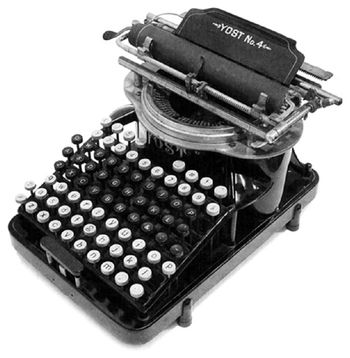
20109271632388125-2010-11BREVHayesFA Dennis Baron’s extended essay A Better Pencil looks back over the entire history of writing technologies (clay tablets, pens, pencils, typewriters), but the focus is on the recent transition to digital devices. His title implies a question. Is the computer really a better pencil? Will it lead to better writing? There is a faction that thinks otherwise:

These computerphobes are convinced that the machines will corrupt our writers, turn books into endangered species, and litter the landscape with self-publishing authors. In addition, computers will rot our brains, destroy family life, put an end to polite conversation, wreak havoc with the English language, invade our privacy, steal our identity, and expose us to predators waiting to pervert us or to sell us things that we don’t need.

Putting this bill of indictment in perspective, Baron points out that just about every other new writing instrument has also been seen as a threat to literacy and a corrupter of youth. The eraser had a particularly bad reputation, under the thesis that “if the technology makes error correction easy, students will make more errors.” I have to add that my own view of the computer as a writing instrument has always been that it’s not so much a better pencil as a better eraser, allowing me to fix my mistakes and change my mind incessantly, without ever rubbing a hole in the page. The first time I held down the delete key on an early IBM PC and watched whole sentences and paragraphs disappear, one character at a time, as if sucked through a straw—that was a vision of a better future for writers.

More here.

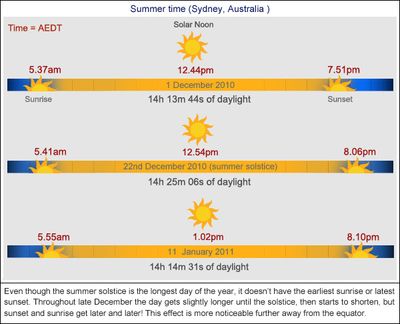
Why doesn’t the latest sunset fall on the longest day of the year?

If the summer solstice falls on the longest day, why doesn't it also coincide with the earliest sunrise and the latest sunset?

Rebecca Jenkins in ABC News [Australia]:

Summer In essence, it all comes down to how we measure time.

As a rule the sun isn't a very reliable time keeper, Watson points out, mainly because the Earth orbits the sun in an elliptical pattern, running faster when it is closest to the sun in January and slower when it is furthest away from the sun in July.

“It's slightly faster in [the Southern Hemisphere] summer than in our winter,” says Watson.

This quirk means that the length of a solar day — the time between two solar noons (when the sun is at the highest point in the sky) — is not always the 24 hours we measure on a clock. It's about 20 seconds longer in January and around 40 seconds shorter in July.

But while the solar day is getting longer during December and into January, the clock still only registers 24 hours. The difference between actual solar time and clock time changes by about 30 seconds every day, Watson explains. And that extra time effectively delays the following sunrise according to our clocks.

At the same time, the Earth's axial tilt means we are getting a few seconds more daylight every day in the Southern Hemisphere in the lead up to summer solstice, but this has a small effect on the sunset and sunrise times compared with the much larger difference between solar time and clock time.

The earliest sunrise occurs before the Earth hits its speedy orbit during December. And while the number of actual daylight hours starts getting shorter after the solstice, sunset is still delayed by the solar/clock time difference until the Earth's solar orbit starts slowing down again in January.

It is this effect that leads to the staggering of the earliest sunrise, the solstice and the latest sunset.

More here.

The Science and Stupidity of Homeopathy

Hartosh Bal Singh in Open:

7449_homeo A week ago, the front page of the country’s larg­est selling English newspaper, The Times of India, announced ‘IIT-B team shows how homeopathy works.’ The article then rather credulously went on to state, ‘Six months after the British Medical Association rubbished homeopathy as witch­craft with no scientific basis, IIT scientists have said the sweet white pills work on the principle of nanotechnology.’ This was a news report that obviously made it past the best procedure for vetting that exists in the newspaper; after all, it appeared on the front page. And if so, it is a reflection of the kind of material the media is willing to swallow and regurgitate without verification.

The newspaper quotes from a paper by a graduate student from IIT-B chemical engineering department ‘published in the latest issue of Homeopathy, a peer-reviewed journal from reput­ed medical publishing firm Elsevier’, titled ‘Extreme homeo­pathic dilutions retain starting materials: A nanoparticulate perspective’. The paper is available online and it claims that even at extreme dilution some nanoparticles of the original starting materials are found in the solution.

But consider what the newspaper has said, and compare what the IIT-B researchers claim in their paper, ‘We have found that the concentrations reach a plateau at the 6c potency and beyond. Further, we have shown that despite large differences in the degree of dilution from 6c to 200c (1012 to 10400), there were no major differences in the nature of the particles (shape and size) of the starting material and their absolute concentra­tions (in pg/ml).’ In other words, their claimed results show that across the range of ‘potencies’ (the more dilute a homeo­pathic medicine the stronger it is supposed to be) of homeo­pathic medicine the concentration of nanoparticles is the same. If so, relatively ‘weak’ homeopathic medicines should have the same effect as more ‘strong’ medicine. This actually invalidates the whole idea of homeopathy.

More here.

Julian Assange’s short-sighted book deal

From The Economist:

ScreenHunter_04 Dec. 29 12.16 The big news of the day is Julian Assange's book deal. The Wikileaks founder has secured more than $1m in advances for his autobiography from Alfred A. Knopf, a New York publisher, and Canongate based in Britain. A manuscript is expected sometime next year. “I don't want to write this book, but I have to,” Mr Assange told the Sunday Times. “I have already spent £200,000 for legal costs and I need to defend myself and to keep WikiLeaks afloat.” Struggling writers around the world are crying crocodile tears for this man. Woe is he and his handsome advance.

The deal is impressive, but there are signs that Mr Assange's rush to shake hands with big publishers was penny-wise, pound-foolish. As it stands, the contract barely covers his existing legal costs, which he says are approaching £500,000. Knopf will surely do its best to rush the book into print, but its cut of final sales will be considerable. A typical contract would give Knopf electronic rights and Mr Assange 25% of net profits. As the towheaded Australian already has a cult following, it might've been savvier for him to self-publish an autobiography and sell it via Amazon, which offers authors 70% of net profits for e-books sold in America (though the book must be priced between $2.99 and $9.99); Barnes & Noble and Apple offer similar royalty rates.

More here.

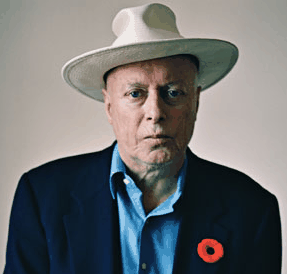
Christopher Hitchens: my hero of 2010 —Richard Dawkins

Richard Dawkins in The Guardian:

ScreenHunter_03 Dec. 29 12.11 Eloquent, witty, literate, intelligent, knowledgeable, brave, erudite, hard-working, honest (who could forget his clean-through skewering of Mother Teresa's hypocrisy?), arguably the most formidable debater alive today yet at the same time the most gentlemanly, Christopher Hitchens is a giant of the mind and a model of courage. A lesser man would have seized the excuse of a mortal illness to duck responsibility and take it easy. Not this soldier. He will not go gentle into that good night; but instead of a futile raging against the dying of the light he rages, with redoubled energy (and concentrated power in his vibrant, Richard Burton tones) against the same obscurantist, vicious or just plain silly targets as have long engaged him. But he never rants. His is a controlled, disciplined rage, and don't get on the wrong side of it.

Like Bertrand Russell, Hitch “would scorn to shiver with terror at the thought of annihilation”. He laughs off the spiritual vultures eager for a death-bed conversion, and dismisses – but with unfailingly gracious courtesy – the many schadenfreudian prayers for his recovery. As Daniel Dennett said, in similar circumstances, “And did you also sacrifice a goat?”

More here.

a writ of majestic, even equitable, sweep

Perkinson_ftr

On a lazy afternoon in February 1961, Wilbert Rideau decided to rob a bank in Lake Charles, Louisiana. Rideau, a smart but impulsive eighth-grade dropout from a violent home, had counted on making a quick, clean getaway, just like the ones he’d seen in the movies, but his plans unraveled during the heist when a phone call to the bank revealed that the police were closing in. Rideau took three hostages, commandeered a car and, as darkness fell, got lost on the back roads outside town. At a bayou crossing the passengers bolted, and Rideau opened fire. Two survived and vanished into the night, but the third, a teller named Julia Ferguson, was wounded by the gunfire and then stabbed to death by Rideau with a hunting knife. A 19-year-old black man had killed a white woman. In no time, Rideau was under arrest. Outside the jail, a mob formed. “Hang that nigger,” a voice called out. But the officers held their man, confident that justice would be swift and severe. “It was a good little town back then,” a deputy sheriff later explained to a reporter. “Ever’body did their job. The prosecutors, the law enforcement…. You didn’t have to worry about lynching because they lynched ’em for you.” The trial, as Rideau recalls in his gripping memoir In the Place of Justice, was “merely a formality,” played out by white attorneys before a white judge and an all-white jury. “I was the only black in sight, a fly in a bowl of milk,” he writes. The place was Calcasieu Parish, at the height of the backlash against the civil rights movement, when Louisiana lawmakers had voted to close down the state’s public schools rather than integrate them. Rideau was guilty of terrible crimes—armed robbery, kidnapping and homicide—but the district attorney stretched and suppressed evidence to prove premeditation, a necessary condition for a capital conviction.

more from Robert Perkinson at The Nation here.