The Winners of the 3 Quarks Daily 2010 Politics Prize

Top_2010_politics_Lapham_19th Politics_160_winner1 Politics-winner-2010

Lewis H. Lapham has picked the three winners:

  1. Top Quark, $1000: Stephen Walt, Why America is going to regret the Cordoba House controversy
  2. Strange Quark, $300: Huffington Post, The Two Most Essential, Abhorrent, Intolerable Lies Of George W. Bush's Memoir
  3. Charm Quark, $200: The Philosopher's Beard, Politics: Can't Someone Else Do It?

Here is what Mr. Lapham had to say about them:

As an editor, I take seriously the craft of writing. The political blog at its best accounts for the editorial process—for the checking of facts as well as the redrafting of manuscripts; the political blog at its worst disregards even the semblance of considered judgment, leaving the internet user to portion out the wheat of informed opinion from the chaff of paranoid rant. The readers and editors of 3QD nominated more than forty pieces of internet writing, then narrowed the field by a public vote to nine finalists. I cannot say these are the best pieces of political blog writing on the internet, but they are representative of the impassioned rhetoric that has engulfed the public political discourse.

In accordance with the rules of the 3QD political prize, I have chosen three entries that exemplify the spirit of the times.

1st Place: “Why America is Going to Regret the Cordoba House Controversy” by Stephen M. Walt

A measured, thoughtful response to the religious intolerance that surrounded the “mosque” at ground zero.

2nd Place: “The Two Most Essential, Abhorrent, Intolerable Lies of George W. Bush's Memoir” by Dan Froomkin

This post uses the publication of George Bush's memoir Decision Points as the occasion to reexamine the Bush years and remind us of the facts embedded in the history of his presidency.

3rd Place: “Politics: Can't Someone Else Do It?” by Thomas Rodham

A philosophical look at the constraints imposed upon liberal politicians during their terms in office. They expect too much from their time in government and their constituents expect too much from them.

Congratulations also from 3QD to the winners (I will send the prize money later today–and remember, you must claim the money within one month from today–just send me an email). And feel free to leave your acceptance speech as a comment here! And thanks to everyone who participated. Thanks also, of course, to Lewis Lapham for doing the final judging.

The three prize logos at the top of this post were designed, respectively, by Sughra Raza, Carla Goller, and me. I hope the winners will display them with pride on their own blogs!

Details about the prize here.
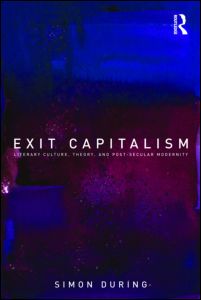
Endgame Capitalism

9780415246552Nathan Schneider interviews Simon During over at The Immanent Frame:

NS: Why is capitalism the focal point of your recent book? And what about capitalism is “postsecular”?

SD: Can I begin with the “postsecular”? It’s a rather confusing term. Mainly it points to a ceasefire—or, anyway, a slowdown—in the long battle between secular reason and religion. That’s ultimately what it implies in the recent work of Habermas, for instance. And that’s also what it means in the kind of intellectual history that uncovers the religious prehistory of secular concepts. But I suspect such work can usually be understood as secularism proceeding under the flag of its own decease. I am more interested in two other possibilities that occur when we think about a zone that is neither secular nor non-secular. The first appears when the limits of the (secular) world become apparent in everyday or mundane life, outside of religion. The second appears when we are compelled to radical leaps of faith—again, outside religion.

Both of these have a direct relation to democratic state capitalism. That’s because democracy and capitalism have each become compulsory and fundamental. They ground everything we do, including religious practice—so we can only get outside them through the kind of postsecular leap of faith that I am talking about. That realization is one of the things that is important about Alain Badiou’s thought. Such leaps may also be relevant to situations in which we encounter secularism’s limits—when secularism can’t contain the ethical and epistemological demands we make of it.

NS: Why can’t secularism itself contain leaps of faith? Why do we need to move past it, to the postsecular?

SD: Of course, there are all kinds of secular leaps of faith. But the will to get outside democratic state capitalism requires something else. It’s true that secular reason is useful in adjudicating upon the current system. You can at least attempt to measure its benefits—the joys, capacities, wealth, and opportunities that it does indeed provide us, and the way that it makes so much seem “interesting,” for instance—against the insecurities, inequalities, restrictions, and controls that it also imposes.

Waking

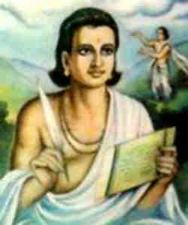
Kalidasa_sm Kalidasa in the 4th or 5th century C.E. (translated by W. S. Merwin & J. Moussaieff Masson):

Even the man who is happy
glimpses something
or a hair of sound touches him

and his heart overflows with a longing
he does not recognize

then it must be that he is remembering
in a place out of reach
shapes he has loved

in a life before this

the print of them still there in him waiting

Of Course the Civil War Was About Slavery

Mmw_succession Emily Badger in Miller-McCune:

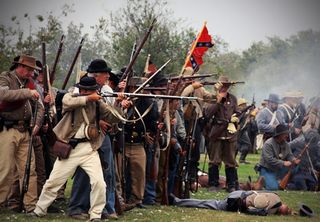
The Sons of Confederate Veterans are holding a gala this week in Charleston, S.C., a hundred-dollar-a-ticket affair celebrating the state’s secession from the Union 150 years ago. It’s the first of countless commemorations planned for the coming four years — lectures, conferences, parades, re-enactments, museum exhibitions and government proclamations — to mark the sesquicentennial of the Civil War.

The Charleston “Secession Ball” — advertised as “an event of a lifetime” — includes a theatrical re-enactment of the signing of the Ordinance of Secession (the original version of which will be on display), as well as dinner and a dance.

“We’re celebrating that those 170 people risked their lives and fortunes to stand for what they believed in, which is self-government,” one of the event’s organizers told The New York Times. “Many people in the South still believe that is a just and honorable cause.”

“Of course, when South Carolina did secede, there was enormous celebration, dancing in the streets and so on,” said James McPherson, a Princeton Civil War historian and author of the Pulitzer Prize-winning history Battle Cry of Freedom.

But something about the Charleston event of 2010 strikes an odd tone.

“They didn’t know what was going to happen to them,” McPherson said of the original revelers. “Now we do know what happened to them, and maybe a celebratory note is not very appropriate.”

Scholars today are mostly of one mind about why South Carolina seceded and what caused the war. But Americans, even a century and a half later, still deeply disagree with each other and historians, many of them embracing a Civil War story about self-government and “states’ rights” that reveals more about America in 2010 than what actually occurred in the 1860s.

Discoverer of Arsenic Bacteria, in the Eye of the Storm

Sn-wolfesimon-thumb-200xauto-5044 In Science magazine, Elizabeth Pennisi interviews Felisa Wolfe-Simon:

Three weeks ago, Felisa Wolfe-Simon, 33, a former performance oboist with a doctorate in oceanography and a NASA fellowship in astrobiology, published a paper online in Science about bacteria that can use arsenic instead of phosphorus in DNA and other biomolecules. Four days before the publication, NASA sent out a media advisory that it would hold a press briefing “to discuss an astrobiology finding that will impact the search for evidence of extraterrestrial life.” That led to wild speculations on the Web about extraterrestrial life, and when the paper was published, many headlines made the most of the “alien” nature of the discovery by Wolfe-Simon and her colleagues at the U.S. Geological Survey in Menlo Park, California.

Then came a torrent of criticism by scientists. A highly critical blog post by Rosie Redfield, a microbiologist at the University of British Columbia, Vancouver, quickly drew hundreds of comments, many also finding fault with the study. Wolfe-Simon and her co-author Ronald Oremland then came under attack by journalists when they declined to respond to media calls for a response to these comments. On 16 December, the authors posted responses to some of the issues, and Science will publish technical comments and responses in early 2011. In the meantime, Wolfe-Simon agreed to share some of her thoughts in an interview with Science’s news department, which covered the original finding in early December. The following has been edited for brevity.

Q: How would you characterize your life since the press conference?

F.W.-S.: Since the press conference, my life has been really busy and stressful. When the paper was accepted for publication, we told the Astrobiology Program and NASA, … and when they asked me to come in and talk about the paper, I said, “Sure.” I was obliged. It had been 2 months or so, and the paper had been accepted for a while, so I thought this would be great, I’ll bring the information to the public.

In the Time of Not Yet: On Edward Said’s Imaginary

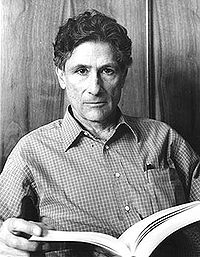
200px-Edward_SaidMarina Warner in the LRB (photo from Wikipedia):

Edward Said first met Daniel Barenboim by chance, at the reception desk of the Hyde Park Hotel in June 1993; Said mentioned he had tickets for a concert Barenboim was playing that week. They began to talk. Six years later, in Weimar, they dreamed up the idea of a summer school in which young musicians from the Arab world and from Israel could play together. They hoped, Said remembered in Parallels and Paradoxes, that it ‘might be an alternative way of making peace’. It was in Weimar, he noted, that Goethe had composed ‘a fantastic collection of poems based on his enthusiasm for Islam … He started to learn Arabic, although he didn’t get very far. Then he discovered Persian poetry and produced this extraordinary set of poems about the “other”, West-östlicher Divan, which is, I think, unique in the history of European culture.’ The West-Eastern Divan: the orchestra had a name; it was never discussed again.

It seems odd that Said, the fierce critic of European Orientalism, chose to use the title of a work that, on the face of it, belongs in the Orientalist tradition. Goethe’s poems are filled with roses and nightingales, boys beautiful as the full moon, wine, women and song. Yet as Said saw it, Goethe’s lyric cycle is animated by a spirit of open inquiry towards the East, grounded in a sense of the past in art and culture, not in dogma or military and state apparatuses. He read it as calling for an understanding of individuality as a process of becoming and therefore fluid. He also believed that poetry can have the metaphorical power to proclaim a visionary politics. The cycle represented for him an alternative history and epistemology, concerned with the cross-pollination between East and West. It seemed to confirm the orchestra’s principle that ‘ignorance of the other is not a strategy for survival.’

Said’s approach was always historical; his work as a critic and intellectual was rooted in an examination of context, both cultural and political, and the orchestra, which this summer toured South America, embodies his commitment to the work of art as an actor in its time. The word theoria, he liked to remind us, means ‘the action of observing’; for him, theory was a dynamic, engaged activity, not a matter of passive reception. The theorist-critic should be a committed participant in the works he observes, and the works themselves aren’t self-created or autonomous but precipitated in the crucible of society and history. ‘My position is that texts are worldly,’ he writes in The World, the Text and the Critic. ‘To some degree they are events, and, even when they appear to deny it, they are nevertheless a part of the social world, human life, and of course the historical moments in which they are located and interpreted.’ The making of music is an event in this sense too.

The Wheels of Injustice Grind Slowly

Khodo2_0Julia Ioffe in Foreign Policy:

When journalists showed up to hear the judge read the long-awaited verdict in the case of jailed oil tycoon Mikhail Khodorkovsky, they found a note on the courthouse door. The reading of the verdict, it said, would be postponed. It was still early in the morning, though, and the note — unsigned and typewritten — seemed like it could easily be fake. This was, after all, the denouement of a highly politicized, hyper-publicized trial, both in Russia and abroad. So one of the puzzled journalists called Khodorkovsky's lawyer, Genrikh Padva, who had not yet heard of the note's existence. “I might have expected this,” he said. “But no one warned me about it ahead of time.”

By the time Padva got to the courthouse, there was a scrum of reporters and elderly Khodorkovsky supporters by the door. They swarmed him, demanding an explanation. “Apparently the court just didn't have enough time to write the verdict,” the lawyer explained. He also had not gotten an official explanation (just an official version of the note on the door) but Padva and the rest of the legal team tried to play it down. This happens all the time, they said. Only Khodorkovsky's father, Boris, had a more probing — and Russian — explanation: After the delay, he said, “a lot fewer people will come” for the actual verdict.

The date was April 27, 2005.

Five and a half years later, on December 15, journalists awaited another Khodorkovsky verdict; the scene was almost identical, with a few names and details changed around. It was a different Moscow courthouse and a different case in question, this one brought in 2007 when Khodorkovsky and his partner Platon Lebedev were just about to be up for parole. The new charges alleged that the two stole all the oil their company Yukos ever produced and then laundered the ill-begotten proceeds. (The first case was that they neglected to pay taxes on this laundered oil money. The apparent contradiction between these two cases has yet to be explained.)

Finding the Facts About Mao’s Victims

20101130-yangjisheng01_jpg_210x640_q85 Ian Johnson in the NYRB blog:

Yang Jisheng is an editor of Annals of the Yellow Emperor, one of the few reform-oriented political magazines in China. Before that, the 70-year-old native of Hubei province was a national correspondent with the government-run Xinhua news service for over thirty years. But he is best known now as the author of Tombstone (Mubei), a groundbreaking new book on the Great Famine (1958–1961), which, though imprecisely known in the West, ranks as one of worst human disasters in history. I spoke with Yang in Beijing in late November about his book, the political atmosphere in Beijing, and the awarding of the Nobel Peace Prize to Liu Xiaobo.

Tombstone, which Yang began working on when he retired from Xinhua in 1996, is the most authoritative account of the Great Famine. It was caused by the Great Leap Forward, a millennial political campaign aimed at catapulting China into the ranks of developed nations by abandoning everything (including economic laws and common sense) in favor of steel production. Farm work largely stopped, iron tools were smelted in “backyard furnaces” to make steel—most of which was too crude to be of any use—and the Party confiscated for city dwellers what little grain was sown and harvested. The result was one of the largest famines in history. From the government documents he consulted, Yang concluded that 36 million people died and 40 million children were not born as a result of the famine. Yang’s father was among the victims and Yang says this book is meant to be his tombstone.

The strange things people swallow

From Salon:

Md_horiz A set of drawers in Philadelphia's Mütter Museum of human pathology contains some very curious artifacts: thousands of objects, from umbrella tips to diminutive opera glasses, that have been extracted from the human body. They were swallowed or inhaled (sometimes accidentally, sometimes on purpose) and later removed by Dr. Chevalier Jackson, a man who dedicated much of his life to removing odd objects from people's insides. The collection is a remarkable testament to the strangeness of the human experience — and our ability to swallow.

In her new book, “Swallow,” Mary Cappello uncovers the stories behind those objects, and the peculiar life story of Chevalier himself. Cappello is a professor at the University of Rhode Island and the author of the bestselling book “Awkward,” a meditation on uncomfortableness. Here, she packs her story with surprising imagery and extravagant lyricism, taking a highly literary approach to the subject — meandering from Chevalier's biography to the odd story of early 1920s women who compulsively ingested pieces of hardware.

More here.

Young Female Chimps Play Out Motherly Role

From The New York Times:

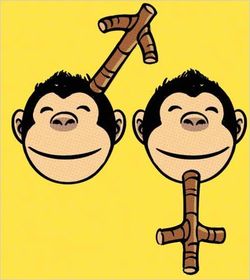
Chimps-popup Young female chimpanzees like to play with sticks as if they were dolls, according to a new study in the journal Current Biology. Although both juvenile male and female chimpanzees were seen playing with sticks in Kibale National Park in Uganda, females were more likely to cradle the sticks and treat them like infants. In human children, societal stereotypes may dictate what boys and girls play with, said Sonya Kahlenberg, a biologist at Bates College in Maine and one of the study’s authors. “The monkeys tell us there is something different there,” she said. The researchers studied juvenile behavior in a single chimpanzee colony over 14 years, and observed 15 females and 16 males.

Of the 15 females, 10 carried around sticks, while five of the males were seen with sticks. The young females were apparently mimicking their mothers, she said. “Females are the main caretakers,” Dr. Kahlenberg said. “Though it’s not that we didn’t see that in male chimps at all.” In one instance, an eight-year-old male with a stick stepped out of his mother’s nest, built a smaller nest and laid his stick in it. Although adult chimpanzees are also known to use sticks, they use them as foraging tools, not toys. Juveniles were defined as chimpanzees between the ages of five and 7.9. This is roughly equivalent to the human age range of six to nine, Dr. Kahlenberg said.

More here.

Monday, December 20, 2010

Sunday, December 19, 2010

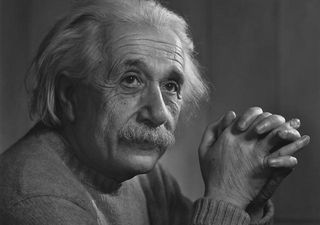
Einstein’s God

Einstein_karsh Michael Shermer in Big Question:

What did Einstein mean by “God” playing dice, or “us believing physicists”? Was he speaking literally or metaphorically? Did he mean belief in the models of theoretical physics that make no distinction between past, present, and future? Did he mean belief in some impersonal force that exists above such time constraints? Was he just being polite and consoling to Besso’s family? Such is the enigma of the most well-known scientist in history whose fame was such that nearly everything he wrote or said was scrutinized for its meaning and import; thus, it is easy to yank such quotes out of context and spin them in any direction one desires.

When he turned 50, Einstein granted an interview in which he was asked point-blank, do you believe in God? “I am not an atheist,” he began. “The problem involved is too vast for our limited minds. We are in the position of a little child entering a huge library filled with books in many languages. The child knows someone must have written those books. It does not know how. It does not understand the languages in which they are written. The child dimly suspects a mysterious order in the arrangement of the books but doesn’t know what it is. That, it seems to me, is the attitude of even the most intelligent human being toward God. We see the universe marvelously arranged and obeying certain laws but only dimly understand these laws.”

That almost sounds like Einstein is attributing the laws of the universe to a god of some sort. But what type of god? A personal deity or some impersonal force? To a Colorado banker who wrote and asked him the God question, Einstein responded: “I cannot conceive of a personal God who would directly influence the actions of individuals or would sit in judgment on creatures of his own creation. My religiosity consists of a humble admiration of the infinitely superior spirit that reveals itself in the little that we can comprehend about the knowable world. That deeply emotional conviction of the presence of a superior reasoning power, which is revealed in the incomprehensible universe, forms my idea of God.”

The most famous Einstein pronouncement on God came in the form of a telegram, in which he was asked to answer the question in 50 words or less. He did it in 32: “I believe in Spinoza’s God, who reveals himself in the lawful harmony of all that exists, but not in a God who concerns himself with the fate and the doings of mankind.”

A Real Science of Mind

Stone_perpetual-tmagArticle Tyler Burge in the NYT:

Imagine that reports of the mid-20th-century breakthroughs in biology had focused entirely on quantum mechanical interactions among elementary particles. Imagine that the reports neglected to discuss the structure or functions of DNA. Inheritance would not have been understood. The level of explanation would have been wrong. Quantum mechanics lacks a notion of function, and its relation to biology is too complex to replace biological understanding. To understand biology, one must think in biological terms.

Discussing psychology in neural terms makes a similar mistake. Explanations of neural phenomena are not themselves explanations of psychological phenomena. Some expect the neural level to replace the psychological level. This expectation is as naive as expecting a single cure for cancer. Science is almost never so simple. See John Cleese’s apt spoof of such reductionism.

The third thing wrong with neurobabble is that it has pernicious feedback effects on science itself. Too much immature science has received massive funding, on the assumption that it illuminates psychology. The idea that the neural can replace the psychological is the same idea that led to thinking that all psychological ills can be cured with drugs.

Correlations between localized neural activity and specific psychological phenomena are important facts. But they merely set the stage for explanation. Being purely descriptive, they explain nothing. Some correlations do aid psychological explanation. For example, identifying neural events underlying vision constrains explanations of timing in psychological processes and has helped predict psychological effects. We will understand both the correlations and the psychology, however, only through psychological explanation.

Beyond Borders: From Vienna to Beirut

Frederic Lezmi in lensculture:

Lezmi_25 I have been searching for the “in between” – whatever lies geographically as well as culturally between my world here in the midst of Europe and my long term focus of interest in the Middle and Near East. Being half Lebanese myself, I have been studying cultural interfaces within the distant Arabic World. From August to December 2008 I traveled between Vienna and Beirut. I encountered people in versatile worlds, inside or in front of architectural places, both real and artificial, public and private. In my photographs, people emerge either as just passers-by or while waiting, as subjects and objects of the viewer’s eye, moving about in their urban or rural environment. These are distanced views in which locals and tourists are on similar paths, randomly congregating and forming elusive compositions. These pictures represent neither precise documents nor do they create artistic worlds. They are constructions of multicolored, fragmented impressions, like looking through a kaleidoscope.

More here.

This Will Change Everything

From The Telegraph:

Everything_1786961b It is not hard to think of examples of wide-eyed predictions that have proved somewhat wide of the mark. Personal jetpacks, holidays on the moon, the paperless office and the age of leisure all underline how futurologists are doomed to fail. Any predictions should thus be taken with a heap of salt, but that does not mean crystal ball-gazing is worthless: on the contrary, even if it turns out to be bunk, it gives you an intriguing glimpse of current fads and fascinations. A few weeks ago, a science festival in Genoa, Italy, gathered together some leading lights to discuss the one aspect of futurology that excites us all: cosa farà cambiare tutto — this will change everything. The event was organised by John Brockman, a master convener, both online and in real life, and founder of the Edge Foundation, a kind of crucible for big new ideas. With him were two leading lights of contemporary thought: Stewart Brand, the father of the Whole Earth Catalog, co-founder of a pioneering online community called The Well and of the Global Business Network; and Clay Shirky, web guru and author of Cognitive Surplus: Creativity and Generosity in a Connected Age.

Shirky meditated on how, during his formative years, it was thought that the decades to come would be dominated by nuclear power and the great adventure of space flight. Decades later, it is now clear that those technologies may have dominated discussions of the day but their direct influence remained firmly with the technological elite. With the benefit of hindsight, his early years were the age of the transistor and birth control. When it comes to the forces shaping our lives today, Shirky points to how coordinated voluntary participation is on the rise, thanks to online tools. With the help of the internet, people are now learning how to make use of the increasing amounts of free time that have been afforded to them since the 1940s for creative acts rather than consumptive ones.

More here.

Sunday Poem

A Letter in October

Dawn comes later and later now,
and I, who only a month ago
could sit with coffee every morning
watching the light walk down the hill
to the edge of the pond and place
a doe there, shyly drinking,
then see the light step out upon
the water, sowing reflections
to either side—a garden
of trees that grew as if by magic—
now see no more than my face,
mirrored by darkness, pale and odd,
startled by time. While I slept,
night in its thick winter jacket
bridled the doe with a twist
of wet leaves and led her away,
then brought its black horse with harness
that creaked like a cricket, and turned
the water garden under. I woke,
and at the waiting window found
the curtains open to my open face;
beyond me, darkness. And I,
who only wished to keep looking out,
must now keep looking in.

by Ted Kooser
from Weather Central
University of Pittsburgh Press
Copyright 1994