Stability and continuity: our greatest luxury as Americans

NoChange__1288967787_5066

Change, in politics, is a lyrical and seductive tune. Think about Woodrow Wilson’s New Freedom, or Franklin Roosevelt’s New Deal; how Ronald Reagan greeted us with ”Morning in America,” or how Barack Obama ran an entire presidential campaign around the theme of ”change.” To listen to the victory speeches delivered on Election Day last week, one might start to believe that change is in the air again. Certainly, candidates across the country ran–and won–on the promise of changing Washington. But anyone counting on a radical transformation in government should steel themselves for another round of heartbreak come January, when the new Congress takes office: Their leadership is no more likely to revolutionize government than Obama’s did in 2008, or the long line of presidents and congresses before them. We might feel frustrated at this inaction, or relieved, depending on our politics. But what we shouldn’t feel is surprised. Because no matter how much politicians love to serenade us to the tune of change, and no matter how happy we are to flirt right back, our governmental system was designed to prevent seismic change from happening.

more from Elvin Lim at The Boston Globe here.

la violencia

Tijuana_575

How well she remembers those days. How could she ever forget—when the Juniors, as they became known, were in their prime: flashing their wealth around Tijuana, dripping gold with a scantily dressed beauty hanging from each arm? Cruising in their SUVs, taking over nightclubs in which they would drink only champagne. Cristina Palacios Hodoyán, lighting ultrathin cigarettes with a gold lighter held in her ultrathin fingers, remembers them with a sorrow in her eyes that even her polished demeanor cannot hide. How could she forget the Juniors, when two of her three sons were among them? The eldest, Alejandro, was kidnapped twice—once in 1996 and again the following year, since when he has never been seen again. The youngest, Alfredo, became known as “el Lobo,” the Wolf, and is serving 176 years in a Mexican jail, convicted of multiple murders and criminal association. “I had wanted them to become lawyers, or go into their father’s business as civil engineers,” their mother reflects. After finishing her cigarette, she picks at a smoked salmon sandwich, at a table in the Merlot restaurant, near the Tijuana Country Club, where the better class of people go. Mrs. Palacios turns sixty-nine the day after we have dinner, and says she plans a quiet meal with close friends, nothing extravagant.

more from Ed Vulliamy at Guernica here.

Building Bridges

From PW:

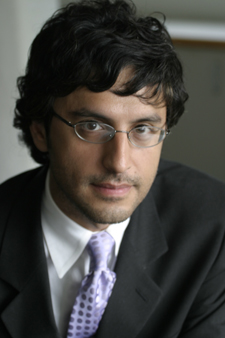
Reza Aslan is the editor of Tablet & Pen: Literary Landscapes from the Modern Middle East, an enormous and impressive anthology of 20th-century Middle Eastern literature.

Reza What made you want to take on this project?

I was interested in telling the story of the modern Middle East from a literary perspective, instead of the usual lens that's used to look at the region—the lens provided by academics and outsiders, colonialists and conquerors. It's an incredibly diverse region with a rich literary history, and I wanted to see how the story of the region sounded when the region spoke for itself.

This had to be an enormous undertaking.

It was a very long and grinding process. Words Without Borders [the online magazine] wanted to put together a collection of literature from “the Muslim world”—everything from Rumi to Pamuk. I disagreed with the notion of “literature from the Muslim world,” because there's no such thing as a “Muslim world” and because most of these writers don't think of themselves as Muslim writers, any more than Philip Roth considers himself a Jewish writer. I also wanted to shorten the time scale to the 20th century. I contacted friends and colleagues who are experts in the literature of the region, and together we collected hundreds of individual works. Then I just read for about nine months straight. And as I read, an overarching narrative began forming in my mind. I culled the list down and added a few more pieces, and finally I organized it in a hybrid chronological/geographical way so that it would read as one sustained narrative, from the first page to the last.

More here.

Tuesday Poem

I Knew a Woman

I knew a woman, lovely in her bones,
When small birds sighed, she would sigh back at them;
Ah, when she moved, she moved more ways than one:
The shapes a bright container can contain!
Of her choice virtues only gods should speak,
Or English poets who grew up on Greek
(I’d have them sing in chorus, cheek to cheek).
…………………………..
How well her wishes went! She stroked my chin,
She taught me Turn, and Counter-turn, and Stand;
She taught me Touch, that undulant white skin;
I nibbled meekly from her proffered hand;
She was the sickle; I, poor I, the rake,
Coming behind her for her pretty sake
(But what prodigious mowing we did make).
…………………………..
Love likes a gander, and adores a goose:
Her full lips pursed, the errant note to seize;
She played it quick, she played it light and loose;
My eyes, they dazzled at her flowing knees;
Her several parts could keep a pure repose,
Or one hip quiver with a mobile nose
(She moved in circles, and those circles moved).
…………………………..
Let seed be grass, and grass turn into hay:
I’m martyr to a motion not my own;
What’s freedom for? To know eternity.
I swear she cast a shadow white as stone.
But who would count eternity in days?
These old bones live to learn her wanton ways:
(I measure time by how a body sways).
…………………………………
………………………………..
by Theodore Roethke
from The Collected Poems of Theodore Roethke;
Random House, 1961

Genes as Mirrors of Life Experiences

From The New York Times:

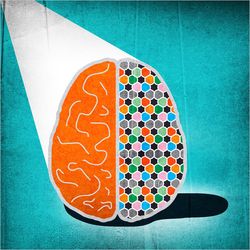
Gene For decades, researchers have ransacked the genetic pedigrees of people with mental illness, looking for common variations that combine to cause devastating conditions like schizophrenia and bipolar disorder. The search has stalled badly; while these disorders may involve genetic disruptions, no underlying patterns have surfaced — no single gene or genes that account for more than a tiny fraction of cases. So scientists are turning their focus to an emerging field: epigenetics, the study of how people’s experience and environment affect the function of their genes.

Genes are far more than protein machines, pumping out their product like a popcorn maker. Many carry what are, in effect, chemical attachments: compounds acting on the DNA molecule that regulate when, where or how much protein is made, without altering the recipe itself. Studies suggest that such add-on, or epigenetic, markers develop as an animal adapts to its environment, whether in the womb or out in the world — and the markers can profoundly affect behavior.

More here.

Kashmir’s Fruits of Discord

Arundhati Roy in the New York Times:

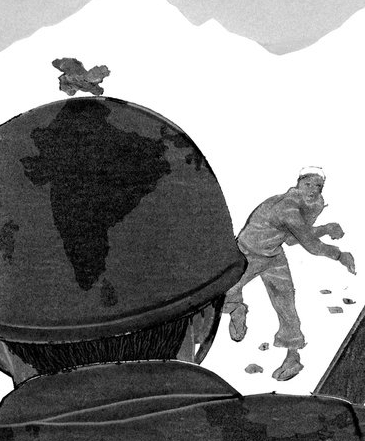
ScreenHunter_12 Nov. 09 10.50 A week before he was elected in 2008, President Obama said that solving the dispute over Kashmir’s struggle for self-determination — which has led to three wars between India and Pakistan since 1947 — would be among his “critical tasks.” His remarks were greeted with consternation in India, and he has said almost nothing about Kashmir since then.

But on Monday, during his visit here, he pleased his hosts immensely by saying the United States would not intervene in Kashmir and announcing his support for India’s seat on the United Nations Security Council. While he spoke eloquently about threats of terrorism, he kept quiet about human rights abuses in Kashmir.

Whether Mr. Obama decides to change his position on Kashmir again depends on several factors: how the war in Afghanistan is going, how much help the United States needs from Pakistan and whether the government of India goes aircraft shopping this winter. (An order for 10 Boeing C-17 Globemaster III aircraft, worth $5.8 billion, among other huge business deals in the pipeline, may ensure the president’s silence.) But neither Mr. Obama’s silence nor his intervention is likely to make the people in Kashmir drop the stones in their hands.

More here.

Generation Why?

Zadie Smith in the New York Review of Books:

Zadie-smith How long is a generation these days? I must be in Mark Zuckerberg’s generation—there are only nine years between us—but somehow it doesn’t feel that way. This despite the fact that I can say (like everyone else on Harvard’s campus in the fall of 2003) that “I was there” at Facebook’s inception, and remember Facemash and the fuss it caused; also that tiny, exquisite movie star trailed by fan-boys through the snow wherever she went, and the awful snow itself, turning your toes gray, destroying your spirit, bringing a bloodless end to a squirrel on my block: frozen, inanimate, perfect—like the Blaschka glass flowers. Doubtless years from now I will misremember my closeness to Zuckerberg, in the same spirit that everyone in ’60s Liverpool met John Lennon.

At the time, though, I felt distant from Zuckerberg and all the kids at Harvard. I still feel distant from them now, ever more so, as I increasingly opt out (by choice, by default) of the things they have embraced. We have different ideas about things. Specifically we have different ideas about what a person is, or should be. I often worry that my idea of personhood is nostalgic, irrational, inaccurate. Perhaps Generation Facebook have built their virtual mansions in good faith, in order to house the People 2.0 they genuinely are, and if I feel uncomfortable within them it is because I am stuck at Person 1.0. Then again, the more time I spend with the tail end of Generation Facebook (in the shape of my students) the more convinced I become that some of the software currently shaping their generation is unworthy of them. They are more interesting than it is. They deserve better.

More here.

Hacker’s challenge

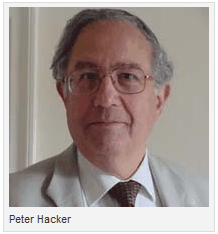
Peter Hacker tells James Garvey that neuroscientists are talking nonsense, in The Philosopher's Magazine:

ScreenHunter_11 Nov. 09 09.40 So long as people read Wittgenstein, people will read Peter Hacker. It’s hard to imagine how his work on the monumental Analytical Commentary on Wittgenstein’s Philosophical Investigations could possibly be superseded. He spent nearly twenty years on that project (ten of them in cooperation with his friend and colleague Gordon Baker), following in Wittgenstein’s footsteps, and producing a large number of important articles and books on topics in the philosophy of mind and language along the way. Nearer the end than the beginning of a distinguished career as an Oxford don, at a time of life when most academics would be happy to leave the lectern behind and collapse somewhere with a nice glass of wine, Hacker is in the middle of another huge project, this time on human nature. He also seems keen to pick a fight with almost anyone doing the philosophy of mind.

This has a much to do with his view of philosophy as a contribution to human understanding, not knowledge. One might think that philosophy has the same general aim as science – securing knowledge of ourselves and the world we live in – even if its subject matter is more abstract and its methods more armchair. What is philosophy if not an attempt to secure new knowledge about the mind or events or beauty or right conduct or what have you? According to Hacker, philosophy is not a cognitive discipline. It’s something else entirely.

More here.

How to spot a lame, lame argument

Johann Hari in The Independent:

ScreenHunter_10 Nov. 09 09.19 There is one particular type of bad argument that has always existed, but it has now spread like tar over the world-wide web, and is seeping into the pubs, coffee shops and opinion columns everywhere. It is known as 'what-aboutery' – and there was a particularly ripe example of it in response to one of my articles last week.

As a rhetorical trick, it is simple. Anyone can do it, and we are all tempted sometimes. When you have lost an argument – when you can't justify your case, and it is crumbling in your hands – you snap back: “But what about x?”

You then raise a totally different subject, and try to get everybody to focus on it – hoping it will distract attention from your own deflated case.

So whenever I report on, say, atrocities committed by Israel, I am bombarded with e-mails saying: “But what about the bad things done by Muslims? Why do you never talk about them?” Whenever I report on the atrocities committed by Islamists, I am bombarded with e-mails saying: “But what about Israel? Why do you never write about the terrible things they do?” And so it goes on, whatever the subject, in an endless international shifting of blame, united in the cry: “What about them! Talk about them instead!”

This argument is almost always disingenuous. How do I know? Because when you write back and explain that, why, I do actually criticize Islamists/Israel/the US/China/whoever-you-have-picked-out-randomly, and here are the articles where I do it, nobody ever writes back and says: fair enough; you consistently condemn human rights abuses, no matter who commits them. No. They scrape around for another “what about.” What about Tibet? What about Sri Lanka? What about North Korea?

More here.

Monday, November 8, 2010

Sunday, November 7, 2010

Of Haymakers and Rainmakers

2012 Panopticonopolis over at The Pinprick of Desire:

Recently, I went to a panel discussion on urban agriculture at the Kellen Gallery, part of the Living Concrete/Carrot City exhibition. To anyone tuned into the food debate in the New York area, familiar sentiments were on display: scrappy entrepreneurs with a love for farming and/or eating, nurturing their holistic vision of a just society, itself replete with happy farmers tilling ever-healthier soil, which in turn produces nutritious fare for contented locavores, farmer’s-market enthusiasts, schoolkids, or [insert your constituency here], building greater community while lessening our carbon footprint, etc.

Being the happy curmudgeon, I was glad to sneak in the following during Q&A:

“Aerofarm is a startup that is only a few years old. Their model does not have anything to do with creating community, or building soil health, or even encouraging food awareness or organic agriculture. They have developed technology that allows people to grow food in enclosed spaces, without sunlight, without soil, even. They recently received $500,000 in seed funding from several venture capital groups. Is there room for everyone to play in this space, or does Aerofarm, etc represent a threat to the vision of (urban) agriculture as implicitly envisioned by this panel and the food movement as we know it in general?”

It was disappointing to see the panel – or what takers there were – squirm their way through this question. One posited that “hydroponic agriculture” is a tremendous waste of resources. This may be or may not be true, but the fact is that Aerofarm is not a hydroponic operation. Another was concerned with the fact that Aerofarm was going to dilute the nascent “brand” of urban agriculture. No one really understood that my question was about money.

So what, exactly, does $500,000 “mean”? Let’s compare Aerofarm’s seed funding with the MacArthur Genius Grant, which itself is $500,000.

According to the MacArthur Foundation’s website, “MacArthur Fellows Program awards unrestricted fellowships to talented individuals who have shown extraordinary originality and dedication in their creative pursuits and a marked capacity for self-direction.” This essentially means that you have been busting your hump for a good chunk of your life before the Genius Grant smiles on you, eg: Will Allen, MacArthur 2008.

In fact, it was Cheryl Rogowski, not Allen, who was recognized as the first farmer-recipient by MacArthur, and that was in 2004. She has been farming since 1983. Wags might point out that people have been, in fact, farming for quite a bit longer than that. Nevertheless, in business school parlance, 20 years is one hell of a product development cycle.

We the People

Walter Benn Michaels in Le Monde Diplomatique:

Over the summer two stars of the American right had a friendly argument about who poses the greatest threat to the United States. Fox News host Bill O’Reilly went with the conventional wisdom: al-Qaida. During the Bush administration, it was the clash of cultures that organised the way American conservatives saw the world. When they worried about issues like illegal immigration, what they were afraid of was al-Qaida operatives mingling among the future valet parkers of Chicago and meatpackers of Iowa. But O’Reilly’s new colleague and ratings rival, Glenn Beck, had a more surprising answer: it’s not the jihadists who are trying to destroy our country, it’s the communists. When Beck and the Tea Party, the rightwing populists most closely tied to him, express their deepest worries, it’s not terrorism they fear, it’s socialism.

What’s surprising is that worrying about communists was more characteristic of the Eisenhower years than of post-9/11. Even more surprising is that Beck is a generation younger than O’Reilly. He hadn’t even been born in 1963 when Eisenhower’s secretary of agriculture, Ezra Taft Benson, gave the speech about Krushchev’s promise to keep “feeding us socialism” mouthful by mouthful until one day (today, according to Beck, who cites this speech frequently) we wake up and realise we’ve “already got communism”.

Most surprising of all is that this reinvention of the cold war is working. Tea Partiers rush to expose the communists in the Democratic Party; on Amazon’s bestseller lists, the highest ranking political book is FA Hayek’s The Road to Serfdom, and even the celebrated radio talk show host Rush Limbaugh has started worrying about the “communist” spies “who work for Vladimir Putin”.

Why communism? And why now? Islamophobia at least has some pretext based in reality: jihadists really did kill thousands of Americans. But not only were there no communists on the planes that hit the World Trade Centre, today there are virtually no communists anywhere in the US, and precious few in the former USSR. Indeed, if there’s one thing Vladimir Putin and Barack Obama can agree on, it’s their enthusiasm for what Putin (at Davos!) called “the spirit of free enterprise”. And yet, like anti-semitism without Jews, anti-communism without communists has come to play a significant political role on the right, especially on what we might call the anti-neoliberal right.

Falling Back: Six poems to mark the end of daylight saving time.

From the Op-Ed page of the New York Times:

Light Verse

It’s just five, but it’s light like six.
It’s lighter than we think.
Mind and day are out of sync.
The dog is restless.
The dog’s owner is sleeping and dreaming of Elvis.
The treetops should be dark purple,
but they’re pink.

Here and now. Here and now.
The sun shakes off an hour.
The sun assumes its pre-calendrical power.
(It is, though, only what we make it seem.)
Now in the dog-owner’s dream,
the dog replaces Elvis and grows bigger
than that big tower

in Singapore, and keeps on growing until
he arrives at a size
with which only the planets can empathize.
He sprints down the ecliptic’s plane,
chased by his owner Jane
(that’s not really her name), who yells at him
to come back and synchronize.

VIJAY SESHADRI, author of “The Long Meadow”

More here.

Pereira Transforms

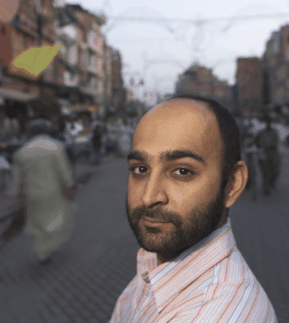
Mohsin Hamid, on reading Antonio Tabucchi's novel, in the introduction to its new edition, at his own website:

ScreenHunter_09 Nov. 07 21.08 I am sometimes asked to name my favourite books. The list changes, depending on my mood, the year, tricks played by memory. I might mention novels by Nabokov and Calvino and Tolkien on one occasion, by Fitzgerald and Baldwin and E. B. White on another. Camus often features, as do Tolstoy, Borges, Morrison, and Manto. And then I have my wild card, the one I tend to show last and with most pleasure, because it feels like revealing a secret.

Sostiene Pereira, I say, by Antonio Tabucchi.

These words are usually greeted with one of two reactions: bewilderment, which is far more common, or otherwise a delighted and conspiratorial grin. It seems to me that Pereira is not yet widely read in English, but holds a heroin-like attraction for those few who have tried it.

My own Pereira habit began a decade ago, in San Francisco’s City Lights bookstore, where an Italian girlfriend suggested I give it a try. San Francisco was the perfect place for my first read: its hills and cable cars and seaside melancholy were reminiscent of Pereira’s Lisbon setting; its Italian heritage, from the Ghirardelli chocolate factory at its heart to the wine valleys surrounding it, evoked Pereira’s Italian author; and its associations with sixties progressivism and forties film noir went perfectly with Pereira’s politics and pace.

More here.

What Can You Do in Twenty-Five Words?

Ian Crouch in The New Yorker:

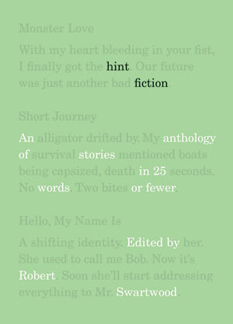
Hintfiction-thumb-233x324-54309 A hinting story, Swartwood explains, should do in twenty-five words what it could do in twenty-five hundred, that is, it “should be complete by standing by itself as its own little world.” And, like all good fiction, it should tell a story while gesturing toward all the unknowable spaces outside the text.

The book is divided into three sections: “life & death,” “love & hate,” and “this & that.” Several stories too fully embrace the gimmick, becoming tiny O. Henry tales complete with tidy setups and kickers. Something about the space constraints make the stories go for too much, rejecting intimacy for some trumped up idea of scale. The best, however, share an off-beat and generally macabre sensibility. Here are two good examples:

“Blind Date,” by Max Barry.

She walks in and heads turn. I’m stunned. This is my setup? She looks sixteen. Course, it’s hard to tell, through the scope.

“Houston, We Have a Problem,” by J. Matthew Zoss.

I’m sorry, but there’s not enough air in here for everyone. I’ll tell them you were a hero.

Violence is a lingering theme, often conveyed with a power that lasts long after the short time it takes to read these tales. Take “Cull,” By L. R. Bonehill, a compressed post-apocalyptic snapshot:

There had been rumors from the North for months. None of us believed it, until one night we started to kill our children too.

More here.

Sunday Poem

At the Edge of the Beach

We are at the end of the world, Mare and I,
at the rim of the ice dark Atlantic, its chill curls
lapping at our toes.

I’ve spent July with sweaty arms tight round my waist, and Mary claims I taught her all the words
she’s not supposed to know. She’s going to marry Christ, and not some ordinary boy.

Late summer’s lick of winter ruffles our hair. We should go in.
I say how romantic those shacks out along the point, Mare, how poignant they are, strung to their
utility poles.

Laur, she says sensibly, it would be prettier without them.
We sat on that curve of beach, when we were twelve,
where civilization crept out among the sand pipers
on sad loops of utility lines.

by Laurie Joan Aron

New York Photographs 1968–1978

Paul McDonough in The Paris Review:

What turned me away from painting was a realization that the streets and parks of Boston provided me with subject matter that I could not conjure up in my studio. At that point, a blank canvas drew nothing but a blank stare. So, with a newly purchased 35mm Leica loaded with tri-x film, I began my forays into downtown Boston to photograph. The kind of photographs I took then related to my art school days, when I would amble around the city making quick pencil sketches of people on park benches and subways. After roaming around Vermont in the summer of 1964, I decided to move to Cambridge, MA where I took a full-time job in a commercial art studio. I was by this time married to my first wife and our plan was to save up enough to live for a year in Europe. Instead we wound up in New York, arriving by U-Haul in the summer of 1967. Rents were cheap, and we could now get by on my part-time work in advertising studios. I had abundant free time, and I took full advantage of it.

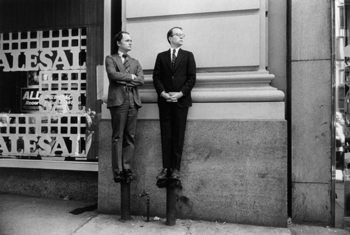
Paulmcdonough2 It was the sheer quantity of people on the street that made the spectacle unique. There were so many opportunities; you had to be perpetually alert and believe something was going to happen. You were not looking for photographs, but for the raw material that would make you want to photograph; the gesture or expression that demanded to be recorded. You were in the moment and you didn’t judge or qualify. For example, in the 1973 photograph taken at a parade, two business men are perched like statues on standpipes, trying to see over the heads of the crowd that had momentarily parted. They were serious; they had a sense of purpose. About what, the photograph doesn’t give a clue. That information is outside the frame’s viewpoint and beyond the camera’s scope.

More here.