Is Dark Matter Supernatural?

Sean Carroll in Cosmic Variance:
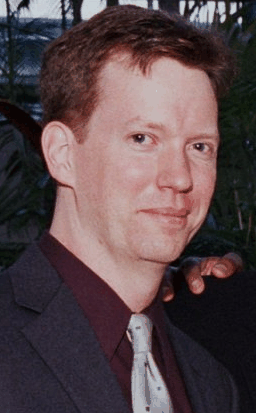
ScreenHunter_23 Nov. 14 11.30 No, it’s not. Don’t be alarmed: nobody is claiming that dark matter is supernatural. That’s just the provocative title of a blog post by Chris Schoen, asking whether science can address “supernatural” phenomena. I think it can, all terms properly defined.

This is an old question, which has come up again in a discussion that includes Russell Blackford, Jerry Coyne, John Pieret, and Massimo Pigliucci. (There is some actual discussion in between the name-calling.) Part of the impetus for the discussion is this new paper by Maarten Boudry, Stefaan Blancke, Johan Braeckman for Foundations of Science.

There are two issues standing in the way of a utopian ideal of universal agreement: what we mean by “supernatural,” and how science works. (Are you surprised?)

There is no one perfect definition of “supernatural,” but it’s at least worth trying to define it before passing judgment. Here’s Chris Schoen, commenting on Boudry et. al:

Nowhere do the authors of the paper define just what supernaturalism is supposed to mean. The word is commonly used to indicate that which is not subject to “natural” law, that which is intrinsically concealed from our view, which is not orderly and regular, or otherwise not amenable to observation and quantification.

Very sympathetic to the first sentence. But the second one makes matters worse rather than better. It’s a list of four things: a) not subject to natural law, b) intrinsically concealed from our view, c) not orderly and regular, and d) not amenable to observation and quantification. These are very different things, and it’s far from clear that the best starting point is to group them together. In particular, b) and d) point to the difficulty in observing the supernatural, while a) and c) point to its lawless character. These properties seem quite independent to me.

More here.
Saturday, November 13, 2010

“Ode on a Grecian Urn” is worth any number of old ladies

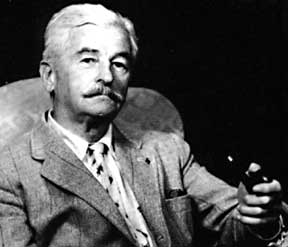
Jean Stein vanden Heuvel interviews William Faulkner in 1956 in the Paris Review:

INTERVIEWER

Do you mean the writer should be completely ruthless?

Wf FAULKNER

The writer's only responsibility is to his art. He will be completely ruthless if he is a good one. He has a dream. It anguishes him so much he must get rid of it. He has no peace until then. Everything goes by the board: honor, pride, decency, security, happiness, all, to get the book written. If a writer has to rob his mother, he will not hesitate; the “Ode on a Grecian Urn” is worth any number of old ladies.

INTERVIEWER

Then could the lack of security, happiness, honor, be an important factor in the artist's creativity?

FAULKNER

No. They are important only to his peace and contentment, and art has no concern with peace and contentment.

More here. [Thanks to John Ballard.]

The Dregs of States

Justin E. H. Smith in his own blog:

ScreenHunter_22 Nov. 14 11.04 Unlike most of my contemporaries, I simply hate the mafia. I hate everything that has to do with the mafia, including fictional representations of it in cinema, television, and video games. I am regularly forced to report ads for Mafia Wars on a certain social-networking site as 'offensive' (ads for KY Jelly, in turn, are dutifully denounced as 'irrelevant'). I hate so much as thinking about casinos, Teamsters, cocaine, construction firms, since these all invariably carry with them a further thought of the mafioso who makes them his business. I hate hearing imitations of Sicilian bosses doing their schtick (threatening to kill people in a funny accent), which are almost always imitations of Christopher Walken doing imitations of Sicilian bosses.

Most of all I hate it when earnest students of mine invoke omertà as an example of a moral code, as having a laudable principle at its core even if in its application it leads to regrettable consequences. Each time this comes up I think to myself: don't students read The Stranger anymore? Or do the 'classics' that inform their moral reasoning extend back only as far as The Godfather and Scarface (I admit I made it through the first of these, but only as a Coppola completist; I have never seen a single episode of the Sopranos, and the earliest memory I have of being repulsed by the whimsical representation of organized crime was Wise Guys, the horrid Brian de Palma film of 1986 starring Billy Crystal and Danny De Vito). I would greatly prefer to engage in a discussion about morality with a student contemplating the possibility of random, lone, unprovoked murder, than with one who thinks unquestioning group loyalty represents any sort of moral accomplishment at all. Omertà is for stunted cretins, I want to say, now get that Godfather poster off your dorm-room wall and start reading some Camus or some Nietzsche.

More here.

The man who writes your students’ papers tells his story

Ed Dante [a pseudonym] in the Chronicle of Higher Education:

Photo_8295_landscape_large You've never heard of me, but there's a good chance that you've read some of my work. I'm a hired gun, a doctor of everything, an academic mercenary. My customers are your students. I promise you that. Somebody in your classroom uses a service that you can't detect, that you can't defend against, that you may not even know exists.

I work at an online company that generates tens of thousands of dollars a month by creating original essays based on specific instructions provided by cheating students. I've worked there full time since 2004. On any day of the academic year, I am working on upward of 20 assignments.

In the midst of this great recession, business is booming. At busy times, during midterms and finals, my company's staff of roughly 50 writers is not large enough to satisfy the demands of students who will pay for our work and claim it as their own.

You would be amazed by the incompetence of your students' writing. I have seen the word “desperate” misspelled every way you can imagine. And these students truly are desperate. They couldn't write a convincing grocery list, yet they are in graduate school.

More here.

Can science prove we’re psychic?

From MSNBC:

Minority-Report-horiz-1p_photoblog600 Scientists are buzzing over a peer-reviewed study that suggests humans have predictive powers, but it’s too early to predict whether or not the research will hold up. The 61-page paper, titled “Feeling the Future,” was written by Cornell psychology professor emeritus Daryl Bem and is due for publication in the Journal of Personality and Social Psychology. Bem says his experiments support the idea that there really is something to human precognition of events that haven't yet occurred. You could argue that this is a case of science imitating sci-fi — particularly considering that precognition provided a key element of the plot for “The Minority Report,” a Philip K. Dick short story that was made into a movie starring Tom Cruise in 2002. You might be forgiven if you think this is the latest trick from a professor who used to be a stage magician. But Bem is dead serious about the experiments, and his submission to the journal is no work of fiction.

“My very first publication was 50 years ago in that journal, which would make a nice capstone,” Bem told me today. Bem said each of the experiments described in the paper simply takes a well-known method for testing how sensory input affects the brain's output “and turns it around backwards” in time sequence. Here are three examples:

  • Precognitive selection: A hundred subjects were asked to predict which of two computer screens will flash up a picture rather than an empty space. They're told in advance that some of the images will be erotic in nature. The computer didn't make its random selection of which images would appear where until after the human subjects made their choice. The subjects correctly identified the future position of the arousing images 53.1 percent of the time — while the success rate for the non-arousing images was merely the expected 50-50. A separate experiment, involving 150 subjects, came up with a 51.7 percent “hit rate” for selecting preferred images over negative images.

More here.

Saturday Poem

The Laying on of Hands

Priests offered it in weekly benedictions to bless
after chants and motets, in Eucharist
or Mass, to magnify a union or to heal
the sick. Doves were sometimes released.

Lovers do it too. The caresss—careless or casual.
The home from work, the comfort me, or the moment
when hands become all scent and skin; the arch of wrist,
the smooth palm and pure white fingertip.

So doctors learned it, palpated sick limbs, guaged temperatures,
pulses; probed chests, abdomens and necks to fathom symptoms,
interrogate signs. But now machines seek better, deeper,
further, filling the walls with images, bright and cold.

by Danielle Hope
from Jama (Journal of the American medical Association)
Vol. 301 No. 4; Jan. 28, 2009

The Mind of a Disease

Jonathan Weiner in The New York Times:

Weiner-popup ll patients begin as storytellers, the oncologist Siddhartha Mukherjee observes near the start of this powerful and ambitious first book. Long before they see a doctor, they become narrators of suffering, as Mukherjee puts it — travelers who have visited the “kingdom of the ill.” Many doctors become storytellers too, and Mukherjee has undertaken one of the most extraordinary stories in medicine: a history of cancer, which will kill about 600,000 Americans by the end of this year, and more than seven million people around the planet. He frames it as a biography, “an attempt to enter the mind of this immortal illness, to understand its personality, to demystify its behavior.” It is an epic story that he seems compelled to tell, the way a passionate young priest might attempt a biography of Satan.

Mukherjee started on the road to this book when he began advanced training in cancer medicine at the Dana-Farber Cancer Institute in Boston in the summer of 2003. During his first week, a colleague who’d just completed the program took him aside. “It’s called an immersive training program. But by immersive, they really mean drowning,” he said, lowering his voice the way many of us do when we speak of cancer itself. “Have a life outside the hospital,” the doctor warned him. “You’ll need it, or you’ll get swallowed.” “But it was impossible not to be swallowed,” Mukherjee writes. At the end of every evening he found himself stunned and speechless in the neon floodlights of the hospital parking lot, compulsively trying to reconstruct the day’s decisions and prescriptions, almost as consumed as his patients by the dreadful rounds of chemotherapy and the tongue-twisting names of the drugs, “Cyclophosphamide, cytarabine, prednisone, asparaginase. . . .”

Eventually he started this book so as not to drown.

More here.

The People vs. Bush: How to Prosecute a President

Charlotte Dennett in The Huffington Post:

14425 One wonders if former President George W. Bush actually thinks he will be politically resurrected — and absolved of all his crimes — following a tide of Republican electoral victories last week and the publication of his memoir this week. Already there has been a good deal of commentary about the timing of the book's release. Theories range from Bush not wanting to hurt the electoral chances of his fellow party members during campaign season, to Bush anticipating and then capitalizing on a Republican landslide, to the most sophisticated theory of all: by Bush's publishing date (November 9) the statute of limitations will have ended on prosecuting the CIA's destruction of torture tapes, something that has been under investigation by Special Prosecutor John Durham with no legal action yet announced. Adding to this speculation are questions over why Bush would admit in his book to authorizing the torture of Khalid Sheikh Mohammed in March, 2003. But rather than get bogged down in speculative legal theories about whether the former president can be prosecuted for violating U.S. and international laws on torture, allow me to focus on a simple fact that is consistently overlooked: there is no statute of limitations for murder. Bush and his fellow co-conspirators are criminally liable for murder by taking our troops to war under false pretenses, resulting in the deaths of over 4,000 American soldiers.

More here.

With Words on Muslims, Opening a Door Long Shut

Michael Slackman in the New York Times:

Sarrazin1-popup This quiet, orderly man, who lives in a quiet, orderly house, in a very quiet tree-lined neighborhood has caused a huge public stir here with his volatile book arguing that Muslim immigrants in Germany are socially, culturally and intellectually inferior to most everyone else.

With the certainty of an accountant adding up rows of numbers, Thilo Sarrazin has delivered his conclusion in a book that has sold over one million copies, forced him to quit his job at the German central bank, may get him kicked out of his political party and for the first time since World War II made it socially acceptable in Germany to single out a particular minority for criticism.

“The facts I quoted and analyzed are undeniable and cannot be done away with,” he said without a hint of defensiveness in his quiet, understated manner.

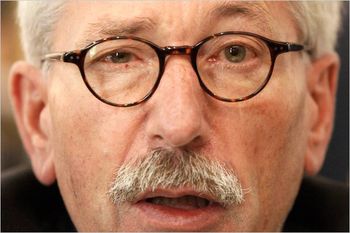
Mr. Sarrazin, 65, is tall and trim, with a head of thick grayish hair, round tortoiseshell glasses and a right eye that is always squinting, as if looking into the sun. Friends of Mr. Sarrazin say they are not at all surprised that he has found himself in this position because while he is quiet and orderly, he also has a penchant for offending.

More here.

Palestine: Roadmap to Peace?

For decades we have heard almost everyone talk about peace in the Holy Land. What is certain is that no one needs peace more than the Palestinian people. Since before 1948, the Palestinian people have been living under the threat of wars and massacres, under occupation and oppression, deprived of their basic rights. But it is real peace that the Palestinians seek, in contrast to the false peace that is being sought at the expense of justice.

As if humanity haven’t learned from the millions killed due to the lack of justice. One would think it would have been obvious by now that there is no peace without justice, and that no people will accept to lie down and accept injustice upon their children. Palestine is no exception. Let there be one or a hundred peace processes. Let there be one or a hundred alternative remedies. Real peace will only prevail when justice does.

And this is an editorial today in the New York Times: Politics Over Peace

Microvolunteering: Young social entrepreneur makes spare minutes matter

Amy Lunday in the Johns Hopkins University Gazette:

ScreenHunter_20 Nov. 13 11.03 Jacob Colker, a graduate student in the Communications in Contemporary Society program in the Krieger School’s Advanced Academic Programs, is among the first group of young social entrepreneurs to be honored by the Rolex Awards for Enterprise: Young Laureates Programme.

On Thursday, Nov. 11, Colker and four other winners will be feted for their dedication to overcoming challenges in the fields of public health, applied technology, the environment and cultural preservation at an award ceremony at the Ecole Polytechnique Federale de Lausanne in Switzerland. Colker is the only laureate from the United States; the others are from the Philippines, Nigeria, India and Ethiopia.

Colker, who is 26, is being recognized for changing the way people get involved in community service as co-founder of the Extraordinaries, an Internet-based program allowing “microvolunteers” to use their skills and expertise online. Their flagship product is free and available to the public at www.sparked.com.

The Young Laureates Programme seeks to foster a spirit of enterprise in the next generation by giving young people the financial support and recognition they need to innovatively tackle the challenges facing humanity. The laureates, all aged between 18 and 30, will each receive $50,000 over two years, giving them time to focus on their pioneering projects and move forward in implementing them.

Colker said he will use his Rolex Award to expand microvolunteering to more Internet users and gain publicity to “encourage millions of people to volunteer.”

More here.

Friday, November 12, 2010

a kind of defeatism about Burma

Thanshwe_manmohan_20101115

It is difficult for me to talk about Burma without a deep sense of nostalgia. My earliest memories are all of Burma, where I grew up between the ages of three and six. My father was a visiting professor at the Agricultural College in Mandalay, on leave from Dhaka University. My first memory of striking natural beauty is that of sunrise over the Maymyo hills seen from our wooden house at the eastern edge of Mandalay. It was a thrilling sight even for a young boy. My first recollections of warm human relations stretching beyond my own family are also of kindly Burmese society. Mandalay was a lively city in the 1930s, and Burma a magically beautiful country. The richness of the land and the enormous capacity of the Burmese people to be happy and friendly shone brightly through the restraining lid of British colonialism. After a short period of independence from British rule and a brief experience of democracy, Burma has been in the grip of a supremely despotic military rule for almost half-a-century now. The country is now one of the absolutely poorest on the globe. Its educational and health services are in tatters. Medicine is difficult to get, and educational institutions can hardly function. There is viciously strict censorship, combined with heavy punishment for rebellious voices. The minority communities—Shans, Karens, Chins, Rohingyas and others—get particularly cruel and oppressive treatment.

more from Amartya Sen at Outlook India here.

But I remember when we were young

Joy-division

When I was writing my first novel, Bright Lights, Big City, I pumped myself up with a soundtrack of rotating LPs in the hope of giving my prose a certain energy and beat, in the hope that some of the visceral power of rock and roll would infuse the page. Among those LPs was Joy Division’s Closer, which shared the turntable with the Talking Heads’ Remain in Light, Television, Elvis Costello’s Armed Forces, and Muddy Waters’s Hard Again. I used to play these albums loud, the idea being that I would simultaneously feel the music in my body even as my mind rose to a state of concentration fierce enough to block it out. Though I knew and had even studied the lyrics of all these albums, I was more interested, for the purposes of my writing, in the beat, and the rhythm and the mood. “No language, just sound, that’s all we need to know,” Ian Curtis wrote in “Transmission.” “To synchronize love to the beat of the show.” I don’t know how conscious a program it was, if I’m overstating it in retrospect, but I think I wanted to see if I could infuse the language with some modicum of the sheer sonic power of rock and roll, somehow transmitting the beat and the mood of my favorite rockers.

more from Jay McInerney at Vanity Fair here.

The Secret Lives of Puppets

5421c

Independent, contemporary artists across the US and Canada are using puppets to fascinating effect, and, in the process, recruiting audiences that span hipsters, metal heads, theatre lovers, art theorists, and book geeks. Could the puppet renaissance go mainstream, as Stephen Marche prematurely predicted in 2009? Well, The Old Trout has dabbled in mainstream environments, such as the National Art Gallery and Alberta Theatre Projects, but, as Peter Balkwill says, they still find themselves labeled as “the independent guerillas that stormed through the backdoor.” And the troupe’s latest project, Ignorance, is unlikely to propel them toward a sitcom deal. Calling it a “puppet documentary” The Trouts are currently writing a stage show on prehistoric man and how we evolved to the largely miserable group of people we are today. It looks at “why we’re not happy. And how we might solve this problem without resorting to alcoholism, tranquilizers, frontal-lobotomies, or other forms of induced ignorance.” All the writing, ideas and designs for the show are being posted on its website where the group encourages visitors to weigh in on the ideas and hand in better ones.

more from Lindsay Gibb at Broken Pencil here.

Amitava Kumar and Hari Kunzru on Islamophobia

Over at the Nation, an audio discussion between Amitava Kumar and Hari Kunzru:

On the night of the 2010 midterm elections, Nation contributor and author Amitava Kumar joined British novelist and journalist Hari Kunzru in a conversation on Islam in America moderated by the Brennan Center’s Faiza Patel and organized by the Asian American Writers’ Workshop. At the conclusion of a campaign season marred by Islamaphobic flash-points such as a Florida Pastor's threat to burn the Koran and the controversy surrounding the lower Manhattan Muslim cultural center, the three speakers explore how increased surveillance in the age of the War on Terror, newer forms of Orientalism and generational divides between various Muslim immigrant groups play out on the national and international political stage.

Also see this related article by Amitava over at Sepia Mutiny, including the comments by readers.

Justice for Some

26_thumb Joseph E. Stiglitz in Project Syndicate:

The mortgage debacle in the United States has raised deep questions about “the rule of law,” the universally accepted hallmark of an advanced, civilized society. The rule of law is supposed to protect the weak against the strong, and ensure that everyone is treated fairly. In America in the wake of the sub-prime mortgage crisis, it has done neither.

Part of the rule of law is security of property rights – if you owe money on your house, for example, the bank can’t simply take it away without following the prescribed legal process. But in recent weeks and months, Americans have seen several instances in which individuals have been dispossessed of their houses even when they have no debts.

To some banks, this is just collateral damage: millions of Americans – in addition to the estimated four million in 2008 and 2009 – still have to be thrown out of their homes. Indeed, the pace of foreclosures would be set to increase – were it not for government intervention. The procedural shortcuts, incomplete documentation, and rampant fraud that accompanied banks’ rush to generate millions of bad loans during the housing bubble has, however, complicated the process of cleaning up the ensuing mess.

To many bankers, these are just details to be overlooked. Most people evicted from their homes have not been paying their mortgages, and, in most cases, those who are throwing them out have rightful claims. But Americans are not supposed to believe in justice on average. We don’t say that most people imprisoned for life committed a crime worthy of that sentence. The US justice system demands more, and we have imposed procedural safeguards to meet these demands.

Aleksandr Solzhenitsyn, (Anti)Modernist

Solzhenitsyn-84x84 Richard Tempest in Eurozine:

Ezra Pound surprisingly believed that “all good art is realism of one kind or another”. No doubt the author of Ivan Denisovich would have agreed. In his literary and aesthetic tastes he was a bit of a Victorian, seemingly alien to the joys, provocations, and conceits of the arts of the modern. He rejects “the quasi-eschatological mythologeme of the End that became well established in Western culture starting in the late nineteenth century, as in the death of God (Nietzsche), the inevitable and imminent decline of Europe (Spengler), or the disappearance of the novel (Mandelshtam)”. Generally appalled by the stridently iconoclastic character of Russian and European modernism he particularly disliked the claims of its practitioners, or at least the more forward-looking among them, to have superseded and surpassed 2000 years of cultural tradition. In one acerbic comment he wrote: “It was suggested that literature should start anew 'on a blank sheet of paper'. (Indeed, some never went much beyond this stage.)” He makes the same sarcastic point fictively. The Red Wheel features a symbolist groupie, languid, mannered Likonya, a “citizeness of the universe” given to batting her eyes and declaiming Nikolai Gumilev's death-affirming verses. A fan of the constructivist stage director Vyacheslav Meyerhold and the decadent chansonnier Aleksandr Vertinsky (her catholic taste = bad taste), she is wont to say things like: “The cultural life of the nineteenth century was very humdrum.” As a literary lampoon, Likonya belongs in the same category of comic characters as Aviette in Cancer Ward, the buxom SocRealist poetess who likes her tetrameters ideologically “progressive”, but also just a little bit sexy.

Actually, among Solzhenitsyn's artistic negations, socialist realism looms much larger than symbolism or even modernism as a whole. His fictional texts are dynamic confutations of the SocRealist “mode of literary production”, to use Terry Eagleton's term; as well as case-specific confutations of the subgenres of SocRealist prose, e. g., the revolutionary novel, factory novel, kolkhoz novel, spy novel, science novel. Or even SocRealist erotica, if there ever was such a thing. The writer's entire fictional and dramatic output is oriented against SocRealist practices; in the same way that Tolstoy's fictions before 1881 are consistently anti-Romantic in their aesthetics, ethics, and formal values (although after his terrible existential crisis of that year he began writing works that were, in a sense, anti-Tolstoyan). “The whole point about realism – real realism – is that it needs no identifying prefix. Solzhenitsyn's work demonstrates this for all time.”

Global Warming Could Mean a Golden Age for Tropical Rain Forests

500x_rainforest-animals-redeyedfrog1 Alasdair Wilkins in io9.com:

Climate change could have devastating consequences for much of the world's ecosystems, but at least one area might benefit. Ancient rain forests thrived during severe warming millions of years ago, helping to create today's species diversity.

56.3 million years ago, planet Earth was going through one of its hottest periods. Average temperatures were 3-5 degrees higher than they are today, and carbon dioxide levels in the atmosphere a whopping 2.5 times thicker than what we've got today. Both of those are fairly extreme, and it seems reasonable that life struggled during these times. But, at least in the rain forests, that wasn't the case at all.

This particular period of global warming was known as the Paleocene-Eocene Thermal Maximum. Around 56.3 million years ago, Earth's temperature started increasing, and it took only 10,000 years for carbon dioxide to reach such high levels. This remained the norm for the next 200,000 years. Despite these seemingly harsh conditions, many species thrived, as the diversity of rain forest species tripled during this period.

Inequality and Moral Hazard Rents in the Financial Sector

Ashwin Parameswaran over at Macroeconomic Resilience:

A recent study by Kaplan and Rauh (h/t Tyler Cowen) confirms what a lot of us suspected anyway: the dominance of Wall Street (bankers, hedge fund managers etc) at the very top end of the income distribution. The presence of bankers at the top end of the income distribution is not surprising – A large portion of this blog has been devoted to the subject of how banks extract significant rents from the implicit and explicit support provided to them by the central bank. It is not surprising then that a significant proportion of these rents flows directly to bank employees. But as Megan McArdle notes, this does not explain the significant presence of hedge fund managers in this list. After all, hedge fund managers do not directly benefit from any state guarantees, implicit or explicit.

The SuperStar Effect?

It is clearly possible that there are many “superstars” in the hedge fund universe who generate genuine alpha and deserve their fat paychecks. But then the question arises as to why the prevalence of such superstars has increased so dramatically in recent times. One explanation may be the increased completeness of markets in the last quarter century which enables hedge fund managers to express a much more diverse range of market views in an efficient and low-cost manner. But this must surely be negated by the reduced supply of easy arbitrage opportunities and the increased competition amongst hedge funds.

Hedge Funds as an Indirect Beneficiary of Moral Hazard “Rents”

Megan McArdle rightly dismisses the role of tax policy on pre-tax compensation of hedge fund managers. But just because hedge funds do not directly benefit from a state guarantee doesn’t mean that central bank policy towards the banking sector is irrelevant in determining their returns. For example, in my post analysing the possible strategy that Magnetar followed in its CDO investments, I observed that Magnetar essentially chose a trade with a positively skewed distribution. As I noted then, it is not a coincidence that Magnetar chose the other side of the trade that was preferred and executed in significant size by bank traders i.e. severely negatively skewed bets such as the super-senior tranche. As I have discussed many times, this demand for negative skewness is driven by the specific dynamics of the moral hazard problem in banking, often exacerbated by the principal-agent problems that exist even between different levels in banks.

Embracing Nature’s Imperfections

Lee Smolin in American Scientist:

Book Gleiser is an accomplished theoretical physicist who holds a distinguished chair at Dartmouth College. His book tells the story of his change of mind about what real science is. Like many people who go into theoretical physics, he began his studies with a fantasy of discovering hidden truths that, when expressed in beautiful mathematical equations, would speak to him of unification and symmetry. He found he was good at this kind of work, and he experienced scientific and professional success. Nonetheless, he came to wonder whether the search for hidden unities in nature is driven more by metaphysical fantasy than by the actual results. Indeed, the results of the search for unification over the past several decades have been disappointing. In the early 1970s theoretical physicists invented what is known as the Standard Model of particle physics, which unifies some, but not all, of the forces in nature and balances nature’s highly symmetric features with its strangely asymmetric ones. In 1975 it was widely believed that this model was just a temporary consolidation of recent discoveries that would soon by superseded by a more unified and symmetric “Grand Unified Theory.” Remarkably, this didn’t happen. The first such theories to be proposed made predictions that were quickly falsified, and later ones made no predictions that anyone knows how to test. What we thought was a narrow ledge offering a place to camp for the night, on the way to a summit of much greater beauty, has turned out to be our ramshackle home theoretically, and we have been stuck there for more than 35 years.

It is possible that this is only a frustratingly long but still temporary setback and that proposals for further unification will turn out to be correct. Certainly most theoretical particle theorists think so. We expect to learn a lot from experiments that have just gotten under way at the Large Hadron Collider outside Geneva and at various deep underground laboratories with dark-matter detectors. But it is also possible that the search for further symmetry and unification has been mistaken, and that the right lessons to draw from the Standard Model reside in its asymmetries and unrealized unities. This is what Gleiser has come to think, and he includes in the book a fascinating report of his exploration of the asymmetries of nature. Whether one agrees with Gleiser’s central argument or not, it is a pleasure to follow his reasoning because the book is so beautifully written.

More here.