Ghost Species

Robert Macfarlane in Granta:
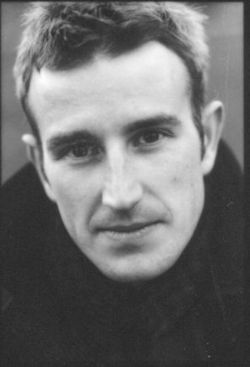
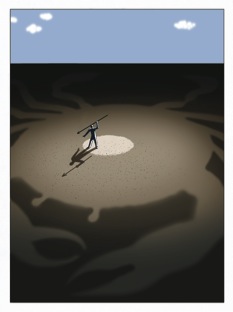
Robert%20Macfarlane On a cold morning last January, I travelled out to the Norfolk Fens to see a ghost. First, I caught a train twenty miles north from Cambridge to Littleport, a market town on the Cambridge–Norfolk border. At Littleport I was met by a friend called Justin Partyka, and Justin drove me in his little white baker’s van up into the Fens proper.

Entering the Fens always feels like crossing a border into another world. Various signs mark out the transition. Ash gives way to willow. Phragmites reeds flock in the ditches, as do bulrushes. The landscape becomes rectilinear: ruler-straight roads and field edges, a skyline as flat as a spirit level, and on every horizon smart rows of poplar trees, planted to break the prevailing winds.

That morning, with the solstice only a fortnight past, the temperature lingered around freezing. The air smelt bright. Roadside rut-puddles were lidded with thin ice. An east wind was blowing, which set the dry reeds stirring and cussing in the ditches. We drove north-east along the River Ouse. Vast fields scrolled away to the horizon on either side of the road, most of them still bare of crops, but some furred with the green of winter wheat. Rooks wandered about on the loam, chakking to each other. One field we passed had been flooded and in the low sunlight it gleamed like a great sheet of iron.

More here. [Thanks to William Dalrymple.]

Manu Joseph’s controversial tale of caste wins Indian literary prize

From The Guardian:

Manu-Joseph-winner-of-the-006 Manu Joseph has won the Hindu Best Fiction award 2010 with his first novel, Serious Men, a groundbreaking examination of caste in contemporary India. Speaking from Chennai after he was awarded the 500,000-rupee prize at a ceremony last night, Joseph said he was “really happy” to have won the award, although the book has divided opinions. While the reception of the novel within India has generally been very good, Joseph confessed that some readers “tell me they hate it”. “Indian writers in English usually take a very sympathetic and compassionate view of the poor, and I find that fake and condescending,” he explained.

Serious Men tells the story of Ayyan Mani, a middle-aged Dalit (someone of a lower caste), who works as an assistant to a brilliant Brahmin (upper-caste) astronomer at a scientific institute in Mumbai. Furious at his humble situation in life, Ayyan develops an outrageous story that his 10-year-old son is a mathematical genius – a lie which becomes increasingly elaborate and out of control. According to the author, some readers have found the morally nuanced figure of Ayyan “offensive”. “It's a class thing,” he suggested. “Most Indians readers of literary fiction written in English are of a certain class, and one of the recreations of the Indian upper class is compassion for the poor. I think the poor in India are increasingly very empowered, and the time has come when the novel can portray them in a more realistic way. Ayyan is still an underdog but that is due to his circumstances, not due to his intellect or aspirations.”

More here.

Cancer World

Steven Shapin in The New Yorker:

“The Emperor of All Maladies: A Biography of Cancer” by Siddhartha Mukherjee
Can Mukherjee’s book has the vividness of an insider’s account. It evokes what it feels like to be at the forefront of modern biomedicine and to bring new knowledge and technologies into the clinic. Take Mukherjee’s account of Sidney Farber in 1947, waiting for his first supply of the antifolate drug aminopterin and watching a two-year-old leukemia patient’s condition deteriorate as another drug failed: The patient “turned increasingly lethargic. He developed a limp, the result of leukemia pressing down on his spinal cord. Joint aches appeared, and violent, migrating pains. Then the leukemia burst through one of the bones in his thigh, causing a fracture and unleashing a blindingly intense, indescribable pain.” Mukherjee can also summon up the texture of previous systems of understanding, even of what it must have been like for Halsted to feel that he was right. It’s hard to think of many books for a general audience that have rendered any area of modern science and technology with such intelligence, accessibility, and compassion. “The Emperor of All Maladies” is an extraordinary achievement.

More here.

Tuesday, November 2, 2010

abstract painterliness

CH2

Like bagels and cream cheese, painterly abstraction is associated in the popular imagination with New York City despite its roots in Old Europe. The idiom’s practitioners are everywhere on earth these days, but the most authentic stuff is still made in our five boroughs. Russell Roberts, Cynthia Hartling and Wallace Whitney are three mid-career painters (based, respectively, in Manhattan, Brooklyn and the Bronx) who engage with the problems and pleasures of painterly abstraction. Among the adjectives sometimes applied to this kind of work is “juicy,” and the efforts of these artists exist along a spectrum of juiciness: Roberts apparently juicy but not really, Hartling moderately so, and Whitney having juiciness to spare. Juiciness implies several distinct components, often present in varying proportions. These include a vigorous, painterly touch, a broad chromatic range that includes a healthy admixture of saturated colors, and a surface that might seem a little ragged to eyes accustomed to the homogenizing computer screen. Juicy painting is open to accidental effects and chance alignments. It is not necessarily emotionally authentic, but it conveys the painter’s enjoyment of the act of mark-making. Joan Snyder’s paintings are juicy, notwithstanding an undercurrent of skepticism regarding the emotional efficacy of pure painting; Jonathan Lasker’s paintings, despite their exaggeratedly tactile surfaces and frequently loud colors, are not. Based closely on preparatory sketches, Lasker’s paintings are pointedly unspontaneous, and spontaneity (or its doppelganger, brushiness) is the juiciest attribute of all.

more from Stephen Maine at artcritical here.

a white boy catches on

Bigdaddykane101108_370

The Anthology of Rap allows us, over the course of its more than 800 pages, to watch the long herky-jerky evolution of the genre. We begin with rap’s birth in the primordial soup of the Old School, a late-seventies swamp in which single-cell rap organisms floated around calling to each other in long strings of pre-lexical nonsense syllables. “Told you ’bout the ding-d’-d’-ding-d’-ding-dingy-ding,” rapped Ikey C, to which the Sugarhill Gang responded, “Baby-bubba to the boogedy-bang-bang the boogie,” to which Sequence retorted, “I said I hip-ma-jazz and a raz-ma-jazz,” at which point DJ Hollywood interjected, “Hip-hip-the-hop, the hop, the hop / Dippy-dippy dip-dip-dop.” Early rap was mainly an avant-garde way to get people to dance at parties; its lyrics were never intended to be transcribed and studied. Today they read like nursery rhymes, or the kind of verse John Keats once criticized as “rocking horse” poetry: simple couplets, religiously end-stopped. (“And the way she moved was like a graceful swan / And we can make love to the break of dawn.”) Reading 100 pages of it made my brain numb. Finally, somewhere in the early eighties, rappers stood up and said (in the words of Kool Moe Dee), “Put that ba-diddy-ba bullshit on hold.” In 1986, Run-DMC made rap a mainstream phenomenon, and then the innovators moved in. Rakim, whose flow was so powerful it would earn him the nickname “God MC,” introduced rhymes within lines instead of just at the ends of them: “The melody that I’m stylin, smooth as a violin / Rough enough to break New York from Long Island.” Big Daddy Kane started playing with multisyllabic rhymes, pairing Tylenol with why you all and vasectomy with wreck with me.

more from Sam Anderson at New York Magazine here.

classically wilde

Mendelsohn_1-111110_jpg_230x884_q85

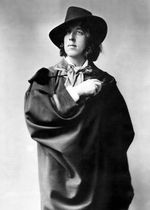
When asked what he intended to do after finishing at Oxford, the young Oscar Wilde—who was already well known not only for his outré persona (“I find it harder and harder every day to live up to my blue china,” etc.), but for his brilliant achievements as a classics scholar—made it clear in which direction his ambitions lay. “God knows,” the twenty-three-year-old told his great friend David Hunter Blair, who had asked Wilde about his postgraduate plans, and who later fondly recalled the conversation in his 1939 memoir, In Victorian Days. “I won’t be a dried-up Oxford don, anyhow. I’ll be a poet, a writer, a dramatist. Somehow or other I’ll be famous, and if not famous, I’ll be notorious.” As we know, his prediction would be spectacularly fulfilled: like a character in one of the Greek tragedies he was able to translate so fluently as a student, his short life followed a spectacular trajectory from fame to infamy, from the heady triumphs of his post-Oxford days, when he was already famous enough to be lampooned by Gilbert and Sullivan in Patience, to the dreadful peripeteia of the trials and imprisonment. But to some of those who knew him at the time, Wilde’s emphatic rejection of the scholarly life must have come as something of a surprise.

more from Daniel Mendelsohn at the NYRB here.

How old people will remake the world

From Salon:

World These days people are living longer lives than ever before. Ancient Romans expected to live an average of 25 years. Today, thanks to advanced medicine and nutrition, the worldwide average is 64. In all, we will enjoy 250 billion more years of life than if we had been born a century ago. Few people, of course, would argue that's a bad thing — but, as more and more people get older, it means that our world is about to undergo some very dramatic changes.

According to journalist Ted C. Fishman's new book “Shock of Gray,” those changes are already being felt in parts of the world. By reporting from cities that are ahead of the overall aging curve, Fishman deftly forecasts the larger problems that will soon consume the globe. Professionals and skilled laborers will be pushed out of their jobs before they can afford to retire, forcing many into service industries that pay a small fraction of their former salaries. Rural communities will struggle with acute aging as young people leave for the cities. That in turn will create opportunities for immigrants, thus accelerating globalization. Builders will need to accommodate more people with greater mobility issues, which will drive up costs for infrastructure. At the same time, scientists will continue to tweak the human life span to the point, perhaps one day, of near immortality.

More here.

Tuesday Poem

Getting Laundry Done in Rampur

Dobiwallah, please take my socks;
these ragged trousers and shirts;
and the shalwar kameez I bought
in the town upstream of here
between one bus and the next.

Beat them clean for me. Hurl them
into the cold waters, against
sharp-edged volcanic rocks — don’t let
the fear of crowding, the stupid words
spilled as answers to strangers
stay in their cloth. Hammer it out.

If a button comes off the shirt,
let it float all the way past Agra
(if they let such a tourist
so close to the Taj Mahal for free).
Let it come to Delhi and be gathered
by a hand glad for one more thing
the river brings. I will follow.

by Hanna Coy
from You Are Here, 2010

Seeing the Natural World With a Physicist’s Lens

Natalie Angier in The New York Times:

ANGI-sfSpan If you’ve ever stumbled your way through a newly darkened movie theater, unable to distinguish an armrest from a splayed leg or a draped coat from a child’s head, you may well question some of the design features of the human visual system. Sure, we can see lots of colors during the day, but turn down the lights and, well, did you know that a large bucket of popcorn can accommodate an entire woman’s shoe without tipping over?

Yet for all these apparent flaws, the basic building blocks of human eyesight turn out to be practically perfect. Scientists have learned that the fundamental units of vision, the photoreceptor cells that carpet the retinal tissue of the eye and respond to light, are not just good or great or phabulous at their job. They are not merely exceptionally impressive by the standards of biology, with whatever slop and wiggle room the animate category implies. Photoreceptors operate at the outermost boundary allowed by the laws of physics, which means they are as good as they can be, period. Each one is designed to detect and respond to single photons of light — the smallest possible packages in which light comes wrapped.

More here.

Caucasian Nation

Marco Roth in n + 1:

ScreenHunter_02 Nov. 02 10.10 The present blooming fantasy of white victimization has roots in the peculiar violent institutions of the 19th-century American South. In the distant mirror of history, it’s easy to spot the irony and the guilt: even before the Civil War began, whites worried that their slaves would rise up and repay their masters in kind — filch the fruit of their labor, rape them, and beat them, sometimes to death. As soon as the balance of power shifted and news of Lee’s surrender at Appomattox Courthouse circulated throughout the former slave states, those fears ran amok. Mark Summers, a historian of the disastrous “Reconstruction” that condemned recently freed blacks to another century of oppression, has observed that the South, unlike the North, had no truly independent newspapers or magazines. What fair and balanced organs then existed reported rumors and falsehoods, like the arrival of a “liberating” French army sent by Napoleon III the same week of Lee’s surrender, or the forced seizure of former plantations by mobs of roving blacks. In Summers’s telling phrase, “the white south saw with dreadful clarity things that did not exist.”

More here.

The signature of the bluffing brain

Ed Yong in Not Exactly Rocket Science:

Poker The best poker players are masters of deception. They’re good at manipulating the actions of other players, while masking their own so that their lies become undetectable. But even the best deceivers have tells, and Meghana Bhatt from Baylor University has found some fascinating ones. By scanning the brains and studying the behaviour of volunteers playing a simple bargaining game, she has found different patterns of brain activity that correspond to different playing styles. These “neural signatures” separate the players who are adept at strategic deception from those who play more straightforwardly.

In the game, a buyer and a seller negotiate over the sale of an imaginary object. The buyer is told about the object’s value in private and suggests a price to the seller, who then sets the actual price. If the price is less than the value, the deal goes ahead, the seller gets the price and the buyer gets the difference between that figure and the object’s value. If the seller’s price is too high, the deal is called off and no one gets anything. This goes on for 60 rounds and at the end of each, the players aren’t told about the outcomes.

Because of this set-up, buyers do best if they set low prices, because they stand to gain the most profits if the sellers accept. Sellers, however, prefer high prices to make the most from their sale. To play successfully, buyers have to keep in mind the object’s real value, the price that they offer, how they think the seller will react to their move, how they could make the most money, and how they can manipulate the seller to accomplish that.

More here.

The Phantom Left

Chris Hedges in Dandelion Salad:

Jon-stewart-rally The loss of a radical left in American politics has been catastrophic. The left once harbored militant anarchist and communist labor unions, an independent, alternative press, social movements and politicians not tethered to corporate benefactors. But its disappearance, the result of long witch hunts for communists, post-industrialization and the silencing of those who did not sign on for the utopian vision of globalization, means that there is no counterforce to halt our slide into corporate neofeudalism. This harsh reality, however, is not palatable. So the corporations that control mass communications conjure up the phantom of a left. They blame the phantom for our debacle. And they get us to speak in absurdities.

The phantom left took a central role on the mall this weekend in Washington. It had performed admirably for Glenn Beck, who used it in his own rally as a lightning rod to instill anger and fear. And the phantom left proved equally useful for the comics Jon Stewart and Stephen Colbert, who spoke to the crowd wearing red-white-and-blue costumes. The two comics evoked the phantom left, as the liberal class always does, in defense of moderation, which might better be described as apathy. If the right wing is crazy and if the left wing is crazy, the argument goes, then we moderates will be reasonable. We will be nice. Exxon and Goldman Sachs, along with predatory banks and the arms industry, may be ripping the guts out of the country, our rights—including habeas corpus—may have been revoked, but don’t get mad. Don’t be shrill. Don’t be like the crazies on the left.

“Why would you work with Marxists actively subverting our Constitution or racists and homophobes who see no one’s humanity but their own?” Stewart asked. “We hear every damn day about how fragile our country is—on the brink of catastrophe—torn by polarizing hate, and how it’s a shame that we can’t work together to get things done. But the truth is we do. We work together to get things done every damn day. The only place we don’t is here [in Washington] or on cable TV.”

The rally delivered a political message devoid of reality or content.

More here.

Monday, November 1, 2010

Last Call: 3 Quarks Daily is looking for New Monday Columnists

Dear Reader,

AbbasHere's your chance to say what you want to the large international audience of highly educated readers that make up the 3QD audience! Several of our regular columnists have had to cut back or even completely quit their columns for 3QD because of other personal and professional commitments, and so we are looking for new voices. We cannot pay, but it is a good chance to draw attention to subjects you are interested in, and to get feedback from us and from our readers.

You would have a column published at 3QD every fourth Monday. It should generally be between 1000 and 2500 words and can be about any subject at all. To qualify for a Monday slot, please submit a sample column to me by email (s.abbas.raza.1 at gmail.com) as an MS Word-compatible document, which I will then circulate to the other editors, and we will let you know our decision fairly quickly after we have a vote on it a fews days after November 1. If you are given a slot on the 3QD schedule, your sample can also serve as your first column. Feel free to use pictures, graphs, or other illustrations in your column. Naturally, you retain full copyright over your writing.

To browse previous columns, go to our Mondays page.

Please DO NOT submit more than one piece of writing, and also do not send the URL for a whole blog or website. I do not have the time to look through multiple postings. Select one piece of writing that you think is representative of the kinds of things you'd like to do at 3QD and just send that.

Several of the people who started writing at 3QD have gone on to get regular paid gigs at well-known magazines, others have written well-received books. Even those who have not, have written to me saying that it has been a uniquely rewarding experience. (See, for example, Aditya Dev Sood's note in the comments section of this post.) If you have a blog or website of your own, please help us to spread this invitation by linking to this post.

The absolute deadline for sample submissions is 11:59 PM EST, November 1, 2010, (that's today) so start writing!

All best,

Abbas

Sunday, October 31, 2010

The Great Indian Love Affair With Censorship

Arundhati-Roy_20101021 Ashis Nandy in Outlook India:

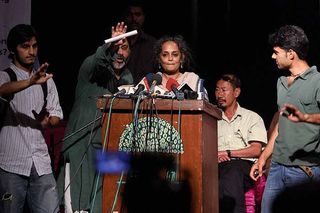
“Patriotism,” Samuel Johnson said nearly 250 years ago, “is the last refuge of a scoundrel.” These days in India, the adage can be safely applied to nationalism. There is no other explanation of the threat to arrest and try Arundhati Roy on charges of sedition for what she said at a public meeting on Kashmir, where Syed Ali Geelani too spoke. I was not there at the meeting, but I have read her moving statement defending herself afterwards. I feel both proud and humbled by it. I am a psychologist and political analyst, handicapped by my vocation; I could not have put the case against censorship so starkly and elegantly. What she has said is simultaneously a plea for a more democratic India and a more humane future for Indians.

I faced a similar situation a couple of years ago, when I wrote a column in the Times of India on the long-term cultural consequences of the anti-Muslim pogrom in 2002. It was a sharp attack on Gujarat’s changing middle-class culture. I was served summons for inciting communal hatred. I had to take anticipatory bail from the Supreme Court and get the police summons quashed. The case, however, goes on, even though the Supreme Court, while granting me anticipatory bail, said it found nothing objectionable in the article. The editor of the Ahmedabad edition of the Times of India was less fortunate. He was charged with sedition.

I shall be surprised if the charges of sedition against Arundhati are taken to their logical conclusion. Geelani is already facing more than a hundred cases of sedition, so one more probably won’t make a difference to him. Indeed, the government may fall back on time-tested traditions and negotiate with recalcitrant opponents through income-tax laws. People never fully trusted the income-tax officials; now they will distrust them the way they distrust the CBI.

In the meanwhile, we have made fools of ourselves in front of the whole world. All this because some protesters demonstrated at the meeting that Arundhati and Geelani addressed! Yet, I hear from those who were present at the meeting that Geelani did not once utter the word “secession”, and even went so far as to give a soft definition of azadi. By all accounts, he put forward a rather moderate agenda. Was it his way of sending a message to the government of India? How much of it was cold-blooded public relations, how much a clever play with political possibilities in Kashmir?

We shall never know, just because most of those who pass as politicians today and our knowledge-proof babus have proved themselves incapable of understanding the subtleties of public communication. They are not literate enough to know what role free speech and free press play in an open society, not only in keeping the society open but also in serious statecraft. In the meanwhile, it has become dangerous to demand a more compassionate and humane society, for that has come to mean a serious criticism of contemporary India and those who run it. Such criticism is being redefined as anti-national and divisive. In the case of Arundhati, it is of course the BJP that is setting the pace of public debate and pleading for censorship. But I must hasten to add that the Congress looks unwilling to lose the race. It seems keen to prove that it is more nationalist than the BJP.

Scientific evidence for psychic powers?

Jerry Coyne in Why Evolution is True:

ScreenHunter_01 Oct. 31 16.10 A respected peer-reviewed journal in psychology, The Journal of Personality and Social Psychology, is about to publish a paper that presents scientific evidence for precognition. The paper, by Daryl Bem of Cornell University, is called Feeling the future: Experimental evidence for anomalous retroactive influences on cognition and affect,” and you can download a preprint on his webpage. I’ve scanned the paper only briefly, and am posting about it in hopes that some of you will read it carefully and provide analyses, either here or elsewhere.

The paper purports to show that a choice that you make in a computer test can be influenced by stimuli you receive after you’ve already made the choice. This implies you have some way, consciously or unconsciously, of detecting things that haven’t yet happened. In an article in Psychology Today, Have scientists finally discovered evidence for psychic phenomena?“, psychologist Melissa Burkley at Oklahoma State University summarizes two of Bem’s studies:

However, Bem’s studies are unique in that they represent standard scientific methods and rely on well-established principles in psychology. Essentially, he took effects that are considered valid and reliable in psychology – studying improves memory, priming facilitates response times – and simply reversed their chronological order.

More here.