Tuesday Poem

If

If you can disentangle
yourself from your selfish self
all heavenly spirits
will stand ready to serve you

if you can finally hunt down
your own beastly self
you have the right
to claim Solomon's kingdom

you are that blessed soul who
belongs to the garden of paradise
is it fair to let yourself
fall apart in a shattered house

you are the bird of happiness
in the magic of existence
what a pity when you let
yourself be chained and caged

but if you can break free
from this dark prison named body
soon you will see
you are the sage and the fountain of life

by Rumi
translation: Nader Khalili

The Afterlife of David Foster Wallace

Jennifer Howard in the Chronicle of Higher Education:

Photo_9282_landscape_large When David Foster Wallace committed suicide, on September 12, 2008, at the age of 46, he put an abrupt and shocking end to what was already one of the most distinctive writing lives in contemporary America. Fans who knew his work tended to be passionate about it. If you weren't drawn to his epic, ironic, lonely-in-the-crowd, cri-de-coeur of a novel Infinite Jest, you might have known him from “Consider the Lobster,” or “A Supposedly Fun Thing I'll Never Do Again,” or another of the wry, footnoted essays that turned up from time to time in magazines like Harper's.

Readers outside academe caught on to Wallace before scholars did. When he died, academic interest in him had only begun to show real signs of life, with scholars starting to look closely at the ways in which Wallace responded to and reshaped for a new generation the postmodernism practiced by writers like Don DeLillo and Thomas Pynchon. Two years later, spurred in part by his death but even more by a rising generation of young scholars, the impending publication of a posthumous novel, and the opening of a major archive of the writer's papers, David Foster Wallace studies is on its way to becoming a robust scholarly enterprise.

More here.

Learning from his death

Feisal H. Naqvi in Pakistan Today:

ScreenHunter_01 Jan. 11 12.34 Many people who critique the blasphemy law do so on the basis that there is no punishment provided in the Quran for denigrating the Prophet (PBUH). So what? There is no punishment provided in the Quran for many crimes. Surely, nobody can deny that a society has a right to determine the acts it wishes to punish. And as Ms Menocal’s book shows, blasphemy is a crime to which Muslim societies have historically been – and self-evidently remain – uniquely sensitive.

The standard jurisprudential response to my assertion is that society indeed has a right to determine what actions are to be treated as criminal, but only within certain rights provided by the fundamental human rights guaranteed by the Constitution. I concede that point, so let us then look at the next issue: is punishing blasphemy violative of fundamental human rights?

My answer is no. As much as I disagree with the blasphemy law, I do not think that criminalising the act of blasphemy is violative of any fundamental human rights guaranteed by the Constitution. All of those rights are subject to reasonable limitations. And in Pakistan – repeat, in this country – I do not think it is unreasonable for the law to provide that blasphemy shall be a criminal offence. Even in England, the last blasphemy prosecution took place not centuries ago, but in 1977.

Does that mean the blasphemy law cannot, or should not, be challenged or changed? Absolutely not. The blasphemy law, as it stands today, invites abuse and serves as a terrible instrument of oppression. But what it does mean is that the change must be brought about through political means, not legal. And politics, as we too often forget, is the art of the possible, not the art of the desirable.

There are three basic ways to attack the blasphemy law. The first…

More here.

Elaine Kaufman: steely madame of the modern Algonquin

From The Telegraph:

Elaine_1780085b Any regular who arrived at Elaine’s restaurant – for the past half-century the most celebrated literary meeting-place in New York – would make a beeline for Elaine herself. The eponymous proprietress was hard to miss. When I met her at 9pm one Monday night last June she was jutting out from the edge of table four — which used to be Norman Mailer’s table, and William Styron’s and Kurt Vonnegut’s — and at the age of 80, she still looked as though she could pick up any given gangster by the collar and flick him out the door with her finger. “Everybody’s here,” she said as she greeted me, with a meaningful nod in the direction of actor Alec Baldwin. The place was not terribly crowded, but Baldwin was at table three (once home to Laurence Olivier and Noël Coward) and gradually, over the next hour or two, Elaine edged further into his group of indeterminate somebodies until she was among them, Baldwin cracking jokes and everyone else laughing.

Elaine’s has been referred to as a salon/saloon, and the combined image that conjures up of Gertrude Stein and John Wayne was as good a first impression of Elaine Kaufman as any. George Plimpton, editor in chief of the Paris Review, once said fondly that “she has the fastest knee in town and she knows where to put it”. Years earlier, she had spent the night in jail after slugging an unwelcome customer and cutting his cheek with her large gold rings. Elaine’s antics were part of the draw; a famous New Yorker cartoon features a couple entering the restaurant as a man rockets headlong out of the front window, with the caption: “Oh, good. Room just opened up at the bar.” New York magazine celebrated the place’s 20th anniversary in 1983 with an article headlined: “If you’ve been too afraid to go to Elaine’s for the past 20 years, here’s what you’ve missed”.

More here.

You Might Already Know This …

From The New York Times:

Esp They should have seen it coming. In recent weeks, editors at a respected psychology journal have been taking heat from fellow scientists for deciding to accept a research report that claims to show the existence of extrasensory perception. The report, to be published this year in The Journal of Personality and Social Psychology, is not likely to change many minds. And the scientific critiques of the research methods and data analysis of its author, Daryl J. Bem (and the peer reviewers who urged that his paper be accepted), are not winning over many hearts.

Yet the episode has inflamed one of the longest-running debates in science. For decades, some statisticians have argued that the standard technique used to analyze data in much of social science and medicine overstates many study findings — often by a lot. As a result, these experts say, the literature is littered with positive findings that do not pan out: “effective” therapies that are no better than a placebo; slight biases that do not affect behavior; brain-imaging correlations that are meaningless.

More here.

Monday, January 10, 2011

Sunday, January 9, 2011

No Thanks for the Memories

Wood_1_jpg_470x398_q85 Gordon S. Wood reviews Jill Lepore's The Whites of Their Eyes: The Tea Party’s Revolution and the Battle Over American History, in the NYRB:

America’s Founding Fathers have a special significance for the American public. People want to know what Thomas Jefferson would think of affirmative action, or how George Washington would regard the invasion of Iraq. No other major nation honors its historical characters in quite the way we do. The British don’t have to check in periodically with, say, either of the two William Pitts to find out what a historical figure of two centuries ago might think of David Cameron’s government in the way we seem to have to check in with Jefferson or Washington about our current policies and predicaments. Americans seem to have a special need for these authentic historical figures in the here and now.

It is very easy for academic historians to mock this special need, and Harvard historian Jill Lepore, as a staff writer for The New Yorker, is an expert at mocking. Her new book, which mingles discussions of the present-day Tea Party movement with scattershot accounts of the Revolution, makes fun of the Tea Party people who are trying to use the history of the Revolution to promote their political cause. From her point of view, “What would the founders do?” is an “ill-considered” and “pointless” question. It has nothing to do with the scholarly science of history. “No NASA scientist decides what to do about the Hubble by asking what Isaac Newton would make of it.” The fact that many ordinary Americans continue to want to ask about the Founders evokes no sympathy or understanding whatever from Lepore.

Of course, it is not just people on the political right who use the founding era to advance their causes. As Lepore concedes, the American Revolution is everyone’s favorite event. “When in doubt, in American politics, left, right, or center, deploy the Founding Fathers.” The antiwar movement of the 1970s seized the Bicentennial of 1776 to further its cause. Jeremy Rifkin of the People’s Bicentennial Commission urged Americans to form TEA parties (the acronym stood for Tax Equity for Americans), and his commission competed with the Nixon administration over who were the true heirs of the American Revolutionary tradition. Brought to trial in 1970 for blocking an army base, the radical historian Howard Zinn told the court that he was acting “in the grand tradition of the Boston Tea Party.”

Targeted

129453714420110108giffords Michelle Goldberg in Tablet:

On Saturday morning, Gabrielle Giffords, an Arizona Democrat, was holding a meet-and-greet at a Tucson Safeway when 22-year-old Jared Lee Loughner allegedly shot her in the head, point blank. He then allegedly turned his fire on others; at least five people were killed, including federal judge John Roll. Roll had previously received death threats for his involvement in immigration cases, but he had been at the event unexpectedly; Giffords is thought to have been the main target. Miraculously, she survived, though as of this writing she remains in critical condition. We don’t yet know what her would-be assassin was thinking. But we do know that Giffords, the first Jewish woman that Arizona sent to Congress, has been the target of a long campaign of right-wing incitement. And Loughner, while clearly in the grip of delusion rather than any coherent ideology, nonetheless shared many far-right obsessions.

Loughner had a YouTube channel and a MySpace page, and both suggest someone deeply unbalanced. His videos, which mostly feature white text on a black background accompanied by trippy electronic music, are full of unintelligible messages about conscious dreaming and English grammar. But they also make it clear that Loughner has internalized some of the conspiracy theories common in the Tea Party. He is obsessed with currency manipulation and out-of-control government power. Toward the end of a YouTube video titled “My Final Thoughts,” he writes, “The majority of citizens in the United States of America have never read the United States of America’s Constitution. You don’t have to accept the federalist laws. Nonetheless, read the United States of America’s Constitution to apprehend all of the current treasonous laws.” Among his MySpace photos is an American history book with a gun on top.

Perhaps equally significant, he lists Mein Kampf among his favorite books—although he cites The Communist Manifesto as well. Giffords was vocal about her Judaism, which she embraced as an adult. (Her father, who is a first cousin of Gwyneth Paltrow’s father, is Jewish, while her mother is a Christian Scientist.) Given Loughner’s fixation on currency and his nod to Hitler, it certainly seems possible that Jew-hatred played a role in his terrible mixed-up fantasy world.

Jazz from an Indian-American Perspective

01042011_Vijay_2009_300 Michael Gallant in America.gov:

For many musicians, playing the fearless jazz improvisations of American pianist Thelonious Monk and the undulating rhythmic intricacies of Carnatic music from southern India might seem like an odd combination, but for Indian-American jazz pianist Vijay Iyer, it is second nature.

When he is not touring around the world, Iyer lives with his family in New York, where he records and performs regularly and teaches music to students at New York University, the New School University and the Manhattan School of Music. His 16 albums range from solo piano performances to intricate trio, quartet and quintet interpretations, as well as more unconventional groupings. The 2004 album In What Language?, for example, combines jazz influences with hip-hop and a spoken-word performance by poet Mike Ladd, drawing on musical traditions from South Asia and Africa. Iyer said he and Ladd created the song-cycle album as an examination of diversity and tolerance for the post–September 11 world.

Iyer wasn’t always set on being a musician; he holds a master’s degree in physics as well as an interdisciplinary doctorate in technology and the arts that he earned at the University of California, Berkeley. Iyer sees an overlap between his scientific background and his musical creativity: He understands the physics behind music and examines the engineering inherent in creating a musical composition.

Prolific and successful as he is, Iyer was not always widely accepted as a pianist or composer. But through a commitment to writing music that melded his influences — Indian and American, especially — Iyer has found a new pathway in American jazz, helping to open the door for new generations of adventurous artists.

Shehrbano Taseer on her father Salman Taseer’s murder

Shehrbano Taseer in the New York Times:

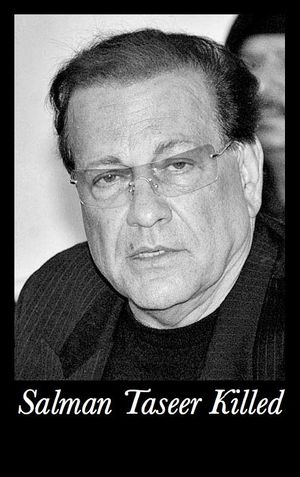
Salman-Taseer-Killed My father’s life was one of struggle. He was a self-made man, who made and lost and remade his fortune. He was among the first members of the ruling Pakistan Peoples Party when it was founded by Zulfikar Ali Bhutto in the late 1960s. He was an intellectual, a newspaper publisher and a writer; he was jailed and tortured for his belief in democracy and freedom. The vile dictatorship of Gen. Mohammad Zia ul-Haq did not take kindly to his pamphleteering for the restoration of democracy.

One particularly brutal imprisonment was in a dungeon at Lahore Fort, this city’s Mughal-era citadel. My father was held in solitary confinement for months and was slipped a single meal of half a plate of stewed lentils each day. They told my mother, in her early 20s at the time, that he was dead. She never believed that.

Determined, she made friends with the kind man who used to sweep my father’s cell and asked him to pass a note to her husband. My father later told me he swallowed the note, fearing for the sweeper’s life. He scribbled back a reassuring message to my mother: “I’m not made from a wood that burns easily.” That is the kind of man my father was. He could not be broken.

More here.

Aatish Taseer on his father Salman Taseer’s murder

Aatish Taseer in The Telegraph:

ScreenHunter_10 Jan. 09 19.51 Already, even before his body is cold, those same men of faith in Pakistan have banned good Muslims from mourning my father; clerics refused to perform his last rites; and the armoured vehicle conveying his assassin to the courthouse was mobbed with cheering crowds and showered with rose petals.

I should say too that on Friday every mosque in the country condoned the killer's actions; 2,500 lawyers came forward to take on his defence for free; and the Chief Minister of Punjab, who did not attend the funeral, is yet to offer his condolences in person to my family who sit besieged in their house in Lahore.

And so, though I believe, as deeply as I have ever believed anything, that my father joins that sad procession of martyrs – every day a thinner line – standing between him and his country's descent into fear and nihilism, I also know that unless Pakistan finds a way to turn its back on Islam in the public sphere, the memory of the late governor of Punjab will fade.

And where one day there might have been a street named after him, there will be one named after Malik Mumtaz Qadir, my father's boy-assassin.

More here. [Thanks to Amitava Kumar.]

The Internet, Tamed

Justin E. H. Smith in his own blog:

ScreenHunter_08 Jan. 09 14.24 If the Internet is cocaine, Facebook is crack. While information is pulverized in a Google search, it is in turn crytallized by the 'news feed' into more potent nuggets, more potent because they are supposedly coming from 'friends'. Like crack, what they actually deliver is little more than a desire for further nuggets. I think this is what Richard Klein (describing cigarettes) claimed is characteristic of the experience of the sublime.

Facebook's potency resides in the personalized character of the stream of information, and in the sensation that it is being delivered directly to you as a result of real agency and even solicitude. But it cannot be fully personalized, and on reflection I note that I've spent a lot of time reading about and looking at things that are really of no interest to me whatsoever. I've figured out how to block Farmville and MafiaWars and obscene stuff like that, but there's no way to similarly keep at bay the barrage of images of other people's babies (a sensitive issue at this stage of the life-cycle), nor the whooping and hollering of sports fans (no less tedious in its written than in its audible form), nor all the bickering about having to grade papers among my academic peers, nor the predictable self-affirmations of the mainline liberals who make up the greater part of my cohort.

Certainly I do read a lot of things that interest me. The best updates are the ones that hew to a consistent theme (like the friend of mine who posts nothing but news of the latest film he has watched, and asks his friends to name films that share similar elements). But all in all, it is considerably less edifying than the books I've just checked out of the library. To extend my earlier analogy a bit further, I feel the need to go back to authentic Andean tradition, and to chew on raw coca leaves for a while– that is, to start reading books again, from cover to cover. It is not that this is an inherently superior mode of learning; in fact I believe it is dying out. But it is how I first started learning, and recently I've begun to miss it.

My first experiences in the library in which I will be working for the next several months have been characterized by a sort of noetic ecstacy (neurochemically very different, I think, from the experience of the flashing red light). I am permitted to go in after hours, and to browse the stacks entirely by myself. In large part, perhaps, because the building is a stunning example of sleek, midcentury-modern architecture, I am easily put in mind of the supercomputers that were, around the same time and not so far away, being constructed by IBM. When I browse the stacks, it is as if I am somehow going inside the Internet, or the thing that would eventually be distilled into the Internet, but that used to be an expansive physical enviroment, filled with information in heavy chunks, books, which one could grab, open, and read, rather than search, click, and skim.

More here.

Sunday Poem

Creation

Wherever the dead are there they are and
Nothing more. But you and I can expect
To see angels in the meadowgrass that look
Like cows –
And wherever we are in paradise
in furnished room without bath and
six flights up
Is all God! We read
To one another, loving the sound of the s’s
Slipping up on the f’s and much is good
Enough to raise the hair on our heads, like Rilke and Wilfred Owen

Any person who loves another person,
Wherever in the world, is with us in this room –
Even though there are battlefields.

by Kenneth Patchen

Head to Toe

From Harvard Magazine:

Daniel Lieberman tracks the evolution of the human head:

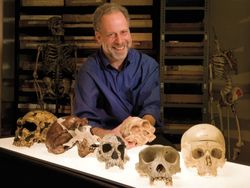
Dan “The head presents an interesting evolutionary paradox,” explains Lieberman, chair of the new department of human evolutionary biology, “because on the one hand it is so complicated that if anything goes wrong, the organism dies. On the other hand, it is where natural selection can and has acted powerfully to make us what we are.” Everything is closely connected. For example, the roof of the orbits is the floor of the brain—if one changes, they both do.

“How is it,” he asks, “that something so complicated and so vital can also be so evolvable?” One explanation involves modularity and integration. Not only do heads contain many modules (instructions for building an eye to see, for example, or an ear to listen), but each module is itself “intensely integrated in terms of development, structure, and function….Changes to the size, the shape, or the relative timing of development of each of the head’s many modules offer a variety of opportunities for change.” Studying the head’s modules, Lieberman writes, may help us understand why “the human head has changed substantially since our lineage diverged from the chimpanzee’s lineage.” It also provides an opportunity for “exploring how nature tinkers with development in ways that affect function and permit the evolution of complex structures.”

More here.

Unlocking the Mystery of Human Nature

From The Telegraph:

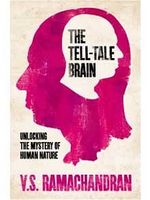
Ramachandran_main_1797924f In 1864, during a charged debate on Darwin’s theory of evolution, Disraeli asked whether we are apes or angels. Over this question, the highly regarded (perhaps too highly regarded) neuroscientist V S Ramachandran sits proudly on the fence. We are both apes and angels, he suggests.

Humans, unlike other creatures, possess language, empathy, humour, plus the capacity for abstract thinking and self-awareness. But our uniqueness is based on structures that evolved for other reasons – our hearing, for example, derived from our chewing (two redundant jaw bones worming their way into the ear). Vital to what makes us special is our brain. As Ramachandran put it in his 2003 Reith Lectures: “Science tells us we are merely beasts, but we don’t feel like that. We feel like angels trapped inside the bodies of beasts, forever craving transcendence.” That, in a nutshell, is for Ramachandran the human predicament, and in The Tell-Tale Brain he sets out to crack it.

More here.

Saturday, January 8, 2011

Learning From the Master

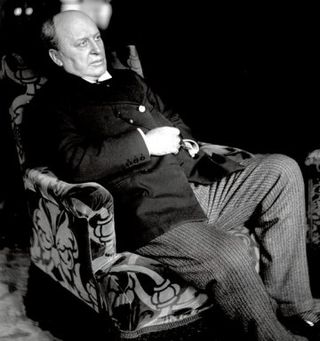
1224285797332_1Gabriel Josipovici reviews Colm Tóibín's All a Novelist Needs: Colm Tóibín on Henry James, in The Irish Times:

THERE ARE GREAT scholar critics, such as Erich Auerbach, Northrop Frye and Christopher Ricks, and great cultural critics, such as Walter Benjamin and Roland Barthes, but by and large the best literary criticism has always come from the practitioners themselves: Coleridge, Eliot, Proust, Auden, Jarrell, Hill. This is not surprising: more is at stake for the writer than for most readers as he seeks to grapple with the mystery of why a predecessor feels so significant, has helped release so much in his own art. Colm Tóibín’s relation to Henry James is of this kind.

In devoting several years of his life to re- creating a small period of James’s life for his novel The Master he was of course devoting them, as any artist devotes his working life, to trying to discover what it was he needed and wanted to say. In other words he wants to understand James, his life and his art, because in that way he will come to understand himself. We can feel sure, therefore, that a collection of his incidental essays on James, written between 2002 and 2009, the years surrounding his writing of The Master, will enrich our understanding of both artists.

And the book does not disappoint. The essays may be incidental – reviews, introductions, lectures – but each conveys a sense of Tóibín’s deep engagement with his subject and his writer’s way with words. Reviewing Sheldon Novick’s biography of James he quickly but firmly insists on replacing the biographer’s easy conflation of silence with sexual repression with something more subtle but to my mind far more convincing: the artist’s reticence. “When Novick says in his prologue that James wrote ‘frank love letters’ to Henrik Andersen (xviii) and adds soon afterwards that James’s ‘only indisputable love letters were written to men’ (13 ), the reader who knows these letters is entitled to feel that Novick’s reading skills are not subtle. These letters . . . are many things, but they are not ‘frank’ and they are not ‘indisputable’. James was not given to frankness or indisputability. That is why we read him.”

In other words the web of allusions may protect not a secret but the sanctity and complexity of life. Tóibín comes to this in the most profound piece in this volume, an essay that would by itself be worth the price of the book, A More Elaborate Web: Becoming Henry James. This is his account of how and why he wrote The Master, and it is one of the best essays on how a work of art comes into being that I know.

Nowhere Man

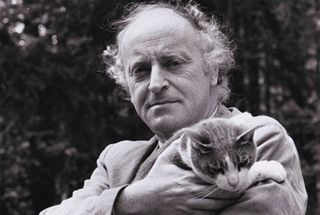
1294084012kirsch_122310_380px Adam Kirsch on my old teacher, in The Tablet:

With most writers, the passage of time helps to consolidate their achievement and fix their reputation. Fifteen years after a poet’s death would seem like ample time for this posthumous process to be completed—especially in the case of a poet as famous as Joseph Brodsky, who became internationally known in his twenties and won the Nobel Prize in 1987. Certainly there is no mystery about the standing of poets like Seamus Heaney or Derek Walcott, Brodsky’s friends, contemporaries, and fellow-laureates. Whether you enjoy reading Heaney or not, the shape of his achievement is clear; his name stands for a certain kind of writing and thinking.

Brodsky, however, continues to look a little blurry to American readers. His work does not have the currency or influence, among younger poets, that his reputation would suggest. Some critics, especially in England, are prepared to dismiss him entirely, to call his work overrated and his reputation unearned. But most simply ignore him, as though he did not belong to the same conversation that includes Heaney or John Ashbery or Adrienne Rich.

In one crucial sense, of course, he does not. All those poets write in English; but Iosif Aleksandrovich Brodsky, born in Leningrad in 1940, was a Russian poet. This means that it is Russian readers, familiar with Brodksy’s language and literary tradition, who must decide his claims to greatness. And as Lev Loseff shows in Joseph Brodsky: A Literary Biography, his clarifying new book, the best Russian judges have been unanimous about Brodsky from the beginning.

When he was 21 years old, for instance, he was introduced to Anna Akhmatova, the tragic heroine of 20th-century Russian poetry. Loseff, a poet and friend of Brodsky’s, explains that such “pilgrimages” to Akhmatova were common for young writers, who would arrive “bearing flowers and notebooks full of poetry.” Unsurprisingly, the encounter made a deep impression on Brodsky: “I suddenly realized—you know, somehow the veil suddenly lifts—just who or rather just what I was dealing with.” What is more surprising is that Akhmatova, then 72 years old, immediately accepted Brodsky as an equal: “Iosif, you and I know every rhyme in the Russian language,” she told him. In 1965, after reading a poem of Brodsky’s, she wrote in her diary: “Either I know nothing at all or this is genius.”

There is nothing new about English readers being baffled by poetry that Russians adore. On the contrary, it’s a critical truism that Russian poetry doesn’t translate well. Pushkin occupies the same place in Russian literature as Shakespeare does in English, but it has always been hard for us to really understand why. Twentieth-century masters like Osip Mandelstam and Marina Tsvetaeva are probably as well known in America for their life stories as for their writings. If Brodsky belongs in their company, then it makes sense for him to remain a little obscure to Americans, just as they do.

What makes Brodsky’s case so unusual is that this Russian poet spent almost half his life in America.