Marital Deafness

Scott Adams in his blog:

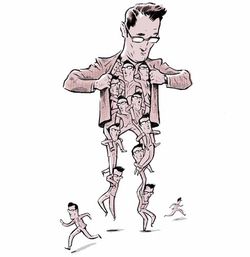
Being married is a lot like being deaf. If you hear the same person talking day-after-day, you literally lose the ability to hear what that person is saying. I will give you two examples from my own life. Both are true. This one happened last week:

Shelly: Do you want some carrot cake?

Me: Hurricane? What hurricane?

In that particular case, we eventually got to the bottom of it, but only because Shelly needed an answer. I estimate that half of the time she says lamp, I hear doorknob, and it doesn't really matter so we go on with our lives. I might spend a few seconds confused about the larger point, but I shake it off.

Within a day of the carrot cake incident, I made an offhand comment to Shelly to the effect that she might enjoy a certain sport. That conversation went like this:

Me: That's your new game, honey.

Shelly: What did you call me?

Me: (slower and louder) I SAID, “THAT'S YOUR NEW GAME, HONEY.”

Shelly: Oh. I thought you called me Jimmy Bean

Me: Why would I call you Jimmy Dean

Shelly: Not Dean, Bean. Jimmy Bean.

Me: Why would I call you Jimmy Bean?

Shelly: That's what I wondered too.

Me: No, I said, “That's your new game, honey.”

Shelly: What's my new game?

Me: I forget.

As I'm sure you've learned, it's impossible to speak to a spouse if he or she is near running water, or using power equipment, or concentrating on something else, or eating something crunchy, or wondering if the squeak in the distance is the cat dying, or there is a child within a hundred yards. Amazingly, that covers 90% of every conversation you might attempt at home.

Recently I discovered that spouses, like computers, must be booted up before they can hear what you say.

More here.
Darkness on the Edge of the Universe

Brian Greene in the New York Times:

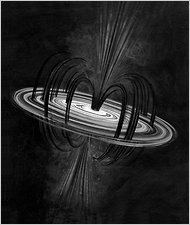
16greeneimg-articleInline The pinpoints of starlight we see with the naked eye are photons that have been streaming toward us for a few years or a few thousand. The light from more distant objects, captured by powerful telescopes, has been traveling toward us far longer than that, sometimes for billions of years. When we look at such ancient light, we are seeing — literally — ancient times.

During the past decade, as observations of such ancient starlight have provided deep insight into the universe’s past, they have also, surprisingly, provided deep insight into the nature of the future. And the future that the data suggest is particularly disquieting — because of something called dark energy.

This story of discovery begins a century ago with Albert Einstein, who realized that space is not an immutable stage on which events play out, as Isaac Newton had envisioned. Instead, through his general theory of relativity, Einstein found that space, and time too, can bend, twist and warp, responding much as a trampoline does to a jumping child. In fact, so malleable is space that, according to the math, the size of the universe necessarily changes over time: the fabric of space must expand or contract — it can’t stay put.

More here.

When Self-Knowledge Is Only the Beginning

Richard Freidman in The New York Times:

Men It is practically an article of faith among many therapists that self-understanding is a prerequisite for a happy life. Insight, the thinking goes, will free you from your psychological hang-ups and promote well-being. Perhaps, but recent experience makes me wonder whether insight is all it’s cracked up to be. Not long ago, I saw a young man in his early 30s who was sad and anxious after being dumped by his girlfriend for the second time in three years. It was clear that his symptoms were a reaction to the loss of a relationship and that he was not clinically depressed.

“I’ve been over this many times in therapy,” he said. He had trouble tolerating any separation from his girlfriends. Whether they were gone for a weekend or he was traveling for work, the result was always the same: a painful state of dysphoria and anxiety. He could even trace this feeling back to a separation from his mother, who had been hospitalized for several months for cancer treatment when he was 4. In short, he had gained plenty of insight in therapy into the nature and origin of his anxiety, but he felt no better. What therapy had given this young man was a coherent narrative of his life; it had demystified his feelings, but had done little to change them.

Was this because his self-knowledge was flawed or incomplete? Or is insight itself, no matter how deep, of limited value?

More here.

Monday, January 17, 2011

Sunday, January 16, 2011

The Intellectual at Play in the Wider World

Pankaj Mishra in the New York Times Book Review:

02mishra-articleInline I don’t think of myself as a literary critic. I write about novels and short stories. But I am reluctant to describe what I do as “literary criticism,” as I like to move quickly beyond the literariness of a text — whether narrative techniques or quality of prose — and its aesthetic pleasures, to engage with the author’s worldview, implied or otherwise, and his or her location in history (of nation-states and empires, as well as of literary forms).

This kind of reading came naturally to me in the new, very poor and relatively inchoate Asian society in which I grew up. When I first began to read literary fiction I could assume neither a clear backdrop of political and social stability, nor a confident knowledge of the world and assumptions of national power. Everything had to be figured out, and literature was the primary means of clarifying a bewilderingly large universe of meanings and contexts.

Much of my self-education was assisted by American writers like Edmund Wilson, Dwight Macdonald, Lionel Trilling, F. W. Dupee and Irving Howe. Some of these were literary critics, but they were, above all, public intellectuals (a species whose irrelevance and powerlessness Alfred Kazin seems to be mourning — rather more than the demise of a critical genre — when he writes, “We are rushing into our future so fast that no one can say who is making it, or what is being made; all we know is that we are not making it, and there is no one, no matter what his age is, who does not in his heart feel that events have been taken out of his hands”).

Coming of age during and after the progressive era, when intellectual argument and political activism promised to reshape America’s future, these critics took it for granted that literature was among the main signs of the times, and subject to the inquiring gaze of history and politics.

In this presumption, they were supported not so much by the Marxian ideologues of the 1930s as by the great realist novelists, from Stendhal to Tolstoy and Mann, who could not have written their most mature works without grappling with the political and moral challenges of their day.

More here.

Have women evolved to protect themselves from sexual assault?

Jesse Bering in Slate:

ScreenHunter_08 Jan. 16 21.40 Thornhill and Palmer, Malamuth, and the many other investigators studying rape through an evolutionary lens, take great pains to point out that “adaptive” does not mean “justifiable,” but rather only mechanistically viable. Yet dilettante followers may still be inclined to detect a misogyny in these investigations that simply is not there. As University of Michigan psychologist William McKibbin and his colleagues write in a 2008 piece for the Review of General Psychology, “No sensible person would argue that a scientist researching the causes of cancer is thereby justifying or promoting cancer. Yet some people argue that investigating rape from an evolutionary perspective justifies or legitimizes rape.”

The unfortunate demonization of this brand of inquiry is rooted in the fallacy of biological determinism (according to which men are programmed by their genes to rape and have no free will to do otherwise) and the naturalistic fallacy (that because rape is natural it must be acceptable). These are resoundingly false assumptions that reveal a profound ignorance of evolutionary biology. Yet the purpose of the remaining article is not to belabor that tired ideological dispute, but to look at things from the female genetic point of view. We've heard the argument that men may have evolved to sexually assault women. Have women evolved to protect themselves from men?

More here.

Kenneth Tong: The Interview (or Portrait of a Sociopath)

Johann Hari in his blog (was also published in the London Evening Standard):

550w_bb10_kenneth Women should “get thin or die trying,” and you can “never start too young.” It is better for a girl to “risk [her] life dieting than be sub-par by being a plus-size.” Remember: “Hunger hurts but starving works.” When an ultra-wealthy but forgotten former British reality show Big Brother contestant called Kenneth Tong started Tweeting these sentiments – and worse – a fortnight ago, a Twitter-storm broke. Everyone from Rhianna to Gordon Ramsay told their followers he was a dangerous fool, but Tong gathered tens of thousands of young girls who followed him. He became the most discussed subject on Twitter in the world for three days. His message? “The words lunch, breakfast, and dinner should now mean nothing to you, you have eaten enough for a lifetime. Stop. You are disgusting.”

Then Tong claimed it was all a hoax – just an hour after I interviewed him. In our long discussion he passionately defended every word he had said, but when I told him that his arguments could kill young girls and expose him to serious legal liability, he visibly began to panic. When I spoke to him on the phone later in the day, after his ‘revelation’, he said “it was dangerous ground we were treading on, I can see that now” and begged me not to publish his comments. So I don’t believe it was a hoax at all – but that he was finally scared off by the legal implications of what he was saying and doing. You can judge for yourself.

I meet Tong at a dingy restaurant in Chinatown in London. He is a short man in a gray suit who manages to look both baby-faced and wizened at the same time. He is lined with great wodges of bling: a sparkling silver necklace hangs from his neck and gold flashes from his wrists. He hurries up to me and smirks: “I am the most hated man in Britain!”

More here.

Izzeldin Abuelaish: I Shall Not Hate

Rachel Cooke in The Observer:

9780307358882 For the duration of the war, the Israeli government allowed no journalists to enter Gaza; they could only gather on the border, and listen to the shelling. But Abuelaish knew plenty of Israelis – thanks to his work as an infertility specialist, he had worked in several Israeli hospitals – and among his many friends on the other side was Shlomi Eldar, a reporter for Israel's Channel 10. Eldar began calling Abuelaish late every afternoon to ask what had happened during the course of the day. Live on air, his friend would then describe the scene – from the vantage point of his living room window, he could see entire neighbourhoods being obliterated – for the benefit of viewers of the evening news show. Abuelaish knew that his audience was not likely to be particularly sympathetic to his point of view. Most Israelis believed the Gazans had brought this crisis on themselves. He also knew that there was a chance that someone on his own side would take against his addressing Israel, and that this might involve reprisals against his family, but he kept taking the calls. “With my voice in their ears, the Israelis couldn't entirely ignore the cost to the Palestinians of their military action.”

More here.

Sunday Poem

Myself

What, younger, felt
was possible, now knows
is not – but still
not chanted enough –

Walked by the sea,
unchanged in memory –
evening, as clouds
on the far-off rim

of water float,
pictures of time,
smoke, faintness –
still the dream.

I want, if older,
still to know
why, human, men
and women are

so torn, so lost,
why hopes cannot
find better world
than this.

Shelley is dead and gone,
who said,
“Taught them not this –
to know themselves;

their might could not repress
the mutiny within,
And for the morn
of truth they feigned,

deep night
Caught them ere evening . . .”

by Robert Creely
from American Poets

What better way to honor Dr. King than to learn more about his life and legacy?

From The Christian Science Monitor:

1. The King trilogy, by Taylor Branch

King Branch’s Pulitzer-prize winning trilogy consists of “Parting the Waters: America in the King Years 1954-1963” (Simon and Schuster, 1088 pp.), “Pillar of Fire: America in the King Years 1963-65” (Simon and Schuster, 768 pp.), and “At Canaan's Edge: America in the King Years 1965-68″ (Simon and Schuster, 1056 pp.). Readers agree that this all-encompassing body of work isn’t just a biography of a great man, but a portrait of America.

From The Head Butler:

Thick books. They'd better be great, because they sure are heavy. “The Power Broker,” for example, the Robert Caro biography of New York City potentate Robert Moses. A brick of a book, but when Butler sat down to read it, he raced through it as if it were a thriller. And, ever after, Butler remembers the book as if it were an experience. Could you have this kind of experience reading about Martin Luther King? After all, everyone knows the King story in outline. Who hasn't heard the “I have a dream” speech? Or seen King in Alabama, marching proudly to jail? Old story, to be sure, but when you hear it told day by day, as Taylor Branch does, it seems new — an epic life unfolding in front of your eyes. Branch traces King's education, showing how teachers and writers shaped his thought. He introduces us to the men and women who became King's colleagues and takes the time to make them as real as King. And then, of course, he moves into the set pieces: the Freedom Rides, Birmingham, jail. Branch, as a writer, is under King's spell; his prose has a cadence you don't often see in biographies, even in Pulitzer Prize winners like “Parting the Waters.”

More here.

Rethinking grief

From The Boston Globe:

Rethinkinggrief__1295038668_3278 You may not have heard of the psychologist Elizabeth Kubler-Ross, but you’ve almost certainly heard of her five stages of grief: denial, anger, bargaining, depression, and acceptance. They’re widely used by psychologists, psychiatrists, and grief counselors. Even Conan O’Brien has joked that getting replaced at “The Tonight Show” involved going through the stages of losing a talk show: “Everyone goes through it, I’ve talked to Arsenio, I’ve talked to everybody….It’s just science, man!”

Is it, though? That’s the question Ruth Davis Konigsberg, a journalist, asks in “The Truth About Grief: The Myth of Its Five Stages and the New Science of Loss.” There is, she argues, very little empirical evidence that people actually grieve by going through five lengthy stages. Instead, she argues, most people grieve pretty quickly, and in their own way. She cites studies which show, for example, that most people accept the loss of a loved one almost immediately — they are “more resilient” than the stages suggest, and more quickly ready to move on with life. Research suggests, she argues, that grief is “a grab bag of symptoms that come and go and, eventually, simply lift.” What really determines how you grieve is simply how resilient your personality is in general.

More here.

Saturday, January 15, 2011

we are both rather contemptible individuals

BOOK-articleLarge

One way to read this book, a dialogue between two famous French authors, is as a comic novel, a brilliant satire on the vanity of writers. Michel Houellebecq, who won last year’s Prix Goncourt, France’s highest literary award, for his latest novel, “La Carte et le Territoire,” is well known for his provocative black humor. Bernard-Henri Lévy (also known as BHL), though less noted for his wit, likes to play up to his reputation as a comic figure, popping up here, there and everywhere in his fine white shirts, opened halfway down his chest, holding forth on everything from Jean-Paul Sartre to jihad in Pakistan, and generally acting out the role, in a somewhat theatrical fashion, of the great Parisian Intellectual. Houellebecq’s first letter to his literary confrere in “Public Enemies” opens on a comical note. “Dear Bernard-Henri Lévy,” it goes. “We have, as they say, nothing in common — except for one essential trait: we are both rather contemptible individuals.” He is, of course, being playful. Houellebecq doesn’t really find himself contemptible. It is part of his comedy. As he says later on in the correspondence: “My desire to displease masks an insane desire to please.” Houellebecq likes to use italics. The two writers exchange views on many topics, like the matter of being Jewish — often, but not really here, a rich source of comedy. BHL is Jewish, and voices his “unconditional support for Israel.” Houellebecq, who is not, declares that he was always “on the side of the Jews.” It is indeed “a real joy, to see Israel fighting these days.” So no disagreements there.

more from Ian Buruma at the NYT here.

the thinking ape

3b9a2f28-1f72-11e0-87ca-00144feab49a

The greatest mysteries of science lie within the fields of neuroscience and cosmology. How does the brain produce consciousness? How did our universe start and how will it end? The immensity of the intellectual challenge – and the public interest in possible answers – inspires leading practitioners to communicate their ideas through books, in a way that is matched in few other fields of science. A trio of top neuroscientists – VS Ramachandran, Antonio Damasio and Oliver Sacks – have recently published books that convey the excitement of current brain research. Ramachandran has the broadest sweep of the three authors: The Tell-Tale Brain explains how and why the human brain makes us “truly unique and special, not ‘just’ another species of ape”. Damasio is somewhat more limited in scope but even more ambitious in intent: his book Self Comes to Mind attempts to describe the neural processes that give rise to consciousness. And in The Mind’s Eye, Sacks views the workings of the brain through the prism of vision. Although each author has his own distinctive approach, there are many common threads. One is the huge amount that has been learned by studying people with brain abnormalities, whether caused by inheritance, illness or accident.

more from Clive Cookson at the FT here.

Bed 18

From Guernica:

Herat_300 In Bed 19, a woman suffers from high blood pressure and burns to her feet from boiling water spilled from a pot; Bed 21 burned herself lighting an oil lamp; Bed 20 fell against a hot water heater.

Then there is the girl in Bed 18. She looks no older than fifteen. Stray wisps of black hair lie limply against her cheeks. Rank smelling blankets cover her bandaged-wrapped body, and she stares mutely at the ceiling, flakes of charred skin peeling off burns to her chin and neck. Beside her sits her pregnant sister-in-law who looks about the same age. They live in Lashkar Gah, the capital of Helmand Province, a Taliban stronghold far south of Herat. They have never left their home before; have never been to their village bazaar and the cities beyond it. The girls won’t look at us. This is the first time they have not covered their faces in the presence of men outside their families.

More here.

India: A Portrait

From The Independent:

French Along journey across India can be at once tiring, exhilarating, frustrating, inspiring, and thrilling. As with the country, so with Patrick French's India: A Portrait. Here, French combines his lifelong passion, India, with his scholarly interest in the way that Sir VS Naipaul operates as a writer. Sir Vidia was, of course, the subject of French's absorbing biography in 2008.

Like Naipaul, French has an abiding interest in India. Like him, he talks to many people from all walks of life and listens to their stories. But unlike him, he shows empathy for what they have to say. More importantly, he does not mock them. Like Naipaul, he reads the country's history closely; unlike him, he doesn't bear the burden of post-colonial resentment or a sense of betrayal towards the country of his ancestors that failed to meet his expectations. India, for him, is not an area of darkness, nor a wounded civilisation. There are a million mutinies, but the portrait French offers is more complex.

More here.

Saturday Poem

The Conservation of Memory

The laws of physics being what they are,
nothing is ever really lost. The keys, the map,
the black cat you let out one morning to the backyard,
the favorite pen, the one sneaker, the child’s jacket,
the car jack you know you put back.
The universe stuffs each in its unruly attic,
ready to dole out in some other form
like a grandmother’s wigs for Mardi Gras.
That thought, too, recurs
and recurs like the dream you woke with
only to find over breakfast you couldn’t recall it.
It’s all somewhere, molecules morphing
from one matter to another,
the cat’s clean body turning to soil
courtesy of the maggot, the meal bug, the dung beetle.
All conserved and transformed, converted,
but steady in their keeping, curling back in waves.
So, too, with memory, with headaches,
with the broken ankle and the pain
of a broken ankle, even with sorrow,
even the invisible soul, that cup of liquid condensing
into clouds and on the coldest days falling
as snow where the new filly drags her muzzle,
then lifts her head, her eyes, the eyes of your great–aunt
or your second–grade teacher. A knowing
you know in the viscera. Echo. Eclipse.

by Bethany Reid
from Blackbird, Vol. 9, No. 1, 2010