
Category: Recommended Reading
Measuring Hell: Was modern physics born in the Inferno?
Chris Wright in the Boston Globe:
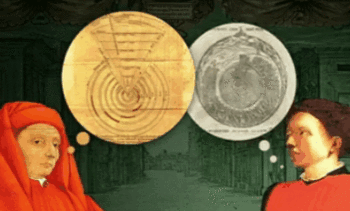
In 1588, when Galileo was a 24-year-old unknown, a medical school dropout, he was invited to deliver a couple of lectures on Dante’s “Divine Comedy.” Many in Galileo’s audience would have been shocked, even dismayed, to see this young upstart take the stage and start poking holes in what they believed about the poet’s meticulously constructed fantasy world.
Ever since its 1314 publication, scholars had toiled to map the physical features of Dante’s Inferno — the blasted valleys and caverns, the roiling rivers of fire. What Galileo said, put simply, is that many commonly accepted dimensions did not stand up to mathematical scrutiny. Using complex geometrical analysis, he attacked a leading scholar’s version of the Inferno’s structure, pointing out that his description of the infernal architecture — such as the massive cylinders descending to the center of the Earth — would, in real life, collapse under their own weight. Later, Galileo realized the leading rival theory was wrong, too, and that even the greatest scholars of the time simply didn’t understand how real-world structures worked.
More here.
IBM’s Watson supercomputer destroys all humans in Jeopardy!
Paul Miller in Engadget:
So, in February IBM’s Watson will be in an official Jeopardy tournament-style competition with titans of trivia Ken Jennings and Brad Rutter. That competition will be taped starting tomorrow, but hopefully we’ll get to know if a computer really can take down the greatest Jeopardy players of all time in “real time” as the show airs. It will be a historic event on par with Deep Blue vs. Garry Kasparov, and we’ll absolutely be glued to our seats. Today IBM and Jeopardy offered a quick teaser of that match, with the three contestants knocking out three categories at lightning speed. Not a single question was answered wrongly, and at the end of the match Watson, who answers questions with a cold computer voice, telegraphing his certainty with simple color changes on his “avatar,” was ahead with $4,400, Ken had $3,400, and Brad had $1,200.
Alright, a “win” for silicon for now, but without any Double Jeopardy or Final Jeopardy it’s hard to tell how well Watson will do in a real match. What’s clear is that he isn’t dumb, and it seems like the best chance the humans will have will be buzzing in before Watson can run through his roughly three second decision process and activate his buzzer mechanically. An extra plus for the audience is a graphic that shows the three answers Watson has rated as most likely to be correct, and how certain he is of the answer he selects — we don’t know if that will make it into the actual TV version, but we certainly hope so. It’s always nice to know the thought processes of your destroyer.
More here, including an interview with one of Watson’s developers.
Why you should never, ever use two spaces after a period. Never. Ever.
Farhad Manjoo in Slate:
Typographers, that's who. The people who study and design the typewritten word decided long ago that we should use one space, not two, between sentences. That convention was not arrived at casually. James Felici, author of the The Complete Manual of Typography, points out that the early history of type is one of inconsistent spacing. Hundreds of years ago some typesetters would end sentences with a double space, others would use a single space, and a few renegades would use three or four spaces. Inconsistency reigned in all facets of written communication; there were few conventions regarding spelling, punctuation, character design, and ways to add emphasis to type. But as typesetting became more widespread, its practitioners began to adopt best practices. Felici writes that typesetters in Europe began to settle on a single space around the early 20th century. America followed soon after.
Every modern typographer agrees on the one-space rule. It's one of the canonical rules of the profession, in the same way that waiters know that the salad fork goes to the left of the dinner fork and fashion designers know to put men's shirt buttons on the right and women's on the left. Every major style guide—including the Modern Language Association Style Manual and the Chicago Manual of Style—prescribes a single space after a period.
More here.
Friday, January 14, 2011
Plato’s Cave as Kino: Owl’s Legacy Excerpt & Becoming Imperceptible
Сталкер over at Chris Marker:
The blog Found Objects notes the current availability of a clip from Chris Marker’s The Owl’s Legacy:
An extract from Chris Marker’s TV series on the culture of ancient Greece, The Owl’s Legacy, featuring contributions from Iannis Xenakis, George Steiner, Cornelius Castoriadis and Elia Kazan. Recently unearthed from obscurity as part of the Otolith Group’s room at Tate Britain for the Turner Prize. As the Otolith Group write in their accompanying artist book, this is exactly the sort of TV programme that simply wouldn’t stand a chance of being made today.
“It all began on a summer night in 1987. The idea for a television series based on Greek culture had just crystalized and we were facing a spectre which haunts the realm of the cultural documentary and that Chekhov defined for eternity: to say things that clever people already know and that morons will never know.”
The original title of the television series is L’Héritage de la chouette. Here are some production details reproduced from the Pacific Film Archive, which seems, along with the Otiolith Group, to be one of the few institutions to possess a copy:
‘Written by Chris Marker. Photographed by Emiko Omori, Peter Chapell, et al. Edited by Khadicha Bariha, Nedjma Scialom. With Iannis Xenakis, George Steiner, Elia Kazan, Theo Angelopoulos, Cornelius Castoriadis. (In English, and French, Georgian, Greek with English subtitles, Color, 3/4″ Video, projected, Cassettes courtesy Chris Marker with permission of Film International Television Production and La Sept).”
You can also consult our older post, “Inner Time of Television” and the full post of the PFA’s notes on The Owl’s Legacy.
One of the great reflections in 20th century philosophy on Plato’s cave and its myriad implications is Hans Blumenberg’s Höhlenausgänge [Exits from the Cave], which opens with an epigraph quoting a journal entry of Kafka’s: “Mein Leben ist das Zögern vor der Geburt.” [My life is the hesitation before birth]. Blumenberg, known for his work on metaphorology and myth but really an astounding polymath of many interests whose posthumous work continues to amaze (as it continues to go largely untranslated), produces in this work perhaps the most rigorous expedition into the many ramifications of the idea of the cave as it flows in and out of Plato’s Republic.
The Temptation of Victoria
Karpov vs. Kasparov
Tears and Rain
I've been thinking about the president's speech all night and this morning, how something about it left me feeling left out. Obama's presence—physical, moral, emotional—was palpable. It carried the charge of authority, of mastering a moment. You felt that he was acknowledging, reflecting, and accepting the hardness of life, drawing freely and even generously on his own experience of sorrow and on his capacity to imagine the sorrow of others. When he reached his peroration, as he moved from an invocation of the innocence and immanence of the dead little girl to a call, part admission, part admonishment, part fatherly exhortation, for Americans “to make sure this country lives up to our children's expectations,” the speech found it true importance, its profundity. To attempt to live up to your children's expectations—to hew to the ideals you espouse and the morals that you lay down for them—is to guarantee a life of constant failure, a failure equivalent with parenthood itself. Surely this is something that the father of Malia and Sasha Obama knows all too well. Choking up at one point, imagining the Taylor-Greens' loss, it seemed to me, in terms of his own unimaginable bereavement, Obama was figuring himself (extraordinarily, I think) not as the Great Father but, more messily and searchingly, as an imperfectly lowercase father, “shaken from [his] routines … forced to look inward,” struggling in the wake of calamity to reclaim and to strive to measure up to a set of principles the burden of whose observance falls so unevenly on the narrow shoulders of the young. He was, at that moment, talking directly to me.
And yet … Was it all the weird, inappropriate clapping and cheering? Or the realization that I am so out of touch with the national vibe that I didn't know that whistling and whooping and standing ovations are, when someone evokes the memory of murdered innocent people, totally cool?
Call for Fox News to drop Glenn Beck
From The Guardian:

The petition was part of a groundswell of opinion that when it comes to Beck, arguably the most extreme of America's multitude of rightwing talk hosts, enough is now enough. Amid the billowing criticism, Beck has defended himself by claiming he has “softened” the tone of his monologues over the past couple of years. “Nobody wants to recognise this. Why? Because it hurts their dialogue.” But the evidence belies his claim of moderation. The JFSJ accompanied the petition with a list of 10 of Beck's most egregious comments in 2010 (see below). They include Beck's radio comment on the financier and philanthropist, George Soros, that “here's a Jewish boy helping send the Jews to the death camps”. The remark was made in reference to Soros as a 13-year-old teenager in Hungary, who survived the Holocaust because his father hid their Jewish identity through elaborate forged documents.
More here.
People prove impervious to anxiety from genetic tests
From Nature:

A previous study found that genetic testing for Alzheimer's diesease had no impact on anxiety2. But a team led by Eric Topol, a professor of translational genomics at the Scripps Translational Science Institute in La Jolla, California, has now looked at the effect on psychology and behaviour of commercially available genome-wide scans focused on a range of diseases. “This is an area that has been in the dark matter of our knowledge base,” says Topol.
More here.
The Great Food Crisis of 2011
It's real, and it's not going away anytime soon.
Lester Brown in Foreign Policy:
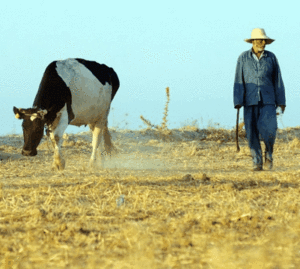
But whereas in years past, it's been weather that has caused a spike in commodities prices, now it's trends on both sides of the food supply/demand equation that are driving up prices. On the demand side, the culprits are population growth, rising affluence, and the use of grain to fuel cars. On the supply side: soil erosion, aquifer depletion, the loss of cropland to nonfarm uses, the diversion of irrigation water to cities, the plateauing of crop yields in agriculturally advanced countries, and — due to climate change — crop-withering heat waves and melting mountain glaciers and ice sheets. These climate-related trends seem destined to take a far greater toll in the future.
More here.
Message To Sarah Palin from Media Matters CEO David Brock
Alex Shephard interviews Daniel Radosh, Daily Show writer
From Full Stop:

Published in 2008, Rapture Ready is Radosh’s account of the “parallel universe” of Christian pop culture. Part travelogue, part investigation into the fault lines of the culture and its intersections with the mainstream, the reader follows Radosh as he attends Christian wrestling matches, alternative Christian music festivals, and Kentucky’s gargantuan Creationism Museum. While Rapture Ready may not be as well known as other excellent investigations of evangelical Christian culture, such as The Year of Living Biblically, it is the funniest and the most moving – Radosh is never cynical, always probing, and remarkably sharp.
Before joining the staff of The Daily Show in 2009, Radosh was a freelance writer whose work was published in The New Yorker, McSweeneys, GQ, and The New York Times, among many others. He also wrote and maintained Radosh.net, the loss of which I hope to mourn in Full Stop someday in the future. Over breakfast, we spoke about the past year at The Daily Show, the ways in which evangelical culture has shifted since the election of Barack Obama, and the best books he read in 2010.
More here.
Firearm-related deaths were positively associated with states that voted for McCain (.66) and negatively associated with states that voted for Obama (-.66).
Richard Florida in The Atlantic:
Terrible tragedies like last week's mass shootings in Tucson cause us to search for deeper answers. Many were quick to blame America's divisive and vitriolic political culture for the violence; others portray the shooter as an unhinged, clinically deranged person with his own unfathomable agenda. Arizona has been ground zero for the battle over immigration. Were the state's political and economic travails a contributing factor? There has been some talk about guns, too. Might tighter gun control laws have made a difference?
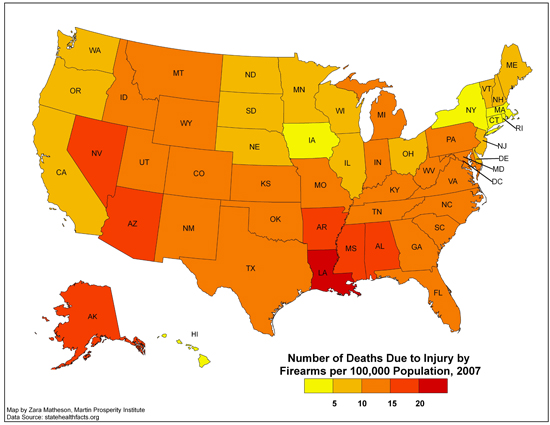
The map above charts firearm deaths for the 50 states plus the District of Columbia. Note that these figures include accidental shootings, suicides, even acts of self-defense, as well as crimes. As of 2007, 10.2 out of every 100,000 people were killed by firearms across the United States, but that rate varies dramatically from state to state. In Hawaii, at the low end, it was 2.6 per 100,000; in New York and New Jersey it was 5.0 and 5.2 respectively. At the high end, 21.7 out of every 100,000 residents of the District of Columbia were killed by guns, 20.2 in Louisiana, 18.5 in Mississippi, and 17.8 in Alaska. Arizona ranked eighth nationally, with 15.1 deaths per 100,000.
More here.
Thursday, January 13, 2011
Speaking of Donations…
One year and one day ago, Haiti was hit with a devastating earthquake. The year that's followed has witnessed economic collapse and exacerbating health crises, including a cholera epidemic. Partners in Health is still accepting donations for assisting recovery in Haiti, as are many others.
Glenn Greenwald’s Donation Drive

Most journalistic enterprises, especially ones online, struggle to find a model for sustaining themselves. Relying on reader support is becoming increasingly common, and I consider that a very healthy development. It means that those reporting, commenting and otherwise working on political matters, but who want to do so outside of a large corporation or DC think tank or advocacy group, can compete on something approaching an equal footing. It also means that one can work full-time on journalism, analysis and activism without any concern for accommodating the interests of corporate employers and advertisers, and without having to devote time and energy to unproductive work in order to earn a living. In sum, reader support is both crucial and a healthy model for doing this work.
From the start of my working on political issues, readership involvement in general has been central to the work I've been able to do. Having an engaged, vibrant readership has provided important value to everything that is done here: it adds substantially to my knowledge base, checks flaws and errors, and amplifies the work and strengthens its ability to have an impact in numerous ways. I realize that not everyone is able to participate in this fund-raiser — it is entirely optional, for those who can and choose to donate — but I do truly appreciate all forms of reader involvement here.
Can Europe Be Saved?
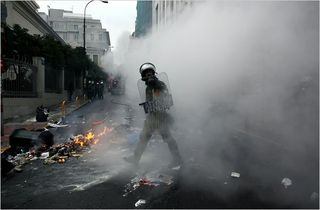
Not long ago Europeans could, with considerable justification, say that the current economic crisis was actually demonstrating the advantages of their economic and social model. Like the United States, Europe suffered a severe slump in the wake of the global financial meltdown; but the human costs of that slump seemed far less in Europe than in America. In much of Europe, rules governing worker firing helped limit job loss, while strong social-welfare programs ensured that even the jobless retained their health care and received a basic income. Europe’s gross domestic product might have fallen as much as ours, but the Europeans weren’t suffering anything like the same amount of misery. And the truth is that they still aren’t.
Yet Europe is in deep crisis — because its proudest achievement, the single currency adopted by most European nations, is now in danger. More than that, it’s looking increasingly like a trap. Ireland, hailed as the Celtic Tiger not so long ago, is now struggling to avoid bankruptcy. Spain, a booming economy until recent years, now has 20 percent unemployment and faces the prospect of years of painful, grinding deflation.
The tragedy of the Euromess is that the creation of the euro was supposed to be the finest moment in a grand and noble undertaking: the generations-long effort to bring peace, democracy and shared prosperity to a once and frequently war-torn continent. But the architects of the euro, caught up in their project’s sweep and romance, chose to ignore the mundane difficulties a shared currency would predictably encounter — to ignore warnings, which were issued right from the beginning, that Europe lacked the institutions needed to make a common currency workable. Instead, they engaged in magical thinking, acting as if the nobility of their mission transcended such concerns.
The result is a tragedy not only for Europe but also for the world, for which Europe is a crucial role model. The Europeans have shown us that peace and unity can be brought to a region with a history of violence, and in the process they have created perhaps the most decent societies in human history, combining democracy and human rights with a level of individual economic security that America comes nowhere close to matching. These achievements are now in the process of being tarnished, as the European dream turns into a nightmare for all too many people. How did that happen?
Poor Reason
“‘Culture of Poverty’ Makes a Comeback.” So read the headline of Patricia Cohen’s front-page article in the October 17, 2010 edition of The New York Times.
The article was prompted by a recent issue of the Annals of the American Academy of Political and Social Science under the title, “Reconsidering Culture and Poverty.” In their introductory essay, the editors, Mario Luis Small, David J. Harding, and Michèle Lamont, strike a triumphant note:
Culture is back on the poverty research agenda. Over the past decade, sociologists, demographers, and even economists have begun asking questions about the role of culture in many aspects of poverty and even explicitly explaining the behavior of the low-income population in reference to cultural factors.
Cohen begins with a similar refrain:
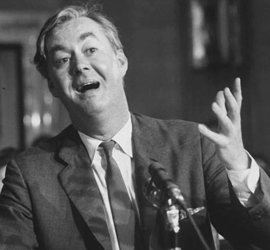
For more than 40 years, social scientists investigating the causes of poverty have tended to treat cultural explanations like Lord Voldemort: That Which Must Not Be Named. The reticence was a legacy of the ugly battles that erupted after Daniel Patrick Moynihan, then an assistant labor secretary in the Johnson administration, introduced the idea of a ‘culture of poverty’ to the public in his 1965 report on ‘The Negro Family.’
Cohen uncritically accepts two myths woven by William Julius Wilson, the prominent Harvard sociologist, and repeated by his acolytes: first, Moynihan was clobbered for bringing to light compromising facts about black families, and second, that this torrent of criticism constrained a generation of social scientists from investigating the relation between culture and poverty, for fear that it would be pilloried for “blaming the victim.” Thus, a third, patently self-serving myth: thanks to some intrepid scholars who reject political correctness, it is now permissible to consider the role that culture plays in the production and reproduction of racial inequalities.
These myths add up to something—a perverse obfuscation of American racial history. They suggest that for four decades academia has abetted a censorial form of anti-racism that prevented serious research into the persistence of poverty among black Americans. If only, the mythmakers insist, we stopped worrying about offending people, we could acknowledge that there is something amiss in black culture—not, as the politically correct would have it, the politics of class—and that this explains racial inequality.
Notwithstanding the election of Barack Obama, the last 40 years have been a period of racial backlash. The three pillars of anti-racist public policy—affirmative action, school integration, and racial districting (to prevent the dilution of the black vote)—have all been eviscerated, thanks in large part to rulings of a Supreme Court packed with Republican appointees. Indeed, the comeback of the culture of poverty, albeit in new rhetorical guise, signifies a reversion to the status quo ante: to the discourses and concomitant policy agenda that existed before the black protest movement forced the nation to confront its collective guilt and responsibility for two centuries of slavery and a century of Jim Crow—racism that pervaded all major institutions of our society, North and South. Such momentous issues are brushed away as a new generation of sociologists delves into deliberately myopic examinations of a small sphere where culture makes some measurable difference—to prove that “culture matters.”
I found myself the most offensive of all

Thomas Bernhard, Austria’s finest postwar writer, was born in Holland in 1931, the illegitimate son of a housemaid, and died at his home in Upper Austria in 1989. His childhood was spent mainly with his maternal grandparents near Salzburg – his grandfather Johannes Freumbichler was a minor Austrian writer and, Bernhard claimed, one of the two most important figures in his life. The other, whom he sometimes referred to as his “Lebensmensch” or “life companion” and sometimes as his aunt, was a woman 37 years his senior, the widow of a civil servant, whom he met at a sanatorium for tuberculosis in 1949. Bernhard had always had a weak chest and the deprivations of the war years, exacerbated by having to lug sacks of potatoes from the cellar to the grocery where he had been apprenticed after leaving school, led to his hospitalisation in 1948. His “aunt” Hedwig helped him escape what he felt would be certain death in the sanatorium. After that, he briefly trained as a singer (abandoned because of his bad lungs) and then took a job as a crime reporter, before turning to writing full-time.
more from Gabriel Josipovici at The New Statesman here.
the privilege of absurdity

In Leviathan Hobbes writes of ‘the privilege of absurdity; to which no living creature is subject, but man only’. Nothing could be more absurd, according to Hobbes’s way of thinking, than killing oneself – except perhaps killing oneself in order to kill others. War shows the law of self-preservation working itself out in practice: humans kill other humans because they fear being killed themselves. But if that is so then any type of warfare that involves certain death for the combatants will be self-defeating. Soldiers who sacrifice their lives in order to protect their comrades are committing suicide – an attitude that Hobbes, for whom a self-interested fear of death was the primary human motivation, could never account for. Behaviour of this kind is not only irrational, but – Hobbes at times suggested – a symptom of madness. Though he is commonly seen as a grimly realistic thinker, Hobbes’s account of human conflict is a long way from the reality of violence. For all his insight into how humans are impelled to prey upon one another he would have been horrified by the world portrayed in Cormac McCarthy’s Blood Meridian, in which violence has come to be a way of life practised for its own sake. For Hobbes violence is instrumental: either it serves the goal of self-preservation, or it is pointless. Seeing humans as essentially driven by their passions, Hobbes cherished little hope that they would ever be guided by reason. Still, he never doubted that if people were more rational they would be less prone to violence. How could any sane person not seek peace? After all, everyone wants to go on living – or so Hobbes wanted to believe.
more from John Gray at Literary Review here.