Ideas festival: Great minds think and drink alike

From The Telegraph:

Ruth Most people go to Hay-on-Wye for the annual literary festival – not to ponder profound existential questions. But this year, more than 7,000 visitors will arrive for the world's largest philosophy festival. HowTheLightGetsIn was founded in 2009 by the philosopher Hilary Lawson, whose aim is create a festival-like atmosphere, in which to discuss issues that make us tick. The festival is named after lyrics found in a Leonard Cohen song, “Anthem”; (“There is a crack in everything/ That's how the light gets in”). Philosophical debates, this year including Philip Pullman discussing the role of fantasy in his novels and life, are combined with live bands, film screenings, comedy and all-night parties.

“I'm not a geek, interested in intellectual puzzles,” Lawson says. “I'm interested in philosophy because it's about understanding the world and our lives. When we started the festival three years ago, philosophy was more likely to appear in Monty Python. It was a laughable matter, it was technical and analytical – not about our lives. Our aim is to overturn the current intellectually conservative environment, where ideas and philosophy are not valued or taken seriously. Our goal is to create an open, vibrant, intellectual culture which combines innovative thought with rich experience.”

More here.

Top Ten Myths About the Brain

From Smithsonian:

Brain 3. It’s all downhill after 40 (or 50 or 60 or 70).
It’s true, some cognitive skills do decline as you get older. Children are better at learning new languages than adults—and never play a game of concentration against a 10-year-old unless you’re prepared to be humiliated. Young adults are faster than older adults to judge whether two objects are the same or different; they can more easily memorize a list of random words, and they are faster to count backward by sevens. But plenty of mental skills improve with age. Vocabulary, for instance—older people know more words and understand subtle linguistic distinctions. Given a biographical sketch of a stranger, they’re better judges of character. They score higher on tests of social wisdom, such as how to settle a conflict. And people get better and better over time at regulating their own emotions and finding meaning in their lives.

4. We have five senses.
Sure, sight, smell, hearing, taste and touch are the big ones. But we have many other ways of sensing the world and our place in it. Proprioception is a sense of how our bodies are positioned. Nociception is a sense of pain. We also have a sense of balance—the inner ear is to this sense as the eye is to vision—as well as a sense of body temperature, acceleration and the passage of time. Compared with other species, though, humans are missing out. Bats and dolphins use sonar to find prey; some birds and insects see ultraviolet light; snakes detect the heat of warmblooded prey; rats, cats, seals and other whiskered creatures use their “vibrissae” to judge spatial relations or detect movements; sharks sense electrical fields in the water; birds, turtles and even bacteria orient to the earth’s magnetic field lines.

By the way, have you seen the taste map of the tongue, the diagram showing that different regions are sensitive to salty, sweet, sour or bitter flavors? Also a myth.

More here.

Tuesday, May 24, 2011

The King and I: My Quest to Build the Perfect Production of King Lear.

110517_CB_Lear_Bam_TN Jessica Winter in Slate:

Thackeray found King Lear boring. Tolstoy was no great fan. Samuel Johnson dreaded rereading the play—he recoiled from the death of Lear's youngest daughter, Cordelia. (Johnson preferred playwright Nahum Tate's sentimental rewrite of Lear, published in 1681, which inserted a happy ending and supplanted Shakespeare's version onstage for more than a century.) Nineteenth-century essayist Charles Lamb declared that staging Lear “has nothing in it but what is painful and disgusting,” concluding, “The Lear of Shakespeare cannot be acted.” Nearly two centuries later, Harold Bloom concurred: “You shouldn't even go and see somebody try and act the part,” the scholar said, “because it's unactable… I've never seen a Lear that worked.” Beginning with a vain, irrational king rejecting both his favorite child and his most faithful servant on a whim, ending with a mad, uncrowned derelict dying of a broken heart—with a detour wherein another foolish old man's eyes are gouged out—King Lear is a shocking spectacle of two families eating themselves alive.

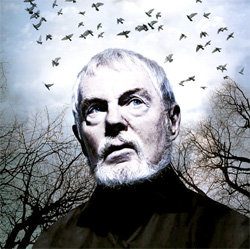
Yet more and more actors have attempted the unactable in recent years; in New York City alone, they've included Ian McKellen, Christopher Plummer, Kevin Kline, and Stacy Keach. The latest is Derek Jacobi, who performs the title role in the rapturously received Donmar Warehouse production of the play (at BAM Harvey Theater in Brooklyn through June 5). The laurelled English actor Greg Hicks will do Lear at the Lincoln Center Festival this summer, and Law & Order's Sam Waterston takes the role for the Public Theater in the fall; a film version starring Al Pacino is also in the works. To a confident actor in the winter of his career, the notion of Shakespeare's tragedy as “a labyrinthian citadel, all but impregnable” (Kenneth Tynan) may seem less like a warning and more like a provocation.

That's how a viewer can approach King Lear, too. Like most, I first read it in college, where I took notes in lectures and seminars about its reputation as a play that resists being played—and, flush with those earnest yet contrarian energies peculiar to late adolescence, I sought out every Lear I could find. And I still do. This quasi-completeist mission is perverse, because its frisson depends largely on expectations of shameless presumption and abject failure. (You fiends! How dare you dare to stage this!) But the promise—always kept—is the thrill of seeing actors try the impossible.

Bob Dylan’s Curious Dotage

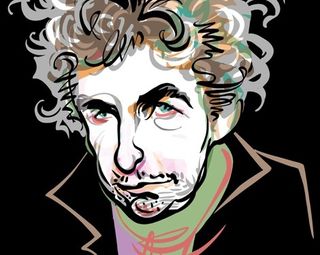
Dylan6 Tim de Lisle over at More Intelligent Life:

A few years ago a concert promoter took the BBC television series “Walking with Dinosaurs” and turned it into a stage show that toured the world’s indoor arenas. Seen from one angle, it was an enterprising move. Seen from another, it was quite unnecessary. The world’s arenas were already crawling with dinosaurs, in the form of old rock stars.

The early years of the 21st century have been the age of the veteran in rock and pop. Records are now trumped by live music, a field where the oldies can dominate. The golden age of popular music, the Sixties, is just close enough for the central figures from it to be still on the road. The Rolling Stones do a world tour every few years; Paul McCartney, with a small child to think about, does a short tour every few months. Brian Wilson of the Beach Boys, now a doddery old teddy bear propped up by a dazzling young band, turns out every other year. Simon & Garfunkel, not always on the best of terms, manage a month here and a month there. And then there is Bob Dylan.

Dylan tours even more than the others. In the 20 years to 2010, he gave 2,045 concerts, according to the fan site ExpectingRain.com, where you can study the setlist for every one of those nights. In April he will play in Singapore, Australasia and—if Beijing lets him in, after rebuffing him last year—China. In the summer he is expected in Europe. Not for nothing are his wanderings known as the Never Ending Tour.

Dylan’s gigs are unlike those of all his peers. If a show by McCartney or the Stones has a fault—apart from some creaking on the high notes—it is that it can be predictable. The Stones always play “Satisfaction”, “Brown Sugar”, “Jumping Jack Flash”; McCartney always does the Beatles classics he wrote himself—“Let It Be”, “Get Back”, “Hey Jude”. With Dylan, the only sure thing is “Like a Rolling Stone”, locked in as the first encore. Otherwise, he reserves the right to leave out any song. And often it’s a relief when he does, given the way he treats the songs he does play, which veers between indifference and outright sabotage.

The Destroyer

081027_r17847_p465 Jon Lee Anderson in The New Yorker:

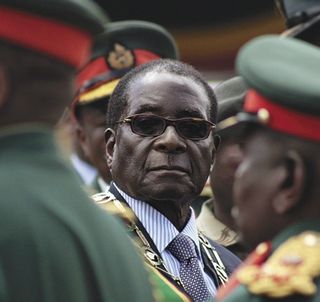
“Empowerment” has been one of the rhetorical pillars of Mugabe’s government, but many of the schemes to benefit black “indigenous Zimbabweans” have been used by those in positions of authority or influence to enrich themselves. For all the talk of redistribution, Mugabe and his circle have not so much broken with the past as assumed for themselves an updated version of the country-club life style once enjoyed exclusively by the nation’s whites. There are many newly built luxury villas in Harare, and a sizable number of Mercedes-Benzes and Volvos, the vehicles of choice among Zimbabwe’s black nomenklatura. (Affluent whites seem to prefer S.U.V.s.) In 2005, Mugabe and his wife moved into a new twenty-five-bedroom mansion in Borrowdale Brooke, a Harare suburb, which cost a reported ten million U.S. dollars to build. Nobody knows exactly how he paid for it, but in Harare it is received wisdom that the mansion was financed by the Chinese, to whom the President had granted lucrative mining and trade concessions. Mugabe said openly that he had the help of “foreign governments.” (He added that Malaysia’s former Prime Minister Mahathir bin Mohamad, a personal friend, had donated tropical timber for the roof; China was reported to have supplied the shiny blue roof tiles.) Grace Mugabe has become infamous for her shopping expeditions abroad and, like Imelda Marcos, her expensive taste in shoes; she has been quoted as saying that because of her narrow feet she can “only wear Ferragamo.” Shortly after her marriage to Mugabe, Grace oversaw the construction of another mansion, called Graceland, which was allegedly built with public funds. She later sold Graceland to the Libyan government.

Another legacy of the colonial era is the cross-hatching of interests between the government and the private sector. A mining-company official I met with, a white man and a prominent figure in Zimbabwe, spoke of fending off direct requests for bribes from a senior cabinet minister, whom he described as “especially rapacious.” He confided that the executives of several mining companies had, under pressure, given large sums of money to government officials that were used to help fund the ZANU-P.F. election campaign. He added that Mugabe and his cronies would probably continue to use the threat of expropriation of the mines as a “political bludgeon” to extract bribes from mining companies. Meanwhile, he expected to see “more Chinese take over more dubious concessions.”

This kleptocratic style of government has had a trickle-down effect: corruption and graft are depressingly unremarkable in Mugabe’s Zimbabwe.

the novel’s not dead

Row_36.3_books

It is from Woolf that we get our sense that the novel is irrevocably divided into two kinds: new and retrograde. From her we inherit the feeling that all that matters in literature is “now,” that contemporary writing is a constant battle between the forces of innovation and life-giving freshness (“life,” “truth,” “the real”) and the turgid, sordid, compromised writers of yesteryear. Bakhtin would say such bifurcations are fatuous and a waste of time; I would go one step further and call them a convenient fiction, a chimera, and a sideshow. Or, to put it another way: there is no crisis of realism in contemporary fiction; there is only, among certain literary critics, a crisis of ownership, a last-ditch effort to keep debates over fiction stalled where they have been for nearly a century. What we have seen for the last ten years or so is a kind of proxy battle, very much in Woolf’s spirit, in which a contrived debate about novelistic method masks a silent—perhaps largely unintentional—effort to maintain cultural, racial, and geographic boundaries.

more from Jess Row at Boston Review here.

Jharia Burning

Joyce-01-thumbnail

At the center of Dhanbad City, in the Jharia region of northeastern India, amid a handful of concrete buildings, stands the enormous bronze statue of a coal miner. He is shirtless, muscular, and handsome. He strides doggedly forward, a mining helmet on his head, a pickax slung over his shoulder. The message is clear: Coal is my life. The area around Dhanbad produces India’s highest grade of coking coal, which in turn fuels the blast furnaces used for smelting steel. Contained in twenty-three large underground mines and nine open cast mines across an expanse of 450 square kilometers, Jharia’s heart of coal also produces power: two thirds of all electricity in India is generated in coal-fired plants. The earth beneath Jharia contains one of the largest coal reserves in the world. But the coal is also on fire.

more from Allison Joyce at VQR here.

This will be the century of disasters

110513_TECH_worldend_TN

In the same way that the 20th century was the century of world wars, genocide, and grinding ideological conflict, the 21st will be the century of natural disasters and technological crises and unholy combinations of the two. It’ll be the century when the things that we count on to go right will, for whatever reason, go wrong. Late last month, as the Mississippi River rose in what is destined to be the worst flood in decades, and as the residents of Alabama and other states rummaged through the debris of a historic tornado outbreak, physicists at a meeting in Anaheim, Calif., had a discussion about the dangers posed by the sun. Solar flares, scientists believe, are a disaster waiting to happen. Thus one of the sessions at the American Physical Society’s annual meeting was devoted to discussing the hazard of electromagnetic pulses (EMPs) caused by solar flares or terrorist attacks. Such pulses could fry transformers and knock out the electrical grid over much of the nation. Last year the Oak Ridge National Laboratory released a study saying the damage might take years to fix and cost trillions of dollars. But maybe even that’s not the disaster people should be worrying about. Maybe they should worry instead about the ARkStorm. That’s the name the U.S. Geological Survey’s Multihazards Demonstration Project gave to a hypothetical storm that would essentially turn much of California’s Central Valley into a bathtub. It has happened before, in 1861-62, when it rained for 45 straight days. The USGS explains: “The ARkStorm draws heat and moisture from the tropical Pacific, forming a series of Atmospheric Rivers (ARs) that approach the ferocity of hurricanes and then slam into the U.S. West Coast over several weeks.” The result, the USGS determined, could be a flood that would cost $725 billion in direct property losses and economic impact.

more from Joel Achenbach at Slate here.

Tuesday Poem

Wise I

WHYS (Nobody
Knows
The Trouble I Seen)
Traditional

If you ever
find
yourself, some where
lost and surrounded
by enemies
who won't
let you
speak in your own language
who destroy your statues
&
instruments, who ban
your omm bomm ba boom
then you are in trouble
deep
trouble
they ban your
own boom ba boom
you in deep
deep
trouble

humph!

probably take you several hundred
years
to get
out!

by Amiri Baraka
from Modern American Poets

“Clarence Darrow: American Iconoclast”

Darrow From Salon:

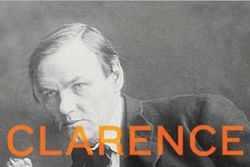
On the first page of this biography, Andrew Kersten calls Clarence Darrow America's greatest lawyer. That's not quite right. The title cannot belong to a man who tried to bribe a jury, represented the mafia, and defended unrepentant murderers and terrorists for the right fee — not when there are Thurgood Marshall, Louis Brandeis, and Charles Hamilton Houston to choose from. That said, it is beyond dispute that Darrow was a master in the courtroom, particularly in cross-examination and closing argument. He married a skeptical intellectualism to the savvy of an expert huckster, resting his foot on the jury box as he quoted Tolstoy and aimed for the spittoon.

Darrow had a talent for finding his way into cases that combined great liberal principles with flashbulb publicity. He fought creationism in the Scopes monkey trial; defended labor leaders and anarchists from conspiracy charges; and represented blacks in Detroit who fired back at a lynch mob. He also served a term as a state legislator in Illinois, and made speeches and wrote books espousing a surly, progressive, but unpredictable politics. Today we might call him a lefty maverick.

More here.

On Your Marks, Get Set, Measure Heart Health

From The New York Times:

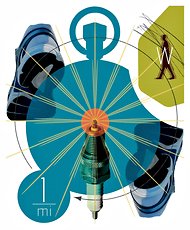
Well How fast can you run a mile?

For people in midlife, this simple measure of fitness may help predict their risk of heart problems as they age. In two separate studies, researchers from the University of Texas Southwestern Medical School and the Cooper Institute in Dallas analyzed fitness levels for more than 66,000 people. Over all, the research showed that a person’s fitness level at midlife is a strong predictor of long-term heart health, proving just as reliable as traditional risk factors like cholesterol level or high blood pressure. The two reports were published last month in Circulation and The Journal of the American College of Cardiology.

In the studies, fitness was measured using carefully monitored treadmill testing to gauge cardiovascular endurance and muscle fatigue. But in analyzing the data, the researchers suggested that the treadmill results could be translated to average mile times, offering a simple formula for doctors and individuals to rate their fitness level at midlife and predict long-term heart risk. “When you try to boil down fitness, what does fitness mean?” said Dr. Jarett D. Berry, assistant professor of internal medicine and cardiology at Southwestern Medical School and a co-author of both papers. “In both these studies, how fast you can run in midlife is very strongly associated with heart disease risk when you’re old. The exercise you do in your 40s is highly relevant to your heart disease risk in your 80s.”

More here.

Monday, May 23, 2011

Lisa Randall to Judge 3rd Annual 3QD Science Prize

UPDATE 6/20/11: The winners have been announced here.

UPDATE 6/13/11: The finalists have been announced here.

UPDATE 6/11/11: The semifinalists have been announced here.

UPDATE 6/3/11: Voting round now open. Click here to see full list of nominees and vote.

Dear Readers, Writers, Bloggers,
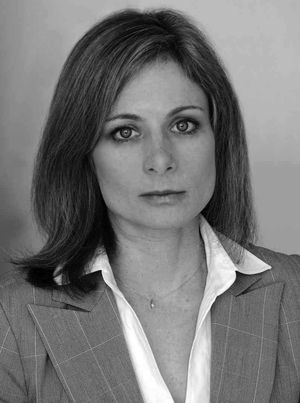
Randall(web) We are very honored and pleased to announce that Lisa Randall has agreed to be the final judge for our third annual prize for the best writing in a blog or e-zine in the category of Science. (Details of last year's science prize, judged by Richard Dawkins, can be found here.) Professor Randall studies theoretical particle physics and cosmology at Harvard University. Her research connects theoretical insights to puzzles in our current understanding of the properties and interactions of matter. She has developed and studied a wide variety of models to address these questions, the most prominent involving extra dimensions of space. Her work has involved improving our understanding of the Standard Model of particle physics, supersymmetry, baryogenesis, cosmological inflation, and dark matter. Randall’s research also explores ways to experimentally test and verify ideas and her current research focuses in large part on the Large Hadron Collider and dark matter searches and models.

Randall’s studies have made her among the most cited and influential theoretical physicists. She has also had a public presence through her writing, lectures, and radio and TV appearances. Her book Warped Passages: Unraveling the Mysteries of the Universe's Hidden Dimensions was included in the New York Times' 100 notable books of 2005. Randall has also recently pursued art-science connections, writing a libretto for Hypermusic: A Projective Opera in Seven Planes that premiered in the Pompidou Center in Paris and co-curating an art exhibit Measure for Measure for the Los Angeles Arts Association.

Randall has received numerous awards and honors for her scientific endeavors. She is a member of the National Academy of Sciences, the American Philosophical Society the American Academy of Arts and Sciences, was a fellow of the American Physical Society, and is a past winner of an Alfred P. Sloan Foundation Research Fellowship, a National Science Foundation Young Investigator Award, a DOE Outstanding Junior Investigator Award, and the Westinghouse Science Talent Search. In 2003, she received the Premio Caterina Tomassoni e Felice Pietro Chisesi Award, from the University of Rome, La Sapienza. In 2006, she received the Klopsteg Award from the American Society of Physics Teachers (AAPT) for her lectures and in 2007 she received the Julius Lilienfeld Prize from the American Physical Society for her work on elementary particle physics and cosmology and for communicating this work to the public.

Professor Randall was included in the list of Time Magazine's “100 Most Influential People” of 2007 and was one of 40 people featured in The Rolling Stone 40th Anniversary issue that year. Prof. Randall was featured in Newsweek's “Who's Next in 2006” as “one of the most promising theoretical physicists of her generation” and in Seed Magazine's “2005 Year in Science Icons”. In 2008, Prof. Randall was among Esquire Magazine's “75 Most Influential People.

Professor Randall earned her PhD from Harvard University and held professorships at MIT and Princeton University before returning to Harvard in 2001.

Professor Randall's new book Knocking on Heaven's Door comes out in September. You can pre-order it here. And follow her on Twitter here.

***

As usual, this is the way it will work: the nominating period is now open, and will end at 11:59 pm New York City Time (EST) on May 31, 2011. There will then be a round of voting by our readers which will narrow down the entries to the top twenty semi-finalists. After this, we will take these top twenty voted-for nominees, and the four main editors of 3 Quarks Daily (Abbas Raza, Robin Varghese, Morgan Meis, and Azra Raza) will select six finalists from these, plus they may also add up to three wildcard entries of their own choosing. The three winners will be chosen from these by Professor Randall.

The first place award, called the “Top Quark,” will include a cash prize of one thousand dollars; the second place prize, the “Strange Quark,” will include a cash prize of three hundred dollars; and the third place winner will get the honor of winning the “Charm Quark,” along with a two hundred dollar prize.

(Welcome to those coming here for the first time. Learn more about who we are and what we do here, and do check out the full site here. Bookmark us and come back regularly, or sign up for the RSS feed.)
PrizeScienceAnnounce2011 Details (please read carefully before nominating):

The winners of this Science Prize will be announced on or around June 21, 2011. Here's the schedule:

May 23, 2011:

  • The nominations are opened. Please nominate your favorite blog entry or e-zine piece by placing the URL for the blog post (the permalink) in the comments section of this post. You may also add a brief comment describing the entry and saying why you think it should win. (Do NOT nominate a whole blog, just one individual blog post.)
  • Blog posts or e-zine articles longer than 4,000 words are not eligible.
  • Each person can only nominate one blog post.
  • Entries must be in English.
  • The editors of 3QD reserve the right to reject entries that we feel are not appropriate.
  • The blog entry may not be more than a year old. In other words, it must have been written after May 22, 2010.
  • You may also nominate your own entry from your own or a group blog or e-zine (and we encourage you to).
  • Guest columnists at 3 Quarks Daily are also eligible to be nominated, and may also nominate themselves if they wish.
  • Nominations are limited to the first 200 entries.
  • Prize money must be claimed within a month of the announcement of winners.

May 31, 2011

  • The nominating process will end at 11:59 PM (NYC time) of this date.
  • The public voting will be opened soon afterwards.

June 10, 2011

  • Public voting ends at 11:59 PM (NYC time).

June 21, 2011 (or thereabouts)

  • The winners are announced.

One Final and Important Request

If you have a blog or website, please help us spread the word about our prizes by linking to this post. Otherwise, post a link on your Facebook profile, Tweet it, or just email your friends and tell them about it! I really look forward to reading some very good material, and think this should be a lot of fun for all of us.

Best of luck and thanks for your attention!

Yours,

Abbas

Pakistan: The narratives come home to roost

by Omar Ali

Imran-Khan3 Most countries that exist above the banana-republic level of existence have an identifiable (even if always contested and malleable) national narrative that most (though not all) members of the ruling elite share and to which they contribute. Pakistan is clearly not a banana-republic; it is a populous country with a deep (if not very competent) administration, a very lively political scene, a very large army, the world’s fastest growing nuclear arsenal and a very significant, even if underdeveloped, economy. But when it comes to the national narrative, Pakistan is sui-generis. The “deep state” has promoted a narrative of Muslim separatism, India-hatred and Islamic revival that has gradually grown into such a dangerous concoction that even BFFs China and Saudi Arabia are quietly suggesting that we take another look at things.

The official “story of Pakistan” may not appear to be more superficial or contradictory than the propaganda narratives of many other nations, but a unique element is the fact that it is not a superficial distillation of a more nuanced and deeper narrative, it is ONLY superficial ; when you look behind the school textbook level, there is no there there. What you see is what you get. The two-nation theory and the creation of Pakistan in 712 AD by the Arab invader Mohammed Bin Qasim and its completion by the intrepid team of Allama Iqbal and Mohammed Ali Jinnah in the face of British and Hindu connivance is the story in middle school textbooks and it turns out that it is also the story in universities and think tanks (this is not imply that no serious work is done in universities; of course it is, but the story of Pakistan does not seem to have a logical relationship with this serious work).

Read more »

Sunday, May 22, 2011

Bachelors and Bunnies

Playboy_full Scott McLemee over at Inside Higher Ed:

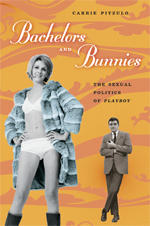
How Playboy brought carnal and acquisitive desires into alignment is the central concern of [Carrie] Pitzulo’s study. She focuses on the magazine’s first two decades, from its debut in 1953 through a mutually polemical encounter with radical feminism in the early 1970s. In the uncorrected page proofs sent out to reviewers, she refers to the book a couple of times by the title For the Articles — a nod to the old joke explaining why one read Playboy. Presumably this was the title it bore when the project started out as a dissertation. (Pitzulo is now assistant professor of history at the University of West Georgia.) This has been corrected in the final version — and in any case, Bachelors and Bunnies is both a better title and more fitting, since its argument is that Playboy's agenda was, at heart, emancipatory for men and women alike.

As the magazine came on the scene in the 1950s, pundits were in the midst of brow-furrowing over a “crisis in masculinity.” Expansion of the professional-managerial class meant that there were more guys working at desks than ever. Women had increasing power in the marketplace, and lots of them were having careers. Some of the rough-hewn male virtues of yesteryear, such as indifference to fashion and a distaste for luxury, were becoming inappropriate in an affluent society. However suitable in the day of the covered wagon, they now slowed the wheels of commerce. “This translated into a cultural angst over the ability of middle-class men to maintain their traditional authority in the home, workplace, and world,” Pitzulo writes.

A new, alternative code of masculinity could be found in the pages of Playboy. It was completely urban and tended towards a sophistication verging on dandyism. While displaying an aversion toward being domesticated by women, it was unambiguously (even strenuously) heterosexual. A man had to know how to consume, and women were there for the consuming. You used the best available hi-fi to play the coolest possible jazz album for that secretary you met in the elevator; soon she would be wearing only a smile, just like this month’s centerfold.

The Stockholm Syndrome Theory of Long Novels

51JMZS7BKML._SL500_AA300_ Mark O'Connell over at the Millions:

[T]hree or four years ago, something changed. For some reason I can’t recall (probably a longish lapse in productivity on my thesis) I set myself the task of reading a Great Big Important Novel. For another reason I can’t recall (probably the fact that it had been sitting on a shelf for years, its pages turning the sullen yellow of neglected great books), I settled on Gravity’s Rainbow. I can’t say that I enjoyed every minute of it, or even that I enjoyed all that much of it at all, but I can say that by the time I got to the end of it I was glad to have read it. Not just glad that I had finally finished it, but that I had started it and seen it through. I felt as though I had been through something major, as though I had not merely experienced something but done something, and that the doing and the experiencing were inseparable in the way that is peculiar to the act of reading. And I’ve had that same feeling, I realize, with almost every very long novel I’ve read before or since.

You finish the last page of a book like Gravity’s Rainbow and—even if you’ve spent much of it in a state of bewilderment or frustration or irritation—you think to yourself, “that was monumental.” But it strikes me that this sense of monumentality, this gratified speechlessness that we tend to feel at such moments of closure and valediction, has at least as much to do with our own sense of achievement in having read the thing as it does with a sense of the author’s achievement in having written it. When you read the kind of novel that promises to increase the strength of your upper-body as much as the height of your brow—a Ulysses or a Brothers Karamazov or a Gravity’s Rainbow—there’s an awe about the scale of the work which, rightly, informs your response to it but which, more problematically, is often difficult to separate from an awe at the fact of your own surmounting of it.

The upshot of this, I think, is that the greatness of a novel in the mind of its readers is often alloyed with those readers’ sense of their own greatness (as readers) for having conquered it. I don’t think William Gaddis’s The Recognitions, for instance, is nearly as fantastic a novel as people often claim it is. But it is one of the most memorable and monumental experiences of my reading life. And these are the reasons why: because the thing was just so long; because I had such a hard time with it; and because I eventually finished it.

Looking into Ramachandran’s Broken Mirror

Ramachandran An interview with Vilayanur S. Ramachandran over at Neurophilosophy:

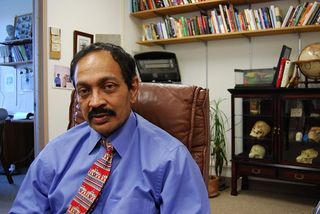
I visited Vilayanur S. Ramachandran's lab at the University of California, San Diego recently, and interviewed him and several members of his lab about their work. Rama and I talked, among other things, about the controversial broken mirror hypothesis, which he and others independently proposed in the early 1990s as an explanation for autism. I've written a short article about it for the Simons Foundation Autism Research Initiative (SFARI), and the transcript of that part of the interview is below. I also wrote an article summarizing the latest findings about the molecular genetics of autism, which were presented in a symposium held at the Society for Neuroscience annual meeting last November.

MC: Autism is an umbrella term referring to numerous conditions. Can the broken mirror hypothesis account for all of them?

Ramachandran: Autism is characterized by a specific subset of symptoms. There may be three or four that are lumped together, but by and large it is one syndrome, as good a syndrome as any in neurology. It's not like dyslexia, where there are half a dozen or a dozen types. With autism, people are debating whether high functioning and low functioning autistics should be lumped together or not. There's a tendency to group them together rather than saying they're distinct.

We have suggested that the mirror neuron system is deficient in autism, and there's mixed evidence of that, but most groups support our view. [Marco] Iaconobi's group at UCLA did a brain imaging study showing that the mirror neuron system is deficient, but others claim that it's normal. That may partly be based on the heterogeneity of autism. The mirror neuron system itself could be normal but its projections, or the regions it's projecting to, could be abnormal. It's still up in the air.