Gil Scott-Heron, R.I.P.

GilScot-Heron_Press.3 Greg Tate in the Village Voice:

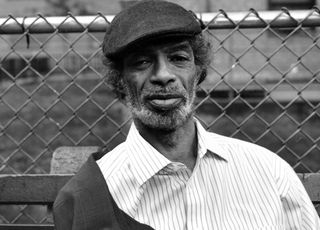
You know why Gil never had much love for that ill-conceived Godfather of Rap tag. If you're already your own genre, you don't need the weak currency offered by another. If you're a one-off, why would you want to bask in the reflected glory of knock-offs? If you're already Odin, being proclaimed the decrepit sire of Thor and Loki just ain't gonna rock your world.

Gil knew he wasn't bigger than hip-hop—he knew he was just better. Like Jimi was better than heavy metal, Coltrane better than bebop, Malcolm better than the Nation of Islam, Marley better than the King James Bible. Better as in deeper—emotionally, spiritually, intellectually, politically, ancestrally, hell, probably even genetically. Mama was a Harlem opera singer; papa was a Jamaican footballer (rendering rolling stone redundant); grandmama played the blues records in Kentucky. So grit shit and mother wit Gil had in abundance, and like any Aries Man worth his saltiness he capped it off with flavor, finesse and a funky gypsy attitude.

He was also better in the sense that any major brujo who can stand alone always impresses more than those who need an army in front of them to look bad, jump bad, and mostly have other people to do the killing. George Clinton once said Sly Stone's interviews were better than most cats' albums; Gil clearing his throat coughed up more gravitas than many gruff MCs' tuffest 16 bars. Being a bona fide griot and Orisha-ascendant will do that; being a truth-teller, soothsayer, word-magician, and acerbic musical op-ed columnist will do that. Gil is who and what Rakim was really talking about when he rhymed, “This is a lifetime mission: vision a prison.” Shouldering the task of carrying Langston Hughes, Billie Holiday, Paul Robeson and The Black Arts Movement's legacies into the 1970s world of African-American popular song will do that too. The Revolution came and went so fast on April 4, 1968, that even most Black people missed it.


Does reading great books make you a better person?

From Salon:

Jane It began when a professor forced him to read “Emma.” Balky at first, Deresiewicz was soon thunderstruck by the revelation that Austen had “not been writing about everyday things because she couldn't think of anything else to talk about. She had been writing about them because she wanted to show how important they really are.” Each chapter in this fusion of memoir and literary criticism reflects on how one Austen novel helped Deresiewicz reach a fuller understanding of some important aspect of life: common courtesy, learning, the importance of character over charm, social status, friendship and love. He makes a good case; Austen is a profoundly moral novelist and surely meant her readers to glean some insights on how best to live from reading her books. I do not doubt that Deresiewicz improved a lot while reading them. It's the causal relationship between the two phenomena that I doubt.

Does reading great literature make you a better person? I've not seen much evidence for this common belief. Some of the best-read people I know are thoroughgoing jerks, and some of the kindest and noblest verge on the illiterate — which is admittedly an anecdotal argument, but then, when it comes to this topic, what isn't? There's a theory, vaguely associated with evolutionary psychology, maintaining that fiction builds empathy, and therefore morality, by inviting us into the minds, hearts and experiences of others. This is what the British children's book author Michael Morpurgo implied recently in the Observer newspaper, when he claimed that “developing in young children a love of poems and stories” might someday render the human-rights organization Amnesty International obsolete.

More here.

Researchers uncover how the brain processes faces

From PhysOrg:

Face Each time you see a person that you know, your brain rapidly and seemingly effortlessly recognizes that person by his or her face. “Faces are among the most compelling visual stimulation that we encounter, and recognizing faces taxes our visual perception system to the hilt. Carnegie Mellon has a longstanding history for embracing a full-system account of the brain. We have the computational tools and technology to push further into looking past one single brain region. And, that is what we did here to discover that there are multiple cortical areas working together to recognize faces,” she said.

For the study, participants were shown images of faces while in a magnetic resonance imaging (MRI) scanner. Their task was to recognize different facial identities with varying facial expressions. Using dynamic multivariate mapping, the research team examined the functional MRI (fMRI) data and found a network of fusiform and anterior temporal regions that respond with distinct patterns to different identities. Furthermore, they found that the information is evenly distributed among the anterior regions and that the right fusiform region plays a central role within the network. “Not only do we have a more clearly defined architectural model of the brain, but we were able to determine the involvement of multiple brain areas in face recognition as well as in other types of processes, such as visual word recognition,” Behrmann said.

More here.

Tuesday, May 31, 2011

Reading Nabokov to Nabokov

Img-article---zanganeh-nabokov_202213920 Lila Azam Zanganeh in The Daily Beast:

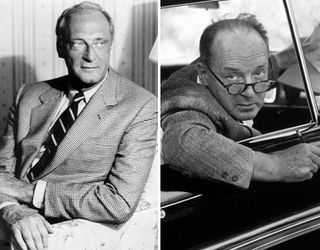
For three days and three nights, on a damp February weekend in Palm Beach, Florida, I read Nabokov to Nabokov. I had traveled from New York to Palm Beach with a manuscript in my suitcase to visit Dmitri Nabokov, the only son and literary executor of Vladimir Nabokov.

The manuscript, my first book, contained a number of Nabokov quotes for which I needed to obtain rights before I could approach an American publisher. I knew that, in 1999, Dmitri had threatened to sue an Italian author named Pia Pera over a book titled Lo’s Diary, a rewriting of Lolita from Lolita’s point of view. To avoid an infringement lawsuit, Pera’s American publisher had printed a scathing preface by Dmitri (“Pia Pera [henceforth PP], an Italian journalist and author of some stories that I have not read …”). Aside from this, Dmitri had built a forbidding reputation in the literary world for attacking the works of many a would-be Nabokovian. Fearing the worst, I had emailed Dmitri the manuscript, hoping he would read it before I made it to Florida, and that we might spend the evening discussing potential issues.

My book was a curious combination of fiction and essay, of invention and interpretation. It posited that Nabokov was the great writer of happiness. A notion that, over the years, almost invariably turned small talk into opinionated tirades. Happiness, evidently, did not keep good company with nymphets and nympholepts.

Palm Beach felt like a sort of grotesque inversion of Nabokov’s short story “Spring in Fialta”: gigantic pine trees; juniper shrubs; sorry-go-rounds of concrete high-rises. With a map and a bicycle, I’d made my way to Ocean Drive. I rehearsed with myself how I might parry various lines of attack: breathe, acquiesce, qualify. “Your father hated didactic writings, hence this book had to be extremely playful … I had to imagine him.” With an accelerated heart rate, I rang the bell of Dmitri’s apartment. A beaming nurse opened the door, and I stepped into a living room adorned with posters outlining, in 19th-century font, the casts of productions Dmitri had sung in during his operatic career. La Bohème stood out—a memorable performance, as Dmitri later recounted, at the Teatro di Reggio Emilia, where he had sung his debut role on the same night as Pavarotti, nearly half a century ago. On the door to his bedroom, to the left, a glossy poster of Kubrick’s Lolita displayed the famous pair of heart-shaped red glasses. Among mirrors and modern cream-white furniture, one could glimpse various miniature models of racing cars, another of his life’s passions.

Human Dignity

George Kateb -Human Dignity Remy Debes reviews George Kateb's Human Dignity, Harvard University Press over at Notre Dame Philosophical Reviews:

You really should read this book. I think . . .

George Kateb's Human Dignity has the ring of popular philosophy. It isn't rigorously researched, especially with regard to the literature on human dignity. It overreaches, making substantive claims not just about the nature and basis of human dignity, but also human rights, liberty, morality, mind, consciousness, self-consciousness, identity, imagination, language, autonomy, and agency. And it defends more than a few contentious positions, including the central claim that human dignity is underwritten by human uniqueness in the strong sense that humans are partly divorced from the natural order — a claim, it must be added, which is on the one hand intended secularly and on the other hand defended unabashedly from the armchair. Still — you should probably read this book.

It is a rewarding book. Rewarding because of its scope — or more exactly, because of its enviable ability to be (generally) deep despite the incredible scope. Rewarding because of its style — its intentionally personal tone and scholastically unencumbered pace. And it is rewarding because it is so bold. Given the timid and hedge-prone state of recent work on human dignity, Kateb's confident viewpoint is refreshing and engaging even when it is frustrating, wildly speculative, and wrong. In short, Human Dignity is one of the more interesting contributions on the subject of human worth in the last few decades. It absorbed me when it succeeded. And it absorbed me when it failed.

Ironically, one of this book's more important successes may be one Kateb himself appreciates least: unlike most work on human dignity, Kateb uses the right method. Abstracting from his substantive and normative claims about the nature of dignity, claims which are the focus of the book, Kateb implicitly appears to appreciate the need to get clear on, and be led by, what I have recently called the form of dignity.

Curse of the Bomb

Rafia_zakariaRafia Zakaria in Guernica:

[L]ike so many other things—infrastructure and institutions, roads and rituals—the bomb too has failed Pakistan. In the past month, Pakistan’s borders have been casually ignored, security walls scaled and planes destroyed—all this despite the possession of the omnipotent trump card residing at the sacred altar of our national consciousness.

The bomb that was supposed to deter and defeat has been unable to frighten anyone into leaving us alone. It has revealed, instead, the flimsy remains of our national pride and a confused, conspiracy-infested mental landscape. Never united otherwise, Pakistanis can now share the heartbreak of knowing that they were never invincible after all, that a few men could easily outwit and outsmart, and that situating their self-worth in a bomb is exacting an infinitely bloody price.

No longer cosseted by the myth of a cure-all weapon, the bomb like an unveiled bride must be assessed in the fluorescence of a depressing and unwelcome day. It was widely known to have been procured through deception and disguise, lies and falsehoods. The man, who developed it, was chastised publicly and heroised privately, despite what some saw as his mendacity.

These sins we forgave, unwilling to recognise their potent if silent attack on national morality now poised to elevate someone accused of selling nuclear technology and promoting proliferation. It is poised to accept that it is entirely forgivable to sacrifice what is right for what is needed and most damningly that the power to destroy is more venerable than the power to befriend and create.

The losses brought by the bomb would likely be forgiven by Pakistanis if they were moral concerns alone. In the cold estimations of post-Soviet calculations, nuclear power was a deterrent, its possession meant that others would stay away, that possession alone equaled power, especially for small countries with few friends.

However, in the era of terrorism, where every living thing is a target and the propagation of fear is a means to control, a markedly different equation of nuclear power is in operation. Under its deductions, weak states with nuclear weapons attract rather than deter non-state enemies.

Ascent into Antwerp

Mas_exterior_ships

Antwerp is an unappreciated beauty with a dubious reputation. But the city, which has fallen into disrepute as a bastion of Flemish nationalism, surprises its visitors with its cultural cosmopolitanism. A top source of pride is the fashion scene, which showcases its creations in the hip neighbourhood surrounding Dries van Noten’s fashion temple and the Fashion Museum opened in 2002, which the Ghent architect Marie-José Van Hee furnished with a theatrically stepped foyer serving both as an ideal place to pose and a catwalk. As the city on the Schelde became a fashion mecca towards the end of the 1980s, thanks to the meteoric rise of the “Antwerp Six”, a small architectural miracle emerged. On the rundown waterfront along the Schelde, Bob van Reeth, the father of new Flemish architecture, built the eye-catching, striped Huis Van Roosmalen and also – as part of the restoration of the burned down riverbank terraces – the Zuiderterras Café that resembles the form of a ship, while Willem-Jan Neutelings erected an apartment building whose wooden facade was intended to recall Antwerp’s maritime tradition. Gradually, politicians began to realise that Antwerp, all too entrenched in its glorious past, needed an urban renewal initiative. Inspired by the revitalisation of decrepit ports in Barcelona, San Francisco, and Sydney, a competition was organised for rejuvenating the “stad aan de stroom” situated between the highway intersection to the south and Eilandje Docks to the north, now made redundant by the new container harbour – with awards going to big names, such as Toyo Ito, Rem Koolhaas, Bob van Reeth, and Manuel de Sola-Morales. But the ambitious projects ended up being shelved, and revitalisation – based on a new master plan – proceeded on an informal basis and haltingly.

more from Roman Hollenstein at Sign and Sight here.

Dial-a-Poem

Dial-a-poem

In a 1970 Arts Magazine article, art critic Gregory Battcock said: “The new curator is more concerned with communication than with art.” In a 1958 essay on Jackson Pollock, Happenings artist Allan Kaprow said: “They will discover out of ordinary things the meaning of ordinariness.” In a 1981 interview, poet John Giorno said: “I certainly won’t curl up in a chair with a book of poetry.” Dial-a-Poem, Giorno’s New York City–wide poetry installation instigated in 1968, used the technology of the telephone, a plastic handheld thing, to relay poetry as if it were simple information. The messages were poems recorded by poets and artists, from John Ashbery to Bobby Seale. For a period of about four years, anyone could dial 212.628.0400 on a rotary telephone and hear a poem. Art and writing at the end of the 1960s had expanded into new kinds of experience. Almost anything could suddenly be labeled “art”—a pile of tires, a conversation, the sound of rain outside a window. Turning away from the heroics associated with the Abstract Expressionist movement—the grand gesture—artists and writers suddenly understood the actions of an ordinary life as a type of poetry. In addition to art’s expansion, the poem on the page expanded, the definitions of “media” expanded, the frame of the picture expanded. Art and life, for a short time, became concomitant.

more from Katie Geha at Poetry here.

Chernobyl in Belarus

Chernobylfeature

WHEN THE reactor at Unit 4 of the V. I. Lenin Atomic Power Station, Chernobyl, exploded twenty-five years ago, the people of Belarus were sacrificed by a secretive political system. Pilots such as Major Aleksei Grushin were sent into the air above Belarus to seed clouds with silver iodine so they would rain down what had spewed from the inner core of the reactor onto the fields below. That political decision kept Muscovites safe—but as a result, 60 percent of the disaster’s radiation fell on the hapless people of Belarus. It was a national catastrophe. As author Svetlana Alexievich points out in her masterful Voices from Chernobyl, the Nazis took three years to destroy 619 Belarusian villages during the Second World War; Chernobyl made 485 villages uninhabitable in hours. Today, 2,000,000 Belarussians, including 800,000 children, live in contaminated areas. To give an idea as to how contaminated this land is, 100,000 people live on land with a radiation level 1,480 times greater than the level typically found on a nuclear bomb test site. Between 1990 and 2000, the incidence of thyroid cancer in adolescents in the region increased by 1,600 percent.

more from Michael Harris at Dissent here.

Tuesday Poem

Ghazal

It’s wine I need. Is it a sin to have another?
No harm in merlot, no harm in another.

In Ramadan, we’ll break our fast with dates and wine—
Must we pray in one room and dance in another?

Crushed blossoms at the end of the summer: teach me
how to coax nectar from the bloom of another.

Burned rice on the stove again: what’s to love
but my imperfections—you’ll forgive me another.

Butter by a kettle always melts, warns the proverb.
Heated, greased, we slip one into the other.

When, inexplicably, you enter my prayers,
I hear messages from one god or another.

Me encanta cantar, cuando estoy sola, en el carro.
My mother tongue dissolves. I speak in another.

Heart thief, enter the fields like a woman in love,
vase in one hand, shears in the other.

by Dilruba Ahmed
from Blackbird, Spring 2010


Feud for thought

From The Guardian:

VS-Naipaul-and-Paul-Thero-007 Well, it was fun while it lasted. After 15 years, novelists Paul Theroux and VS Naipaul have finally ended their bookish bust-up, with a little help from Ian McEwan. Friends for three decades, the pair fell out in the mid-90s after the Trinidadian sold off one of Theroux's books – personally dedicated to Naipaul – for $1,500. Theroux responded with a memoir of their friendship, Sir Vidia's Shadow, which labelled Naipaul a racist, an egoist and a mercenary. All this hand-wringing came to an end last weekend with a simple handshake. Spotting Naipaul in the green room at the Hay festival, Theroux turned to McEwan and asked what he should do. “Life is short,” McEwan replied. “You should say hello.” And with that, handbags were holstered. But all is not lost. Ever since Tolstoy challenged Turgenev to a duel, the vendetta has been part and parcel of literary life – and it will survive even Theroux and Naipaul. These feuds appear to be alive and well:

Salman Rushdie v John le Carré

The novelists fell out in the late 80s, when Le Carré criticised Rushdie's Satanic Verses. After Le Carré was accused of anti-semitism in 1997, Rushdie waded in, writing to the Guardian about his lack of sympathy. “Rushdie's way with the truth is as self-serving as ever,” replied Le Carré in the next day's edition. A further missive from Rushdie called the crime writer “a pompous ass”.

Possible peacemaker: At the time Christopher Hitchens muddied the waters, calling Le Carré “a man who, having relieved himself in his own hat, makes haste to clamp the brimming chapeau on his head”. It's his job to clean things up.

More here.

The Bilingual Advantage

From The New York Times:

CONV-popup A cognitive neuroscientist, Ellen Bialystok has spent almost 40 years learning about how bilingualism sharpens the mind. Her good news: Among other benefits, the regular use of two languages appears to delay the onset of Alzheimer’s disease symptoms. Dr. Bialystok, 62, a distinguished research professor of psychology at York University in Toronto, was awarded a $100,000 Killam Prize last year for her contributions to social science.

Q. So what exactly did you find on this unexpected road?

A. As we did our research, you could see there was a big difference in the way monolingual and bilingual children processed language. We found that if you gave 5- and 6-year-olds language problems to solve, monolingual and bilingual children knew, pretty much, the same amount of language. But on one question, there was a difference. We asked all the children if a certain illogical sentence was grammatically correct: “Apples grow on noses.” The monolingual children couldn’t answer. They’d say, “That’s silly” and they’d stall. But the bilingual children would say, in their own words, “It’s silly, but it’s grammatically correct.” The bilinguals, we found, manifested a cognitive system with the ability to attend to important information and ignore the less important.

Q. How does this work — do you understand it?

A. Yes. There’s a system in your brain, the executive control system. It’s a general manager. Its job is to keep you focused on what is relevant, while ignoring distractions. It’s what makes it possible for you to hold two different things in your mind at one time and switch between them. If you have two languages and you use them regularly, the way the brain’s networks work is that every time you speak, both languages pop up and the executive control system has to sort through everything and attend to what’s relevant in the moment. Therefore the bilinguals use that system more, and it’s that regular use that makes that system more efficient.

More here.

Monday, May 30, 2011

Sunday, May 29, 2011

Under the Volcano

Elsalvadorimg-575 Dara Kerr in Guernica:

On a muggy November afternoon in 1974, Dolores Alfaro and her husband descended El Salvador’s Chichontepec volcano. They’d been picking coffee beans in one of the plantations dotting the steep slopes, and were returning home with full wicker baskets. Walking through the forest, Alfaro saw a half-dozen olive green trucks, packed with soldiers, cresting a hill and slowly rolling into town. There had been tensions between laborers and the military but seeing troops standing on the flatbed trucks, rifles aimed, fingers on triggers, made her realize something had changed.

On that day, a faction of the national military raided a village of unarmed civilians. The soldiers moved from house to house. By dusk, they murdered six people, imprisoned twenty-eight, and wounded dozens. This practically unknown event, named La Cayetana after this village at the foot of the volcano, marked a change in the nature of persecution in El Salvador—going from sporadic repression of select individuals to deliberate attacks on entire communities. It set the pattern for scores of government massacres to come.

Six years later, in 1980, the country’s archbishop Oscar Romero was assassinated—shot in the heart while celebrating Mass—his death catalyzing El Salvador’s twelve-year civil war, which was marked by roving paramilitary death squads and the murder of tens of thousands. For more than a decade, the U.S. government supplied the Salvadoran military with an average of $1 million per day and trained its troops in counterinsurgency tactics. Much of what happened was shrouded after the war ended in 1992, and the nation’s congress passed amnesty laws—absolving war criminals—and official amnesia set in.

The Naturalness of (Many) Social Institutions: Evolved Cognition as Their Foundation

PBoyerPascal Boyer and Michael Petersen in Journal of Institutional Economics (forthcoming):

General accounts of social institutions should provide plausible and testable answers to questions of institutional design, such as, why do social institutions have the specific features that we observe in human societies? Why do we observe common institutional features in otherwise very different cultural environments? Or, why do some institutions seem natural and compelling to participants, while others are considered alien or coercive? Here we develop the view that present institutional theories do not properly address such design questions, and that this can be remedied only by taking into account what we call the ‘naturalness’ of institutions, their connection to human expectations and preferences that result from evolution by natural selection. This perspective may help us understand commonalities across cultures, but alsowhy some institutions are more successful and compelling than others and why they change in particular directions.

To some extent, this suggestion echoes a defining feature of the neoinstitutional approach. From the beginning, neo-institutionalism has been oriented towards developing realistic models of the actors, countering the Homo oeconomicus model inherent in older institutional accounts and emphasizing the cognitive limits of human decision makers (Brousseau and Glachant, 2008). From this perspective, important lines of inquiry have been developed with regards to, first, how institutions carry a range of unintended consequences given the cognitive limits of their designers, and, second, how a function of institutions is to counter such limits (North, 1990). At the same time, however, this perspective of bounded rationality provides only a partial description of human cognition. While one line of research within the cognitive sciences has been preoccupied with the biased and fallible nature of human cognition, a complementary line of research has developed the view that human cognition is in fact ‘better than rational’ (Cosmides and Tooby, 1994). Evolutionary psychologists have argued that human cognition includes a multitude of domain-specific cognitive programs, each optimally geared (within evolutionary constraints) to solve particular problems in the course of human evolutionary history (Barkow et al., 1992). The inferential power of these specialized programs comes from their content-rich nature. That is, they are loaded with inbuilt assumptions about their domain. Environments that fit these inbuilt assumptions appear intuitive and readily understandable.

Our aim is to outline the argument that institutions are effective not despite human cognition but, in part, because of human cognition. Essentially, we argue that the content-rich nature of evolved intuitions provides a foundation which can be and is often used in the design of many social institutions. Institutions that fit these intuitions, we propose, develop more easily, require less effort to conform to and are more culturally stable.

How a Sex Rebel was Born

Md_horizTracy Clark-Flory interviews Susie Bright in Salon:

There are lots of things about your early sex life that could be quite controversial — you're underage and sleeping with much older adults. But you write about the experience like it was very positive overall.

Oh, I feel that way. When I talk nonchalantly publicly about becoming sexually active at 16, people are like, “Oh my god you were underage!” And I'm like, “Are you kidding me?!” You think I was wearing diapers? You want to see a picture of me at 16? I'm working, I'm going to school, I'm having sex, I have a huge social life, I'm politically involved in meetings from morning to night, I take care of a household with my dad. I'm a beginning grown-up. I had the foolishness and naiveté and clumsiness of a teenager, but when you're ready you're ready. When you think about this on more of a global or species level, it's kind of ridiculous how we infantalize teenagers.

From there you were introduced to this world of casual sex where the idea was that, as you say, “sex would be friendly and kind and fun. You'd get to see what everyone was like in bed.” How did that idea pan out in practice?

Well, first of all, I detest the term “casual sex” — since when is it actually casual, this so-called casual sex? Every time I was with someone it was intimate. It was intense. I got to know them and they got to know me on levels we certainly wouldn't have known if we hadn't gotten together — and I don't just mean what their bottom looked like, I mean their personality, their feelings. You're vulnerable with someone. I mean, some people say, “No, I'm made of steel. I just go in there and fuck.” Have I ever experienced that, at all? I just don't find sex to be this jaded, cynical, stoic exercise. How do you manage to do that and have an orgasm? I don't.

When You’re Strange

When_Youre_Strange_jpg_470x408_q85 Paul Theroux in the NYRB:

Until I went to live in Africa, I had not known that most people in the world believe that they are the People, and their language is the Word, and strangers are not fully human—at least not human in the way the People are—nor is a stranger’s language anything but the gabbling of incoherent and inspissated felicities. In most languages, the name of a people means “the Original People,” or simply “the People.” “Inuit” means “the People,” and most Native American names of so-called tribes mean “the People”: For example, the Ojibwe, or Chippewa, call themselves Anishinaabe, “the Original People,” and the Cherokee (the name is not theirs but a Creek word) call themselves Ani Yun Wiya, meaning “Real People,” and Hawaiians refer to themselves as Kanaka Maoli, “Original People.”

As recently as the 1930s, Australian gold prospectors and New Guinea Highlanders encountered each other for the first time. The grasping, world-weary Aussies took the Highlanders to be savages, while the Highlanders, assuming that the Aussies were the ghosts of their own dead ancestors on a visit, felt a kinship and gave them food, thinking (as they reported later), “They are like people you see in a dream.” But the Australians were looking for gold and killed the Highlanders, who were uncooperative. The Lakota, Indians of the North American plains, who called white men washichus, Nathaniel Philbrick writes in The Last Stand, “believed that the first white men had come from the sea, which they called mniwoncha, meaning ‘water all over.’” In an echo of this accurate characterization, and at about the same time, the historian Fernand Braudel tells us, “To West Africans, the white men were murdele, men from the sea.”

Otherness can be like an illness; being a stranger can be analogous to experiencing a form of madness—those same intimations of the unreal and the irrational, when everything that has been familiar is stripped away.