by Hasan Altaf
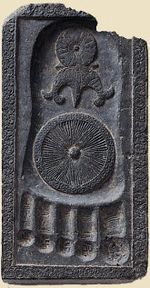 The first time I heard the word “Gandhara” was when I was maybe eight or ten, and, driving from Islamabad to Peshawar with my father, brother, and grandparents, stopped in a town I’d never heard of to visit a museum that was equally unfamiliar. The little town was Taxila, and the museum was the Taxila Museum. I’m sure at the time someone, most likely my father, explained to me the significance, the historic and artistic value, of the objects presented there, but it seems I must have glazed over and ignored it. To the eight- or ten-year-old I was, none of the statues and relics, the Buddhas and bodhisattvas, were particularly memorable. We left Taxila and continued our drive, leaving the museum behind, and until recently, I never thought about them again.
Many of us who grow up outside Pakistan have Pakistan always in the back of our minds, but that Pakistan is an imagined one that is different for each of us, and mine, at least, did not encompass Gandhara. (Which is, at one level, strange, as my imagined France includes a Revolution, my imagined England a conquering William, and, thanks to my grandmother, my imagined Pakistan a Muhammad bin Qasim.) Even when I lived in Pakistan, in Islamabad, within easy driving range of the remains of the culture, “Gandhara” was an irrelevant if not foreign concept.
The new show of Gandhara art, at the Asia Society in New York (none of the work came from Taxila, but from Lahore and Karachi instead, after apparently a great deal of diplomatic wrangling), doesn’t seem to be particularly aimed at changing that situation – which is, all things considered, probably for the best; such an attempt could so easily swing towards the moralistic and the preachy. Instead, the exhibition restricts itself mostly to sobriety, to a calm display of the work and relevant facts. When the curators do conjecture, they do so about what a particular gesture might mean, whether a particular statue depicts Athena or simply an Athena-like goddess, whether a particular piece came from a dome or a pedestal.
Read more »