A searing novel and a sensational film has thrust Sapphire into the limelight

Sapphire talks to Arifa Akbar in The Independent:
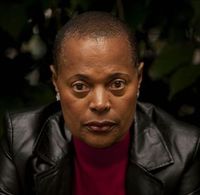
Saph Shortly after the publication of her first novel, Push, which told the story of an obese, illiterate, black teenager abused by her mother and raped by her father, Sapphire was informed by a prominent African American magazine that it would not be featuring a review. Essence magazine's boycott was a defining moment for Sapphire. The story of Claireece Precious Jones, written phonetically in a vivid stream-of-conscious outpouring, remained below the radar for 13 years. Then, in 2009, it hit the New York Times bestseller list after a film adaptation by Lee Daniels (entitled Precious) which stunned audiences at the Cannes, Sundance, and Toronto festivals, won two Oscars, and made an unlikely heroine out of Precious Jones. She finds freedom, of sorts, despite having two babies by her father and contracting HIV from his abuse. Sapphire has a theory for why the book was disdained by Essence in 1996. “I think people thought maternal abuse made the black community look bad,” she says.

As one of the first books to lay open the character of the violent, sexually abusive mother-figure, it had perhaps too taboo a topic, although “I felt like saying 'I'm not trying to hurt you. Don't shoot the messenger'”. The then editor eventually wrote Sapphire a letter of apology. The magazine has, 15 years on, been among the first to review her second novel, The Kid (Hamish Hamilton, £12.99). An urban Bildungsroman featuring Precious's orphaned son, Abdul Jones, it is just as explicit, and damning, in its depiction of a forgotten underclass. Push's story of illiteracy, undetected abuse and social deprivation was a deliberate reflection on the failures of the American welfare system. It is rare that these fringes of existence are ever exposed, co-existing next to extreme affluence, and there is always disbelief when they are, she suggests.

More here.

To clear digital waste in computers, ‘think green,’

From PhysOrg:

Dump A digital dumping ground lies inside most computers, a wasteland where old, rarely used and unneeded files pile up. Such data can deplete precious storage space, bog down the system's efficiency and sap its energy. Conventional rubbish trucks can't clear this invisible byte blight. But two researchers say real-world trash management tactics point the way to a new era of computer cleansing. In a recent paper published on the scholarly website arXiv, Johns Hopkins University computer scientists Ragib Hasan and Randal Burns have suggested familiar “green” solutions to the digital waste data problems: reduce, reuse, recycle, recover and dispose. “In everyday life, 'waste' is something we don't need or don't want or can't use anymore, so we look for ways to re-use it, recycle it or get rid of it,” said Hasan, an adjunct assistant professor of computer science. “We decided to apply the same concepts to the waste data that builds up inside of our computers and storage devices.” With this goal in mind, Hasan and Burns, an associate professor of computer science, first needed to figure out what kind of computer data might qualify as “waste.” They settled on theses four categories:

  • Unintentional waste data, created as a side effect or by-product of a process, with no purpose.
  • Used data, which has served its purposes and is no longer useful to the owner.
  • Degraded data, which has deteriorated to a point where it is no longer useful.
  • Unwanted data, which was never useful to the computer user in the first place.

The researchers found no shortage of files and computer code that fit into these categories. “Our everyday data processing activities create massive amounts of data,” their paper states. “Like physical waste and trash, unwanted and unused data also pollutes the digital environment. … We propose using the lessons from real life waste management in handling waste data.” The researchers say a user may not even be aware that much of this waste is piling up and impairing the computer's efficiency. “If you have a lot of debris in the street, traffic slows down,” said Hasan. “And if you have too much waste data in your computer, your applications may slow down because they don't have the space they require.”

More here.

Friday Poem

Why the Young Men Are So Ugly

They have little tractors in their blood
and all day the tractors climb up and down
inside their arms and legs, their
collarbones and heads.

That is why they yell and scream and slam the barbells
down into their clanking slots,
making the metal ring like sledgehammers on iron,
like dungeon prisoners rattling their chains.

That is why they shriek their tires at the stopsign,
why they turn the base up on the stereo
until it shakes the traffic light, until it
dryhumps the eardrum of the crossing guard.

Testosterone is a drug,
and they say No, No, No until
they are overwhelmed and punch
their buddy in the face for joy,

or make a joke about gravy and bottomless holes
to a middle-aged waitress who is gently
setting down the plate in front of them.

If they are grotesque, if
what they say and do is often nothing more
than a kind of psychopathic fart,

it is only because of the tractors,
the tractors in their blood,
revving their engines, chewing up the turf
inside their arteries and veins
It is the testosterone tractor

constantly climbing the mudhill of the world
and dragging the young man behind it
by a chain around his leg.
In the stink and the noise, in the clouds
of filthy exhaust

is where they live. It is the tractors
that make them
what they are. While they make being a man
look like a disease.

by Tony Hoagland

Thursday, September 1, 2011

Pakistan, the Army and the Conflict Within

Pervez_HoodbhoyPervez Hoodbhoy and Zia Mian in MERIP:

Pakistan’s generals are besieged on all sides. Like never before, they are at odds with their own rank and file. According to the New York Times, the discontent with the top brass is so great as to evoke concerns of a colonels’ coup. The army also is losing support from its domestic political allies and subject to the increasing hostility of the Pakistani public. The generals are even at risk of being dumped by their oldest and most generous supporter, the United States.

Pakistani army chief Gen. Ashfaq Kayani and other military leaders know it is wise to stop digging when in a hole. But it is not clear if the generals can stop. On July 5, the New York Times reported that US officials hold senior officers of Inter-Services Intelligence (ISI), the military intelligence agency, responsible for the kidnapping, torture and murder of Pakistani journalist Saleem Shahzhad. Shahzhad was well known for his reporting on the military’s ties with militant Islamist groups.

The immediate cause of this crisis was the successful US operation to discover Osama bin Laden’s hiding place in Pakistan, stealthily enter the country and kill him. But, in reality, the generals have been brought to these dire straits by army policies, particularly those enacted over the past three decades, which have left the army, and Pakistan, deeply divided. Keeping the army and the country together is part of the same challenge.

A Counterproductive Disdain

Alexander Cooley and Lincoln Mitchell in the New York Times:

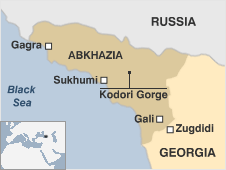
_45840292_abkazia226 Last Friday, voters in the Georgian breakaway territory of Abkhazia went to the polls in a presidential election that was broadly ignored by the United States and its European allies.

There were no international observers, no stern warnings to Abkhaz leaders about the rule of law, no Western congratulations to the winner — Alexander Ankvab, who had been acting president since Sergei Bagapsh, the twice-elected Abkhaz president, died suddenly in May.

In fact, many Western organizations, urged by Tbilisi, condemned the polling. Catherine Ashton, the European Union foreign policy chief, said the E.U. “does not recognize the constitutional and legal framework within which these elections have taken place,” while NATO declared that the alliance “does not recognize the elections.”

The main reason for these reactions is that while the people of Abkhazia view themselves as an independent state, the world’s governments, with only a very few exceptions, consider the territory as an integral part of Georgia. Only a few weeks ago the U.S. Senate passed a resolution describing Abkhazia as “occupied” by Russia.

Still, condemning political processes in the breakaway territory damages Western credibility and influence in the South Caucasus in a number of ways.

More here.

paul berman reflects

6a00d8341c562c53ef0133ed81a5e8970b-500wi

BUT WAIT. The anniversary of September 11 reminds me that, before I come up with a gloomy word to conclude my sentence, it might be useful to recall the Middle Eastern landscape of ten years ago. It was not a spectacle of hope. The whole region seemed to be veering in terrorist directions, with battles almost everywhere going on between Islamists of different stripes and mukhabarat regimes, likewise of different stripes, ranging from the bad to the ghastly. And ten years later? Dismal still, in a kaleidoscopically different pattern. Anyone can think of doomsday possibilities—an Iranian order to Hamas and Hezbollah to launch a regional war, and so on. Still, two new elements, which you could not have found ten years ago, figure nowadays on the landscape. Here and there around the region you can see democratic institutions, shaky as a leaf—threatened by terrorists and Islamist militias in Iraq, trampled underfoot by an Islamist militia in Lebanon, still merely a project for the future in Tunisia, and feebler yet in Egypt, given that, if the Egyptian elections go ahead, they will probably bring the wrong people to power. Democratic institutions nonetheless amount to a new element. And something else: the ineradicable fact that liberals, relatively isolated and weak as they are, have made a mass appearance on the public stage, and the liberals left a good impression on the rest of society, and they even demonstrated the ability, for a moment, to shape events, and their day may not be over yet. Do these new elements add up to nothing? If you are philosophically a hard-core materialist and you tally up the measurable facts of power and wealth, they add up to nothing. But if you consider that ideas sometimes have an autonomous force of their own, and that liberal ideas are more likely to flourish in an atmosphere of freedom, these two new and feeble elements look like—well, a beginning.

more from Paul Berman at TNR here.

canetti and the crowd

20110810_2011+33bookslead_w

As a child, Elias Canetti treasured Robinson Crusoe. The author of Auto da Fé (1935), the nightmarish story of a self-absorbed sinologist who is tricked into marriage by his illiterate housekeeper and who sinks first into the lower depths of society and then into madness, seems to have had the lifelong feeling of being solitary, separate from the rest of humankind. According to his later study in mass psychology Crowds and Power, crowds form in an effort to shake off the burden of individuality. Perhaps surprisingly – as he always claimed to value the individual human being above all else – the impression the reader takes from the book is that, for Canetti, this process of self-obliteration held a powerful attraction. Born into a Sephardic Jewish family in a small port city on the Ottoman Danube and growing up amid the festering anti-Semitism of interwar Europe, Canetti had no illusions about the wisdom of crowds. Yet he seems to have been drawn by suddenly formed masses of humanity, finding a sense of elation in being swept up as a student by a flood of people marching on the Palace of Justice in Vienna in 1927. The crowd was a threat, but also a way out from painful self-consciousness. Crowds fascinated Canetti, so much so that he was inclined to explain the whole of history through them.

more from John Gray at the New Statesman here.

Houellebecq, persona

TLS_Montague_740233a

Michel Houellebecq is best known as a novelist, especially since he was awarded the Prix Goncourt in 2010 for La Carte et le territoire, but the current enfant terrible of French literature actually began his career as a poet. His manifesto, Rester vivant (Staying Alive), appeared as long ago as 1991, the same year as his study of H. P. Lovecraft, whose sombre vision has influenced him. A year later came La Poursuite du bonheur (The Pursuit of Happiness), followed by Le Sens du combat, translated here as The Art of Struggle, the first book of his poetry to appear in English. Already an ambiguity arises, as his translators acknowledge: “In French, ‘sens’ can mean either ‘way’ or ‘sense’, and ‘combat’ can mean ‘struggle’ or ‘fight’”. But Combat was the newspaper for which Albert Camus, whom Houellebecq seems to admire, worked during the Second World War, and there is a hand-to-hand sense about it. So why not “The Way of Combat”, especially since the translators do not even raise the possibility of “art” for “sens” in their foreword? Furthermore, this collection had a companion volume in fiction, with an equally combative title, Extension du domaine de la lutte (1994). Perhaps this should have been called something like “Widening the Battlefield” in English, but instead was given the puzzling title Whatever. This ignores Houellebecq’s theme, the destructive quality of economic coupled with sexual liberalism, which, he maintains, combine to extend our contemporary battleground.

more from John Montague at the TLS here.

The I-word

From The Boston Globe:

Word LIKE CORRUPTION, crime, and asbestos, “inflation” is a word that many Americans imagine in all-red capital letters, flashing across TV screens amid warnings of crisis. For anyone who remembers the gloomy, scary 1970s, when the inflation rate in the United States reached double digits, the word is shorthand for an economy that has spiraled out of control, the dollar losing value and prices climbing feverishly. “Inflation is as violent as a mugger, as frightening as an armed robber, and as deadly as a hit man,” said Ronald Reagan in 1978, as nervous citizens imagined the day when they’d have to push a wheelbarrow full of cash to the grocery store in order to buy a loaf of bread.

That particular nightmare never came to pass, thanks to drastic measures taken by the Federal Reserve. For the better part of the past 30 years, the dollar has stayed stable, reassuring American families and the nation’s trading partners, with the central bank standing guard over the economy and doing everything necessary to keep inflation low. You might say that Kenneth Rogoff has been one of the guards. As a research economist at the Federal Reserve during the first half of the 1980s, he helped ensure that the word “inflation” would never again flash across American TV screens. His reputation as a conservative-minded inflation hawk followed him from the Fed to the International Monetary Fund to his current position in the economics department at Harvard.

More here.

How to Save the Taj Mahal?

From Smithsonian:

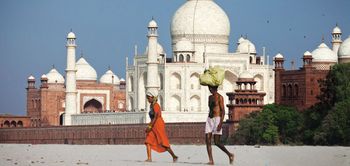
Taj-Mahal-Yamuna-River-631 Part of the Taj Mahal’s beauty derives from the story the stones embody. Though a tomb for the dead, it is also a monument to love, built by the Mughal emperor Shah Jahan, fifth in a line of rulers who had originally come as conquerors from the Central Asian steppes. The Mughals were the dominant power on the Indian subcontinent for much of the 16th to 18th centuries, and the empire reached its cultural zenith under Shah Jahan. He constructed the Taj (which means “crown,” and is also a form of the Persian word “chosen”) as a final resting place for his favorite wife, Arjumand Banu, better known as Mumtaz Mahal (Chosen One of the Palace). A court poet recorded the emperor’s despair at her death in 1631, at the age of 38, after giving birth to the couple’s 14th child: “The color of youth flew away from his cheeks; The flower of his countenance ceased blooming.” He wept so often “his tearful eyes sought help from spectacles.” To honor his wife, Shah Jahan decided to build a tomb so magnificent that it would be remembered throughout the ages. For more than 15 years, he directed the construction of a complex of buildings and gardens that was meant to mirror the Islamic vision of Paradise.

More here.

Thursday Poem

Butter

A Welshman has taken
his nervous bank with him to the beaches
of Spain, from a glass-louvered bottom
of a small yacht he watches the vaulting ribs
of a sunken ship emptied
of the marigolds of salad
and dominion. His girlfriend’s
breasts are copper; he will
sell, he thinks, his dead father’s
dairy farm in late September.
Septembre. Septembre.
He is honestly reading a short story
by Poe. Thunderheads
moving over the lighter casino clouds
of mid-morning. He wonders
about Samuel Beckett
at late night rehearsals.
Spear points and bullwhips
up in the darkening sky. Who wants to die
in Springtime with a collapsed market
and in Paris. He laughs
having just bought back the farm. The slang
of the Americans gaining on him.

by Norman Dubie
from
Blackbird
Spring 2011, Val. 10

Wednesday, August 31, 2011

Frans Hals’ non-religious religious art

Our own Morgan Meis in The Smart Set:

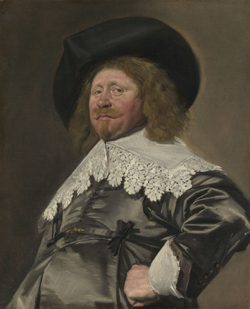
ID_IC_MEIS_HALS_AP_001 Frans Hals is often described as a “loose” painter. You can see what that means in one of Hals' great paintings currently on display at the Metropolitan Museum of Art. The painting is called “The Smoker,” from 1625. You wouldn't be surprised, though, if someone told you it was painted 250 years later than that. The face of the young man smoking a pipe at the center of the painting is rendered in almost impressionistic strokes. A dab of red here, a curve of yellow there. The collar of the man's shirt is created with a rough stab of white down the middle of the canvas. The painstaking brushwork of other Dutch masters from the Golden Age is notably absent. That is not to say Hals was sloppy, a crime for which he has sometimes been accused. Hals labored at his chosen craft all life long. It is just that he worked very hard to achieve a looser style. You can see it even in his formal portraits, in works such as “Portrait of a Man” from 1636-8. The face of the man in that painting is rendered with all the precision you might find in a Rubens of roughly the same era. And the expressiveness of the man's face is reminiscent of Rembrandt. But if you look at the man's left arm, the one cocked at his hip, you notice that the style devolves (or evolves?) into that of the loose Hals again. The elbow — and the folds of garment around the elbow — are painted with the same rough gestures and impressionistic swaths of color that are so startling in “The Smoker.”

More here.

Libya’s Revolution: A Model for the Region?

Maria J. Stephan in Waging Nonviolence:

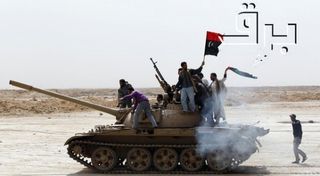
5510256193_01ba966958_z Recent analyses of the Arab Spring have questioned the efficacy of nonviolent resistance compared to armed struggle in ousting authoritarian regimes. The relatively expeditious victories of the nonviolent uprisings (not “revolutions,” as some suggest) in Tunisia and Egypt stand in stark contrast to Libya, where a disparate amalgam of armed groups, guided politically by the Libyan Transitional National Council (TNC) and backed militarily by NATO, are on the verge of removing Moammar Qadhafi from power. As someone who has written extensively about civil resistance, notably in the Middle East, while at the same time working on the Libya portfolio within the State Department, I’ve been grappling with the meaning and significance of the Libyan revolution and its possible impact on the region.

More here.

Israel’s Image Won’t Improve Without Policy Changes

Gary Wexler in Forward:

ScreenHunter_05 Sep. 01 13.11 Even with all the efforts of Camera, the Israel Project, the Jewish Federations and all the other organizations that blast my email inbox daily with defensive statements, Israel is increasingly emerging as the world’s pariah nation.

Yet, as strange as it may sound coming from a marketer with an advertising background, who has represented hundreds of Jewish organizations worldwide, I have arrived at the conclusion that the solution will not be found in branding, marketing, public relations or the writings of political pundits. The problem is that all their concepts, strategies, words and legitimate defenses – no matter how powerful and clever – are not going to elevate Israel’s plummeting image. Hundreds of thousands of dollars from donors and the Israeli government have been poured into this effort, yet the situation only worsens every month. I am as much to blame as anyone for being a supporter of these actions.

It has become clear that the world doesn’t care about Israel’s wines, its Bauhaus architecture, its fashion, its alluring women, its sexy gay men, its beaches, its ballet or its hummus. The world, its media and its university campuses are riveted upon Israel’s relationship with the Palestinians as well as the state of its democracy.

No, the answer to Israel’s image problems does not depend upon the marketing. It depends first upon the policies.

More here.

We’re on your case, mate

Cn_image.size.hitchens-private-eye

A t whose expense comes the mild irony when, this fall, the cheaply produced scandal sheet Private Eye will have an exhibition of its cartoons and pictorial covers at the Victoria and Albert Museum, a building consecrated to taste and restraint? Perhaps the show’s modest title furnishes a clue: “ Private Eye: The First 50 Years.” Keep in mind that, a half-century ago, the British establishment was almost as near in time to its Victorian forebears as we are to the half-forgotten names—like Harold Macmillan (who even in his own day was described as an Edwardian)—who were so pitilessly lampooned in Private Eye’ s first issues. I was a mere sheltered schoolboy at the time, but couldn’t fail to notice the exciting fact that the authorities were getting nervous. In spite of a BBC monopoly on the airwaves, the semi-official censorship of cinema and the theater, and the titanic, still-enduring prestige of Winston Churchill and the royal family, you could hear the noise of collapsing scenery as a whole parcel of scandals—sexual ones, property ones, espionage ones—started to unwrap at the same time. Private Eye, which could be bought inexpensively and smuggled under the jacket, was the ideal samizdat bulletin, where you could very often read next week’s real news. They so nearly called it Bladder, which would have gone well with the bathroom humor, the word bubbles, the dirty paper, and the graffiti-like cartoons. But that image would also have evoked the squeaky rubber balls of the old court jesters, meant to rebound in the end from the armor of authority.

more from Hitch at Vanity Fair here.

does cursive matter?

Tempest-in-an

In that regard, the past two years have been good to me. Forty-four states¾most recently Hawaii (Aloha) and Indiana (Go Hoosiers!)—have tacitly affirmed what I insisted all those years ago, with their adoption of an education platform called the Common Core State Standards, which replaces decades-old handwriting requirements with a “keyboarding” mandate. “The standards are designed to be robust and relevant to the real world, reflecting the knowledge and skills that our young people need for success in college and careers,” reads the program’s website. “With American students fully prepared for the future, our communities will be best positioned to compete successfully in the global economy.” Of course, competing in the global economy isn’t everybody’s sole concern. “How do they expect these children to sign all their papers when their kids are students?” asks Pamela on one online forum. “Sign their checks, mortgage papers, marriage licenses, personal correspondence?” she continues. “Can you imagine what it would be like to find the Constitution and the Declaration of Independence illegible?” wonders Dwain. “What if the computer goes down or the power goes off?” writes Deeply Shaded. Those are the sorts of questions asked by legions of hand-wringers in thousands of comments on hundreds of websites that have reported on cursive’s demise. A recent CNN story tellingly titled “Nation of adults who will write like children?” opens with some unkind words about the penmanship of Miley Cyrus and Justin Bieber and ends with the strange warning: “If you write slowly, your hand may not be able to keep up with your mind’s attempt to have a thought, form it into a sentence, and remember it long enough to write it down.”

more from Graham T. Beck at The Morning News here.