Laughter is a physical, not a mental, thing, study suggests

From MSNBC:

Laughter-therapy-hello-giggles Laughter is regularly promoted as a source of health and well being, but it has been hard to pin down exactly why laughing until it hurts feels so good. The answer, reports Robin Dunbar, an evolutionary psychologist at Oxford, is not the intellectual pleasure of cerebral humor, but the physical act of laughing. The simple muscular exertions involved in producing the familiar ha, ha, ha, he said, trigger an increase in endorphins, the brain chemicals known for their feel-good effect. His results build on a long history of scientific attempts to understand a deceptively simple and universal behavior. “Laughter is very weird stuff, actually,” Dr. Dunbar said. “That’s why we got interested in it.” And the findings fit well with a growing sense that laughter contributes to group bonding and may have been important in the evolution of highly social humans. Social laughter, Dr. Dunbar suggests, relaxed and contagious, is “grooming at a distance,” an activity that fosters closeness in a group the way one-on-one grooming, patting and delousing promote and maintain bonds between individual primates of all sorts.

Excruciating
In five sets of studies in the laboratory and one field study at comedy performances, Dr. Dunbar and colleagues tested resistance to pain both before and after bouts of social laughter. The pain came from a freezing wine sleeve slipped over a forearm, an ever tightening blood pressure cuff or an excruciating ski exercise. The findings, published in the Proceedings of the Royal Society B: Biological Sciences, eliminated the possibility that the pain resistance measured was the result of a general sense of well being rather than actual laughter. And, Dr. Dunbar said, they also provided a partial answer to the ageless conundrum of whether we laugh because we feel giddy or feel giddy because we laugh.

More here.

Tuesday, September 13, 2011

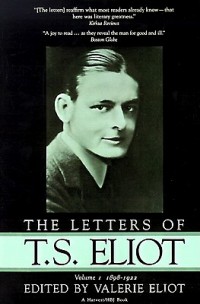
Visions and Revisions: On T.S. Eliot

6508506 James Longenbach in The Nation:

By the time T.S. Eliot was born in St. Louis on September 26, 1888, he had been preceded in this world by a brother and four sisters, the eldest of whom was nineteen years his senior. Inevitably, great care was lavished on the youngest Eliot; he had five mothers. Or perhaps six. Next door to the Eliot house on Locust Street lived Abigail Adams Eliot, Eliot’s grandmother, who had grown up in Washington, DC, and could recall clearly her great-uncle, the second president of the United States, after whose wife she had been named.

Great things were expected of the youngest Eliot, and a crucial part of his genius was to have achieved greatness in forms that no one in his family was fully equipped to countenance. Simultaneously, he fulfilled and decimated their expectations, constructing a life that allowed his family to admire his achievement only inasmuch as they were also bewildered, incapable of helping themselves to the side dish of self-congratulation that usually accompanies the main course of familial pride. The author of The Waste Land and Four Quartets secured the loyalty of his admirers (as well as the unshakable attention of his detractors) in precisely the same way.

The Marvels and the Flaws of Intuitive Thinking

Daniel Kahneman in Edge:

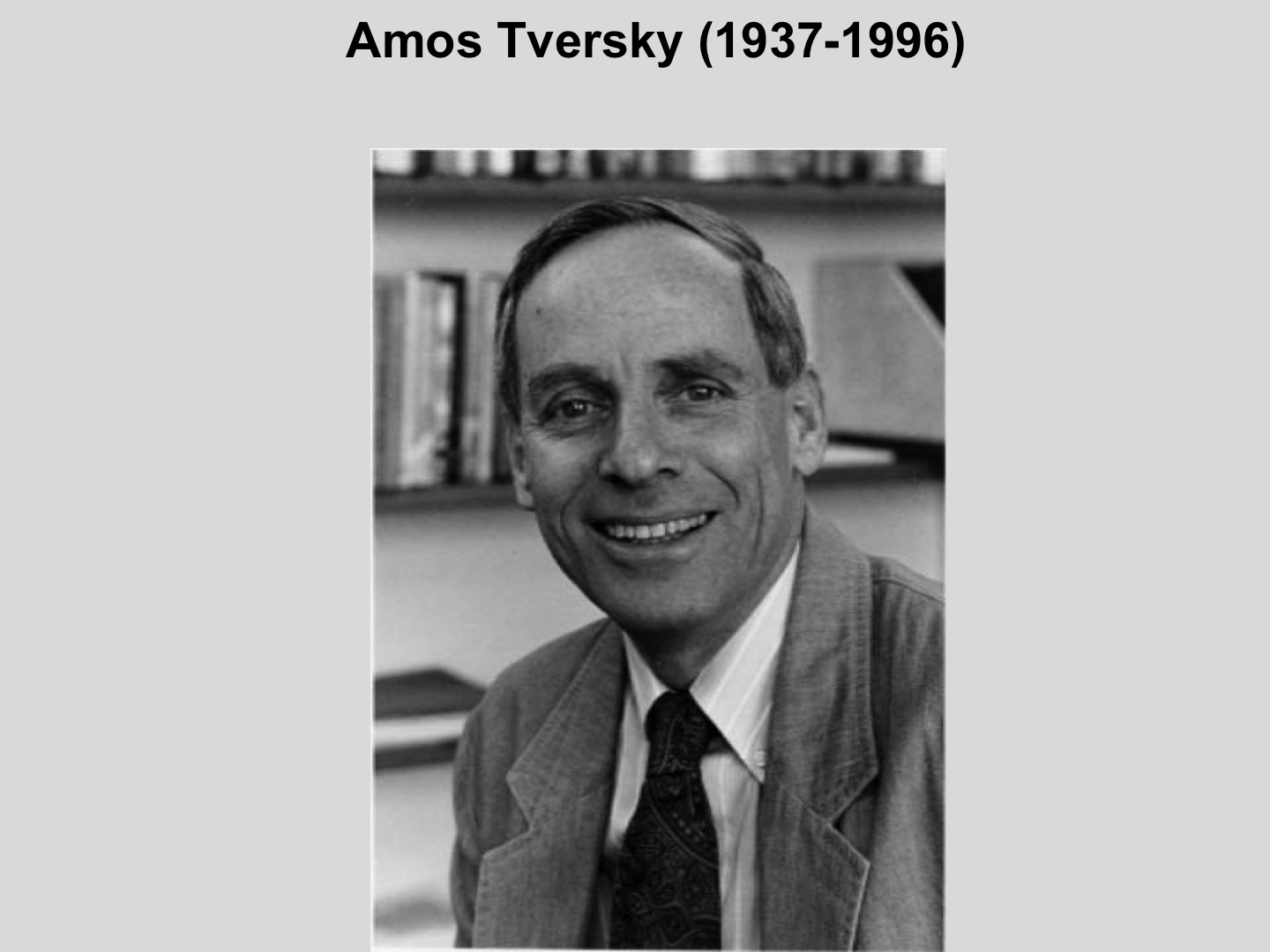
The marvels and the flaws that I'll be talking about are the marvels and the flaws of intuitive thinking. It's a topic I've been thinking about for a long time, a little over 40 years. I wanted to show you a picture of my collaborator in this early work. What I'll be trying to do today is to sort of bring this up-to-date. I'll tell you a bit about the beginnings, and I'll tell you a bit about how I think about it today.

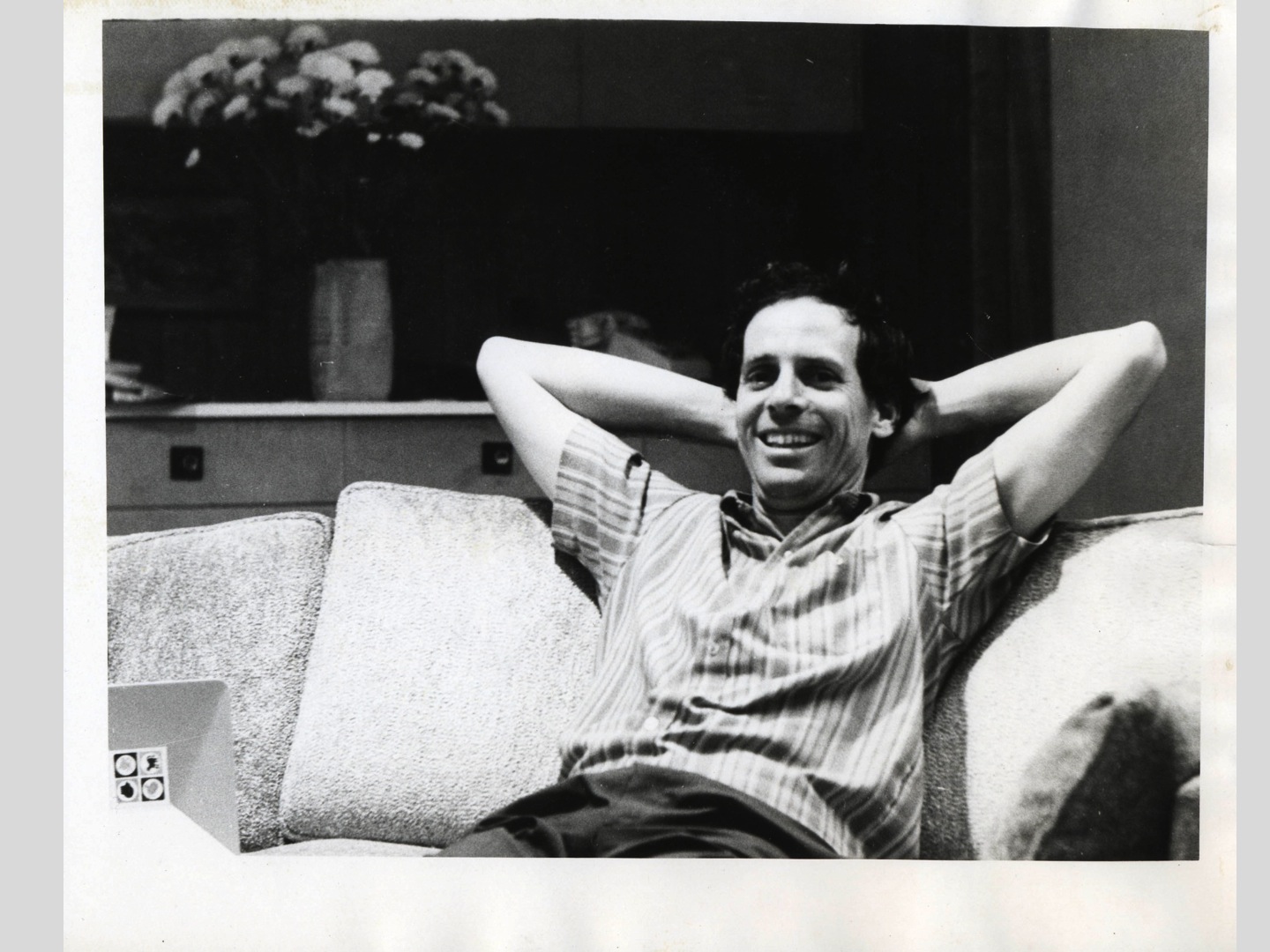
This is Amos Tversky, with whom I did the early work on judgment and decision-making. I show this picture in part because I like it, in part because I like very much the next one. That's what Amos Tversky looked like when the work was being done. I have always thought that this pairing of the very distinguished person, and the person who is doing the work tells you something about when good science is being done, and about who is doing good science. It's people like that who are having a lot of fun, who are doing good science.

We focused on flaws of intuition and of intuitive thinking, and I can tell you how it began. It began with a conversation about whether people are good intuitive statisticians or not. There was a claim at the University of Michigan by some people with whom Amos had studied, that people are good intuitive statisticians. I was teaching statistics at the time, and I was convinced that this was completely false. Not only because my students were not good intuitive statisticians, but because I knew I wasn't. My intuitions about things were quite poor, in fact, and this has remained one of the mysteries, and it's one of the things that I'd like to talk about today — what are the difficulties of statistical thinking, and why is it so difficult.

We ended up studying something that we call “heuristics and biases”. Those were shortcuts, and each shortcut was identified by the biases with which it came. The biases had two functions in that story. They were interesting in themselves, but they were also the primary evidence for the existence of the heuristics. If you want to characterize how something is done, then one of the most powerful ways of characterizing the way the mind does anything is by looking at the errors that the mind produces while it's doing it because the errors tell you what it is doing. Correct performance tells you much less about the procedure than the errors do.

Philip Pettit on Consequentialism

Over at Philosophy Bites:

Is consequentialism in ethics a form of moral opportunism? Is torture always wrong? What about punishing the innocent? Philip Pettit, who recently gave the 2011 Uehiro Lectures on 'Robustly Demanding Values', discusses some common criticisms of consequentialism in conversation with Nigel Warburton in this episode of the Philosophy Bites podcast

Listen to Philip Pettit on Consequentialism

a Macdonaldist

Article00-1

“As smoking gives us something to do with our hands when we aren’t using them,” Dwight Macdonald wrote in 1957, “Time gives us something to do with our minds when we aren’t thinking.” What leads us here, Macdonald asks, to the banal, boxed trifles of popular journalism? What, exactly, is to be gained by a three-hundred-word once-over of “World News”? Do we seek, as Macdonald concedes to be Time’s singular benefit, “practice in reading”? Perhaps we crave immersion in a warm bath of facts, to “have the little things around, like pets,” to collect “them as boys collect postage stamps.” Macdonald spent years laboring in the fact-friendly Luce empire as a writer at Fortune, no doubt watching his paragraphs hacked apart, the perfect verb sacrificed on the altar of snappiness, the clauses chopped into the staccato anti-rhythms of “readability.” Buy it if you like, was Macdonald’s position. But don’t call it edification. If the pointless accumulation of facts was taken to be some sort of mental tonic, and time spent with The Ed Sullivan Show assumed to be wasted (you could have been reading Time!), Macdonald blamed a particularly American reverence for the scientific method. What happens in a three-minute nightly news segment is in some sense subject to verification and thus accorded a certain respect: true trash over untrue trash.

more from Kerry Howley at Bookforum here.

the needle-nosed CRH380A

Cn_image.size.china

A ll month she had been practicing, standing for hours in front of the bathroom mirror in her tiny Shanghai flat, delicately gripping a chopstick sideways between her teeth as her supervisor had instructed her, and, by dint of some nimble dental gymnastics with it, learning how to smile in precisely the way that China High-Speed Railways had officially demanded of their new stewardesses. Make an Eight-Teeth Smile: that was the phrase; that was the order. It took work: long hours, aching jaws, but gradually this pretty artifice of sincerity and amity became second nature to her—such that by June 30, the eve of the 90th anniversary of the founding of her country’s Communist Party (the Youth League of which she was a proud member), the 20-year-old Huang Yun had her Eight-Teeth Smile and her welcome face finally down pat and was nervously ready for her big day. She stood before her approving parents in the doorway, primed to go: her back ramrod-straight, just like the soldiers outside the Forbidden City—who, unlike her, never smiled—her makeup flawless, her purple-and-white uniform impeccably ironed, her yellow-and-blue silk scarf neatly tied, her pumps gleaming, her cap, with its tiny red railroad badge, tilted forward just so.

more from Simon Winchester at Vanity Fair here.

photography from a very particular corner of Europe

ID_POLCH_EYEWI_CO_002

Moving away became less possible in the post-war Communist era. Hungary changed its name to the People’s Republic of Hungary in 1949. “The only kind of photography approved by the state was Socialist Realism,” the text tells us, and we again are looking at grand vistas of workers in factories and farmers in the fields, photographs that are more symbolic than lyrical, more state-sanctioned that individual. In the mid-1950s, the republication of Kata Kálmán’s Tiborc (1937), which documented the poverty of the countryside in the 1930s, encouraged new social documentary work in the period, most notably the series by Peter Korniss on Romanian peasants in the 1960s. But as the years move on, the galleries get smaller and the subject matter, aside from Fejes’ “Wedding,” loses its imaginative force. In the end, I doubted the whole concept of Hungarian photography despite the show’s premise. But then this is the point. “Eyewitness” is as much about Hungary as is about European history, and the long struggle between World War I and the formation of the European Union. The exhibition is also an archive of war and ritual, portraits and advertisements, all held together in a kind of black-and-white, dreamlike state that pushes the past farther away. As I left the show, I was reminded of the protagonist in Italo Calvino’s short story “Adventures of a Photographer,” who concludes, “perhaps true, total photography . . . is a pile of fragments of private images, against the creased background of massacres and coronations.”

more from James Polchin at The Smart Set here.

Some notes on translation and on Madame Bovary

Madame_Bovary_1857_(hi-res)Lydia Davis at the Paris Review:

Not long ago, I was chatting with an older friend who is a retired engineer and also something of a writer, but not of fiction. When he heard that I had just finished a translation of Madame Bovary, he said something like, “But Madame Bovary has ­already been translated. Why does there need to be another translation?” or “But Madame Bovary has been available in English for a long time, hasn’t it? Why would you want to translate it again?” Often, the idea that there can be a wide range of translations of one text doesn’t occur to people—or that a translation could be bad, very bad, and unfaithful to the original. Instead, a translation is a translation—you write the book again in English, on the basis of the French, a fairly standard procedure, and there it is, it’s been done and doesn’t have to be done again.

A new book that is causing excitement internationally will be quickly translated into many languages, like the Jonathan Littell book that won the Prix Goncourt five years ago. It was soon translated into English, and if it isn’t destined to endure as a piece of literature, it will probably never be translated into English again.

But in the case of a book that appeared more than one hundred and fifty years ago, like Madame Bovary, and that is an important landmark in the history of the novel, there is room for plenty of different English versions.

more here.

The Cough That Launched a Hit Movie

From The New York Times:

Contagion-movie-trailer-pic-194f4 When Hollywood turns to medicine, accuracy generally heads for the hills. But the creators of the new action thriller “Contagion” went to unprecedented lengths to fact-check their story of a destructive viral pandemic, retaining a panel of nationally renowned virologists and epidemiologists as consultants. The intent was to infuse the usual hyperbole with an extra frisson: This is the way it could really happen. Be very afraid.

You have to applaud the effort, for the movie does indeed offer a procession of dead-on accurate scenes that not only could happen but, in many cases, have already happened. Still, the whole thing is an improbable caricature, with 100 action-packed Hollywood minutes veering far from reality. You can still be very afraid if you want, if a contagious apocalypse happens to be your thing. But it’s not going to happen this way. “Contagion” begins modestly and realistically enough, with a cough. Gwyneth Paltrow, a midlevel executive for an international corporation, gets sick on her way home from a business trip. She coughs from Hong Kong through a layover in Chicago and on to Minneapolis, producing clouds of a deadly Asian virus and leaving infectious droplets on everything she touches. She is the pandemic’s index case, and her napkins, used tissues, drinking glasses and three-ring binder are all vectors of disease.

More here.

Tuesday Poem

Waste

Who beside my mother knew
a cabbage stalk stripped of its leafage
contains more goodness than mere garbage?
Her quick sure knife would pare away
the fibrous husk, rough with leaf-stumps,
slice off the watery rootward end,
and bring to light a white, damp cone –
the cabbage-heart.
Raw, this secret tidbit dipped in salt
would crunch up sweetly pungent,
more tenderly succulent than turnip.
She always gave the cabbage-heart to us,
splitting it lengthwise to fairshare
its flavours if more than one of us were near.
To my sisters and me this chewy nugget
was nothing much – by-product of cooking
routinely salvaged and eaten
not to waste.

Almost discarded memory – I strip it and retrieve
so late a faintly bitter spike of realisation:
how she would have relished the cabbage-hearts
she always gave to us.

by Lionel Abrahams
PIW, © 2004

3QD Philosophy Prize 2011 Finalists

Hello,

The editors of 3QD have made their decision. The twenty semifinalists have been winnowed down to six, and three wildcard entries added. Thanks again to all the participants.

Once again, Carla Goller has provided a “trophy” logo that our finalists may choose to display on their own blogs. And if you like our site, please do add us to your blogroll!

So, here it is, the final list that I am sending to Patricia Churchland, who will select the 1st, 2nd, and 3rd prize winners: (in alphabetical order by blog name here)

  1. Philosophy_160_2011_finalist 3 Quarks Daily: Why should we care about Kant?
  2. Brains: Has Molyneux's Question Been Answered?
  3. Evolving Thoughts: More on phenomena
  4. PEA Soup: Scanlon on Blame, Part 3: Criminal Blame and Meaning
  5. PEA Soup: Williams, Thick Concepts, and Reasons
  6. Philotropes: Singer's problem for heroes
  7. Sprachlogik: Sketch of a Way of Thinking about Modality
  8. The Kindly Ones: Demarcation's revisited demise
  9. Tomkow: Self Defense

We'll announce the three winners on or around September 19, 2011.

Good luck!

Abbas

P.S. The editors of 3QD will not be making any comments on our deliberations, or the process by which we made our decision, other than to simply say that we picked what we thought were the best posts out of the semifinalists, and added three others which we also liked.

Monday, September 12, 2011

3QD Philosophy Prize Semifinalists 2011

Hello,

The voting round of our philosophy prize (details here) is over. A total of 444 votes were cast for the 37 nominees (click here for full list of nominees). Thanks to the nominators and the voters for participating.

Carla Goller has designed a “trophy” logo that our top twenty vote-getters may choose to display on their own blogs. So here they are, in descending order from the most voted-for:

  1. Philosophy_160_2011_seminfinalist Common Sense Atheism: The Goal of Philosophy Should Be to Kill Itself
  2. Philosophy Bro: David K. Lewis' “On The Plurality of Worlds”: A Summary
  3. The Kindly Ones: Demarcation's revisited demise
  4. Philotropes: Singer's problem for heroes
  5. Rust Belt Philosophy: Spoken like a man who's never been poor
  6. Sprachlogik: Sketch of a Way of Thinking about Modality
  7. 3 Quarks Daily: What do we deserve?
  8. 3 Quarks Daily: Subjective Consciousness: A Unique Perspective
  9. The Constructive Curmudgeon: The Empathy Machine: An Unfinished Essay
  10. The Philosophy of Poetry: The Glimpse of Recognition
  11. The Philosopher's Beard: Morality vs Ethics: The Trolley Problem
  12. Tomkow: Self Defense
  13. Fledgling Philosophy: Potential and Possession: a Common Conflation
  14. Old Translations: Epistemic Trust and Understanding in a Model of Scientific Knowledge
  15. Sola Ratione: William L. Craig's knockdown argument
  16. Yeah, OK, But Still: Art, Ethics and Christmas
  17. PEA Soup: Williams, Thick Concepts, and Reasons
  18. The Consternation of Philosophy: Disgust, Magical Thinking, and Morality
  19. Specter of Reason: Merry Christmas, or, Ryle's Idiotic Idea
  20. Evolving Thoughts: More on phenomena

The editors of 3 Quarks Daily will now pick the top six entries from these, and after possibly adding up to three “wildcard” entries, will send that list of finalists to Patricia Churchland for final judging. We will post the shortlist of finalists here in the next days.

Good luck!

Abbas

perceptions

Parking Structure 9 Santa Rosa, Ca, 2007

Ned Kahn. Parking Structure 9. Santa Rosa, Ca. 2007.

“A series of stainless steel cables stretched across the space between two circular access ramps of a parking structure. Hanging from the cables are approximately 20,000 small mirrors that move in the wind and bounce beams of sunlight onto the architecture and pavement below. Resembling a series of parallel spider webs, the artwork is visible from many vantage points inside the parking structure and the courtyard below. Intricate patterns of light and shadow, much like the pattern of sunlight filtering through a canopy of trees in a forest, sweep across the ground throughout the day and change with the wind.”

Since I have selected a possibly less glamorous piece to show here (for personal aesthetics :)), do check out as much as possible here, here, and here.

The Self and September 11

(I am reposting here the essay I wrote for 3QD on the occasion of the fifth anniversary of the September 11 attacks. It had been a few years since I'd last read it, and when pulling it back up I expected I would be embarrassed by its juvenile irreverence. In fact, I discovered that I remain fairly attached to what I said –anything to break this drone of sanctimony that is quickly becoming a late-summer tradition!–, and that I would be hard pressed to come up with any reflections for the tenth anniversary that differ much in tone or content from those of five years ago.)

*

What could be more self-indulgent than to recount where one was on September 11? As if other people were not somewhere. As if being anywhere at all on the planet automatically made one a survivor.

I survived September 11, as it happens, in an internet café in Berlin packed with smirking German hipsters, who could not wait to go find more hipsters, at a rave or at a squat, with whom to wax ironical about the day’s events and to recount with a smirk where they were when it happened, a whole six hours later.

My grandmother survived Auschwitz: disguised since birth as a Swedish Protestant, she rode it out teaching elementary school in Minnesota. But she had the decency to stay pursed-lipped after the war. We on the other hand must carry on about where we were, what we felt and thought, as though that mattered. I am no exception.

The first thought I had when asked to write something for the fifth anniversary of September 11 was: Jesus. I must be really old. I was old then, and it's been five years. I should probably start wrapping things up right about now. I don't even have a will, let alone a legacy. I can't seem to bring myself to think about such things. I just love life too much. I do not want to die.

I knew of course that what I was expected to produce was hard-nosed political analysis — I'd managed to do it for Counterpunch — and here I was carrying on as though it was all about me. I would like to be a sharp political analyst, I truly would: on the one hand, the chickens of American imperialism came home to roost, but on the other hand taking innocent lives is never acceptable, etc.

But some topics just stifle all that analytical acumen and cause me to regress into infantile self-absorption, unable to write about anything other than myself. My hope is that I will get away with this by lacquering it up with essayistic style, and claiming membership in a venerable tradition. Montaigne got away with it, some will respond, only because in the 16th century the self was a new and exciting discovery. Today it is old news. And yet, today, I carry on.

Read more »

Sunday, September 11, 2011

Can Darwinism Improve Binghamton?

Jerry A. Coyne in the New York Times Book Review:

ScreenHunter_02 Sep. 12 09.21 My undergraduate students, especially those bound for medical school, often ask why they have to study evolution. It won’t cure disease, and really, how useful is evolution to the average person? My response is that while evolutionary biology can explain, for example, the origin of antibiotic-resistant bacteria, we shouldn’t see evolution as a cure for human woes. Its value is explanatory: to tell us how, when and why we got here (by “we,” I mean “every organism”) and to show us how all species are related. In the end, evolution is the greatest tale of all, for it’s true.

David Sloan Wilson, on the other hand, sees evolutionary biology as a panacea for the world’s ills. By understanding “human nature” — that is, the behaviors and attitudes instilled in our ancestors by natural selection — we will, he claims, finally be able to solve problems like poor education, dysfunctional cities, bad economics, mental illness and ethnic cleansing. “Evolutionary science,” Wilson argues, “will eventually prove so useful on a daily basis that we will wonder how we survived without it. I’m here to make that day come sooner rather than later, starting with my own city of Binghamton.” “The Neighborhood Project” describes Wilson’s ambitious proposal for using evolutionary biology to raise up Binghamton, a down-at-the heels town of about 50,000 in upstate New York. An evolutionary biologist at the State University of New York there, Wilson formerly worked on toads and mites, but has now adopted his own town as a study organism.

More here.

A surprising theory about global variations in intelligence

Christopher Eppig in Scientific American:

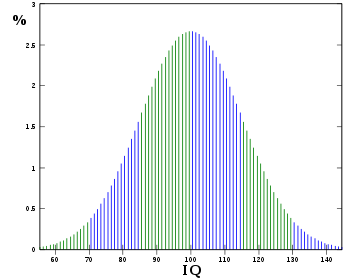
350px-IQ_curve_svg A great deal of research has shown that average IQ varies around the world, both across nations and within them. The cause of this variation has been of great interest to scientists for many years. At the heart of this debate is whether these differences are due to genetics, environment or both.

Higher IQ predicts a wide range of important factors, including better grades in school, a higher level of education, better health, better job performance, higher wages, and reduced risk of obesity. So having a better understanding of variations in intelligence might yield a greater understanding of these other issues as well.

Before our work, several scientists had offered explanations for the global pattern of IQ. Nigel Barber argued that variation in IQ is due primarily to differences in education. Donald Templer and Hiroko Arikawa argued that colder climates are difficult to live in, such that evolution favors higher IQ in those areas. Satoshi Kanazawa suggested that evolution favors higher IQ in areas that are farther from the evolutionary origin of humans: sub-Saharan Africa. Evolution, the hypothesis goes, equipped us to survive in our ancestral home without thinking about it too hard. As we migrated away, though, the environment became more challenging, requiring the evolution of higher intelligence to survive.

We tested all these ideas.

More here.

A fashion muse and femme fatale

Amy Finnerty in the Wall Street Journal:

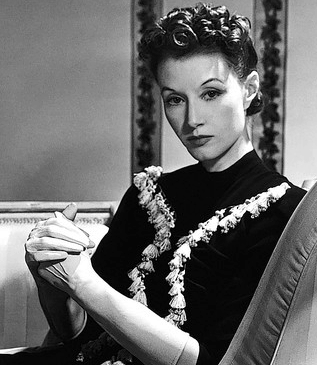
ScreenHunter_01 Sep. 12 09.10 Millicent Rogers (1902-53) was a fashion muse and femme fatale who charted an unsteady course through the boutiques, ballrooms and salons of America and Europe. Cherie Burns has written a bracing, sex-and-shopping account of that life, suggesting that haute couture provided a cloistered young debutante a way to “lay claim to herself” and become a sophisticated socialite. But this puts perhaps too psychological a spin on the fashion forays of Millicent, who was forever in search of novelty to combat her upper-class ennui.

The money came from her paternal grandfather, Henry Huttleston Rogers, a Standard Oil founder called the “hellhound of Wall Street.” As a child she was kept out of school for long stretches by rheumatic fever, but she learned French and German, studied Greek and bantered with her brother in Latin. Millicent's family summered on an 1,800-acre estate in Southampton, N.Y.; her parents had built an Italianate villa there that would make one of Edith Wharton's buccaneers blush. “God, I'm sick of the place,” Millicent wrote in her diary near the start of World War I. “I want to do something for a change.” She took a nursing course but found changing dressings “horrible in the extream [sic].” Her English correspondence throughout this book is notable for atrocious spelling.

More here.