What’s The Theme of This Year’s African American History Month?

Note: In honor of African American History Month, we will be linking to at least one related post throughout February.
BlackAbout This Year’s Theme

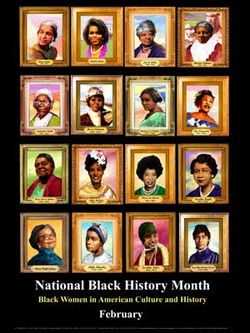
This year's theme “Black Women in American Culture and History” honors African American women and the myriad of roles they played in the shaping of our nation. The theme, chosen by the Association for the Study of African American Life and History urges all Americans to study and reflect on the value of their contribution to the nation.

February is African American History Month

The Library of Congress, National Archives and Records Administration, National Endowment for the Humanities, National Gallery of Art, National Park Service, Smithsonian Institution and United States Holocaust Memorial Museum join in paying tribute to the generations of African Americans who struggled with adversity to achieve full citizenship in American society. As a Harvard-trained historian, Carter G. Woodson, like W. E. B. Du Bois before him, believed that truth could not be denied and that reason would prevail over prejudice. His hopes to raise awareness of African American's contributions to civilization was realized when he and the organization he founded, the Association for the Study of Negro Life and History (ASNLH), conceived and announced Negro History Week in 1925. The event was first celebrated during a week in February 1926 that encompassed the birthdays of both Abraham Lincoln and Frederick Douglass. The response was overwhelming: Black history clubs sprang up; teachers demanded materials to instruct their pupils; and progressive whites, not simply white scholars and philanthropists, stepped forward to endorse the effort. By the time of Woodson's death in 1950, Negro History Week had become a central part of African American life and substantial progress had been made in bringing more Americans to appreciate the celebration. At mid–century, mayors of cities nationwide issued proclamations noting Negro History Week. The Black Awakening of the 1960s dramatically expanded the consciousness of African Americans about the importance of black history, and the Civil Rights movement focused Americans of all color on the subject of the contributions of African Americans to our history and culture. The celebration was expanded to a month in 1976, the nation's bicentennial. President Gerald R. Ford urged Americans to “seize the opportunity to honor the too-often neglected accomplishments of black Americans in every area of endeavor throughout our history.” That year, fifty years after the first celebration, the association held the first African American History Month. By this time, the entire nation had come to recognize the importance of Black history in the drama of the American story. Since then each American president has issued African American History Month proclamations. And the association—now the Association for the Study of African American Life and History (ASALH)—continues to promote the study of Black history all year.

More here.

Tuesday, January 31, 2012

Jonathan Haidt Decodes the Tribal Psychology of Politics

Marc Parry in the Chronicle of Higher Education:

ScreenHunter_07 Feb. 01 10.59Haidt (pronounced like “height”) made his name arguing that intuition, not reason, drives moral judgments. People are more like lawyers building a case for their gut feelings than judges reasoning toward truth. He later theorized a series of innate moral foundations that evolution etched into our brains like the taste buds on our tongues—psychological bases that underlie both the individual-protecting qualities that liberals value, like care and fairness, as well as the group-binding virtues favored by conservatives, like loyalty and authority.

“He, over the last decade or so, has substantially changed how people think about moral psychology,” says Paul Bloom, a psychologist at Yale University.

Now Haidt wants to change how people think about the culture wars. He first plunged into political research out of frustration with John Kerry's failure to connect with voters in 2004. A partisan liberal, the University of Virginia professor hoped a better grasp of moral psychology could help Democrats sharpen their knives. But a funny thing happened. Haidt, now a visiting professor at New York University, emerged as a centrist who believes that “conservatives have a more accurate understanding of human nature than do liberals.”

In March, Haidt will publish The Righteous Mind: Why Good People Are Divided by Politics and Religion (Pantheon). By laying out the science of morality—how it binds people into “groupish righteousness” and blinds them to their own biases—he hopes to drain some vitriol from public debate and enable conversations across ideological divides.

More here.

A Box of Universe

Brian Hayes in American Scientist:

ScreenHunter_06 Feb. 01 10.53Isaac Newton’s universe was a cozy, tidy place. Gathered around the sun were six planets, a handful of moons and the occasional comet, all moving against a backdrop of stationary stars. Newton provided us with the mathematical tools needed to compute the motions of these bodies. Given initial positions and velocities, we can calculate the forces acting on each object, using Newton’s law of universal gravitation. From the forces we can determine accelerations, and then update the positions and velocities for the next round of calculations. This scheme of computation is known as the n-body method. Perhaps Newton himself could have put it to work if he had had suitable computing machinery.

Today we have the computers. On the other hand, our universe is far larger and more intricate than Newton’s. Now the solar system is merely a speck in a spiral galaxy of several hundred billion stars. Our galaxy drifts among billions of others, which form clusters and superclusters and a whole hierarchy of structures extending as far as the eye (and the telescope) can see. Those objects are getting farther away all the time because the universe is expanding, and moreover the expansion is accelerating. Strangest of all, the luminous matter of the galaxies—everything we see shining in the night sky—makes up less than one-half of 1 percent of what’s out there. Most of the universe is unseen and unidentified stuff known only as “dark matter” and “dark energy.”

Given this profound change in the nature and the scale of the known universe, I find it remarkable that computer simulations of cosmic evolution can still rely on n-body algorithms rooted in the principles of Newtonian mechanics.

More here.

Are we “born that way”? Do we choose to be gay? Who cares?

E. J. Graff in The American Prospect:

ScreenHunter_05 Feb. 01 10.43I'm one of fourteen Americans who has never watched an entire episode of “Sex and the City.” The high heels and extreme grooming, the squealing girl talk, the pursuit of men—booooring. Give me a rerun of The Wire any day.

So I had to be brought up to cultural speed when Cynthia Nixon, who played the show's sexy lawyer Miranda, made a little splash in The New York Times Magazine this past weekend by saying that, for her, being gay is a choice. Of course, the preferred LGBT movement line is that we were all “born this way”—and so her comments sent the Maoist portions of the LGBT thought police into an angry buzzing fury. Here's the relevant article, which is long because it is extremely thoughtful:

I gave a speech recently, an empowerment speech to a gay audience, and it included the line ‘I’ve been straight and I’ve been gay, and gay is better.’ And they tried to get me to change it, because they said it implies that homosexuality can be a choice. And for me, it is a choice. I understand that for many people it’s not, but for me it’s a choice, and you don’t get to define my gayness for me. A certain section of our community is very concerned that it not be seen as a choice, because if it’s a choice, then we could opt out. I say it doesn’t matter if we flew here or we swam here, it matters that we are here and we are one group and let us stop trying to make a litmus test for who is considered gay and who is not.” Her face was red and her arms were waving. “As you can tell,” she said, “I am very annoyed about this issue. Why can’t it be a choice? Why is that any less legitimate? It seems we’re just ceding this point to bigots who are demanding it, and I don’t think that they should define the terms of the debate. I also feel like people think I was walking around in a cloud and didn’t realize I was gay, which I find really offensive. I find it offensive to me, but I also find it offensive to all the men I’ve been out with.

I cannot tell you how much I adore Nixon for fully and wholeheartedly identifying as having chosen to be gay. (I love my bisexual friends for standing up for that despised identity, too, but Nixon is our topic today.)

More here.

On two accounts of the great Chinese famine

Xujun Eberlein in the Los Angeles Review of Books:

Tumblr_lyn4ni9W0g1qhwx0oIn July 2011, Frank Dikötter’s Mao’s Great Famine won the BBC’s Samuel Johnson Prize, one of Europe’s best known and most lucrative awards for a work of nonfiction. One of the judges, Brenda Maddox, explained to the Guardian why the book impressed her so much: “Why didn’t I know about this? We feel we know who the villains of the 20th century are — Stalin and Hitler. But here, fully 50 years after the event, is something we did not know about.”

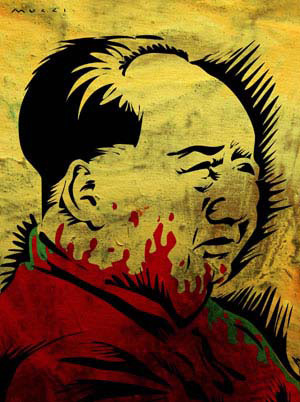
That reaction highlights both the main contribution and main limitation of Dikötter’s book. Though there have been many books and articles published on the same subject — in English, Chinese, and I’m sure other languages — apparently Dikötter’s is the one that brought awareness to at least one more Westerner ignorant of the catastrophe. On the other hand, Dikötter’s attempt to draw parallels between the Mao-era famine that swept over the entirety of mainland China from 1959 to 1961 and killed tens of millions, the Holocaust, and the Soviet Gulag is, at best, an over-simplification that hinders understanding. To borrow what the discerning Asia scholar Ian Buruma once said on a different subject: “To distinguish between atrocities does not diminish the horror, but without clarity on these matters history recedes into myth and becomes a form of propaganda.”

More here.

Six Things That Are Dead, According to Harold Bloom

Austin Allen in Big Think:

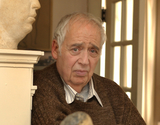
Bloom2Celebrated literary critic Harold Bloom turns eighty-two this year and is still publishing and teaching. In his honor, I’ve compiled a list of six things he’s outlived.

1) The Western canon.

“Unfortunately, nothing will ever be the same because the art and passion of reading well and deeply, which was the foundation of our enterprise, depended on people who were fanatical readers when they were still small children.…The shadows lengthen in our evening land, and we approach the second millennium expecting further shadowing.” —“An Elegy for the Canon,” The Western Canon, 1994

“The battle is lost. These resentniks have destroyed the canon.” —New York Times interview, 1994

2) American education.

American education—even in elite universities—has become a scandal, in my opinion. It has committed suicide.” —TheBrowser.com interview, 2011

3) Art.

[On slam poetry] “It is the death of art.” —Paris Review interview, 2000

More here.

Pakistan’s rush for more bombs — why?

Pervez Hoodbhoy in the Express Tribune:

ScreenHunter_03 Jan. 31 16.52On January 24, UN Secretary-General Ban Ki-Moon vented his frustration at Pakistan’s determined opposition to a treaty that would limit fissile material production for use in nuclear weapons. For three years, Pakistan has single-handedly — and successfully — blocked the Conference on Disarmament (CD) in Geneva from discussing an effort that would reduce nuclear weapons globally. Consequently, within diplomatic circles, Pakistan has acquired the reputation of an outlier that opposes all efforts towards this end.

The opposition comes in the backdrop of news that Pakistan has the world’s fastest-growing nuclear arsenal. This claim — which still reverberates around the world — was first published in a Bulletin of Atomic Scientists report entitled “Pakistan’s nuclear forces — 2011”. The authors, Hans M Kristensen and Robert S Norris, say although the numbers of Pakistani warheads and delivery vehicles is a closely-held secret, yet “we estimate that Pakistan has a nuclear weapons stockpile of 90-110 nuclear warheads, an increase from the estimated 70-90 warheads in 2009”. They reckon that if the expansion continues, Pakistan’s stockpile could reach 150-200 in a few years. By this count, Pakistan’s arsenal may have already exceeded India’s, and will soon rival Britain’s.

The Bulletin report has not been denied by Pakistan. Its stockpile of highly enriched uranium is increased daily by thousands of centrifuges whirring away at the Kahuta Laboratory (and possibly elsewhere). This is augmented by plutonium producing reactors at Khushab; two are already at work and a third is undergoing trials. Google Earth photos show that a fourth one is under construction. The plutonium has no commercial purpose. Instead, the goal is to produce lighter but deadlier bombs to be fitted on to missile tips.

More here.

Tuesday Poem

Anahata

aside from faith,
as far as you know,
you will never have another heart.
better to grow the one you were born with.
fill it with blood & love. risk.
let the strange world sneak inside.
accept all of life in your chest.
death is the end of percussion.
breathe deeply, the music
will function. listen close.
freedom thaws in your ribcage.
dance with vehemence
to feel its fast-pumping.
tempt two lips to greet your throat
& take note: your racing pulse
will laugh & kiss back. god is strong
in the clock of your desire.
every tick, my friend, divine
confirmation: you are alive. beat. yes!
you are alive.

by Lenelle Moïse

The Orchid Olympics

From Smithsonian:

Orchid-Olympics-631Orchids may be the most diverse flower family in the world, with more than 25,000 species. (Their only competition comes from daisies.) The orchid family maintains such diversity in the wild in part because individual orchid species summon only specific pollinators; the flowers thus avoid mingling their genes with those of other nearby orchids that are visited by their own pollinators. But most of the 50,000 orchids from 5,000 varieties on display at the conference do not occur in the wild; they are hybrids, created by people who have cross-fertilized orchid species, often from far-flung lands. “The joy of breeding orchids is to see if you can combine two species in order to create something even more beautiful than either of the parents,” Martin Motes, a commercial grower from Florida and conference judge, said as visitors poured into the hall and crowded around the displays. He has been breeding orchids for 40 years, and many varieties of his 500 hybrids are named after his wife, Mary. “My wife thinks I am playing God! Well, man is given dominion over the beasts of the fields and orchids of the greenhouse, I guess,” he said. An orchid breeder begins with a vision—the color, shape, size, fragrance and longevity of the desired flower—and then searches for the ideal parents. “When we craft orchids for celebrities and delegates, we also consider their tastes, personalities and occupation, said Tim Yam, a senior researcher and orchid breeder at the Singapore Botanic Gardens. “For example, the orchid named for Princess Diana was white—the color of royalty—and very fragrant. But if it’s for a prime minister or president, we might choose a deeper color and majestic spray.”

More here.

In Search of the Elusive Definition of Heterosexuality

Abigail Zuger, M.D. in The New York Times:

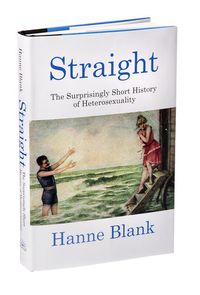
BookScientifically, as Ms. Blank summarizes, tongue in cheek: “We don’t know much about heterosexuality. No one knows whether heterosexuality is the result of nature or nurture, caused by inaccessible subconscious developments, or just what happens when impressionable young people come under the influence of older heterosexuals.” Far more scientific firepower, in other words, has been directed at the brains, genes, hormones and general physiologic processes behind homosexual attraction, leaving heterosexuality like a silhouette, outlined only by what it is not. Yet the great behavioral descriptionists, Alfred Kinsey and others, have made it clear that sometimes it is exactly what it is not — or, rather, it is what many feel it should not be. From same-sex adults sharing a bed (for warmth? from friendship?) in the 19th century to married men “on the down low” in the 21st, self-defined heterosexuals have routinely behaved in ways that seem to contradict the basic principles.

But who wrote those principles? Who validated them? Ms. Blank points out that the standards of heterosexuality to which so many desperately aspire have largely been the work of our culture’s biggest dreamers, including the authors of 19th-century penny novels and 21st-century chick lit. Who, after all, has given us more clear-cut, universally appealing examples of suitably behaved male and female heterosexuals than Walt Disney? Meanwhile, the annals of law are now filling with all the subtleties that Disney ignores, for people who fail to fit into a binary sex/gender system still have both children and property. Empires may rise and fall, but those eternals remain. Ms. Blank offers the provocative solution that soon we will move on from our present fixation on the binary to a more fluid understanding. “If male and female are two of a variety of sexes, and masculine and feminine two of a variety of genders, then heterosexual and homosexual are two of a variety of ways to combine them,” she notes.

More here.

Monday, January 30, 2012

Azra Raza explains her work

by S. Abbas Raza

My sister Azra is an oncologist and one of the leading authorities in the world on Myelodysplastic Syndromes (MDS) which refers to a group of diseases in which the body does not make enough red blood cells, white blood cells, and platelets. About a third of patients with MDS go on to develop leukemia. MDS afflicts around 55,000 Americans at present (but the number is increasing).

In her characteristically modest way, she did not tell me (or anyone else in the family) that about a year ago she made a number of videos that her patients can watch to get an idea of her background as well as information about the nature of MDS, what treatment options are available, what sort of current research is being done on it, etc. I happened to find the videos on YouTube yesterday as I was looking for something else, and so I have asked her if I can post them here, because I think they provide excellent insight into how scientists think in general, and her own work in particular.

There may be some bias in my infinite admiration for my sister but it is hardly as if she doesn’t have admirers from outside of the family, especially among her colleagues as well as her patients. Some readers may still accuse me of promoting my own family. Yes, I am guilty as charged. If you have a sister as accomplished as mine, you should be promoting her work too! 🙂

Azra Raza, M.D., is Professor of Medicine, and Director of the Myelodysplastic Syndromes Center, at Columbia University Medical Center in New York City. Of course, she is also a fellow editor at 3QD. The videos have been shot in her office. I hope you’ll find them as interesting as I did.

Read more »

Sunday, January 29, 2012

The Origins of Property: A Parable with Morals

Terrence Tomkow in his blog:

6a00d8342025e153ef0163004c1b8e970d-320wiOnce upon a time there was a primitive tribe that hunted and gathered in a verdant forest in a temperate clime.

I call them a “tribe” but that name may mislead if it suggests some rigorous form of social organization. In fact, the group was about as un-organized as it is possible for people to be. There were among them no elders, chiefs, shamans or any other kind of leader with authority over his fellows. With one exception– which we will soon discuss — there were no laws, rules or taboos that were obeyed or enforced among them and no judges or police to enforce them.

This lack of norms was reflected in their language which (luckily for our narrative purposes) was much like modern English but which lacked any moral or legal vocabulary. The natives never spoke of 'right' or 'wrong', 'legal' or 'law'. They had no words for 'promise', or 'contract' and none for 'property' or 'ownership'.

Even so, as I just averred, there was one rule that the natives generally acknowledged and mostly conformed to. They called it “The Rule”.

The Rule: No Bullying!

By 'bullying' the natives seem to have meant, roughly, hurting other people or using force or the threat of force to compel others to do what they would otherwise not do. But not every use of force or infliction of harm was regarded as bullying.

It was, for example, not considered bullying to use force or its threat to defend oneself or someone else against a bully. The Rule permitted self-defense and “other defense” and this had important consequences for all of tribal life.

To understand these upshots it is necessary to understand that the tribe's aversion to bullying did not mean that they were averse to violence or the use of force. 

More here.

Harold Varmus and the Provocative Questions Project

Robert Langreth at Bloomberg News:

440221Why do obese people get cancer more often? How can some turtles live more than a century without ever developing tumors while mice can develop them in a year? Could treatments that hold tumor cells in check without destroying them keep people alive longer?

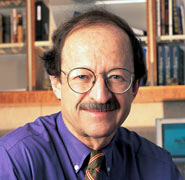
Answering questions like these may lead to the next big cancer breakthroughs, said Harold Varmus, director of the U.S. National Cancer Institute, in an interview. The Nobel Prize winner said the NCI would spend at least $15 million this year in a new initiative to answer 24 “provocative questions” that researchers have often neglected.

“In an effort to stop people from obsessing over the fact that the budget is not growing, I’ve been trying to engage them in workshops to define the great unanswered questions in cancer research,” Varmus, 72, said in an interview at Bloomberg’s headquarters in New York. “We’re trying to drive science in a novel way.”

Spending for the Bethesda, Maryland-based institute Varmus has led since July 2010 will decline to $5.07 billion in the 2012 fiscal year from $5.1 billion in 2010. The provocative question project will try to create a middle ground between top- down big science projects, and relying on scientists to come up with their own ideas, according to a commentary published in Nature magazine this week by Varmus and Ed Harlow, a cancer researcher at Harvard Medical School in Boston and senior adviser to Varmus.

More here. [Thanks to Stefan Saal.]

Citizen Philosophers: Teaching Justice in Brazil

Fraenkel_37.1_studentsCarlos Fraenkel in Boston Review:

Getting out of the cave and seeing things as they really are: that’s what philosophy is about, according to Almira Ribeiro. Ribeiro teaches the subject in a high school in Itapuã, a beautiful, poor, violent neighborhood on the periphery of Salvador, capital of the state of Bahia in Brazil’s northeast. She is the most philosophically passionate person I’ve ever met.

Most of the four million slaves shipped from Africa to Brazil were sold in Salvador, the first residence of Portugal’s colonial rulers. It’s still Brazil’s blackest city. In Ribeiro’s neighborhood, children play football or do capoeira, pray in Pentecostal Churches or worship African gods. Many are involved with drugs; “every year we lose students to crack,” she tells me. And they study philosophy two hours each week because of a 2008 law that mandates philosophy instruction in all Brazilian high schools. Nine million teenagers now take philosophy classes for three years.

“But seeing things as they really are isn’t enough,” Ribeiro insists. As in Plato’s parable in The Republic, the students must go back to the cave and apply what they’ve learned. Their lives give them rich opportunities for such application. The contrast between the new luxury hotels along the beach and Itapuã’s overcrowded streets gives rise to questions about equality and justice. Children kicking around a can introduce a discussion about democracy: football is one of the few truly democratic practices here; success depends on merit, not class privilege. Moving between philosophy and practice, the students can revise their views in light of what Plato, Hobbes, or Locke had to say about equality, justice, and democracy and discuss their own roles as political agents.

To foster that discussion, Ribeiro must take on a deeply rooted political defeatism. Voting in Brazil is obligatory, but many think it’s useless. In 2010, the largest number of votes for any member of congress went to Tiririca, a popular TV clown, who ran on the slogan, “I don’t know what a congressman does, but vote me in and I’ll tell you.” João Belmiro, another high school philosophy teacher, finds this outrageous. Philosophy, he hopes, will bring change before long.

To Name the Unnameable

Satanic-verses_468wKenan Malik in Eurozine:

It is this idea of speech as intrinsically good that has been transformed. Today, free speech is as likely to be seen as a threat to liberty as its shield. By its very nature, many argue, speech damages basic freedoms. It is not intrinsically a good but inherently a problem because speech inevitably offends and harms. Speech, therefore, has to be restrained, not in exceptional circumstances, but all the time and everywhere, especially in diverse societies with a variety of deeply held views and beliefs. Censorship (and self-censorship) has to become the norm. “Self-censorship”, as the Muslim philosopher and spokesman for the Bradford Council of Mosques Shabbir Akhtar put it at the height of the Rushdie affair, “is a meaningful demand in a world of varied and passionately held convictions. What Rushdie publishes about Islam is not just his business. It is everyone's – not least every Muslim's – business.”

Increasingly politicians and policy makers, publishers and festival organizers, liberals and conservatives, in the East and in the West, have come to agree. Whatever may be right in principle, many now argue, in practice one must appease religious and cultural sensibilities because such sensibilities are so deeply felt. We live in a world, so the argument runs, in which there are deep-seated conflicts between cultures embodying different values. For such diverse societies to function and to be fair, we need to show respect for other peoples, cultures, and viewpoints. Social justice requires not just that individuals are treated as political equals, but also that their cultural beliefs are given equal recognition and respect. The avoidance of cultural pain has, therefore, come to be regarded as more important than the abstract right to freedom of expression. As the British sociologist Tariq Modood has put it, “If people are to occupy the same political space without conflict, they mutually have to limit the extent to which they subject each others' fundamental beliefs to criticism.” What the anti-Baals of today most fear is starting arguments. What they most want is for the world to go to sleep.

The consequence of all this has been the creation not of a less conflicted world, but of one that is more sectarian, fragmented and tribal.

Religion, Grrrr

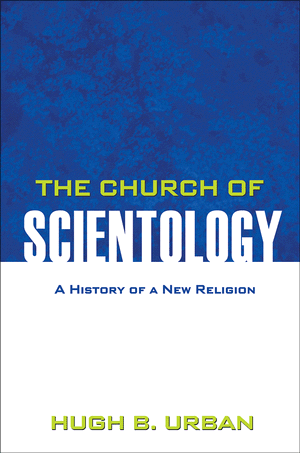
K9515Rachel Aviv reviews Hugh Urban's The Church of Scientology: A History of a New Religion in the LRB (you can read the introduction to the book here):

Hubbard insisted that the principles of Dianetics had nothing to do with ‘any mumbo-jumbo of mysticism or spiritualism or religion’. He assured readers that ‘Dianetics is a science; as such, it has no opinion about religion, for sciences are based on natural laws.’ Throughout the United States, people formed Dianetics clubs and helped each other to become ‘clear’: in this state, they would be free of all compulsions, neuroses and delusions, see colours vividly for the first time, appreciate melody, perform complex mathematical calculations and recall every moment of their lives. Hubbard was so confident of the merits of his electro-psychometer, a device used to detect hidden trauma by measuring galvanic skin response, that he asked the American Medical Association to investigate his new tool. The medical establishment showed no interest. In a review in the Nation, the kindest thing the psychiatrist Milton Sapirstein could say about Dianetics was that ‘the author seems honestly to believe what he has written.’

Hubbard took the rejection badly. When his followers were arrested for practising medicine without a licence, he complained that the United States made it ‘illegal to heal or cure anything’. He began to reconsider the distinction he’d made between psychology and spiritual practice. In a 1953 newsletter he wrote that the process of uncovering repressed memories through auditing is ‘perhaps allied with religion, perhaps a mystic practice and possibly just another form of Christian Science or plain Hubbardian nonsense’. The following year, embracing what he called the ‘religious angle’, he opened the first church of Scientology in Los Angeles. The electro-psychometer was no longer used as a diagnostic tool but became instead a ‘valid religious instrument, used in Confessionals’.

In The Church of Scientology, one of only a handful of academic treatments of the subject, Hugh Urban is less interested in the experiences of Scientologists than in the legal processes and semantic twists through which a set of beliefs becomes a religion.