Can a small group of reformers modernize Pakistan’s schools?

Kamila Shamsie in Guernica:

ScreenHunter_09 Jan. 25 12.322011, Karachi. I find myself looking at an illustration of an airplane colliding with the World Trade Center. Fire and smoke plume from the buildings. Below the illustration are the words, in Urdu: “Tay—Takrao.” Translated, they are along the lines of “C is for Collide.” The image is in a textbook for first-grade students who are learning the Urdu alphabet. “Jeem—Jihad” and “Hei—Hijab” follow (the accompanying illustration shows a woman in top-to-toe niqab rather than hijab).

Madrassas,” I say, shaking my head. But the friend showing me the illustrations says such books can also be found in schools that aren’t within the madrassa system. She suggests that I look at some government-issued textbooks before coming to any conclusions about the wide gap between education in madrassas, which are largely unregulated, and education that follows the National Curricula.

So the next day I went out in search of government-issued textbooks. I came upon one for social sciences published by the Punjab government (each of Pakistan’s four provinces has its own textbook board). Flipping it open, I saw a chapter on the livestock of Pakistan. The section on “The Cattle” started: “It is a ‘Sunnah’ [custom; recommended practice] of our Holy Prophet to rear the cattle. By doing so, we fulfill our needs and at the same time obey the Sunnah-e-Nabi [custom-of-the-Prophet].” Further on in the book was a section on health, which began: “It is said that health is wealth.” But clichés weren’t the worst of the section's problems. It ended with: “We need to make great efforts to solve the problems of our province so that all of us can live in peace and prosperity. We need to work selflessly and devotedly because to do what is just and virtuous in the eyes of Allah is a great Jihad.” That wasn’t the only mention of the J-word. Later, it merited its own chapter, which laid out the different kinds of Jihad, including Jihad bin Nafs: “A Jihad by sacrificing one’s own life and self. It means that every kind of physical effort may be put in for the service of Islam, so much so that one may sacrifice even one’s life for the propagation and cause of Islam.” Not so far from “Tay—Takrao” and “Jeem—Jihad” after all.

More here.

So What Do We Do With All This Data?

From Smithsonian:

DataSomeday, probably sooner than we think, much of our lives will be recorded by sensors. Whether it’s armbands tracking our heartbeats or dashboards monitoring our driving or smart phones pinpointing where we are at all times, we, as defined by our preferences and habits, are becoming part of the staggering swirl of data already out there in cyberspace. With so much personal information now in play, a lot of people are nervous about who owns it and what they’ll do with it. As they should be. But there’s also the question of how to make sense of it all. Can all this seemingly random data be reconfigured into patterns that not only do the obvious–allow businesses to zero in on customers–but also help deal with ridiculously complex matters, such as slashing health care costs or forecasting the stock market?

Consider the possibilities in health care. In the past, anyone analyzing who gets ill and why had to rely on data skewed heavily toward sick people–statistics from hospitals, info from doctors. But now, with more and more healthy people collecting daily stats on everything from their blood pressure to their calorie consumption to how many hours of REM sleep they get a night, there’s potentially a trove of new health data that could reshape what experts analyze. As Shamus Husheer, CEO of the British firm Cambridge Temperature Concepts, told the Wall Street Journal,You can compare sleep patterns from normal people with, say, pain sufferers. If you don’t know what normal sleep looks like, how do you tease out the data?”

More here.

Tuesday, January 24, 2012

THE YEARS OF STAGNATION AND THE POODLES OF POWER

Adam Curtis at the BBC:

ScreenHunter_08 Jan. 24 23.22Everybody is always remarking about how stuck our society feels these days. The music doesn't change, the political parties are all exactly the same, and films and TV dramas are almost always set in the past.

We are also stuck with an economic system that is not delivering the paradise that it once promised – but is instead creating chaos and hardship. Yet no-one can imagine a better alternative, so we remain static – paralysed by a terrible political and cultural claustrophobia.

I want to tell the story of another time and another place not so long ago that was also stifled by the absence of novelty and lacking a convincing vision of the future. It was in the Soviet Union in the late 1970s and 1980s. At the time they called it “the years of stagnation”.

There are of course vast differences between our present society and the Soviet Union of thirty years ago – for one thing they had practically no consumer goods whereas we are surrounded by them, and for another western capitalism was waiting in the wings to fill the vacuum. But there are also echoes of our present mood – a grand economic system that had once promised heaven on earth had become absurd and corrupted.

Everyone in Russia in the early 1980s knew that the managers and technocrats in charge of the economy were using that absurdity to loot the system and enrich themselves. The politicians were unable to do anything because they were in the thrall of the economic theory, and thus of the corrupt technocrats. And above all no-one in the political class could imagine any alternative future.

In the face of this most Soviet people turned away from politics and any form of engagement with society and lived day by day in a world that they knew was absurd, trapped by the lack of a vision of any other way.

More here.

against internet freedom

20111219_TNA32Sternercellphoneprotesterforhomepage

On its face, Internet freedom is a cause around which all Americans would naturally rally. It is consistent with our commitment to an open and free society. As Clinton notes, technological change makes new demands on American diplomacy, and the administration should be applauded for its attempt to carry American values into new technological realms. That said, even a cursory examination suggests that the concept of Internet freedom may be as troublesome as it is seductive. At best, freedom to use the Internet, or a right to access cyberspace, is a subset of the broader freedoms that Americans value. The cause of Internet freedom surely ought to be part of a broader campaign to promote those freedoms globally. Such a campaign would address many of the concerns that Secretary Clinton properly expressed about tyrannical regimes and the Internet. Therein may lie the ultimate shortcoming in the administration’s campaign for Internet freedom as a component of twenty-first-century diplomacy: freedom and democracy must be actively promoted abroad as a precondition for promoting Internet freedom. As Morozov pointedly observes, if unabashedly championing freedom and democracy themselves seems too backwards and Bush-like to policymakers today, the “nearly magical qualities” of the Internet from their perspective leave it as “the only ray of light in an otherwise dark intellectual tunnel of democracy promotion.”

more from Eric R. Sterner at The New Atlantis here.

Tuesday Poem

A Precise Woman

A precise woman with a short haircut brings order
to my thoughts and my dresser drawers,
moves feelings around like furniture
into a new arrangement.
A woman whose body is cinched at the waist and firmly divided
into upper and lower,
with weather-forecast eyes
of shatterproof glass.
Even her cries of passion follow a certain order,
one after the other:
tame dove, then wild dove,
then peacock, wounded peacock, peacock, peacock,
the wild dove, tame dove, dove dove
thrush, thrush, thrush.

A precise woman: on the bedroom carpet
her shoes always point away from the bed.
(My own shoes point toward it.)
.

by Yehuda Amichai
From The Selected Poems of Yehuda Amichai
University of California Press, 1996
translators: Chana Bloch and Stephen Mitchell

Freud: the last great Enlightenment thinker

From Prospect Magazine:

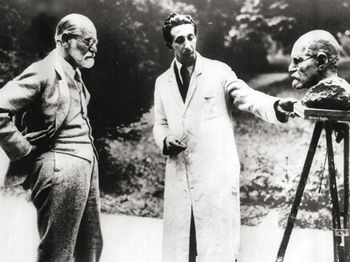
FreudFreud’s ideas are today not simply rejected as false. They are repudiated as being dangerous or immoral; the “gloomy mythology” of warring instincts is condemned as a kind of slander on the species, the fundamental nobility of which it is sacrilege to deny. To be sure, righteous indignation has informed the response to Freud’s thought from the beginning. But its new strength helps explain one of the more remarkable features of intellectual life at the start of the 21st century, a time that in its own eyes is more enlightened than any other: the intense unpopularity of Freud, the last great Enlightenment thinker. Born in Austria-Hungary in 1856 and dying in London in 1939, Freud is commonly known as the originator of the idea of the unconscious mind. However, the idea can be found in a number of earlier thinkers, notably the philosopher Arthur Schopenhauer. It would be more accurate to describe Freud as aiming to make the unconscious mind an object of scientific investigation—a prototypically Enlightenment project of extending the scientific method into previously unexplored regions. Many other 20th century thinkers aimed to examine and influence human life through science and reason, the common pursuit of the quarrelling family of intellectual movements, appearing from the 17th century onwards, that formed the Enlightenment. But by applying the Enlightenment project to forbidden regions of the human mind Freud, more than anyone else, revealed the project’s limits.

More here.

Survival’s Ick Factor

James Gorman in The New York Times:

DisgustDisgust is the Cinderella of emotions. While fear, sadness and anger, its nasty, flashy sisters, have drawn the rapt attention of psychologists, poor disgust has been hidden away in a corner, left to muck around in the ashes. No longer. Disgust is having its moment in the light as researchers find that it does more than cause that sick feeling in the stomach. It protects human beings from disease and parasites, and affects almost every aspect of human relations, from romance to politics. In several new books and a steady stream of research papers, scientists are exploring the evolution of disgust and its role in attitudes toward food, sexuality and other people.

Picture: REVOLTING In India, the power of disgust to improve villagers' hygiene is being tested. Center of Gravity, a Bangalore agency working with Valerie Curtis, a disgust researcher, created skits including this role, Laddu Lingam; he makes treats of mud and worms and never washes his hands. Another character, Supermom, shows the proper behavior.

More here.

Letter From Detroit

Ingrid Norton in the Los Angeles Review of Books:

Tumblr_lxrr9vUI9N1qhwx0oI was sitting in the Telway diner around the edge of midnight. The Telway is a story in itself: a chrome island built during the 1940s, floating on a blighted stretch of Michigan Avenue. Telway is staffed by the Appalachian whites who long ago moved to Detroit for work and, more recently, to the suburbs to live. It’s open 24 hours and nothing costs more than $2.25. I ordered a fish sandwich and had the place to myself, except for the short-order cook, the waitress, and the cashier. A pair of bulky night workers stood in the vestibule and asked for hamburgers, heads framed by the take-away window. Then an ambulance pulled off Michigan Avenue and parked on the sidewalk outside. A stocky, balding EMS worker with reddened skin and tired eyes came in.

“How much time you got?” he asked the powder-faced redheaded woman working the counter.

“How much time you need?”

“I just watched the cops beat the shit out of somebody,” the EMT said to all of us. “He was being stupid.”

He ordered a large coffee with double cream, and proceeded to tell us the convoluted story. He spoke with a flat affect and blank eyes. It was a robbery/assault at some house “by the train station.” He’d waited outside with the woman who had called 911. She kept telling him to go inside and help the man who’d been assaulted. “‘He’s spitting up, you gotta get in there.’ And I told her again,” he said, “‘I can’t go into a violent situation before the police get here, so we’ll have to wait for the police.’”

It took the police over half an hour to get there, and so they waited on the sidewalk while the woman grew steadily more agitated, railing about it being the EMT’s duty to save lives. She said, “I’m going in to get him! If he dies while we’re waiting and you aren’t helping him, I’m gonna sue the city.”

More here.

Do Thrifty Brains Make Better Minds?

Andy Clark in the New York Times:

ScreenHunter_07 Jan. 24 10.33Might the miserly use of neural resources be one of the essential keys to understanding how brains make sense of the world? Some recent work in computational and cognitive neuroscience suggests that it is indeed the frugal use of our native neural capacity (the inventive use of restricted “neural bandwidth,” if you will) that explains how brains like ours so elegantly make sense of noisy and ambiguous sensory input. That same story suggests, intriguingly, that perception, understanding and imagination, which we might intuitively consider to be three distinct chunks of our mental machinery, are inextricably tied together as simultaneous results of a single underlying strategy known as “predictive coding.” This strategy saves on bandwidth using (who would have guessed it?) one of the many technical wheezes that enable us to economically store and transmit pictures, sounds and videos using formats such as JPEG and MP3.

In the case of a picture (a black and white photo of Laurence Olivier playing Hamlet, to activate a concrete image in your mind) predictive coding works by assuming that the value of each pixel is well predicted by the value of its various neighbors. When that’s true — which is rather often, as gray-scale gradients are pretty smooth for large parts of most images — there is simply no need to transmit the value of that pixel. All that the photo-frugal need transmit are the deviations from what was thus predicted. The simplest prediction would be that neighboring pixels all share the same value (the same gray scale value, for example), but much more complex predictions are also possible. As long as there is detectable regularity, prediction (and hence this particular form of data compression) is possible.

More here. And a short sequel here.

The Bomb: Iran, Saudi Arabia, and Pakistan

Pervez Hoodbhoy in The Express Tribune:

ScreenHunter_06 Jan. 24 10.27Once upon a time Iran was Pakistan’s close ally — probably its closest one. In 1947, Iran was the first to recognise the newly independent Pakistan. In the 1965 war with India, Pakistani fighter jets flew to Iranian bases in Zahedan and Mehrabad for protection and refuelling. Both countries were members of the US-led Seato and Cento defence pacts, Iran opened wide its universities to Pakistani students, and the Shah of Iran was considered Pakistan’s great friend and benefactor. Sometime around 1960, thousands of flag-waving school children lined the streets of Karachi to greet him. I was one of them.

The friendship has soured, replaced by low-level hostility and suspicion. In 1979, Ayatollah Khomenei’s Islamic revolution, and the Soviet invasion of Afghanistan, set major realignments in motion. As Iran exited the US orbit, Pakistan joined the Americans to fight the Soviets. With Saudi money, they together created and armed the hyper-religious Pashtun mujahideen. Iran too supported the mujahideen — but those of the Tajik Northern Alliance. But as religion assumed centrality in matters of state in both Pakistan and Iran, doctrinal rifts widened.

These rifts are likely to widen as the US prepares for its withdrawal from Afghanistan. Iranians cannot forget that in 1996, following the Soviet pullout from Afghanistan, the Taliban took over Kabul and began a selective killing of Shias. This was followed by a massacre of more than 5,000 Shias in Bamiyan province. Iran soon amassed 300,000 troops at the Afghan border and threatened to attack the Pakistan-supported Taliban government.

More here.

Monday, January 23, 2012

Sunday, January 22, 2012

Philip Larkin: “Moving and Memorable”

Francis-Noël Thomas in Humanities:

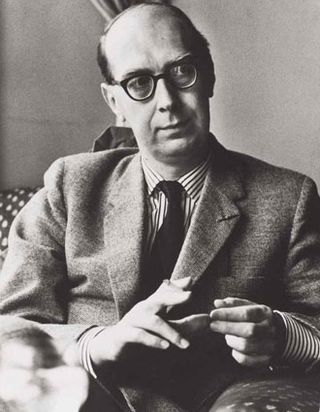
Moving_memorable_18_1000pxhPhilip Larkin started writing poems in 1938 when he was fifteen or sixteen and very nearly stopped about ten years before he died at sixty-three. His reputation, during his lifetime, was based almost entirely on three collections published at intervals of approximately ten years: The Less Deceived (1955), The Whitsun Weddings (1964), and High Windows (1974). Together they contain eighty-five poems, all but a few of them under forty lines. He said in an interview that he never wanted to “be a poet,” and he did not follow the established routine of people who did want to “be poets.” He didn’t give readings or lectures, was never a poet-in-residence at a university, never taught, rarely gave interviews, generally stayed away from literary circles, stayed away from London, did not work at maintaining a network of editors and publishers, did not have an agent or a publicist, and finally stopped writing poems. For him, to “be a poet” meant spending a lot of time doing things he considered inimical to writing poems. “I don’t want to go around pretending to be me.”

Beginning in 1955, he lived in Hull, where he was appointed university librarian, and he stayed there for the rest of his life. The University of Hull underwent a major expansion during his nearly thirty-year tenure; he was closely involved in the planning, design, and construction of two new library buildings. At the end of his career, he was directing a staff of over a hundred. When he first appeared in Who’s Who in 1959, he did not mention he was a poet or even a writer.

More here.

In Which I Fix My Girlfriend’s Grandparents’ WiFi and Am Hailed as a Conquering Hero

Mike Lacher in McSweeney's:

ScreenHunter_03 Jan. 22 17.04Lo, in the twilight days of the second year of the second decade of the third millennium did a great darkness descend over the wireless internet connectivity of the people of 276 Ferndale Street in the North-Central lands of Iowa. For many years, the gentlefolk of these lands basked in a wireless network overflowing with speed and ample internet, flowing like a river into their Compaq Presario. Many happy days did the people spend checking Hotmail and reading USAToday.com.

But then one gray morning did Internet Explorer 6 no longer load The Google. Refresh was clicked, again and again, but still did Internet Explorer 6 not load The Google. Perhaps The Google was broken, the people thought, but then The Yahoo too did not load. Nor did Hotmail. Nor USAToday.com. The land was thrown into panic. Internet Explorer 6 was minimized then maximized. The Compaq Presario was unplugged then plugged back in. The old mouse was brought out and plugged in beside the new mouse. Still, The Google did not load.

Some in the kingdom thought the cause of the darkness must be the Router. Little was known of the Router, legend told it had been installed behind the recliner long ago by a shadowy organization known as Comcast.

More here.

Twelve Lessons (Most of Which I Learned the Hard Way) for Evolutionary Psychologists

FesslerDan Fessler in his blog over at the International Cognition and Culture Institute (h/t: Dan Sperber):

Lesson 5: Understanding human diversity is vital to generating and testing hypotheses about the mind. Read ethnographies describing other cultures, travel whenever the opportunity presents itself, and try to surround yourself with colleagues who are familiar with disparate ways of life – what seems self-evidently true about humans to you may not seem so to others. If there is reason to suspect that the features of the mind at issue could be variable across groups, whenever possible, employ samples that vary along potentially relevant dimensions.

A second reason to attend to human diversity is that many adaptations can be expected to be facultatively adjusted or deployed. In order to test for such possibilities, or even to recognize that they might exist, we must consider the range of physical and social ecologies that humans inhabit. Consider, for example, the case of sex differences in reactions to sexual versus emotional infidelity. In their pivotal paper on the subject, Buss et al. (1992) insightfully noted that this effect should vary across cultures as a function of the degree of male parental investment. However, although much research has now been done on jealousy, some in cultures other than that of the original authors, nonetheless, investigators have yet to compare results across samples selected specifically with regard to variation along this critical dimension. A preliminary effort in this regard (Yamashita, 2005) suggests that the Na (Mosuo) culture of Southwest China could provide an ideal setting for such an investigation. However, as this example suggests, testing hypotheses across ecologies that differ along functionally relevant axes will not always be easy.

Female Orgasm: An Evolutionary Journey

Female_orgasm_bDaniel Honan in Big Think:

Take the issue of female orgasm, for instance, which some scientists do not accept as a biological necessity. Dr. Elisabeth A. Lloyd, among others, has described female orgasm as the female equivalent to male nipples, anatomy that one sex needed, while the other sex “just sort of lucked out with some lingering leftovers.”

Ryan rejects this view. “When a woman has an orgasm,” he explains, “the pH of her reproductive tract shifts in a way that favors sperm that enter her at that point.” Why is this so important? Sperm competition. In prehistoric times, according to Ryan, women had “multiple lovers at any given ovulatory cycle, even in any given sexual event.”

And so, let's say a woman is having sex with several different men, and she likes them all well enough. Now let's suppose she has a special connection with one man in particular, whether it is a psychological connection or the attraction happens on the level of smell. That man provokes her to have an orgasm, and that man’s sperm has a great advantage over the sperm of the other men “in the obstacle course to the ovum.”

What's the Significance?

Is it true that women are “quality players” while men are “quantity players”? Ryan says the two sexes are hard-wired exactly that way, and the proof about our sexual proclivities is written in the human anatomy. “The female, like the male body, is a book that can be read,” says Ryan. “It’s full of information about the sex lives of our ancestors.”

Ryan points to some cutting-edge experiments that suggest the ovum itself is “capable of distinguishing between the sperm of different men by the DNA and choosing the sperm that is the best match for her.”

Apple’s Mind-Bogglingly Greedy and Evil License Agreement

Eb-profileEd Bott in ZDNet, via Zite:

Summary: Over the years, I have read hundreds of license agreements, looking for little gotchas and clear descriptions of rights. But I have never, ever seen a legal document like the one Apple has attached to its new iBooks Author program.

I read EULAs so you don’t have to. I’ve spent years reading end user license agreements, EULAs, looking for little gotchas or just trying to figure out what the agreement allows and doesn’t allow.

I have never seen a EULA as mind-bogglingly greedy and evil as Apple’s EULA for its new ebook authoring program.

Dan Wineman calls it “unprecedented audacity” on Apple’s part. For people like me, who write and sell books, access to multiple markets is essential. But that’s prohibited:

Apple, in this EULA, is claiming a right not just to its software, but to its software’s output. It’s akin to Microsoft trying to restrict what people can do with Word documents, or Adobe declaring that if you use Photoshop to export a JPEG, you can’t freely sell it to Getty. As far as I know, in the consumer software industry, this practice is unprecedented.

Exactly: Imagine if Microsoft said you had to pay them 30% of your speaking fees if you used a PowerPoint deck in a speech.

I’ve downloaded the software and had a chance to skim the EULA. Much of it is boilerplate, but I’ve read and re-read Section 2B, and it does indeed go far beyond any license agreement I’ve ever seen…

Worth All the Sweat

20120121_STP001_0In the Economist:

As doctors never tire of reminding people, exercise protects against a host of illnesses, from heart attacks and dementia to diabetes and infection.

How it does so, however, remains surprisingly mysterious. But a paper just published in Nature by Beth Levine of the University of Texas Southwestern Medical Centre and her colleagues sheds some light on the matter.

Dr Levine and her team were testing a theory that exercise works its magic, at least in part, by promoting autophagy. This process, whose name is derived from the Greek for “self-eating”, is a mechanism by which surplus, worn-out or malformed proteins and other cellular components are broken up for scrap and recycled.

To carry out the test, Dr Levine turned to those stalwarts of medical research, genetically modified mice. Her first batch of rodents were tweaked so that their autophagosomes—structures that form around components which have been marked for recycling—glowed green. After these mice had spent half an hour on a treadmill, she found that the number of autophagosomes in their muscles had increased, and it went on increasing until they had been running for 80 minutes.

To find out what, if anything, this exercise-boosted autophagy was doing for mice, the team engineered a second strain that was unable to respond this way. Exercise, in other words, failed to stimulate their recycling mechanism. When this second group of modified mice were tested alongside ordinary ones, they showed less endurance and had less ability to take up sugar from their bloodstreams.

A thousand ways to please a husband

Sadie Stein in The Paris Review:

ThousandcoverMany people engage in dubious experimentation in their youth. Some get involved with intravenous drugs. Others sleep with problematic men. A few tattoo their faces. I, for my part, went on a spree when I was nineteen of cooking exclusively from a 1917-era cookbook. The book, A Thousand Ways to Please a Husband (with Bettina’s Best Recipes), might sound vaguely titillating. It’s not. ATWtPaH, by Louise Bennett Weaver and Helen Cowles LeCron, is the story of Bettina and Bob’s first year of marriage. The fictional, surnameless couple, who populate a series of domestic vignettes (with menus and recipes), seems to live on the outskirts of an anonymous American city where Bob does … well, some kind of office job. It’s 1917, but apparently no need at all to mention the War. My copy is a yellow hardcover I acquired at a long-ago church sale; it’s illustrated liberally with images of mischievous chef-cupids and periodic thumbnail sketches of the newlyweds. By the time we meet the pair, on their first night in their brand-new, cozy brown bungalow, the honeymoon is over—literally. When the happy-go-lucky Bob suggests dinner out, after they disembark from the train, he’s treated to the following:

“I’m ashamed of you! We’ll take the first car for home—a streetcar, not a taxi! Our extravagant days are over, and the time has come to show you that Bettina knows how to keep house!” Home again, and swathed in a trim percale apron, Bettina turns to her “Emergency Shelf,” which will become a recurring character, along with the word “economical,” her energy-efficient fireless cooker (a slow cooker of sorts), and the budget notebook that is her preferred topic of dinner-table conversation. “That was fun,” Bob says of the day they assembled the shelf. “Yes, and work, too,” said Bettina, “but I’m glad we did it. Do you remember how much I saved by getting things in dozen and half-dozen lots? And Mother showed me how much better it was to buy the larger sizes in bottled things, because in buying the smaller bottles you spend most of your money for the glass. Now that you have to pay my bills, Bob, you’ll be glad that I know these things.” In case you’re wondering, that evening Bob sat down to:

Creamed Tuna on Toast Strips
Canned Peas with Butter Sauce
Rolls Butter
Strawberry Preserves
Hot Chocolate with Marshmallows

More here. (Note: For my own favorite Uber Chef and dear friend Elatia Harris with love)