Thursday Poem

CLOUD

A blue stain
creeps across
the deep pile
of the evergreens.
From inside the
forest it seems
like an interior
matter, something
wholly to do
with trees, a color
passed from one
to another, a
requirement
to which they
submit unflinchingly
like soldiers or
brave people
getting older.
Then the sun
comes back and
it’s totally over.

by Kay Ryan
from Poetry, Vol. 195, No. 5, February
publisher: Poetry, Chicago, 2010

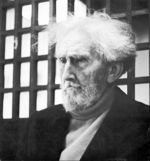
pounded

Pound-Ezra_Erker-Verlag_St-Gallen

By my count, though I may have missed a few, this is the 25th volume of Ezra Pound’s highly distinctive correspondence to see the light of day. The first selection of his letters, edited by D.D. Paige and culled from the years 1907-41, was published in 1950, when Pound was four years into what would be a 12-year sojourn in St Elizabeths Hospital in Washington, to which he’d been confined indefinitely after pleading insanity at his trial for treason in 1946. Paige’s selection introduced to the world madcap Ez the compulsive letter-writer, all hectoring capitals and italics and doolally spelling, here berating recalcitrant magazine editors, there puffing his chosen (in the main, pretty well chosen) band of modernistas; here, somewhat less happily, solving the world’s political and economic woes by promoting Social Credit, there championing the achievements of his great hero, Benito Mussolini. Coming the year after the scandal caused by the decision to award the Bollingen Prize to The Pisan Cantos, the book’s publication caused something of a furore – as indeed did all things Poundian in the immediate postwar era.

more from Mark Ford at the LRB here.

The Yankee Comandante

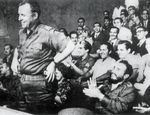
120528_r22221_p465

For a moment, he was obscured by the Havana night. It was as if he were invisible, as he had been before coming to Cuba, in the midst of revolution. Then a burst of floodlights illuminated him: William Alexander Morgan, the great Yankee comandante. He was standing, with his back against a bullet-pocked wall, in an empty moat surrounding La Cabaña—an eighteenth-century stone fortress, on a cliff overlooking Havana Harbor, that had been converted into a prison. Flecks of blood were drying on the patch of ground where Morgan’s friend had been shot, moments earlier. Morgan, who was thirty-two, blinked into the lights. He faced a firing squad. The gunmen gazed at the man they had been ordered to kill. Morgan was nearly six feet tall, and had the powerful arms and legs of someone who had survived in the wild. With a stark jaw, a pugnacious nose, and scruffy blond hair, he had the gallant look of an adventurer in a movie serial, of a throwback to an earlier age, and photographs of him had appeared in newspapers and magazines around the world. The most alluring images—taken when he was fighting in the mountains, with Fidel Castro and Che Guevara—showed Morgan, with an untamed beard, holding a Thompson submachine gun. Though he was now shaved and wearing prison garb, the executioners recognized him as the mysterious Americano who once had been hailed as a hero of the revolution.

more from David Grann at the New Yorker here.

poppy-heads

Wilson_269437h

“May I call you my morphine?” Robert Browning asked Elizabeth Barrett the month before they married in 1846. Barrett, who had been taking opiates every day since she was fourteen, replied “Can you leave me off without risking your life?”. Jean Cocteau later reversed the trope, describing not the woman as an addiction but the addiction as a woman – “Opium is the woman of destiny, pagodas, lanterns” – while for Baudelaire the solipsism of the opium addict resulted in “an appalling marriage of man to himself”. You can always rely on an opium-eater for a fancy prose style. Opium also brings out the stylist in doctors: “What”, asked Dr John Jones in The Mysteries of Opium Reveal’d (1700), “can cure pain and all its effects better than pleasure?”, and he compared the effect of the drug to “the sight of a dearly-loved Person etc thought to have been lost at Sea”. The Victorian physician Sir William Osler described morphine as “God’s own medicine”, but the sap of the Papaver somniferum was enjoyed long before the worship of Osler’s own God. Fossilized poppy seeds found at the remains of a lakeside village in Zurich suggest that opium was first consumed in the late Stone Age; Egyptian scrolls reveal that Ra recommended opium for headaches; Homer relates how Helen, pitying the dejection of Telemachus at the absence of his father Odysseus, pours an ointment into his wine called “no sorrow” (nepenthe); Sibyl sedates Cerberus, the three-headed guard dog at the gates of Hades, with a soporific, and Galen prescribed opium as an antidote for “confusion” in the elderly.

more from Frances Wilson at the TLS here.

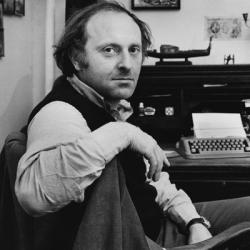
Joseph Brodsky: A Literary Life

Michael Scammell in The New Republic:

Brodsky1Joseph Brodsky caught the attention of the outside world for the first time in 1964, when he was tried in Leningrad for the crime of writing poetry. That is not how the indictment read, of course: his “crime” was that he did not have a regular job, and was therefore a “parasite.” But a scurrilous article attacking Brodsky in theEvening Leningrad newspaper not long before his trial gave the game away. He was charged with being a “literary drone,” a writer of pointless doggerel, and therefore useless to society unless he was made to do “real” work. The newspaper attack and the subsequent trial were badges of honor for someone as young as Brodsky. He was only twenty-four and virtually unknown outside the narrow circle of his admirers, and campaigns of this sort were ordinarily reserved for famous older figures, such as Boris Pasternak and Anna Akhmatova.

Brodsky was in fact the victim of political events far beyond his control.

More here.

Tracking The Junk Food The World Eats After Dark

Ted Burnham at NPR:

ScreenHunter_08 May. 24 10.32People around the world show remarkable similarity in their daily eating habits: meals start off healthy in the morning, but get progressively worse throughout the day – until by nightfall we're deep into junk food territory. Just take a look at these images from mobile startup Massive Health. Focus on the dots over North America in the upper left, which indicate the healthiness (green) or unhealthiness (red) of people's meals at different times of day.

At 10 a.m. Eastern, North America is covered in green as people dig into healthy breakfasts. But by 10 p.m., red and orange splotches dominate most of the continent. And at 1 a.m., there's hardly any green to be seen. Similar trends appear according to local time in Europe, Asia, and elsewhere. View an interactive version showing the whole day here.

The data was culled from Massive Health's iPhone app, Eatery. Users record, rate, and track the healthiness of their meals over time. The images reflect ratings on about 500,000 meals from users in 50 countries, collected over 5 months.

The data doesn't explain why we eat worse the later it gets – it just tells us that we do. But there's something profound about such a consistent, worldwide pattern.

More here.

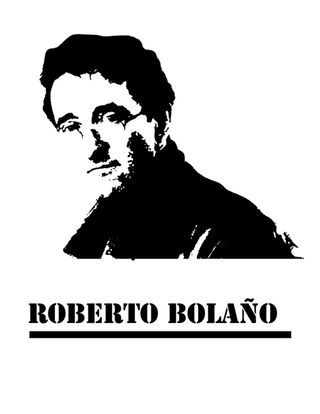
Bolaño’s Last, Great Secret

570_Bolano1R.B. Moreno in The Millions:

Next year marks the tenth anniversary of the death of Roberto Bolaño, the prolific genre-bender whose narratives and exile from Chile began seriously enchanting the literary world in 2005, the year The New Yorker began publishing his short stories. Altogether, nine stories have appeared in the magazine, including January’s “Labyrinth,” which accompanied a curious photograph. But I’ll get to that in a moment. First, a bit about Bolaño’s following, which may be credited in part to his early exit from said world at the age of 50, by way of liver failure. For the uninitiated, “Gomez Palacio,” his posthumous New Yorker debut about a tormented writer interviewing for a teaching post in a remote Mexican town, tends to work a kind of magic. A ragged copy of the issue in which “Gomez Palacio” appeared caught critic Francine Prose in a waiting room: “I was glad the doctor was running late,” she wrote later in reviewing Last Evenings on Earth, “so I could read the story twice, and still have a few minutes left over to consider the fact that I had just encountered something extraordinarily beautiful and (at least to me) entirely new.”

Francisco Goldman, who likened “The Great Bolaño” to Borges in a profile for The New York Review of Books, dates the ex-Chilean’s rise to 1999, the year The Savage Detectives won a coveted Venezuelan prize for the best Spanish-language novel. “The inseparable dangers of life and literature, and the relationship of life to literature, were the constant themes of Bolaño’s writings,” reads Goldman’s summary of his subject’s legacy, which at the time spanned ten novels and three story collections. (Bolaño’s drive to finish his 900-page masterwork, 2666, a far-flung novel involving the murders of women in the Sonora desert, is thought to have exacerbated his liver condition.) “It’s as if Bolaño is satirizing the routine self-pity of exile,” adds Goldman, in turning to one of his short fictions (“Mauricio ‘The Eye’ Silva”). “Yet the story’s mood of nearly inexpressible and lonely grief leaves you an intuitive sense of its truthfulness, which seems something other than a literal truthfulness.”

Cognitive Democracy

FarrellHenry Farrell and Cosma Shalizi in Crooked Timber:

Over the last couple of years, Cosma Shalizi and I have been working together on various things, including, inter alia, the relationship between complex systems, democracy and the Internet. These are big unwieldy topics, and trying to think about them systematically is hard. Even so, we’ve gotten to the point where we at least feel ready to start throwing stuff at a wider audience, to get feedback on what works and what doesn’t. Here’s a paper we’re working on, which argues that we should (for some purposes at least), think of markets, hierarchy and democracy in terms of their capacity to solve complex collective problems, makes the case that democracy will on average do the job a lot better than the other two ways, and then looks at different forms of collective information processing on the Internet as experiments that democracies can learn from. A html version is under the fold; the PDF version is here. Your feedback would very much be appreciated – we would like to build other structures on top of this foundation, and hence, really, really want criticisms and argument from diverse points of view (especially because such argument is exactly what we see as the strength of democratic arrangements).

Cognitive Democracy

Henry Farrell (George Washington University) and Cosma Rohilla Shalizi (Carnegie-Mellon/The Santa Fe Institute)

In this essay, we outline a cognitive approach to democracy. Specifically, we argue that democracy has unique benefits as a form of collective problem solving in that it potentially allows people with highly diverse perspectives to come together in order collectively to solve problems. Democracy can do this better than either markets and hierarchies, because it brings these diverse perceptions into direct contact with each other, allowing forms of learning that are unlikely either through the price mechanism of markets or the hierarchical arrangements of bureaucracy. Furthermore, democracy can, by experimenting, take advantage of novel forms of collective cognition that are facilitated by new media.

Wednesday, May 23, 2012

The Crisis of European Democracy

0523OPEDstolle-articleLargeAmartya Sen in the NYT:

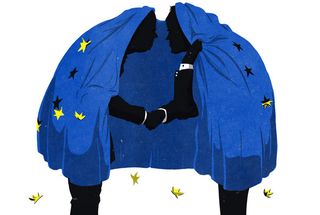
Perhaps the most troubling aspect of Europe’s current malaise is the replacement of democratic commitments by financial dictates — from leaders of the European Union and the European Central Bank, and indirectly from credit-rating agencies, whose judgments have been notoriously unsound. Participatory public discussion — the “government by discussion” expounded by democratic theorists like John Stuart Mill and Walter Bagehot — could have identified appropriate reforms over a reasonable span of time, without threatening the foundations of Europe’s system of social justice. In contrast, drastic cuts in public services with very little general discussion of their necessity, efficacy or balance have been revolting to a large section of the European population and have played into the hands of extremists on both ends of the political spectrum.

Europe cannot revive itself without addressing two areas of political legitimacy. First, Europe cannot hand itself over to the unilateral views — or good intentions — of experts without public reasoning and informed consent of its citizens. Given the transparent disdain for the public, it is no surprise that in election after election the public has shown its dissatisfaction by voting out incumbents.

Great Gatsby: a story for the modern age

From The Telegraph:

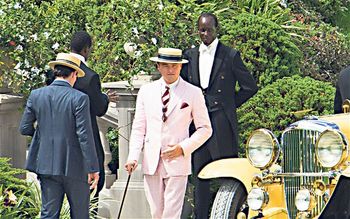
Gatsby_2136533bA Gatsby moment is upon us. The Great Gatsby is by far the most popular novel of F Scott Fitzgerald; it embodies the 1920s, and has attained an iconic status, both for American novelists and for many readers. Still, the flood of adaptations about to pour over us is unprecedented. Is there something in the air? Is there something that makes this most glamorous of novels speak to us with especial resonance? Later this summer, a new film adaptation of The Great Gatsby will be released, starring Leonardo DiCaprio (you can watch the trailer here) and the ubiquitous Carey Mulligan, as Daisy Buchanan. There are, too, a number of stage adaptations, some rather unusual. A musical version is being launched at the King’s Head Theatre in Islington in the summer, with music and lyrics by Joe Evans. An “immersive” version was staged in Wilton’s Music Hall in April, with dancing and cocktails throughout – the audience advised to dress in their 1920s best. Most curious is a New York version, retitled GATZ, coming to London as part of the London International Festival of Theatre in June and July. The New York theatre group Elevator Repair Service has set the book in a drab office, where a worker finds a copy of the book and starts to read it out; his colleagues take on the roles and the action plays itself out. Remarkably, every single word is performed; it is not a long novel, but even short novels are longer than the longest plays, and this evening will last for eight hours.

The Great Gatsby has always encouraged this sort of reverence. It is true that the earliest surviving film version, a 1949 adaptation with Alan Ladd and a memorable Shelley Winters as Myrtle, takes some bold liberties, beginning with Gatsby’s crooked empire and purchase of the mansion, rather than letting him intrude gradually on the action. Modern viewers, however, will be astonished at the dutiful reverence of the 1974 version with Robert Redford as Gatsby and scripted by Francis Ford Coppola, which preserves many of Nick Carraway’s comments in voiceover and an amazing amount of the casual dialogue.

More here.

When Women Were Birds

From The Daily Beast:

BirdsMountain time: Terry Tempest Williams is at home in Utah, and I’m in Los Angeles, flabbergasted by her warmth, even over the phone, by her graciousness, intuition, and intimacy. She is comfortable with distance and interruption; with poor phone connections and tesserated thoughts. Everything Williams has ever written, from her first book, The Secret Language of Snows, written for children in 1984, to her latest, When Women Were Birds: Fifty-Four Variations on Voice, finds its roots in the precariousness and uncertainty of life and grows from there, skyward. It has taken her 35 years to begin to understand and write about what this meant to her. “Honestly, I buried this story,” she says, the wind whistling through the phone; helicopters overhead in L.A. “I did not save or cherish those journals. I wrote in them unceremoniously. It wasn’t until I turned 54, the age she was when she died, that I realized how terrified I had been of my own blank mind.”

Williams has loyal readers. Her lectures and readings—held in far corners and small towns as well as distinguished, big-city venues—are always packed. Why? Because she’s the kind of writer who makes a reader feel that his voice might also, one day, be heard. Why? Because she cancels out isolation: connections are woven as you sit in your chair reading—between you and the place you live, between you and other readers, you and the writer. Without knowing how it happened, your sense of home is deepened reading her work, dug out, the soil pressed down around you as if you were a plant the author promised to water. It’s the strangest thing. Williams was born into a large Mormon clan in northern Utah. Mormon women are expected, she explains, to keep journals and bear children. The author is fond of saying that the only things she has done religiously in her life are keep a journal and use birth control. When Williams’s mother died at 54, she left Terry, then 22, shelves and shelves of brightly bound journals.

Williams opened them. They were blank.

More here.

Wednesday Poem

A Knocker

There are those who grow
gardens in their heads
paths lead from their hair
to sunny and white cities

it's easy for them to write
they close their eyes
immediately schools of images
stream down their foreheads

my imagination
is a piece of board
my sole instrument
is a wooden stick

I strike the board
it answer me
yes–yes
no–no

for others the green bell of a tree
the blue bell of water
I have a knocker
from unprotected gardens

I thump on the board
and it prompts me
with the moralists dry poem
yes–yes
no–no

by Zbigniew Herbert
translation: Czeslaw Milosz and Peter Dale Scott

Syria Diary

220px-Bashar_al-Assad_(cropped)Layla Al-Zubaidi in the LRB:

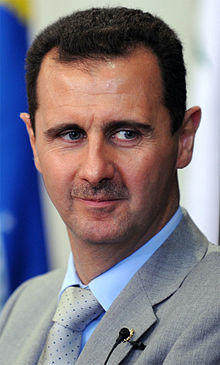
In a hit YouTube show called Top Goon, wooden puppets act out the parts of Bashar and his father. The director relocated his operation to Lebanon after a march last July led to the detention of many of his friends. In August, the political cartoonist Ali Farzat was kidnapped and dumped by a roadside, his hand broken, after he published a cartoon depicting Bashar hitching a ride out of town. Dissent is met with brute force, no matter what form it takes, and masks and puppets are a reasonable precaution. In the final episode of Top Goon the puppeteers show (part of) their faces. His eyes just visible behind a Syrian flag, one of them pops up from behind the stage to tell the Bashar puppet his time is up. Bashar won’t go down easily: ‘I’m president of this republic! I’ll annihilate you! Infiltrator! Scum! Al-Qaida!’ The puppeteer isn’t bothered. ‘Do you know,’ he says, ‘I can make you do whatever I want. I can make you dance.’ He makes the president do a few pirouettes. Then he unscrews his head.

In downtown Damascus I passed the usual bustling alleys filled with shops and cafés, busy as ever. The window of a loyalist restaurant displayed a cartoon. A big devil, carrying a hat emblazoned with the UN flag, was blowing a horn labelled SECTARIAN SCHISM. Little devils sliced chunks out of a map of Syria, their knives marked with the corporate logos of al-Jazeera, al-Arabiya and the BBC.

I got into a cab. When the driver asked why I’d come to Syria I said I was writing about Syrian culture – I was careful not to say ‘revolutionary’ culture. He gave me a look in the mirror that seemed to say he thought I’d come from outer space. I asked him to drop me off by the central bank, where a huge portrait of Bashar, eyes tinted ice-blue, covered the monumental façade.

‘You want culture?’ the driver asked and pointed at a stage being set up in the square in front of the bank, in preparation for a visit by Kofi Annan’s international observers. Giggling teenagers in scout uniform were taking up position. Kiosks were draped with Syrian flags and posters of the ruling family surrounded the stage. ‘That’s our culture. Setting up a theatre to show the world that millions support our president.’

The Lonely Ones

Sontag1-383x537Emily Cooke in The New Inquiry:

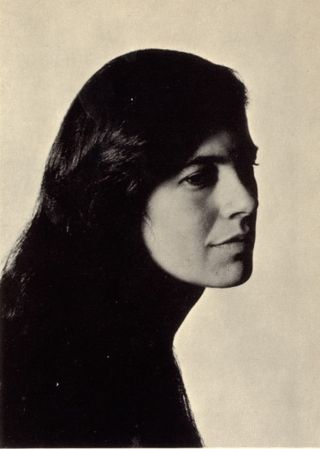
By all accounts, Susan Sontag found being alone intolerable. In Sigrid Nunez’s 2011 memoir, Sempre Susan, Sontag didn’t even want to drink her morning coffee or read the newspaper without someone else around. When she was alone and unoccupied by books, she tells Nunez, her “mind went blank” like “static on the screen when a channel stops broadcasting.” Without others to respond to her ideas, or a book to provoke them, the ideas vanished. Sontag herself substantiates Nunez’s impression in the second volume of her journals, As Consciousness Is Harnessed to Flesh. The tension visible here between the demands (and solace) of relationships and the appeal (and terror) of solitude may be a basic human circumstance. But women, in modern history, feel the tension with special acuteness, we who are assumed to be talented at interaction and rudderless when alone. It is striking that even Sontag, the most authoritative and singular of public figures — the most masculine of women intellectuals — also found the conflict vexing. The first volume of the journals charted her heady, headlong ascent into sexual and intellectual self-knowledge. This second volume, even as it spans the period of her most important work, shows her running up against her own limits. For Sontag, one of the most troubling of these was her difficulty being alone.

Solitude is a problem for writers generally, who spend so much time alone rehearsing a form of ideal communication. And men —as a practical matter — are often worse at being alone than women. But for male writers, however often an appearance of self-sufficiency can be stripped away to reveal a hidden structure of support, there is a writerly tradition of solitude that has existed at least since Romanticism: Rousseau’s “my habits are those of solitude and not of men,” or Shelley’s “Alastor; or, the Spirit of Solitude.” A man who chooses to be alone assumes the glamour of his forebears. A woman’s aloneness makes us suspicious: Even today it carries connotations of reluctance and abandonment, on the one hand, and selfishness and disobedience, on the other. Kate Bolick, writer of a much-discussed piece in The Atlantic about the “rise of single women,” became something of a spectacle for suggesting that she was happy, at 39, being unmarried and on her own. Albeit strangely titillated, many readers rallied to believe her. The rest called her deluded.

Why China Won’t Rule

Fab8c2014ef8f17c2669302a6721b4cb.portrait.jpgRobert Skidelsky in Project Syndicate:

Is China poised to become the world’s next superpower? This question is increasingly asked as China’s economic growth surges ahead at more than 8% a year, while the developed world remains mired in recession or near-recession. China is already the world’s second largest economy, and will be the largest in 2017. And its military spending is racing ahead of its GDP growth.

The question is reasonable enough if we don’t give it an American twist. To the American mind, there can be only one superpower, so China’s rise will automatically be at the expense of the United States. Indeed, for many in the US, China represents an existential challenge.

CommentsThis is way over the top. In fact, the existence of a single superpower is highly abnormal, and was brought about only by the unexpected collapse of the Soviet Union in 1991. The normal situation is one of coexistence, sometimes peaceful sometimes warlike, between several great powers.

CommentsFor example, Great Britain, whose place the US is often said to have taken, was never a “superpower” in the American sense. Despite its far-flung empire and naval supremacy, nineteenth-century Britain could never have won a war against France, Germany, or Russia without allies. Britain was, rather, a world power – one of many historical empires distinguished from lesser powers by the geographic scope of their influence and interests.

CommentsThe sensible question, then, is not whether China will replace the US, but whether it will start to acquire some of the attributes of a world power, particularly a sense of responsibility for global order.

Trouble at the Heart of Psychiatry’s Revised Rule Book

Edward Shorter in Scientific American:

ImagesMajor depression was created in 1980 by DSM-III editor Robert Spitzer as an effort to bridge disagreements between psychoanalysts, when they ruled the roost in the American Psychiatric Association, and the rest of the profession, which was becoming increasingly oriented towards biology. As a political construct, major depression included the two forms of depressive illness that previously had been considered as different from each other as measles and tuberculosis: melancholic illness and nonmelancholia. Melancholia, a grave form of depression involving slowed thought and movement, a complete joylessness in life and lack of hope for the future, had always been considered a separate illness. By 1980 the term melancholia had gone out of style and had been replaced by endogenous depression.

The other form of depressive illness that psychiatry had always recognized as separate was an ill-defined aggregation of symptoms of mood, anxiety, fatigue, somatic complaints – and a tendency to obsess about it all – that had been called on occasion neurasthenia, neurotic depression, reactive depression and other terms indicating real illness but not melancholic disease.

So the first artifact the DSM series created was lumping these two forms of depressive illness together. In fact, they are so disparate that the depression term itself should be abandoned.

More here. [Thanks to Louise Gordon.]

From Terror Suspect to College Graduate

Amitava Kumar in The Daily Beast:

1337425850690.cachedHe will be graduating this Sunday from Trinity College in Connecticut. He is not a very good student. His GPA is only 2.7. Once he was even threatened with expulsion because he had been quarrelling with his wife and had missed classes. He surprised me a few days ago by saying that he wanted to give a speech at his graduation ceremony. Would I read the draft he had written?

There was a further surprise. In what he had sent me, there was mention of his incarceration, in a federal prison in upstate New York, a few months after the events of 9/11. He was suspected of being a terrorist. I had known of this, but I had also found him taciturn and secretive; I was surprised that he was prepared to stand in his blue and gold robes at graduation and read aloud about having been put behind bars.

I will call him Khalid Farooq. He is 34 years old, and grew up in Abbotabad in Pakistan. He arrived in the U.S. on Sept. 5, 2001. Over the year that I have now known him, Khalid had mentioned his arrests—the first only a few days after the September attacks—but the details I was now reading were new to me.

More here.

Tuesday, May 22, 2012

The Most Comma Mistakes

Ben Yagoda in the New York Times:
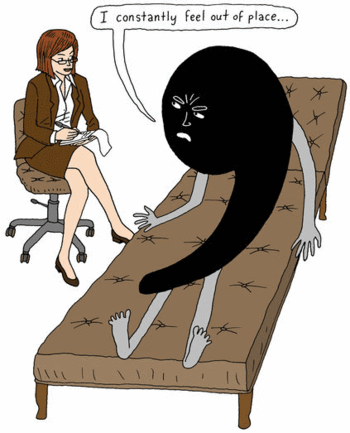
ScreenHunter_06 May. 22 16.52If I’ve seen it once, I’ve seen it a thousand times. I’m referring to a student’s writing a sentence like:

I went to see the movie, “Midnight in Paris” with my friend, Jessie.

Comma after “movie,” comma after “friend” and, sometimes, comma after “Paris” as well. None is correct — unless “Midnight in Paris” is the only movie in the world and Jessie is the writer’s only friend. Otherwise, the punctuation should be:

I went to see the movie “Midnight in Paris” with my friend Jessie.

If that seems wrong or weird or anything short of clearly right, bear with me a minute and take a look at another correct sentence:

I went to see Woody Allen’s latest movie, “Midnight in Paris,” with my oldest friend, Jessie.

You need a comma after “movie” because this and only this is Mr. Allen’s newest movie in theaters, and after “Jessie” because she and only she is the writer’s oldest friend.

The syntactical situation I’m talking about is identifier-name. The basic idea is that if the name (in the above example, “Jessie”) is the only thing in the world described by the identifier (“my oldest friend”), use a comma before the name (and after it as well, unless you’ve come to the end of the sentence). If not, don’t use any commas.

More here.