Anne Boleyn: witch, bitch, temptress, feminist

Hilary Mantel in The Guardian:

ScreenHunter_04 May. 22 14.46As a small child I remember being told by a solemn nun that Anne Boleyn had six fingers on one hand. In the nun's eyes, it was the kind of deformity that Protestants were prone to; it was for Anne's sake, as everyone knew, that Henry VIII had broken away from Rome and plunged his entire nation into the darkness of apostasy. If it weren't for this depraved woman, England would be as holy as Ireland, and we'd all eat fish on Friday and come from families of 12.

Anne Boleyn wasn't exactly a Protestant, but she was a reformer, an evangelical; and the sixth finger, which no one saw in her lifetime, was a fragment of black propaganda directed at her daughter, Elizabeth I. In Elizabeth's reign it was the duty of beleaguered papists to demonstrate that the queen's mother had been physically and spiritually deformed. Hence, not just the extra finger but the “wen” on her throat, which supposedly she hid with jewellery: hence the deformed foetus to which she was said to have given birth. There is no evidence that this monster baby ever existed, yet some modern historians and novelists insist on prolonging its poor life, attracted to the most lurid version of events they can devise.

Anne Boleyn is one of the most controversial women in English history; we argue over her, we pity and admire and revile her, we reinvent her in every generation. She takes on the colour of our fantasies and is shaped by our preoccupations: witch, bitch, feminist, sexual temptress, cold opportunist.

More here.

Hidden Epidemic: 
Tapeworms Living Inside People’s Brains

ScreenHunter_03 May. 22 14.39

Carl Zimmer in his excellent blog, The Loom:

Theodore Nash sees only a few dozen patients a year in his clinic at the National Institutes of Health in Bethesda, Maryland. That’s pretty small as medical practices go, but what his patients lack in number they make up for in the intensity of their symptoms. Some fall into comas. Some are paralyzed down one side of their body. Others can’t walk a straight line. Still others come to Nash partially blind, or with so much fluid in their brain that they need shunts implanted to relieve the pressure. Some lose the ability to speak; many fall into violent seizures.

Underneath this panoply of symptoms is the same cause, captured in the MRI scans that Nash takes of his patients’ brains. Each brain contains one or more whitish blobs. You might guess that these are tumors. But Nash knows the blobs are not made of the patient’s own cells. They are tapeworms. Aliens.

A blob in the brain is not the image most people have when someone mentions tapeworms. These parasitic worms are best known in their adult stage, when they live in people’s intestines and their ribbon-shaped bodies can grow as long as 21 feet. But that’s just one stage in the animal’s life cycle. Before they become adults, tapeworms spend time as larvae in large cysts. And those cysts can end up in people’s brains, causing a disease known as neurocysticercosis.

More here.

Meet India’s sperm donors

Lhendup G. Bhutia in Open:

ScreenHunter_02 May. 22 14.32In the film Vicky Donor, Annu Kapoor plays Dr Baldev Chaddha, a fertility specialist whose sperm bank in New Delhi is close to shutting down because the quality of his donors’ samples is just too poor to impregnate patients. That’s when Vicky Arora, played by Ayushmann Khurrana, comes in. A good-for-nothing lad who lives off his mother’s beauty parlour, his sperm samples rejuvenate Dr Chaddha’s flagging business. Vicky discovers that the quick buck assured by his virility beats the tedium of managing his uncle’s garment store: every single shot of semen fetches him a wad of Rs 500 notes. And this is how Vicky Arora becomes Vicky Donor and starts wanking for a living.

For all the earnest talk of the film’s intention to cast light on an industry cloaked in secrecy and ridden with stigma, its portrayal of the sperm donation business is but a caricature. The industry does exist, but there are no wads of cash being dispensed, donors don’t hang out at Costa Coffee outlets, and they certainly don’t earn enough to buy cars. Indian donors are mostly outstation students living in cramped hostel rooms, sweating to pay their bills and embarrassed by their need to encash what everyone else flushes down the drain. For some donors, it may be pocket money, but for most it’s the room rent or phone bill. And turning donor entails putting their pride at risk. Every commercial ejaculator must pass a strict selection test. Only the best are signed on. The rejects return home unpaid and dejected.

More here.

fresno

Image-1

Fresno sits about two thirds of the way down California’s huge Central Valley, which runs almost the entire length of the state, bounded to the west by the coastal ranges and to the east by the Sierra Nevada mountains. This is the most fertile farmland in the United States. The central and nothern parts get plenty of rain, but the southern part, called the San Joaquin Valley, is dry and subject to droughts, though with a few nice months of green in fall and spring. It could not have looked very promising when Fresno first appeared as a small outpost along the San Joaquin River; the expansion of the California Pacific Railroad to Fresno in the 1870s helped, however. And soon enough it became clear that despite the difficulty of the land, the connection to the farming infrastructure being set up to the north, including the railroad, made settling there worthwhile. Dutch and German farmers built irrigation ditches to make the land farmable. They were soon followed by immigrants from Mexico, Armenia, China, and Japan.

more from Michael Thomsen at n+1 here.

Four Ways Happiness Can Hurt You

June Gruber in Greater Good:

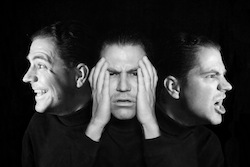
Multifaceman-smallClearly, happiness is popular. But is happiness always good? Can feeling too good ever be bad? Researchers are just starting to seriously explore these questions, with good reason: By recognizing the potential pitfalls of happiness, we enable ourselves to understand it more deeply and we learn to better promote healthier and more balanced lives. Along with my colleagues Iris Mauss and Maya Tamir, I have reviewed the emerging scientific research on the dark side of happiness, and we have conducted our own research on the topic. These studies have revealed four ways that happiness might be bad for us.

1. Too much happiness can make you less creative—and less safe.

Happiness, it turns out, has a cost when experienced too intensely. For instance, we often are told that happiness can open up our minds to foster more creative thinking and help us tackle problems or puzzles. This is the case when we experience moderate levels of happiness. But according to Mark Alan Davis’s 2008 meta-analysis of the relationship between mood and creativity, when people experience intense and perhaps overwhelming amounts of happiness, they no longer experience the same creativity boost. And in extreme cases like mania, people lose the ability to tap into and channel their inner creative resources. What’s more, psychologist Barbara Fredrickson has found that too much positive emotion—and too little negative emotion—makes people inflexible in the face of new challenges.

More here.

sci-fi philosophy

0520STONEparsons1-blog427

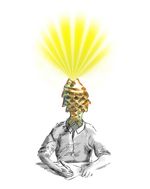
The fish pendant, on Dick’s account, began to emit a golden ray of light, and Dick suddenly experienced what he called, with a nod to Plato, anamnesis: the recollection or total recall of the entire sum of knowledge. Dick claimed to have access to what philosophers call the faculty of “intellectual intuition”: the direct perception by the mind of a metaphysical reality behind screens of appearance. Many philosophers since Kant have insisted that such intellectual intuition is available only to human beings in the guise of fraudulent obscurantism, usually as religious or mystical experience, like Emmanuel Swedenborg’s visions of the angelic multitude. This is what Kant called, in a lovely German word, “die Schwärmerei,” a kind of swarming enthusiasm, where the self is literally en-thused with the God, o theos. Brusquely sweeping aside the careful limitations and strictures that Kant placed on the different domains of pure and practical reason, the phenomenal and the noumenal, Dick claimed direct intuition of the ultimate nature of what he called “true reality.” Yet the golden fish episode was just the beginning.

more from Simon Critchley at the Opinionater here.

perl on sendak

693103

The great popular artists have an instinctive relationship with the audience. That was true of Maurice Sendak, who died on Tuesday at the age of 83. He followed his gut. He kowtowed to no one. He knew that when pop culture really matters, it’s grounded in personal experience—in something the artist feels so strongly that other people cannot help but feel it too. Sendak had been involved with more than 50 children’s books by the time he became a national sensation in 1963 with Where the Wild Things Are. But even after Max in his white pajamas became part of modern mythology, right up there with the Beatle’s Nowhere Man, Sendak refused to take the audience for granted. He was resolutely independent to the end, and he expected the same of the public that had made him famous. There was something of the nineteenth-century reformer about Sendak—an old-fashioned optimism about the capacity of popular art to change public opinion and make the world a better place. He worked hard to provide public theater for children. He took on the subject of homelessness in 1993, with We Are All in the Dumps with Jack and Guy, his old familiar cast of adorable child-gremlins now living in hideaways jerrybuilt from cardboard boxes.

more from Jed Perl at TNR here.

A Richer Life by Seeing the Glass Half Full

Jane Brody in The New York Times:

Murphy’s Law — “Anything that can go wrong will go wrong” — is the antithesis of optimism. In a book called “Breaking Murphy’s Law,” Suzanne C. Segerstrom, a professor of psychology at the University of Kentucky, explained that optimism is not about being positive so much as it is about being motivated and persistent. Dr. Segerstrom and other researchers have found that rather than giving up and walking away from difficult situations, optimists attack problems head-on. They plan a course of action, getting advice from others and staying focused on solutions. Whenever my husband, a dyed-in-the-wool pessimist, said, “It can’t be done,” I would seek a different approach and try harder — although I occasionally had to admit he was right. Dr. Segerstrom wrote that when faced with uncontrollable stressors, optimists tend to react by building “existential resources” — for example, by looking for something good to come out of the situation or using the event to grow as a person in a positive way. I was 16 when my mother died of cancer. Rather than dwell on the terrible void her death left in my life, I managed to gain value from the experience. I learned to apply her lifelong frugality more constructively, living each day as if it could be my last, but with a focus on the future in case it wasn’t. Yes, I saved, but I also chose not to postpone for some nebulous future the things I wanted to do and could, if I tried hard, find a way to do now. And I adopted a very forthright approach to life, believing that if I wanted something badly enough, I could probably overcome the odds against me.

More here.

Monday, May 21, 2012

The two 3QD summer interns for 2012

Dear Readers and Applicants,

I must confess that I am extremely gratified by the number of amazingly talented and intelligent and fascinating young persons from four continents who applied for our internship. I feel sad that I can only take a maximum of two people but I would like to express my gratitude also to all the other remarkable individuals in the excellent pool of candidates: thank you so much for making the effort to apply. I am sorry that it didn't work out this time but I am glad that I got to know you a little bit, and I want to assure you that it was not necessarily a matter of any applicant being “better” than any other, it is just that I was looking for some specific skills and experience in certain areas. I wish you the best and hope that we have the opportunity to work together sometime in the future.

And now without further ado here are the two 3QD interns for summer 2012:

HenryHenry Molofsky

Proudly hailing from Washington, DC, Henry now lives in Connecticut where he studies philosophy and music at Wesleyan University. He has previously worked at the nationally syndicated public radio program Afropop. He has also spent time studying and being a middle-school English teacher's assistant in Israel. He writes a lot of essays, which sometimes he'll admit he enjoys, but he also enjoys running in the woods, playing crazy parties with his top-40 cover band, and banging on West-African drums with nearly-correct technique. And he is a pianist.

ZujajaZujaja Tauqeer

Zujaja is a DPhil student researching military power and medical aid in Pakistan at Oxford University as a Rhodes Scholar. A graduate of Brooklyn College, she will study medicine at Harvard Medical School after completing her DPhil. Born in Lahore, Zujaja left Pakistan with her family to escape persecution against Ahmadi Muslims, and someday, when she's finally out of the classroom, she hopes to return there and work to create an equitable and sustainable healthcare system.

Welcome Zujaja and Henry and get ready for June 18th! You are now Associate Editors of 3QD. And thanks once again to all the brilliant people who applied.

Yours,

Abbas

    Sunday, May 20, 2012

    Envy, or, The Last Infirmity

    Sven Birkerts in the Los Angeles Review of Books:

    1336866570It was the face of F. Murray Abraham playing Antonio Salieri in Milos Forman's film adaptation of Peter Shaffer's Amadeus that finally touched me off. Who knew that envy had so many expressions, that it was such a great subject? Why hadn't I gotten it before? I had seen Amadeusseveral times over the years, but this is how it is with movies, with books, with everything — you need the eyes to see what is to be seen. But even so, how could I still have thought that it was about Mozart. About — what does “about” even mean? Centering on? Mapping to? Representing? Mozart in the film has nothing to do with the Mozart of artistic imagination or our received notions of greatness. He is a silly little grasshopper, a buffoon, even though sublime melodies are seen to issue from his every pen stroke. He very clearly cannot help his genius; it has been stuffed into him like an irrepressible filling. I never understood: how could the man, the boy-man, be such a fool? It made no sense. At least not if Amadeus was viewed as his movie, about him. But the other night — it took this long — I got that I'd been dense. Amadeus was about Salieri, first to last, and if Mozart came across as he unflatteringly did, it was because Salieri cast him so in his rancorous memory. The gulf between Mozart's personality and his gift was what his rival saw, what his jealous rage projected.

    More here.

    Against the Infantilization of the Natural History Museum

    Justin E. H. Smith in his blog:

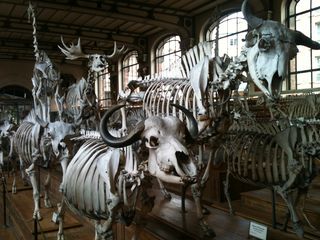
    6a00d83453bcda69e20168eb8cd469970c-320wiIt has often struck me that no greater misfortune can befall a natural history museum than for it to come into enough money for renovations. These typically take the form of interactive screens displaying 'fun facts' directed at eight-year-olds, and they require the removal of anything that reeks of the past, which is to say also the removal of the very idea of natural history, in favor of some eternally present, unceasingly entertaining, Chuck E. Cheese-like arcade.

    Just think about it: what kind of adult goes to a nature museum these days? I mean an adult who does not have some child in tow: a child, it is presumed, in need of perpetual edification? I mean a proper, auto-edifying, end-in-him-or-herself adult. These days, museums that are not about art are about nature, nature is about science, science is about education, and education, as we know, is for the kids, insofar as they, finally, are the future.

    Art for the grown-ups, then; nature for the kids. But education must be fun, so out with the rancid body parts in formaldehyde with calligraphic labels in Latin; in with the touch screens that tell you, as if you did not already know this since the age of two or so, that dinosaurs are birds, that Pluto is no longer a planet, and, in case you forgot this for a fraction of a second, that learning is fun. But all this thoroughly and disgustingly ideological rebranding requires money, which, as I've already suggested, the best museums of natural history do not have.

    More here.

    Mathematicians Come Closer to Solving Goldbach’s Weak Conjecture

    Davide Castelvecchi in Scientific American:

    One of the oldest unsolved problems in mathematics is also among the easiest to grasp. The weak Goldbach conjecture says that you can break up any odd number into the sum of, at most, three prime numbers (num­bers that cannot be evenly divided by any other num­ber except themselves or 1). For example:

    35 = 19 + 13 + 3
    or
    77 = 53 + 13 + 11

    Mathematician Terence Tao of the University of California, Los Angeles, has now inched toward a proof. He has shown that one can write odd numbers as sums of, at most, five primes—and he is hopeful about getting that down to three. Besides the sheer thrill of cracking a nut that has eluded some of the best minds in mathematics for nearly three centuries, Tao says, reaching that coveted goal might lead mathematicians to ideas useful in real life—for example, for encrypting sensitive data.

    The weak Goldbach conjecture was proposed by 18th-century mathematician Christian Goldbach. It is the sibling of a statement concerning even numbers, named the strong Goldbach conjecture but actually made by his colleague, mathematician Leonhard Euler. The strong version says that every even number larger than 2 is the sum of two primes. As its name implies, the weak version would follow if the strong were true: to write an odd number as a sum of three primes, it would be sufficient to subtract 3 from it and apply the strong version to the resulting even number.

    More here.

    Can you identify?

    Laura Miller in Salon:

    Book_mirror-460x307The news of recent research documenting how readers identify with the main characters in stories has mostly been taken as confirmation of the value of literary role models. Lisa Libby, an assistant professor at Ohio State University and co-author of a study published in the Journal of Personality and Social Psychology, explained that subjects who read a short story in which the protagonist overcomes obstacles in order to vote were more likely to vote themselves several days later. The suggestibility of readers isn’t news. Johann Wolfgang von Goethe’s novel of a sensitive young man destroyed by unrequited love, “The Sorrows of Young Werther,” inspired a rash of suicides by would-be Werthers in the late 1700s. Jack Kerouac has launched a thousand road trips. Still, this is part of science’s job: Running empirical tests on common knowledge — if for no other reason than because common knowledge (and common sense) is often wrong.

    A far more unsettling finding is buried in this otherwise up-with-reading news item. The Ohio State researchers gave 70 heterosexual male readers stories about a college student much like themselves. In one version, the character was straight. In another, the character is described as gay early in the story. In a third version the character is gay, but this isn’t revealed until near the end. In each case, the readers’ “experience-taking” — the name these researchers have given to the act of immersing oneself in the perspective, thoughts and emotions of a story’s protagonist — was measured. The straight readers were far more likely to take on the experience of the main character if they weren’t told until late in the story that he was different from themselves. This, too, is not so surprising. Human beings are notorious for extending more of their sympathy to people they perceive as being of their own kind. But the researchers also found that readers of the “gay-late” story showed “significantly more favorable attitudes toward homosexuals” than the other two groups of readers, and that they were less likely to attribute stereotypically gay traits, such as effeminacy, to the main character. The “gay-late” story actually reduced their biases (conscious or not) against gays, and made them more empathetic. Similar results were found when white readers were given stories about black characters to read.

    More here.

    Sunday Poem

    Still Life
    —static: from the Latin sto, stare, to stand.

    Once there were four green apples arranged
    In a simple pyramid on a white china plate.

    Once a painter rendered them on a cheap canvas
    That was left hanging in the kitchen of the house

    She bought soon after a truck plowed through
    The windshield of the car her husband was driving.

    In the remodeled kitchen that still let in a draft,
    After toast and tea, she would stand before the frame.

    From the shadow limning the apples’ bottom edges
    She could almost hear a low hum, the static of objects

    Pulled through time, the slight hiss of their resistance,
    The one sound when everything is standing still.
    .

    by H.L. Spelman