The Music’s Over

20120526_bkp502Prospero's obituary for Donna Summer and Robin Gibb, in The Economist:

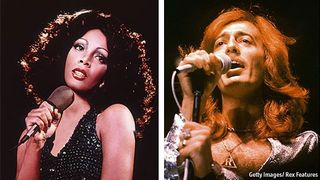
AS A genre, disco gets a rotten press. It tends to conjure up images of hairy chests and medallions, and the worst kind of dad-dancing: a roll of the hands and a finger thrust from the floor to the sky. It was, said Bethann Hardison, a black runway model in the 1970s, “created so that white people could dance”.

Such a caricature does it no justice. The beat might be the simplest 4/4, but the origins are more complex. To understand where disco came from, and why it should be considered culturally important, one must first place oneself in dysfunctional, dangerous 1970s New York. If punk rock, born of a similar time and place, and hip-hop, a little younger, are the musical styles that define that city’s disaffected youth, then they have a sibling in disco. “Disco was born, maggot like, from the rotten remains of the Big Apple”, wrote Peter Shapiro in “Turn the Beat Around” a history of the genre.

The release it gave was different though. While punk was like a child throwing a tantrum and hip hop was about fierce rhetoric, disco meant escaping reality. The outrageous clothes and ostentatious dance moves took the mind off of the gang violence and unemployment. For the city’s gays, who were still striving for acceptance, it was particularly liberating.

The disco beat quickly spread around the world. By the time that Donna Summer released “I Feel Love” in 1977, it was mainstream. Everyone was at it. Even the Rolling Stones released a lamentable disco attempt, “Hot Stuff”, in 1976. Nonetheless, “I Feel Love” was one of the most influential records of the decade. Produced by Giorgio Moroder, it layered Moog synthesiser tracks (until then the preserve of avant garde electronica bands such as Kraftwerk) to create one of the most compelling dance tunes ever released. It is also the exact moment that disco sprouted the branch that evolved into house music.

Trees of Life: A Visual History of Evolution

TreesoflifeMaria Popova in Brain Pickings:

Since the dawn of recorded history, humanity has been turning to the visual realm as a sensemaking tool for the world and our place in it, mapping and visualizing everything from the body to the brain to the universe toinformation itself. Trees of Life: A Visual History of Evolution (public library) catalogs 230 tree-like branching diagrams, culled from 450 years of mankind’s visual curiosity about the living world and our quest to understand the complex ecosystem we share with other organisms, from bacteria to birds, microbes to mammals.

Though the use of a tree as a metaphor for understanding the relationships between organisms is often attributed to Darwin, who articulated it in his Origin of Species by Means of Natural Selection in 1859, the concept, most recently appropriated in mapping systems and knowledge networks, is actually much older, predating the theory of evolution itself. The collection is thus at once a visual record of the evolution of science and of its opposite — the earliest examples, dating as far back as the sixteenth century, portray the mythic order in which God created Earth, and the diagrams’ development over the centuries is as much a progression of science as it is of culture, society, and paradigm.

How Markets Crowd Out Morals

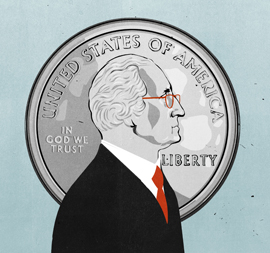
Ndf_37.3_quarterA Boston Review forum on the arguments made by Michael Sandel in What Money Can’t Buy: The Moral Limits of Markets, with responses from Richard Sennett; Matt Welch; Anita L. Allen; Debra Satz; Herbert Gintis; Lew Daly; Samuel Bowles; Elizabeth Anderson; and John Tomasi. From Michael Sandel's lead piece:

We live in a time when almost anything can be bought and sold. Markets have come to govern our lives as never before. But are there some things that money should not be able to buy? Most people would say yes.

Consider friendship. Suppose you want more friends than you have. Would you try to buy some? Not likely. A moment’s reflection would lead you to realize that it wouldn’t work. A hired friend is not the same as a real one. You could hire people to do some of the things that friends typically do—picking up your mail when you’re out of town, looking after your children in a pinch, or, in the case of a therapist, listening to your woes and offering sympathetic advice. Until recently, you could even bolster your online popularity by hiring some good-looking “friends” for your Facebook page—for $0.99 per friend per month. (The phony-friend Web site was shut down after it emerged that the photos being used, mostly of models, were unauthorized.) Although all of these services can be bought, you can’t actually buy a friend. Somehow, the money that buys the friendship dissolves it, or turns it into something else.

This fairly obvious example offers a clue to the more challenging question that concerns us: Are there some things that money can buy but shouldn’t? Consider a good that can be bought but whose buying and selling is morally controversial—a human kidney, for example. Some people defend markets in organs for transplantation; others find such markets morally objectionable. If it’s wrong to buy a kidney, the problem is not that the money dissolves the good. The kidney will work (assuming a good match) regardless of the monetary payment. So to determine whether kidneys should or shouldn’t be up for sale, we have to engage in a moral inquiry. We have to examine the arguments for and against organ sales and determine which are more persuasive.

So it seems, at first glance, that there is a sharp distinction between two kinds of goods: the things (like friends) that money can’t buy, and the things (like kidneys) that money can buy but arguably shouldn’t. But this distinction is less clear than it first appears.

The Faster-Than-Light Telegraph That Wasn’t

Mistakes-faster-than-light-telegraph-that-wasnt_2David Kaiser in Scientific American:

Physicists had long known that the two flavors of polarization—plane or circular—were intimately related. Plane-polarized light could be used to create circularly polarized light, and vice versa. For example, a beam of H-polarized light consisted of equal parts R– and L-polarized light, in a particular combination, just as a beam of R-polarized light could be broken down into equal parts H and V. Likewise for individual photons: a photon in state R, for example, could be represented as a special combination of states H and V. If one prepared a photon in state R but chose to measure plane rather than circular polarization, one would have an equal probability of finding H or V: a single-particle version of Schrödinger’s cat.

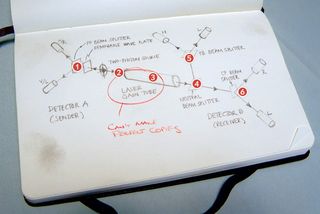
In Herbert's imagined set-up, one physicist, Alice (“Detector A” in the illustration), could choose to measure either plane or circular polarization of the photon headed her way [1]. If she chose to measure plane polarization, she would measure H and Voutcomes with equal probability. If she chose to measure circular polarization, she would find R and L outcomes with equal probability.

In addition, Alice knows that because of the nature of the source of photons, each photon she measures has an entangled twin moving toward her partner, Bob. Quantum entanglement means that the two photons behave like two sides of a coin: if one is measured to be in state R, then the other must be in state L; or if one is measured in state H, the other must be in state V. The kicker, according to Bell's theorem, is that Alice's choice of which type of polarization to measure (plane or circular) should instantly affect the other photon, streaming toward Bob [2]. If she chose to measure plane polarization and happened to get the result H, then the entangled photon heading toward Bob would enter the state V instantaneously. If she had chosen instead to measure circular polarization and found the result R, then the entangled photon instantly would have entered the state L.

Next came Herbert's special twist.

How Bad Is It?

Jasper-johnsGeorge Scialabba in New Inquiry:

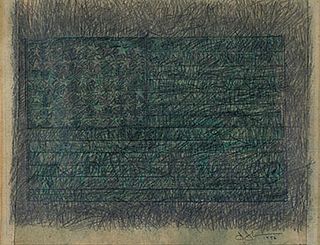
Pretty bad. Here is a sample of factlets from surveys and studies conducted in the past twenty years. Seventy percent of Americans believe in the existence of angels. Fifty percent believe that the earth has been visited by UFOs; in another poll, 70 percent believed that the U.S. government is covering up the presence of space aliens on earth. Forty percent did not know whom the U.S. fought in World War II. Forty percent could not locate Japan on a world map. Fifteen percent could not locate the United States on a world map. Sixty percent of Americans have not read a book since leaving school. Only 6 percent now read even one book a year. According to a very familiar statistic that nonetheless cannot be repeated too often, the average American’s day includes six minutes playing sports, five minutes reading books, one minute making music, 30 seconds attending a play or concert, 25 seconds making or viewing art, and four hours watching television.

Among high-school seniors surveyed in the late 1990s, 50 percent had not heard of the Cold War. Sixty percent could not say how the United States came into existence. Fifty percent did not know in which century the Civil War occurred. Sixty percent could name each of the Three Stooges but not the three branches of the U.S. government. Sixty percent could not comprehend an editorial in a national or local newspaper.

Intellectual distinction isn’t everything, it’s true. But things are amiss in other areas as well: sociability and trust, for example. “During the last third of the twentieth century,” according to Robert Putnam in Bowling Alone, “all forms of social capital fell off precipitously.” Tens of thousands of community groups – church social and charitable groups, union halls, civic clubs, bridge clubs, and yes, bowling leagues — disappeared; by Putnam’s estimate, one-third of our social infrastructure vanished in these years. Frequency of having friends to dinner dropped by 45 percent; card parties declined 50 percent; Americans’ declared readiness to make new friends declined by 30 percent. Belief that most other people could be trusted dropped from 77 percent to 37 percent. Over a five-year period in the 1990s, reported incidents of aggressive driving rose by 50 percent — admittedly an odd, but probably not an insignificant, indicator of declining social capital.

Still, even if American education is spotty and the social fabric is fraying, the fact that the U.S. is the world’s richest nation must surely make a great difference to our quality of life?

Money and Morality

From The Guardian:

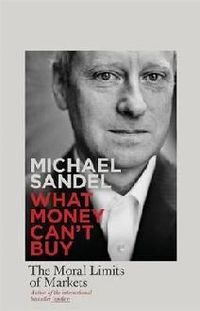
GetImageSomething curious happened when I tried to potty train my two-year-old recently. To begin with, he was very keen on the idea. I'd read that the trick was to reward him with a chocolate button every time he used the potty, and for the first day or two it went like a breeze – until he cottoned on that the buttons were basically a bribe, and began to smell a rat. By day three he refused point-blank to go anywhere near the potty, and invoking the chocolate button prize only seemed to make him all the more implacable. Even to a toddler's mind, the logic of the transaction was evidently clear – if he had to be bribed, then the potty couldn't be a good idea – and within a week he had grown so suspicious and upset that we had to abandon the whole enterprise. It's a pity I hadn't read What Money Can't Buy before embarking, because the folly of the chocolate button policy lies at the heart of Michael Sandel's new book. “We live at a time when almost everything can be bought and sold,” the Harvard philosopher writes. “We have drifted from having a market economy, to being a market society,” in which the solution to all manner of social and civic challenges is not a moral debate but the law of the market, on the assumption that cash incentives are always the appropriate mechanism by which good choices are made. Every application of human activity is priced and commodified, and all value judgments are replaced by the simple question: “How much?”

Sandel leads us through a dizzying array of examples, from schools paying children to read – $2 (£1.20) a book in Dallas – to commuters buying the right to drive solo in car pool lanes ($10 in many US cities), to lobbyists in Washington paying line-standers to hold their place in the queue for Congressional hearings; in effect, queue-jumping members of the public. Drug addicts in North Carolina can be paid $300 to be sterilised, immigrants can buy a green card for $500,000, best man's speeches are for sale on the internet, and even body parts are openly traded in a financial market for kidneys, blood and surrogate wombs. Even the space on your forehead can be up for sale. Air New Zealand has paid people to shave their heads and walk around wearing temporary tattoos advertising the airline.

More here.

‘What Is’ Meets ‘What if’: The Role of Speculation in Science

From The New York Times:

GuessWoody Allen once said that when you do comedy, you sit at the children’s table. The same might be said of speculation in science.

And yet speculation is an essential part of science. So how does it fit in? Two recent publications about the misty depths of canine and human history suggest some answers. In one, an international team of scientists concludes that we really don’t know when and where dogs were domesticated. Greger Larson of the University of Durham, in England, the first of 20 authors of that report, said of dog DNA, “It’s a mess.” In the other, Pat Shipman, an independent scientist and writer, suggests that dogs may have helped modern humans push the Neanderthals out of existence and might even have helped shape human evolution. Is one right and the other wrong? Are both efforts science — one a data-heavy reality check and the other freewheeling speculation? The research reported by Dr. Larson and his colleagues in The Proceedings of the National Academy of Sciences is solid science — easily judged by peers, at any rate. The essay by Dr. Shipman is not meant to come to any conclusion but to prompt thought and more research. It, too, will be judged by other scientists, and read by many nonscientists. But how is one to judge the value of speculation? The questions readers ought to ask when confronting a “what-if” as opposed to “what-is” article are: Does the writer make it clear what is known, what is probable, and what is merely possible?

More here.

Monday, May 28, 2012

Sunday, May 27, 2012

How combat changed Paul Fussell, and how Fussell changed American letters

Stephen Metcalf in Slate:

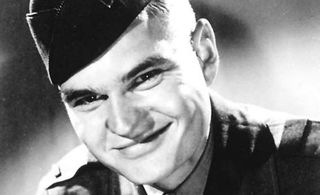
120525_DIL_Fussell-EX.jpg.CROP.rectangle3-largeFussell had written a guide to poetic form and an equally fine critical life of Samuel Johnson when, in 1975, he broke out as an intellectual celebrity with The Great War and Modern Memory, which won the National Book Award and National Book Critics Circle Award. The Great War tells the story of the destruction of the 19th century —of its class system and its faith in progress; really, of any way of living predicated on a stable system of value —by World War I. Out of the mass experience of pointless death, a new way of speaking and writing, devoid of euphemism, arose, a plain style we associate with Hemingway (“Abstract words such as glory, honor, courage, or hallow were obscene beside the concrete names of villages, the number of roads, the names of rivers, the number of regiments and dates”) but in England may just as easily evoke Siegfried Sassoon, Wilfred Owen, Robert Graves, and Edmund Blunden —writers who saw action in the Great Fuck-Up, as infantrymen soon called it, writers who, as a result of firsthand acquaintance with the trenches, sought a way of making literature without any recourse to elevated literary diction.

The Great War chronicles the loss of the old rhetoric, of high pieties, of sacrifice and roseate dawns, in favor of “blood, terror, agony, madness, shit, cruelty, murder, sell-out, pain and hoax,” as Fussell lists it at one point; the sound of “ominous gunfire heard across water.” Fussell himself fought in World War II, and himself wrote in a candid style. “I am saying,” he concludes one chapter in The Great War, as if replying to a margin note from a junior editor, “that there seems to be one dominating form of modern understanding; that it is essentially ironic; and that it originates largely in the application of mind and memory to the events of the Great War.”

More here.

Horseshoe Crabs and Velvet Worms

Constance Casey in the New York Times:

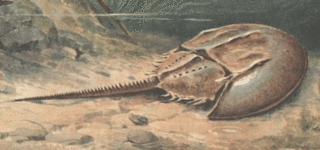
ScreenHunter_15 May. 28 11.59Richard Fortey has spent most of his life looking at fossils, the imprints of the skeletons of the very thoroughly dead. Here he sets out — like a more deeply thoughtful David Attenborough, without the cameras — to describe the distinguished groups of organisms that are still recognizable and thriving after millions and millions of years. The horseshoe crabs, velvet worms and other venerable creatures he encounters are Earth’s true conservatives. “We’ve devised a system that works very well for our niche,” they would tell us. “No big changes necessary. Maybe just a tweak at the molecular level.” As Fortey says, “to look at a living horseshoe crab is to see a portrait of a distant ancestor repainted by time, but with many of its features still unchanged.”

Fortey’s dozen or so subjects have survived the many cataclysms the planet has thrown at them over the past 450 million years. As if repeated earthquakes, volcanic eruptions and ice sheets weren’t enough, there were two mass-extinction events. The best known was the disaster 65 million years ago that led to the downfall of the dinosaurs. We’re less familiar with the more devastating earlier extinction — about 251 million years ago — that erased 90 percent of life from the sea and almost as large a percentage of the little things struggling on land. The horseshoe crab made it through; its fossil remains date from 450 million years ago.

Somewhere then, perhaps at the bottom of a poisoned sea, with tsunamis rolling above, some organisms stayed alive, including something we would recognize as the horseshoe crab if it clambered up onto the beach. It’s astonishing to consider that the lucky few — arthropods, snails, clams, jellyfish, worms and a few small four-legged creatures on land — that survived the worst extinction gave rise to everything that followed, including us.

More here.

Can science explain why we tell stories?

Adam Gopnik in The New Yorker:

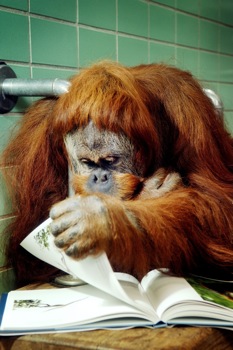
Monkey-readingOf all the indignities visited on the writer’s life these days, none is more undignified than the story or pitch meeting, a ritual to which every writer, from the gazillion-dollar screenwriter to the lowly essayist, will sooner or later submit. “So tell us the story,” the suits say after a few minutes of banter and schmooze, and the writer gulps and jumps in. “Well, uh, it’s sort of, like—it’s sort of a fish out of water story…“and then as one pale incident succeeds the next, the tycoons emit a slow burn of polite disbelief and boredom, ending with a forced smile and a we’ll-get-back-to-you. Sometime. Soon…

And yet something interesting, even encouraging, is revealed in this ritual, all its humiliations aside. Stories, more even than stars or spectacle, are still the currency of life, or commercial entertainment, and look likely to last longer than the euro. There’s no escaping stories, or the pressures to tell them. And so the pathetic story-pitcher turns to pop science—to Jonathan Gottschall’s new book, “The Storytelling Animal,” for instance— for some scientific, or at least speculative, ideas about what makes stories work and why we like them. Gottschall’s encouraging thesis is that human beings are natural storytellers—that they can’t help telling stories, and that they turn things that aren’t really stories into stories because they like narratives so much. Everything—faith, science, love—needs a story for people to find it plausible. No story, no sale.

More here.

Dog domestication may have helped humans thrive while Neandertals declined

Pat Shipman in American Scientist:

German-shepherdWe all know the adage that dogs are man’s best friend. And we’ve all heard heartwarming stories about dogs who save their owners—waking them during a fire or summoning help after an accident. Anyone who has ever loved a dog knows the amazing, almost inexpressible warmth of a dog’s companionship and devotion. But it just might be that dogs have done much, much more than that for humankind. They may have saved not only individuals but also our whole species, by “domesticating” us while we domesticated them.

One of the classic conundrums in paleoanthropology is why Neandertals went extinct while modern humans survived in the same habitat at the same time. (The phrase “modern humans,” in this context, refers to humans who were anatomically—if not behaviorally—indistinguishable from ourselves.) The two species overlapped in Europe and the Middle East between 45,000 and 35,000 years ago; at the end of that period, Neandertals were in steep decline and modern humans were thriving. What happened?

A stunning study that illuminates this decisive period was recently published inScience by Paul Mellars and Jennifer French of Cambridge University. They argue, based on a meta-analysis of 164 archaeological sites that date to the period when modern humans and Neandertals overlapped in the Dordogne region of southwest France, that the modern-human population grew so rapidly that it overwhelmed Neandertals with its sheer numbers.

More here.

How FBI Entrapment Is Inventing ‘Terrorists’ – and Letting Bad Guys Off the Hook

Rick Perlstein in Rolling Stone:

ScreenHunter_12 May. 27 19.45This past October, at an Occupy encampment in Cleveland, Ohio, “suspicious males with walkie-talkies around their necks” and “scarves or towels around their heads” were heard grumbling at the protesters' unwillingness to act violently. At meetings a few months later, one of them, a 26-year-old with a black Mohawk known as “Cyco,” explained to his anarchist colleagues how “you can make plastic explosives with bleach,” and the group of five men fantasized about what they might blow up. Cyco suggested a small bridge. One of the others thought they’d have a better chance of not hurting people if they blew up a cargo ship. A third, however, argued for a big bridge – “Gotta slow the traffic that's going to make them money” – and won. He then led them to a connection who sold them C-4 explosives for $450. Then, the night before the May Day Occupy protests, they allegedly put the plan into motion – and just as the would-be terrorists fiddled with the detonator they hoped would blow to smithereens a scenic bridge in Ohio’s Cuyahoga Valley National Park traversed by 13,610 vehicles every day, the FBI swooped in to arrest them.

Right in the nick of time, just like in the movies. The authorities couldn’t have more effectively made the Occupy movement look like a danger to the republic if they had scripted it. Maybe that's because, more or less, they did.

The guy who convinced the plotters to blow up a big bridge, led them to the arms merchant, and drove the team to the bomb site was an FBI informant. The merchant was an FBI agent. The bomb, of course, was a dud. And the arrest was part of a pattern of entrapment by federal law enforcement since September 11, 2001, not of terrorist suspects, but of young men federal agents have had to talk into embracing violence in the first place.

More here.

Sunday Poem

Shanghai Traffiic

Morning traffic makes excuses at every changing light.
Now the whole world is jealous of Shanghai, humming
And hawing, purring and growling. One heart beats faster
As it runs the red, a double-decker bus screams with rage:
A spluttering of outrage, a fit of blue pique. There is only
One life, you fool, the conductor says, as he pummels
The green bonnet of something smaller than mankind.
This morning the whole world should be one Shanghai,
Quick-witted, light-footed, like the handsome young novelists
Having cocktails at the Glamour Bar, beautiful as Shanghai
That turns its proud head to foreigners, not caring a damn
As the fish rise in the canal seine-net, as the scholar turns
To split an atom. I turn into the Nanking Road and find
A sheet of luminescent Venetian glass, colours of agave
And opal, texture of oriental cloth upon the window of morning,
Upon the face of my Lord Byron. Traffic like this is worth it –
Worth it to have so many humans in the nest of life together.
Though these are mostly the swollen lights and embarrassed tails
Of saloon and estate Fords, of aluminium grills, forgotten marques,
Stray Bentleys and garaged ZV plates. A mist of life,
An apron of colour, a human luminescence, levitates over
The asphalt of Shanghai. Here, the sin of the world is bleached
With business. It is history that the traffic circles round,
History that pulls the night-grill from its earth-lock and begins
To trade. Such morning traffic: here in Shanghai it teaches me
improvisations of perfect form, the beginnings of
Yeatsean indigo, a shadow disturbed, the colour of beautiful.
.

by Thomas McCarthy
publisher: PIW, 2010

Saturday, May 26, 2012

B. F. Skinner’s ideas are making an unlikely comeback

B. F. Skinner’s notorious theory of behavior modification was denounced by critics 50 years ago as a fascist, manipulative vehicle for government control. But Skinner’s ideas are making an unlikely comeback today, powered by smartphone apps that are transforming us into thinner, richer, all-around-better versions of ourselves. The only thing we have to give up? Free will.

David H. Freedman in The Atlantic:

ScreenHunter_11 May. 27 15.24Most of us know someone who lost weight years ago and has kept it off, and we all see celebrities who claim to have slimmed down for good using plain old diet and exercise, from Bill Clinton to Drew Carey to Jennifer Hudson. But we keep hearing that the vast majority of us—98 percent is a figure that gets thrown about—can’t expect to do the same.

Alcoholics don’t seem to face such dismal prospects, thanks to Alcoholics Anonymous and similar multistep programs, which are widely regarded as effective treatments. With obesity, we’re apparently at a loss for a clear answer. Fads like the Atkins diet slowly fade in popularity after dieters watch the weight return. We’re left with the impression that the techniques needed to permanently lose weight don’t exist, or apply to only a tiny percentage of the population, who must be freaks of willpower or the beneficiaries of exotic genes. Scientists and journalists have lined up in recent years to pronounce the diet-and-exercise regimen a nearly lost cause—a view argued in no fewer than three cover stories and another major article in The New York Times Magazine over the past 10 years, and in a cover story in this magazine two years ago.

All of which is odd, because weight-loss experts have been in fairly strong agreement for some time that a particular type of diet-and-exercise program can produce modest, long-term weight loss for most people. But this program tends to be based in clinics operated by relatively high-priced professionals, and requires a significant time commitment from participants—it would be as if the only way to get treated for alcoholism were to check into the Betty Ford Center. The problem is not that we don’t know of a weight-control approach that works; it’s that what works has historically been expensive and inconvenient.

More here.

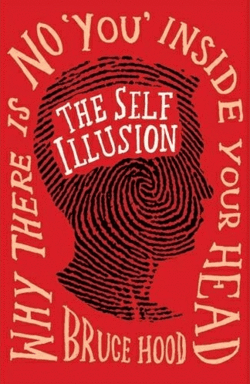
The Self Illusion: An Interview With Bruce Hood

Jonah Lehrer in Wired:

ScreenHunter_10 May. 27 14.19LEHRER: The title of The Self Illusion is literal. You argue that the self – this entity at the center of our personal universe – is actually just a story, a “constructed narrative.” Could you explain what you mean?

HOOD: The best stories make sense. They follow a logical path where one thing leads to another and provide the most relevant details and signposts along the way so that you get a sense of continuity and cohesion. This is what writers refer to as the narrative arc – a beginning, middle and an end. If a sequence of events does not follow a narrative, then it is incoherent and fragmented so does not have meaning. Our brains think in stories. The same is true for the self and I use a distinction that William James drew between the self as “I” and “me.” Our consciousness of the self in the here and now is the “I” and most of the time, we experience this as being an integrated and coherent individual – a bit like the character in the story. The self which we tell others about, is autobiographical or the “me” which again is a coherent account of who we think we are based on past experiences, current events and aspirations for the future.

The neuroscience supports the claim that self is constructed. For example, Michael Gazzaniga demonstrated that spilt-brain patients presented with inconsistent visual information, would readily confabulate an explanation to reconcile information unconsciously processed with information that was conscious. They would make up a story. Likewise, Oliver Sacks famously reported various patients who could confabulate accounts to make sense of their impairments. Ramachandran describes patients who are paralyzed but deny they have a problem. These are all extreme clinical cases but the same is true of normal people. We can easily spot the inconsistencies in other people’s accounts of their self but we are less able to spot our own, and when those inconsistencies are made apparent by the consequences of our actions, we make the excuse, “I wasn’t myself last night” or “It was the wine talking!” Well, wine doesn’t talk and if you were not your self, then who were you and who was being you?

More here.