
Category: Recommended Reading
Searching for truth in a post-green world
Paul Kingsnorth in Orion Magazine:

1. Technological progress is carrying us to inevitable disaster.
2. Only the collapse of modern technological civilization can avert disaster.
3. The political left is technological society’s first line of defense against revolution.
4. What is needed is a new revolutionary movement, dedicated to the elimination of technological society.
Kaczynski’s prose is sparse, and his arguments logical and unsentimental, as you might expect from a former mathematics professor with a degree from Harvard. I have a tendency toward sentimentality around these issues, so I appreciate his discipline. I’m about a third of the way through the book at the moment, and the way that the four arguments are being filled out is worryingly convincing. Maybe it’s what scientists call “confirmation bias,” but I’m finding it hard to muster good counterarguments to any of them, even the last. I say “worryingly” because I do not want to end up agreeing with Kaczynski. There are two reasons for this. Firstly, if I do end up agreeing with him—and with other such critics I have been exploring recently, such as Jacques Ellul and D. H. Lawrence and C. S. Lewis and Ivan Illich—I am going to have to change my life in quite profound ways. Not just in the ways I’ve already changed it (getting rid of my telly, not owning a credit card, avoiding smartphones and e-readers and sat-navs, growing at least some of my own food, learning practical skills, fleeing the city, etc.), but properly, deeply. I am still embedded, at least partly because I can’t work out where to jump, or what to land on, or whether you can ever get away by jumping, or simply because I’m frightened to close my eyes and walk over the edge. I’m writing this on a laptop computer, by the way. It has a broadband connection and all sorts of fancy capabilities I have never tried or wanted to use. I mainly use it for typing. You might think this makes me a hypocrite, and you might be right, but there is a more interesting observation you could make. This, says Kaczynski, is where we all find ourselves, until and unless we choose to break out. In his own case, he explains, he had to go through a personal psychological collapse as a young man before he could escape what he saw as his chains. He explained this in a letter in 2003:
I knew what I wanted: To go and live in some wild place. But I didn’t know how to do so. . . . I did not know even one person who would have understood why I wanted to do such a thing. So, deep in my heart, I felt convinced that I would never be able to escape from civilization. Because I found modern life absolutely unacceptable, I grew increasingly hopeless until, at the age of 24, I arrived at a kind of crisis: I felt so miserable that I didn’t care whether I lived or died. But when I reached that point a sudden change took place: I realized that if I didn’t care whether I lived or died, then I didn’t need to fear the consequences of anything I might do. Therefore I could do anything I wanted. I was free!
More here.
What will your next body be like?
Ian Pearson in Timeguide:

http://timeguide.wordpress.com/2012/01/29/how-to-live-forever/
What I want to focus on this time is that you don’t have to die to benefit. If your mind is so well connected, you could inhabit a new body, without having to vacate your existing one. Furthermore, there really isn’t much to stop you getting a new body, using that, and dumping your old one in a life support system. You won’t do that, but you could. Either way, you could get a new body or an extra one, and as I asked in passing in my last blog, what will your new body look like?
Firstly, why would you want to do this? Well, you might be old, suffering the drawbacks of ageing, not as mobile and agile as you want to be, you might be young, but not as pretty or fit as you want to be, or maybe you would prefer to be someone else, like your favourite celebrity, a top sports hero, or maybe you’d prefer to be a different gender perhaps? Or maybe you just generally feel you’d like to have the chance to start over, do it differently. Maybe you want to explore a different lifestyle, or maybe it is a way of expressing your artistic streak. So, with all these reasons and more, there will be plenty of demand for wanting a new body and a potentially new life.
More here.
Thursday Poem
You Are Not
You are not in the tulips,
not in their flailing stems
or shrivelled yellow petals
that alive you’d have painted;
not in the pearly wintry sky
or the scarred slopes of the hill
that before your legs failed
you’d have climbed;
not in the spiky firs
or eddies and swirls of the river
or in its still sandy pools
where in your youth
you’d have swum;
not in the beginning drizzle of snow,
or in the deer that hangs
in the larder with black hooves
and long delicate legs,
not in its heart or liver
that we ate last night for supper
and you would have relished.
I don’t know where you are
who loved all the things
I love; who I remember
hauling out of the bath –
tugging on arms I was afraid
of pulling from their sockets;
then drying and helping to dress
and guiding down slippery stone steps
to watch flycatcher chicks
leaving the nest, hearing
the peep peep peep
of their mother’s warning call.
.
Vicki Feaver
from Like a Fiend Hid in a Cloud
publisher: Jonathan Cape, London, 2013
The Next Left

Jake Blumgart interviews Bhaskar Sunkara, in Boston Review:
Jake Blumgart: Who is Jacobin’s intended audience? You don’t really seem to be trying to engage with conservatives.
Bhaskar Sunkara: The intended audience is connected to the two distinct goals ofJacobin. The first is an intra-left goal to reassert the importance of class and Marxist analysis in the context of an increasingly anarchist-inflected left. We aren’t dogmatic and orthodox, we don’t think the old ways of organizing and thinking are the way forward, but we’re committed to adapting those ways of thinking to new material realities.
But there is another goal, which is more directed to the general public and—I don’t think I’ve put it this crassly before—to liberals: articulating radical left ideas and doing so in a way that is clear and accessible. The pieces are meant to be uncompromising in content but informed, accessible, and in good faith. Over the course of the project, this attempt has been wildly successful. We may get furious cries from the left for getting attention from people such as Christopher Hayes, Reihan Salam, Andrew Sullivan, and whatnot. But that’s part of our intended purpose. We don’t want a world where Hayes and Katrina vanden Heuvel are the de facto left in this country. That’s not saying anything against them; they are principled social democrats. That’s a lot for the American context. But by existing and getting the amount of mass media attention we get — fromRolling Stone to the New York Times —we’re visible reminders of a long-forgotten, and uncompromisingly socialist, political tradition. We are also trying to bring a radical perspective on politics and economics to our predominately young audience, while other publications from our generation are focused more on culture. It’s very much in the tradition of the Second International radicals—Kautsky, Lenin, Luxemburg, and their contemporaries weren’t academics.
That’s not saying that those frameworks don’t have their place, and I love publications like n+1 and the like, but I’m talking about poverty critiques that feel like they have to start with a hook from The Wire. I think that’s bullshit. I think we can just write the essay on poverty and include a few line graphs in it. I think the left can do with a dose of empiricism and that our ideas can stand-up next to others by virtue of their seriousness.
Just Deserts: An Interview with Danielle S. Allen
Justin E. H. Smith interviews Danielle S. Allen in Cabinet magazine:
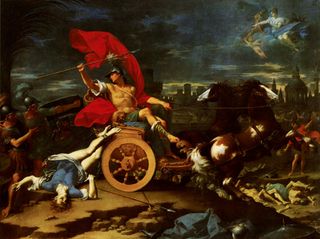
Your book The World of Prometheus offers a perfect way of giving historical depth to this issue on punishment, but it may also be interesting to reflect on how punishment in ancient Athens is relevant to our understanding of punishment in the contemporary world and, in particular, in the US. I’ve read both Prometheus andTalking to Strangers, your more recent book on Brown v. Board of Education, and one thing that struck me is how many of the same themes run through both books. You observe in Prometheus that the value of approaching punishment through the Greeks is that we’re able to “sharpen our thinking about punishment on the stone of the unfamiliar ancient world.” Does this remain for you the ultimate reason for studying ancient conceptions of punishment: that it gives us a point of access for understanding the problem of punishment itself by looking at an unfamiliar conception of it?
I can tell you the origin story of the book, which is simply that, as an undergraduate, I took a class on Athenian politics in which we read a lot of the speeches that were given in Athenian law courts. I was really taken aback by the fact that there was very little mention of imprisonment in those speeches, and I suddenly realized that I couldn’t imagine a world where prisons weren’t a major part of how we think about punishment. That captivated me, and I wanted to understand a world where imprisonment was not the dominant mode of understanding punishment. In that regard, the origin of the book was absolutely the shock of discovering, by looking at the ancient world, that our world is contingent, and that one particular contingency is the degree to which we use incarceration. It bears some thinking as to how we got there and what a world without extensive incarceration looks like.
Well, that might be right about our contemporary context; the ancient story is somewhat different.
Robert Pinsky reads Thomas Hardy’s “The Oxen”
Irving Berlin dealt with Christmas expectations by writing a song about being in California: The little-known verse to “White Christmas” makes it clear that the dream of snow and sleighbells is set in “Beverly Hills, L.A.” where “the orange and palm trees sway.”
In an entirely different way, Thomas Hardy attains surprise as well as nostalgia by basing his Christmas poem on a country legend. Hardy shows respect for rural customs and the kind of unorthodox beliefs that some might call “superstition.” The respect, along with his wry, gentle detachment, both gain a kind of authority from the regional terms “barton” (a farmyard) and “coomb” (a valley).
Here again, in a Slate tradition, is Hardy's “The Oxen.”
‘Django Unchained’: A Postracial Epic?

Hillary Crosley in The Root:
As all of the Django Unchained reviews hit the Internet, I'm sure plenty of African Americans will list why they hate Quentin Tarantino's new film about a slave's journey for revenge — but not me. A friend and I recently attended a screening for the film, which opens on Christmas Day, followed by an awkward question-and-answer session with the director. We were two of perhaps 10 black people in the theater — that's what makes what happened next so awkward.
In the film, Django (Jamie Foxx) is purchased by Dr. King Schultz (Christoph Waltz), a German dentist-turned-bounty hunter, and the two pair up to collect the bodies and ransoms of outlaws across the South. Because Django is such a natural, Schultz asks him to work with him through the winter in exchange for his help finding the former slave's wife, Broomhilda (Kerry Washington), who was sold to a different plantation. The search for Hildy leads the duo to the plantation of Calvin Candie (Leonardo DiCaprio) — which he shares with his head house slave, Stephen (Samuel L. Jackson) — and bloody drama ensues.
After the film ended, Tarantino began the interview with Peter Bogdanovich, the elderly director best known for 1971's The Last Picture Show, when a black woman interrupted their conversation, saying, “A lot of black people are not going to like this movie. I'm about to have a heart attack.” Then a few audience members began to heckle Tarantino from the balcony, shouting: “This is bulls–t.” (The director invited his detractors to offer their comments during the open session after the interview while admitting that Django dealt with heavy subject matter.)
“That's the thing about this film — we're dealing with virgin territory with this kind of story and this history,” Tarantino said. “It's a rough movie. As bad as some of the s–t is in this film, a lot worse s–t was going on. This is the nice version.”
Wednesday, December 26, 2012
Can the Indian Journalist and Media Proprietor Survive this Gilded Age?

Vinod Jose in Caravan:
A FEW WEEKS AGO, I went to a public function at the India International Centre in New Delhi. The audience included several prominent cabinet ministers, the heads of some of India’s foremost business families, and the usual retinue of senior journalists and former diplomats. Almost all of them were a generation or two older than me, and before the function formally began, the room buzzed with gestures of bonding and comradeship—like an alumni reunion or a gathering of long-lost friends. Men in their 50s, 60s and 70s hugged and exchanged good wishes; a few even pinched at each other’s potbellies.
After the event had got under way, a slim older man with a recognisable face hurried into the auditorium. Almost all the chairs were filled, except one or two stray seats next to outsiders like me. As this gentleman parked himself in the seat adjacent to mine, his identity clicked in my mind: he’s a lobbyist, I thought, but he calls himself a public-relations man. I had often spotted him hurrying past in the hallways of North and South blocks, and at the offices of other ministries in Shastri, Krishi and Rail Bhavans. But he’s also a regular face on television screens, where I had paid closer attention to his ruby-studded eyeglass cords and seductive hand movements, and the way his brow furrowed while stating an unconventional argument or making a difficult defence of some policy or person.
On the stage, a cabinet minister was making a rather dull speech, and like me, the lobbyist became distracted. He punched out messages on his Blackberry Curve and began scrolling through SMSes on a worn-out Nokia. The minister was boring, but my neighbour was far more entertaining. Much to my shame, I let my eyes drift toward to his phones, and for a second I invaded his privacy. He had just sent a BBM on his BlackBerry, which read:
“yes, yes. Met the min in the morning. He says he’s with you on this. But a moment later, he says the difficulties that he faces. Totally a chameleon. Yes, chameleon. Can’t trust him. I missed you being there!”
“Wow,” I thought. Which minister was he talking about? To whom was he sending this message? And what was the issue under discussion? I struggled against my journalistic curiosity-—wisdom prevailed, and I fixed my eyes straight ahead once again.
Why Must the Nation Grieve with God?

Lawrence M. Krauss over at CNN:
All of us who have had children in primary school at one time or another stopped in our tracks when we heard the news, just as President Barack Obama did, as we tried to imagine how we would have coped had something so horrendous happened in our own child's school.
But why must the nation grieve with God? After Newtown, a memorial service was held in which 10 clergy and Obama offered Hebrew, Christian and Muslim prayers, with the president stating: ” 'Let the little children come to me,' Jesus said, 'and do not hinder them. For such belongs to the kingdom of Heaven.' God has called them all home. For those of us who remain, let us find the strength to carry on.”
Why must it be a natural expectation that any such national tragedy will be accompanied by prayers, including from the president, to at least one version of the very God, who apparently in his infinite wisdom, decided to call 20 children between the age of 6 and 7 home by having them slaughtered by a deranged gunman in a school that one hopes should have been a place or nourishment, warmth and growth?
We are told the Lord works in mysterious ways but, for many people, to suggest there might be an intelligent deity who could rationally act in such a fashion and that that deity is worth praying to and thanking for “calling them home” seems beyond the pale.
Let me be clear that there may be many grieving families in Newtown and around the country who have turned to their faith for solace in this difficult time. No caring person would begrudge them this right to ease their pain. But the question that needs to be asked is why, as a nation, do we have to institutionalize the notion that religion must play a central role at such times, with the president as the clergyman-in-chief?
Why We Should Criticize Mo Yan
Perry Link weighs in over at the NYRB blog:
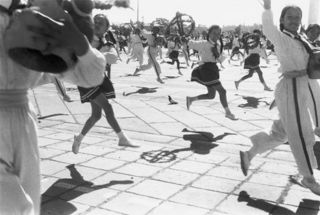
[T]here is another problem with the arguments made by Mo Yan’s defenders, and that is what the Chinese call xifangzhongxinzhuyi. This phrase does not translate easily, so please pardon my awkward rendering as “West-centrism.” The late Chinese physicist and human rights advocate Fang Lizhi was good at pointing out double standards in Western attitudes. When Communist dictatorships fell in Europe, the Cold War was declared “over.” But what about China, North Korea, and Vietnam? If the reverse had happened—if dictatorships had fallen in Asia but persisted in Europe—would Washington and London still have hailed the end of the Cold War? What if Solzhenitsyn, instead of exposing the gulag, had cracked jokes about it? Would we have credited him with “art” on grounds that his intended audience knew all about the gulag and appreciates the black humor? Or might it be, sadly, that only non-whites can win Nobel Prizes writing in this mode?
Pankaj Mishra, in an essay in The Guardian called “Why Salman Rushdie Should Pause before Condemning Mo Yan on Censorship,” acknowledges that Mo Yan has offered deplorable support to China’s rulers. But the main point of Mishra’s essay is that Western writers have also been the handmaidens of powers that oppress people in distant places. He asks, therefore, that people like Rushdie (and me, whom he also mentions) “pause.” I admire some of Mishra’s penetrating observations, for example that “Jane Austen’s elegantly self-enclosed world” depended on unseen “hellish slavery plantations” in the Caribbean. But why does any of this mean that I should “pause” before criticizing Beijing or its acolytes?
Must Salman Rushdie hold his tongue about Beijing until London is squeaky clean? My guess is that Pankaj Mishra, if you could shake him by the shoulders, would say (as I would) that any citizen of any country should be free to criticize any government anywhere that oppresses anyone. But his article does not leave that impression.
Authoritarians in China and elsewhere regularly take the position that foreigners should keep criticisms to themselves; the reasons for their position are obvious. The reasons that Western liberals often take the same position are far less obvious but well worth probing.
How the Mullahs Won: Salman Rushdie’s artistic decline
Isaac Chotiner in The Atlantic:

In this time of protests at American embassies and consulates around the Muslim world, it is helpful to be reminded of the things one dimly remembers—namely, the utter gutlessness and disgrace that characterized so many of the initial responses to the fatwa. Rushdie recounts the reaction of Margaret Thatcher’s British government and much of Fleet Street, with high-ranking officials and columnists complaining about the cost to taxpayers of Rushdie’s security, as well as the reaction of religious leaders (and not only Muslim ones) who seemed more sympathetic to book-burning mobs than to the oh-so-quaint idea of free expression. Many brave independent bookstores, as well as a number of writers, did rally to Rushdie’s cause. But those who didn’t—from Hugh Trevor-Roper (“I would not shed a tear if some British Muslims, deploring his manners, should waylay him in a dark street and seek to improve them”) to John le Carré—come in for well-earned drubbings.
More here.
A New Focus on the ‘Post’ in Post-Traumatic Stress
David Dobbs in The New York Times:
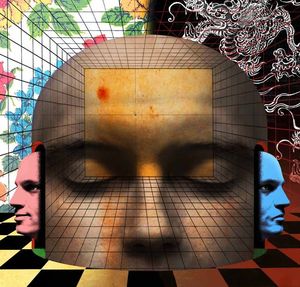
In the first case, Paul Plotsky, a neurobiologist at Emory University, described what happened when he tweaked one of the most widely used models of how maternal separation affects young rats. The model was created in the early 1990s by Dr. Plotsky himself to bring consistency to the way maternal separation is studied. Earlier experiments kept mother and pups apart anywhere from 1 to 24 hours; Dr. Plotsky reset those periods to 15 minutes (the amount of time rat mothers in the wild routinely leave their litters to get food) and 180 minutes (a traumatic separation, he says, because in the wild it would mean that “the mother became a meal or roadkill”). After a 15-minute separation, a mother would typically sniff and lick each pup, then gather and feed them, all the while conversing with them in gentle, ultrasonic warbles. After a 180-minute separation, however, most mothers would dash about emitting panicky squeaks, often stomping on the pups or ignoring them. The pups too would squeak loudly. And for the rest of their lives, they had outsize physiological and behavioral reactions to stress and challenge.
More here.
Tuesday, December 25, 2012
One Pound Fish
Happy Newton’s Day!

In and Out of Fashion
Viviane Sassen in Lensculture:

The retrospective shows images built up like paintings or collages, and which arise in free association and creativity. These are not generally prominent aspects in the cautious climate of today’s largely commercially-driven fashion photography, but they are typical of Viviane Sassen’s fashion photography.
More here.
Greetings, Friends!
Ian Frazier in The New Yorker:

And turn the volume down on Fox,
Mix up a vat of eggnog, brandied,
And fling a last Bronx cheer at Sandy.
Kick out the jams! Swing wide the gates!
… Dear friends, you have indulged our screed.
Please take the spirit for the deed.
Frost wrote of “poetry and power”—
We’re grateful just to shave and shower,
And sleep without four blankets on,
And read by Con Ed light till dawn.
Are we declining? We don’t think so.
Just teetering normally on the brink, so
Let’s link arms and raise a chorus
For all that we’ve got going for us.
The future, true, is trending hot.
We’re headed into who-knows-what.
But we’ll take heart this holy night
That work and love will make it right.
And now doze off with a soft “Hurrah!”
For the world, the Obamas, and the health-care law.
More here.
Monday, December 24, 2012
perceptions
Sughra Raza. Untitled.
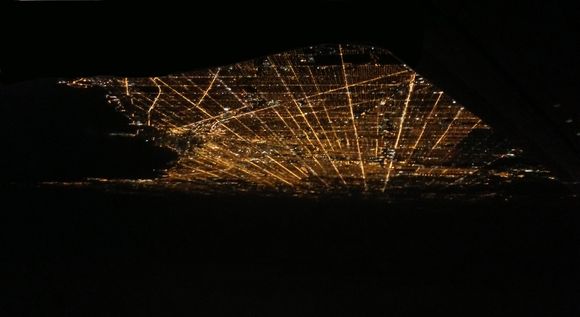
Digital photograph, November, 2012.
With season's greetings and best wishes for the new year to all.
Sunday, December 23, 2012
Rape in India: Reactions to the Protests over the Gang Rape in Delhi
In reaction to recent events in India, Anand Soondas in The Times of India:
Strange theories are floated to explain the depravity of Indian men – from greater access to pornography (that would have made Holland very unsafe for women) to a growing inclination towards noodles (think Taiwan, Singapore, Hong Kong) – but the truth is that at the root of it all lies a culture built around hierarchies, of gender, faith, colour, caste, region.
We are, quite simply, not used to people being equal – dark versus fair, Mongoloid versus Aryan, ‘chinky’ versus large-eyed are demarcations and rankings that have almost been internalized; in many cases institutionalized. Of course, female versus male continues to be the greatest division of all – and one that cuts across all other borders of the mind.
We at The Times of India in our edition today laid out a 6-point action plan to make India safer for women – harsher punishment, sensitization of the police force, setting up of fast-track courts, better patrolling, cleverer use of technology like GPS and CCTVs and a data base of public transport personnel – but what all these measures will not address is the mindset. A mindset that since the time of that deviant philosopher called Manu has refused to see “the weaker sex” as anything but property and the receptacle of male sperms.Though many of my north Indian friends react in agonized protest when I say this, but in the end it is also a cultural and civilisational thing. In those societies that do — or have learnt to — respect women, and consider them as equal, incidence of rape, sexual harassment, molestation is very low, if not absent altogether. In Darjeeling, for instance, police stations across the district will tell you that in the last decade they have come across only a couple of cases.
The Secular Saint

Morgan Meis in The Smart Set:
Arthur Plotnik, a former student of Roth's at the Iowa Writer's Fiction Workshop, tapped into some of those deeper issues in a piece he wrote for The Christian Science Monitor. Arthur Plotnik felt shocked when he first heard the news that Roth was retiring. “I can't help feeling,” Plotnik wrote, “as if the Master — the patron saint of fiction for two generations — has let me down.” Plotnik further recalls how Roth would tell his students that he “imagined fiction to be something like a religious calling, and literature a kind of sacrament.”
I don't think this religious language should be taken lightly. Calling Roth a saint is not exactly a metaphor here — it is something deeper than a metaphor. We have to think about what a saint actually does, what role a saint performs. A saint is a person set apart for their holiness. The saint is still a human being, of course, still a sinner. There is a famous quote by Fr. Bernard Carges that says: “A saint is a sinner who keeps on trying.” But the seriousness of that trying, the relentlessness of that trying, marks the saint as beyond a normal human being. The saint thus becomes a model for everyone else struggling to make difficult choices, to behave well when there are so many motivations for behaving less-than-well. But it is even more complicated than that. It was always acknowledged, from the time of the early Christian saints, that the vast majority of human beings would never achieve a saintly level of holiness. So the saint is both a model and an impossible standard. The fact that the saint takes on the task of living life at a higher and unachievable level adds meaning to the lives of everyone else. For many centuries, human beings seem to have enjoyed stories of the saints as a way to acknowledge their own limits. People have been glad that saints exist and simultaneously glad that they do not have to be saints. There is a tension in those two feelings but not, I think, a contradiction. Confronting a saint is like confronting a better version of yourself, a version that you know you cannot ever become. The confrontation creates feelings of inspiration, then frustration, and then acceptance. Or so it was for many centuries of Western Civilization.
Then, to condense much history into one phrase, secularization happened. Saints didn't go away. The Catholic Church is canonizing people to this day. Mother Theresa lived and died and is well on her way to sainthood. Nevertheless, saints are less important than they once were. They have lost their mainstream social role. And yet, the world still holds a spot in its heart, a saint spot.