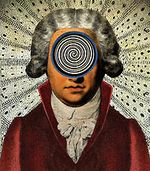
Berndnaut Smilde. Nimbus II. Hotel MariaKapel, Hoorn. 2012.

Lambda print.

New Year's morning:
the ducks on the pond
quack and quack.
by Issa
Rashid Latif Ansari:

· Much against the myth of male lineage, ‘an uninterrupted, intimate and essential maternal connection defines our species.’
· ‘Women are both necessary and sufficient for reproduction, and men are neither. From the production of the first cell (egg) to the development of the fetus and the birth and breast-feeding of the child, fathers can be absent. They can be at work, at home, in prison or at war, living or dead.’
· ‘Your life as an egg actually starts in your mother’s developing ovary, before she was born; you were wrapped in your mother’s fetal body as it developed within your grandmother.’
· ‘After the two of you left Grandma’s womb, you enjoyed the protection of your mother’s prepubescent ovary. Then, sometime between 12 and 50 years after the two of you left your grandmother, you burst forth and were sucked by her fimbriae into the fallopian tube. You glided along the oviduct, surviving happily on the stored nutrients and genetic messages that Mom packed for you.’
· ‘Then, at some point, your father spent a few minutes close by, but then left. A little while later, you encountered some very odd tiny cells that he had shed. They did not merge with you, or give you any cell membranes or nutrients — just an infinitesimally small packet of DNA, less than one-millionth of your mass.’
· ‘Over the next nine months, you stole minerals from your mother’s bones and oxygen from her blood, and you received all your nutrition, energy and immune protection from her. By the time you were born your mother had contributed six to eight pounds of your weight. Then as a parting gift, she swathed you in billions of bacteria from her birth canal and groin that continue to protect your skin, digestive system and general health. In contrast, your father’s 3.3 picograms of DNA comes out to less than one pound of male contribution since the beginning of Homo sapiens 107 billion babies ago.’
· ‘If a woman wants to have a baby without a man, she just needs to secure sperm (fresh or frozen) from a donor (living or dead). The only technology the self-impregnating woman needs is a straw.’
· ‘Recently, the geneticist J. Craig Venter showed that the entire genetic material of an organism can be synthesized by a machine and then put into what he called an “artificial cell.” Mr. Venter started with a fully functional cell, then swapped out its DNA. In doing so, he unwittingly demonstrated that the female component of sexual reproduction, the egg cell, cannot be manufactured, but the male can.’
· ‘If all the men on earth died tonight, the species could continue on frozen sperm. If the women disappear, it’s extinction.’
Keeping Greg’s beautiful expose’ in mind and recollecting the shameful attacks of terrorists on unarmed civilians, recently targeting even a school going girl, Malala (Pakistan), the wanton killing of school children in Newton USA and the latest barbaric act of gang rape (Delhi, India) culminating in an un imaginable torturous death of an innocent victim, a young woman, I feel that it is high time that the women take the driving seat and transform this world from the mayhem created by men to a peaceful, considerate and compassionate planet.
In 2013, I will contribute my humble bit towards this cause. Will you too???
More here. (Note: Thanks to dear friend Javed Jabbar)
Gary Marcus in The New Yorker:
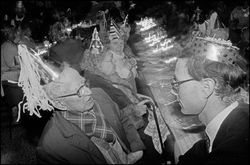
…Learning a new skill can also have unexpected benefits. Recently, the neuroscientist Nina Kraus published a pile of new studies that show that learning about music can facilitate getting better at other things, like language skills and hearing in noisy places—and can do so in ways that last for decades. (Her first studies were with children; other studies are now in progress to see if the same holds true for lessons taken by adults). Music training can help the brain better decompose the elements of sound—in ways that Kraus was able to directly measure in the lab—and seems to improve working memory, too. And, in another recent study, a team of Canadian researchers found evidence that a mere twenty days of music lessons can lead to better scores on a test of verbal intelligence. Moreover, whether or not picking up a new skill makes you smarter, it can certainly make you happier. We can’t all be rock stars. But, as the cliché goes, the journey can be every bit as rewarding as the destination. A New Year’s resolution shouldn’t just be about becoming great at something. It should be about becoming a better or happier or more fulfilled person. Whether your dream is to play piano, cook steak sous-vide, or finally learn to speak French, the lesson from all this new research is clear: there is no better time than now to take on something new. Happy New Year!
More here.
Emma Pearson in The New York Times:
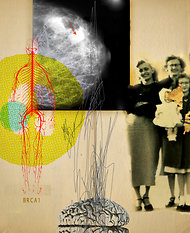
At Stanford, I study artificial intelligence, in which math is used to resolve these sorts of dilemmas. My teachers claim that gaining information never hurts. It can be proved mathematically that a robot with more information never makes worse decisions But we are not robots. Our eyes don’t filigree the world with coordinates and probabilities, and they can be blinded by tears. Still, we, too, display a preference for information. We dislike uncertainty so strongly that we sometimes even prefer bad news. One study of people at risk for a terminal disease found that those who learned they were going to die from it were happier a year later than those who remained uncertain about their fates. Most people have a deep intuition that a life lived cleareyed has inherent value, independent of whether the truth makes you happy. But surely this has limits. I know there are some things I do not want to know: which other girls my boyfriend finds attractive or the day and manner of my death. The truth can hurt in two ways. It can worsen your options: you can’t live as happily with a significant other after learning of his infidelity. Or it can make you irrational: hearing about terrorists targeting airplanes may lead you to drive instead of fly, though planes remain much safer than cars.
So was I wrong to unwind my double helix?
More here.
From MIT Technology Review:
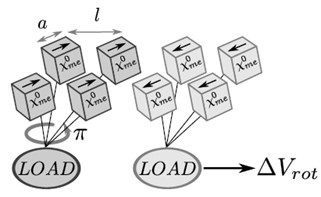
In recent years, a new way of thinking about the quantum vacuum has emerged which has vastly more potential. And today, one physicist describes how it could be used to create propulsion.
Before we discuss that, let’s track back a little. According to quantum mechanics, any vacuum will be filled with electromagnetic waves leaping in and out of existence. It turns out that these waves can have various measurable effects, such as the Casimir-Polder force.
The new approach focuses on the momentum associated with these electromagnetic fields rather than the force they exert. The question is whether it is possible to modify this momentum because, if you can, you should receive an equal and opposite kick. That’s what rocket scientists call propulsion.
Today, Alex Feigel at the Soreq Nuclear Research Center, a government lab in Yavne Israel, suggests an entirely new way to modify the momentum of the quantum vacuum and how this can be exploited to generate propulsion.
More here.
Justin E. H. Smith at Academia.edu:

More here.
Berit Brogaard in Psychology Today:

You walk into a computer store intending to purchase one of those teensy $300 notebooks for your teen daughter but walk out with a $2,300 MacBook Air. It didn't feel like a spur-of-the-moment buy. Somewhere along the way your intentions shifted, and at the time you actually thought it was a brilliant idea to reach into your pocket for an additional $2,000. You are not quite sure how it happened, and now it’s too late.
More here.
From Scientific American:

New research suggests that there may be some truth to this possibility—that we may think we’re capable of being “just friends” with members of the opposite sex, but the opportunity (or perceived opportunity) for “romance” is often lurking just around the corner, waiting to pounce at the most inopportune moment. In order to investigate the viability of truly platonic opposite-sex friendships—a topic that has been explored more on the silver screen than in the science lab—researchers brought 88 pairs of undergraduate opposite-sex friends into…a science lab. Privacy was paramount—for example, imagine the fallout if two friends learned that one—and only one—had unspoken romantic feelings for the other throughout their relationship. In order to ensure honest responses, the researchers not only followed standard protocols regarding anonymity and confidentiality, but also required both friends to agree—verbally, and in front of each other—to refrain from discussing the study, even after they had left the testing facility. These friendship pairs were then separated, and each member of each pair was asked a series of questions related to his or her romantic feelings (or lack thereof) toward the friend with whom they were taking the study.
The results suggest large gender differences in how men and women experience opposite-sex friendships. Men were much more attracted to their female friends than vice versa.
More here.
From Time Magazine:
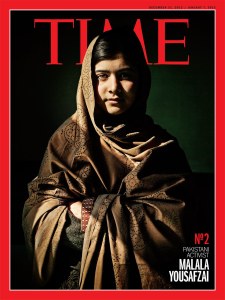
“This is Malala,” said the girl on the other end of the line. Malala Yousafzai, 15, was calling from the hospital in Birmingham, England, where under heavy guard she has been undergoing treatment since Oct. 16. “I understand that what happened was tragic, but you need to stay strong,” Malala told Ayesha. “You cannot give up.” It was one of the few times Malala had called anyone in Pakistan since she was flown to England for specialized medical treatment after a Taliban assassin climbed onto her school bus, called out for her by name and shot her in the head on Oct. 9. Her brain is protected by a titanium plate that replaced a section of her skull removed to allow for swelling. But she spoke rapidly to the older girl in Urdu, encouraging her to stand up for her father even if doing so brought risks. As an outspoken champion of girls’ right to an education, Malala knew all about risk — and fear and consequences — when it comes to taking on the Taliban. “The way she spoke was so inspirational,” Ayesha says. “She made me realize that my father was fighting our enemies and that it was something I should be proud of, not afraid.” The next day Ayesha returned to school. And with that call, Malala began to return to what she seems born to do — passing her courage on to others.
More here.
Marriage is not
a house or even a tent
it is before that, and colder:
The edge of the forest, the edge
of the desert
the unpainted stairs
at the back where we squat
outside, eating popcorn
where painfully and with wonder
at having survived even
this far
.
we are learning to make fire
by Margaret Atwood
.
.
First, Hillary Crosley in The Root:
As all of the Django Unchained reviews hit the Internet, I'm sure plenty of African Americans will list why they hate Quentin Tarantino's new film about a slave's journey for revenge — but not me. A friend and I recently attended a screening for the film, which opens on Christmas Day, followed by an awkward question-and-answer session with the director. We were two of perhaps 10 black people in the theater — that's what makes what happened next so awkward.
In the film, Django (Jamie Foxx) is purchased by Dr. King Schultz (Christoph Waltz), a German dentist-turned-bounty hunter, and the two pair up to collect the bodies and ransoms of outlaws across the South. Because Django is such a natural, Schultz asks him to work with him through the winter in exchange for his help finding the former slave's wife, Broomhilda (Kerry Washington), who was sold to a different plantation. The search for Hildy leads the duo to the plantation of Calvin Candie (Leonardo DiCaprio) — which he shares with his head house slave, Stephen (Samuel L. Jackson) — and bloody drama ensues.
Then, Ishmael Reed over at the WSJ's Speakeasy:
I had a pretty good idea of where “Django Unchained” was going from the first credit. It went to the Weinstein Company. The Weinstein Company once fought a legal battle (settled out of court) over the right to distribute “Precious,” which is, in my opinion, the worst film ever made about black life. The company’s name in the credits for “Django” also meant that the movie was aimed at a mainstream audience.
Though German, the bounty hunter character played by German-Austrian actor Christoph Waltz seemed to speak with a British accent, which is all the rage in the media, though I need subtitles to understand what Piers Morgan is saying half the time. The German dentist dazzles the screen with his eloquent talk and vocabulary and puts together constructions like “shan’t.” I would loved to have been present at the marketing meetings about this movie. The cynicism must have been as thick as cigar smoke.
Also at The Root, Henry Louis Gates has a 3 part interview with Quentin Tarantino.
Justin E. H. Smith in his own blog:
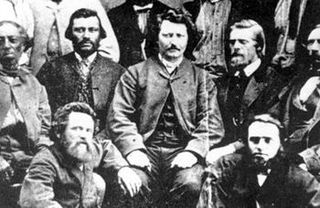
Ted Kaczynski tied for top, at 98.9 percent, in the logic course he took at Harvard with W. V. O. Quine, though he left no lasting impression on the professor. And anarcho-primitivism is in the end –is it not?– a sort of application of the law of the excluded middle: it's either the earth or us. It is somewhat more difficult to trace the Montana manifestos of the Canadian Métis resistance fighter Louis Riel back to his philosophical education at the Sulpician College of Montreal in the 1850s, but as with the Unabomber after him we can be certain that there were decades-old classroom lectures ringing in his head, in the silence of his cabin, as he set about putting his thoughts to paper.
Riel was in exile in the Montana Territory, having ducked across the border in the aftermath of the 1870 Red River rebellion in Manitoba. He was of Franco-Ojibwa ancestry, and a Métis: a label non-Canadians know better in its Spanish rendering, 'mestizo', yet one that has its own distinctive meaning in the Canadian context. During the rebellion he had ordered the execution of the Orangeman Thomas Scott, in order, it is speculated, to send Canada a little message about who was in charge out on the Prairie. Riel began to imagine himself the divinely chosen leader of all Métis, and took on the biblical name of ‘David’.
More here.
Nilanjana Roy over at her website:
That girl, the one without the name. The one just like us. The one whose battered body stood for all the anonymous women in this country whose rapes and deaths are a footnote in the left-hand column of the newspaper.
Sometimes, when we talk about the history of women in India, we speak in shorthand. The Mathura rape case. The Vishaka guidelines. The Bhanwari Devi case, the Suryanelli affair, the Soni Sori allegations, the business at Kunan Pushpora. Each of these, the names of women and places, mapping a geography of pain; unspeakable damage inflicted on women’s bodies, on the map of India, where you can, if you want, create a constantly updating map of violence against women.
For some, amnesia becomes a way of self-defence: there is only so much darkness you can swallow. They turn away from all the places that have become shorthand for violence beyond measure, preferring not to know about Kashmir or the outrages in Chattisgarh, choosing to forget the Bombay New Year assault, trying not to remember the deaths of a Pallavi Purkayastha, a Thangjam Manorama, Surekha and Priyanka Bhotmange, the mass rapes that marked the riots in Gujarat. Even for those who stay in touch, it isn’t possible for your empathy to keep abreast with the scale of male violence against women in India: who can follow all of the one-paragraph, three-line cases? The three-year-old raped before she can speak, the teenager assaulted by an uncle, the 65-year-old raped as closure to a property dispute, the slum householder raped and violently assaulted on her way to the bathroom. After a while, even memory hardens.
In another essay, Sæterbakken writes, “We are never fully and completely ourselves because our lacks, our weaknesses, and our fears make up an essential dimension within us.”[2] As evidenced in Andreas Feldt, Sæterbakken believes that our wounds are essential to who we are, as individuals and as a collective, and should not be avoided, or even healed; in fact, they are often meant to stay open so we can remain sensitive to our surroundings. “Melancholia satisfies us by preventing us from reaching satisfaction,” he writes, “it calms us by keeping our anxiety alive, it gives us peace by prolonging the state of emergency that answers to the name Humankind.” For Sæterbakken, even art cannot offer salvation or fulfillment. On the contrary, it reminds us “of the nothingness we know awaits us,” but in this reminder of absolute denial of life we find confirmation of our existence. If we cannot experience the silence of death, which is without music, literature, or sensation, in life, then we must seek out and experience art which draws attention to the paradox of existing as a being incapable of becoming fully aware of itself and its potential. This is the art Sæterbakken offers us.
more from at The Quarterly Conversation here.
Comfort once contended that bloody-mindedness was the greatest human virtue. It was certainly the virtue by which he lived, and the reason he was able to pursue his parallel careers in literature and medicine. In 1935 he blew the fingers off his left hand while making fireworks to celebrate the Silver Jubilee of George V. His aunt, assuming that he would remain a lifelong invalid, wrote him a cheque for £50. His response was to go to South America and compose a travelogue called The Silver River. In the preface he wrote: “I do not believe the fable that men read travel books to escape from reality: they read to escape into it, from a crazy wonderland of armaments, cant, political speeches at once insincere and illiterate, propaganda, and social injustice which the lunacy of humanity has constructed over a period of years.” When it was published, Alex Comfort was 18.
more from Matthew Sweet at The Guardian here.
Although Sacks tells the reader he will concentrate on “ ‘organic’ psychoses — the transient psychoses sometimes associated with delirium, epilepsy, drug use and certain medical conditions,” he includes a chapter, “On the Threshold of Sleep,” that treats hypnagogic hallucinations, the vivid imagery many people see before they fall asleep, and another, “The Haunted Mind,” which describes bereavement and traumatic hallucinations that would be classified as psychiatric not neurological phenomena. As Sacks knows, separating the physiological from the psychological is a philosophical conundrum that continues to plague both science and philosophy. But one of the pleasures of reading “Hallucinations” is understanding how complex human reality often trumps attempts to categorize it. As the 19th-century neurologist Jean Martin Charcot once remarked (and Freud recorded): “Theory is good, but it doesn’t prevent things from existing.”
more from Siri Hustvedt at the NY Times here.
From Scientific American:

More here.