A Dose of Narcissism Can Be Useful

From Scientific American:

NarcissistNarcissism has long gotten a bad rap. Its unseemly reputation dates back at least to ancient Greek mythology, in which the handsome hunter Narcissus (who undoubtedly would be gloating over his present-day fame) discovered his own reflection in a pool of water and fell in love with it. Narcissus was so transfixed by his image that he died staring at it. In 1914 Sigmund Freud likened narcissism to a sexual perversion in which romantic attraction is directed exclusively to the self. Contemporary views are hardly more flattering. Enter the words “narcissists are” into Google, and the four most popular words completing the phrase are “stupid, “evil,” “bullies” and “selfish.”

In 2008 psychologist Jean M. Twenge of San Diego State University and her colleagues found that narcissism scores have been climbing among American college students in the U.S. for the past few decades. Although the data are controversial, these scholars argue that we are living in an increasingly narcissistic culture. Some of the opprobrium heaped on narcissists is surely deserved. Yet research paints a more nuanced picture. Although narcissists can be difficult and at times insufferable, they can also make effective leaders and performers. Moreover, because virtually all of us share at least a few narcissistic traits, we may be able to learn something about ourselves from understanding them.

More here.

Thursday Poem

Machines

Dearest, note how these two are alike:
This harpsicord pavane by Purcell
And the racer's twelve-speed bike.

The machinery of grace is always simple.
This chrome trapezoid, one wheel connected
To another of concentric gears,
Which Ptolemy dreamt of and Schwinn perfected,
Is gone. The cyclist, not the cycle, steers.
And in the playing, Purcell's chords are played away.

So this talk, or touch if I were there,
Should work its effortless gadgetry of love,
Like Dante's heaven, and melt into the air.

If it doesn't, of course, I've fallen. So much is chance,
So much agility, desire, and feverish care,
As bicyclists and harpsicordists prove

Who only by moving can balance,
Only by balancing move.

by Michael Donaghy
from Shibboleth, 1998
Oxford University Press

Wednesday, January 2, 2013

The Red and the Black

Issue_9_ackerman_b

Over at Jacobin, Seth Ackerman proposes this era's version of the Meidner Plan or John Roemer's A Future for Socialism, in Jacobin:

If a deterministic story about free markets generating optimal prices, leading to maximum output was no longer viable, then the failure of planned economies could hardly be attributed to the absence of those features. As Communist systems were collapsing in Eastern Europe, economists who had lost faith in the neoclassical narrative began to argue that an alternative explanation was needed. The most prominent theorist in this group was Joseph Stiglitz, who had become famous for his work on the economics of information. His arguments dovetailed with those of other dissenters from the neoclassical approach, like the eminent Hungarian scholar of planned economies, János Kornai, and evolutionary economists like Peter Murrell.

They all pointed to a number of characteristics, largely ignored by the neoclassical school, that better accounted for the ability of market economies to avoid the problems plaguing centrally planned systems. The aspects they emphasized were disparate, but they all tended to arise from a single, rather simple fact:in market systems firms are autonomous.

That means that within the limits of the law, a firm may enter a market; choose its products and production methods; interact with other firms and individuals; and must close down if it cannot get by on its own resources. As a textbook on central planning put it, in market systems the presumption is “that an activity may be undertaken unless it is expressly prohibited,” whereas in planned systems “the prevailing presumption in most areas of economic life is that an activity may not be undertaken unless permission has been obtained from the appropriate authority.” The neoclassical fixation with ensuring that firms exercised this autonomy in a laissez-faire environment – that restrictions on voluntary exchange be minimized or eliminated — was essentially beside the point.

Oh God, What Have We Done?

Inside-The-Centre-The-Life-o

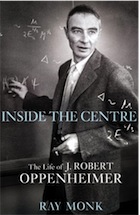
Jackson Lears reviews Ray Monk's Inside the Centre: The Life of J. Robert Oppenheimer in the LRB:

J. Robert Oppenheimer, the physicist in charge of the Manhattan Project and hence ‘father of the atomic bomb’, was never openly remorseful. But he was nothing if not ambivalent, as Ray Monk makes clear in his superb biography. When the fireball burst Oppenheimer remembered the words from Vishnu in the Bhagavad Gita: ‘I am become death, destroyer of worlds.’ It was his own idiosyncratic translation, and it became his most famous remark. The next day, though, his mood was anything but sombre as he jumped out of a jeep at Los Alamos base camp. His friend and fellow physicist Isidor Rabi said: ‘I’ll never forget the way he stepped out of the car … his walk was like High Noon … this kind of strut. He had done it.’ His colleague Enrico Fermi ‘seemed shrunken and aged, made of old parchment’ by comparison. Yet his euphoria passed, and he sank into second thoughts, despondent about the calamitous consequences awaiting the Japanese. He walked the corridors mournfully, muttering: ‘I just keep thinking about all those poor little people.’ Racial condescension aside, he meant what he said, and during the days following the test his secretary said he looked as though he were thinking: ‘Oh God, what have we done!’

He was a brilliant physicist, a charismatic leader and a skilful administrator; he was also a deeply reflective and troubled man, sensitive enough to question the conventional wisdom of the powerful even as he struggled to maintain his influence among them. Monk ably captures all these dimensions, in part through sheer accretion of detail. But he does have a central theme, expressed in his title, Inside the Centre. Whatever else Oppenheimer wanted, he always longed to be at the centre of every important theoretical debate and policy discussion he could manage to enter; a child of wealthy and assimilated German Jews on the Upper West Side of Manhattan, he was the quintessential outsider as insider – yet never quite the insider he aimed to be, in part due to his own contrarian instincts. Committed to Enlightenment ideals of open inquiry, he submitted to regimes of suspicion and secrecy though without ever giving up his own doubts.

Reporting Poverty

Katherine.boo_.9.15.575px

Emily Brennan interviews Katherine Boo in Guernica:

Guernica: After reporting on issues of poverty in the United States for so long, what drew you to write about India?

Katherine Boo: I met my husband, who is from India, in 2001. When I first started going to India, I’d be at these dinner tables where people, claiming a posture of great authority, talked about what was going on in these historically poor communities. They always seemed to fall into two schools of thought: everything had changed with the country’s increasing prosperity, or nothing had changed in the lives of low-income people. I wasn’t a subscriber to either. In fact, I was familiar with these arguments from my experience of writing about the poor in the United States. Most of the people who do the talking about what it’s like for the very poor don’t spend much time with them. That circumstance transcends borders.

It was my husband, who had watched my reporting and fact-checking process, the way I use official documents and taped interviews to be quite precise, who first said to me, “Well, this might be something you can do in India.” And at first, I thought, “I can’t do it. I’m not Indian. If I did write anything, I would just be some stupid white woman writing a stupid thing.” But there were people around me who were saying, “If you do it well, then who you are becomes less important.” My husband and these others were interested in issues of social equality and fairness in India and thought it would be valuable to know what it was like for low-income people there, know it with a little more depth. There was plenty of reporting going on in India, but specifically what I do—follow people over long periods of time—there wasn’t much of that in India. (There are some people in the United States who do it, and do it very well, but there are not a lot of them here, either.) In my kind of work, you don’t parachute in after some big, terrible event, which is important and has to be covered, but offers only a glimpse. It’s the kind of work in which you ask, what is my understanding of how the world works, and where can I go to see these questions get worked out in individuals’ lives?

the loser

Article_asher

Somebody in Boots was Algren’s big chance, but when he stepped into the ring he swung and he missed. It was released in March 1935, and a year later it had sold only 762 copies. Algren hadn’t found a straight job, and after his publishing failure it seemed he wouldn’t be able to make it as a writer. He had nowhere to go, and no idea what to do next, and so resigned himself to nothingness. In the apartment of a girlfriend whose name has been forgotten, Algren removed the gas line from the back of a stove, placed it in his mouth, and breathed methane. The girlfriend discovered Algren nearly but not quite dead, and handed him over to Larry Lipton and Richard Wright, who looked after him for months. Eventually they had him committed to a hospital, which discharged him to his parents’ apartment. He spent the remainder of his life denying his suicide attempt. Seven years passed between the publication of Algren’s first book and his second, and during those years he grew into himself and became the stubborn, hilarious, fiercely loyal, brilliant, pugnacious, and fickle person he would be until his death.

more from Colin Asher at The Believer here.

Hallucinations

Neurologist+Dr+Oliver+Sacks+Speaks+Columbia+kMVL2970fegl

Sacks’s weekend drug experimentation escalated: a cocktail of amphetamine, LSD, and cannabis let him see true indigo, a color unknown in nature, while morning-glory seeds gave him the conviction that a visitor, in actuality a psychoanalyst colleague of Sacks’s physician parents, was in fact only a replica of the woman he knew. In London, after extracting morphine from the drug cabinet in his parents’ home office and injecting it, he enjoyed a spectacular hallucination of the Battle of Agincourt on the sleeve of his dressing gown, remaining immersed in the vision for more than twelve hours; the span of time lost sufficiently alarmed Sacks that he gave up opiates altogether. In New York, he suffered acute delirium tremens after the sudden cessation of a serious chloral hydrate habit, experiencing intense hallucinations and fending off panic only by writing a clear, almost clinical account of what he saw. It was during this period that Sacks’s vocation as a writer would emerge, and the theme of writing as refuge and remedy will return in Hallucinations as a refrain.

more from Jenny Davidson at Bookforum here.

a kind of parallel government

Image

In parliaments and in the public square, European democracy appears to be on its last legs. The European Union, garlanded last month with an incomprehensible Nobel Peace Prize, has become ever more feckless. National governments pushing senseless austerity budgets are losing public favor by the day. But on TV, democracy is thriving, and nowhere more than in the Danish political drama Borgen. From Greece to Ireland, where political leaders have been reduced to glorified accountants, audiences have made a series about a peripheral EU administration the most surprising television hit in years. Borgen (“The Castle,” a nickname for Christiansborg, the Copenhagen parliament building) depicts the trials of a new prime minister, her squabbling coalition government, and an aggressive, scandal-hungry news media. A quarter of the nation watches the program each week, and Helle Thorning-Schmidt, the country’s actual prime minster, is said to be an obsessive fan. Borgen is more than a sensation; it is a kind of parallel government.

more from Jason Farago at n+1 here.

Sri Lanka’s Tamils pick up the pieces after the war

Anonymous in The Caravan:

ScreenHunter_100 Jan. 02 15.43On the afternoon of 19 May 2009, at around 1:20 pm, a ration shop accountant named Sivarajan ran to the front of the winding lunch queue in the Anandakumaraswami Zone 3 refugee camp to serve rice and sodhi, a watery concoction of chillies and coconut milk. Swarna, a former militant, sat in her tent nearby, yelling at her mother for having told an army man from the morning shift that their family belonged to Mullaitivu, on the northeastern coast, where the war between the Sri Lankan Army and the separatists—“Tigers,” she called them—was still raging.

At that moment, they got a text message on their mobile phones from the government’s information department. Addressed to all Sri Lankans, it proclaimed, in Sinhala—a language neither Sivarajan nor Swarna could read—that Velupillai Prabhakaran, the man who led a 26-year-long separatist battle for a Tamil Eelam (state), had been killed by the army in a lagoon just a two hours drive north of where they were. So when the news was announced in Tamil over a loudspeaker that evening, they did not believe it. When it finally sank in, they realised—neither with remorse nor relief, but mere wonder at its very possibility—that in an instant the war they had been born into had left their lives.

Nothing would ever be the same again.

More here.

Amnesia and the Self That Remains When Memory Is Lost

Daniel Levitin in The Atlantic:

ScreenHunter_99 Jan. 02 15.33Tom was one of those people we all have in our lives — someone to go out to lunch with in a large group, but not someone I ever spent time with one-on-one. We had some classes together in college and even worked in the same cognitive psychology lab for a while. But I didn't really know him. Even so, when I heard that he had brain cancer that would kill him in four months, it stopped me cold.

I was 19 when I first saw him — in a class taught by a famous neuropsychologist, Karl Pribram. I'd see Tom at the coffee house, the library, and around campus. He seemed perennially enthusiastic, and had an exaggerated way of moving that made him seem unusually focused. I found it uncomfortable to make eye contact with him, not because he seemed threatening, but because his gaze was so intense.

Once Tom and I were sitting next to each other when Pribram told the class about a colleague of his who had just died a few days earlier. Pribram paused to look out over the classroom and told us that his colleague had been one of the greatest neuropsychologists of all time. Pribram then lowered his head and stared at the floor for such a long time I thought he might have discovered something there. Without lifting his head, he told us that his colleague had been a close friend, and had telephoned a month earlier to say he had just been diagnosed with a brain tumor growing in his temporal lobe. The doctors said that he would gradually lose his memory — not his ability to form new memories, but his ability to retrieve old ones … in short, to understand who he was.

More here.

Study Suggests Lower Mortality Risk for People Deemed to Be Overweight

Pam Belluck in the New York Times:

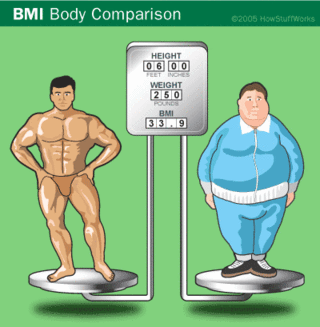
Bmi-comparisonThe report on nearly three million people found that those whose B.M.I. ranked them as overweight had less risk of dying than people of normal weight. And while obese people had a greater mortality risk over all, those at the lowest obesity level (B.M.I. of 30 to 34.9) were not more likely to die than normal-weight people.

The report, although not the first to suggest this relationship between B.M.I. and mortality, is by far the largest and most carefully done, analyzing nearly 100 studies, experts said.

But don’t scrap those New Year’s weight-loss resolutions and start gorging on fried Belgian waffles or triple cheeseburgers.

Experts not involved in the research said it suggested that overweight people need not panic unless they have other indicators of poor health and that depending on where fat is in the body, it might be protective or even nutritional for older or sicker people. But over all, piling on pounds and becoming more than slightly obese remains dangerous.

More here.

Wednesday Poem

My Father's Hats ….

………………Sunday mornings I would reach
high into his dark closet while standing
on a chair and tiptoeing reach
higher, touching, sometimes fumbling
the soft crowns and imagine
I was in a forest, wind hymning
…………….. through pines, where the musky scent
of rain clinging to damp earth was
his scent I loved, lingering on
bands, leather, and on the inner silk
crowns where I would smell his
hair and almost think I was being
held, or climbing a tree, touching
the yellow fruit, leaves whose scent
was that of clove in the godsome
air, as now, thinking of his fabulous
sleep, I stand on this canyon floor
and watch light slowly close
on water I can't be sure is there.

by Mark Irwin
from New Letters, Volume 66, Number 3, 2000

Are we witnessing the decline and fall of men?

From The Spiked Review of Books:

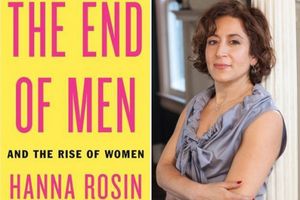
MenIgnore the hyperbolic title. Hanna Rosin’s The End of Men and the Rise of Women is filled with worthwhile insights and raises serious questions about the meaning and implications of shifting gender roles. Rosin, an editor at the Atlantic and founder of Slate’s ‘DoubleX’, has emerged as one of only a handful of American writers who has understood the centrality of so-called ‘women’s issues’ to American culture.

Her thesis goes something like this: our society is in the midst of a whole host of social and economic changes that women are benefiting from more than men, and perhaps at the expense of men. It’s a compelling idea, not least because it seems to confirm what many people have observed in the course of their own experiences. It is not simply that men have lost their jobs, or even that those jobs are gone for good, or that it is mainly women doing the jobs that are now being created. It is more a sense of creeping demoralisation and ambivalence about the future that is as much in evidence in Charles Murray’s discussion of the decline of marriage, in his book Coming Apart, as it is in ‘The Myth of Work/Life Balance’ debate that appeared in the Atlantic last summer. Rosin intuitively understands that discussions like these are related to, and have been shaped by, changes in women’s status over the past 30 years. What isn’t so clear is whether the current situation is the inevitable consequence of a shifting balance between men and women or a symptom of something else.

More here.

The Future of Medicine Is Now

From The Wall Street Journal:

Here are six of today's potentially transformative trends.

DNA Sequencing for Routine Checkups

ChipAt a genetics conference in November, Oxford Nanopore Technologies unveiled the first of a generation of tiny DNA sequencing devices that many predict will eventually be as ubiquitous as cellphones—it's already the size of one. Since the first sequencing of the human genome was completed in 2003 at a price tag of over $2 billion, the speed, price and accuracy of the technology have all improved. Illumina Inc. has dropped its price for individual readouts to $5,000; earlier this year, Life Technologies introduced a sequencer it says can map the human genome for $1,000. The smallest machine is now desktop-size. But nanopore sequencing devices, which are designed to be even smaller and more affordable, could speed efforts to make gene sequencing a routine part of a visit to the doctor's office. DNA molecules are exceedingly long and complicated; that makes them hard to read. Nanopore technology measures changes in the molecules' electrical current as the DNA is threaded in a single strand through tiny holes called “nanopores” created in a membrane.

Letting Your Body Fight Cancer

Few advances in cancer care are generating more enthusiasm than harnessing the power of the immune system to fight the disease. Tom Stutz is one reason why. Last April, the 72-year-old retired lawyer was confined to a wheelchair, struggling for every breath, and required help with simple tasks such as eating, all because of a previously diagnosed skin cancer that had spread to his lungs and liver. “I was ready to check out, to be honest,” he says. That month, he began taking an experimental drug known as MK3475. Six weeks later, he started feeling better. Today, Mr. Stutz has jettisoned the wheelchair and regularly walks a 3.5-mile loop near his home in Los Angeles. “I feel terrific,” says Mr. Stutz, who learned after a checkup in the fall that his tumors had shrunk by about 65% so far. For decades, cancer researchers have wondered why the immune system typically doesn't treat tumor cells as invaders and target them. Part of the mystery was recently solved: Tumors protect themselves by hijacking the body's natural brake for the immune system. MK3475, being developed by Merck & Co., is among a new category of drugs that release the brake, unleashing an army of immune cells to hunt down the cancer. A recent report from a trial in which Mr. Stutz participated said that of 85 patients who took the drug, 51% saw their tumors significantly shrink; in eight cases, the tumors couldn't be detected on imaging tests.

More here.

Tuesday, January 1, 2013

inventing abstraction

130107_r23007_p233

What possessed a generation of young European artists, and a few Americans, to suddenly suppress recognizable imagery in pictures and sculptures? Unthinkable at one moment, the strategy became practically compulsory in the next. Many of the artists had answers—or, at least, they cooked them up. The trailblazing Wassily Kandinsky and the bulletproof masters of abstraction, Piet Mondrian and Kazimir Malevich, doubled, tortuously, as theorists. They initiated what would become a common feature of determinedly innovative art culture to this day: the simpler the art, the more elaborate the rationale. That’s easily understood. We need stories. When they are banished within art, they re-form around and about it. But most interesting to me are the early abstract artists’ personal motives. The Swiss Taeuber-Arp and her husband, Hans Arp, from Alsace, were Dadaists in Zurich during the First World War. They seem to have been excited by the prospect of a passably pure, toughly modest aestheticism that jettisoned the traditions of a Europe gone mad with slaughter. Arp was making sprightly geometric and free-form collages and reliefs, often composed by games of chance—for example, shapes in colored paper dropped onto sheets of white paper and glued down more or less where they fell.

more from Peter Schjeldahl at The New Yorker here.

Emancipation Images, 150 Years Later

2253_reg

Today marks the 150th anniversary of the Emancipation Proclamation, a real if not full step towards freedom and justice in the United States. Over at The Root:

January 1, 2013, marks the 150th anniversary of the Emancipation Proclamation, and in light of the historical milestone, two educators — Deborah Willis, New York University photographic historian, and Barbara Krauthamer, historian of slavery at University of Massachusetts-Amherst — created Envisioning Emancipation: Black Americans and the End of Slavery, a book of photographs that shows what freedom looked like for blacks around the time of emancipation and reveals the role African Americans played in gaining their own freedom. The two scholars spoke to The Root about the history behind the photos and how there's more to these stills than meets the eye.

The Most Futuristic Predictions That Came True in 2012

Original

George Dvorsky in io9:

1. A Cyborg Competes Against Able-Bodied Athletes at the Olympics

For the first time ever in Olympic history, a double-amputee raced alongside able-bodied athletes. Nicknamed “Blade Runner,” South African sprinter Oscar Pistorius’s remarkable achievement raised as much enthusiasm as it did concern — some observers felt that his advanced prosthetic “Cheetahs” gave him an unfair advantage over the other athletes. But while Pistorius failed to medal, his remarkable achievement signified the dawn of the cyborg age.

2. NASA Starts to Work on a Faster-Than-Light Warp Drive

Speaking at the 100 Year Starship 2012 Public Symposiumearlier this year, physicist Harold White stunned the aeronautics world when he announced that he and his team at NASA had begun work on the development of a faster-than-light warp drive. His proposed design, an ingenious re-imagining of an Alcubierre Drive, may eventually result in an engine that can transport a spacecraft to the nearest star in a matter of weeks — and all without violating Einstein’s law of relativity. Though still in the proof-of-concept phase, White and his colleagues are trying to turn theory into practice — and potentially change the nature of space travel as we know it.

3. Scientists Enhance the Intelligence of Primates with a Chip

Back in September, scientists demonstrated that a brain implant could improve thinking ability in primates — and by a factor of 10 percent. By implanting an electrode array into the cerebral cortex of monkeys, researchers were able to restore — and even improve — their decision-making abilities. The implications for possible therapies are far-reaching, including potential treatments for cognitive disorders and brain injuries. And it also means the era of animal uplifting has begun.

Work, Learning and Freedom

4067-chomsky-sydney-lecture-110211

Noam Chomsky and Michael Kasenbacher in Reader Supported News:

The question I would like to ask is what is really wanted work? Maybe we could start with your personal life and your double career in linguistics and political activism? Do you like that kind of work?

If I had the time I would spend far more time doing work on language, philosophy, cognitive science, topics that are intellectually very interesting. But a large part of my life is given to one or another form of political activity: reading, writing, organising, activism and so on. Which is worth doing, it's necessary but it's not really intellectually challenging. Regarding human affairs we either understand nothing, or it's pretty superficial. It's hard work to get the data and put it all together but it's not terribly challenging intellectually. But I do it because it's necessary. The kind of work that should be the main part of life is the kind of work you would want to do if you weren't being paid for it. It's work that comes out of your own internal needs, interests and concerns.

The philosopher Frithjof Bergmann says that most people don't know what kind of activities they really want to do. He calls that 'the poverty of desire.' I find this to be true when I talk to a lot of my friends. Did you always know what you wanted to do?

That's a problem I never had – for me there was always too much that I wanted to do. I'm not sure how widespread this is – take, say, a craftsman, I happen to be no good with tools, but take someone who can build things, fix things, they really want to do it. They love doing it: 'if there's a problem I can solve it'. Or just plain physical labour – that's also gratifying. If you work on command then of course it's just drudgery but if you do the very same thing out of your own will or interest it's exciting and interesting and appealing. I mean that's why people look for work – gardening for example. So you've had a hard week, you have the weekend off, the kids are running around, you could just lie down to sleep but it's much more fun to be gardening or building something or doing something else.

It's an old insight, not mine. Wilhelm von Humboldt, who did some of the most interesting work on this, once pointed out that if an artisan produces a beautiful object on command we may admire what he did but we despise what he is – he's a tool in the hands of others. If on the other hand he creates that same beautiful object out of his own will we admire it and him and he's fulfilling himself.

Slavoj Zizek: I am not the world’s hippest philosopher!

Slavoj_zizek-580x386

Katie Engelhart interviews Zizek in Salon:

You have said before: “I am a philosopher, not a prophet.” And yet, your followers are remarkably pious; many worship you as a prophet. Why?

Well, I’m ambiguous on this. On the one hand, I return to a more classical Marxism. Like: ‘It cannot last! This is all crazy! The hour of reckoning will come, blah blah blah.’

Also, I really hate all of this politically correct, cultural studies bullshit. If you mention the phrase “postcolonialism,” I say, “Fuck it!” Postcolonialism is the invention of some rich guys from India who saw that they could make a good career in top Western universities by playing on the guilt of white liberals.

So you offer respite to the 20-something who wants to escape the fruits of postmodernism: political correctness, gender studies, etc.?

Yes, yes! That’s good!

But here I also have a bit of megalomania. I almost conceive of myself as a Christ figure.OK! Kill me! I’m ready to sacrifice myself. But the cause will remain! And so on…

But, paradoxically, I despise public appearances. This is why I almost stopped teaching entirely. The worst thing for me is contact with students. I like universities without students. And I especially hate American students. They think you owe them something. They come to you … Office hours!