We Call This Progress

Arundhati Roy in Guernica:

ScreenHunter_91 Dec. 21 15.58I don’t know how far back in history to begin, so I’ll lay the milestone down in the recent past. I’ll start in the early 1990s, not long after capitalism won its war against Soviet Communism in the bleak mountains of Afghanistan. The Indian government, which was for many years one of the leaders of the nonaligned movement, suddenly became a completely aligned country and began to call itself the natural ally of the U.S. and Israel. It opened up its protected markets to global capital. Most people have been speaking about environmental battles, but in the real world it’s quite hard to separate environmental battles from everything else: the war on terror, for example; the depleted uranium; the missiles; the fact that it was the military-industrial complex that actually pulled the U.S. out of the Great Depression, and since then the economies of places like America, many countries in Europe, and certainly Israel, have had stakes in the manufacture of weapons. What good are weapons if they aren’t going to be used in wars? Weapons are absolutely essential; it’s not just for oil or natural resources, but for the military-industrial complex itself to keep going that we need weapons.

Today, as we speak, the U.S., and perhaps China and India, are involved in a battle for control of the resources of Africa. Thousands of U.S. troops, as well as death squads, are being sent into Africa. The “Yes We Can” president has expanded the war from Afghanistan into Pakistan. There are drone attacks killing children on a regular basis there.

In the 1990s, when the markets of India opened, when all of the laws that protected labor were dismantled, when natural resources were privatized, when that whole process was set into motion, the Indian government opened two locks: one was the lock of the markets; the other was the lock of an old fourteenth-century mosque, which was a disputed site between Hindus and Muslims. The Hindus believed that it was the birthplace of Ram, and the Muslims, of course, use it as a mosque. By opening that lock, India set into motion a kind of conflict between the majority community and the minority community, a way of constantly dividing people. Finding ways to divide people is the main practice of anybody that is in power.

More here.

Asians: Too Smart for Their Own Good?

Carolyn Chen in the New York Times:

Asian-sfSpanAsian-Americans constitute 5.6 percent of the nation’s population but 12 to 18 percent of the student body at Ivy League schools. But if judged on their merits — grades, test scores, academic honors and extracurricular activities — Asian-Americans are underrepresented at these schools. Consider that Asians make up anywhere from 40 to 70 percent of the student population at top public high schools like Stuyvesant and Bronx Science in New York City, Lowell in San Francisco and Thomas Jefferson in Alexandria, Va., where admissions are largely based on exams and grades.

In a 2009 study of more than 9,000 students who applied to selective universities, the sociologists Thomas J. Espenshade and Alexandria Walton Radford found that white students were three times more likely to be admitted than Asians with the same academic record.

Sound familiar? In the 1920s, as high-achieving Jews began to compete with WASP prep schoolers, Ivy League schools started asking about family background and sought vague qualities like “character,” “vigor,” “manliness” and “leadership” to cap Jewish enrollment. These unofficial Jewish quotas weren’t lifted until the early 1960s, as the sociologist Jerome Karabel found in his 2005 history of admissions practices at Harvard, Yale and Princeton.

More here.

The Data Vigilante

From The Atlantic Monthly:

DataSimonsohn does not look like a vigilante—or, for that matter, like a business-school professor: at 37, in his jeans, T-shirt, and Keen-style water sandals, he might be mistaken for a grad student. And yet he is anything but laid-back. He is, on the contrary, seized by the conviction that science is beset by sloppy statistical maneuvering and, in some cases, outright fraud. He has therefore been moonlighting as a fraud-buster, developing techniques to help detect doctored data in other people’s research. Already, in the space of less than a year, he has blown up two colleagues’ careers. (In a third instance, he feels sure fraud occurred, but he hasn’t yet nailed down the case.) In so doing, he hopes to keep social psychology from falling into disrepute. Simonsohn initially targeted not flagrant dishonesty, but loose methodology. In a paper called “False-Positive Psychology,” published in the prestigious journal Psychological Science, he and two colleagues—Leif Nelson, a professor at the University of California at Berkeley, and Wharton’s Joseph Simmons—showed that psychologists could all but guarantee an interesting research finding if they were creative enough with their statistics and procedures. The three social psychologists set up a test experiment, then played by current academic methodologies and widely permissible statistical rules. By going on what amounted to a fishing expedition (that is, by recording many, many variables but reporting only the results that came out to their liking); by failing to establish in advance the number of human subjects in an experiment; and by analyzing the data as they went, so they could end the experiment when the results suited them, they produced a howler of a result, a truly absurd finding. They then ran a series of computer simulations using other experimental data to show that these methods could increase the odds of a false-positive result—a statistical fluke, basically—to nearly two-thirds.

Just as Simonsohn was thinking about how to follow up on the paper, he came across an article that seemed too good to be true. In it, Lawrence Sanna, a professor who’d recently moved from the University of North Carolina to the University of Michigan, claimed to have found that people with a physically high vantage point—a concert stage instead of an orchestra pit—feel and act more “pro-socially.” (He measured sociability partly by, of all things, someone’s willingness to force fellow research subjects to consume painfully spicy hot sauce.) The size of the effect Sanna reported was “out-of-this-world strong, gravity strong—just super-strong,” Simonsohn told me over Chinese food (heavy on the hot sauce) at a restaurant around the corner from his office. As he read the paper, something else struck him, too: the data didn’t seem to vary as widely as you’d expect real-world results to. Imagine a study that calculated male height: if the average man were 5-foot‑10, you wouldn’t expect that in every group of male subjects, the average man would always be precisely 5-foot-10. Yet this was exactly the sort of unlikely pattern Simonsohn detected in Sanna’s data.

More here.

DNA blueprint of a single human cell

From Nature:

DnaHumans, strawberries, honeybees, chickens and rats are among the many organisms to have their DNA sequenced. But although sequencing an individual species is challenging, it is much harder to sequence the DNA of a single cell.

To get enough DNA for sequencing, thousands or even millions of cells are usually required. And finding out which mutations are in which cells is almost impossible, and mutations present in only a few cells (like early cancerous cells) are hidden altogether. But a technique reported today in Science1 provides a way to copy DNA so that more than 90% of the genome of a single cell can be sequenced. The method also makes it easier to detect minor DNA sequence variations in single cells and, so, to find genetic differences between individual cells. Such differences can help to explain how cancer becomes more malignant, how reproductive cells emerge and even how individual neurons differ.

More here.

Friday Poem

Good Night, Ya Bastard

In Ballyferriter on holidays
we stayed above Seáinín na mBánach’s shop
and some nights
a crowd of locals
and summer visitors
would return after closing time
in Daniel Keane’s pub.

We, the children, lying in suspense
feigning sleep in our beds
waiting for the soft murmur of the company
making its way up the stairs.

Things would start with a bit of a chat,
stories being told, fun being poked,
you acting as shy host
’til the Beamish gave you voice
and you called for a song.

Everyone joining in the chorus,
the hiss as another bottle is opened.

And when the revelling was over
we’d hear the people going,
down on the road in the early morning
someone shouts, “Good night, ya bastard.”
in the full of his voice on the village street.

My sorest wish
to have grown up in time,
before you died,
so I could come
to a night you organised
over Seáinín’s shop
in Ballyferriter.

And when the night was over
and the company were going
I would head for my own lodgings too
in Baile Eaglaise or the Gorta Dubha.
Before I left I would turn to you
and say “Good night, ya bastard,”
fondly, tipsily.

Colm Breathnach
from An Fear Marbh
publisher: Cló Iar-Chonnachta, Indreabhán, 1998
translation: 2007, Colm Breathnach

Thursday, December 20, 2012

she blew mah nose and then she blew mah mahnd

The_Stones_313709h

Lennon’s infamous utterance, “Before Elvis there was nothing”, can be consigned to the bin once and for all, now that we have his letter to Craig McGregor of the New York Times of September 1971. The reporter had filed the common charge against the Beatles, as Davies puts it, of “ripping off Black American music”. They didn’t sing their own songs in the early days, John wrote to McGregor, because they weren’t good enough, really – the one thing we always did was to make it known that there were black originals, we loved the music and wanted to spread it in any way we could. In the ’50s there were few people listening to blues – R&B – rock and roll, in America as well as Britain. People like – Eric Burdon’s Animals – Mick’s Stones – and us drank and ate and slept the music, and also recorded it, many kids were turned on to black music by us. As for the Rolling Stones, as Mick said in a recent television programme marking fifty years of existence, an achievement both admirable and absurd, they came from being the band that everyone hated to the band everyone loves. It was, after all, only rock and roll.

more from James Campbell at the TLS here.

back to the codex

Devil_codex_Gigas

Although what most of us now think of as “the book”—the codex form made up of pages bound to a spine—began to spread not long after Socrates, it took more than six hundred years for it, rather than the scroll, to lead Western readers where they pleased. This technological triumph is usually explained in terms of the codex’s greater efficiency. But such accounts have to assume that pagans, Jews, Indians, Chinese, Koreans, and Japanese, all of whom advanced quite happily without the codex, had no interest in efficiency, even though the last three were centuries ahead of the West in the development of the impressive efficiency of print. In fact, the codex is more likely to have spread among the new Christians of the West, and later the Islamists, not for its efficiency in delivering text, but for its ability to signify that its holder was bound for a new religion, not still enrolled in the old. (It should not be surprising, then, that enthusiastic readers of e-books sometimes resemble new sectarians.) Both Andrew Piper in Book Was There and Leah Price in How to Do Things with Books in Victorian Britain look back to the rise of the codex, noting its symbolic and practical contribution to the conversion of Augustine of Hippo.

more from Paul Duguid at Threepenny Review here.

haunted museums

Blom_220w

he Museum of World Culture has been favourably compared with the Musée du Quai Branly, which is often mentioned as the antithesis of the Swedish museum. But is the difference between seeking to honour formerly humiliated and despised people, and to promote intercultural exchange actually that great in practice? In both cases, the objectives involve strengthening existing self-images: in France the one depicting the country as the highest court of good taste; and in Sweden the one about being the ultimate domicile of good will. At the same time, and in spite of the ideological ambitions driving the museums, in both French and Swedish cases a kind of unintentional ethnography is being conducted: a haunted ethnography. Siegel points to how collections are made available through a classificatory system that fixes and delimits the understanding of the objects. The collections of the Museum of World Culture in Gothenburg contain about 100 000 objects. These are classified in accordance with a variety of ontological and epistemological principles dating from the period in which the objects were acquired. These principles are difficult to grasp, but they determine what can be found.

more from Lisa Karlsson Blom and Mikela Lundahl at Eurozine here.

Trying war crimes from the time of the birth of Bangladesh

This week the chairman of Bangladesh’s International Crimes Tribunal resigned. We explain the background to his action, our role in the story, and what it all means for his country’s search for justice.

From The Economist:

ScreenHunter_89 Dec. 20 16.13Bangladesh suffered a violent birth. In the last days of 1971 the country then called East Pakistan was engulfed by torture, rape, mass-killing and other acts of genocide. The main perpetrators were Pakistani troops bent on preventing secession from “West Pakistan”. But the army had the support of many of East Pakistan’s fundamentalist groups, including Jamaat-e-Islami, which remains Bangladesh’s largest Islamic party. Estimates of the death toll vary from around 300,000 to the current government’s reckoning of 3m—one in 20 of the population at that time.

In 2010 Bangladesh established a tribunal to try those accused of war crimes. It is called the International Crimes Tribunal, though it is not an international court in the sense of being founded on international law. Rather it is a national court, based on a Bangladeshi statute passed in 1973 and amended in 2009 and 2012. It was very late to begin the search for justice, for the accused as well as for victims. But war crimes are subject to no statute of limitation.

The main perpetrators are not in the dock, since they are either dead or living in Pakistan. But some suspects are still leading prominent lives in Bangladesh. Ten people have been arrested and charged with offences ranging from individual acts of rape and murder to the ordering of mass executions. This week the first case—that of Delwar Hossain Sayeedi (pictured above), a member of parliament in 1996-2008 and a leader of Jamaat—seemed to be moving towards its fatal conclusion. His conviction, and presumed death sentence, was widely expected in mid-December.

At the last moment, however, the presiding judge, Mohammed Nizamul Huq, resigned as chairman of the tribunal, following questions put to him by The Economist and the publication in Bangladesh of private e-mails which cast doubt upon his role and upon the court proceedings.

More here.

The Angelina Jolie Project

Carl Zimmer in his excellent blog, The Loom, which has just moved to National Geographic:

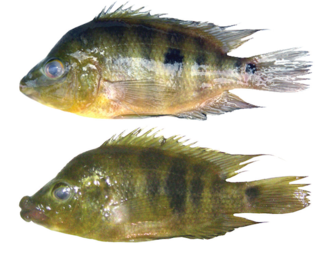
Cichlid-lips-bmcAbout 1800 years ago, a volcano in northern Nicaragua exploded. The crater formed by the eruption slowly filled like a rain barrel. Eventually the water rose high enough to warrant the title of lake. Today it is called Lake Apoyeque. Although Lake Apoyeque is over 300 feet deep, the rains have a long way to before they reach its brim. Lake Apoyeque remains ringed by volcanic cliffs towering as high as 1200 feet. And yet, despite its young age and its remote location, it is filled with fish.

For thirty years, Axel Meyer, an evolutionary biologist now at the University of Konstanz in Germany, has journeyed to Lake Apoyeque and other lakes of Nicaragua to study the evolution of their fish. He and his colleagues have caught cichlids and sequenced their DNA. By comparing their genes, the scientists can work out how the fish spread across the country. At Lake Apoyeque, for example, they found that the cichlids shared a number of mutations with the cichlids of Lake Managua nearby. The fish of Lake Apoyeque have accumulated relatively few mutations of their own. Meyer and his colleagues studied those mutations to estimate how long it took for their genetic diversity to evolve. They concluded that the cichlids came from Lake Managua to Lake Apoyeque only about a century ago.

There are forests and cliffs dividing Lake Managua and Lake Apoyeque, and no one can say exactly how the fish leaped over them around 1900. One likely route is a water spout. Water spouts are known to pass over Nicaragua, and it’s possible that every few thousand years one of them happens to suck up fish from one lake along the way and drops them in another.

More here.

MODERN EUROPEAN MASTERS NOW AVAILABLE IN TRANSLATION

John Greenman in The Newer York:

“The Girl with the Inexplicably Large Readership”

by Dag Dagsson

Dagsson’s thriller tells the story of two people: Salamander Lutefisk, a deeply damaged twenty-three year old computer programmer, and Bjorn Enquist, an investigative journalist. Enquist’s problem, like that of so many Scandinavian reporters, is that too many women want to have sex with him. As the novel begins, Enquist and Lutefisk team up to solve the murder of Enquist’s wealthy employer’s niece’s botanist’s reindeer, I think. Without giving away too much, I can tell you that the more this duo chases the truth, the more it recedes. Also that that whole thing is an elaborate dream sequence. Rivetingly fast paced, this novel is not just for fans of Swedish municipal politics, but also for anyone afraid to admit that they are into S&M.

More here.

From “Operation Wetback” To Newtown: Tracing The Hick Fascism Of The NRA

Reaganra

Mark Ames at NSFW (via Doug Henwood):

Until now, I have largely avoided getting dragged down into the gun control debate, in part because gun proliferation doesn’t explain why “going postal” first exploded into the culture in the late 1980s, and has worked its way into the American DNA ever since. Gun control or lack thereof doesn’t explain why these kinds of rampage shootings only appeared in the late Reagan era and spread ever since then. And there must have been my own personal prejudices too — I grew up with guns, and despite a couple of bad episodes involving guns and a drunken violent stepfather, I have a reflexive contempt for people who haven’t gone shooting and tell you that gun control laws are the answer.

Well, guess what? Their knee-jerk solution is more right than mine.

Passing gun restrictions today probably wouldn’t do much to slow down rampage massacres, at least not for awhile — but the politics of sweeping gun control laws could have a huge transformative effect over time. It’s no longer impossible for me to ignore that fact.

Which means it’s also no longer possible for me to ignore the National Rifle Association, and its hick fascism politics that’ve been poisoning our culture ever since the NRA’s infamous “coup” in 1977, when the NRA was taken over by far-right fanatics led by a convicted murderer and onetime US Border Guards chief named Harlon Carter — whose previous claim to fame was when he led a massive crackdown on Mexican immigrant laborers called “Operation Wetback.” That’s not a typo by the way.

Friday Poem

Giyani Block

When the sun recedes
into the Soutpansberg,
Giyani Block puts on a
black adder coat;
a mirror of death and despair.

Doctors and nurses stand on their feet.
They shall not rest when the workers’ strike
ignites its furious flame.
They’re on tiptoe, looking up,
wrestling the faceless, tailless monster.

Death’s whistle rings,
Death is a bosom friend here.
He walks like a dragon snake in the mountain.
In this house, Death is a burrowing mole;
he digs a hole in a life on the brink.
In this house, Death is a lion
with sharpened teeth, awaiting a rabbit.

Whether you are the most feared inyanga
with a calabash full of muti,
or a priest with the bible in hand,
whether strong as an iron-breaker or weak as an outcast,
whether handsome, shining like the sun
or beauteous, dancing with the stars,
Giyani Block remains a black sea
that wrecks our boats,
leaving no evidence or trace.
In Giyani Block heavens fall,
towers come to ruins,
flowers fade away.
Poor granny has joined ‘ngoma’:
who'll dance till the balls of his feet are bloodied,
his pride is but history.

Ncindhani, my neighbour, is feeble,
washed away like a rope.
His shoulders like a clothes hanger,
the blue arteries along his hands straight
as the strings of Juluka’s guitar;
his eyes are clouds of death,
deeply sunken like the sun falling
into the mouth of the horizon.
When he puts the hospital jacket away,
fleshless ribs and his amulet stand out
like rinderpest, a drought-stricken goat
by the stream.

by Vonani Bila
from In the Name of Amandla
Timbila Poetry Project, Elim, 2004

Genes, Cells and Brains

From The Guardian:

Clifford-Harper-illustrat-010We have outsourced the job of interpreting ourselves to the modern life sciences. The decoding of the human genome will tell us who we really are, pledged the gene-merchants. Brain scans will tell us who we really are, swore the neuro-hustlers. And what did we get? We got suckered. It turns out that humans have roughly as many protein-encoding genes as a fruit fly, and that fMRI scanning is still such an inexact art that a team of satirical neuroscientists have demonstrated significant “brain activity” in a dead salmon. This fascinating, lucid and angry book by the sociologist Hilary Rose and the neurobiologist Steven Rose (they are married) boasts abundant targets and a lethally impressive hit ratio. They decry the entrepreneurialisation of science – “wealth creation is now unabashedly formalised as the chief objective of science and technology policy” – not least because it actually impedes science. (“PhD students can work for months on a project only to find that they cannot continue as they have run into a patent.”) They lambast the “armchair” theorising of evolutionary psychology, with its ungrounded assumption that we have “stone-age minds in the 21st century”. They scorn the “neuromyths” sold to the educational establishment, with the result that schoolchildren become the unwitting subjects of uncontrolled experiments in applying alleged lessons from animal psychology to the classroom.

The book performs in high style the necessary public service of recomplicating the simplistic hogwash hysterically blasted at us by both uncritical science reporters and celebrity scientists. (The authors are very funny about Richard Dawkins, who clearly doesn't understand what a metaphor is.) Here are the knotty histories of molecular biology and evolutionary theory, with explanations of why evo-devo and epigenetics make the old genetic determinism untenable, and why there is hardly ever “a gene for” something. (“Ninety-five genetic loci have been found related to blood lipid levels,” the authors write, “possibly hundreds of genes might be implicated in coronary heart disease, and around a hundred in schizophrenia.”) They show how and why both genomics and stem-cell therapy have thus far failed to usher in a miraculous new age of medicine, and observe sorrowfully that, even as the media storm of neurogibberish rages unabated, Big Pharma is shutting down research into mental health disorders in favour of more tractable (and so profitable) diseases.

More here.

The sustainable meat of the future: Mealworms?

From Smithsonian:

MealwormsThe year is 2051. Given the realities of climate change and regulations on carbon emissions, beef and pork–protiens with high carbon footprints–have become too expensive for all but the most special of occasions. Luckily, scientists have developed an environmentally-friendly meat solution. Sitting down for dinner, you grab your fork and look down at a delicious plate of….mealworms. That, anyway, is one possibility for sustainable meat examined by Dennis Oonincx and Imke de Boer, a pair of scientists from the University of Wageningen in the Netherlands, in a study published today in the online journal PLOS ONE. In their analysis, cultivating beetle larvae (also known as mealworms) for food allowed the production of much more sustainable protein, using less land and less energy per unit of protein than conventional meats, such as pork or beef. In a 2010 study, they found that five different insect species were also much more climate-friendly than conventional meats—a pound of mealworm protein, in particular, had a greenhouse gas footprint 1% as large as a pound of beef. “Since the population of our planet keeps growing, and the amount of land on this earth is limited, a more efficient, and more sustainable system of food production is needed,” Oonincx said in a statement. “Now, for the first time it has been shown that mealworms, and possibly other edible insects, can aid in achieving such a system.”

This prospect might seem absurd—and, for some, revolting—but the problem of greenhouse gas emissions resulting from meat production is quite serious. The UN estimates that livestock production accounts for roughly 18% of all emissions worldwide, caused by everything from the fuel burned to grow and truck animal feed to the methane emitted by ruminants such as cows as they digest grass. Of most concern, since world populations are increasing and growing more wealthy, is that the demand for animal protein is expected to grow by 70-80% by 2050.

More here.

Wednesday, December 19, 2012

Statements on Erik Loomis

Erik Loomis blogs over at one of the smarter blogs around, Lawyers, Guns and Money. His position at the University of Rhode Island has come under attack, and there are a couple of statements in support. If you support him after reading the details, you may want to sign one of the statements in support. (Comments on this are closed.)

First, over at Crooked Timber:

Erik Loomis is no stranger to this blog. A gifted young scholar of US labor and environmental history, Loomis is also a blogger at Lawyers, Guns and Money. Many of us have tussled and tangled with him, most recently over whether leftists should vote for Obama. We have often disagreed with Loomis, not always pleasantly or politely, and he has certainly given as good as he has got.

But now we must stand by Loomis’s side and speak up and out on his behalf, for he has become the target of a witch hunt, and as an untenured professor at the University of Rhode Island, he is vulnerable. Loomis needs our solidarity and support, and we must give it to him.

Next over at Duck of Minerva:

Erik Loomis is a history professor at the University of Rhode Island and a long-time blogger. His highest-profile gig is at Lawyers, Guns & Money. In the immediate aftermath of the Newtown massacre, Erik tweeted that he “wanted to see Wayne LaPierre’s head on a stick.” The usual suspects in the conservative blogsphere soon translated this into the idea that Erik had called for LaPierre’s assassination.

The rest played out as you might expect. The stupid spread throughout the right-wing echo chamber, leading to depressing pot.kettle.black bullshit and, soon enough, calls to the Rhode Island police etc. etc. Erik was forced to delete his Twitter account, leading to the same kinds of losers who whine about “suppression of speech” at the slightest opportunity to crow victorious.

Joy

Zadie Smith in the New York Review of Books:

Smith_1-011013_jpg_230x1243_q85It might be useful to distinguish between pleasure and joy. But maybe everybody does this very easily, all the time, and only I am confused. A lot of people seem to feel that joy is only the most intense version of pleasure, arrived at by the same road—you simply have to go a little further down the track. That has not been my experience. And if you asked me if I wanted more joyful experiences in my life, I wouldn’t be at all sure I did, exactly because it proves such a difficult emotion to manage. It’s not at all obvious to me how we should make an accommodation between joy and the rest of our everyday lives.

Perhaps the first thing to say is that I experience at least a little pleasure every day. I wonder if this is more than the usual amount? It was the same even in childhood when most people are miserable. I don’t think this is because so many wonderful things happen to me but rather that the small things go a long way. I seem to get more than the ordinary satisfaction out of food, for example—any old food. An egg sandwich from one of these grimy food vans on Washington Square has the genuine power to turn my day around. Whatever is put in front of me, foodwise, will usually get a five-star review.

You’d think that people would like to cook for, or eat with, me—in fact I’m told it’s boring. Where there is no discernment there can be no awareness of expertise or gratitude for special effort. “Don’t say that was delicious,” my husband warns, “you say everything’s delicious.” “But it was delicious.” It drives him crazy. All day long I can look forward to a popsicle. The persistent anxiety that fills the rest of my life is calmed for as long as I have the flavor of something good in my mouth. And though it’s true that when the flavor is finished the anxiety returns, we do not have so many reliable sources of pleasure in this life as to turn our nose up at one that is so readily available, especially here in America. A pineapple popsicle. Even the great anxiety of writing can be stilled for the eight minutes it takes to eat a pineapple popsicle.

More here.