You’re tired of this old world at last

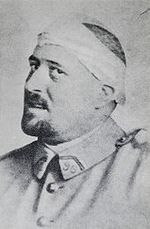
170px-Guillaume_Apollinaire_foto

With the outbreak of the Great War in 1914, Apollinaire—an assiduously cosmopolitan promoter of new movements in art, from Cubism to German Expressionism—enlisted in the French army. On New Year’s Day in 1915, while traveling by train from Marseilles to Nice, he met a young schoolteacher from Algeria named Madeleine Pagès, and their encounter soon blossomed into an intense epistolary relationship. Apollinaire’s side of the correspondence has been assembled in Letters to Madeleine, recently translated by Donald Nicholson-Smith. These letters—containing the first versions of many of the poems later published in the poet’s last collection, Calligrammes—are indispensable to lovers of modern poetry, and their origins in what the poet called “the very forefront of France-in-arms,” amid the horrors of trench warfare, make them a powerful testimonial of the Great War, on the level of classic accounts by authors such as Robert Graves, Wilfred Owen, Erich Maria Remarque, and Siegfried Sassoon.

more from Christopher Winks at Bookforum here.
obscenity

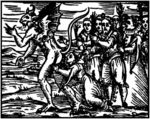
The_Obscene_Kiss

It is rare enough now to hear talk about obscenity, a reflection of our avowed permissiveness, a state within which it is increasingly hard to feel confident about advocating the punishment of something for being disgusting; if anything, we try to discourage obscenity rather than denounce it. In this way, Western culture now invests the word inappropriate with more force than its opposite, and it offers people the opportunity to enjoy the delicious authority of moral commentator on the psycho-social-sexual practice of everyday life without really dealing with anything too horrendous. This abiding discourse, however, in which we appear to be performing with ethical scrupulousness, is of course a blind; the mildly impotent talk of managing the appropriateness of interaction between work colleagues at a newspaper can carry on, for example, while the publisher of the same newspaper presides over a publishing empire whose core business is pornography. In our pornocracy, almost nothing is obscene, or rather nobody dare call it by name, as the term is just too absolute. Calling something inappropriate allows us to preserve the fantasy that we exert a moral influence on culture, even as it also implies that there are contexts in which anything might be appropriate, which is a much more violent reality than what we usually want to admit.

more from Michael Hinds at Dublin Review of Books here.

sullivan on the pope

050413_ratzinger_vmed_10a.grid-4x2

For me, the great tragedy of Benedict was his panic after the Second Council. There is no disputing the elegance of his mind or the exquisite meticulousness of his perfect, orderly German theology – and his work alongside the more consistently modernist Hans Kung will stand the test of time. But his post-1960s theology had as much relationship to the real challenges of the 21st Century as the effete, secluded German scholar, embalmed in clerical privilege for his entire adult life. And his early promise as a theologian calcified into the purest form of reaction and fear when given the power to enforce orthodoxy, which is what he essentially did for well over two decades. It was excruciating to watch such a careful, often illuminating scholar turn into a Grand Inquisitor. It was revealing that a bureaucrat who never missed even a scintilla of heresy was able to turn such a blind eye to the monstrous rapes of so many children.

more from Andrew Sullivan here.

Does African-American Literature Exist?

Kenneth W. Warren in The Chronicle of Higher Education:

Photo_10411_landscape_largeI'd like to make a claim that runs counter to much of literary scholarship. Historically speaking, the collective enterprise we call African-American or black literature is of recent vintage—in fact, it's just a little more than a century old. Further, it has already come to an end. And the latter is a fact we should neither regret nor lament.

African-American literature was the literature of a distinct historical period, namely, the era of constitutionally sanctioned segregation known as Jim Crow. Punctuated by state constitutional amendments that disfranchised black Americans throughout much of the South, legitimated by the U.S. Supreme Court in 1896 with the infamous “separate but equal” ruling in Plessy v. Ferguson, and stumbling into decline in the 1950s, 60s, and early 70s, Jim Crow and the fight against it gave rise to—and shaped—African-American literary practice as we have come to know it. Like it or not, African-American literature was a Jim Crow phenomenon, which is to say, speaking from the standpoint of a post-Jim Crow world, African-American literature is history. While one can (and students of American literature certainly should) write about African-American literature as an object of study, one can no longer write African-American literature, any more than one can currently write Elizabethan literature.

More here. (Note: At least one daily post throughout February will be devoted to African American History Month)

A Match Made in the Code

John Tierney in The New York Times:

ValenNew Orleans — In the quest to find true love, is filling out a questionnaire on a Web site any more scientific than praying to St. Valentine? Yes, according to psychologists at eHarmony, an online company that claims its computerized algorithms will help match you with a “soul mate.”

…Unlike many other Web dating services, eHarmony doesn’t let customers search for partners on their own. They pay up to $60 per month to be offered matches based on their answers to a long questionnaire, which currently has about 200 items. The company has gathered answers from 44 million people, and says that its matches have led to more than half a million marriages since 2005. Dr. Gonzaga, a social psychologist who previously worked at a marriage-research lab at the University of California, Los Angeles, said eHarmony wouldn’t let him disclose its formulas, but he did offer some revelations. He said its newest algorithm matches couples by focusing on six factors:

¶ Level of agreeableness — or, put another way, how quarrelsome a person is.

¶ Preference for closeness with a partner — how much emotional intimacy each wants and how much time each likes to spend with a partner.

¶ Degree of sexual and romantic passion.

¶ Level of extroversion and openness to new experience.

¶ How important spirituality is.

¶ How optimistic and happy each one is.

The more similarly that two people score in these factors, the better their chances, Dr. Gonzaga said, and presented evidence, not yet published, from several studies at eHarmony Labs. One study, which tracked more than 400 married couples matched by eHarmony, found that scores from their initial questionnaires correlated with a couple’s satisfaction with their relationship four years later.

More here.

Tuesday Poem

A Visit

Gone are the days
when you could walk on water.
When you could walk.

The days are gone.
Only one day remains,
the one you're in.

The memory is no friend.
It can only tell you
what you no longer have:

a left hand you can use,
two feet that walk.
All the brain's gadgets.

Hello, hello.
The one hand that still works
grips, won't let go.

That is not a train.
There is no cricket.
Let's not panic.

Let's talk about axes,
which kinds are good,
the many names of wood.

This is how to build
a house, a boat, a tent.
No use; the toolbox

refuses to reveal its verbs;
the rasp, the plane, the awl,
revert to sullen metal.

Do you recognize anything? I said.
Anything familiar?
Yes, you said. The bed.

Better to watch the stream
that flows across the floor
and is made of sunlight,

the forest made of shadows;
better to watch the fireplace
which is now a beach.

by Margaret Atwood

Oriental Enlightenment

Kenan Malik in Pandaemonium:

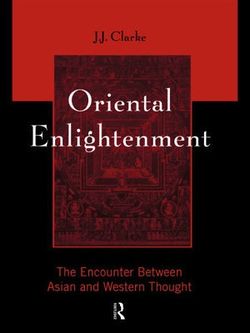
Oriental-enlightenmentA book that I wish I had read many years ago. JJ Clarke’s Oriental Enlightenmentis a superb study of ‘The encounter between Asian and Western thought’, as the subtitle puts it. It is primarily a historical study of Western perceptions of Chinese and Indian cultures and philosophies. Any exploration of the role of ‘Eastern’ thought in the Western intellectual tradition necessarily lies in the shadow of Edward Said’s 1978 work Orientalism, which has effectively set the terms of the debate. Western historians, philologists and philosophers, Said argued, have fabricated a complex set of representations about the Orient through which ‘European culture was able to manage – and even produce – the Orient politically, sociologically, militarily, ideologically, scientifically and imaginatively during the post-Enlightenment period’.

As the title of Clarke’s book reveals, he is not only aware of Said’s importance in this debate, but takes Orientalism as the starting point for his own study. But if Clarke draws upon Said’s insights, he also rejects much of his argument. ‘Where Said painted orientalism in sombre hues, using it as the basis for a powerful ideological critique of Western liberalism’, Clarke writes, ‘I shall use it to uncover a wider range of attitudes, both dark and light, and to recover a richer and often more affirmative orientalism, seeking to show that the West has endeavoured to integrate Eastern thought into its own intellectual concerns in a manner which, on the face of it, cannot be fully understood in terms of “power” and “domination”.’

More here.

5 Ways to Make Progress in Evolutionary Psychology: Smash, Not Match, Stereotypes

Kate Clancy in Scientific American:

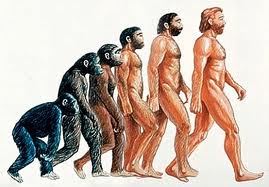
Images (1)Evolutionary psychology, the study of human psychological adaptations, does not have a popular or scientific reputation for being rigorous, even though there are rigorous, thoughtful scientists in the field. The field is trying to take on an incredibly challenging task: understand what of human behavior is adaptive and why. We can better circumvent the conditions that lead to violence, war, and hatred if we know as much as we can about why we are the way we are. What motivates us, excites us, angers us, and how can evolutionary theory help us understand it all?

Because of this, there are consequences to a bad evolutionary psychology interpretation of the world. The biggest problem, to my mind, is that so often the conclusions of the bad sort of evolutionary psychology match the stereotypes and cultural expectations we already hold about the world: more feminine women are more beautiful, more masculine men more handsome; appearance is important to men while wealth is important to women; women are prone to flighty changes in political and partner preference depending on the phase of their menstrual cycles. Rather than clue people in to problems with research design or interpretation, this alignment with stereotype further confirms the study. Variation gets erased: in bad evolutionary psychology, there are only straight people, and everyone wants the same things in life. Our brains are iPhones, each app designed for its own special adaptive purpose.

More here.

The man who shot and killed Osama bin Laden

Phil Bronstein at the Center for Investigative Reporting:

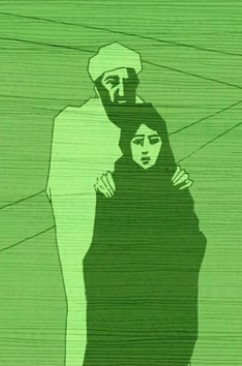
ScreenHunter_100 Feb. 12 11.12“I thought in that first instant how skinny he was, how tall and how short his beard was, all at once. He was wearing one of those white hats, but he had, like, an almost shaved head. Like a crew cut. I remember all that registering. I was amazed how tall he was, taller than all of us, and it didn't seem like he would be, because all those guys were always smaller than you think.

I'm just looking at him from right here [he moves his hand out from his face about ten inches]. He's got a gun on a shelf right there, the short AK he's famous for. And he's moving forward. I don't know if she's got a vest and she's being pushed to martyr them both. He's got a gun within reach. He's a threat. I need to get a head shot so he won't have a chance to clack himself off [blow himself up].

In that second, I shot him, two times in the forehead. Bap! Bap! The second time as he's going down. He crumpled onto the floor in front of his bed and I hit him again, Bap! same place. That time I used my EOTech red-dot holo sight. He was dead. Not moving. His tongue was out. I watched him take his last breaths, just a reflex breath.

And I remember as I watched him breathe out the last part of air, I thought: Is this the best thing I've ever done, or the worst thing I've ever done? This is real and that's him. Holy shit.”

More here.

Monday, February 11, 2013

Sunday, February 10, 2013

What Galileo saw

Adam Gopnik in The New Yorker:

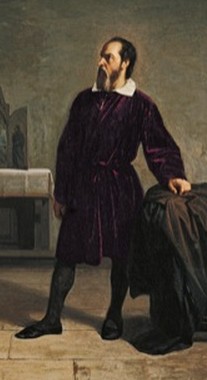
ScreenHunter_97 Feb. 10 18.36Although Galileo and Shakespeare were both born in 1564, just coming up on a shared four-hundred-and-fiftieth birthday, Shakespeare never wrote a play about his contemporary. (Wise man that he was, Shakespeare never wrote a play about anyone who was alive to protest.) The founder of modern science had to wait three hundred years, but when he got his play it was a good one: Bertolt Brecht’s “Galileo,” which is the most Shakespearean of modern history plays, the most vivid and densely ambivalent. It was produced with Charles Laughton in 1947, during Brecht’s Hollywood exile, and Brecht’s image of the scientist as a worldly sensualist and ironist is hard to beat, or forget. Brecht’s Galileo steals the idea for the telescope from the Dutch, flatters the Medici into giving him a sinecure, creates two new sciences from sheer smarts and gumption—and then, threatened by the Church with torture for holding the wrong views on man’s place in the universe, he collapses, recants, and lives on in a twilight of shame.

It might be said that Brecht, who truckled to the House Un-American Activities Committee—“My activities . . . have always been purely literary activities of a strictly independent nature”—and then spent the next bit of his own life, post-Hollywood, accessorized to the Stalinist government of East Germany, was the last man in the world to be pointing a finger at someone for selling out honesty for comfort. But then the last man who ought to point that finger is always the one who does. Galileo’s shame, or apostasy, certainly shapes the origin myth of modern science, giving it not a martyr-hero but a turncoat, albeit one of genius. “Unhappy is the land that breeds no heroes,” his former apprentice says at the play’s climax to the master who has betrayed the Copernican faith. “No,” Galileo replies, “unhappy is the land that needs a hero.” It is a bitter valediction for the birth of the new learning. The myth that, once condemned, he muttered under his breath, about the earth, “But still, it moves,” provides small comfort for the persecuted, and is not one that Brecht adopted.

More here.

‘Kill Anything That Moves’

Joel Whitney in the San Francisco Chronicle:

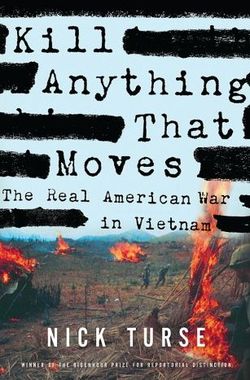
ScreenHunter_96 Feb. 10 18.30In early 1971, the New York Times Book Review splashed its cover with the question “Should We Have War Crimes Trials?” American perceptions of the war in Vietnam were at a sort of tipping point, and the military was nervous. A retired general and respected prosecutor at Nuremberg argued in the Times and on “The Dick Cavett Show” that Gen. William Westmoreland might be guilty of war crimes. “[O]ur army that now remains in Vietnam,” a colonel wrote at the time, “is in a state approaching collapse, with individual units avoiding or having refused combat, murdering their officers … drug-ridden, and dispirited where not near-mutinous.”

As Nick Turse tells it in his indispensable new history of the war, challenges to the military's perceptions of the conflict, which it pretended to be winning every day for years, started with Seymour Hersh's groundbreaking account of the My Lai massacre. American soldiers murdered 500 Vietnamese civilians at My Lai in 1968, and after Hersh's exposé, suddenly war crimes were a hot story. For a moment. But Turse insists that if the editors of Newsweek hadn't “eviscerated” an article that described a much larger death toll in 1972, the wool wouldn't still be pulled over Americans' eyes.

The problem, as described in Turse's “Kill Anything That Moves,” is the tension between the “bad apples” argument – which sees atrocities in Vietnam as the exception – and the reality of the broader, official “American way of war.”

More here.

The Other Side of Noam Chomsky’s Brilliant Mind

An excerpt from the new book “Power Systems” explore's Chomsky's contributions to the raging academic debate on linguistics and how children learn to speak.

David Barsamian and Noam Chomsky in AlterNet:

DB: It’s been more than five decades since you first wrote about universal grammar, the idea of an inborn capacity in every human brain that allows a child to learn language. What are some of the more recent developments in the field?

ScreenHunter_95 Feb. 10 18.25NC: Well, that gets technical, but there’s very exciting work going on refining the proposed principles of universal grammar. The concept is widely misunderstood in the media and in public discussions. Universal grammar is something different: it is not a set of universal observations about language. In fact, there are interesting generalizations about language that are worth studying, but universal grammar is the study of the genetic basis for language, the genetic basis of the language faculty. There can’t be any serious doubt that something like that exists. Otherwise an infant couldn’t reflexively acquire language from whatever complex data is around. So that’s not controversial. The only question is what the genetic basis of the language faculty is.

Here there are some things that we can be pretty confident about. For one thing, it doesn’t appear that there’s any detectable variation among humans. They all seem to have the same capacity. There are individual differences, as there are with everything, but no real group differences—except maybe way at the margins. So that means, for example, if an infant from a Papua New Guinea tribe that hasn’t had contact with other humans for thirty thousand years comes to Boulder, Colorado, it will speak like any kid in Colorado, because all children have the same language capacity. And the converse is true. This is distinctly human. There is nothing remotely like it among other organisms. What explains this?

More here.

Letter from Jaipur

J. D. Daniels in the Paris Review:

IMG_0518-300x225Last year’s Jaipur Literature Festival was exciting and boring at the same time—a death threat is exciting, but thirty death threats are boring; as Dostoevsky wrote, “Man is a creature who can get used to anything.” Salman Rushdie was scheduled to attend: Islamic groups agitated to deny him a visa, which he does not need in order to enter India, but never mind. It was suggested that instead Rushdie might address the festival via video conference: the government itself advised against this. Hari Kunzru, Jeet Thayil, Amitava Kumar, and Ruchir Joshi read aloud in protest from The Satanic Verses, still banned in India, but, after the gravity of their collective transgression had been brought home to them, they left the festival.

We know what comedy is: life is increased. Think of Rodney Dangerfield addressing the crowd at the end of Caddyshack: “Hey, everybody, we’re all gonna get laid!” And we know what tragedy is: isolation increases. I used to think that life was about winning everything, Mike Tyson once said, but now I know that life is about losing everything.

But what is India, with its boundless affirmation of life in general that befouls so many lives in the particular, with its joyous proliferation unto overcrowding, need, and misery?

More here.

Slave market

From SCIP:

Zan

A monument dedicated to the memory of the inhuman situations which resulted from slavery. For ages, Zanzibar served as a transit port for African slaves going to Mauretania and the Arabic countries. The monument is created by Clara Sörnäs.

(Note: At least one daily post throughout February will be devoted to African American History Month)

More here.

Sunday Poem

Spring may be in your step or in your mind,
but if you carry it always in your mind
it’ll often be in your step. —Roshi Bob

Pagham Harbour Spring

The blur of sky and sea
this white grey morning
before the day burns
moves into blue

the sweet butter scent of gorse
the sweet scent of you
dear daughter ghost in my head
dear daughter

the mudflats and sailings shine
as the children run by
along marsh edge and the high dyke bank
egret and oystercatcher dunlin and sandpiper

In the distance a train passes
where a short neat man
pushes a refreshment trolley
his clean white shirt immaculately ironed
his black waistcoat just right
the quiet dignity of him
as he passes through the hours

You’d know this the particulars
were you here
held in the wide sky arc
the children running on the dyke bank
absorbed in this world
.

by Lee Harwood
from Collected Poems
publisher: Shearsman Books, Exeter, 2004