Sylvia Plath 50 Years Later: What Modern Feminism Can Learn From Ariel

Anis Shivani in the Huffington Post:

Img-thingSylvia Plath, who died 50 years ago this week, founded a style of feminist poetry that has almost completely receded. Arriving as she did at the head of the women's rights movement, Plath's poetry partly set the stage for the feverish experiments in consciousness that followed soon; it was comparable to, say, Malcolm X's militancy auguring the civil rights movement. Today, after 50 years of academic assimilation, one finds little poetry that stands up well to Plath's urgent retort to patriarchy, militarism and domesticity.

Is Ariel, her most important book, still effective almost 50 years after publication? Does it feel dated or is there a message that still resonates? How does the poetry itself hold up, ignoring the understandable obsession surrounding the circumstances of her death and after image? What can poets today learn from Ariel?

Ariel has lost none of its freshness — or madness. It strikes a deadly blow at the justifications of commercialized post-war American domesticity in the same way that Guillaume Apollinaire'sAlcools (1913) encapsulated the ennui immediately preceding three decades of European warfare.

More here.

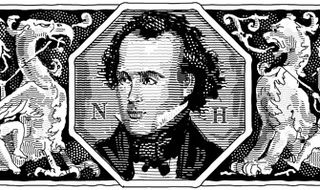
The Possibility of Progress: Nathaniel Hawthorne’s “The Hall of Fantasy”

Jerremy Kessler in The New Atlantis:

ScreenHunter_107 Feb. 16 17.54At any moment, the imagination says no to the world as it is while saying yes to an alternative reality — to a world that never was or has yet to be. Behind every vision lies dissatisfaction. This holds true for the statesman as much as for the artist. Both say no to the world in which they find themselves, even as they say yes to its next incarnation, now disincarnate.

In his story “The Hall of Fantasy,” Nathaniel Hawthorne hints that every form of human activity verges on the unworldliness of fantasy, negating the present in favor of the future or imagined past. Yet it is the political use of the imagination that attracts Hawthorne’s most skeptical treatment. Political reformers and revolutionaries, Hawthorne argues, are uniquely unworldly, even anti-worldly, as they claim to care deeply for the same world that they work to destroy. Hawthorne’s story is a peculiarly American meditation on the relationship between art and politics and the purpose and power of human creativity.

More here.

why priests?

17BALMER-articleLarge

Wills argues that an alternative understanding of Jesus and the eucharist, one more consonant with the New Testament (Hebrews excepted) and informed by Augustine, sees Jesus as coming to harmonize humanity with himself. The eucharistic meal remains a meal (as it was in the first century), not a sacrifice, one that celebrates the union between Christ and his followers. “One does nothing but disrupt this harmony by interjecting superfluous intermediaries between Jesus and his body of believers,” Wills writes. “When these ‘representatives’ of Jesus to us, and of us to Jesus, take the feudal forms of hierarchy and monarchy, of priests and papacy, they affront the camaraderie of Jesus with his brothers.” If some elements of Wills’s thesis sound familiar, they are. In the not-so-distant past, another formidable thinker and critic — someone who also favored Augustine over Aquinas — mounted a similar case. In his 1520 “Address to the Christian Nobility of the German Nation,” Martin Luther argued against “Roman presumption” and punctured the pretensions of the clergy: “Priests, bishops or popes . . . are neither different from other Christians nor superior to them.” Similarly, in “The Babylonian Captivity of the Church,” published the same year, Luther wrote that “priests are not lords, but servants,” and “the sacrament does not belong to the priests, but to all men.”

more from Randall Balmer at the NY Times here.

Hitler’s Philosophers

02ec852e-4cad-4900-9d6a-a94c285e8a64

From 1933, Hitler’s chosen “philosophical” manager was Alfred Rosenberg, who was tasked with defending an ideology that would destroy democracy, pluralist toleration and individual freedom. Rosenberg even fished around in Homer and Plato to support his theories of the leadership principle, arguing that these greats of ancient Greece were “proto-Nazis”. He criticised Hegel’s idea of a strong state, arguing that the Volk takes precedence. But it was from Wilhelm Marr’s book The Victory of Judaism over Teutonism (1873) that, according to Sherratt, Rosenberg drew the Nazi version of Social Darwinism. Sherratt’s chapter on Martin Heidegger, the renowned philosopher of phenomenology, is a powerful portrait of collaboration, and corruption of the best. He endorsed the sacking of his erstwhile mentor Edmund Husserl after the dismissal of Jews from the civil service and academia in 1933. Heidegger even removed his dedication to Husserl from subsequent editions of his magnum opus Being and Time. He lectured in a Nazi uniform. As late as 1942 he was still praising National Socialism and “its unique historical status”. He defended Hitler’s regime and war aims well into 1944. According to Sherratt, Heidegger’s intellectual project can be read as a “doctrine of radical self-sacrifice where individualisation is allowed only for the purpose of heroism in warfare”.

more from John Cornwell at the FT here.

the gun guys

580x375

“Gun guys are not like camera buffs; they’re not like fly fishermen, not like car buffs. It’s deep, it’s really deep,” he explains. “I was really trying to figure out why these things move us, why they are so important to us.” Baum’s own love affair with guns began at age 5; at summer camp he discovered he had a natural aptitude for target shooting. He was attracted to the physicality of guns and charmed by the James Bond mythology he associated with them. But in his liberal suburb, the late ’60s brought a schism between the weapons and his world. “I was against the [Vietnam] war too, and aspired to the hippie aesthetic as much as any other sixth-grader,” he writes. “But that didn’t keep me from liking guns. To me, they were separate.” This separation between guns and violence is an essential part of Baum’s world view. As he details the way guns make him feel, one thing becomes clear: He finds power in carrying but not using a weapon.

more from Carolyn Kellogg at the LA Times here.

The deleted passage of the declaration of independence (1776)

From BlackPast:

THE DECLARATION OF INDEPENDENCE AND THE DEBATE OVER SLAVERY

When Thomas Jefferson included a passage attacking slavery in his draft of the Declaration of Independence it initiated the most intense debate among the delegates gathered at Philadelphia in the spring and early summer of 1776. Jefferson's passage on slavery was the most important section removed from the final document. It was replaced with a more ambiguous passage about King George's incitement of “domestic insurrections among us.” Decades later Jefferson blamed the removal of the passage on delegates from South Carolina and Georgia and Northern delegates who represented merchants who were at the time actively involved in the Trans-Atlantic slave trade. Jefferson's original passage on slavery appears below.

He has waged cruel war against human nature itself, violating its most sacred rights of life and liberty in the persons of a distant people who never offended him, captivating & carrying them into slavery in another hemisphere or to incur miserable death in their transportation thither. This piratical warfare, the opprobrium of infidel powers, is the warfare of the Christian King of Great Britain. Determined to keep open a market where Men should be bought & sold, he has prostituted his negative for suppressing every legislative attempt to prohibit or restrain this execrable commerce. And that this assemblage of horrors might want no fact of distinguished die, he is now exciting those very people to rise in arms among us, and to purchase that liberty of which he has deprived them, by murdering the people on whom he has obtruded them: thus paying off former crimes committed again the Liberties of one people, with crimes which he urges them to commit against the lives of another.

More here. (Note: At leas t one daily post throughout February will be devoted to African American History Month)

The Green Suitcase

From The Telegraph:

As the first year of the Telegraph’s hugely popular Short Story Club draws to a close, we present the winning entry by Jo Senior.
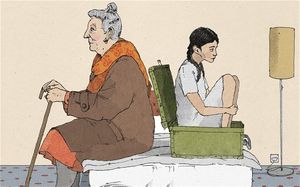
Wesley-illo1_2482252bThe first thing Mildred Bloom does when she arrives anywhere is find out how to leave. In airport terminals this is usually an easy task and, over the years, she has acquainted herself with the exit in a dozen different languages: salida, sortie, wyj´scie. On this occasion she locates the Ausgang with little trouble, but unfortunately she fails to find her suitcase.

“My suitcase is green,” she tells the young American slouching beside her at the baggage carousel, “and really quite small.”

The young American shrugs, yawns and, after a brief tussle with a bear-sized backpack, lopes away into the arms of his waiting Fräulein.

She had hoped for more, even from a fellow New Yorker. Mildred eyes the Ausgang sign.

Minutes pass, and she feels half-mesmerised by tiredness and the revolutions of the conveyor belt. Just six bags remain unclaimed. Then five. Three of the five are green, but they are the wrong green, and not hers. Mildred tilts her head at their labels. They are not even from her flight. And there is a child’s buggy. Who forgets a child’s buggy? she wonders.

The conveyer belt stops, momentarily shudders back to life, then stops again. As the electrics power down, the belt seems to exhale, its work done. And, as hard as Mildred stares, it stays done. All the activity in the baggage hall is now focused on another carousel, where travellers collect like buzzards round a corpse.

She watches a man collect the five remaining suitcases and line them up on the floor. He avoids Mildred’s eye. He looks at his watch. He lays the buggy beside the suitcases. He looks at his watch again, still avoiding Mildred’s eye, and walks away. He slings his uniform jacket over his arm, as if he is already halfway home.

“Young man,” she calls after him. She does not think she has ever called anyone “young man” before, but something tells her that the situation will demand a certain hauteur.


More here.

Saturday Poem

If you want to rule the world
set the poor against the poor
……………… —R. Bob

Libertad! Igualdad! Fraternidad!

You sullen pig of a man
you force me into the mud
with your stinking ash-cart!

Brother!
–if we were rich
we'd stick our chests out
and hold our heads high!

It is dreams that have destroyed us.

There is no more pride
in horses or in rein holding.
We sit hunched together brooding
our fate.

Well–
all things turn bitter in the end
whether you choose the right or
the left way
and–
dreams are not a bad thing.
.

by William Carlos Williams

Friday, February 15, 2013

Genetic system performs logic operations and stores data in DNA

Roland Pease in Nature:

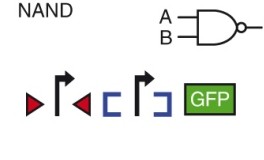
ScreenHunter_106 Feb. 15 17.10Synthetic biologists have developed DNA modules that perform logic operations in living cells. These ‘genetic circuits’ could be used to track key moments in a cell’s life or, at the flick of a chemical switch, change a cell’s fate, the researchers say. Their results are described this week in Nature Biotechnology1.

Synthetic biology seeks to bring concepts from electronic engineering to cell biology, treating gene functions as components in a circuit. To that end, researchers at the Massachusetts Institute of Technology (MIT) in Cambridge have devised a set of simple genetic modules that respond to inputs much like the Boolean logic gates used in computers.

“These developments will more readily enable one to create programmable cells with decision-making capabilities for a variety of applications,” says James Collins, a synthetic biologist at Boston University in Massachusetts who was not involved in the study.

Collins developed the genetic ‘toggle switch’ that helped to kick-start the field of synthetic biology more than a decade ago2. A wide range of computational circuits for cells have been developed since…

More here.

Gollum’s Mother

1360736613

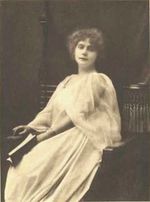
IT’S DIFFICULT, even a century after her literary career began its decline, to talk about Marie Corelli without succumbing to a battery of adjectives. Often condemned as a hack and praised as a saint, Corelli was something altogether more interesting, a sort of Oscar Wilde in reverse. If Wilde’s lampoons show a certain tenderness toward human hypocrisy, the joke being that most everyone is terrible, Corelli’s satire, while no less affectionate, sides always with the angels. Hers is a sincere sarcasm. She was a flamboyant puritan, an antisuffragist cryptofeminist, and a defender of traditional morals who lived all her life with another woman. On a wall above the mantel in one of the main halls of Mason Croft, the house she shared with her lifelong companion Bertha Vyver, both women’s initials appear encircled by a wreath. The caption underneath reads “Amor Vincit.” (All-conquering love notwithstanding, it’s likely that Corelli’s relationship with Vyver remained platonic.)

more from Lili Loofbourow at the LA Review of Books here.

sacks on drugs

Oliver-Sacks

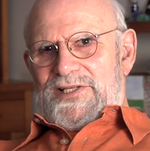
In the 1960s, Sacks extended his neurophenomenological explorations by taking a variety of recreational drugs; not only amphetamines but also pot and, of course, LSD. The results were occasionally ecstatic, sometimes merely strange and often terrifying. Conversations with a friendly spider – with whom, after an opening exchange of pleasantries, he discussed whether Bertrand Russell had irreversibly damaged Frege’s system of thought with his famous paradox – and studying key moments from the battle of Agincourt enacted on his dressing gown sleeve, were not atypical episodes in the pharmacological dramas unfolding in his head. He fought off panic by carefully transcribing the “craziness” inside himself, writing “for dear life” as “wave after wave of hallucination” rolled over him. These were not quite as crazy as the experience of the student Daniel Breslaw, a subject in a formal study of LSD, who, entering an elevator, passed “a floor every hundred years” and, when back in his room, swam “through the remaining centuries of the day. Every five eons or so a nurse arrives (in the aspect of a cougar, a differential equation, or a clock radio) and takes my blood pressure”. As if this were not enough, Breslaw experienced synaesthesia, or a fusion between the senses, reporting such gems as “the smell of a low B flat, the sound of green”.

more from Raymond Tallis at the TLS here.

Because we are Syrians

130312_mainimg

We in the Middle East have always had a strong appetite for factionalism. Some attribute it to individualism, others blame the nature of our political development or our tribalism. Some even blame the weather. We call it tasharthum and we loathe it: we hold it as the main reason for all our losses and defeats, from al-Andalus to Palestine. Yet we love it and bask in it and excel at it, and if there is one thing we appreciate it is a faction that splinters into smaller factions. Yet even by the measure of previous civil wars in the Middle East, the Syrians seem to have reached new heights. After all, the Palestinians in their heyday had only a dozen or so factions, and the Lebanese, God bless them, pretending it was ideology that divided them, never exceeded thirty different factions. In Istanbul I asked a Syrian journalist and activist why there were so many battalions. He laughed and said, ‘Because we are Syrians,’ and went on to tell me a story I have heard many times before.

more from Ghaith Abdul-Ahad at the LRB here.

the real west bank

Wnv-Hebron_1-2

As we made our way among the winding, shoddy roads that Palestinians are allowed to drive on, the settlements were everywhere—on hilltops, around every turn, connected by their own sumptuous superhighways. I convened a contest among the other riders on our Freedom Bus about what science fiction terminology best described the settlements we kept seeing. “Death Star” or “Coruscant” from Star Wars seemed appropriate to their looming effect, but not their actual appearance. So I settled on, simply, “moon base.” A moon base is, essentially, the perfect suburb. In contrast to its hostile surroundings, it is supposed to be clean, orderly, functional, and white. Every inch is planned. Its inhabitants work together for a higher purpose. I imagine that life in the matching apartment buildings and townhouses and houses of the settlements is like that too. I imagine that there are a lot of recycling bins. Space eventually leads one to time. They are closer than we think, and one doesn’t make sense without the other; light-years measure distance, and timezones dictate the hour. On the map of the West Bank, too, I began noticing traces of my own country’s history.

more from Nathan Schneider at Killing the Buddha here.

Fairies Forever!

LittleRedRidingHood1927-205x300

“Once upon a time there was . . .”: The very opening formula of fairy tales suggests quaintness, the patina of the long-ago, the flavor of the outmoded. If fairy tales, as a genre, are the opposite of modernity, why is it, then, that they have survived thousands of years? One answer is that they deal with things that are timeless and universal, basic aspects of the human condition – offering the reader, in Tolkien’s words, consolation, the recovery of a clear view, and the chance to escape the bleakness of the quotidian. Another is that, being originally transmitted orally, they have no definite shape and are thus infinitely adaptable to the needs and interests of their specific audiences. We tend to forget this, since the most successful recorders of fairy tales, men like Charles Perrault, Antoine Galland, Jacob and Wilhelm Grimm, Hans Christian Andersen or Joseph Jacobs, have given their tales permanent shapes, turning what once were protean entities into classical texts with a canonical status. Nevertheless, fairy tales have of course continued to be re-told, adapted, transformed, modernized. Seen from this angle, there is little unusual about the collection of modernized fairy tales to be reviewed here. What makes it particularly interesting is the fact that The Fairies Return Or, New Tales for Old, which was recently published with an introductory essay by the renowned folklorist Maria Tatar, is really a reprint of a collection that first appeared in 1934.

more from Dieter Petzold at The Berlin Review of Books here.

romanticism, the video game

Shadow-header

In Romanticism, Romantic Irony is paradoxically counterbalanced by an opposite tendency, which Larmore calls ‘Authenticity’, “a very different and essentially non-reflective way of being an individual, unabsorbed by a sense of belonging” (83). The habit of brooding, the sullen, introspective sensibility of some Romantic thinkers, was answered with a fiery impulsiveness in others, a rejection of the rational and structured self-possession of the Age of Reason. When the Romantics weren’t cloudy, they were stormy, acting out their passions, asserting their individuality, defending their homelands, and taking up the standards of their ideals, no matter the cost. This alternate mode of Romantic behavior is reflected in Shadow of the Colossus‘s other mode of gameplay, which I call the encounter. This is the combat, a ritual slaying of each Colossus in turn, which Wander undertakes to appease the demigod Dormin. In these battles, Wander isn’t just being practical, acting in patient pursuit of his calculated agenda. As the player gets lost in the excitement of the battle and each successive rush of triumph, so Wander loses himself in the emotional rush of catharsis. He releases himself to his passions, acting out his love for Mono and his resentment at her death.

more from Jesse Miksic at Berfrois here.

Margaret Garner Incident (1856)

From BlackPast:

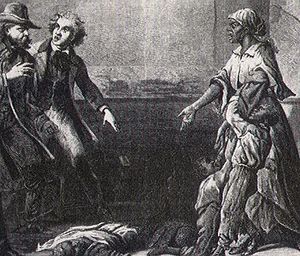
Garner_Margaret_Best known as the inspiration for Toni Morrison’s award winning novel, Beloved, The Margaret Garner Incident of 1856 contains one of the most ground breaking fugitive slave trials of the pre-Civil War era. Margaret Garner was born into slavery on June 4, 1834 on Maplewood plantation in Boone County, Kentucky. Working as a house slave for much of her life, Garner often traveled with her masters and even accompanied them on shopping trips to free territories in Cincinnati.

After marrying Robert Garner in 1849, Margaret bore four children by 1856. The 1850s were also a period in which the Underground Railroad was at its height in and around Cincinnati, transporting numerous slaves to freedom in Canada. The Garners decided to take advantage of such an opportunity to escape enslavement. On Sunday January 27, 1856, they set out for their first stop on their route to freedom, Joseph Kite’s house in Cincinnati. The Garners made it safely to Kite’s home on Monday morning, where they awaited their next guide. Within hours, the Garners master, A.K. Gaines, and federal marshals stormed Kite’s home with warrants for the Garners. Determined not to return to slavery, Margaret decided to take the lives of herself and her children. When the marshals found Margaret in a back room, she had slit her two year old daughter’s throat with a butcher knife, killing her. The other children lay on the floor wounded but still alive.

More here. (Note: At leas t one daily post throughout February will be devoted to African American History Month)

Anti-anxiety drug found in rivers makes fish more aggressive

From Nature:

FishTiny amounts of a common anti-anxiety medication — which ends up in wastewater after patients pass it into their urine — significantly alters fish behaviour, according to a new study. The drug makes timid fish bold, antisocial and voracious, researchers have found. Oxazepam belongs to the class of drugs called benzodiazepines, the most widely prescribed anxiety drugs, and is thought to be highly stable in aquatic environments. It acts by enhancing neuron signals that damp down the brain's activity, helping patients to relax.

An article in Science this week now places the drug on a growing list of pharmaceutical products that escape wastewater treatment unscathed and may be affecting freshwater communities1. A chemical found in contraceptive pills, known as 17-β-estradiol, and the antidepressant drug fluoxetine (Prozac) have been shown to alter behaviour in the fathead minnow (Pimephales promelas), and the popular anti-inflammatory drug ibuprofen reduces courtship behaviour in male zebrafish (Danio rerio). Taken together, the evidence suggests that tests of possible pollutants must go beyond merely cataloguing fatal or highly toxic doses, says Todd Royer, an ecologist at Indiana University in Bloomington. “This study really highlights the importance of non-lethal effects,” he says. Even if a drug doesn't kill or cause acute toxicity, it could be altering “community structure and other ecosystem processes”, he explains.

More here.

Commenting problems at 3 Quarks Daily

Hello,

ScreenHunter_105 Feb. 15 11.49For the last few days, many legitimate comments are being mistakenly caught as spam by Typepad's automated filter and being quarantined in a spam folder. I have written to Typepad about this and they have replied saying:

We're moving to a new anti-spam service and in the process, you may see some issues with the current anti-spam features. We're aware of those issues and we're working as quickly as possible to get everything running smoothly. We apologize for any inconvenience in the meantime.

In the meantime, I will be checking the spam folder as often as I can and publishing any legitimate comments I find there. So, if you leave a comment and don't see it appear immediately, please be patient. I will get to it eventually.

Sorry about this and thanks for your patience.

Yours,

Abbas