Love and Ambition in a Cruel New World

Michiko Kakutani in The New York Times:

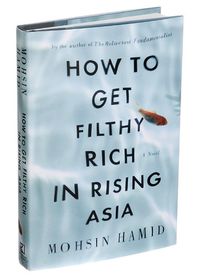
BookMohsin Hamid’s 2007 novel, “The Reluctant Fundamentalist,” was an artful tour de force, a lapidary monologue delivered by a young Princeton-educated Pakistani that opened out to become a puzzlelike exploration of identity, and a suspenseful, post-Sept. 11 meditation on the nervous, mutually suspicious dynamic between America and the Muslim world. Mr. Hamid’s new novel, “How to Get Filthy Rich in Rising Asia,” also tells a compelling story that works on two levels — in this case as a deeply moving and highly specific tale of love and ambition, and as a larger, metaphorical look at the mind-boggling social and economic changes sweeping “rising Asia.”

Set in an unnamed country that resembles Pakistan the novel chronicles the 70-odd-year-long life of an unnamed hero who journeys from an impoverished village to a sprawling city and who makes — and loses — a fortune in the water (“bottled hydration”) business. The story is couched as a kind of self-help book and told in the second person, with a protagonist referred to only as “you.” What might initially seem like a clumsy narrative technique is actually a device that allows Mr. Hamid to zoom in and out from his hero’s life, as though he were using a telephoto lens, moving in to give us up-close-and-personal glimpses of “you’s” enduring relationship with a woman he meets when they are teenagers (she is always referred to as “the pretty girl”) then moving back to show us the ways in which his entrepreneurial career mirrors that of millions of others as they become part of a new urbanized demographic that is changing the shape of the world.

More here.

ray

1361438978

“He appeared out of the glory of Hollywood, the mythos of Hollywood, the dreams of Hollywood,” recalls Ken Ross, one of Ray’s students, in Don’t Expect Too Much, Susan Ray’s fascinating documentary about the making of We Can’t Go Home Again, Nicholas Ray’s experimental feature film. “He was bigger than life,” says Ross. Richard Bock (then known as Richie) adds, “And he was cool, I mean, he was a cool guy.” Once at Harpur, Ray immediately enlisted his students in the making of We Can’t Go Home Again; a glimpse at Ray’s address book, full of stars’ names, gave some the idea that he might be their ticket to Hollywood. With his hang-loose attitude toward drugs, booze, and sex, and his receptivity to the countercultural zeitgeist, Ray related to his students on their own level, serving as a kind of scruffy Yoda –– teacher, mentor, surrogate father, and hip confessor –– to the group of kids. They coalesced into a filmmaking commune centered on the farm he rented in upstate New York.

more from Peter Winkler at the LA Review of Books here.

Ku Klux Klan

Historian Eric Foner observed:

Mississippi_ku_kluxIn effect, the Klan was a military force serving the interests of the Democratic party, the planter class, and all those who desired restoration of white supremacy. Its purposes were political, but political in the broadest sense, for it sought to affect power relations, both public and private, throughout Southern society. It aimed to reverse the interlocking changes sweeping over the South during Reconstruction: to destroy the Republican party's infrastructure, undermine the Reconstruction state, reestablish control of the black labor force, and restore racial subordination in every aspect of Southern life. To that end they worked to curb the education, economic advancement, voting rights, and right to keep and bear arms of blacks.[45] The Ku Klux Klan soon spread into nearly every southern state, launching a “reign of terror against Republican leaders both black and white. Those political leaders assassinated during the campaign included Arkansas Congressman James M. Hinds, three members of the South Carolina legislature, and several men who served in constitutional conventions.”

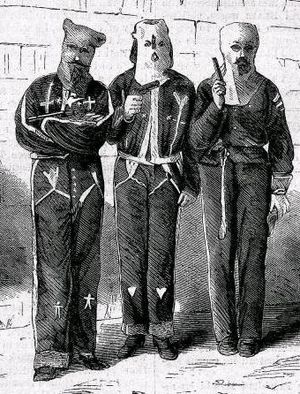
Klan members adopted masks and robes that hid their identities and added to the drama of their night rides, their chosen time for attacks. Many of them operated in small towns and rural areas where people otherwise knew each other's faces, and sometimes still recognized the attackers. “The kind of thing that men are afraid or ashamed to do openly, and by day, they accomplish secretly, masked, and at night.” With this method both the high and the low could be attacked.[47] The Ku Klux Klan night riders “sometimes claimed to be ghosts of Confederate soldiers so, as they claimed, to frighten superstitious blacks. Few freedmen took such nonsense seriously.”[48] The Klan attacked black members of the Loyal Leagues and intimidated southern Republicans and Freedmen's Bureau workers. When they killed black political leaders, they also took heads of families, along with the leaders of churches and community groups, because these people had many roles in society. Agents of the Freedmen's Bureau reported weekly assaults and murders of blacks. “Armed guerrilla warfare killed thousands of Negroes; political riots were staged; their causes or occasions were always obscure, their results always certain: ten to one hundred times as many Negroes were killed as whites.” Masked men shot into houses and burned them, sometimes with the occupants still inside. They drove successful black farmers off their land. “Generally, it can be reported that in North and South Carolina, in 18 months ending in June 1867, there were 197 murders and 548 cases of aggravated assault.

Klan violence worked to suppress black voting. More than 2,000 persons were killed, wounded and otherwise injured in Louisiana within a few weeks prior to the Presidential election of November 1868. Although St. Landry Parish had a registered Republican majority of 1,071, after the murders, no Republicans voted in the fall elections. White Democrats cast the full vote of the parish for Grant's opponent. The KKK killed and wounded more than 200 black Republicans, hunting and chasing them through the woods. Thirteen captives were taken from jail and shot; a half-buried pile of 25 bodies was found in the woods. The KKK made people vote Democratic and gave them certificates of the fact.[50]In the April 1868 Georgia gubernatorial election, Columbia County cast 1,222 votes for Republican Rufus Bullock. By the November presidential election, however, Klan intimidation led to suppression of the Republican vote and only one person voted for Ulysses S. Grant.[51] Klansmen killed more than 150 African Americans in a county in Florida, and hundreds more in other counties. Freedmen's Bureau records provided a detailed recounting of Klansmen's beatings and murders of freedmen and their white allies

More here. (Note: At least one daily post throughout February will be devoted to African American History Month)

The Antonine wall

Walkers-by-Crag-Lough-on--010

The Antonine wall, often running through suburbs and sprawl, lacks the romance of its southern cousin – and is less obviously well-preserved. (Built in turf rather than stone, the wall’s surviving trace is most frequently its accompanying ditch. Though often it’s no more than a dip in a field, it has many moments of beauty and drama at spots such as at Bar Hill and Rough Castle.) But its history is no less rich and fascinating than that of its southerly cousin’s. In the 18th century, it found itself caught up in the nascent industrial revolution. The gentry on whose lands it stood – some of whom were important antiquaries, collecting and preserving the inscribed stones that were found along it – were beginning to make serious money from coal and steel. Keppie points out that in some cases it was the same scholars who came to study the wall who also developed bright ideas about a canal that could usefully link the Forth and the Clyde: when the canal was built, it cut through parts of the wall, as did, in turn, the Edinburgh-Glasgow railway and the M9. These interventions destroyed but they also revealed.

more from Charlotte Higgins at The Guardian here.

Bitter Pill: Why medical bills are killing us

Steven Brill in Time Magazine:

Bitter1. Routine Care, Unforgettable Bills
When Sean Recchi, a 42-year-old from Lancaster, Ohio, was told last March that he had non-Hodgkin’s lymphoma, his wife Stephanie knew she had to get him to MD Anderson Cancer Center in Houston. Stephanie’s father had been treated there 10 years earlier, and she and her family credited the doctors and nurses at MD Anderson with extending his life by at least eight years. Because Stephanie and her husband had recently started their own small technology business, they were unable to buy comprehensive health insurance. For $469 a month, or about 20% of their income, they had been able to get only a policy that covered just $2,000 per day of any hospital costs. “We don’t take that kind of discount insurance,” said the woman at MD Anderson when Stephanie called to make an appointment for Sean.

Stephanie was then told by a billing clerk that the estimated cost of Sean’s visit — just to be examined for six days so a treatment plan could be devised — would be $48,900, due in advance. Stephanie got her mother to write her a check. “You do anything you can in a situation like that,” she says. The Recchis flew to Houston, leaving Stephanie’s mother to care for their two teenage children. About a week later, Stephanie had to ask her mother for $35,000 more so Sean could begin the treatment the doctors had decided was urgent. His condition had worsened rapidly since he had arrived in Houston. He was “sweating and shaking with chills and pains,” Stephanie recalls. “He had a large mass in his chest that was … growing. He was panicked.” Nonetheless, Sean was held for about 90 minutes in a reception area, she says, because the hospital could not confirm that the check had cleared. Sean was allowed to see the doctor only after he advanced MD Anderson $7,500 from his credit card. The hospital says there was nothing unusual about how Sean was kept waiting. According to MD Anderson communications manager Julie Penne, “Asking for advance payment for services is a common, if unfortunate, situation that confronts hospitals all over the United States.”

More here.

Saturday Poem

As we take the thing apart,
we forget what it was.
…………… —Roshi Bob

Duration

Water drops
are no longer cloud
Fruits and leaves
are not tree
Petals are not rose
Tears are not calm sea

Everything that comes off
teaches us to fall
.

Duracíon
Gotas de agua
ya no son nube
Frutos y hojas
no son árbol
Pétalos no son rosa
Lágrimas no son mar sereno

Todo lo que se desprende
nos enseña a caer

.
by Gloria Posada
from Naturalezas
publisher: Ediciones Sin Nombre, México D.F., 2006
translation: 2011, Laura Chalar

Friday, February 22, 2013

The Drones Come Home

John Horgan in National Geographic:

ScreenHunter_119 Feb. 22 16.52A dozen years ago only two communities cared much about drones. One was hobbyists who flew radio-controlled planes and choppers for fun. The other was the military, which carried out surveillance missions with unmanned aircraft like the General Atomics Predator.

Then came 9/11, followed by the U.S. invasions of Afghanistan and Iraq, and drones rapidly became an essential tool of the U.S. armed forces. The Pentagon armed the Predator and a larger unmanned surveillance plane, the Reaper, with missiles, so that their operators—sitting in offices in places like Nevada or New York—could destroy as well as spy on targets thousands of miles away. Aerospace firms churned out a host of smaller drones with increasingly clever computer chips and keen sensors—cameras but also instruments that measure airborne chemicals, pathogens, radioactive materials.

The U.S. has deployed more than 11,000 military drones, up from fewer than 200 in 2002. They carry out a wide variety of missions while saving money and American lives. Within a generation they could replace most manned military aircraft, says John Pike, a defense expert at the think tank GlobalSecurity.org. Pike suspects that the F-35 Lightning II, now under development by Lockheed Martin, might be “the last fighter with an ejector seat, and might get converted into a drone itself.”

More here.

on killing animals

Klinepool2

Does the notion that animals do not have an interest in their lives, that they have an interest only in not suffering, make any sense? I don’t think so. To say that a sentient being—any sentient being—is not harmed by death is most peculiar. Sentience is not a characteristic that has evolved to serve as an end in itself. Rather, it is a trait that allows beings to identify situations that are harmful and that threaten survival. Sentience is a means to the end of continued existence. Sentient beings, by virtue of their being sentient, have an interest in remaining alive; that is, they prefer, want or desire to remain alive. Therefore, to say that a sentient being is not harmed by death denies that the being has the very interest that sentience serves to perpetuate. It would be analogous to saying that a being with eyes does not have an interest in continuing to see or is not harmed by being made blind. The Jains of India expressed it well long ago: “All beings are fond of life, like pleasure, hate pain, shun destruction, like life, long to live. To all life is dear.”

more from Gary Francione at The Point here.

Their madness is contagious

20121116_TNA37HawthorneHallofFantasy400w

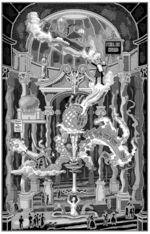
In his story “The Hall of Fantasy,” Nathaniel Hawthorne hints that every form of human activity verges on the unworldliness of fantasy, negating the present in favor of the future or imagined past. Yet it is the political use of the imagination that attracts Hawthorne’s most skeptical treatment. Political reformers and revolutionaries, Hawthorne argues, are uniquely unworldly, even anti-worldly, as they claim to care deeply for the same world that they work to destroy. Hawthorne’s story is a peculiarly American meditation on the relationship between art and politics and the purpose and power of human creativity. In “The Hall of Fantasy,” the world’s dreamers gather to dispute the merits of their envisioned futures. The story, first published in 1843, arises from a failure to write a story: the narrator, a dreamer himself, has drifted off while working on an “idle tale” and finds himself in a glistening hall. There reside “the statues or busts of men who in every age have been rulers and demigods in the realms of imagination.” Among the stony luminaries are Homer, Aesop, Dante, Milton, Cervantes, and Shakespeare. The hall itself is paved with white marble, capped by a “lofty dome,” supported by ornate pillars, decorated with a mixture of styles from around the world, and lit by stained glass.

more from Jeremy Kessler at The New Atlantis here.

Waging War On Sex Workers

Grant

Zoe Schlanger interviews journalist and former sex worker Melissa Gira Grant “on what feminists get wrong about prostitution,” in Guernica:

Grant joined me at her neighborhood coffee shop on a February afternoon, and as we sat down, she pointed to a cafe table behind us. “I outlined my book over there,” Grant said, and pointed to another. “And that’s where we discussed the proposal.” This summer, Grant’s first book,Playing the Whore, will be published by Verso Books in collaboration with Jacobin magazine, where she is a contributing editor.

She recently published a piece at Jacobin titled “Happy Hookers,” a critique of how those who have not worked in the sex industry tend to think about those who have, and how those feelings, whether grounded in the reality of the industry or not, shape policy that affects workers–almost always in a way that harms.

In a recent piece in Reason magazine, Grant asks, “How have we arrived at this point, that in the name of ‘protecting’ women, or even ensuring their ‘rights,’ feminists are eager to take away their jobs and health care?” She points her finger at what Elizabeth Bern­stein calls “carceral feminism,” wherein success is measured in arrest numbers, and conservative donors are mollified by the portrayal of all sex workers as victims. “The result is—or should be—an international scandal,” Grant writes.

Grant and I talked over tea about sex worker organizing, transmisogyny, and what it means to be real on the Internet.

Zoe Schlanger for Guernica…

Melissa Gira Grant: …I’ve moved away from writing about and describing actual experiences of sex work, whether mine or anybody else’s, because the culture is obsessed with the behavior of sex workers. They want to figure out why they do what they do and who they are. Women’s sites like xo Jane, Crushable, and even Jezebel have been publishing a lot of first-person writing by sex workers. I’ve noticed an uptick in the last year. A lot of it is really great and breaks stereotypes, and that’s in addition to the blogs that sex workers themselves have.

What I’m trying to do is to shift the focus onto the producers of the anti-sex work discourse: the cops, the feminists, the anti-prostitution people. They don’t like being talked about. So my response was, “Look, this wasn’t a piece about how you or I feel about sex work. It’s about the actions of groups of people, and so if you can show me something different about the impact of these actions, I’d like to see it.” Those are the people whose behavior needs to change.

To Fight India, We Fought Ourselves

Mohsin Hamid in The New York Times:

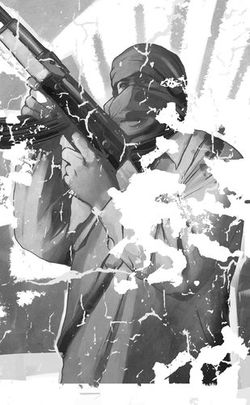
OpedON Monday, my mother’s and sister’s eye doctor was assassinated. He was a Shiite. He was shot six times while driving to drop his son off at school. His son, age 12, was executed with a single shot to the head. Tuesday, I attended a protest in front of the Governor’s House in Lahore demanding that more be done to protect Pakistan’s Shiites from sectarian extremists. These extremists are responsible for increasingly frequent attacks, including bombings this year that killed more than 200 people, most of them Hazara Shiites, in the city of Quetta. As I stood in the anguished crowd in Lahore, similar protests were being held throughout Pakistan. Roads were shut. Demonstrators blocked access to airports. My father was trapped in one for the evening, yet he said most of his fellow travelers bore the delay without anger. They sympathized with the protesters’ objectives. Minority persecution is a common notion around the world, bringing to mind the treatment of African-Americans in the United States, for example, or Arab immigrants in Europe. In Pakistan, though, the situation is more unusual: those persecuted as minorities collectively constitute a vast majority. A filmmaker I know who has relatives in the Ahmadi sect told me that her family’s graves in Lahore had been defaced, because Ahmadis are regarded as apostates. A Baluch friend said it was difficult to take Punjabi visitors with him to Baluchistan, because there is so much local anger there at violence toward the Baluch. An acquaintance of mine, a Pakistani Hindu, once got angry when I answered the question “how are things?” with the word “fine” — because things so obviously aren’t. And Pakistani Christians have borne the brunt of arrests under the country’s blasphemy law; a governor of my province was assassinated for trying to repeal it.

What then is the status of the country’s majority? In Pakistan, there is no such thing. Punjab is the most populous province, but its roughly 100 million people are divided by language, religious sect, outlook and gender. Sunni Muslims represent Pakistan’s most populous faith, but it’s dangerous to be the wrong kind of Sunni. Sunnis are regularly killed for being open to the new ways of the West, or for adhering to the old traditions of the Indian subcontinent, for being liberal, for being mystical, for being in politics, the army or the police, or for simply being in the wrong place at the wrong time.

More here.

the war poets

P4_Parker_paper_L_w_325651h

“The man who really endured the War at its worst was everlastingly differentiated from everyone except his fellow soldiers”, Sassoon wrote in Memoirs of an Infantry Officer. Robert Graves was prepared to say Goodbye to All That in his contentious 1929 memoir of the war, but Sassoon and Blunden never would. “My experiences in the First World War have haunted me all my life”, Blunden confessed the year before he died, “and for many days I have, it seemed, lived in that world rather than this.” These letters are inevitably suffused with the war, not merely in recollections but also as a ready source for jokey metaphors. “The battalion is going over the top at 3 but there’s plenty of time for me to share in this big push”, Blunden characteristically writes of a forthcoming cricket match, and as late as the 1960s he refers to a government tax rise as a “gas attack”. The war also continued to define them as writers. The literary fate of those poets who survived the war was in some ways little different from those who died in it: despite long careers and many later volumes of verse, both Sassoon and Blunden are chiefly remembered as War Poets.

more from Peter Parker at the TLS here.

Ain’t I A Woman?

From Women's History:

This is Frances Gage's account of a speech given by Sojourner Truth at the Women's Rights Convention, 1851, in Akron, Ohio. She published the account in The History of Woman Suffrage, volume 1, co-authored with Susan B. Anthony, published in 1881. Recent scholarship has disputed whether this account, written about 30 years after the speech was given, is an accurate representation of Truth's speaking style. The dialect, in particular, was most likely an addition by Gage.

1881 Account by Frances Gage:

“Wall, chilern, whar dar is so much racket dar must be somethin' out o' kilter. I tink dat 'twixt de niggers of de Souf and de womin at de Nork, all talkin' 'bout rights, de white men will be in a fix pretty soon. But what's all dis here talkin''bout?

“Dat man ober dar say dat womin needs to be helped into carriages, and lifted ober ditches, and to hab de best place everywhar. Nobody eber helps me into carriages, or ober mud-puddles, or gibs me any best place!” And raising herself to her full height, and her voice to a pitch like rolling thunders, she asked “And a'n't I a woman? Look at me! Look at me! Look at my arm! (and she bared her right arm to the shoulder, showing her tremendous muscular power). I have ploughed, and planted, and gathered into barns, and no man could head me! And a'n't I a woman? I could work as much and eat as much as a man – when I could get it – and bear de lash a well! And a'n't I a woman? I have borne thirteen chilern, and seen 'em mos' all sold off to slavery, and when I cried out with my mother's grief, none but Jesus heard me! And a'n't I a woman?

“Den dey talks 'bout dis ting in de head; what dis dey call it?” (“Intellect,” whispered some one near.) “Dat's it, honey. What's dat got to do wid womin's rights or nigger's rights? If my cup won't hold but a pint, and yourn holds a quart, wouldn't ye be mean not to let me have my little half-measure full?” And she pointed her significant finger, and sent a keen glance at the minister who had made the argument. The cheering was long and loud.

“Den dat little man in black dar, he say women can't have as much rights as men, 'cause Christ wan't a woman! Whar did your Christ come from?” Rolling thunder couldn't have stilled that crowd, as did those deep, wonderful tones, as she stood there with outstretched arms and eyes of fire. Raising her voice still louder, she repeated, “Whar did your Christ come from? From God and a woman! Man had nothin' to do wid Him.” Oh, what a rebuke that was to that little man.

Turning again to another objector, she took up the defense of Mother Eve. I can not follow her through it all. It was pointed, and witty, and solemn; eliciting at almost every sentence deafening applause; and she ended by asserting: “If de fust woman God ever made was strong enough to turn de world upside down all alone, dese women togedder (and she glanced her eye over the platform) ought to be able to turn it back, and get it right side up again! And now dey is asking to do it, de men better let 'em.” Long-continued cheering greeted this. “Bleeged to ye for hearin' on me, and now old Sojourner han't got nothin' more to say.”

More here. (Note: At least one daily post throughout February will be devoted to African American History Month)

Dating Games

Whitney-383x495

Whitney Erin Boesel in New Inquiry:

It’s sometime past two in the morning, and I’m trying to make interchangeable sets of torsos, heads, and limbs that fit together to make impossible bodies. I’ve answered a Call for Papers for a conference on gamification and, since one of the suggested topic areas is “personal relationships,” I’m designing a vaguely rummy-like card game about online dating. (The conference encourages experimental formats.)

My game is called “OkMatch!” which not only puns two popular online-dating sites—OkCupid! and Match.com—but also captures many people’s ambivalence toward the prospects they find on such sites: “okay” matches (if they’re lucky). In the game, players try to assemble a complete “partner” by accumulating 11 body-part cards, each assigned a profile attribute (height, education level, zodiac sign, etc.) with point values. It’s easier to draw, say, a +1 right thigh than a +5 one, so players must decide whether to hold out or “settle” for the lower value card they already have. The game ends when one player completes a partner (and so earns a 15-point bonus), but whoever has the most points “wins.”

The highest-scoring possible partner—one with +5 attribute types in all attribute categories—is a visual catastrophe. This person is the exquisite corpse gone wrong, a biologically impossible remix of different ages, races, genders, sizes, and abilities. This is my less than subtle way of suggesting that the ideal partner we fantasize about is usually an absurd abstraction. Even a person with all the specifications we think we want would not be perfect for us, because there’s still so much left to go wrong (even when all those things are “right”). There’s also the minor technicality that even when we think we know what we want, we probably don’t. How often are we excited to get exactly the person we want, only to discover within a few months that they’re not so great after all? If we “know what we want,” and yet whom we want rarely turns out to be that, perhaps the fault lies not in our partners, dear Brutus, but in our self-awareness.

People love to get up in arms about online dating, as if it were so terribly different from conventional dating—and yet a first date is still a first date, whether we first encountered that stranger online, through friends, or in line at the supermarket. What’s unique about online dating is not the actual dating, but how one came to be on a date with that particular stranger in the first place.

The scientific revolution has stalled, here’s how to kickstart it

From The Register:

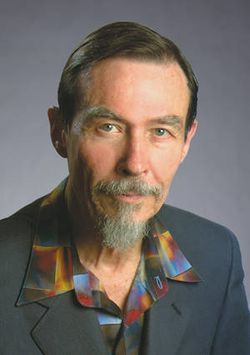
Carver_mead_300wMicroelectronics pioneer, Caltech professor emeritus, and all-around smart guy Carver Mead believes that the scientific revolution that began with the discovery of special relativity and quantum mechanics has stalled, and that it's up to us to kickstart it. “A bunch of big egos got in the way,” he told his audience of 3,000-plus chipheads at the International Soild-State Circuits Conference (ISSCC) in San Francisco on Monday. Much more work needs to be done to restart that revolution, Mead said, with the goal of explaining in an intuitive way how all matter in the universe relates to and affects all other matter, and how to explore those interrelationships in a way that isn't “buried in enormous piles of obscure mathematics.” If you're not familiar with Mead, you should be. Now 78, he received the National Medal of Technology in 2003, cited for his “pioneering contributions to the microelectronics field, that include spearheading the development of tools and techniques for modern integrated-circuit design, laying the foundation for fabless semiconductor companies, catalyzing the electronic-design automation field, training generations of engineers that have made the United States the world leader in microelectronics technology, and founding more than 20 companies including Actel Corporation, Silicon Compilers, Synaptics, and Sonic Innovations.” Those credentials have earned Mead the right to be listened to — although he'd be the first to argue that mere credentials and achievements don't guarantee intelligent thought. In fact, they can cause intellectual ossification. To illistrate that point, Mead told the story of how Charles Townes, the inventor of the laser and maser, took his ideas to the leading quantum-mechanics nabobs at the time, Neils Bohr and Werner Heisenberg. “They both laughed at him, and basically said, 'Sonny, you just don't seem to understand how quantum mechanics works',” Mead told his ISSCC audience. “Well, history has shown that it wasn't Charlie who didn't know how quantum mechanics works, it was the pontifical experts in the field who didn't know how it worked.”

Mead said that we're all taught that there was a revolution in scientific thought that started with relativity and quantum mechanics. “Actually, that's not the case,” he said. “A revolution is when something goes clear around. And what happened starting in the first 25 years of the 20th century was that there was the beginning of a revolution, and it got stuck about a quarter of the way around.”

More here.

Friday Poem

What's Genocide?

their high school principal
told me I couldn’t teach
poetry with profanity
so I asked my students,
“Raise your hand if you’ve heard of the Holocaust.”
in unison, their arms rose up like poisonous gas
then straightened out like an SS infantry
“Okay. Please put your hands down.
Now raise your hand if you’ve heard of the Rwandan genocide.”
blank stares mixed with curious ignorance
a quivering hand out of the crowd
half-way raised, like a lone survivor
struggling to stand up in Kigali
“Luz, are you sure about that?”
“No.”
“That’s what I thought.”

“Carlos—what’s genocide?”

they won’t let you hear the truth at school
if that person says “fuck”
can’t even talk about “fuck”
even though a third of your senior class
is pregnant.

I can’t teach an 18-year-old girl in a public school
how to use a condom that will save her life
and that of the orphan she will be forced
to give to the foster care system—
“Carlos, how many 13-year-olds do you know that are HIV-positive?”

“Honestly, none. But I do visit a shelter every Monday and talk with
six 12-year-old girls with diagnosed AIDS.”
while 4th graders three blocks away give little boys blowjobs during recess
I met an 11-year-old gang member in the Bronx who carries
a semi-automatic weapon to study hall so he can make it home
and you want me to censor my language

“Carlos, what’s genocide?”

your books leave out Emmett Till and Medgar Evers
call themselves “World History” and don’t mention
King Leopold or diamond mines
call themselves “Politics in the Modern World”
and don’t mention Apartheid

“Carlos, what’s genocide?”

you wonder why children hide in adult bodies
lie under light-color-eyed contact lenses
learn to fetishize the size of their asses
and simultaneously hate their lips
my students thought Che Guevara was a rapper
from East Harlem
still think my Mumia t-shirt is of Bob Marley
how can literacy not include Phyllis Wheatley?
schools were built in the shadows of ghosts
filtered through incest and grinding teeth
molded under veils of extravagant ritual

“Carlos, what’s genocide?”

“Roselyn, how old was she? Cuántos años tuvo tu madre cuando se murió?”

“My mother had 32 years when she died. Ella era bellísima.”

…what’s genocide?

they’ve moved from sterilizing “Boriqua” women
injecting indigenous sisters with Hepatitis B,
now they just kill mothers with silent poison
stain their loyalty and love into veins and suffocate them

…what’s genocide?

Ridwan’s father hung himself
in the box because he thought his son
was ashamed of him

…what’s genocide?

Maureen’s mother gave her
skin lightening cream
the day before she started the 6th grade

…what’s genocide?

she carves straight lines into her
beautiful brown thighs so she can remember
what it feels like to heal

…what’s genocide?
…what’s genocide?

“Carlos, what’s genocide?”

“Luz, this…
this right here…

is genocide.”
.

by Carlos Andrés Gómez

Listen

Thursday, February 21, 2013

Capitalism and Inequality

Jerry Z. Muller in Foreign Affairs:

Muller_Capitalism_411Recent political debate in the United States and other advanced capitalist democracies has been dominated by two issues: the rise of economic inequality and the scale of government intervention to address it. As the 2012 U.S. presidential election and the battles over the “fiscal cliff” have demonstrated, the central focus of the left today is on increasing government taxing and spending, primarily to reverse the growing stratification of society, whereas the central focus of the right is on decreasing taxing and spending, primarily to ensure economic dynamism. Each side minimizes the concerns of the other, and each seems to believe that its desired policies are sufficient to ensure prosperity and social stability. Both are wrong.

Inequality is indeed increasing almost everywhere in the postindustrial capitalist world. But despite what many on the left think, this is not the result of politics, nor is politics likely to reverse it, for the problem is more deeply rooted and intractable than generally recognized. Inequality is an inevitable product of capitalist activity, and expanding equality of opportunity only increases it — because some individuals and communities are simply better able than others to exploit the opportunities for development and advancement that capitalism affords. Despite what many on the right think, however, this is a problem for everybody, not just those who are doing poorly or those who are ideologically committed to egalitarianism — because if left unaddressed, rising inequality and economic insecurity can erode social order and generate a populist backlash against the capitalist system at large.

More here.

players club

Falstaff490x300

On a June day in 1598, at about three o’clock in the afternoon, nearly three thousand patrons file into The Curtain, a London playhouse on the outskirts of the city, along the Shoreditch road. They wait for the actors of the Lord Chamberlain’s Men to take the stage for a hotly anticipated new play by William Shakespeare, the sequel to his enormously popular Henry IV. An instant hit in 1596 and one of the playwright’s most performed in the four hundred years following its premiere, the first part of Henry IV stages the history of England before the Wars of the Roses. King Henry IV struggles to hold on to his throne, in part because of political rebellion, but also because of concerns about his rogue son and heir, Prince Hal. While the play’s historical insights no doubt appealed to Shakespeare’s audience, the real reason for the play’s success lies with Sir John Falstaff, a “villainous, abominable misleader of youth” and Shakespeare’s best-loved comic creation. Falstaff, a portly, drunken knight, is corrupter of the young Prince Hal and hero of the play’s tavern underworld. Known for his drunken antics, Falstaff eventually attracted as much scholarly attention as the solemn and tragic Hamlet.

more from Rebecca Lemon at Lapham’s Quarterly here.