the romantic quixote

Images

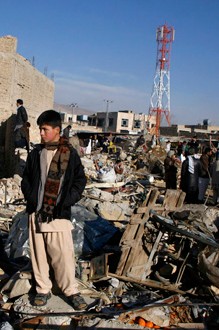
When Spaniards say, “It’s all the Germans’ fault,” they could be referring to the European debt crisis. When British Hispanists say the same, they are most likely talking about the so-called Romantic interpretation of Miguel de Cervantes’ masterpiece Don Quixote. In his influential book The Romantic Approach to Don Quixote, the late Cambridge don Anthony Close assailed critics who read Cervantes’ work in a philosophical light for imposing “modern stereotypes and preoccupations” on a novel that, in his view, was written exclusively as a parody of the tales of chivalry predominant in the sixteenth century. Close’s Oxford ally P. E. Russell did him one better, asserting that Cervantes should not be considered to have “contributed anything of originality to the history of ideas.” The logic Russell used to support this claim was almost dizzying in its circularity, as it required him to stipulate—as a standard for establishing that someone has had a truly original idea—the presence of a contemporary who had expressed more or less the same idea. The agents-provocateurs of this most British pique were, as I indicated before, Germans. To be more specific, they were the thinkers and poets associated with or influential to the German Romantic movement of the early nineteenth century, most notably Johann Christoph Friedrich von Schiller, Karl Wilhelm Friedrich Schlegel, Friedrich Wilhelm Joseph Schelling, and Georg Wilhelm Friedrich Hegel.

more from William Egginton at Arcade here.
the dark side of britten

Britten-23-Feb

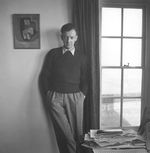
We are only two months into the Britten centenary year and already books, articles and talks (and, of course, performances) swell the flood of existing biographical studies and the six bulky volumes of diaries and letters. Dead for less than 40 years, Britten is as copiously documented as any English composer except Elgar. Have emails wiped out areas of research? I hope that some teenage composer, a latter-day Britten, is even now baring their musical soul writing candid and maybe scurrilous opinions on the current musical scene in a diary as the young Britten did from 1928. ‘The child is father to the man’ rings true in Britten’s case. Britten the man was a Jekyll and Hyde, with Hyde perhaps too often gaining the upper hand. The sophisticated judgments, often couched in schoolboyish jargon, tell us how Britten discovered music, not only by performing and by reading scores but also by attending concerts and listening avidly to the radio and recordings. As well as, of course, by composing ambitious works galore.

more from Michael Kennedy at The Spectator here.

First direct brain-to-brain interface between two animals

From Kurzweil Accelerating Intelligence:

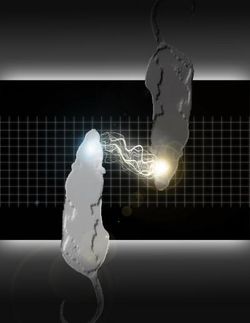
Brain_2_brain_ratsResearchers have electronically linked the brains of pairs of rats for the first time, enabling them to communicate directly to solve simple behavioral puzzles. They even brain-linked two animals thousands of miles apart — one in Durham, North Carolina and one in Natal, Brazil. The researchers think linking multiple brains could form the first “organic computer.” “Our previous studies with brain-machine interfaces had convinced us that the brain was much more plastic than we had thought,” said Duke University Medical Center neurobiologist Miguel Nicolelis . “In those experiments, the brain was able to adapt easily to accept input from devices outside the body and even learn how to process invisible infrared light generated by an artificial sensor. “So, the question we asked was: if the brain could assimilate signals from artificial sensors, could it also assimilate information input from sensors from a different body?” To find out, the researchers first trained pairs of rats to solve a simple problem — to press the correct lever when an indicator light above the lever switched on, to obtain a sip of water. They next connected the two animals’ brains via arrays of microelectrodes inserted into the area of the cortex that processes touch information.

One animal of the dyad was designated as the “encoder” animal. This animal received a visual cue that informed it which lever to press in exchange for a food pellet. Once this “encoder” rat pressed the right lever, a sample of its brain activity that coded its behavioral decision was translated into a pattern of electrical stimulation that was delivered directly into the brain of the second animal of the dyad, known as the “decoder” animal. The decoder rat had the same types of levers in its chamber, but it did not receive any visual cue indicating which lever it should press to obtain a reward. So to press the correct lever and receive the reward it craved, the decoder rat would have to rely on the cue transmitted from the encoder via the brain-to-brain machine interface. The researchers then conducted trials to determine how well the decoder animal could decipher the brain input from the encoder rat to choose the correct lever. The decoder rat ultimately achieved a maximum success rate of about 70 percent, only slightly below the possible maximum success rate of 78 percent that the researchers had theorized was achievable. This maximum rate was what the researchers found they could achieve when they were transmitting regular electrical signals directly to the decoder rat’s brain that were not generated by the encoder.

More here.

Why did Hobbes write Leviathan?

Leviathan

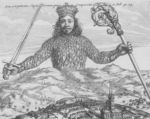
The present-day reputation of Leviathan is somewhat ironic. Modern readers are shocked by the book’s political philosophy, with its seemingly bleak view of human nature and its endorsement of sovereign power with no constitutional constraints. Yet in fact Leviathan offers perhaps the most accommodating version of Hobbes’s political thinking. It adds to the earlier argument of De Cive a novel conception of political representation, which although far removed from the modern democratic understanding of the idea, displays some of the lineaments of it. In De Cive Hobbes envisaged the state as having a democratic foundation in popular consent that must necessarily be abandoned in favour of monarchy for reasons of practicality. In Leviathan he offers an account of politics that is open to multiple different political forms. I suspect one reason Leviathan has retained its fascination is that Hobbes’s attempt to map his idea of sovereignty on to a shifting political landscape gave it an open-ended quality, which has allowed later readers to find what they were looking for in it. Hobbes’s contemporaries were more confused than outraged by his political views: they couldn’t be sure if he was really a monarchist or not. What scandalized them were the parts of the book that modern readers skip over: the assault on religion.

more from David Runciman at the TLS here.

Friday Poem

On a Day When the Wind is Perfect

On a day
when the wind is perfect,
the sail just needs to open
and the world is full of beauty.
Today is such a day.

My eyes are like the sun
that makes promises;
the promise of life
that it always keeps
each morning.

The living heart gives to us
as does that luminous sphere,
both caress the earth with great tenderness.

This is a breeze that can enter the soul.
This love I know plays a drum.
Arms move around me;
who can contain their self before my beauty?

Peace is wonderful,
but ecstatic dance is more fun,
and less narcissistic;
gregarious He makes our lips.

On a day when the wind is perfect,
the sail just needs to open
and the love starts.

Today is such
a day.
.

by Rumi

from Love Poems From God: Twelve Sacred Voices from the East and West
by Daniel Ladinsky

Thursday, February 28, 2013

Muzaffar Al-Nawwab: In the Old Tavern

Translation by Sinan Antoon in Jadaliyyah:

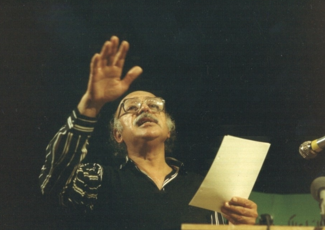
MuzaffarMuzaffar al-Nawwab (b. Baghdad, 1934) is one of Iraq’s most famous and influential poets. He studied literature in Baghdad and worked as a teacher. He joined the Iraqi Communist Party at a very early age and was imprisoned and tortured under the Ba’th. He left Iraq in 1970 and lived in exile until 2011 when he returned to Baghdad for a visit. Al-Nawwab is well known in Iraq and throughout the Arab world, especially among leftists and activist of various generations, for his powerful revolutionary poems and scathing invectives against Arab regimes and dictators. Banned in most Arab countries, his poems circulated widely from the 1970s onward on cassettes. They are widely available nowadays on the Internet. He is also considered one of the most innovative and influential Iraqi poets who composed in the spoken dialect. Although born to an aristocratic family in Baghdad, Al-Nawwab immersed himself in the dialect of southern Iraq in the 1960s and composed some of the most memorable poems in Iraqi collective memory, many of which were put to music and sung by famous contemporary singers. Except for a few editions of his early poems in the Iraqi spoken, Al-Nawwab, who shunned mainstream cultural circles and lived in various exiles for the last four decades, never published, or authorized, a collection of his own works. A critical edition, or any reliable printed diwan (there are many versions and unauthorized collections, in circulation) has yet to appear. “In the Old Tavern” is one of his most famous poems, composed (probably) in late 1970s. Al-Nawwab prefaced one of his famous recitals by saying that the obscenity of the political status quo exceeded the obscenity in his poems. Al-Nawwab’s health has deteriorated in recent years and he has not written any new poems. He lives in Beirut.

In the Old Tavern

The tavern
is not that far
What good is that?
You are like a sponge
Suckling on taverns
But never getting drunk

What is left of this night’s life
In the drunkards’ glasses
Saddens you
Why did they leave them?
Were they lovers?
Were they faggots like those at summit meetings?
Was it a prostitute
With no one in this tattered world?
Had you been here
You would have hidden her desire in your mythical jacket
Whispered warmly in her cold lungs:
Is the cold killing you?
What is killing me more is partly the warmth,
and partly the situation itself!
My lady, we are prostitutes just like you
Misery fornicates with us
False religion, false thought, and false bread and poems
Even the color of blood
is forged and made grey in funerals
And all the people approve
And the ruler is not one-eyed!
My lady, how can one be honorable
When the secret police stick their hands everywhere?
What is yet to come is even worse
We are put in the juice-maker
For oil to come out

More here.

Why average novels are fodder for good movies but great books fail on screen

Madhavankutty Pillai in Open:

11141.angle-piA novel’s quality often does not matter to its movie adaptation because cinema works at the surface level—there is no sophisticated way to depict thought as thought. You can have a voiceover in the background or enactment of emotion or, like the Bollywood shortcut of the 60s and 70s, a reflection in the mirror telling the character what he is thinking. There is always another agency needed to show thought. And absence of thought makes characters shallow. Daniel Day-Lewis is one of the finest actors today and his portrayal of Lincolnis masterful, but it will always be incomplete because the viewer will never know what he is thinking.

A good movie can be made of an ordinary book as long as there are strong plot points or a grand theme or potential for spectacle. In Life of Pi, Ang Lee’s visual grandeur compensates for the book’s clumsiness. Ironically, the reverse is also true—great novels are often not fodder for great cinema. There have been many movie versions ofCrime and Punishment, but who remembers any of them? It is a work that hinges on inner monologue, which cinema cannot depict. Remove that and you have just the skin without the soul.

More here.

Space-based solar farms power up

Emmet Cole at the BBC:

ScreenHunter_126 Feb. 28 16.56“Ex-Nasa scientist seeks visionary billionaire to help change the world. High risk venture. Return not guaranteed. GSOH a plus.”

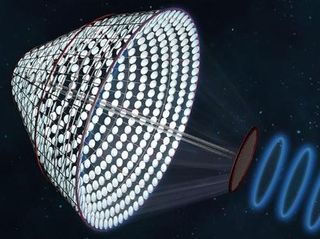
John Mankins, the scientist in question, has not yet reached the point of placing a classified ad, but it could soon be an option. The 25-year veteran of the US space agency is the man behind a project called SPS-Alpha, which aims to loft tens of thousands of lightweight, inflatable modules into space. Once there, they will be assembled into a huge bell-shaped structure that will use mirrors to concentrate energy from the sun onto solar panels. The collected energy would then be beamed down to ground stations on Earth using microwaves, providing unlimited, clean energy and overnight reducing our reliance on polluting fossil fuels. The snag? It is unproven technology and he estimates it will take at least $15bn- $20bn to get his project off the ground.

Mankins initially had research funding from an advanced concepts arm at Nasa, but that money dried up in September 2012; hence his continuing search for a benefactor.

“I can't think of a better solution than to find somebody who is very wealthy, very visionary and willing to make this happen,” he says.

But not everyone shares Mankins' optimism. Space-based solar power (SBSP) is a topic that divides the scientific world into extremes. On one side are people like Mankins who believe it is the only solution to our ever increasing energy demands, whilst on the other is a sizeable chunk of the scientific community who believe any money put into solar power should remain firmly on the ground.

More here.

our divided nature

Gettyimages_73701914-new

Gray is one of the most controversial writers in Britain today. He has legions of ad – mirers and not a few detractors, but it is the complexion of his detractors that tells us most about him. Though he despises the lazy assumptions behind the labels we pin on each other, he would probably let the label “atheist” be fixed to his lapel if he had to make a choice; but he is an atheist who despises the evangelical zeal of the “new atheism” and has sympathy for the old religion it is trying to supplant. I’ll come back to that later in this review but let me return for a moment to Berlin and his influence on Gray. What I got from Gray’s book on Berlin was a sense of the tragic and intractable nature of the human condition. Gray writes that the first implication of Berlin’s perspective is a rejection of any idea of a perfect society or a perfect human life. Its second implication is that a developed morality cannot have a settled hierarchical structure that solves our dilemmas by telling us how to act.

more from Richard Holloway at The New Statesman here.

I’m looking to buy a gun

Stucker_38.1_gun

I love guns. They are seductive, with a visceral appeal that seems to bypass reason entirely and go directly to some more primitive part of the brain. When my uncle Jim saw that I couldn’t be dissuaded from buying the pistol, he offered to take me to a local firing range for the first of several lessons, using a large-frame Smith & Wesson .357 Magnum that he owned. To heft that gun, to squeeze off that first shot and feel the recoil shake my arms and torso, was to experience the power of an extraordinary machine. The pistol was dangerous and difficult to master. But by the end of my first session of target practice, I could consistently put six shots into center mass on a black silhouette target at 30 feet. It was hard not to feel like a badass. I also hate and fear guns. The .22 in my pocket had one purpose: to take a life. That reality was never far from my mind, and the thought that I might have to kill an attacker—or that an attacker might somehow take the gun away and use it to kill me—was deeply sobering.

more from Hal Stucker at Boston Review here.

the most spectacular illusion is reality itself

Images

Debates in mid-century French psychiatry reflected these assumptions. Were hallucinations a malfunction of the sense organs or, as Esquirol maintained, a ‘central’ phenomenon of the brain itself? Was it possible for them to co-exist with reason? Should all mystic states be regarded as hallucinations? Such questions were put to the test by Esquirol’s protégé Jacques-Joseph Moreau de Tours, who experimented with large doses of hashish in the company of a literary demi-monde that included Théophile Gautier, Gérard de Nerval and Baudelaire. He concluded that, even at the mindbending peak of its effects, hashish produced only illusions based on sensory distortion rather than ‘true hallucinations’, manufactured by the mind from whole cloth. ‘A hallucination,’ he wrote in 1845, ‘is the most frequent symptom and the fundamental fact of delirium, mental illness and madness.’ The physician and theorist of dreams Alfred Maury assumed a direct equivalence between hallucinators and the insane: ‘For what are the latter, if not minds who believe in their hallucinations as if they were serious facts?’

more from Mike Jay at the LRB here.

Barack X

From The New Yorker:

The more onerous aspects of Jim Crow conspired to obscure a reality key to understanding Barack Obama’s complicated relationship to black America: simply put, the colored section was far more democratic than the ostensibly free segments of America because virtually any tincture of black ancestry was sufficient to gain admission. The boundaries of whiteness required vigilant policing and scrutiny, but black people were far more catholic in our self-perception. In response, America conjured a usable mythology, one in which the product of interracial unions were uniformly doomed to suffer disproportionate woe. Fiction, folklore, and films like “Imitation of Life” cinched the concept of the tragic mulatto in American popular imagination. But the concept didn’t square with our own lived experience. There was nothing tragic about the trajectories of Frederick Douglass, Booker T. Washington, Mordecai Johnson, or any other biracial black person—aside from the burden of racial inequality they shouldered along with anyone else of African descent. The activist Walter White used his nearly white skin as a kind of camouflage that allowed him to investigate lynchings for the N.A.A.C.P. in the nineteen-twenties. Obama understood this history well enough to stand nearly outside of it. In 2008, Barack Obama authored a new archetype—a biracial man who was not so much tragic as ironic. Unlike the maligned mulattoes of old, Obama wasn’t passing for white—he was passing for mixed. For those with an eye to this history it was a masterful performance, a riff as adroit as anything conjured by Dizzy Gillespie or Sonny Rollins.

Early on, observers noted Obama’s Ebonic lapses when speaking to black audiences and saw in them a sly attempt to pander to African-American voters. But they had it precisely backward: to black audiences, his ability to speak in pulpit inflections one moment and concave Midwestern tones the next made him seem more black, not less. We saw him as no different than any African-American lawyer who speaks black English at home and another, entirely more formal language, in his professional environment. Not surprisingly this has translated into confusion over who the President of the United States is. A 2010 Pew poll showed that fifty-three per cent of whites see the President as biracial while only a quarter see him as black. At the same time, fifty-five per cent of African-Americans see Obama as black while a third see him as mixed race. What the poll failed to ask, however, was whether African-Americans see those two categories as mutually exclusive. Slavery, coercion, and the randomness of social exchange conspired to ensure that virtually all of black America is biracial in some regard. Walter White had blonde hair, fair skin, and blue eyes—yet was black enough to serve as the N.A.A.C.P.’s chief executive for twenty-four years. What was known but left unsaid is that Obama was at least as black as any of the other forty million of us and biracial in the same sense that Douglass, Washington, and White were.

More here. (Note: At least one daily post throughout February will be devoted to African American History Month)

Thursday Poem

Place

On the last day of the world
I would want to plant a tree

what for
not for the fruit

the tree that bears the fruit
is not the one that was planted

I want the tree that stands
in the earth for the first time

with the sun already
going down

and the water
touching its roots

in the earth full of the dead
and the clouds passing

one by one
over its leaves

by W.S. Merwin
from The Rain in the Trees
Alfred A. Knopf, 1988

Say Goodbye To Video Stores, Mailmen, Pennies…

From Smithsonian:

FutureThe February 1989 issue of Life magazine predicted that, by the year 2000, many staples of modern American life might find themselves on the scrapheap of history. Life predicted that by the year 2000 people would need to say goodbye to everything from film (pretty much) to all-male clergy in the Catholic church (not so much). Bid ta-ta to LPs, fur coats and sugar. Toodle-oo to checkbooks, oil and swimming in the ocean. Happy trails to privacy, porno theaters and who knows, maybe even Democrats. It’s not just animals and vegetation that are departing the planet (currently one species every 15 minutes). With them goes, for better or worse, any number of the tangibles and intangibles now taken for granted. Gathered here are the contents of an as-yet-unburied time capsule dedicated to impending obsolescence. So should auld acquaintance be forgot…

The predictions are especially interesting in that they were made shortly before the birth of the modern web and the mid-1990s flood of non-tech types getting online. What then will bring about the decline of the mailman? The magazine insists that it’s not email, but the fax machine. A few of the things that Life said you’d “Say goodbye to…”

The Red Cent

“The extinction of penny candy along with the high cost of copper have made the life expectancy of this coin not worth a plugged nickel.” On February 4, Canada stopped putting their penny into circulation. They joined the likes of Australia, Norway and Sweden among others, but there’s no indication that Americans will be rid of Lincoln’s copper face anytime soon.

More here.

Wednesday, February 27, 2013

Peering into our blind spots

Katie Koch in the Harvard Gazette:

ScreenHunter_125 Feb. 27 18.41Mahzarin Banaji shouldn’t have been biased against women. A leading social psychologist — who rose from unlikely circumstances in her native India, where she once dreamed of becoming a secretary — she knew better than most that women were just as cut out for the working world as men.

Then Banaji sat down to take a test. Names of men and women and words associated with “career” and “family” flashed across the computer screen, one after the other. As she tried to sort the words into groups as instructed, she found that she was much faster and more accurate when asked to lump the male names with job-oriented words. It wasn’t what a pathbreaking female scientist would have expected, or hoped, to see.

“I thought to myself: Something is wrong with this damned test,” said Banaji, Harvard’s Richard Clarke Cabot Professor of Social Ethics, as she reflected during an interview in her William James Hall office on her first run-in with an Implicit Association Test (I.A.T.).

That Banaji specializes in creating just these kinds of assessments did nothing to change the results. But at least she can take comfort in knowing she’s not alone. In the past 15 years, more than 14 million such tests have been taken at Project Implicit, the website of Banaji and her longtime collaborator Anthony Greenwald.

What these curious test-takers, as well as Banaji and Greenwald, found was that many of us hold onto quite a bit of unconscious bias against all sorts of groups, no matter how unprejudiced we strive to be in our actions and conscious thoughts. It’s a counterintuitive, even unnerving proposition, and one that Banaji and Greenwald, a professor of psychology at the University of Washington, set out to explain for a lay audience in “Blindspot: Hidden Biases of Good People.”

More here.

An exhibit encapsulating 1993 also captures the freedom, and the anxiety, of post-historical art

Our own Morgan Meis in The Smart Set:

ID_IC_MEIS_1993_AP_001 (1)“NYC 1993: Experimental Jet Set, Trash and No Star” proposes that an art exhibit can function as a time capsule. The current exhibit at the New Museum in New York City takes a cross section of the art and culture produced in 1993 and displays it in the museum in no particular order and with no particular agenda. There are works from artists already famous in 1993 — like Kiki Smith — and artists who would soon become famous, like Mathew Barney. But there are also plenty of works from artists you've never heard of. Some of the work in the exhibit was originally shown in big galleries and museums. But some of it was never officially shown at all, or was only available in little-known galleries and private artist studios. The point of “NYC 1993” is to give a sense of what might have been encountered across the cultural landscape of New York City 20 years ago.

Promotional material for the exhibit argues that, “The social and economic landscape of the early ’90s was a cultural turning point both nationally and globally,” and that 1993 was a “pivotal moment in the New York art world.” But this is mere nervousness on the part of the curators, who don't want to be accused of creating a show that is utterly arbitrary. The perfect thing about 1993 is that it has no special significance. In the grand scope of history, 1993 means nothing.

The non-essential nature of the year 1993 is what makes it the proper subject for a time capsule. Time capsules are meant to give an overall picture of one period of time so that another period of time in the future can know what life was like back then. And if you want to give an overall picture, you want to stay away from extraordinary events or unusually significant points in history. You want to focus on the mundane.

More here.

The Taliban’s New, More Terrifying Cousin

Jeffrey Stern in The Atlantic:

ScreenHunter_124 Feb. 27 18.29For the Hazaras, a group of Shia Muslims from Afghanistan with a large population in Pakistan, leaving the house has become a fraught enterprise. Schools have emptied, students stay home and parents try to explain to their children why people want them dead. They believe their government is at best uninterested in protecting them, and many are so traumatized they believe it's complicit. The Feb. 16 bombing killed 85 people, almost all of them Hazaras, and the number is still rising as people succumb to their wounds. About a month prior, another attack had killed 96 people who were also almost all Hazaras. The victims are not bystanders; they are a people who are being exterminated.

The group doing the killing is called Lashkar e Jhangvi, “The Army of Jhangvi” or LEJ. They are Sunnis whose agenda is not much more nuanced than killing Shias. Though South Asia is a region rife with internecine conflict, with factions who have fought each other for all of recent history over land and religion, these attacks are unique. Even in a region violence visits far too often, what's happening now is singular, and it's getting worse.

First it was snipers picking off civilians, then LEJ members began stopping busses, shooting Shia passengers and leaving their bodies on the roadsides. Now, LEJ is using massive bombs in places frequented by Shia civilians: social clubs, computer cafes, markets and schools. About 1,300 people have been killed in these attacks since 1999, according to a website dedicated to raising awareness about them. More than 200 have been killed so far this year.

More here.

Piero

130304_r23213_p233

The great Renaissance expert Bernard Berenson explained the sudden, virtual cult appeal of the artist in terms of an emerging modern taste for “the ineloquent in art,” by which he meant a turn away from dramatic illustration toward the aesthetics of conceptual design and candid technique. Berenson cited Impressionism and, especially, the phlegmatic, intellectually bracing method of Cézanne as spurs to the new appreciation of Piero. That’s apposite. His style also resonates in the marmoreal figures of Picasso’s neoclassical period; and his way of seeming to capture something fundamental, once and for all, reminds me of abstract paintings by Piet Mondrian. Looking at Piero’s work may impart a sense of being steadied and elevated. You might even forget momentarily that you were ever less noble, or that any other art has held more than a passing interest for you.

more from Peter Schjeldahl at The New Yorker here.