Is Targeted Killing War?

by Lisa Hajjar

Bradley Jay Strawser begins his essay by positing that the debate over drones is prone to rigid and oversimplified pro and con arguments which are unsuited to grappling with the “deep-seated moral tension” manifest in the rise of unmanned aerial vehicles armed with missiles. He argues that there is a pressing need and value in assessing drones as an object of moral theory distinct from their actual use. He uses as an empirical example the area where drones actually have been used most, the Federally Administered Tribal Areas (FATA) of Pakistan, to illustrate a moral abstraction and draw a conclusion: If the war in FATA is a just war worth fighting and the targets of drone strikes worth killing, then “a relatively strong (but highly conditional) case can be made that drones are the best option (or least bad option) presently available with which to engage this fight.”

To set up the abstract moral argument about drones as a weapons technology, Strawser recruits nuclear weapons as a comparative example. What makes nukes patently immoral “in accordance with just war theory constraints” is their inherent (technological) incapacity to discriminate between legitimate and illegitimate targets (i.e., combatants and civilians) as well as their inherently disproportionate effects (i.e., total destruction and long-term devastation). But nuclear weapons are neither technologically nor morally comparable to drones. The only thing they have in common is that both are weapons. Rather, drones are like tanks or helicopter gunships or fighter planes, all of which—unlike nukes—have the capacity to kill with discrimination and in ways that are proportional to the value of the target. Thus, in abstract terms if the purpose to which drones or tanks or helicopter gunships or fighter planes are used is “just,” then there is nothing inherently immoral in using any of them.

However, if we want to make an abstract moral argument about drones specifically, we have to isolate what distinguishes drones from other similar killing technologies: drones are unmanned. Here Strawser makes a rather rigid claim: “In fact, drones offer clear normative advantages by better protecting their operators from harm and by being more accurate in hitting their intended targets than other weapon platforms…” Leaving aside the accuracy assertion (which is debatable[1]), if drones offer a clear advantage to their operators, it is an advantage that compares to the combatant who perfidiously disguises himself to approach and kill his target unawares or the sniper who kills from a distance. Perfidy in the context of war is a war crime because the advantage the combatant gains from disguised sneak attack is illegal, and sniping is at the outer margins of what we would call “battle” because distance and camouflage offer degrees of protection to the shooter that those who engage their enemies directly do not enjoy. Being present in or proximate to the battle, or even flying manned crafts above targets and risking being shot down are the kinds of “disadvantages” that unmanned lethal technology eliminates.

Thus, one key question that drone warfare raises is whether it is moral (or legal) to be in war and be able to kill surreptitiously and systematically without the risk of being killed. Strawser blends a jus in bello contention that drones are moral because they are capable of proportionate violence, and a jus ad bellum argument that fighting militants in FATA is a just war. Thus, he piggybacks the contention that the use of drone technology to wage the war in FATA is just because the war is just. The insight we might draw from his reasoning is that battle-less wars and surprise attacks are moral.

The use of drones, at least in the ways they are so hotly debated, is a technological innovation to the practice of targeted killing. To contemplate the abstract morality of drones, we must deal with the question of whether targeted killing is moral, and this begs a more complicated question: Is targeted killing “war” and if so, what kind of war is it?


Read more »

Reply to Critics: No Easy Answers

by Bradley Jay Strawser

I wish to thank the Dialog Advisory Group and 3 Quarks Daily for hosting this symposium.[1] I also thank the four commenters, John Fabian Witt, Steven Levine, Feisal Naqvi, and Lisa Hajjar. Each essay raises important points which deserve thorough discussion for which I am grateful.

Before I respond, however, I’ll note that in the intervening time since I wrote the opening essay, the now infamous Department of Justice (DOJ) White Paper on drones was released.[2] This was followed shortly thereafter by the Obama administration agreeing to divulge further memos to congress regarding the killing of US citizens overseas via drone.[3] Needless to say, this is a significant development in the broader drone debate, although much of the release itself can be chalked up to Washington political theater.[4] In terms of substance, the White Paper does not provide much new information regarding the administration’s legal and moral reasoning behind US drone operations – they have made similar overtures defending the practice in other venues.[5] The DOJ argument is that lethal drone strikes, to be justified, must meet a three part test which they claim the strikes carried out by the US do meet. First, the individual in question must be reasonably deemed to pose an imminent threat; second, capture must be infeasible; and, third, the killing must be carried out according to standard “law of war principles,” such as proportionality, distinction, and the like.[6]

The pressing moral issue for present drone operations, then, is not the principle of such action, as it is claimed and represented in this White Paper. For, in principle, the killing of a liable person who poses an imminent threat to innocents in order to block his or her threat, when the strictures of necessity and proportionality have been met, is perfectly legitimate. This is simply the traditional claim of justifiable defensive killing. Surprisingly, some of the authors responding to my initial essay in this symposium seem to not understand this point when they claim that all drone strikes fail to give their targets “due process” and are “extra-judicial executions.” This misunderstands the moral reasoning behind the drone strikes – at least so far as it is claimed by the administration. I am not here thereby suggesting that the US drone operations necessarily meet their claimed justification – that’s another matter – but simply that some of the authors for this symposium are not even responding to the justification as it is claimed. Instead they are asserting that US takes itself to have the right to commit “extra-judicial executions,” which is not at all what the US claims for its drone operations. So I must take a moment and review this basic justification for defensive killing.

The first choice for blocking any unjust threat is the least harmful option available (such as capture), but there are times when necessity demands lethal action be taken as the best or only means to thwart the threat. In such cases, the person posing the unjust threat has made herself liable to the defensive harm in question, and her rights are not transgressed. Such killing is thus not violating that person’s due process rights, nor her right to not be harmed unjustly (for she is being harmed justly). In such a scenario, the person’s actions have made her liable to be killed as the only or best means to block her unjust threat.[7] Again, in principle, this kind of moral justification for killing is nothing new. Such a justification is given on a daily basis when law enforcement officers kill a criminal in the act of threating innocents. If the criminal was posing an imminent threat such that he was liable to be harmed to thwart that threat, none of his rights were violated by the cops when they shoot him.

Of course, the very notion that a threat can be justifiably blocked by killing, while sound in principle and sometimes in practice, is ripe for abuse and misuse. So the pressing moral issue for the drone campaign is how the notion of “imminent threat” is being evaluated, measured, and properly understood.

Read more »

Sunday, February 24, 2013

New Drone Base in Niger Builds U.S. Presence in Africa

Eric Schmitt and Scott Sayare in the New York Times:

Drones-web-map-popupOpening a new front in the drone wars against Al Qaeda and its affiliates, President Obama announced on Friday that about 100 American troops had been sent to Niger in West Africa to help set up a new base from which unarmed Predator aircraft would conduct surveillance in the region.

The new drone base, located for now in the capital, Niamey, is an indication of the priority Africa has become in American antiterrorism efforts. The United States military has a limited presence in Africa, with only one permanent base, in Djibouti, more than 3,000 miles from Mali, where insurgents had taken over half the country until repelled by a French-led force.

In a letter to Congress, Mr. Obama said about 40 United States military service members arrived in Niger on Wednesday, bringing the total number of those deployed in the country to about 100 people. A military official said the troops were largely Air Force logistics specialists, intelligence analysts and security officers.

Mr. Obama said the troops, who are armed for self-protection, would support the French-led operation that last month drove the Qaeda and affiliated fighters out of a desert refuge the size of Texas in neighboring Mali.

Niger, one of the poorest countries in the world, signed a status-of-forces agreement last month with the United States that has cleared the way for greater American military involvement in the country and has provided legal protection to American troops there.

More here.

Players Club

Falstaff490x300

Rebecca Lemon in Lapham's Quarterly:

On a June day in 1598, at about three o’clock in the afternoon, nearly three thousand patrons file into The Curtain, a London playhouse on the outskirts of the city, along the Shoreditch road. They wait for the actors of the Lord Chamberlain’s Men to take the stage for a hotly anticipated new play by William Shakespeare, the sequel to his enormously popular Henry IV. An instant hit in 1596 and one of the playwright’s most performed in the four hundred years following its premiere, the first part of Henry IV stages the history of England before the Wars of the Roses. King Henry IV struggles to hold on to his throne, in part because of political rebellion, but also because of concerns about his rogue son and heir, Prince Hal. While the play’s historical insights no doubt appealed to Shakespeare’s audience, the real reason for the play’s success lies with Sir John Falstaff, a “villainous, abominable misleader of youth” and Shakespeare’s best-loved comic creation. Falstaff, a portly, drunken knight, is corrupter of the young Prince Hal and hero of the play’s tavern underworld.

Known for his drunken antics, Falstaff eventually attracted as much scholarly attention as the solemn and tragic Hamlet. In the 1590s, though, his humor earned him royal, rather than scholarly, notice: Queen Elizabeth, captivated by the knight in Henry IV, Part 1, purportedly asked to see a play that showed Falstaff in love. Shakespeare spent the next year writing and producing The Merry Wives of Windsor to satisfy Her Majesty, delaying the appearance of a sequel to Henry IV. The wait has made this summer afternoon in 1598 all the sweeter. As the performance begins, the audience once again revels in Falstaff and the heir apparent avoiding the battlefield for the bar. In both plays, Hal initially shirks his princely duties to drink with Falstaff at his favorite haunt, the Boar’s Head Tavern. The audience relishes this cheeky rebellion, raising their pints in unison.

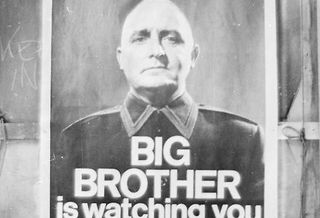
Don’t be Beguiled by Orwell: Using Plain and Clear Language is Not Always a Moral Virtue

3063572

Ed Smith in The New Statesman:

Orwell season has led me back to his famous essay “Politics and the English Language”, first published in 1946. It is written with enviable clarity. But is it true? Orwell argues that “the great enemy of clear language is insincerity. When there is a gap between one’s real and one’s declared aims, one turns as it were instinctively to long words.”

I suspect the opposite is now true. When politicians or corporate front men have to bridge a gap between what they are saying and what they know to be true, their preferred technique is to convey authenticity by speaking with misleading simplicity. The ubiquitous injunction “Let’s be clear”, followed by a list of five bogus bullet-points, is a much more common refuge than the Latinate diction and Byzantine sentence structure that Orwell deplored.

We live in a self-consciously plain-spoken political era. But Orwell’s advice, ironically, has not elevated the substance of debate; it has merely helped the political class to avoid the subject more skilfully. The art of spin is not (quite) supplanting truth with lies. It aspires to replace awkward complexities with catchy simplicity. Successful spin does not leave the effect of skilful persuasiveness; it creates the impression of unavoidable common sense. Hence the artifice becomes invisible – just as a truly charming person is considered nice rather than “charming”.

There is a new puritanism about the way we use words, as though someone with a broad vocabulary or the ability to sustain a complex sentence is innately untrustworthy. Out with mandarin obfuscation and donnish paradoxes, in with lists and bullet points. But one method of avoiding awkward truths has been replaced by another. The political class now speaks as it dresses: in matt navy suits and open-necked white shirts. Elaborate adjectives have suffered the same fate as flowery ties. But this is not moral progress, it is just fashion.

Sunday Poem

Breaker Bar

Every now and then I get the urge to lift
the simple slender breaker bar in my hands,
snap a socket on the square pivot fitting

and go hunting for a big fat frozen bolt,
one that hasn’t budged in ages, rust bound
threads that yearn to give held fast by a split

spiral washer, a tense marriage of wedge
to pent up tension, for no reason other
than to feel the sheer unbridled joy

that comes from applying Archimedes
Law of the Lever, set to deliver
a stunning verdict proclaimed with a sharp

dry crack that travels through my hands
my arms to light up some forgotten
constellation in a dark and dusty

corner of my brain, closing a circuit
that began with the simple slender
breaker bar bequeathed but rarely wielded,

a conjure stick to summon you back to
throw your weight around, tip the scales in my
favor, balanced absurdly on the business end.

by Dave Hardin
from Epigraph, Issue II

Breaker bar

The New Essayists or the Decline of a Form?

Adam Kirsch in The New Republic:

ScreenHunter_121 Feb. 24 16.08Books of essays regularly turn up on the best-seller lists; many of their authors are stars on the radio, especially on the cult program “This American Life.” In the HBO show “Girls,” the character portrayed by Lena Dunham declared her ambition to become a writer and “the voice of my generation,” but she did not hope to write the Great American Novel: she wanted to produce a book of essays. Here as in so many of its details, “Girls” proves to be a faithful stenographer of its moment. A talented writer such as John Jeremiah Sullivan might, fifty years ago, have tried to explore his complicated feelings about the South, and about race and class in America, by writing fiction, following in the footsteps of Walker Percy and Eudora Welty. Instead he produced a book of essays, called Pulphead, on the same themes; and the book was received with the kind of serious attention and critical acclaim that were once reserved for novels.

But all is not as it seems. You do not have to read very far in the work of the new essayists to realize that the resurrection of the essay is in large measure a mirage. For while the work of writers such as David Sedaris, Sloane Crosley, John Jeremiah Sullivan, and Davy Rothbart are described as essays—My Heart Is an Idiot: Essays, is the title of Rothbart’s new book—they have little in common with what was once meant by that term. The new essay, like the old essay, is a prose composition of medium length; but beyond that the differences are more salient than the resemblances.

More here.

Unsteady odyssey: A travel writer seeks a tonic in the world of Islamic prohibition

Barney Thompson in the Financial Times:

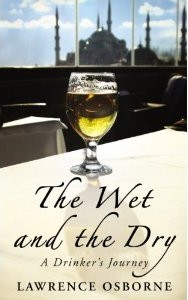
ScreenHunter_120 Feb. 24 16.01A few pages into The Wet and the Dry, somewhere between a Milanese bar and a Lebanese vineyard, Lawrence Osborne outlines the purpose of his “drinker’s journey” to a group of Arabs watching him work his way through a series of martinis. “I say I am taking a few months off to travel and wander, drinking my way across the Islamic world to see whether I can dry myself out,” he writes. “… I am curious to see how non-drinkers live. Perhaps they have something to teach me.”

If they do, Osborne is an unwilling pupil. Rather than experiment with Islamic prohibition, the novelist and travel writer lurches from one bout of boozing to another, from long lunches with winemakers in the Beka’a valley to the fabled bars of Beirut, to an Abu Dhabi hotel room where he wakes up fully clothed and wet through, piecing together the escapades of the previous night second-hand (“Don’t you remember passing out in the pool?”).

And so on – to a brewery in Pakistan, the nightlife of southern Thailand and the faded grandeur of the watering holes of Cairo. It’s as if Osborne has set out not so much to engage with the world of prohibition as to subvert it all by himself. The very notion of a Muslim alcoholic, he says, “gives me hope that the human race can be saved”.

More here.

What Our Brains Can Teach Us

David Eagleman in the New York Times:

23eagleman-oped-img-articleInlineAfter President Obama’s recent announcement of a plan to invigorate the study of neuroscience with what could amount to a $3 billion investment, a reasonable taxpayer might ask: Why brain science? Why now?

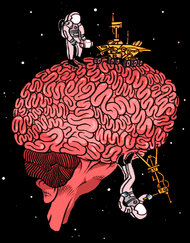
Here’s why. Imagine you were an alien catching sight of the Earth. Your species knows nothing about humans, let alone how to interpret the interactions of seven billion people in complex social networks. With no acquaintance with the nuances of human language or behavior, it proves impossible to decipher the secret idiom of neighborhoods and governments, the interplay of local and global culture, or the intertwining economies of nations. It just looks like pandemonium, a meaningless Babel.

So it goes with the brain. We are the aliens in that landscape, and the brain is an even more complicated cipher. It is composed of 100 billion electrically active cells called neurons, each connected to many thousands of its neighbors. Each neuron relays information in the form of miniature voltage spikes, which are then converted into chemical signals that bridge the gap to other neurons. Most neurons send these signals many times per second; if each signaling event were to make a sound as loud as a pin dropping, the cacophony from a single human head would blow out all the windows. The complexity of such a system bankrupts our language; observing the brain with our current technologies, we mostly detect an enigmatic uproar.

More here.

Cakewalk

From Xroads:

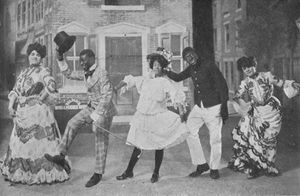
Cakewalk2Its origins in slavery and the plantation south, the Cakewalk was the sole organized and even condoned forum for servants to mock their masters. A send-up of the rich folks in the “Big House,” the cakewalk mocked the aristocratic and grandiose mannerisms of southern high-society. Much bowing and bending were characteristic of the dance, which was more a performance than anything else. Couples lined up to form an aisle, down which each pair would take a turn at a high-stepping promenade through the others. In many instances the Cakewalk was performance, and even competition. The dance would be held at the master’s house on the plantation and he would serve as judge. The dance’s name comes from the cake that would be awarded to the winning couple.

Carnival in full effect, the cakewalk festivities turned convention on its head. The time of the dance was one in which typical order was set aside. Lowly slaves and servants were encouraged to mock the masters to whom obedience was mandated at all other times. The dancers donned fine clothes and adopted high-toned manners, and for the length of the performance they were not slaves but the stars of the show, their racial and social standing transcended. As much as the cakewalk managed to overcome these barriers temporarily, however, it reinforced them the rest of the time. Because the dance was generally sponsored and judged by the plantation owner, he became master of ceremonies, and became master of the joke as well. If the master is in on the jokes that mock him, then the jokes no longer harm his standing with the slaves. So it was with the cakewalk, which further reinforced the master’s authority in allowing him to name a winner and thus make even his symbolic overthrow an attempt to appease him and an act of his decree.

More here. (Note: At least one daily post throughout February will be devoted to African American History Month)

The Shocking Savagery of America’s Early History

From Smithsonian:

First-Blood-Bernard-Bailyn-2Enter Bernard Bailyn, the greatest historian of early America alive today. Now over 90 and ensconced at Harvard for more than six decades, Bailyn has recently published another one of his epoch-making grand narrative syntheses, The Barbarous Years, casting a light on the darkness, filling in the blank canvas with what he’s gleaned from what seems like every last scrap of crumbling diary page, every surviving chattel slave receipt and ship’s passenger manifest of the living and dead, every fearful sermon about the Antichrist that survived in the blackened embers of the burned-out churches.

Bailyn has not painted a pretty picture. Little wonder he calls it The Barbarous Years and spares us no details of the terror, desperation, degradation and widespread torture—do you really know what being “flayed alive” means? (The skin is torn from the face and head and the prisoner is disemboweled while still alive.) And yet somehow amid the merciless massacres were elements that gave birth to the rudiments of civilization—or in Bailyn’s evocative phrase, the fragile “integument of civility”—that would evolve 100 years later into a virtual Renaissance culture, a bustling string of self-governing, self-sufficient, defiantly expansionist colonies alive with an increasingly sophisticated and literate political and intellectual culture that would coalesce into the rationale for the birth of American independence. All the while shaping, and sometimes misshaping, the American character. It’s a grand drama in which the glimmers of enlightenment barely survive the savagery, what Yeats called “the blood-dimmed tide,” the brutal establishment of slavery, the race wars with the original inhabitants that Bailyn is not afraid to call “genocidal,” the full, horrifying details of which have virtually been erased.

More here.

Saturday, February 23, 2013

The Eye of the Beholder: How Bad Data, Scrambles for Funding and Professional Bias Shape Human Trafficking Law and Policy

Images

Dina Francesca Haynes over at The Interdisciplinary Project on Human Trafficking:

One of the most cumbersome issues stymieing anti-trafficking efforts over the past twelve years since the adoption of the Palermo Protocol and the subsequent US Trafficking Victim Protection Act (TVPA) is that far too much of the discussion has centered on sex. Media, politicians, movies, celebrities, prosecutors, law enforcement and even academics have focused their attention almost exclusively on human trafficking for sex.

So much discussion of human trafficking now centers around sex, most audience members attending a talk or reading about human trafficking expect that sex trafficking will be the focus of discussion, even when the discussion is specifically slated to center on human trafficking into domestic servitude, for example. Because the audience has been primed by the media focus on trafficking for sex, they envision an entirely different sort of “victim” when experts talk to them about human trafficking. The audience is prepared for (and expects to hear about) sex and so other areas of human trafficking are ignored, regardless of the fact that the varieties of ways in which humans have been exploited by traffickers abound. In the United States, for example, victims of human trafficking have been forced into severely exploitative labor (domestic service, nannies, agriculture, factory work; cleaners and maintenance crews); misled about the work that would be available and then trapped by their debt and/or lack of immigration status or visa portability (teachers, welders,); adult sex workers deprived of their earnings and coerced or forced into work that they do not wish to do and children forced into sex work and other types of indentured or forced labor (hair braiding). Internationally, people are trafficked from their countries of origin to countries of destination for all of the foregoing reasons, as well types of forced and indentured labor as yet unknown in the United States (camel jockeys, massage on the beach, inherited servitude). People are also trafficked within the interior of their own countries.

In fact, the ILO estimates that 12.3 million people, possibly a majority of whom are women, are in forced labor at any given time. About one and a half million of these may be forced specifically into sex trafficking. Sex trafficking is horrific, to be sure, and must be addressed. But the foregoing figures would suggest that about thirteen percent of forced labor involves sex. Although not all exploitative labor would rise to the level of human trafficking (which requires that one be severely exploited), most forced labor arguably would. Even if more conservatively viewed, much of the world’s human trafficking market is focused on forced labor for work other than sex, while most of the discussions (and assumptions, and funding) focus on trafficking in humans for sex.

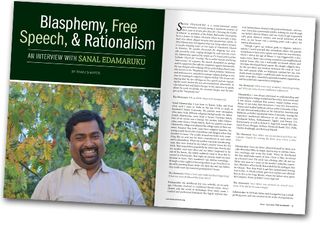
Blasphemy, Free Speech, and Rationalism

Shaffer-1

Ryan Shaffer interviews Sanal Edamaruku in The Humanist:

Sanal Edamaruku is a world-renowned author and rationalist currently facing a maximum sentence of three years in prison plus fines for criticizing the Catholic Church. As president of the Indian Rationalist Association, he is a fixture on Indian television where he provides a skeptical view about alleged miracles and paranormal claims. In 2012 Edamaruku investigated what was being called a miracle: a crucifix dripping water at Our Lady of Velankanni Church in Mumbai. He quickly discovered the dripping was actually caused by water seeping through the wall onto the crucifix. Edamaruku reported his results on TV-9 and criticized the Catholic Church for “creating” the so-called miracle and being “anti-science.” In response, the church demanded an apology and its supporters filed official complaints against Edamaruku. He was charged with violating 295(a) of the Indian Penal Code, also known as the “blasphemy law,” which prohibits “deliberate and malicious acts, intended to outrage religious feelings or any class by insulting its religion or religious beliefs.” His lawyers are arguing that the law infringes on free speech and are requesting the courts declare the law unconstitutional. Meanwhile, he was refused bail and fled to Europe. In this interview he speaks about his work, his family, the criminal charges, and the dangers of the “blasphemy law.”

The Humanist: Tell us a little about your background.

Sanal Edamaruku: I was born in Kerala, India, and lived there until I came to Delhi in the late 1970s to study at Jawaharlal Nehru University. My parents were rationalists who came from different religious backgrounds; my father, Joseph Edamaruku, came from a Syrian Christian family. One of his uncles was a bishop. My mother, Soley Edamaruku, came from a Hindu family. Both my parents are from Edamaruku village and adopted the village name as their surname. Because they both came from religious families, the young couple faced a lot of problems and dangers when they decided to marry. The events around my birth were something like an acid test for their commitment to each other and to rationalism. When my mother was nine months pregnant, they were invited to my father’s parents’ house for the birth. They stayed there peacefully for some time. But the day my mother went into labor and my father happened to be out of the house, the family suddenly tried to force her to convert to Christianity. That night my parents made the hard decision to leave. They wandered—my mother travailing—through a rainy night not knowing where to go. I was born in the early morning hours under the open sky and rain before they could reach my maternal grandparents’ house.

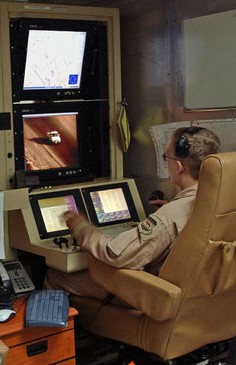
Drone Pilots Are Found to Get Stress Disorders Much as Those in Combat Do

James Dao in the New York Times:

ScreenHunter_120 Feb. 23 19.29In the first study of its kind, researchers with the Defense Department have found that pilots of drone aircraft experiencemental health problems like depression, anxiety and post-traumatic stress at the same rate as pilots of manned aircraft who are deployed to Iraq or Afghanistan.

The study affirms a growing body of research finding health hazards even for those piloting machines from bases far from actual combat zones.

“Though it might be thousands of miles from the battlefield, this work still involves tough stressors and has tough consequences for those crews,” said Peter W. Singer, a scholar at the Brookings Institution who has written extensively about drones. He was not involved in the new research.

That study, by the Armed Forces Health Surveillance Center, which analyzes health trends among military personnel, did not try to explain the sources of mental health problems among drone pilots.

But Air Force officials and independent experts have suggested several potential causes, among them witnessing combat violence on live video feeds, working in isolation or under inflexible shift hours, juggling the simultaneous demands of home life with combat operations and dealing with intense stress because of crew shortages.

More here.

Roxanne Naseem Rashedi interviews Porochista Khakpour

From the Los Angeles Review of Books:

1361131992POROCHISTA KHAKPOUR'S DEBUT NOVEL Sons and Other Flammable Objects is an award-winning dark lyrical comedy. The novel revolves around the Adams family — Darius, Lala, and Xerxes — and pays special attention to the father, Darius (who for all Persian readers will have an allegorical relation to Darius the Great, who ruled at the height of the Persian Empire), and his American-born son Xerxes. The Adamses immigrate to the United States after the Iranian Revolution. As Darius attempts to transplant his Iranian roots into Los Angeles’s soil, Xerxes tries to forget his hyphenated identity, a silent signifier for social stigma given the novel’s post-9/11 context. Eden Gardens, the apartment complex where Xerxes grows up, inverts the reference to innocent, prelapsarian human relations, re-envisioning Eden as home to “the not so fragile types like The Drug Dealer and The Sorority Girls…

Roxanne Rashedi: One of the things that struck me about Sons and Other Flammable Objects — and there were many — was the way you seamlessly shifted through varying geographic locations and temporal spaces. While the members of the Adams family are foreigners in America, they live in Los Angeles, home to one of the biggest Iranian diaspora communities in the world. I found it interesting that while there was a diverse community in the Eden Gardens complex, there was still no other Iranian family mentioned living there or in the surrounding area. Was this intentional? Or, was this a function of your own upbringing in Pasadena, removed from Los Angeles’s heavily Iranian-populated Westside and Valley?

Porochista Khakpour: Bingo — yes, I grew up quite isolated from Los Angeles’s famous Iranian diaspora. And by that I mean we were about 30­–45 minutes away depending on freeway traffic. We’d make weekend treks to Tehrangeles for Persian food and it was almost like visiting the zoo or going to Disneyland. It was another world. Back home in South Pasadena, I was the only Iranian in my grade and one of a handful of Middle Easterners in the entire school system. I was definitely friends with other immigrants, but I remember almost resenting the one or two other Iranian families in our tiny city, because it felt like we were obligated to be their friends. I wanted to write about that specific world of mine instead of writing about immigrants in a fairly homogenous immigrant enclave, which is what you always expect when reading about any immigrant or ethnic group.

More here.

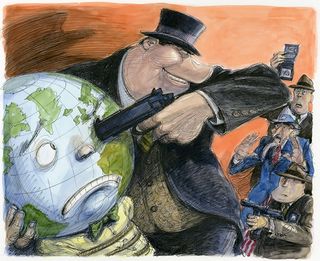
Gangster Bankers: Too Big to Jail

Matt Taibbi in Rolling Stone:

20130212-banks-too-big-to-jail-600x-1360709012The deal was announced quietly, just before the holidays, almost like the government was hoping people were too busy hanging stockings by the fireplace to notice. Flooring politicians, lawyers and investigators all over the world, the U.S. Justice Department granted a total walk to executives of the British-based bank HSBC for the largest drug-and-terrorism money-laundering case ever. Yes, they issued a fine – $1.9 billion, or about five weeks' profit – but they didn't extract so much as one dollar or one day in jail from any individual, despite a decade of stupefying abuses.

People may have outrage fatigue about Wall Street, and more stories about billionaire greedheads getting away with more stealing often cease to amaze. But the HSBC case went miles beyond the usual paper-pushing, keypad-punching­ sort-of crime, committed by geeks in ties, normally associated­ with Wall Street. In this case, the bank literally got away with murder – well, aiding and abetting it, anyway.

For at least half a decade, the storied British colonial banking power helped to wash hundreds of millions of dollars for drug mobs, including Mexico's Sinaloa drug cartel, suspected in tens of thousands of murders just in the past 10 years – people so totally evil, jokes former New York Attorney General Eliot Spitzer, that “they make the guys on Wall Street look good.” The bank also moved money for organizations linked to Al Qaeda and Hezbollah, and for Russian gangsters; helped countries like Iran, the Sudan and North Korea evade sanctions; and, in between helping murderers and terrorists and rogue states, aided countless common tax cheats in hiding their cash.

More here.