creativity and the inhumane

Duggan_328950h

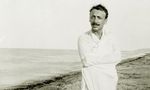
Exactly what happened at around 11 o’clock on the evening of August 13, 1922 in the Vittoriale, the retreat on the shores of Lake Garda of Gabriele D’Annunzio, Italy’s most celebrated war hero and writer, is unclear. He was sitting in pyjamas and slippers, his back to an open window, in the raised ground floor of the music room, listening to Luisa Baccara, the latest of his long-suffering mistresses, play the piano. Suddenly he toppled headfirst ten feet on to the gravel below and fractured his skull. According to one witness he had been fondling Luisa’s sister: perhaps he had lunged forward and lost his balance; or perhaps she had pushed him away a little too brusquely. Or it could be that he had simply been overcome by momentary dizziness: he was consuming quite large quantities of drugs at this time, including cocaine. He himself subsequently chose to shroud the episode in mystery, referring, with his characteristically teasing eye for self-glorification, to his “archangelic flight” – and noting, with a further twist of irreverent immodesty how, after three days in a coma, he had risen again.

more from Christopher Duggan at the TLS here.

Cossery days

Egypt-demonstrators-do-Harlem-Shake-jpg

Though he left Cairo at twenty-one, Albert Cossery never forgot its condition, even as he sat daily at Brasserie Lipp, a dandy to the outside world. Henry Miller, who helped get Cossery’s first book published in the United States, confirms this preoccupation, writing in a 1945 essay, “Despite the seemingly unrelieved gloom and futility in which his figures move, [Cossery] nevertheless expresses in every work his indomitable faith in the power of the people to throw off the yoke.” It’s a message that also finds affirmation in the work of Sonallah Ibrahim, the political prisoner turned Cairene slacker-novelist whose debut work, That Smell, was published in translation by New Directions two weeks ago (and happens to have been translated by Robyn Creswell, this magazine’s poetry editor). This darkly biting take on politics is finally seeing the light of day as a global literature, though its origins are in the tragic failures of Egypt’s mid-century political transition. Today’s rise of a suppressive Brotherhood in the face of Tahrir’s youthful spark has bred a new, mordant pranksterism, reminiscent of Albert Cossery yet unencumbered by the weight of history. With the “Satiric Revolutionary Struggle,” this strategy may have finally found its rightful place in Egypt’s opposition politics.

more from Mostafa Heddaya at Paris Review here.

the garden hermit

Elliott_03_13

The basic idea of a retreat from society for the sake of contemplation goes far into the past. The Tang Dynasty scholar-official writing affectionate poetry about his rude bamboo cottage is a familiar image. Even such sophisticates as the author of the Georgics enjoyed imagining being a farmer. The draw of a primitive life, one perhaps offering spiritual refurbishment, has always been strong. What was new in the 18th century was the decorative aspect. To the gardening gentleman or lady of the time, it was the idea of a hermit that attracted, not the prospect of being a hermit oneself. As Campbell makes plain, the impetus behind the advent of the garden hermit was a taste for the gothic and the picturesque sponsored by such trendsetters as Alexander Pope and Horace Walpole. Melancholy was suddenly considered admirable. Deliberate gloom implied deep thoughts and an affinity with nature. Where better than in the garden to express it? And what better expression of a dedication to melancholy than a real hermit’s cell occupied by a real hermit?

more from Charles Elliot at Literary Review here.

THE TURN AGAINST NABOKOV

Michael Idov in The New Yorker:

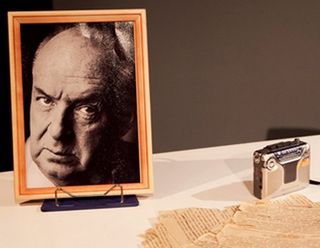
ScreenHunter_133 Mar. 07 14.17Leonid Mozgovoy, the owl-eyed seventy-one-year-old actor, has played Chekhov (goatee), Hitler (mustache), and Lenin (goatee, bald cap), all in films by the famed Russian director Alexander Sokurov. And sometimes, in his natural hair, he becomes Humbert Humbert in “Lolita,” a one-man show featuring Humbert reading his own story out loud, that has played in Saint Petersburg on and off over the last two decades. When it was first staged, the monologue had to pass muster with the khudsovet, a Soviet censorship organ. It did. “They said I perform it rather chastely,” Mozgovoy recalled in an interview.

On a snowy night in early 2013, “Lolita” went up once again, unchanged, but it had suddenly become the most scandalous show in town. The performance had been postponed since last October amid threats to Mozgovoy and others. In January, three men jumped the play’s twenty-four-year-old producer, Anton Suslov, giving him two black eyes and a concussion while calling him a “pedophile”; a murky video of the beating was posted online. The same libel was slashed in spray paint across the walls of the Nabokov museum in St. Petersburg and the writer’s ancestral estate in Rozhdestveno, about fifty miles from the city. Anonymous activists had petitioned to have the play banned, the museum closed, and Nabokov’s books purged from stores. The author, whose novels thrum with ironic recurrences, might have been perversely pleased with this: thirty-six years after his death and twenty-two years after the fall of the Soviet Union with all its khudsovets, Vladimir Nabokov is, once again, controversial.

More here.

Model Casey Legler: is she the perfect man?

Eva Wiseman in The Observer:

Casey-Legler-wearing-Give-009Casey Legler is standing, topless, by our rail of clothes, reading them like they're credits on a film. Some are “drag”, some “boy”. Some she'll wear if she wants to “serve you 'girl'”, some she won't wear at all. As a child, all she wanted to do was sit by a swimming pool in a pink tutu, and read her difficult books. She moved a lot when she was younger, between Louisiana, Florida and Aix-en-Provence, and, noticing that the fashions (and prejudices) in France and America were completely different, Legler “learned early on,” she tells me later, “that what you looked like wasn't necessarily who you were”. People had “different armour. I realised things only mean what we want them to mean, and it's not appropriate information for differentiation. What you look like is just what you look like. Then there's… everything else.”

Legler is 6ft 2in, 35 years old, and the first woman to sign exclusively as a male model. She is muscular and cheery, with the awkward swagger of a rock star. Her voice is soft and earnest, and when she talks, she holds unblinking eye contact. In front of the camera, edges appear. Spikes. She juts her chin; she becomes a boy.

Fashion has always played with gender, from 18th century men in their wigs and make-up, to Patti Smith and David Bowie, through to the recent success of Andrej Peji'c, the male model who FHM named as the 98th “sexiest woman in the world”.

More here.

Noam Chomsky: Can Civilization Survive Capitalism?

Noam Chomsky in AlterNet:

Screen_shot_2013-03-05_at_11.01.59_amThe term “capitalism” is commonly used to refer to the U.S. economic system, with substantial state intervention ranging from subsidies for creative innovation to the “too-big-to-fail” government insurance policy for banks.

The system is highly monopolized, further limiting reliance on the market, and increasingly so: In the past 20 years the share of profits of the 200 largest enterprises has risen sharply, reports scholar Robert W. McChesney in his new book “Digital Disconnect.”

“Capitalism” is a term now commonly used to describe systems in which there are no capitalists: for example, the worker-owned Mondragon conglomerate in the Basque region of Spain, or the worker-owned enterprises expanding in northern Ohio, often with conservative support – both are discussed in important work by the scholar Gar Alperovitz.

Some might even use the term “capitalism” to refer to the industrial democracy advocated by John Dewey, America’s leading social philosopher, in the late 19th century and early 20th century.

Dewey called for workers to be “masters of their own industrial fate” and for all institutions to be brought under public control, including the means of production, exchange, publicity, transportation and communication. Short of this, Dewey argued, politics will remain “the shadow cast on society by big business.”

More here.

Up All Night: The science of sleeplessness

From The New Yorker:

SleepOf the many ways that things can go wrong in bed, sleep troubles are probably the most prevalent. According to a 2011 poll, more than half of Americans between the ages of thirteen and sixty-four experience a sleep problem almost every night, and nearly two-thirds complain that they are not getting enough rest during the week. The National Academy of Sciences estimates that fifty to seventy million Americans suffer from a “chronic disorder of sleep and wakefulness.” The results are dangerous as well as annoying. A recent study by the Centers for Disease Control and Prevention revealed that almost five per cent of adults acknowledge nodding off at the wheel at least once during the previous month. The U.S. Department of Transportation has determined that what might be called D.W.D.—driving while drowsy—causes forty thousand injuries a year in the United States and more than fifteen hundred deaths.

Our collective weariness is the subject of several new books, some by professionals who study sleep, others by amateurs who are short of it. David K. Randall’s “Dreamland: Adventures in the Strange Science of Sleep” belongs to the latter category. It’s a good book to pick up during a bout of insomnia. Randall begins with an account of his own sleep problems, which include laughing, humming, grunting, bouncing, kicking, and, on at least one occasion, sleep-walking into a wall. He considers a range of possible explanations for the national exhaustion—too much light, too much warmth, too much avoirdupois—and finds them all compelling. The electric light bulb has made darkness optional, eliminating the enforced idleness that used to begin at sunset. Modern mattresses and bedclothes trap the heat that the body gives off as its core temperature drops each night. Obesity increases the chances of developing sleep apnea, a condition that combines choking and waking in an exhausting, sometimes life-threatening cycle. For all these reasons and more, Randall anticipates a bright future for the emerging field of “fatigue management.” One sleep expert he interviews predicts that “fatigue management officers” will soon be as common at major corporations as accountants. Like time, sleep, it turns out, is money.

More here.

Seeing and Observing

From Harvard Magazine:

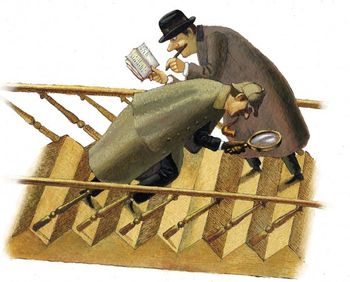
HolmesWhen I was little, my dad used to read us Sherlock Holmes stories before bed. While my brother often took the opportunity to fall promptly asleep on his corner of the couch, the rest of us listened intently. I remember the big leather armchair where my dad sat, holding the book out in front of him with one arm, the dancing flames from the fireplace reflecting in his black-framed glasses. I remember the rise and fall of his voice as the suspense mounted beyond all breaking point, and finally, finally, at long last the awaited solution, when it all made sense and I’d shake my head, just like Dr. Watson, and think, Of course; it’s all so simple now that he says it. I remember the smell of the pipe that my dad himself would smoke every so often, a fruity, earthy mix that made its way into the folds of the leather chair, and the outlines of the night through the curtained French windows. His pipe, of course, was ever-so-slightly curved just like Holmes’s. And I remember that final slam of the book, the thick pages coming together between the crimson covers, when he’d announce, “That’s it for tonight.”…

And then there’s the one thing that wedged its way so deeply into my brain that it remained there, taunting me, for years to come, when the rest of the stories had long since faded into some indeterminate background and the adventures of Holmes and his faithful Boswell were all but forgotten: the steps. The steps to 221B Baker Street. How many were there? It’s the question Holmes brought before Watson in “A Scandal in Bohemia,” and a question that never once since left my mind. As Holmes and Watson sit in their matching armchairs, the detective instructs the doctor on the difference between seeing and observing. Watson is baffled. And then, all at once everything becomes crystal clear.…

“You see, but you do not observe. The distinction is clear. For example, you have frequently seen the steps which lead up from the hall to this room.”

“Frequently.”

“How often?”

“Well, some hundreds of times.”

“Then how many are there?”

“How many? I don’t know.”

“Quite so! You have not observed. And yet you have seen. That is just my point. Now, I know that there are seventeen steps, because I have both seen and observed.”

More here.

Wednesday, March 6, 2013

Chavez: Despot or Saint?

3fb59388dba40e150a7adebb628e5ff3

Bhaskar Sunkara in Vice:

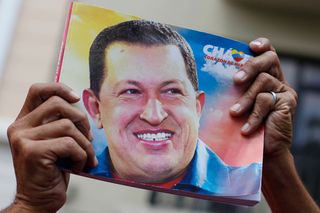
Everyone else seems to be either mourning at or dancing on Hugo Chavez's grave, but I’m feeling decidedly unmoved. And not out of some deep apathy. It’s just that the Chavez being invoked by both supporters and enemies can't be dead, because that man never existed.

One dead Chavez was a despot. Democratically elected over and over again, popularly reinstated after a 2002 coup, but still some sort of Stalin or mini-Pol Pot. (They both had that irresistible smile.) The other dead Chavez was a saint. Some demi-god sent from above to massage away our earthly suffering and sing us tender bedtime songs afterward. He could do no wrong.

These narratives are utterly incompatible, setting the showdown for a month's worth of heated Twitter sparring and inane web-comment dueling. Now, there's nothing I like more than a good fight, but I'm not picking a side. Or I guess I'm picking both.

In its 14 years in power, Chavez's administration was at once authoritarian and democratic, crudely demagogic and genuinely participatory. History is messy like that.

El Presidente was part of a long line of Latin American populists, the left-wing variety of which has always attracted cheering fan boys. And for good reason: It's the fiery rhetoric of Italian fascism tempered by the warm-and-fuzzy egalitarian core of Scandinavian socialism. And Chavez lived up to some of those socialist ambitions: He was more committed to redistributing wealth and power than just about any Latin American leader that came before him. His government reduced extreme poverty by 70 percent, millions got reliable healthcare and a decent education for the first time, and attempts were made to construct community councils and other organs of direct democracy.

Our brains, and how they’re not as simple as we think

Vaughan Bell in The Observer:

ScreenHunter_132 Mar. 06 17.19Scientific concepts have always washed in and out of popular consciousness but like never before, the brain has become part of contemporary culture. With the recent announcement of two billion-dollarscience projects, the Human Brain Project in Europe and the Brain Activity Map in the US, it would be hard to ignore the impact on public spending. Meanwhile, the Barbican has just kicked off an unprecedented month-long festival of neuroscience called Wonder, suggesting even the traditionally science-shy art world has raised an eyebrow.

But it's the sheer penetration of neuroscience into everyday life that makes it remarkable. We talk about left- and right-brain thinking, brainstorming and brain disorders. Differences between the male and female brain are the subject of regular press speculation and newspapers publish stories on brain scans that claim to explain everything from love to memory. Young people are increasingly warned that everything from video games to sexual activity could “damage their brains” while old people are encouraged to “train their brain” lest they lose its functions later in life.

Unpleasant experiences from malaise to trauma to mental illness are reframed as primarily neurological problems, while art and music are evaluated for their neurochemical effect.

More here.

movers and shakers

ID_PI_GOLBE_SHAKE_FT_001

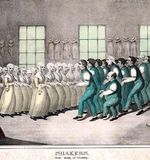
The Shakers are now known for austerity, especially in their design. In worship, however, the Shakers were anything but restrained. Shaker religious services were ecstatic chaos, full of hopping, writhing, trembling, singing, screaming, convulsing, and shaking (and this is how the United Society of Believers in Christ’s Second Appearing got their nickname). The Shakers crowed like roosters and ran naked through the woods, seized with the spirit. Neighbors could often hear their rituals from miles away. How could such apocalyptic fervor spawn so utilitarian an object as the flat-bottom broom? Moreover, why was the humble broom such an important part of the Shakers’ gospel? While living in mid-18th century Manchester, the young Ann Lee worked 14-hour days in a cotton mill. We don’t have much documentation about this time in Lee’s life. Suffice it to say, she knew well how the making of goods could be as meaningless and hard as it was necessary. The simple, clean, agrarian Shaker life was meant to be in drastic contrast with the crowded, anonymous, industrial life of Manchester. Flattening the broom’s bottom seems like a small innovation.

more from Stefany Anne Golberg at The Smart Set here.

why piero?

Kaiser_1-032113_jpg_230x1310_q85

Various attempts have been made to explain Piero’s unique qualities since his “rediscovery” in the late nineteenth century, many of them insightful. Early on, John Addington Symonds claimed that “by dignity of portraiture, by loftiness of style, and by a certain poetical solemnity of imagination, he raised himself above the level of the mass of his contemporaries.”1 Of course, Piero was also indebted to some of those contemporaries, and his relationship to Florentines such as Domenico Veneziano and Uccello, as well as to Flemish artists, has long been acknowledged. Yet in most respects the influence of others upon his work seems to be fairly minimal, and one might argue that he had a greater debt to the architect and humanist Leon Battista Alberti than to any of his painting predecessors. What is it, then, that makes him so distinct from his contemporaries? Piero’s innovative use of oil paint and his perfection of perspective are two qualities that have been often discussed, as have his use of color to express form and his ability to evoke space. His phenomenal mastery of light and his breathtaking depiction of it have also been repeatedly noted.2 But Piero’s singular importance in the history of landscape painting has, so far as I am aware, rarely been adequately appreciated…

more from Walter Kaiser at the NYRB here.

eclectic inventories of consciousness

Cover00

Adler’s novels concede the necessity of making fiction quicker, more terse, descriptively less elaborate than the traditional thing called a novel, not so much in deference to shrunken attention spans, but as the most plausible way of rendering the distracted, fragmentary quality of contemporary consciousness. Their reportorially even tone is quite distinct from the distorting lyricism found in most novels of sensibility; omitting much of what we expect in first-person narratives, Adler gets at the overfull yet depleted condition we find ourselves in now, peripatetic and restless, ever more deprived of the time and mental space to reflect on what we are really doing, or who we really are. They describe what it’s like to be living now, during this span of time, in our particular country and our particular world. This is what the best novels have always done, and with any luck will continue to do.

more from Gary Indiana at Bookforum here.

Reviewed: The God Argument by A C Grayling

Bryan Appleyard in the New Statesman:

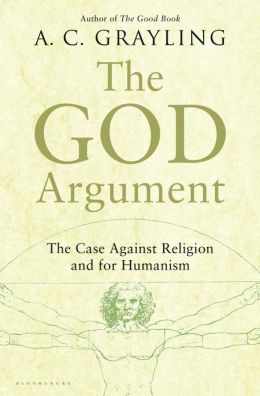
9781620401903_p0_v2_s260x420The book is in two halves – the first is Grayling’s case against religion; the second outlines the humanist alternative, which is “an ethics free from religious or superstitious aspects, an outlook that has its roots in rich philosophical traditions”.

First, to take the book on its own terms, this is a lucid, informative and admirably accessible account of the atheist-secular- humanist position. Grayling writes with pace and purpose and provides powerful – though non-lethal – ammunition for anybody wishing to shoot down intelligent theists such as Alvin Plantinga or to dispatch even the most sophisticated theological arguments, such as the ontological proof of the existence of God. That said, the first half, which is in essence analytical, is much better than the second half, which is rather discursive and feels almost tract-like in its evocation of shiny, happy people having fun in a humanist paradise. Nevertheless, this is rhetorically justifiable to the extent that it is an attempt to answer the question necessarily posed by any attempt to eliminate religion – what would be put in its place? Even the most rabid followers of the horsemen cannot seriously deny that religion does serve some useful purposes: providing a sense of community, consoling the bereaved and the suffering, telling a story to make sense of the world, and so on. Grayling tells a humanist story in the belief that it is perfectly capable of answering all these needs.

More here.

On the Legacy of Hugo Chávez

Greg Grandin in The Nation:

Chavez_sign_rtr_imgI first met Hugo Chávez in New York City in September 2006, just after his infamous appearance on the floor of the UN General Assembly, where he called George W. Bush the devil. “Yesterday, the devil came here,” he said, “Right here. Right here. And it smells of sulfur still today, this table that I am now standing in front of.” He then made the sign of the cross, kissed his hand, winked at his audience and looked to the sky. It was vintage Chávez, an outrageous remark leavened with just the right touch of detail (the lingering sulfur!) to make it something more than bombast, cutting through soporific nostrums of diplomatese and drawing fire away from Iran, which was in the cross hairs at that meeting.

The press of course went into high dudgeon, and not just for the obvious reason that it’s one thing for opponents in the Middle East to call the United States the Great Satan and another thing for the president of a Latin American country to personally single out its president as Beelzebub, on US soil no less.

I think what really rankled was that Chávez was claiming a privilege that had long belonged to the United States, that is, the right to paint its adversaries not as rational actors but as existential evil. Latin American populists, from Argentina’s Juan Perón to, most recently, Chávez, have long served as characters in a story the US tells about itself, reaffirming the maturity of its electorate and the moderation of its political culture. There are at most eleven political prisoners in Venezuela, and that’s taking the opposition’s broad definition of the term, which includes individuals who worked to overthrow the government in 2002, and yet it is not just the right in this country who regularly compared Chávez to the worst mass murderers and dictators in history.

More here.

Wednesday Poem

21 Short Poems or The Gun
.

*

There is a gun in the closet.
There are many things in the closet.

*

An extremely small man
may ride on a gun
like a horse,
a black horse.

*

If a monster with seven heads
stood at the gate,
I would shoot without hesitation,
but the open gate
scares me.

*

The judge always acquits the gun.
Naïve judge.

*

I had an unforgettable face
and a white gun.

*

A gun isn’t a metaphor.

Read more »

The Science of Love and Betrayal

From The Independent:

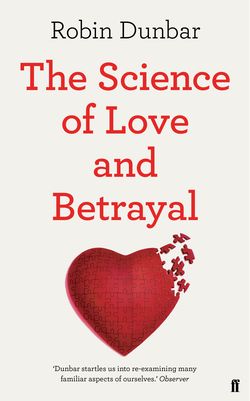
Science-of-loveThe book explores the role played by smell in physical attraction (men can tell by the scent, even though they are not aware of it, when a woman is ovulating); analyses the significance of the wording of lonely hearts advertisements; examines the strange phenomenon of religious love for an invisible God; and weighs up the rival benefits, in terms of gene propagation, of males adopting the strategies of either monogamy or philandering.

Dunbar's quest is to find out why we evolved into a (generally) monogamous species; and the answer he turns up is unsettling. It appears that women are the choosers in our species, and they choose on the basis of which male is likely to offer the best protection for their offspring.

“Infanticide by males is a perennial risk for monkeys and apes,” says Dunbar, because killing a female's young offspring stops her lactating and makes her fertile again. Our distant female ancestors were therefore more likely to choose males as “hired guns” who would keep them and their children safe from the predations of other males. For this reason, women generally have more reason to maintain the pairbond than men do. It's painful to reflect that the splendour of love has such grisly origins.

More here.

Green tea extract interferes with the formation of amyloid plaques in Alzheimer’s disease

From PhysOrg:

GreenteaextrResearchers at the University of Michigan have found a new potential benefit of a molecule in green tea: preventing the misfolding of specific proteins in the brain. The aggregation of these proteins, called metal-associated amyloids, is associated with Alzheimer's disease and other neurodegenerative conditions.

A paper published recently in the Proceedings of the National Academy of Sciences explained how U-M Life Sciences Institute faculty member Mi Hee Lim and an interdisciplinary team of researchers used green tea extract to control the generation of metal-associated amyloid-β aggregates associated with Alzheimer's disease in the lab. The specific molecule in green tea, (—)-epigallocatechin-3-gallate, also known as EGCG, prevented aggregate formation and broke down existing aggregate structures in the proteins that contained metals—specifically copper, iron and zinc. “A lot of people are very excited about this molecule,” said Lim, noting that the EGCG and other flavonoids in natural products have long been established as powerful antioxidants. “We used a multidisciplinary approach. This is the first example of structure-centric, multidisciplinary investigations by three principal investigators with three different areas of expertise.”

More here.