
Category: Recommended Reading
Sunday Poem
| Shahid Reads His Own Palm | ||
I come from the cracked hands of men who used the smoldering ends of blunts to blow shotguns, men who arranged their lives around the mystery of the moon breaking a street corner in half. I come from "Swann Road" written in a child's slanted block letters across a playground fence, the orange globe with black stripes in Bishop's left hand, untethered and rolling to the sideline, a crowd openmouthed, waiting to see the end of the sweetest crossover in a Virginia state pen. I come from Friday night's humid and musty air, Junk Yard Band cranking in a stolen Bonneville, a tilted bottle of Wild Irish Rose against my lips and King Hedley's secret written in the lines of my palm. I come from beneath a cloud of white smoke, a lit pipe and the way glass heats rocks into a piece of heaven, from the weight of nothing in my palm, a bullet in an unfired snub-nosed revolver. And every day the small muscles in my finger threaten to pull a trigger, slight and curved like my woman's eyelashes. | ||
Saturday, March 9, 2013
Books of Ice: Sculptures by Basia Irland
From Orion Magazine:
Ice is a seed.
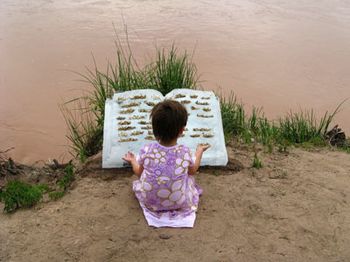
Balls of ice sowed seeds of life on Earth. That’s what comets are, just clumps of ice holding interstellar rocks and dust. But in that dust are amino acids and nucleotides that build living things. Many scientists think that this might be one way life began on Earth, 4 billion years ago, when the spinning arms of the galaxy cast comets over the planet, comets and comets and comets, protolife smacking onto the broken lava plains, until basins gathered the meltwater into oceans, and the oceans nurtured onrushing life. Ice sows ice, too. The first grains gleamed in white sunshine, throwing back the sun’s heat and cooling their own small shadows. More ice formed in the cool places, and the shine of it cooled a larger shadow, until the reflectivity of the growing ice sheets cooled the whole planet, finally draped in dazzling layers of ice. Now the glaciers that remain in mountain valleys give life to rivers—the Ganges, the Fraser, the Colorado—as meltwater slides down blue rills and finally cuts a channel through gravel and till.
A seed is a book.

More here. (Note: Do take a few minutes to watch the stunning video)
Flip of a single molecular switch makes an old brain young
From Yale News:
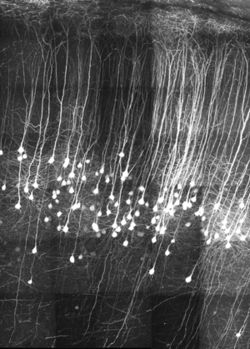
Scientists have long known that the young and old brains are very different. Adolescent brains are more malleable or plastic, which allows them to learn languages more quickly than adults and speeds recovery from brain injuries. The comparative rigidity of the adult brain results in part from the function of a single gene that slows the rapid change in synaptic connections between neurons. By monitoring the synapses in living mice over weeks and months, Yale researchers have identified the key genetic switch for brain maturation a study released March 6 in the journal Neuron. The Nogo Receptor 1 gene is required to suppress high levels of plasticity in the adolescent brain and create the relatively quiescent levels of plasticity in adulthood. In mice without this gene, juvenile levels of brain plasticity persist throughout adulthood. When researchers blocked the function of this gene in old mice, they reset the old brain to adolescent levels of plasticity. “These are the molecules the brain needs for the transition from adolescence to adulthood,” said Dr. Stephen Strittmatter. Vincent Coates Professor of Neurology, Professor of Neurobiology and senior author of the paper. “It suggests we can turn back the clock in the adult brain and recover from trauma the way kids recover.”
More here.
our common humanity and stuff

Now, The Undivided Past suggests, the only solidarity that is acceptable is solidarity with humankind: nothing less will do because anything more partial risks dividing us, and division means fisticuffs or worse. Yet is there not something ultimately quietist about writing off many of the conceptual vehicles that have previously allowed people to mobilise? Not all conflict, after all, is bad and justice sometimes may even require it. Behind Cannadine’s story of identities that need to be shrugged off is the interesting intellectual question of when we all got so hung up on this business of identity and started seeing it as something limiting rather than liberating. Nazism and fascism took the shine off nationalism for many European liberals. “Identity” began to be used in the contemporary sense sometime in the 1950s but it acquired a harder and more negative edge during the culture wars on British and American campuses. In an earlier book, Ornamentalism (2001), Cannadine criticised Edward Saïd’s influential account of Orientalism by claiming that in the British empire divisions of class trumped race. In The Undivided Past he seeks to do away with such categories completely, trumping them by an appeal to our common humanity.
more from Mark Mazower at the FT here.
He wasn’t a gangster anymore
When Whitey Bulger was arrested in Santa Monica late on the afternoon of June 22, 2011, it brought to an end one of the longest, and strangest, manhunts in U.S. history. Nearly 82, Bulger had spent 15 years hiding in plain sight in an apartment complex near the Pacific with longtime girlfriend Cathy Greig. In that time, he had literally reinvented himself: from a ruthless murderer and extortionist, who for more than a quarter century ruled South Boston, or Southie, to a grandfatherly figure, white-haired, bearded and nondescript. “We were looking for a gangster, and that was part of the problem,” explains former Boston police detective Charles Fleming in Kevin Cullen and Shelley Murphy’s “Whitey Bulger: America’s Most Wanted Gangster and the Manhunt That Brought Him to Justice,” a definitive account of Bulger’s life and the city that helped create him. “He wasn’t a gangster anymore.”
more from David L. Ulin at the LA Times here.
weird life
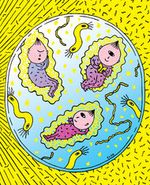
We are used to thinking of life based upon the distinctive properties of carbon and water. It does not have to be like that, according to astrobiologists. Life probably requires solvents, and a way for complex molecules to be built up: a prerequisite for self-replication that is one of life’s essential features. However, out on Titan (a moon of Saturn) there is liquid methane in which life could arise and whole new biochemical pathways could be imagined. A National Research Council report concludes: “If life is an intrinsic property of chemical reactivity, life should exist on Titan.” ut why stop there? On Triton (a moon of Neptune), where temperatures are so low that gases liquefy, a metabolism based on strange silica compounds and liquid nitrogen has been posited. Or again, astrobiologists have proposed life in the clouds surrounding Venus, and based on sulfuric acid. Why not life around red dwarfs if one tweaks the elements in a different fashion?
more from Richard Fortey at the NY Times here.
Saturday Poem
The Next Superpower
On the much-publicised full moon
festive youths and families gorge
on overpriced moon-cakes
to celebrate mid-autumn. How
very poetic. Not all that far away
the plants’ wastes flow
to choke the Yangtze. I can’t
appreciate the taste of the cakes,
their severe sweetness. The Chinese
cherish the stuff. This, they say,
is a beloved tradition. I can’t
remember ever loving anything
resembling one. You can’t finish
yours, and stroll onto the balcony
to view the fireworks. I’m worried
about the colossal dam cracking
and the River devouring this stuffy,
miasmic city. Will nature
ever know what to do with
humans? Will humans surpass words
like “nature”, “river” and “moon”?
The cake, I’ve been told, grows
every year in price. China swells
every year in wealth and power. I’m
frankly terrified of an ecological
armageddon. You seem bored with
the festivities and utterly finished
with the West. We left Australia
for an ancient culture. How
perturbed we are to discern
this country’s gargantuan
industrialisation. I leer at the remnants
of the pungent cake. The West
has traded its soul for a few dollars. Will
China remember the Opium War or
keep eating the impossibly rich
sweets? Am I being simply
disrespectful? What
of it? Glaciers melt and, yes,
this autumn is hotter than summer. So
Capitalism won; the cadres swapped
their gray Mao-esque suits
for the latest Armani. Indeed
your ennui and my disenchantment
match. We’re in love, two ex-pats
struggling to finish our moon-cakes
in the furnace of “the next Shanghai”.
.
.
by Ali Alizadeh
from Eyes in Times of War
Salt Publishing, Cambridge, UK, 2006
from Eyes in Times of War
Salt Publishing, Cambridge, UK, 2006
Friday, March 8, 2013
How Big is the Universe?
Darkness Lit From Within: On A.B. Yehoshua
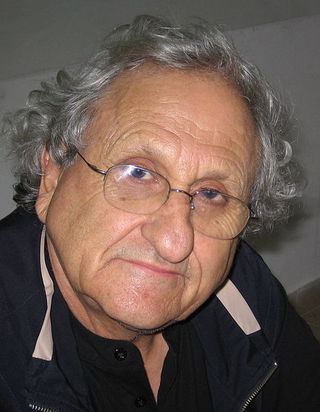
Vivian Gornick in The Nation (image from Wikimedia Commons):
When I stumbled on the writing of A.B. Yehoshua, it was as though a fault line had opened in a hardened surface to expose me to an emotional insight that life on the Israeli street had denied me. Interestingly enough, I met the author before I read the work, and only later realized that it demonstrated beautifully the old chestnut about the best part of a writer residing in the work, not in the person. Yehoshua’s prose penetrated to a level of psychological understanding that moved me deeply, whereas he himself could have doubled for the bullying Israeli with whom I dealt daily.
I met him in Haifa, where he lives and teaches. A friend in New York had sent him a letter of introduction on my behalf, and one day when I was in the city, I called and was invited to come right over. He was sitting at his desk when I arrived: a man in his mid-40s with a bulky body, a powerful face and a mass of curly black hair. He looked up and said in a voice rising on a note of insinuation, “So why are you still living in the Diaspora? Why aren’t you living here where you belong?” I laughed. “You’re kidding,” I said. He told me that he most certainly was not kidding and went on to sketch a picture of my life in the States as one at risk in a Christian nation that, at any time, might turn on me; right now, at this very minute, I was standing on a narrow strip of beach with the sea at my back and the goyim, for all I knew, beginning to advance on me. The visit lasted an hour, during which I said little while Yehoshua harangued me.
When I got back to Tel Aviv, I bought a collection of his early stories and sat down in my rented apartment with its stone floors, shuttered balcony and long door handles to read the writing of this fiercest of old-fashioned Zionists. I began to read in mid-afternoon and continued straight through to the last page of the last story, whereupon I remained sitting with the book in my lap, staring into a room now shrouded in a darkness that, mysteriously, felt lit from within.
While Yehoshua’s conversation mimicked the national idiom, his writing was soaked in existential loneliness. The stories, all of them set in modern Israel, were uniformly tales of disconnect in marriage and friendship. At once timeless but of their Israeli moment, they were the work of a writer who, wanting to dive down into those psychic regions of loss and defeat common to all humanity, knew how to make metaphorical use of a sick, sweating man awakening in an empty flat in Tel Aviv on a hot summer morning sometime in the 1970s.
We’re All Bystanders to the Sandberg-Mayer Mommy Wars

Ann Friedman in The Cut (via Andrew Sullivan):
Many corporations now strive for a veneer of family friendliness, so it’s not likely a woman will get the stink-eye for leaving early to catch her kid’s soccer game. Which is a feminist victory. But if a childless employee cops to the fact that she’s ducking out for a yoga class? It’s seen as downright indulgent and may even show up on a performance review. In interviews, Mayer has suggested that the professionally ambitious woman pick one thing — one thing! — that helps them unwind, and do it every week. (In other words, it’s okay to go to yoga, but only yoga.) I want all working women to have opportunities — and all working men to have life balance, too — but have caught myself thinking, why is it easier to ask me to work during my three-day weekend than it is to demand my co-worker check e-mail while on vacation with her kids? “Work-life balance” has become synonymous with “upper-class working moms,” and that’s a problem for everyone.
Systemic solutions like more flexible family-leave policies and subsidized childcare would be game-changers for mommy warriors. But, ironically, when such policy solutions are on the table, the people on the front lines agitating for them aren’t professional-track mothers. They’re usually low-wage workers of all genders. Case in point: New York City Council Speaker and mayoral hopeful Christine Quinn is single-handedly blocking a bill that would ensure paid sick days for all workers in the city. This news item, which should be at the heart of the work-life balance conversation, has rarely been noted as we huff and puff about Sandberg’s circles and Mayer’s nursery. “While we all worry about the glass ceiling, there are millions of women standing in the basement,” British feminist Laurie Penny once wrote, “and the basement is flooding.” Have you read much about the domestic workers’ strike in California, much less participated in a Twitter debate about it? Me neither. The “mommy wars” is like a discourse borg that manages to absorb and distort all conversations about women and work.
Giving Women in Academia Genuine Equal Opportunities
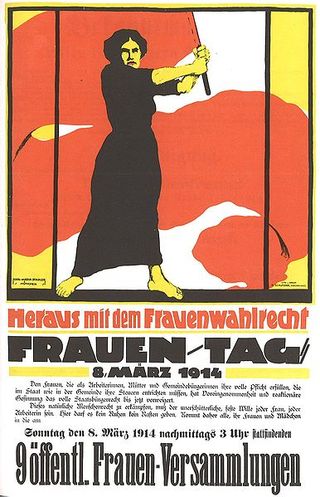
For this International Women's Day, Ingrid Robeyns in Crooked Timber (image from Wikimedia Commons):
I want to use this occasion to share some thoughts about how to given women in academia a fair chance. I’m not talking about affirmative action or quota, but rather making both the environment more welcoming to women, the formal practices fairer to women, and the informal practices such that they are less disadvantageous for women. The reason why these things need to be discussed is that I increasingly encounter academics (mostly men, I fear) who think that there are no further issues with the environment/procedures/practices, and who believe that in reality women now get better chances in academia than men. While there may be isolated cases of such favorable treatment of women, my judgement of the situation is that all things considered many women are still in many (subtle and not-so-subtle) ways disadvantaged, and that unfortunately many academics do not understand how the practices in academia are disadvantaging women. So, let us look at some of these factors, and ask what each of us can do to give women an equal chance in academia.
Implicit bias
In many situations the causes of women’s unequal chances are small and not visible to those not trained to diagnose the situation. One cause is the effects of implicit bias, which implies that if a piece of work is being done by women, it will be judged of lower quality than exactly the same piece of work done by me, due to non-conscious associations we hold. Or, a certain skill, capacity or personality trait will be judged positively if we see it in a man, and less positively or even negatively if it’s a trait of a woman. A typical case is being assertive, which is in men seen as a sign of leadership, but in women quickly interpreted as being aggressive. Implicit bias is often at work in how we judge CV’s and publication list: a woman with a strong publication list will be seen as ‘promising’, a man will be seen as ‘excellent’. These differences in evaluation are documented in studies on implicit bias, but many colleagues (from various universities and fields) who know about implicit bias, have seen it work in evaluative situations (like hiring committees) in which the work and capacities of men and women were evaluated.
a history of debt
Historically, as we have seen, ages of virtual, credit money have also involved creating some sort of overarching institutions – Mesopotamian sacred kingship, Mosaic jubilees, Sharia or Canon Law – that place some sort of controls on the potentially catastrophic social consequences of debt. Almost invariably, they involve institutions (usually not strictly coincident to the state, usually larger) to protect debtors. So far the movement this time has been the other way around: starting with the ’80s we have begun to see the creation of the first effective planetary administrative system, operating through the IMF, World Bank, corporations and other financial institutions, largely in order to protect the interests of creditors. However, this apparatus was very quickly thrown into crisis, first by the very rapid development of global social movements (the alter-globalisation movement), which effectively destroyed the moral authority of institutions like the IMF and left many of them very close to bankrupt, and now by the current banking crisis and global economic collapse. While the new age of virtual money has only just begun and the long-term consequences are as yet entirely unclear, we can already say one or two things. The first is that a movement towards virtual money is not in itself, necessarily, an insidious effect of capitalism. In fact, it might well mean exactly the opposite.
more from David Graeber at Eurozine here.
more than clever

In the early 20th century, incipient Modernists, most notably T.S. Eliot, found new layers of value in Donne. His perceived cool intellectualism seemed fresh and vigorous to poets grown weary of Romanticism’s emotionalism and emphasis on the self. Donne soon became a favorite of the New Critics as well. That school’s emphasis on reading poems as autonomous systems—discounting extra-textual considerations such as the author’s intentions and historical situation—was well suited to Donne’s poetry; his intentions are difficult or impossible to determine, and each poem he wrote seemed designed to function as, to use a phrase from one of Donne’s Holy Sonnets, “a little world made cunningly.” Donne’s poems in general, and “A Valediction: of Weeping” in particular, are certainly cunning. But it would be a mistake to think of them as nothing more than exercises in cleverness.
more from Joel Brouwer at Poetry here.
Koolhaas in china

Subtending Koolhaas’s decision to build in Beijing was a feeling of disgust with mass culture and free-market capitalism that came to a head in the early aughts. In 2002, the same year he won the commission for the CCTV complex, he published an essay called “Junkspace.” It takes the form of an obsessive list of definitions, in the vein of Susan Sontag’s “Notes on ‘Camp.’” Junkspace, narrowly defined, is the opposite of what Koolhaas means by architecture. Lacking substance and form, “it is subsystems only, without superstructure, orphaned particles in search of framework or pattern.” But junkspace is not a technical term. It fuses with Koolhaas’s anxieties about suburbanization, Americanization, malls, air conditioning, casual Fridays, and vast cultural leveling to become something more symbolically vivid. Junkspace is “kindergarten grotesque,” “mini-Starbucks on interior plazas”; it “is like being condemned to a perpetual Jacuzzi with millions of your best friends.” What emerges is a conflicted blend of angst, glibness, Western Marxism, and arch patrician contempt.
more from Colin Jones at Dissent here.
Friday Poem
Following Frida
That mono-brow wouldn’t work today.
Girls wax the in-betweens, the ups and
downs, smooth, smooth. Sometimes,
the greenery around the hacienda
itches so much we sneeze and tickle,
create unnecessary frowns, a slippage.
There’s always Dr. Death, of course,
his bright smile, that happy mouth
inviting us to pout and make kiss shapes.
Kiss, kiss! Kiss, kiss! he urges. His short needle
makes cushions of our worries. Little prick here,
another there, there, there,
it’s all right darlings, growing old
needn’t hurt so badly.
The hairs remind us, marching to link brow
to brow, shadowing our lips.
We want to be Frida, earnest with hair,
mocking Dr. Death's short needle
before it punctures our flesh.
Old, old! we shout the words he hates,
loose and old, not tight and old!
Senses, raging, in need of colour
as we behold ourselves, mirror-wise,
the women we always were,
just older, looser, still there.
.
.
‘Perhaps some day I might end up as a poet after all’
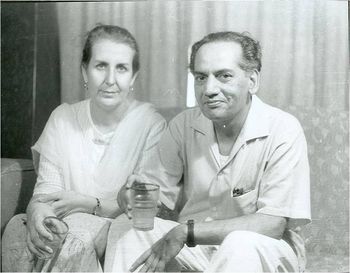
Salima Hashmi in Himal Southasian:
The daughter of Faiz Ahmed Faiz, the Subcontinent's iconic bard, discovers letters exchanged by her mother and father.
Faiz on Gandhi
The British tradition of announcing the death of a king is “The king is dead, long live the king!” Nearly 25 years ago, Mahatma Gandhi writing a moving editorial on the late C R Das in his exquisite English captioned it as “Deshbandhu is dead, long live Deshbandhu!” If we have chosen such a title for our humble tribute to Gandhiji, it is because we are convinced, more than ever before, that very few indeed have lived in this degenerate century who could lay greater claim to immortality than this true servant of humanity and champion of downtrodden. An agonizing 48 hours at the time of writing this article, have passed since Mahatma Gandhi left this mortal coil. The first impact of the shock is slowly spending itself out, and through the murky mist of mourning and grief a faint light of optimistic expectation that Gandhiji has not died in vain, is glowing.
Maybe it is premature to draw such a conclusion now in terms of net result, but judging by the fact the tragedy has profoundly stirred the world’s conscience, we may be forgiven if we may store by the innate goodness of man. At least we can tell at the top of our voice suspicious friends in India that the passing away of Gandhiji is as grievous a blow to Pakistan as it is to India. We have observed distressed looks, seen moistened eyes and heard faltering voices in this vast sprawling city of Lahore to a degree to be seen to be believed.
More here.
Bees get memory boost when buzzed up on caffeine
From MSNBC:
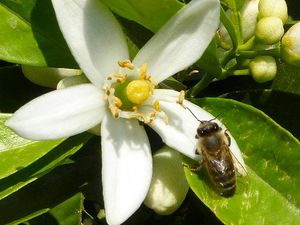
In their study, Wright and colleagues measured how much caffeine was in the nectar of three different species of the Coffea plant, including the “robusta” plant used to make freeze-dried coffee and the “arabica” plant used to make espresso and filter coffee. They also measured the amount of caffeine in four species of the Citrus plant: grapefruit, lemons, pomelo and oranges. All of these plants contained caffeine. [10 Things You Need to Know About Coffee] Plants produce caffeine as a defense mechanism — a bitter-tasting brew to fend off insects. Fortunately for the bees, the caffeine levels are below the threshold that they can taste, but high enough to affect their memory, the authors say. Next, the researchers used a form of Pavlovian conditioning to test how the caffeine affected the bees' memory. Bees have a reflex where they stick out their mouth parts when they encounter something sweet. The scientists trained the bees to extend their mouths in response to a floral scent, in order to receive a reward of sugar alone or sugar containing different levels of added caffeine. Caffeine had a strong effect on the bees' memory. Even 24 hours later, three times as many bees remembered the scent that was paired with a caffeine reward as the plain sugar. Twice as many bees remembered the flowers' scent after three days.
More here.
Thursday, March 7, 2013
Hugo Boss

Christopher Hitchens in Slate:
Recent accounts of Hugo Chávez's politicized necrophilia may seem almost too lurid to believe, but I can testify from personal experience that they may well be an understatement. In the early hours of July 16—just at the midnight hour, to be precise—Venezuela's capo officiated at a grisly ceremony. This involved the exhumation of the mortal remains of Simón Bolívar, leader of Latin America's rebellion against Spain, who died in 1830. According to a vividly written articleby Thor Halvorssen in the July 25 Washington Post, the skeleton was picked apart—even as Chávez tweeted the proceedings for his audience—and some teeth and bone fragments were taken away for testing. The residual pieces were placed in a coffin stamped with the Chávez government's seal. In one of the rather free-associating speeches for which he has become celebrated, Chávez appealed to Jesus Christ to restage the raising of Lazarus and reanimate Bolívar's constituent parts. He went on:
“I had some doubts, but after seeing his remains, my heart said, 'Yes, it is me.' Father, is that you, or who are you? The answer: 'It is me, but I awaken every hundred years when the people awaken.' “
As if “channeling” this none-too-subtle identification of Chávez with the national hero, Venezuelan television was compelled to run images of Bolívar, followed by footage of the remains, and then pictures of the boss. The national anthem provided the soundtrack. Not since North Korean media declared Kim Jong-il to be the reincarnation of Kim Il Sung has there been such a blatant attempt to create a necrocracy, or perhaps mausolocracy, in which a living claimant assumes the fleshly mantle of the departed.
Latin America After Chávez
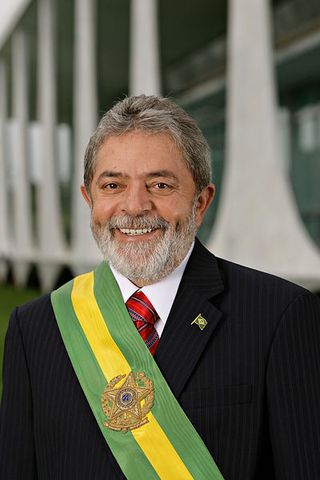
Luiz Inácio Lula da Silva in the New York Times (image from Wikimedia Commons):
HISTORY will affirm, justifiably, the role Hugo Chávez played in the integration of Latin America, and the significance of his 14-year presidency to the poor people of Venezuela, where he died on Tuesday after a long struggle with cancer.
However, before history is allowed to dictate our interpretation of the past, we must first have a clear understanding of Mr. Chávez’s significance, in both the domestic and international political contexts. Only then can the leaders and peoples of South America, arguably the world’s most dynamic continent today, clearly define the tasks ahead of us so that we might consolidate the advances toward international unity achieved in the past decade. Those tasks have gained new importance now that we are without the help of Mr. Chávez’s boundless energy; his deep belief in the potential for the integration of the nations of Latin America; and his commitment to the social transformations needed to ameliorate the misery of his people.
Mr. Chávez’s social campaigns, especially in the areas of public health, housing and education, succeeded in improving the standard of living of tens of millions of Venezuelans.
One need not agree with everything Mr. Chávez said or did. There is no denying that he was a controversial, often polarizing, figure, one who never fled from debate and for whom no topic was taboo. I must admit I often felt that it would have been more prudent for Mr. Chávez not to have said all that he did. But this was a personal characteristic of his that should not, even from afar, discredit his qualities.
One might also disagree with Mr. Chávez’s ideology, and a political style that his critics viewed as autocratic. He did not make easy political choices and he never wavered in his decisions.