WHAT should Barack Obama, who is to visit Israel next Wednesday for the first time in his presidency, do about the Israeli-Palestinian conflict? First, he must abandon the stale conventional wisdom offered by the New York-Washington foreign-policy establishment, which clings to the crumbling remnants of a so-called peace process that, in the 34 years since the Camp David accords, has actually helped make peace less attainable than ever.
When the most recent iteration of this process began with high hopes at the Madrid peace conference in 1991, which led to the Oslo accords two years later, there were 200,000 Israelis illegally settled in the occupied Palestinian territories: today, there are more than twice as many. During this time, under four successive presidents, the United States, purportedly acting as an honest broker, did nothing to prevent Israel from gradually gobbling up the very land the two-state solution was to be based on. Until 1991 most Palestinians, although under Israeli military occupation, could nonetheless travel freely. Today, an entire generation of Palestinians has never been allowed to visit Jerusalem, enter Israel or cross between the West Bank and Gaza. This ghettoization of the Palestinians, along with the unrest of the second intifada of 2000-5 and the construction of seemingly permanent settlements and of an apartheid-style wall, are the tragic fruits of the so-called peace process the United States has led. The “peace process” has consisted of indulging Israeli intransigence over Palestine in exchange for foreign-policy goals unrelated to the advancement of peace and Palestinian freedom. In the late 1970s this involved the strategic cold war prize of moving Egypt from the Soviet column to the American column.
NASA’s Curiosity rover has found what it went to Mars to look for: evidence of an environment that could have once supported life. Chemical analyses show that a greyish powder taken from the rover’s first drilled rock sample contains clay minerals formed in water that was slightly salty, and neither too acidic nor too alkaline for life.
“If this water was around and you had been on the planet, you would have been able to drink it,” says Curiosity project scientist John Grotzinger, a planetary geologist at the California Institute of Technology in Pasadena. He and other NASA researchers announced the findings today at a news briefing in Washington DC. Previous missions to Mars have spotted clay minerals. And Curiosity itself had already found signs that liquid water once flowed across the surface. But the pinch of powder tested by Curiosity, from a rock nicknamed John Klein, is the first hard evidence of water-borne clays in a benign pH environment. “This is the only definitive habitable environment that we’ve described and recorded,” says David Blake, principal investigator for the rover’s Chemistry and Mineralogy instrument (CheMin) at NASA’s Ames Research Center in Moffett Field, California. An X-ray analysis by CheMin showed that the ground-up rock comprised mostly igneous minerals such as feldspar, pyroxene, olivine and magnetite. But at least 20% of the rock was made up of clay minerals, such as smectite, that form in the presence of water. The salts in the rock, such as halite, are of the sort that life tolerates, Blake says, unlike the iron salts found elsewhere on Mars by the rover Opportunity, which indicate an acidic environment. A second instrument on Curiosity, known as the Sample Analysis at Mars (SAM), heated a fraction of a gram of powder and analyzed the gases released. Water was released from the sample at relatively high temperatures, which is characteristic of clay minerals and a good confirmation of CheMin’s findings, says Paul Mahaffy, principal investigator for SAM at NASA’s Goddard Space Flight Center in Greenbelt, Maryland.
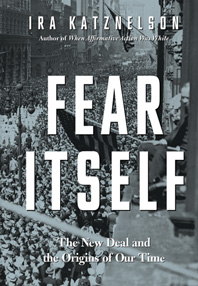
Scott Lemieux reviews my old advisor Ira Katznelson's new book Fear Itself, in The American Prospect:
In 1942, Congress passed legislation attempting to facilitate voting by soldiers stationed overseas. Passed too close to the date of the general election (and after the primary election season) and creating a cumbersome process, the bill was ineffective. As the number of American soliders overseas continued to increase, the lack of practical access to the ballot was intolerable to President Franklin Delano Roosevelt. He sent a bill to Congress in 1944 that would have created a simple federal ballot made it much easier for soldiers to make their voices heard. Despite having the authority of a wartime president, however, the bill failed. Congress instead passed a much weaker version, more similar to the 1942 statute, that did not send out a uniform federal ballot and left administration in the hands of the states. Fewer than 33 percent of eligible soldiers were able to vote in the 1944 elections. How, during the height of wartime, could such a basic democratic right be denied many soldiers risking their lives for their country?
The answer, as Ira Katznelson details in his brilliant new book Fear Itself, is that a coalition of Republicans (who believed that soldiers largely represented a pro-FDR demographic) and Southern Democrats (who feared that even this limited form of federal intervention would threaten Jim Crow) wanted to limit ballot access for soldiers. The clash between the imperatives of war and the constraints of congressional politics makes the failure of FDR's 1944 bill a paradigmatic New Deal story. Eighty years ago yesterday, FDR famously said during his First Inaugural Address that “the only thing we have to fear is fear itself.” The New Deal—which Katznelson argues should be seen as encompassing the period between the election of FDR in 1932 and the election of Eisenhower 20 years later—was, according to Fear Itself, conducted in the shadow of three major fears. First, there was the fear about whether democracy could survive the Great Depression as countries such as Germany, Italy, and Japan turned to authoritarian responses. Second, there was the fear protecting national security respresented, first by World War II and then by the Cold War and the atomic age. And third, and crucially, was the Southern fear that its system of white supremacy would not survive. The first two fears created an impetus for unprecedented federal action, but this federal action was, throughout the New Deal, shaped and constrained by the third fear.
One of the many strengths of Fear Itself is that it brings Congress back to center stage in the New Deal era.
As a starting point, we have drawn up a list of 65 people, based on recommendations from our ten-strong panel. Candidates have to be alive and still active in public life. They must be distinguished in their field and have influence on international debate. We gave credit for the currency of the candidates’ work—their influence over the past 12 months and their continuing significance to this year’s biggest questions.
The panel: Anne Applebaum, Philip Campbell, Amy Chua, James Fallows, Stephanie Flanders, Bernard Henri-Lévy, Bronwen Maddox, David Miliband, Anna Maria-Misra and Strobe Talbott. Judges were not permitted to vote for themselves.
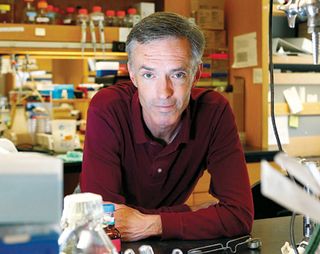
Let's make one thing clear: Jim Collins won't grow you a house any time soon.
More than a decade ago, Collins, a decorated scientist at Boston University, helped give birth to synthetic biology, which soon grew into arguably the world's hottest and most poorly defined scientific discipline. Its practitioners made big promises: that by harnessing the ideas of engineering and applying them to genetics, they would create cheap, abundant biofuels, customized medicine, even self-growing houses, as one scientist predicted.
The potential for mastering life was so exciting that scientists talked about applications decades away as if they were around the bend. Scholars from the Bay Area and Boston issued forth into industry, promising to reinvent life from the inside out, evolution be damned. Drawing inspiration from electrical circuits and computing, they'd create standardized biological parts. The notion drew easy comparisons to Legos: Snap them together, and soon enough you'd have control of life.
Since 2004 investors have poured at least $1.84-billion into synthetic-biology start-ups; the government has added many more millions in research dollars. But more recently, the hype has died down. Most of those companies have made grinding progress, not breakthroughs. Much potential remains to reinvent manufacturing and medicine, but the road is far longer than some imagined.
There's a simple reason for this problem: The tools have outpaced the knowledge. The cost of genetic sequencing and synthesis continues to plunge, but the functions of many genes in even the simplest forms of life, like bacteria and yeast, stubbornly hold on to their secrets. Genetic networks interact in complex, mysterious ways. Engineered parts take wild, unexpected turns when inserted into genomes. And then evolution, a system that would drive any electrical engineer mad, tiptoes in.
As synthetic biology passes from precocious youth toward maturity, it is returning home to academe. Collins sees an upside to that retrenchment: The science, once a domain of biological amateurs and outsiders, can now inform basic research into life's unending complexity.
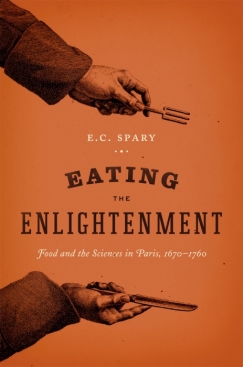
Steven Shapin reviews Eating the Enlightenment : Food and the Sciences in Paris, 1670-1760, in the LA Review of Books:
AFTER SAN FRANCISCO POLITICIANS Harvey Milk and George Moscone were gunned down in City Hall by their colleague Dan White in 1978, the murder trial launched a pre-Internet meme about moral accountability. White’s lawyers claimed that his capacity for judgment was diminished at the time of the killings. A sign of White’s mental impairment was his abnormal diet, especially an increased consumption of Coca-Cola and the sickly sweet, cream-filled cakes known as Twinkies: an American edible icon, concocted of not much more than sugar, calories and commercial ingenuity. The precise legal claims were, first, that Twinkie-eating was an indication of the defendant’s pathological mental state, not its cause, and second, that “there is a minority opinion in psychiatric fields that sugar-rich diets might exacerbate existing mood-swings.” But excitable journalists preferred a simpler version: Twinkies were the snack that drove men mad. “The Twinkie defense” entered American pop culture — and eventually the Oxford English Dictionary — as a tag for any number of obviously ridiculous but expert-endorsed claims about dietary causes of disturbed psychic states.
The Twinkie defense is just tenable enough to be offered up as an accountability waiver — a seriously pathological version of its more benign kin, the “sugar rush” or “sugar high” — but also ludicrous enough to be officially disallowed. It’s a modern absurdity, but one that has a long and sinuous cultural history. Go back several hundred years and one finds that the general form of the Twinkie defense was central to medical thought and practice. The idea that diet might shape mental states was commonly accepted; the open question concerned what foods had what effects on the mind.
Of all the startups that launched last year, Fuzz is certainly one of the most intriguing and the most overlooked. Describing itself as a “people-powered radio” that is completely “robot-free,” Fuzz bucks the trend toward ever greater reliance on algorithms in discovering new music. Fuzz celebrates the role played by human DJs—regular users who are invited to upload their own music to the site in order to create and share their own “radio stations.”
The idea—or, perhaps, hope—behind Fuzz is that human curators can still deliver something that algorithms cannot; it aspires to be the opposite of Pandora, in which the algorithms do all the heavy lifting. As its founder, Jeff Yasuda, told Bloomberg News last September, “there’s a big need for a curated type of experience and just getting back to the belief that the most compelling recommendations come from a human being.”
But while Fuzz's launch attracted little attention, the growing role of algorithms in all stages of artistic production is becoming impossible to ignore. Most recently, this role was highlighted by Andrew Leonard, the technology critic for Salon, in an intriguing article about House of Cards, Netflix's first foray into original programming. The series' origin myth is by now well-known: Having studied its user logs, Netflix discovered that a remake of the British series of the same name could be a huge hit, especially if it also featured Kevin Spacey and was directed by David Fincher.
“Can the auteur survive in an age when computer algorithms are the ultimate focus group?” asked Leonard. He wondered how the massive amounts of data that Netflix has gathered while users were streaming the first season of the series—how many times did they click the pause button?—would affect future episodes.
Many other industries are facing similar questions. For example, Amazon, through its Kindle e-reader, collects vast troves of information about reading habits of its users: what books they finish and what books they don't; what sections they tend to skip and which they read most diligently; how often they look up certain words in the dictionary and underline passages. (Amazon is hardly alone here: Other e-book players are as guilty.)
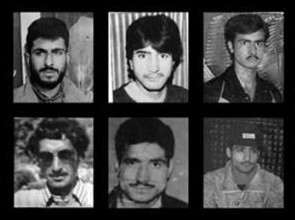
A young Kashmiri man is working in his father’s paddy field, bare-chested in the humid late summer, his strong body glistening with exertion. His mother and sisters work alongside, knee-deep in water. Let’s just imagine that they’re humming a tune off a nearby transistor radio.
That’s how the story, which I first heard almost exactly ten years back, begins—Soon an army jeep, closely followed by a truck, pulls up on the road next to their fields. The men inside appear to watch for some time. Then half a dozen armed soldiers step out briskly, and walk towards the family. There may have been an exchange of words, though later no one can confirm what was said.
The soldiers quickly grab the young man, and drag him off into the waiting truck. His muscular torso did not suggest strength any more, it was quietly noted afterwards, but great vulnerability. The women ran after the soldiers, shouting and screaming. One of them pulled off her headscarf, tossing it at the feet of the departing soldiers, in a final gesture of abject surrender. But there was no space for mercy here: these were men from the Rashtriya Rifles of the Indian Army, the much feared RR, trained for counter-insurgency, and said to be “psychologically strong”. They were not known to relent. As the olive-green truck rolled away, it was as if its engine were sucking away the very air from this landscape. For a little while longer the women could still be seen, flailing their arms in muffled, incoherent despair, and then, a heaving heap of exhausted bodies on the ground.
A week later, the young man’s father was still doing the rounds of army outposts in the area, trying to find his missing son. Dense concentric webs of barbed wire girdle these camps, with a second impenetrable ring of sandbags and metal sheets, which together buttress the nervous, edgy authority of the soldiers. Over several days the elderly man was passed on from camp to camp; after craven postures of servility and submission had been struck before soldiers and Subedars, in front of boyish Captains and Majors, he was finally ushered into the presence of “C.O. sahib”, the Commanding Officer of the unit.
Ah, that was your son, the Colonel is said to have remarked, sharp in his mint-fresh camouflage fatigues and his polished combat boots. The Colonel was almost smiling now—good-looking boy, handsome, nice strong body. He was with us, he said, but he’s gone now.
On July 22, 1851, on a day when a visitor to London had any number of amusements at his disposal—from M. Gompertz’s Giant Panorama (“including a new diorama of intense interest”) at the Parthenium Rooms on St. Martin’s Lane, to the “Real Darkies from the South” (replete with “the Sayings and Doings and Lights and Shadows of the Ethiopian race”) appearing at Gothic Hall—a group of men assembled in a small room in Westminster.
They were drawn by a curious invitation: “To witness an attempt to open a lock throwing three bolts, and having six tumblers, affixed to the iron door of a strong room.” The men gathered around the door to a vault, once the repository of records for the South-Eastern Railway. At their center was an unassuming figure, an American named Alfred C. Hobbs, clad in waistcoat and collar. At 11:35 a.m., Hobbs produced a few small tools from his pocket—“a description of which, for obvious reasons, we fear to give” a correspondent for the Times wrote—and turned his attention to the vault’s lock. His heavy brows knitted, Hobbs’ hands flitted about the lock with a faint metallic scratching. Twenty-five minutes later, it opened with a sharp click. Amid the excited murmur, the witnesses asked Hobbs to repeat the task. Having relocked the vault, he once again set upon it with deft economy. The vault opened “in the short space of seven minutes,” as the witnesses would testify, “without the slightest injury to the lock or the door.”
The lock was known as the “Detector,” and it needed no introduction. Indeed, since its patenting in 1818 by Jeremiah Chubb, a Portsmouth ironmonger, it had become one of the country’s most popular locks, advertised in the Bleak House serials and enshrined in magazine doggerel: “My name is Chubb, that makes the Patent Locks; Look on my works, ye burglars, and despair.”
More here, including more articles on lock picking.
So why is a tale about a manumitted slave/homicidal black gunslinger more palatable to a contemporary leftoid sensibility than either a similarly cartoonish one about black maids and their white employers or one that thematizes Lincoln’s effort to push the Thirteenth Amendment through the House of Representatives? The answer is, to quote the saccharine 1970s ballad, “Feelings, nothing more than feelings.” Wiener’s juxtapositions reflect the political common sense that gives pride of place to demonstrations of respect for the “voices” of the oppressed and recognition of their suffering, agency, and accomplishments. That common sense informs the proposition that providing inspiration has social or political significance. But it equally shapes the generic human-interest “message” of films like The Help that represent injustice as an issue of human relations—the alchemy that promises to reconcile social justice and capitalist class power as a win/win for everyone by means of attitude adjustments and deepened mutual understanding.
ARISTIDE IS A FLAWED and complicated figure, but his presidencies remain the symbol of the historic democratic mobilization that put an ecstatic end to more than thirty years of US-backed military dictatorships. And while his legislative achievements have been criticized by the Left and the Right, Haitians today celebrate one remarkable political triumph—that he disbanded the reviled Armed Forces of Haiti, which had been trained by US Marines during the American occupation from 1915 to 1934 and had never known an enemy but the country’s own citizens.3 This presented a problem for Aristide’s enemies in the business class: Unable to call on the military, they were without means to force him from office and suppress the protests of his Lavalas base. Which goes a long way toward explaining why Aristide’s second term in office lasted so much longer than his first and why UN soldiers were required on the ground after the second coup took place.
Jaynes began inspecting the world’s earliest literature for the first signs of human consciousness. “I started off like in a detective story,” he told a reporter for the Princeton radio station. As he moved backward through the centuries, he saw that consciousness, as he had defined it, disappeared somewhere between the Odyssey and the Iliad. Odysseus is a modern hero, introspective and deceptive. In the Iliad, the writing of which scholars date some three hundred years earlier, the characters are passive and mentally inert. They have no concept of a private mental space. The word “psyche” referred only to actual substances in the body, breath, and blood, which leave the warrior’s body as soon as he dies. The gods, emerging from mists or clouds or the sea, handle the warrior’s decisions. When Achilles accuses Agamemnon of stealing his mistress, Agamemnon insists he had no agency. “Not I was the cause of this act, but Zeus,” he explains. “So what could I do? Gods always have their way.” Critics have interpreted the meddling presence of the god as poetic devices, but Jaynes accused translators of imputing a modern mentality to people with subjectivities foreign to us. “The gods were in no sense ‘figments of the imagination,’” he wrote.
I don't know much, when I knew less, And I was heartbroke for the first time, I was drowning in my tears, I went looking for a lifeline, Trying to find some comfort, A simple tender touch, Searching for some little cure That would not cost too much, And I could hear that produce wagon on the street, I could hear that farmer singing, As I cried myself to sleep
I got ba-na-na, watermelon, peaches by the pound, Sweet corn, mirleton, mo' better than in town, I got okra, enough to choke ya, Beans of every kind, If hungry is what's eatin' you I'll sell you peace of mind, But this ain't what you came to hear me say, And I hate to disappoint you, But I got no love today, I got no love today, I got no love today, No love today
I could not love to save myself From lonesome desperation. Everything I thought was love Was worthless imitation. My concept of commitment Was to take all you could give, I thought the cheapest thrills I loved Were teachin' me to live, But nothin' seemed to last or see me through Nothin' but that little song That I still sing for you.
No love today, none tomorrow, Not now, not forever. You can't see what comes for free, I think you much too clever, For your own good I will tell you What's right before your eyes, Intelligence is no defense Against what this implies, In the end no one will sell you what you need, You can't buy it off the shelf, You got to grow it from the seed,
I got ba-na-na, watermelon, peaches by the pound, Sweet corn, mirleton, mo' better than in town, I got okra, enough to choke ya, Beans of every kind, If hungry is what's eatin' you I'll sell you peace of mind, But this ain't what you came to hear me say, And I hate to disappoint you, But I got no love today, I got no love today, I got no love today, No love today
A curious thing happens to white-faced capuchin monkeys when they anoint their bodies with mud and plant matter, a natural insect repellent: With their heads and faces slathered in goop, these highly social primates lose their ability to recognize each other. Previously friendly monkeys can become fighting foes. This abrupt change in behavior hints at the importance of facial expressions for recognition, University of Washington evolutionary biologist Sharlene Santana says, and could help to explain why primate faces are so wildly divergent: Some species, like white-faced capuchins, have monotone hair and skin color; others, like the northern owl monkey, sport a dramatic mix of fur and flesh tones.
Biologists have long seen primates’ facial expressions during social interactions as clues that factors like group size drove the stark differences in their facial evolution. But there was little direct evidence to support the theories, so Santana decided to study a large number of monkey species, in a wide variety of social group sizes and environments, to see how their faces had evolved. Santana found that the complexity of a species’ facial color patterns is tightly linked to certain social systems. Species that live in larger groups tend to have plainer faces than those living in smaller groups. Primates in large social groups most likely benefit from plain faces that allow for a greater range of expressions, she explains.
For more than 500 years, the whereabouts of King Richard III of England, who was killed in the one of the last battles of the War of the Roses, were unknown. A skeleton was dug up in a parking lot in Leicester late last year, and last month, archeologists confirmed the centuries-old corpse belonged to the king. Death wasn’t the end for Richard, as experts study his remains and historians argue where they should finally be put to rest. It wasn’t over for these historical figures either, as told in great detail by Bess Lovejoy in “Rest in Pieces: The Curious Fates of Famous Corpses,” out March 12. These men’s unfortunate corpses were hacked, stolen, transported across oceans and even stuffed into a trunk and used as a chair.
Napoleon Bonaparte
After the former French emperor died in exile 1821 in Great Britain, 20 years would pass before his body returned to its home country. What happened next is the result of an autopsy that took one too many liberties. The doctor had allegedly removed the emperor’s genitals, and they joined some of Napoleon’s other belongings in a collection that was later auctioned in London in 1916. In 1927, the organ went on display at the Museum of French Art in New York City. It changed several collectors’ hands until the 1970s, when it was purchased by an American urologist, who kept it in a suitcase underneath his bed until he died in 2007 and his daughter inherited it.
Abraham Lincoln
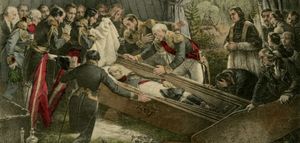
After his assassination, the 16th president was embalmed and placed in an elaborate marble tomb in Springfield, Illinois. On election night, 1876, a group of counterfeiters attempted to steal the corpse, planning to hold it for ransom to force the release of famous engraver Benjamin Boyd, who had been pinched for forging $50 bills. Their scheme was interrupted by the Secret Service, which coincidentally Lincoln had created the day he was shot. The late president’s coffin was moved underneath the tomb, resurfacing once more in 1901, when workers sealed it in a steel cage and block of concrete. According to a young boy who, along with a small group of Illinois officials, snuck a peek at the politician one last time, Lincoln was perfectly preserved.
At the heart of the thought of American philosopher Nancy Bauer is the troubled relationship between philosophy and feminism. Put differently, Bauer is interested in exploring the possibilities for a genuinely philosophical feminism, while at the same time aiming at paving the way for a feminist critique of the philosophical tradition that is transformative, rather than dismissive, of the intellectual discipline as such. Instead of simply arguing in favour of feminist philosophy, where the issue of the value of feminism for philosophy and vice versa is settled in advance, Bauer works on the borders of feminism and philosophy, where difficulties in bringing the two enterprises together abound, but great intellectual rewards await in the case of success. In Bauer's work, this ambition manifests itself in a way of doing philosophy that ties the abstractions of philosophy to concerns of everyday life, where French writer, philosopher and feminist Simone de Beauvoir serves as a great source of inspiration. Writing about the philosophy of Beauvoir and its connections to the thought of Descartes, Hegel, and Sartre, Bauer received her PhD in philosophy from Harvard University in 1997.
The work of Beauvoir is also the main topic of our conversation, ranging from questions about what philosophy is, also touching upon the relationship between philosophy and politics, to subjects of critique and the importance of scepticism for feminism. A central concern which nonetheless to some degree remains implicit is the sceptical legacy of seventeenth century French rationalist René Descartes. What is the image of philosophy proposed by scepticism and what are its implications for the prospect of a feminist philosophy? Descartes is generally acknowledged to be the founder of modern philosophy. In his work, the authority of reason is relocated from the great schools of scholasticism to the individual mind. Human subjectivity thus becomes the foundation of modern thought. The emphasis of the cogito as the touchstone of philosophical authority is also fundamental in the radical doubt that characterizes the thought of Descartes. Through his intervention, philosophy turns into an enterprise marked by scepticism, where the notion of the origin of thought becomes entwined with the image of a philosopher starting out from a position of metaphysical loneliness and isolation. Yet, the sceptical doubt of Descartes remains purely theoretical, in effect separating the realm where the doubting takes place from everyday life. For the latter dimension of human existence, Descartes adopts an entirely different guiding principle, rather asserting that he will “follow even the most doubtful of opinions […] with no less constancy than if they had been quite certain.”
President Hugo Chávez is dead, but the debate over “Chavismo” lives on. His economic policies were aimed at improving the living standards of the poorest citizens of Venezuela, and those are the terms on which his ultimate success is likely to be judged.
Measured in terms of tangible improvements in human development, his achievements are significant. The bigger question is whether they can be politically and economically sustained.
A loud critic of United States policies and leader of a broader Latin American renunciation of neoliberal policies, Mr. Chávez has never been popular in the United States.
Strong aversion to both his political values and his personal style has often led to dismissive assessments of Venezuela’s economic record since he became president in 1999. But as Mark Weisbrot and Jake Johnston of the Center for Economic and Policy Research have carefully documented, the Venezuelan economy experienced significant growth after 2003, when the Chávez government successfully gained control over the national petroleum industry, and fared surprisingly well even after oil prices collapsed in 2008.
Oil revenues were used to finance large public investments in health, education, housing, pensions and food subsidies to the poor. World Bankindicators show a sharp decline in poverty from slightly more than 60 percent in 2003 to slightly more than 30 percent in 2011.
Many projects or “misiones” that Mr. Chávez put into place proved so popular that even Henrique Capriles, his opponent in the last election, promisedvoters he would maintain and augment them.
While some critics of Mr. Chávez suggest that his policies have not had much impact on other Latin American countries, others contend that they are not that different from those carried out by other social democratic governments in the region, like Brazil’s. The influential Luiz Inácio Lula da Silva, past president of Brazil, has lauded Mr. Chávez’s contribution to regional initiatives.
The impact that Mr. Chávez had on other left-leaning governments in the region, especially in Bolivia and Ecuador, certainly represents part of his political legacy.
Economists have not yet developed very good tools for assessing the impact of specific development policies, partly because these are intrinsically difficult to measure.