ice-age art

Clar05_3506_05

How much power or importance the Ice Age makers and users attributed to their sculpture is again a matter of guesswork. There are interesting new data, from attempts to reproduce the artefacts using the tools and techniques most probably involved, on how long the figures and more elaborate patterns took to make. Scores of hours, it looks like. This leads to the question of quality. Archaeologists (and right-thinking art historians, by the way) are reluctant to trust their powers of judgment here, but my ‘modern mind’, as it moved through the rooms in the show, was soon reeling from the huge disparities of skill and aesthetic complexity obvious from piece to piece. How fabulously, ruthlessly brilliant the best craft performances were, and how pathetic and negligible the worst! The social anthropologists tell us that ‘symbolic thought entails consciousness of the aesthetic.’ Nice to know. Whoever it was made the Lespugue Venus, or carved the fish-patterns on the tusk from Eliseevitchi (but the fish-scale analogy undersells the weird multiplicity of the rhythms and sizes of mark in play), or imagined the torque of the bison’s neck from Zaraysk – well, they knew that their mastery-mystery would soon set the fireside chattering. Just as surely as the scratchers of the mammoth scrawl from La Madeleine or the listless ptarmigan from Isturitz or the lavatory-wall woman from Courbet Cave couldn’t have cared less. Consciousness of the aesthetic has never necessarily meant competence; or even, most often, the wish to compete. A lot of the time, any old visualisation will do.

more from T.J. Clark at the LRB here.
Wednesday Poem

Between Poles

Between the poles of the conscious and the unconscious,
there has the mind made a swing:

Thereon hang all beings and all worlds,
and that swing never ceases its sway.

Millions of beings are there:
the sun and the moon in their courses are there.

Millions of ages pass, and the swing goes on.
All swing! the sky and the earth and the air and the water;

and the Lord Himself taking form:
And the sight of this has made Kabîr a servant.
.

Chain Ghazal

From The Guardian:

GhazalThere's always a wealth of interesting new writing in Gene Doty's online quarterly, The Ghazal Page, reflecting the editor's welcoming and creative approach to the classical form (a ghazal is a kind of oriental lyric). This week's poem, Chain Ghazal: Chickens by Esther Greenleaf Mürer, comes from the latest issue and nicely blends innovative and traditional approaches. It's guaranteed to put a spring in your step, even if the March weather doesn't. Originally, in the Persian ghazal, the couplet, or sher, was a single line divided by a caesura, and each sher formed a small, separate poem. Agha Shahid Ali, the ghazal's first “ambassador” in America, describes the couplet as “a stone from a necklace”. A mono-rhyme (the qafia), declared in the first couplet, and picked up by the second line of each succeeding one, brings unity to the diversity of the whole poem. The refrain, or radif, has a similar function, and follows the qafia in the same pattern. The last couplet traditionally includes the poet's name. Readers in the UK will know Mimi Khalvati's many fine and tender love poems in the form. The challenge for the anglophone poet lies both in rhyming skill and tonal balance. The repetition of qafia and radif suggests polysyllabic rhyme, and the latter, in English, tends towards comic verse. Mürer's poem is open to the comic spirit, but also uses the rhyme scheme's potential for generating serious ideas – and narrative. The choice of linked quatrains thickens the plot. Mürer triples the mono-rhyme in each stanza, and each first line of a new stanza recovers, with minor variations, the refrain from the last line of the previous one: hence, the “chain” effect. That repetition, although it crosses the stanza break, gives a rather “bluesy” feel to this ghazal. In fact, the fourth stanza talks about the “blues”, including the word in its trio of rhymes, and about how walking cures them. It's almost as if the poem spliced two genres: the ghazal and the blues. Even without that direct reference, you'd hear the slightly mournful undertone to the jauntiness.

Chain Ghazal: Chickens

I never count my chickens when crossing the road.
I always run like the dickens when crossing the road.
When I let go of expectations I'm always amazed
at how the plot thickens once I have crossed the road.

When preparing to cross the road I gird up my loins.
Before I pick up a toad I gird up my loins.
And thus I train myself in poetic practice:
When fixing to write an ode I gird up my loins.

First I gird up my loins and then I put on my shoes.
Fill my pockets with coins before I put on my shoes.
It will never do to arrive back home with bare feet;
can't go to Des Moines until I've put on my shoes.

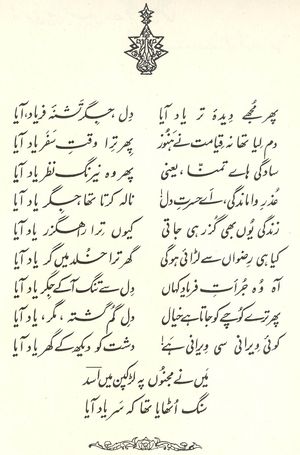
More here. (Note: The picture shows one of my favorite ghazals by the great Urdu poet Ghalib)

How Your Language Affects Your Wealth and Health

From Scientific American:

Does the language we speak determine how healthy and rich we will be? New research by Keith Chen of Yale Business School suggests so. The structure of languages affects our judgments and decisions about the future and this might have dramatic long-term consequences. There has been a lot of research into how we deal with the future. For example, the famous marshmallow studies of Walter Mischel and colleagues showed that being able to resist temptation is predictive of future success. Four-year-old kids were given a marshmallow and were told that if they do not eat that marshmallow and wait for the experimenter to come back, they will get two marshmallows instead of one. Follow-up studies showed that the kids who were able to wait for the bigger future reward became more successful young adults.

Resisting our impulses for immediate pleasure is often the only way to attain the outcomes that are important to us. We want to keep a slim figure but we also want that last slice of pizza. We want a comfortable retirement, but we also want to drive that dazzling car, go on that dream vacation, or get those gorgeous shoes. Some people are better at delaying gratification than others. Those people have a better chance of accumulating wealth and keeping a healthy life style. They are less likely to be impulse buyers or smokers, or to engage in unsafe sex. Chen’s recent findings suggest that an unlikely factor, language, strongly affects our future-oriented behavior. Some languages strongly distinguish the present and the future. Other languages only weakly distinguish the present and the future. Chen’s recent research suggests that people who speak languages that weakly distinguish the present and the future are better prepared for the future. They accumulate more wealth and they are better able to maintain their health. The way these people conceptualize the future is similar to the way they conceptualize the present. As a result, the future does not feel very distant and it is easier for them to act in accordance with their future interests.

More here.

The First Step Toward Mapping Human Thoughts

Robert Gonzalez in io9:

Today we are closer than ever to understanding the biological basis of human thought. In a major first for neuroscience, researchers have produced an image showing almost an entire vertebrate brain at work — down to the level of individual neurons. Soon we'll have a human brain “activity map” which reveals how electrical impulses in the brain correlate to thought patterns, biological processes, and more.

The neurons in question belong to a zebrafish embryo, and the researchers come from HHMI's Janelia Farm Research Campus. In the video up top, the activity of individual neurons appear as flashes, detonating across the fish's entire larval brain. And while the brain of a zebrafish only contains about 100,000 neurons (compared to the tens of billions in the human brain), it represents an important step along the path to creating a Brain Activity Map for us apes, a project into which the Obama administration may soon funnel billions of dollars.

According to findings published in the latest issue of Nature Methods, microscopist Phillip Keller and neurobiologist Misha Ahrens have modified an existing imaging technique (called light sheet microscopy) in such a way that enables them to record neuronal activity from the entire volume of the zebrafish's brain. They did this while the embryo was alive, and with a temporal resolution of 0.8 Hz (meaning they were recording activity about once every second). All told, Keller and Ahrens were able to capture “more than 80% of all neurons at single-cell resolution.

Tuesday, March 19, 2013

A Letter to Paul Wolfowitz occasioned by the tenth anniversary of the Iraq war

Andrew J. Bacevich in Harper's Magazine:

Dear Paul,

220px-Paul_WolfowitzI have been meaning to write to you for some time, and the tenth anniversary of the beginning of the Iraq war provides as good an occasion as any to do so. Distracted by other, more recent eruptions of violence, the country has all but forgotten the war. But I won’t and I expect you can’t, although our reasons for remembering may differ.

Twenty years ago, you became dean of the Johns Hopkins School of Advanced International Studies and hired me as a minor staff functionary. I never thanked you properly. I needed that job. Included in the benefits package was the chance to hobnob with luminaries who gathered at SAIS every few weeks to join Zbigniew Brzezinski for an off-the-record discussion of foreign policy. From five years of listening to these insiders pontificate, I drew one conclusion: people said to be smart — the ones with fancy résumés who get their op-eds published in the New York Times and appear on TVreally aren’t. They excel mostly in recycling bromides. When it came to sustenance, the sandwiches were superior to the chitchat.

You were an exception, however. You had a knack for framing things creatively. No matter how daunting the problem, you contrived a solution. More important, you grasped the big picture. Here, it was apparent, lay your métier. As Saul Bellow wrote of Philip Gorman, your fictionalized double, in Ravelstein, you possessed an aptitude for “Great Politics.” Where others saw complications, you discerned connections. Where others saw constraints, you found possibilities for action.

More here.

Pakistan’s Extremist Democracy

Ahmed Rashid in the New York Review of Books:

ScreenHunter_143 Mar. 19 16.32This spring was supposed to open a new chapter in Pakistan’s tenuous embrace of inclusive democracy. At midnight on March 17, following constitutional rules, the Pakistan government of Asi Ali Zardari stepped down and the national assembly was dissolved, in preparation for national elections in May, which will mark the first time the country passes from one elected leadership to another. And yet a terrifying escalation of extremist attacks against religious minorities and aid workers since the start of the year has shown the government and the security forces’ utter failure to deal with a festering culture of intolerance.

Sectarian killings in three very disparate parts of the country—Quetta, in the western province of Balochistan, Karachi, in the south, and Lahore, in the Punjab heartland—are just the latest incidents of large-scale violence. In Quetta in January and February, the Sunni extremist organization Lashkar-e-Jhangvi killed nearly two hundred Shias of the Hazara ethnic group in two separate bomb attacks. For days after the second attack, outraged members of the Hazara community refused to bury their dead, blocking roads with coffins, while others said they were ready to flee the country. On March 3, in the heart of Karachi, Lashkar-e-Jhangvi militants killed another fifty Shias in a truck bombing that did extensive damage to a Shia neighborhood. In other incidents, Shia naval officers have been gunned down and Shia doctors have been targeted in major cities. The total number of Shias killed this year already approaches the more than four hundred killed in all of 2012, a figure that was itself a dramatic rise from previous years.

Nor have other groups been spared.

More here.

Lockheed Martin finds way to slash the amount of energy needed to remove salt from seawater

David Alexander in Reuters:

300px-GraphenA defense contractor better known for building jet fighters and lethal missiles says it has found a way to slash the amount of energy needed to remove salt from seawater, potentially making it vastly cheaper to produce clean water at a time when scarcity has become a global security issue.

The process, officials and engineers at Lockheed Martin Corp say, would enable filter manufacturers to produce thin carbon membranes with regular holes about a nanometer in size that are large enough to allow water to pass through but small enough to block the molecules of salt in seawater. A nanometer is a billionth of a meter.

Because the sheets of pure carbon known as graphene are so thin – just one atom in thickness – it takes much less energy to push the seawater through the filter with the force required to separate the salt from the water, they said.

The development could spare underdeveloped countries from having to build exotic, expensive pumping stations needed in plants that use a desalination process called reverse osmosis.

“It's 500 times thinner than the best filter on the market today and a thousand times stronger,” said John Stetson, the engineer who has been working on the idea. “The energy that's required and the pressure that's required to filter salt is approximately 100 times less.”

More here.

Tony Karon: Don’t Say I Didn’t Warn You!

Tony Karon in Rootless Cosmopolitan:

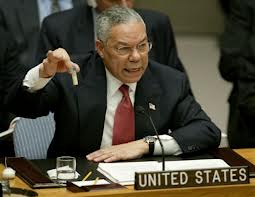
ImagesDigging through my archives of “Tony Karon Weblog” emailings, I came across this gem sent out on December 14, 2002. Re-reading it reminds me of how clear it was, even then, that the Weapons of Mass Destruction case for invading Iraq was bogus, and that the “liberal hawk” case for supporting the invasion as an exercise in exporting democracy was equally mired in delusional fantasy.

As things stand, the Bush administration is looking increasingly unlikely to get UN authorization to go to war with Iraq for the simple reason that Baghdad is complying with the new inspection regime, putting the onus on the U.S. and Britain to come up with evidence of prohibited weapons activity that can be verified by the inspectors. And the U.S. has made clear that it doesn’t have such specific nuggets of evidence, and that its case is based on circumstantial evidence derived from putting together tips from defectors with satellite imagery, procurement records etc. That’s why, for now, they’re focusing on the fact that Iraq has again failed to account for Gulf War mustard gas shells etc. that had been left unaccounted for after the last UN mission. Still, a skeptical Security Council is unlikely to be convinced in the absence of forensic evidence, and London and Washington are already preparing the public for the possibility that none may be revealed.

More here.

Philip Roth at 80: the novelist of desire

Sameer Rahim in The Telegraph:

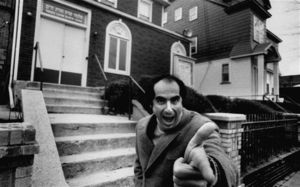
Roth1_2512877b“In the coming years I have two great calamities to face: death and a biography,” says a poker-faced Philip Roth. “Let’s hope the first comes first.” He is speaking at the start of a new PBS film, Philip Roth Unmasked, based on extensive interviews with the author, and made to coincide with his 80th birthday. You can understand him wanting to guard his own story. His work over the last 50 years – from Goodbye, Columbus (1959) to what he claims is his final work, Nemesis (2010) – has mined his own Jewish upbringing in Newark, testing and teasing the reader to guess what is fact and what is fiction.

As Jonathan Franzen comments here it has always been Roth’s shtick to seem “more honest” and “more outrageous” than any other writer. His early work was condemned by Jewish organisations that felt he showed Jews in a bad light. He responds here as he did 50 years ago by saying he told the truth: “There were Jewish girls who bought diaphragms, there were Jewish men who were adulterous.” Sex is the driving force of Roth’s work. His favourite moment in Ulysses is when Bloom ogles a pretty girl by the sea while surreptitiously arousing himself. “At it again,” says Roth, quoting Bloom. “That should be on my tombstone!” Roth’s masturbatory classic Portnoy’s Complaint (1969) goes at it, again and again. Its combination of sex, comedy and high art made the book a hit, selling 350,000 copies in its first month. The novel’s genesis is fascinating. Always funny in company, Roth had never seiously tried doing the same on the page. Alexander Portnoy, the Jewish boy who can’t leave it alone, was the perfect vehicle. Framing it as a confession to a psycholoanalist gave him permission to say what he wanted, whatever way he liked. Roth warned his parents the book might make trouble for them and sent them on a cruise when it was published. But his father, far from being ashamed, sold copies on board signed “Hermann Roth, Philip Roth’s father”.

More here. (Note: Saw “Unmasked” and loved it. At the Film Forum in Chelsea. Free. If you can, go and see the film)

Good News Beats Bad on Social Networks

John Tierney in The New York Times:

BAD NEWS SELLS. If it bleeds, it leads. No news is good news, and good news is no news.

BadThose are the classic rules for the evening broadcasts and the morning papers, based partly on data (ratings and circulation) and partly on the gut instincts of producers and editors. Wars, earthquakes, plagues, floods, fires, sick children, murdered spouses — the more suffering and mayhem, the more coverage. But now that information is being spread and monitored in different ways, researchers are discovering new rules. By scanning people’s brains and tracking their e-mails and online posts, neuroscientists and psychologists have found that good news can spread faster and farther than disasters and sob stories. “The ‘if it bleeds’ rule works for mass media that just want you to tune in,” says Jonah Berger, a social psychologist at the University of Pennsylvania. “They want your eyeballs and don’t care how you’re feeling. But when you share a story with your friends and peers, you care a lot more how they react. You don’t want them to think of you as a Debbie Downer.” Researchers analyzing word-of-mouth communication — e-mails, Web posts and reviews, face-to-face conversations — found that it tended to be more positive than negative, but that didn’t necessarily mean people preferred positive news. Was positive news shared more often simply because people experienced more good things than bad things? To test for that possibility, Dr. Berger looked at how people spread a particular set of news stories: thousands of articles on The New York Times’s Web site. He and Katherine Milkman, a Penn colleague, analyzed the “most e-mailed” list for six months, controlling for factors like how much display an article received in different parts of the home page.

One of his first findings to be reported — which I still consider the most important social-science discovery of the past century — was that articles and columns in the Science section were much more likely to make the list than nonscience articles. He found that science aroused feelings of awe and made Times readers want to share this positive emotion with others.

More here.

Tuesday Poem

Slow Dance

More than putting another man on the moon,
More than a New Year’s resolution of yogurt and yoga,
we need the opportunity to dance
with really exquisite strangers. A slow dance
between the couch and dining room table, at the end
of the party, while the person we love has gone
to bring the car around
because it’s begun to rain and would break their heart
if any part of us got wet. A slow dance
to bring the evening home. Two people
rocking back and forth like a buoy. Nothing extravagant.
A little music. An empty bottle of whiskey.
It’s a little like cheating. Your head resting
on his shoulder, your breath moving up his neck.
Your hands along her spine. Her hips
unfolding like a cotton napkin
and you begin to think about
how all the stars in the sky are dead. The my body
is talking to your body slow dance. The Unchained Melody,
Stairway to Heaven, power-chord slow dance. All my life
I’ve made mistakes. Small
and cruel. I made my plans.
I never arrived. I ate my food. I drank my wine.
The slow dance doesn’t care. It’s all kindness like children
before they turn three. Like being held in the arms
of my brother. The slow dance of siblings.
Two men in the middle of the room. When I dance with him,
one of my great loves, he is absolutely human,
and when he turns to dip me
or I step on his foot because we are both leading,
I know that one of us will die first and the other will suffer.
The slow dance of what’s to come
and the slow dance of insomnia
pouring across the floor like bath water.
When the woman I’m sleeping with
stands naked in the bathroom,
brushing her teeth, the slow dance of ritual is being spit
into the sink. There is no one to save us
because there is no need to be saved.
I’ve hurt you. I’ve loved you. I’ve mowed
the front yard. When the stranger wearing a sheer white dress
covered in a million beads
slinks toward me like an over-sexed chandelier suddenly come to life,
I take her hand in mine. I spin her out
and bring her in. This is the almond grove
in the dark slow dance.
It is what we should be doing right now. Scraping
for joy. The haiku and honey. The orange and orangutan slow dance.

Matthew Dickman
from American Poetry Review, 2008

Singapore’s Lessons for an Unequal America

Coat_of_arms_of_Singapore_(blazon)

Joseph Stiglitz in the NYT's Opinionator:

Inequality has been rising in most countries around the world, but it has played out in different ways across countries and regions. The United States, it is increasingly recognized, has the sad distinction of being the most unequal advanced country, though the income gap has also widened to a lesser extent, in Britain, Japan, Canada and Germany. Of course, the situation is even worse in Russia, and some developing countries in Latin America and Africa. But this is a club of which we should not be proud to be a member.

Some big countries — Brazil, Indonesia and Argentina — have become more equal in recent years, and other countries, like Spain, were on that trajectory until the economic crisis of 2007-8.

Singapore has had the distinction of having prioritized social and economic equity while achieving very high rates of growth over the past 30 years — an example par excellence that inequality is not just a matter of social justice but of economic performance. Societies with fewer economic disparities perform better — not just for those at the bottom or the middle, but over all.

It’s hard to believe how far this city-state has come in the half-century since it attained independence from Britain, in 1963. (A short-lived merger with Malaysia ended in 1965.) Around the time of independence, a quarter of Singapore’s work force was unemployed or underemployed. Its per-capita income (adjusted for inflation) was less than a tenth of what it is today.

There were many things that Singapore did to become one of Asia’s economic “tigers,” and curbing inequalities was one of them. The government made sure that wages at the bottom were not beaten down to the exploitative levels they could have been.

The government mandated that individuals save into a “provident fund” — 36 percent of the wages of young workers — to be used to pay for adequate health care, housing and retirement benefits. It provided universal education, sent some of its best students abroad, and did what it could to make sure they returned. (Some of my brightest students came from Singapore.)

There are at least four distinctive aspects of the Singaporean model, and they are more applicable to the United States than a skeptical American observer might imagine.

There Is No Real Life

Hemon

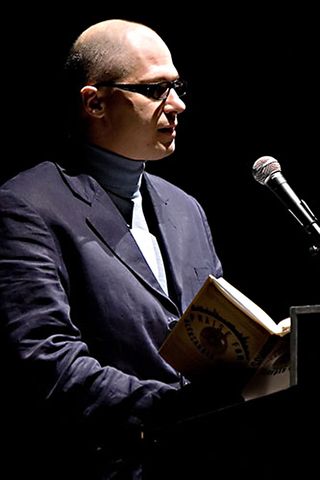
Brad Fox interviews Aleksandar Hemon in Guernica:

Aleksandar Hemon—Sasha, as he likes to be called—left his native Sarajevo for Chicago on a cultural exchange program in 1992, just as the siege began. He resolved to settle, mastering English while he canvassed for Greenpeace and watched his hometown burn on the news. Once a journalist in Bosnia, Hemon wrote his first story in English in 1995 and within a decade received a Guggenheim Fellowship and a MacArthur “genius grant” for works penned in his new language.

His 2008 novel, The Lazarus Project, began as an investigation into the true story of an escapee from the pogroms of Eastern Europe, who was shot by Chicago’s police chief in 1908. Photos of a police captain posing with the corpse are included in the book, which Hemon calls “an Abu Ghraib novel.” It is narrated by Brik, a columnist and Bosnian immigrant to Chicago, who wins a grant to travel to Moldova and finally to Sarajevo to research the worlds that both he and Lazarus left behind.

Unconcerned with the boundaries between fiction and nonfiction—“There’s no such difference in Bosnia,” he says—Hemon’s work investigates the many uses of narrative, from jokes and gossip to the way states create national identities and individuals struggle to maintain coherence. “In some way there is no real life,” he says. “It’s always the story of your life that you’re living.” Among the most deeply felt of these explorations, the essay “The Aquarium,” from his forthcoming nonfiction debut, The Book of My Lives, describes experiencing the death of his one-year-old daughter as his three-year-old acquires language and invents an imaginary brother. The book’s dedication reads, “For Isabel, forever breathing on my chest.”

I met Hemon at his agent Nicole Aragi’s apartment in Chelsea. When I arrived, I found him in front of a large TV discussing soccer coaching strategies with the Somali novelist Nuruddin Farah. Hemon led me to a long, heavy wood table and we sat directly across from each other. He nervously fingered a plastic bottle cap, bouncing it off the tabletop over and over again as we talked. His presence was large and looming, and there was a controlled aggression in his posture. He was serious but laughed easily, adamant but occasionally self-mocking. “There’s a very simple rule of writing,” he told me. “It’s all shit, until it isn’t.”

Brad Fox for Guernica

Guernica: What do you make of the story that Sasha Hemon came to America, couldn’t speak English, and then two years later sat down to write The Question of Bruno: Stories?

Aleksandar Hemon: That’s the great American story [laughs]. It complies with the story of immigrants who came through Ellis Island: they were nobodies—half-human somehow. They had potential, but of course they couldn’t do anything with it over there, because it wasn’t America, so they came here, and suddenly they bloomed.

I don’t know the numbers, but roughly half of the people who came through Ellis Island returned home. They came here to make money, not to make history.

Guernica: But you didn’t return home?

Aleksandar Hemon: I could have at a certain point, but I didn’t. Life had started here. Chicago is not a bad place to live. But the usual story of immigration is the happy fulfillment of human potential in America that is not available anywhere else—it’s propaganda, really. It’s more complicated than that.

Ever More Shocked, Never Yet Awed

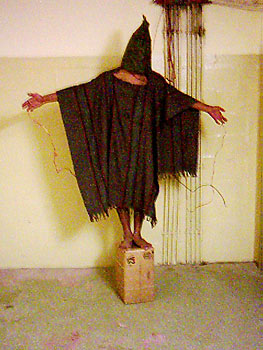
AbuGhraibAbuse-standing-on-boxTomorrow marks the 10th anniversary of the start of the Iraq war. David Swanson in Counterpunch:

At 10 years since the launch of Operation Iraqi Liberation (to use the original name with the appropriate acronym, OIL) and over 22 years since Operation Desert Storm, there is little evidence that any significant number of people in the United States have a realistic idea of what our government has done to the people of Iraq, or of how these actions compare to other horrors of world history. A majority of Americans believe the war since 2003 has hurt the United States but benefitted Iraq. A plurality of Americans believe, not only that Iraqis should be grateful, but that Iraqis are in fact grateful.

A number of U.S. academics have advanced the dubious claim that war making is declining around the world. Misinterpreting what has happened in Iraq is central to their argument. As documented in thefull report, by the most scientifically respected measures available, Iraq lost 1.4 million lives as a result of OIL, saw 4.2 million additional people injured, and 4.5 million people become refugees. The 1.4 million dead was 5% of the population. That compares to 2.5% lost in the U.S. Civil War, or 3 to 4% in Japan in World War II, 1% in France and Italy in World War II, less than 1% in the U.K. and 0.3% in the United States in World War II. The 1.4 million dead is higher as an absolute number as well as a percentage of population than these other horrific losses. U.S. deaths in Iraq since 2003 have been 0.3% of the dead, even if they’ve taken up the vast majority of the news coverage, preventing U.S. news consumers from understanding the extent of Iraqi suffering.

In a very American parallel, the U.S. government has only been willing to value the life of an Iraqi at that same 0.3% of the financial value it assigns to the life of a U.S. citizen.

The 2003 invasion included 29,200 air strikes, followed by another 3,900 over the next eight years. The U.S. military targeted civilians, journalists, hospitals, and ambulances It also made use of what some might call “weapons of mass destruction,” using cluster bombs, white phosphorous, depleted uranium, and a new kind of napalm in densely settled urban areas.

Birth defects, cancer rates, and infant mortality are through the roof. Water supplies, sewage treatment plants, hospitals, bridges, and electricity supplies have been devastated, and not repaired. Healthcare and nutrition and education are nothing like they were before the war. And we should remember that healthcare and nutrition had already deteriorated during years of economic warfare waged through the most comprehensive economic sanctions ever imposed in modern history.

Monday, March 18, 2013

Sunday, March 17, 2013

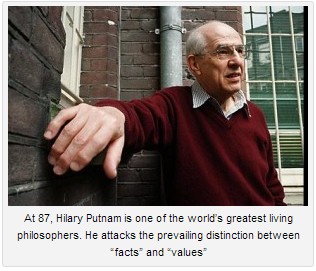
A philosopher in the age of science

Malcolm Thorndike Nicholson in Prospect:

Within the world of academic philosophy, Putnam is famous (perhaps notorious is the word) for his habit of changing his mind. His entry in the joke Philosophical Lexicon runs:

Hilary: A very brief but significant period in the intellectual career of a distinguished philosopher. “Oh, that’s what I thought three or four hilaries ago.

His longtime admirer Sidney Morgenbesser once quipped of Putman: “He’s a quantum philosopher. I can’t understand him and his position at the same time.”

ScreenHunter_142 Mar. 17 16.37This intellectual mutability extends to his politics and personal life. Born in 1926 to an intellectually gifted, middle-class Jewish family in Chicago, Putnam was raised an atheist and progressive. In the 1960s Putman was a vocal defender of the Civil Rights Movement, a critic of the American involvement in Vietnam, and a member of the communist Progressive Labor Party. By 1976 Putnam, after grappling with the human rights abuses by communists, left the PLP and gave up his support for Maoism. Both Putnam and his wife, the philosopher Ruth-Anna Putnam, returned to Judaism after decades of atheism. Putnam was 68 when he had his Bar Mitzvah.

Changing your mind in any situation, much less academic philosophy, is seen as a sort of weakness. It takes a very secure ego to end a debate with “well I think I may have been wrong.” Putnam’s shifts in position demonstrate not just his intellectual confidence, but also the virtue of seeing the bigger picture. Putnam is able to step back for a moment and see a particular position, say functionalism in philosophy of mind, and notice that it doesn’t quite fit in with a greater commitment in metaphysics and philosophy of language.

In Philosophy in an Age of Science Putnam wants us to take a step back and consider the relationship between two deeply entrenched ways of understanding the world. One, the scientific position, attempts to explain things in mind-independent and law-like terms. This is often called the descriptive or “is” position. The other, the moral position, attempts to explain things in mind-dependent and value-laced terms. This is often called the normative or “ought” position.

More here.

Don’t expect me to be sane anymore

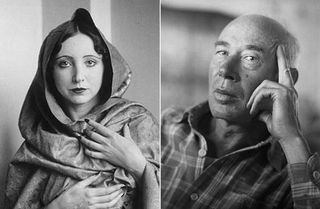
Letter from Henry Miller to Anaïs Nin after a visit to Nin's home. From Letters of Note:

8494168401_fed6d2dd2d_oAugust 14, 1932

Anais:

Don't expect me to be sane anymore. Don't let's be sensible. It was a marriage at Louveciennes—you can't dispute it. I came away with pieces of you sticking to me; I am walking about, swimming, in an ocean of blood, your Andalusian blood, distilled and poisonous. Everything I do and say and think relates back to the marriage. I saw you as the mistress of your home, a Moor with a heavy face, a negress with a white body, eyes all over your skin, woman, woman, woman. I can't see how I can go on living away from you—these intermissions are death. How did it seem to you when Hugo came back? Was I still there? I can't picture you moving about with him as you did with me. Legs closed. Frailty. Sweet, treacherous acquiescence. Bird docility. You became a woman with me. I was almost terrified by it. You are not just thirty years old—you are a thousand years old.

Here I am back and still smouldering with passion, like wine smoking. Not a passion any longer for flesh, but a complete hunger for you, a devouring hunger. I read the paper about suicides and murders and I understand it all thoroughly. I feel murderous, suicidal. I feel somehow that it is a disgrace to do nothing, to just bide one's time, to take it philosophically, to be sensible. Where has gone the time when men fought, killed, died for a glove, a glance, etc? (A victrola is playing that terrible aria from Madama Butterfly—”Some day he'll come!”)

More here.

Zuckerman Abridged

Max Ross in The New Yorker:

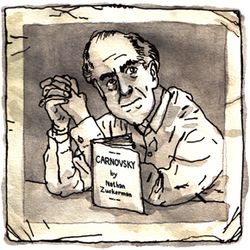
ZuckIn the late fall of 2004, Nathan Zuckerman, the American-Jewish novelist whose fictions aggressively scrutinized Jewish values (and subsequently caused him to be ostracized from the Jewish community), was found dead in his country estate—evidently the result of complications following a neurosurgical procedure. He was eighty-one years old. At the time, a number of mysteries remained concerning Zuckerman’s life. Why had he fled Manhattan for rural Massachusetts? How, after a series of marriages, had he come to live alone? After his novel “Carnovsky” made him rich and famous, had he merely quit publishing his work, or had he stopped writing altogether? While it was assumed these questions would never be answered, the recent discovery of hundreds of notebooks and journals hidden throughout Zuckerman’s home in the Berkshires explains, at least in part, the seclusion and silence that marked his final thirty-five years. Consumed by depression after his father’s death, in 1969, the author was, for a time, unable to produce anything he considered of value; and by the nineteen-nineties, when he began writing again, a neurodegenerative disorder was unravelling his mind. As a quartet of unearthed novels demonstrates, much of his prose was incoherent. Nevertheless, the notebooks and manuscripts provide an intimate glimpse of the author’s heretofore undocumented life—a life marked by ongoing filial resentment, self-deception, and tendencies toward seclusion buoyed by periods of intense sexual compulsion.

Nathan Zuckerman was born in 1933 in Newark, New Jersey, the son of Victor, an overbearingly permissive chiropodist, and Selma, a lover of gardening and mahjongg. He was followed four years later by Henry, who adored Nathan, although they became estranged later in life. The Zuckermans’ was a typical American Jewish household of the era. They believed that happiness could be attained only through academic achievement; that anti-Semitism was more muted than before, but still ubiquitous. Around the dinner table, Nathan’s parents discussed the perils of intermarriage, the problem of Santa Claus, and the injustice of medical-school quotas. From an early age Nathan collected donations door-to-door for the Jewish National Fund, and learned Hebrew at the Talmud Torah on Schley Street. All his friends were Jewish, all his schoolteachers were Jewish, and, to a boy who seldom left his neighborhood, the entire world seemed Jewish—suffocatingly so.

More here.