
[Thanks to Mira Kamdar.]
Category: Recommended Reading
Renowned Nigerian author Chinua Achebe dies
From NewsDay:
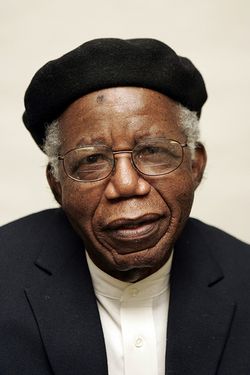
A source close to the family said the professor had been ill for a while and was hospitalised in an undisclosed hospital in Boston.
The source declined to provide further details, saying the family would issue a statement on the development later today.
Contacted, spokesperson for Brown University, where Mr. Achebe worked until he took ill, Darlene Trewcrist, is yet to respond to our enquiries on the professor’s condition.
Until his death, the renowned author of Things Fall Apart was the David and Marianna Fisher University Professor and Professor of Africana Studies at Brown.
The University described him as “known the world over for having played a seminal role in the founding and development of African literature.”
“Achebe’s global significance lies not only in his talent and recognition as a writer, but also as a critical thinker and essayist who has written extensively on questions of the role of culture in Africa and the social and political significance of aesthetics and analysis of the postcolonial state in Africa,” Brown University writes of the literary icon.
Mr. Achebe was the author of Things Fall Apart, published in 1958, and considered the most widely read book in modern African Literature. The book sold over 12 million copies and has been translated to over 50 languages worldwide.
Mohsin Hamid’s electrifying new novel
From The Telegraph:
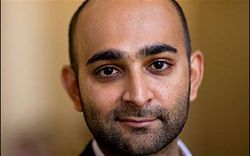
“You” are born in rural poverty, in a compound where food is cooked over a fire and water is drunk slightly upstream of the same channel used for washing and sewage, but your family soon moves to the city in search of better opportunities. You find after-school work delivering pirated DVDs on your bicycle, and through your job you meet the pretty girl, an aspiring actress who wants to learn more about films. She seduces you, and being the sort of man who believes that “the first woman you make love to should also be the last” you are smitten. But she soon leaves the neighbourhood with a producer who tells her he can help her career. Because you are the youngest child, you are able to finish school (your brother is sent out to work and your sister is married off) and, being clever, you obtain a scholarship to the university. There you join a “political organisation” (which seems more like a religious organisation), in order to secure some influence for yourself. But you realise that if you are ever to re-enter the pretty girl’s orbit – she is now a successful model, her face visible on billboards all around the city – you will have to make some money. You find a job selling expired goods to small vendors, before setting up your own business: bottling boiled water and selling it on as mineral water. This grows and grows until you are filthy rich. The pretty girl eventually comes back into your life; but the path to true happiness, the novel suggests, can’t be dictated by a 12-point plan. The second person voice allows Hamid to move around his hero’s life – and sometimes to move away from it altogether – much more nimbly than would be possible in a traditional first- or third-person narrative. The self-help device also allows him to dispense nuggets of genuine wisdom: love “dampens the fire in the steam-furnace of ambition”; nepotism “is not restricted to swaggering about in its crudest, give-my-son-what-he-wants form. It frequently assumes more cunning guises, attire, for example, or accent.” If the conceit is ultimately a bit gimmicky, Hamid’s style rescues it from becoming irritating. His sentences have a beguiling formality, but are always underscored by warmth and wit. The novel is filled with crisp images: after a riot, “broken glass and bits of rubble rest like five o’clock shadow on the city’s smooth concrete”.
More here.
Friday Poem
What We Have
Our men do not belong to us. Even my own father, left one afternoon, is not mine. My brother is in prison, is not mine. My uncles, they go back home and they are shot in the head, are not mine. My cousins, stabbed in the street for being too—or not—enough, are not mine.
Then the men we try to love, say we carry too much loss, wear too much black, are too heavy to be around, much too sad to love. Then they leave and we mourn them too. Is that what we’re here for? To sit at kitchen tables, counting on our fingers the ones who died, those who left and the others who were taken by the police, or by drugs, or by illness or by other women. It makes no sense. Look at your skin, her mouth, these lips, those eyes, my God, listen to that laugh. The only darkness we should allow into our lives is the night, and even then, we have the moon.
.
by Warsan Shire
from Poetry Review, 2012
from Poetry Review, 2012
How would you like to invest in immortality?
From Fortune:

He's not the only one. Speakers at this year's Global Future 2045 Congress in New York City—the second annual event put on by the 2045 Initiative—include legendary futurist and investor Ray Kurzweil, former X PRIZE Foundation chairman and entrepreneur Dr. Peter H. Diamandis, and Dr. George Church, the molecular biologist who helped initiate the Human Genome Project, as well as a long list of influential thought leaders in business, robotics, neuroscience, and spirituality. (Itskov has even met with the Dalai Lama, who was intrigued by the project.. Several of these backers, including Kurzweil and Diamandis, recently signed a letter sent to UN Secretary General Ban Ki-moon inviting him to join the 2045 Congress when it convenes in June to talk about the future of both humanity and the 2045 Initiative.
More here.
Thursday, March 21, 2013
The revival of an extinct species is no longer a fantasy. But is it a good idea?
Carl Zimmer in National Geographic:
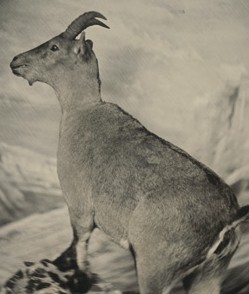
Then came the guns. Hunters drove down the bucardo population over several centuries. In 1989 Spanish scientists did a survey and concluded that there were only a dozen or so individuals left. Ten years later a single bucardo remained: a female nicknamed Celia. A team from the Ordesa and Monte Perdido National Park, led by wildlife veterinarian Alberto Fernández-Arias, caught the animal in a trap, clipped a radio collar around her neck, and released her back into the wild. Nine months later the radio collar let out a long, steady beep: the signal that Celia had died. They found her crushed beneath a fallen tree. With her death, the bucardo became officially extinct.
But Celia’s cells lived on, preserved in labs in Zaragoza and Madrid. Over the next few years a team of reproductive physiologists led by José Folch injected nuclei from those cells into goat eggs emptied of their own DNA, then implanted the eggs in surrogate mothers.
More here.
Dan Pallotta: The way we think about charity is dead wrong
Iraq—Ten Years Later: A Symposium
ANNE-MARIE SLAUGHTER: “If I could re-roll the film, I would stop the invasion.”
Ten years ago, the day after the U.S. invaded Iraq, I published an op-ed in The New York Times with the completely inaccurate headline: “Good Reasons for Going Around the U.N.” I did not think that the U.S. had good reasons for going around the U.N.; indeed, I was politically naïve enough to believe right down to the last minute that the Bush administration would not act without U.N. approval. Once the invasion was underway, however, I argued that although illegal, it could still be made legitimate if: 1) U.S. troops found weapons of mass destruction; 2) the Iraqi people greeted the troops as liberators; and 3) the U.S. then went back to the U.N. Security Council and sought a post-hoc approval of the action by majority vote, as NATO did after the intervention in Kosovo.
None of these three conditions were met; the Iraq war is thus both illegal and illegitimate in the eyes of the vast majority of nations. Looking back, it is hard to remember just how convinced many of us were that weapons of mass destruction would be found. Had I not believed that, I would never have countenanced any kind of intervention on purely humanitarian terms. Many dictators brutalize their populations; they have to conduct the equivalent of active war against their own citizens to reach the threshold of the responsibility to protect doctrine. Nor is it permissible to use military force to establish a democracy, even assuming such an outcome were likely or even possible. But if you did think that Saddam Hussein had an illegal WMD program, then the terror and torture that many Iraqi civilians suffered served as an additional justification for using force.
I now see the decision to invade Iraq as cynical, tragic, immoral, and irresponsible to the point of folly. I do not think that the thousands of U.S. and allied lives lost were lost in vain: Only time can tell what Iraq will become; how the Iraqi people will look back on the toppling of Saddam Hussein and the ensuing ten years of violence; and what role Iraq will play in the larger Middle East. It is very difficult to imagine any transition from Saddam to post-Saddam without some violence and political upheaval in a nation as fractured religiously and ethnically as Iraq. But in hindsight, the U.S. decision to spend tens of billions of U.S. dollars; to ignore all knowledge, planning, and expertise about Iraq with regard to what should happen when the bullets stopped flying; and to ignore the opposition of many of our closest allies in deciding when and how to take action is virtually indefensible.
Social Democracy for Centrists

Joseph M. Schwartz in Dissent:
The Economist, long identified with libertarian economic ideals, lauded the “Nordic model” in a cover story last month as a “centrist” economic path for global capitalism. Long hostile to “tax-and-spend” social democracy, the publication’s change in tack arises from its recognition that austerity policies are deepening the economic crisis and that the inequality and declining social mobility of “free-market,” Anglo-American capitalism threatens the very legitimacy of the capitalist system that the Economist holds dear.
The magazine praises Denmark, Sweden, Finland, and Norway for accomplishments often touted by social democrats—low poverty rates, egalitarian distribution, and efficient public services. But the magazine argues that these are now “centrist” societies because they balance their budgets, allow for consumer “choice” within their public services, and nurture risk-taking entrepreneurs. The Economist sheepishly admits that these countries funnel over 50 percent of their GDP through the public sector (versus a meager 30 percent in the United States and 36 percent in Great Britain). But Adrian Woolridge’s “special report” places inordinate emphasis on how the Nordic nations’ have trimmed their (still) generous paid leave, sick day, and disability benefits, while touting Sweden’s switch from a defined-benefit to defined-contribution public pension plan.
The Economist never once mentions that the Nordic economic model of growth-with-equity derives from the continued existence of a powerful labor movement (union density is above 70 percent in each country, versus 11.3 percent in the United States and 17 percent in Great Britain). Nor does it tell us that the historical dominance of social democracy means that Nordic conservative parties resemble Obama-style Democrats. Even as social democratic parties move in and out of government, the “Nordic model” draws heavily upon the egalitarian values of its labor movement and social democratic parties.
Who wrote Shakespeare’s plays? Stanford professor lets you decide
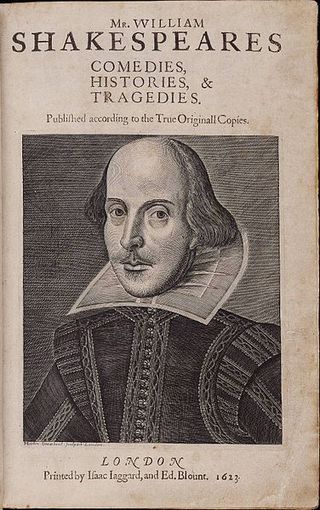
Paul Gabrielsen in Stanford News (via Jennifer Ouellette):
Poor William Shakespeare is having an identity crisis.
Most people are content to accept that an Englishman with that name was born in 1564, died in 1616 and wrote plays, sonnets and poems in the interim that changed English literature forever.
Some, however, see things differently. They don't doubt that the man from Stratford-upon-Avon existed, or that the plays attributed to Shakespeare are foundational and sublime. But elements of the Shakespeare canon are incompatible with his known biography, they say. An intimate knowledge of court affairs. Fluency in French. Familiarity with Italy. Shakespeare, they claim, was not written by Shakespeare.
Both sides hold heated opinions in the centuries-old debate, but in the absence of definitive physical evidence, the decision is up to you, says Stanford University's Peter Sturrock.
In his new book, AKA Shakespeare: A Scientific Approach to the Authorship Question, Sturrock explores the argument through the eyes of four fictional characters, each with a different perspective on the debate. They voice their opinions on 25 pieces of evidence, but Sturrock invites readers to weigh in as well and arrive at their own conclusion.
Sturrock, 88, is a professor emeritus of applied physics and an eminent astrophysicist. While writing his 2009 memoir, A Tale of Two Sciences, he revisited his early pastime of writing poetry.
“The only poem I could remember was a parody of that famous sonnet, 'Shall I compare thee to a summer's day?' My parody began, inevitably, 'Shall I compare thee to a winter's night?' and it went on from there.”
This led him to re-read all 154 of the Bard's sonnets, which he felt were autobiographical.
“But once you start asking what the sonnets are all about, you are automatically led to the question: Who was the author anyway?”
The authorship question, he reasoned, could be addressed by a scientific approach. Years before, while studying pulsars, Sturrock devised a new method to process information using statistics. His method was based on a statistical concept known as Bayes' theorem, which states that probabilities change depending on the information you have.
costumes and conflict

A friend and I decided to buy motorbikes and ride across Southern Africa after college. I took my old film camera not quite knowing what I would find to photograph and more or less stumbled into Namibia and across the Hereros during that trip. I was spellbound. I was not expecting to see deserts, ghost towns, Bavarian architecture, First World War relics, or tribes wearing Victorian-era dresses. I felt as if I was on a Wild West movie set where they had ordered all the wrong people and props. I photographed both the Herero and Himba people on that trip, but always had it in the back of my mind to return and make a more accomplished body of work on the Herero.
more from Jim Naughten’s photographic project at The Morning News here.
the childhood of jesus
The Childhood of Jesus achieves Coetzee’s usual trick of being at once austere and voluptuous, eloquent and inscrutable. It sits in your hand like a meteorite or a shard of obsidian. Its relevance to Jesus seems tangential and inexact (but then Joyce didn’t like Ulysses being tethered too tightly to Homer, either). The boy is awkward, passionate, and reluctant to engage with conventions of number and language because he has devised his own ways of thinking. He asks penetrating questions, as children do. He makes up his own version of Don Quixote, like the titular character in Borges’s short story ‘Pierre Menard, Author of the Quixote’ (Menard, incidentally, deplored ‘those parasitic books that set Christ on a boulevard’). He blithely allows himself to be the epicentre of a series of seismic upheavals in people’s lives, happy in his princely role (as children are). But I don’t quite buy him as the Messiah – even if he is, at times, a very naughty boy. In fact the New Testament character I was most often reminded of was Joseph, a clear avatar for Simón (not that there’s been a Vie de Josèphe to my knowledge). There is also a sense of trouble over the sea, of a coldly indifferent world beyond a small pool of familial warmth and safety, and a constant readiness to flee that evoke the Flight into Egypt as depicted in another like-titled work, Berlioz’s oratorio L’enfance du Christ.
more from Keith Miller at Literary Review here.
a vanished world

Roman Vishniac is not a household name, but it probably should be. As a new retrospective at the International Center of Photography, curated by Maya Benton, makes plainly evident, Vishniac was one of the more versatile photographers of the twentieth century, and the breath of his accomplishment and legacy is only now beginning to come clear. He is best known, today, for his photographs of impoverished shtetl and ghetto Jews, taken primarily in Germany, Poland, and Russia during the 1930s, and published in the postwar years in the landmark book, A Vanished World. As Benton demonstrates, these images were commissioned by Jewish relief organizations, and the fact that they came to represent Jewish life in Eastern Europe as a whole during that period is somewhat deceptive. In fact, Vishniac himself captured a wide range of Jewish experience — his own family was quite well off — his images giving not just a window onto the lost world of the most impoverished cases, but the urban bourgeoisie.
more from Mark Lamster at Design Observer here.
Does Spelling Matter?
From New Statesman:
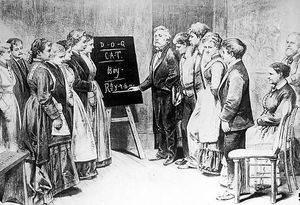
Horobin clearly has little sympathy with those who would write another person off because of a propensity to make spelling mistakes but he also reflects on the inevitability of others making such a judgement. His subtle and persuasive argument in favour of rigorous learning is the perfect antidote to those academic linguists from the “anything goes” school of grammar and spelling, whose advice is ideal until one has to write a job application that will be read by someone with more traditional views.
More here.
Engineered immune cells battle acute leukaemia
From Nature:
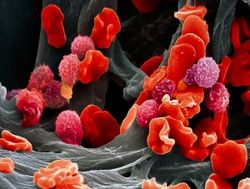
When reintroduced into the patients, the tricked T cells quickly homed in on their targets. “All of our patients very rapidly cleared the tumour,” says Michel Sadelain, a researcher at the Memorial Sloan-Kettering Cancer Center in New York and an author of the study. The treatment “worked much faster than we thought”. The technique has already shown promise against chronic leukaemia, but there were doubts about whether it could take on the faster-growing acute lymphoblastic leukaemia, a tenacious disease that kills more than 60% of those afflicted. Carl June, an immunologist at the University of Pennsylvania in Philadelphia and a pioneer in engineering T cells to fight cancer, says that he is surprised that the method worked so well against such a swift-growing cancer. The next step, he says, is to move the technique out of the ‘boutique’ academic cancer centres that developed it and into multicentre clinical trials. “What needs to be done is to convince oncologists and cancer biologists that this new kind of immunotherapy can work,” he says.
More here.
Wednesday, March 20, 2013
Is This Where the Third Intifada Will Start?
Ben Ehrenreich in the New York Times Magazine:
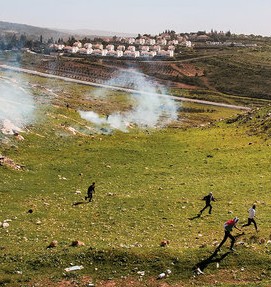
It took the people of Nabi Saleh more than a year to get themselves organized. In December 2009 they held their first march, protesting not just the loss of the spring but also the entire complex system of control — of permits, checkpoints, walls, prisons — through which Israel maintains its hold on the region. Nabi Saleh quickly became the most spirited of the dozen or so West Bank villages that hold weekly demonstrations against the Israeli occupation. Since the demonstrations began, more than 100 people in the village have been jailed.
More here.
Flavour in malt whisky is attributable to the malt specification, to brewing and distilling practices and to wood-ageing regimes
Andrew Jefford in the Financial Times:

The customary divisions of the Scotch malt world, moreover, are regional: lowland, highland, Speyside, Islay and the islands, Campbeltown. The malts of each group are said to have a different character, deriving in some unspecified way from that location. All this makes beguiling sense – for a set of consumers who are already familiar with the concept of terroir in the wine world. This notion of a link between whisky and its place of origin provides a useful scaffold for the climb into complication and connoisseurship.
But as whisky scientists point out, it’s not really like that. Water has no influence on malt whisky flavour; barley can come from anywhere, provided that it delivers satisfactory spirit yield; and, in many cases, the newly made spirit is taken by tanker from its beautiful, peaceful, lonely distillery surroundings within a couple of weeks of distillation. It’s then aged in uglier, less peaceful but more logistically sensible locations in central Scotland.
Flavour in malt whisky, those troublesome researchers insist, is essentially attributable to the malt specification, to brewing and distilling practices and to wood-ageing regimes.
More here.
The End of Overeating: Taking Control of the Insatiable American Appetite
[Thanks to Zaneb Khan Beams.]
time to argue about culture

Today, in European cultures, and in other cultures that have borrowed it, science per se is strictly peripheral at best. It is not only inseparable from technology; it is all but completely divorced from philosophy. This is a far cry from the Middle Ages. The centrality of science in all spheres of Western European culture was ensured when the crucial elements — all of them — were borrowed during the Crusades, more or less simultaneously, from Classical Arabic civilization. There, science had never become integrated into Islamic culture, but was considered “foreign” to Islam, and so fell to the onslaught of anti-intellectualism that swept the Islamic world at its peak in the Middle Ages. By contrast, Western Europeans were enthralled by science from the 13th century down to the 20th, when Humanism — now redefined specifically as a collection of ‘non-scientific fields’ — replaced science as the default mode of higher education. Science has come under attack not only by fundamentalists, but even by philosophers and other scholars, who seem not to understand science. What happened?
more from Christopher Beckwith at Berfrois here.
who is Katherine Mansfield?
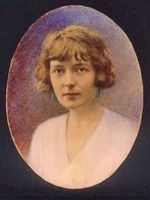
It has been a lively afterlife. In the ninety years since Mansfield’s death, her work has never been out of print; the same stories repeatedly reedited and reissued in newer, more “authentic” editions. Biographies have multiplied, clamoring for validation like conspiracy theorists. Scholars have greedily rummaged through this particular portmanteau, each emerging with quite irreconcilable portraits of the author. One of the most dedicated treasure-hunters has been Dr. Gerri Kimber, a British scholar, who dug up “a little gem” just last month at the Alexander Turnbull Library, in Wellington, New Zealand. The unearthed manuscripts contained one “complete piece” inspired by an erotic pantomime and signed Katharina Mansfield. Kimber rhapsodized about the significance of the find: the writer and the woman “go hand in hand,” she said; the discovered draft could tell us much about the life; the writing was a cathartic exercise for the woman. Kimber is working on a four-volume Mansfield extravaganza (letters, diaries, stories, poems); when it is published, a new “complete” version of Mansfield will join all the others.
more from Kirsten O’Regan at Paris Review here.