Black and Bengali

Shaik_march

Fatima Shaik in In These Times:

The federal census taker comes every 10 years and, for most people in the United States, this has little consequence. But not where I lived, in New Orleans, just outside the historic district of Tremé. There, people talked to each other about whether to lie to the census taker and which lie to tell, and that conversation produced stories about who had disappeared from us and who had stayed, and what was more important: loyalty or money.

That was the mentality in Creole New Orleans from as far back as I can remember—that is, the 1950s—until recently. The lying, the disappearing, the money and lack of it had everything to do with race.

We were part of a mixed-race community of immigrants and Louisiana natives, and there was no place for us in the data tables of the census or in the mind of a black-and-white America. And yet we existed, for generations. Now, in a thoroughly researched new book, Bengali Harlem and the Lost Histories of South Asian America, Vivek Bald traces one vein of our lineage, from a most distant country.

Bald follows Muslim peddlers and, later, ship workers who journeyed from India to the United States at the turn of the 20th century. As local Indian markets for fabrics lost value in the 1880s, Muslim Bengali men began traveling abroad to find customers for “Oriental” wares—silk and cotton, handkerchiefs, bedspreads and tablecloths, and rugs. They found an eager appetite in the United States, where styles from the East were becoming fashionable, furnishing sitting rooms across the nation, from the homes of Northern socialites to New Orleans’ bordellos. Later, in the northeastern United States, Bengali mechanics arrived, often by jumping ship to escape the terrible working conditions in the furnace rooms of British steamers.

All of these men, too dark and foreign to be accepted in the white parts of town, entered segregated communities of color in New York, such as the Harlem of the book’s title, but also Detroit, New Orleans and, later, other large industrial U.S. cities. My grandfather, Shaik Mohamed Musa, a Bengali peddler who arrived in Tremé in 1896, was one of them.

Private Traits and Attributes are Predictable from Digital Records of Human Behavior

PNAS

Michal Kosinski, David Stillwell, and Thore Graepel in the Proceedings of the National Academy of Sciences:

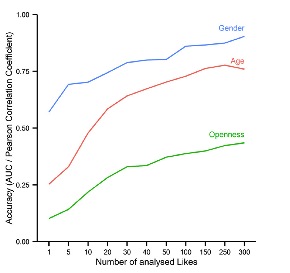
We show that easily accessible digital records of behavior, Facebook Likes, can be used to automatically and accurately predict a range of highly sensitive personal attributes including: sexual orientation, ethnicity, religious and political views, personality traits, intelligence, happiness, use of addictive substances, parental separation, age, and gender. The analysis presented is based on a dataset of over 58,000 volunteers who provided their Facebook Likes,detailed demographic profiles, and the results of several psychometric tests. The proposed model uses dimensionality reduction for preprocessing the Likes data, which are then entered into logistic/linear regression to predict individual psychodemographic profiles from Likes. The model correctly discriminates between homosexual and heterosexual men in 88% of cases, African Americans and Caucasian Americans in 95% of cases, and between Democrat and Republican in 85% of cases. For the personality trait “Openness,” prediction accuracy is close to the test–retest accuracy of a standard personality test. We give examples of associations between attributes and Likes and discuss implications for online personalization and privacy.

manet’s gaze

ID_VS_POLCH_OLYMP_CO_001

It is often said that Manet invented modern painting. He challenged the limits of the canvas frame, distorting perspective and depth, framing scenes as if with the lens of a camera, such that we only get part of the scene, bodies and rooms only partly in view. He also used heavily pronounced brushwork that constantly reminds us we are looking at paint on a canvas. Look at “Portrait of Emilie Ambre as Carmen” (1880), its quick brushstrokes create feathery outlines of body and costume, creating a swirl of color and light. Her face is the most detailed part of the work, the luminous white paint conveying a theatrical light giving the opera’s singer’s face clarity and depth. He also turned his attention away from the academic demands of grand historical scenes and, like the Impressionists whom he kept at a distance, made everyday moments of middle-class Parisian life, of street encounters and Opera lobbies, bar crowds and park strollers legitimate subjects of painting. Such scenes are also quite secular, absent religious or nationalist interests. They direct their gaze at the bourgeoisie’s own individual tastes and desires. And in this way, these paintings are pure theater. They turn the life of the city into painterly scenes, making the casual in own alluring spectacle.

more from James Polchin at The Smart Set here.

francis

15egan-stfrancis-blog427

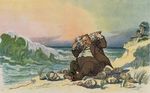
Though Francis of Assisi is the most popular saint in a long history of tortured bodies and souls, the fact that no pope until Cardinal Jorge Bergoglio would take his name says a lot about the timeless shadow from the 12th century to the 21st. The legacy of the first Francis is almost too much to bear. Today, on the spine of Assisi, where pilgrims jostle with peddlers of all things Francis, you see the extraordinary Giotto frescoes inside the basilica, a narrative of the saint’s life. That such a magnificent structure was built over the bones (interred beneath the floor of the lower church) of a man who often slept without a roof over his head is a testament to how a powerful movement can be co-opted. But another legacy, far removed from marbled ostentation, can be found in the Franciscan priests who try to follow the example of their founder. When my young nephew was murdered by gunfire a few years ago, it was soothing that a man in the brown robes, sandals and roped belt of the Franciscan order conducted the most humane of funeral masses.

more from Timothy Egan at The New York Times here.

I low mine ear incline

TaftImagePS

In his 1915 Book of Wonders, popular science writer Rudolph Bodmer suggested that the association followed from the symbolic power of shells: “The sounds we hear when we hold a sea shell to the ear are not really the sound of the sea waves. We have come to imagine that they are because they sound like the waves of the sea, and knowledge that the shell originally came from the sea helps us to this conclusion very easily.”2 But the likeness, he urged, had a technical explanation—though one in which similitude still figured. Both sea and seashell sounds were generated by waves: “The sounds we hear in the sea shell are really air waves”—waves, that is, of concentrated, resonant noise from the listener’s surroundings. That explanation sought to supplant superstition with science, trading sublime enchantment for fascinating fact. The account in Bodmer’s book rested on a century of empirical and theoretical investigation in which sound had come to be understood as vibration, and not, as earlier, more numinously, on the model of music or voice, exampling what Jonathan Sterne names as a “shift from models of sound reproduction based on imitations of the mouth to models based on imitations of the ear.”

more from Stefan Helmreich at Cabinet here.

Friday Poem

In The Loop

I heard from people after the shootings. People
I knew well or barely or not at all. Largely
the same message: how horrible it was, how little
there was to say about how horrible it was.
People wrote, called, mostly e-mailed
because they know I teach at Virginia Tech,
to say, there’s nothing to say. Eventually
I answered these messages: there’s nothing
to say back except of course there’s nothing
to say, thank you for your willingness
to say it. Because this was about nothing.
A boy who felt that he was nothing,
who erased and entered that erasure, and guns
that are good for nothing, and talk of guns
that is good for nothing, and spring
that is good for flowers, and Jesus for some,
and scotch for others, and “and” for me
in this poem, “and” that is good
for sewing the minutes together, which otherwise
go about going away, bereft of us and us
of them. Like a scarf left on a train and nothing
like a scarf left on a train. As if the train,
empty of everything but a scarf, still opens
its doors at every stop, because this
is what a train does, this is what a man does
with his hand on a lever, because otherwise,
why the lever, why the hand, and then it was over,
and then it had just begun.
.

by Bob Hicok
from Poetry, Vol. 195, No. 5, February
publisher: Poetry, Chicago, 2010

Sex and the arab world

From The Telegraph:

ArabAt the height of the anti-Mubarak protests in Tahrir Square in 2011, a young man held up a sign reading, “I want to get married.” It may not sound like the most urgent political demand, but it does prove that sex gets everywhere. Shereen El Feki’s book on sex in the Arabic-speaking world is frequently eye-popping, with its tales of female cross-dressers wearing football kit beneath their black robes, prostitutes catering to rich lesbian Saudis in five-star hotels, or pimps arranging short-lived “summer marriages” between poor teenage girls and elderly men. The stories lend the book an anecdotal air and may draw criticism that El Feki has cherry-picked the most lurid cases. The truth, however, is that the stories emphasise just how bewildering the issue of sex has become across the Middle East. The mix of national laws, local customs and religious edicts bring nothing but confusion, made all the more extreme because global media have opened up a public space that has never existed before. In politics, business and art, no one has any clue what the future holds. When it comes to sex, there’s not much clarity.

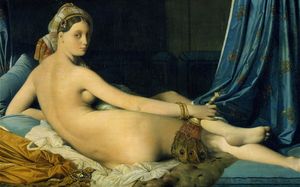
Take homosexuality. An array of public decency laws allow the police to target gay men and close down the places they meet, but there are no specific laws against homosexuality in Egypt. However, when El Feki points this out to a retired police chief, he insists she is wrong. There are laws, and he acted on them throughout his career. In a country where the law is whatever a policeman imagines, the need for reform is urgent. Demands for sexual freedom were not a significant feature of the protests in Tahrir Square, however. El Feki is told by an activist that talk of sexual freedom would offend the rural villagers who have joined them. El Feki is dubious: she believes the revolutionaries are guilty of self-censorship, fearing any suggestion of licentiousness would enable the puritanical Muslim Brotherhood to outflank them. The Brotherhood was notably absent from the streets of Cairo until late in the revolution, when their fearsome organisational skills brought victory in the presidential election. Nineteenth-century Europeans regarded the Arabic-speaking world as an alien erotic landscape. El Feki quotes Flaubert, who records his dalliances with prostitutes along the length of the Nile. The Frenchman was one of thousands of writers and artists who recorded their impressions of a region that only opened to Western travellers after 1830.

More here.

Cheating the Reaper

From Harvard Magazine:

BootsFor patients with high blood pressure, doctors are likely to prescribe antihypertensive medication and provide detailed instructions about how much to take, and when. They have been less able to provide detailed dosage recommendations for exercise. Research shows that a regular walking, swimming, or tennis habit reduces chronic disease risk, but it’s been unclear just how much different levels of exercise might extend our lives. Now, a study coauthored by epidemiologist I-Min Lee, a professor of medicine at Harvard Medical School and professor of epidemiology at Harvard School of Public Health, offers specific exercise prescriptions. Lee and her colleagues pooled data from six large studies that included information on the leisure activities and body mass index of more than 650,000 people older than 40, each of whom was followed for an average of 10 years. The researchers’ analysis revealed that subjects who completed the equivalent of 75 minutes of brisk walking each week—roughly 11 minutes a day—lived 1.8 years longer than those who didn’t exercise at all. Those who got the federally recommended minimum of 150 minutes of moderate-intensity exercise a week—22 minutes every day, or 30 minutes a day, five days a week—gained 3.4 years.

Lee was somewhat surprised that even small amounts of movement made such a difference. “What we found is really encouraging,” she says. “If you do a little, you get a fairly good gain in years.”

More here.

The Inscrutable Brilliance of Anne Carson

17carson1-articleLarge

Sam Anderson in The New York Times Magazine:

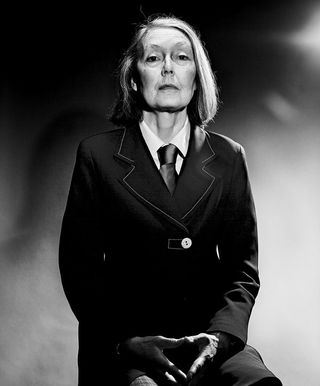
Anne Carson was uncomfortable with the idea of a traditional profile: a journalist following her around for a few days, like a private detective, noting her outfits and mannerisms, shadowing her on errands, making lists of furniture and wall decorations and pets, quizzing her students, standing behind her holding his breath while she tried to write in her journal. Carson is a private person. She prefers to be alone. (When her husband is traveling, Carson will call and tell him, “I miss you, but I’m having a great time.”) Her book jackets have no author photo. Her back-flap biography — “Anne Carson was born in Canada and teaches ancient Greek for a living” — is so minimalist that it sounds like a parody of a back-flap biography. Carson told me that, years ago, she had a bad experience with the private-detective model of journalism and would prefer never to do it again. It took her publisher a couple of weeks to wear her down to the point that she would agree, even in a limited way, to participate in a profile. Carson later described those weeks as akin to water torture.

In the end, she agreed to exchange some e-mails. This felt like a significant victory.

Carson is usually referred to as a poet, but just about no one finds that label satisfying: her fans (for whom she does something more than poetry), her critics (for whom she does something less than poetry) or herself. She often labels her work in conspicuously nonpoetic terms. Her book “The Beauty of the Husband” is subtitled “A Fictional Essay in 29 Tangos.” Her book “Decreation” is subtitled “Poetry, Essays, Opera.” Carson gives the impression — on the page, at readings — of someone from another world, either extraterrestrial or ancient, for whom our modern earthly categories are too artificial and simplistic to contain anything like the real truth she is determined to communicate. For two decades her work has moved — phrase by phrase, line by line, project by improbable project — in directions that a human brain would never naturally move. The approach has won her awards (MacArthur, Guggenheim, Lannan) and accolades and an electric reputation in the literary world.

In her day job, Carson, who is 62, is a professor of erratic subjects (ancient Greek, attention, artistic collaboration) at various universities around North America, where she appears for a semester at a time as — as she often puts it — “a visiting [whatever].” (Even when she says this out loud, she makes the bracket sign with her hands.) This, I think, is the best catchall description of Carson. Wherever she goes, whatever she does, she is always a “visiting [whatever].”

Did Neil deGrasse Tyson Blow It Big Time?

Albert01

Jerry Coyne over at Why Evolution is True:

This episode smacks a bit of internet drama, which I try to avoid, but it also bears on scientific discourse, censorship, and civility, and I wanted to say a few words.

According to the “Arts Beat” site of the New York Times, Neil deGrasse Tyson, who organized a prestigious debate on the origins of the universe at The American Museum of Natural History, subsequently withdrew an invitation to one participant: the physicist/philosopher David Albert. Last April I wrote about how Albert had given a pretty negative review to Lawrence Krauss’s new book, A Universe from Nothing: Why there is Something Rather Than Nothing (a book that I wasn’t too keen on, either, but for different reasons). And, sure enough, Albert and others—including Krauss—had been invited to debate the topic of how something comes from nothing at the Museum. Then came the rude gesture:

The annual Isaac Asimov Memorial Debate is the American Museum of Natural History’s biggest public event, drawing sold-out crowds for an evening billed as bringing together “the finest minds in the world” to debate “pressing questions on the frontiers of scientific discovery.”

But this year’s installment, to be held March 20 under the heading “The Existence of Nothing,” may also be notable for the panelist who disappeared.

Among the speakers will be several leading physicists, including Lawrence M. Krauss, whose book “A Universe from Nothing: Why There Is Something Rather Than Nothing” became a cause célèbre in the scientific blogosphere last spring after a scathing review in the New York Times Book Review by the philosopher David Z. Albert.

But Mr. Albert will not be onstage, having been abruptly disinvited by the museum several months after he agreed to take part.

Thursday, March 14, 2013

Communication and the brain – Don’t Worry, It’s Science: There’s A Brain Scan

FMRI

Via Jennifer Ouellette, Melanie B. Tannenbaum over at Nature's SpotOn NYC:

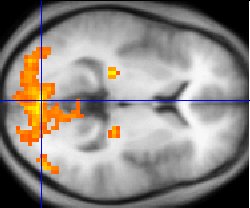
When writing about anything pertaining to psychology or human nature, people love nothing more than a brain image lit up like a Christmas tree. These omnipresent images have been mockingly termed “brain porn”, defined by journalist Alissa Quart as a “willingness to accept seemingly neuroscientific explanations for nearly everything.” According to a team of British scientists led by Cliodhna O’Connor, many popular science articles will include “logically irrelevant neuroscience information” intended to “imbue an argument with authoritative, scientific credibility” (McCabe & Castel, 2008; O’Connor et al., 2012). You might see scientists or science writers displaying neuroimaging data as proof that their claims are objective or real.

Neuroscience is frequently used to discuss psychopathology in particular, with 36% of “neuroscience” mentions in mainstream articles referring to it (O’Connor et al., 2012). Psychopathology can include anything from dementia, ADHD, and schizophrenia to eating disorders, personality disorders, addiction, depression, and anxiety. Every time you see an article mentioning a study about how “neural correlates,” “brain structures” or “neurological functioning” can explain the above conditions, you should be on high alert for brain porn in action.

On one hand, attributing things like addiction or depression to the brain imbues these disorders with legitimacy. It’s not a choice, it’s not a shortcoming – it’s a disease. Yet this very blessing can also become a sufferer’s curse. Portraying certain brains as homogeneously “different” implies something about what those brains are not: normal. As O’Connor and colleagues note, searching for group-level brain differences implies that there is some sort of fundamentally unalterable contrast between “those” brains and “normal” brains. Although no one ever actually explains what a normal, healthy brain should look like, we do get a very clear picture from these articles of what the people possessing these brains are not – “criminal, overweight, homosexual, or mentally ill” (O’Connor et al., 2012). By drawing a line between “normal” and “abnormal” and pinning any individual differences on presumably unalterable brain structures, this logic reinforces social group divisions and perpetuates essentialist stereotypes.

Describing something like alcoholism as a disease can be a helpful practice in some regards. It legitimizes the need for beneficial social services and attempts to convince non-alcoholics that the disorder does not simply result from some kind of personal failure. However, it can also cause a great deal of harm by reinforcing the idea that there is something fundamentally wrong with alcoholics’ brains, and that they are somehow biologically different from “normal people.”

This idea that things only seem “legitimate” once they have a biological correlate raises another point about the worrisome nature of neuroscience portrayals in the media.

Happy birthday, Albert!

Since today is the 134th anniversary of the birth of Albert Einstein, as a tribute to my greatest hero I am posting an essay I wrote almost eight years ago over a weekend in Shrewsbury, Massachussettes, at my sister Azra's house in which I attempted to present a very short explanation of Einstein's remarkable theory of Special Relativity. Don't let the straighforward math scare you, if you work your way slowly through it, I hope that you will be rewarded by a feeling of satisfaction and understanding.

Einstein-thumbA century ago, this was the situation: Galilean and Newtonian physics said that any descriptions of motion by any two inertial observers (for such observers, bodies acted on by no forces move in straight lines) in uniform (not accelerating) relative motion are equally valid, and the laws of physics must be exactly the same for both of them. Bear with me here: what this means is, for example, if you see me coming toward you at a speed of 100 mph, then we could both be moving toward each other at 50 mph, or I could be still and you could be moving toward me at 100 mph, or I could be moving toward you at 30 mph while you are coming at me at 70 mph, and so on. All these descriptions are equivalent, and it is always impossible to tell whether one of us is “really” moving or not; all we can speak about is our motion relative to each other. In other words, all motion is relative to something else (which is then the inertial frame of reference). So for convenience, we can always just insist that any one observer is still (she is then the “frame of reference”) and all others are in motion relative to her. This is known as the Principle of Relativity. Another way to think about this is to imagine that there are only two objects in the universe, and they are moving relative to one another: in this situation it is more clearly impossible to say which object is moving. (Think about this paragraph, reread it, until you are pretty sure you get it. Just stay with me, it gets easier from here.)

At the same time, James Clerk Maxwell's equations of electricity and magnetism implied that the speed of light in a vacuum, c, is absolute. The only way that this could be true is if Maxwell's equations refer to a special frame (see previous paragraph) of reference (that in which the speed of light is c) which can truly be said to be at rest. If this is the case, then an observer moving relative to that special frame would measure a different value for c. But in 1887, Michelson and Morley proved that there is no such special frame. Another way of saying this (and this is the way Einstein put it in 1905) is that the speed of light is fixed, and is independent of the speed of the body emitting it. (The details of the Michelson-Morley experiment are beyond the scope of this essay, so you'll have to take my word for this.)

Now we have a problem. We have two irreconcilable laws: 1) The Principle of Relativity, and 2) The absoluteness of the speed of light for all observers. They cannot both be true. It would be another eighteen years before a young clerk in the Swiss patent office would pose and then resolve this problem. Here's how he did it: he asked what would happen if they were both true.

Next, I will show how the various aspects of SR fall straight out of the assumption that both of these laws are true. I will focus in greater detail on the slowing down (dilation) of time, and then speak more briefly about length contraction, and the intertwining of space and time.

More here. Some months later I also wrote an short explanation of some aspects of General Relativity which you can read here.

young schiller

Schiller-portrait-theatredunord-fr-friedrich-schiller

What distinguished the Hohe Carlsschule from other European military academies was its founder’s deep fascination with the progressive pedagogical ideas of the French Enlightenment. From a young age, the students learned Greek, Latin, French, philosophy, and were set on a professional path as doctors, lawyers, or civil servants—all extremely enviable positions. They studied rhetoric and contemporary literature and learned, through style exercises, to write poetry. The teachers were scarcely older than the students, and instead of lecturing held informal chats in which the students were invited to participate. The Carlsschulers were encouraged to look on them as their friends and confidants, to whom closely guarded secrets could be trusted. Schiller enjoyed a particularly close relationship with Jakob Friedrich Abel, a philosophy teacher only seven years his senior. He credited Abel with the deep moral and aesthetic convictions that would run through his plays and his poetry, even as Abel reported on Schiller to the duke.

more from Michael Lipkin at Paris Review here.

boredom v depression

Meaney_330593h

“I’ve been on antidepressants for, what, about a year now, and I suppose I feel as if I’m pretty qualified to tell what they’re like. They’re fine, really, but they’re fine in the same way that, say, living on another planet that was warm and comfortable and had food and fresh water would be fine: it would be fine, but it wouldn’t be good old Earth, obviously. I haven’t been on Earth now for almost a year, because I wasn’t doing very well on Earth. I’ve been doing somewhat better here where I am now, on the planet Trillaphon, which I suppose is good news for everyone involved.” The repetitions and played-up quaintness here give the sense of a consciousness that has been lulled into congeniality. But as the story unfolds, and the imprecisions come into focus, the narrator comes to see that depression is not “just sort of really intense sadness, like what you feel when your very good dog dies, or when Bambi’s mother gets killed in Bambi”. Rather, it’s a kind of auto-immune deficiency of the self…

more from Thomas Meaney at the TLS here.

the new bowie

130318_r23248_p233

The current level of interest in Bowie reflects a larger theme in pop-music culture. While the long view of musical history suggests the obvious—that the greats remain great while a few fade out—in the near term, some acts seize the imagination of the moment. The Beatles have a flawless catalogue, but their aesthetic has left them on the outside for now: cartoons, granny glasses, and French horns don’t fit into 2013. Conversely, the ennui of present versions of punk and disco and rap—rooted in a young adult’s curt dismissal rather than a child’s open acceptance—has reinforced a common taste for darker acts such as Bowie. We no longer believe that all you need is love (or embroidered bell-bottoms), but we do believe in androgyny and world-weary dance parties buoyed by cocaine and artificially sour exchanges that mask a deep romantic streak. Aladdin Sane and Ziggy Stardust and the Thin White Duke of “Station to Station,” one of Bowie’s best albums, were always coming on aloof and imperious, then begging you to stay. His catalogue, though not as fault-free as that of the Beatles, or even that of Led Zeppelin, provides grist for today’s music-making cohort. Bowie has lasted, and he has found a place in the twenty-first century as an idea and a musician and a series of haircuts.

more from Sasha Frere-Jones at The New Yorker here.

Brief Encounter with the Mysterian

Colinmcginn

Richard Marshall interviews Colin McGinn in 3:AM Magazine:

3:AM: You are a famous exponent of mysterianism, ‘a philosophy proposing that certain problems will never be explained or at the least cannot be explained by the human mind at its current evolutionary stage. The problem most often referred to is the hard problem of consciousness.’ I remember reading your book The Mysterious Flame when it was published in 1999 and being impressed by a really smart philosopher ‘fessing up to the futilitarian idea that something was just too hard to solve. But I wonder whether you still think that we’ll never understand the nature of consciousness. Do you think there’ll never be a time when we get machines smarter than us? So I gues my general question is about philosophers changing their minds. Is there anything that could make you change your mind?

CM: I think we know the nature of consciousness better than anything else. What we don’t know is how it springs bright-eyed from the heaving of matter. Many machines are already smarter than us—at dumb things. My mind could easily be changed: by seeing consciousness leaking from the atomic nucleus, say. I also think physics is a hotbed of mystery (see my book Basic Structures of Reality).

3:AM: One of the cool things in your autobiography was the detail about you playing endless games of pushball. Your approach to philosophy seems very enamored with an American, hip sense of style. Philosophy in the UK seemed drab by contrast. Is that right?

CM: I don’t know what pushball is and have never knowingly played it. I have played quite a good deal of pinball, as well as old video games like Galaga and Defender. My sense of style is not American-inspired: it is a combination of Steve Marriott and Vladimir Nabokov. I never found philosophy in the UK drab, just underpaid.

Thursday Poem

Hospital Parking Lot, April

Once there was a woman who laughed for years uncontrollably after a stroke.

Once there was a child who woke after surgery to find his parents were impostors.
These seagulls above the parking lot today, made of hurricane and ether, they
have flown directly out of the brain wearing little blue-gray masks, like strangers' faces, full
of wingéd mania, like television in waiting rooms. Entertainment. Pain. The rage
of fruit trees in April, and your car, which I parked in a shadow before you died, decorated now with feathers,
.
and unrecognizable
with the windows unrolled
and the headlights on
and the engine still running
in the Parking Space of the Sun.
.
by Laura Kasischke
from Poetry, Vol. 193, No. 1, October, 2008

Is Any Hope Left for Mideast Peace?

Rashid Khalidi in The New York Times:

CampWHAT should Barack Obama, who is to visit Israel next Wednesday for the first time in his presidency, do about the Israeli-Palestinian conflict? First, he must abandon the stale conventional wisdom offered by the New York-Washington foreign-policy establishment, which clings to the crumbling remnants of a so-called peace process that, in the 34 years since the Camp David accords, has actually helped make peace less attainable than ever.

When the most recent iteration of this process began with high hopes at the Madrid peace conference in 1991, which led to the Oslo accords two years later, there were 200,000 Israelis illegally settled in the occupied Palestinian territories: today, there are more than twice as many. During this time, under four successive presidents, the United States, purportedly acting as an honest broker, did nothing to prevent Israel from gradually gobbling up the very land the two-state solution was to be based on. Until 1991 most Palestinians, although under Israeli military occupation, could nonetheless travel freely. Today, an entire generation of Palestinians has never been allowed to visit Jerusalem, enter Israel or cross between the West Bank and Gaza. This ghettoization of the Palestinians, along with the unrest of the second intifada of 2000-5 and the construction of seemingly permanent settlements and of an apartheid-style wall, are the tragic fruits of the so-called peace process the United States has led. The “peace process” has consisted of indulging Israeli intransigence over Palestine in exchange for foreign-policy goals unrelated to the advancement of peace and Palestinian freedom. In the late 1970s this involved the strategic cold war prize of moving Egypt from the Soviet column to the American column.

More here.

Mars Rover Finds Evidence of Ancient Habitability

From Scientific American:

MarsNASA’s Curiosity rover has found what it went to Mars to look for: evidence of an environment that could have once supported life. Chemical analyses show that a greyish powder taken from the rover’s first drilled rock sample contains clay minerals formed in water that was slightly salty, and neither too acidic nor too alkaline for life.

“If this water was around and you had been on the planet, you would have been able to drink it,” says Curiosity project scientist John Grotzinger, a planetary geologist at the California Institute of Technology in Pasadena. He and other NASA researchers announced the findings today at a news briefing in Washington DC. Previous missions to Mars have spotted clay minerals. And Curiosity itself had already found signs that liquid water once flowed across the surface. But the pinch of powder tested by Curiosity, from a rock nicknamed John Klein, is the first hard evidence of water-borne clays in a benign pH environment. “This is the only definitive habitable environment that we’ve described and recorded,” says David Blake, principal investigator for the rover’s Chemistry and Mineralogy instrument (CheMin) at NASA’s Ames Research Center in Moffett Field, California. An X-ray analysis by CheMin showed that the ground-up rock comprised mostly igneous minerals such as feldspar, pyroxene, olivine and magnetite. But at least 20% of the rock was made up of clay minerals, such as smectite, that form in the presence of water. The salts in the rock, such as halite, are of the sort that life tolerates, Blake says, unlike the iron salts found elsewhere on Mars by the rover Opportunity, which indicate an acidic environment. A second instrument on Curiosity, known as the Sample Analysis at Mars (SAM), heated a fraction of a gram of powder and analyzed the gases released. Water was released from the sample at relatively high temperatures, which is characteristic of clay minerals and a good confirmation of CheMin’s findings, says Paul Mahaffy, principal investigator for SAM at NASA’s Goddard Space Flight Center in Greenbelt, Maryland.

More here.