Stand Up: HBS Marks 50 Years of Women News

From Harvard Magazine:

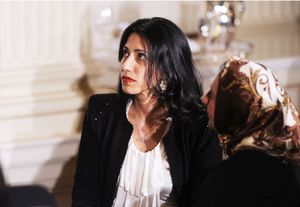
HarvardIn 1963, eight women crossed the Charles River to crack a barrier that had stood for more than half a century at Harvard, becoming the first of their gender to enroll in the Business School’s two-year M.B.A. program. Fifty years and 11,000 female graduates later, women make up about 40 percent of today’s incoming M.B.A. classes. An equal number of men and women graduate with honors, and their current dean, Nitin Nohria, considers himself a feminist. Yet when Facebook chief operating officer Sheryl Sandberg ’91, M.B.A. ’95—the keynote speaker at the recent W50 Summit, a two-day conference celebrating 50 years of women in the M.B.A. program—asked a group of about 800 alumnae gathered in Burden Hall to stand if they had ever vocalized wanting to become CEO of their own companies, almost no one did. “I’m here today to do one thing: to give every woman in this audience not just the permission, but the encouragement to stand up next time that question is asked,” said Sandberg, author of the New York Times best-selling book Lean In. “Not just to be CEO of the company you are in, but to do anything you might not think you can do…anything you might be afraid to do. I want to do that for the men in this room today as well, but I want to do it especially for the women, because the blunt truth is, men still rule the world.”

Throughout the two-day conference, alumnae gathered in small groups to discuss topics like “Negotiate What You Need to Succeed: A Workshop for Women,” “Getting onto Boards Bootcamp,” and “Using Business Acumen to Effect Social Change.” They heard from such business-world leaders as former Time Inc. chief Ann Moore, M.B.A. ’78, and Gail McGovern, the president and CEO of the American Red Cross, as well as from prominent faculty members, including Arbuckle professor of business administration Rosabeth Moss Kanter. A Women’s Place, a new film on the history of women at HBS, was screened on Thursday evening.

More here.

Thursday Poem

A Ghazal: Intimations of Ghalib

آہ کو چاہیے اک عمر اثر ہوتے تک

کون جیتا ہے تری زلف کے سر ہوتے تک

It takes a lifetime for sighs to sway hearts.
Shall I live to pick lilacs for your hair?

The soul’s slow sea journey is perilous.
It is a rough ride from a drop to a pearl.

Love practices poise: ardor abhors time.
Can I keep my heart cooking in this fire?

I grant you will hurry when I ask for you.
I will be dust when my cry reaches you.

A sun glance lifts a dewdrop to extinction.
I too shall wait for a ray of light from you.

This life is over before you even know it.
We are in the world like sparks in the night.
.
. .
translated by M. Shahid Alam
from Notre Dame Review, Winter/Spring 2013

Wednesday, April 10, 2013

Blood Nation

Ritter-BloodNation

Kevin Young in VQR:

Memoir is a form under siege. In the small-print preface to Loose Girl: A Memoir of Promiscuity (2008), Kerry Cohen inadvertently indicates what’s wrong with the memoir today: This book is a work of nonfiction. I have changed most names and identifying details. I have also, at times, combined certain characters to allow for narrative sense. I have tried to recount the circumstances as best I remember them, but memory can be a faulty device. Facts are important but I believe that even more important than the facts is truth. I trusted truth to guide me as I wrote. Jack Kerouac once said, “Every-thing I wrote as true because I believed what I saw.” So it is for this book.

Such prefatory notes, indicating the degree of fiction found in its pages, have become necessary in the wake of James Frey’s best-selling blowout, his come-to-Oprah moment when he revealed what careful readers suspected: Much of his so-called nonfiction was made up. If Frey’s televised admission in 2006 was a kind of religious confession, then the real penance has been paid ever since by the memoirists who followed, for whom fact-checking has become a ritual purification—and the disclaimer a Hail Mary pass resulting, they hope, in brisk sales, the modern measure of success.

Truth is the goal of the memoir—or at least of its preface. Such authenticating devices are ways of gaining trust in a distrustful world. And yet such a disclaimer comes up against the problem encountered by a fabricator coming clean: “To tell you the truth, I am a liar.” The liar’s paradox has become the memoirist’s mantra, indicated by Loose Girl’s strategic separation of facts from truth; and its declared reliance on memory as recreated facsimile rather than on a strict recounting of verifiable events. Like Mary Karr’s Liars’ Club (1995) and Geoffrey Wolff’s Duke of Deception (1990), two books that helped jump-start the memoir form, even the titleLoose Girl seems to play with the notion of truth interrupted. This is not to say that these three memoirs are false. Rather, as indicated by their very titles, books such asThe Liars’ Club and The Duke of Deception discuss family members who are con artists in ways large and small that the memoir form has proven well suited for.

You could say the memoir is a promiscuous form. The novel, the memoir’s direct antecedent, is omnivorous—it is a form that cannibalizes other forms, from letters to hymnals to confessions themselves. The confusion the memoir has caused is actually one over form—for despite what its recent practitioners seem to think, the memoir is a form, not a genre. In trying to expand the memoir from a form into a genre rather like the broader field of nonfiction, the authors of memoir often mistake its strengths—hard facts ennobled by the fluid, specific act of memory—as something not to be championed but chiefly ignored. As a result, instead of flirting with fiction, as almost all writing does, the memoir flirts with the truth.

The End of Sleep?

Sleeping-soldier

Jessa Gamble in Aeon:

Human sleep comprises several 90-minute cycles of brain activity. In a person who is awake, electroencephalogram (EEG) readings are very complex, but as sleep sets in, the brain waves get slower, descending through Stage 1 (relaxation) and Stage 2 (light sleep) down to Stage 3 and slow-wave deep sleep. After this restorative phase, the brain has a spurt of rapid eye movement (REM) sleep, which in many ways resembles the waking brain. Woken from this phase, sleepers are likely to report dreaming.

One of the most valuable outcomes of work on sleep deprivation is the emergence of clear individual differences — groups of people who reliably perform better after sleepless nights, as well as those who suffer disproportionately. The division is quite stark and seems based on a few gene variants that code for neurotransmitter receptors, opening the possibility that it will soon be possible to tailor stimulant variety and dosage to genetic type.

Around the turn of this millennium, the biological imperative to sleep for a third of every 24-hour period began to seem quaint and unnecessary. Just as the birth control pill had uncoupled sex from reproduction, designer stimulants seemed poised to remove us yet further from the archaic requirements of the animal kingdom.

Any remedy for sleepiness must target the brain’s prefrontal cortex. The executive functions of the brain are particularly vulnerable to sleep deprivation, and people who are sleep-deprived are both more likely to take risks, and less likely to be able to make novel or imaginative decisions, or to plan a course of action. Designer stimulants such as modafinil and armodafinil (marketed as Provigil and Nuvigil) bring these areas back online and are highly effective at countering the negative effects of sleep loss. Over the course of 60 hours awake, a 400mg dose of modafinil every eight hours reinstates rested performance levels in everything from stamina for boring tasks to originality for complex ones. It staves off the risk propensity that accompanies sleepiness and brings both declarative memory (facts or personal experiences) and non-declarative memory (learned skills or unconscious associations) back up to snuff.

How a Single Spy Helped Turn Pakistan Against the United States

Mark Mazzetti in the New York Times:

14davis1-articleLarge-v4The burly American was escorted by Pakistani policemen into a crowded interrogation room. Amid a clatter of ringing mobile phones and cross talk among the cops speaking a mishmash of Urdu, Punjabi and English, the investigator tried to decipher the facts of the case.

“America, you from America?”

“Yes.”

“You’re from America, and you belong to the American Embassy?”

“Yes,” the American voice said loudly above the chatter. “My passport — at the site I showed the police officer. . . . It’s somewhere. It’s lost.”

On the jumpy video footage of the interrogation, he reached beneath his checkered flannel shirt and produced a jumble of identification badges hanging around his neck. “This is an old badge. This is Islamabad.” He showed the badge to the man across the desk and then flipped to a more recent one proving his employment in the American Consulate in Lahore.

“You are working at the consulate general in Lahore?” the policeman asked.

“Yes.”

“As a . . . ?”

“I, I just work as a consultant there.”

More here.

Women, consider freezing your eggs

Marcia C. Inhorn at CNN:

130408163258-marcia-inhorn-headshot-left-teaseEgg freezing is the newest reproductive technology: a recently perfected form of flash-freezing that allows human eggs to be successfully stored in egg banks. Only commercially available in American IVF clinics since October 2012, when the “experimental” label was lifted, egg freezing is being heralded as a “revolution in the way women age,” a “reproductive backstop,” a “fertility insurance policy,” an “egg savings account” and in particular, a way for ambitious career women to postpone motherhood until they are ready.

With egg freezing, women can use their own banked eggs later in life to effectively rewind their biological clock, becoming mothers in their 40s, 50s and beyond. It's a technological game changer that just might allow women to defy the notion that they can't have it all.

Trying to balance career and family is difficult for many professional women. I am one of those educated career-driven women who completed my Ph.D., found a good husband and landed my first tenure-track job at a major public university by 35.

But as my husband sometimes reminds me, I took only a single day of vacation during my first year on the job. I worked relentlessly to prepare lectures for four courses, to convert my dissertation into the mandatory book manuscript for tenure, and to advise the throngs of students coming to my office hours.

More here.

milosz in california

Image_gallery

His cultural impact has greatly deepened and enriched the American conversation about literature, history, thought. Did we influence him? That’s an even larger topic, and a more interesting one. Nowhere in America would have been home. The Polish landscape of its countryside, the architecture of its towns, the old feuds and old friends, the cafés, and familiar jokes in his native tongue were gone. In America, he would always be the devotée of “some unheard-of tongue.” The density and intensity of a language whose 40 million speakers are concentrated in 121,000 square miles cannot easily be likened to the world’s new Latin, the imperial language with nearly ten times as many native speakers. His 1960 emigration was a game-changer. I speak as an émigré to the same land—the republic of California, a place with trees 30 feet across and waterfalls a thousand feet high, a land with 2,000 species of plants found nowhere else on earth. California is separated from the rest of the continent by a mountain range and uniquely borders Mexico and faces Asia.

more from Cynthia Haven at The Quarterly Conversation here.

when engineers run the world

Spencer_lowell_msl_curiosity

While that accounted for the preponderance of degree-holding jihadis, it did not explain the dominance of engineering. For that, the social scientists turned to what they called the “engineering mindset”. “Engineering is a subject in which individuals with a dislike for ambiguity might feel comfortable,” they wrote. According to a US survey, engineers were “less adept at dealing with the confusing causality of the social and political realms and . . . inclined to think that societies should operate in an orderly way akin to well-functioning machines”. Had the sociologists panned their lens across from the Middle East to the west coast of the US, they would have found that same mindset not confined to the political margins but flourishing in the commercial mainstream. If this age belongs to any profession, it surely belongs to the engineer – not in the term’s historical sense of builders of dams and railways but in its new sense of makers of technology and software. Look at the Forbes billionaire list, published in March: of the ten richest people in the world, three – Carlos Slim, Bill Gates and Larry Ellison – made their riches through engineering.

more from Aditya Chakrabortty at The New Statesman here.

evolution without darwin

Bowler

What if a young Charles Darwin, stricken with seasickness, had been washed over the side of HMS Beagle on a dark and stormy night in 1832? Peter Bowler’s dramatic opening paragraph, complete with a nod and wink to Edward Bulwer-Lytton, sets a scene that would have averted the far higher drama that ensued from the publication in 1859 of On the Origin of Species. How would biological science’s role in history have differed? By 1900, Bowler argues, scientifically informed opinion would have absorbed the idea that living forms evolve, without recognising that this happens through natural selection. In fact, as Bowler has demonstrated in his previous work on the history of evolutionary thought, that is pretty much what did happen. Although Darwin’s theory of natural selection transformed the understanding of life by turning all eyes to evolution, the subsequent decades saw a successful effort to sideline it in favour of less disturbing candidates for mechanisms of change. People were ready to accept the idea of evolutionary transformation as long as it seemed orderly, progressive and purposeful. Lamarckian ideas, suggesting that individuals could improve themselves through their own striving and then pass on these improvements to their offspring, were a popular alternative. Other theories proposed that living forms were shaped by inner laws that guided change in beneficial directions.

more from Marek Kohn at Literary Review here.

Adventures in Mathematical Knitting

Sarah-Marie Belcastro in American Scientist:

BottleOver the years I’ve knitted many Klein bottles, as well as other mathematical objects, and have continually improved my designs. When I began knitting mathematical objects, I was not aware of any earlier such work. But people have been expressing mathematics through knitting for a long time. The oldest known knitted mathematical surfaces were created by Scottish chemistry professor Alexander Crum Brown. (For more about Crum Brown's work, click the image at right). In 1971, Miles Reid of the University of Warwick published a paper on knitting surfaces. In the mid-1990s, a technique for knitting Möbius bands from Reid’s paper was reproduced and spread via the then-new Internet. (Nonmathematician knitters also created patterns for Möbius bands; one, designed to be worn as a scarf, was created by Elizabeth Zimmerman in 1989.) Reid’s pattern made its way to me somehow, and it became the inspiration for a new design for the Klein bottle. Math knitting has caught on a bit more since then, and many new patterns are available. Some of these are included in two volumes I coedited with Carolyn Yackel: Making Mathematics with Needlework (2007) and Crafting by Concepts (2011).

More here.

Cancers don’t sleep

From PhysOrg:

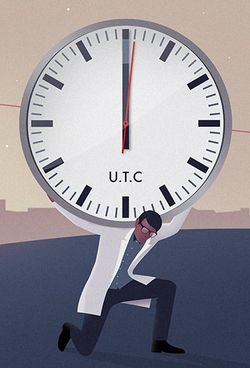
CellThe Myc oncogene can disrupt the 24-hour internal rhythm in cancer cells. Timing of the body's molecular clock in normal cells synchronizes the cellular need for energy with food intake during our sleep-wake cycle. Timing matters to the study of cancer in two ways. First, toxicity to some chemotherapy drugs is related to time of day. For example, a cancer drug called 5-flourouracil is less toxic if given to a patient at night because the liver enzymes that detoxify it are more abundant at night. Second, several circadian rhythm genes have been implicated as tumor suppressors, although those exact connections are as yet unclear. Other researchers have also observed that many, but not all, cancer cell cultures lack proper circadian rhythm. “Our hypothesis is that disrupting circadian rhythm benefits cancer cells by unleashing their metabolism from the constraints of the molecular clock,” says Altman. “In this regard, cancers don't sleep; they don't rest.” The Penn study deals with the relationship of clock proteins in peripheral tissues associated with three types of cancer cells. The researchers surmise that Myc may affect circadian rhythm by promiscuously binding to promoter regions in key genes for maintaining circadian rhythm. In fact, using a well known genome browser they confirmed that Myc binds to circadian genes.

…”This work ties together the study of cell metabolism and cancer chronotherapy – If cells don't have to 'rest,” they may replicate all the time, with no breaks at all. ” “The understanding of these basic mechanisms from our work should lead to better cancer treatment strategies that reduce side effects and increase effectiveness” says Hsieh.

More here.

Tuesday, April 9, 2013

A Better Quality of Agony

Deraniyagala-wave-580

Teju Cole reviews Sonali Deraniyagala’s Wave, in The New Yorker:

Sorrow flattens her. Then sorrow gives way to anger and suicidal fury, and it takes a dedicated group of relatives and friends to lock away the knives and hide the pills and keep her from self-harm. There’s a period of alcoholism, and for a while she harasses, with demonic inventiveness, a Dutch couple who have rented her parents’ home. Grief is a frightening condition, and at its extreme is like the sun: impossible to look at directly. That Deraniyagala wrote down what happened is understandable. But why would some unconcerned individual, someone who has not been similarly shattered, wish to read this book? Yet read it we must, for it contains solemn and essential truths. I am reminded of what Anne Carson wrote in the introduction to “Grief Lessons,” her translation of four plays by Euripides:

Grief and rage—you need to contain that, to put a frame around it, where it can play itself out without you or your kin having to die. There is a theory that watching unbearable stories about other people lost in grief and rage is good for you—may cleanse you of darkness. Do you want to go down to the pits of yourself all alone? Not much. What if an actor could do it for you? Isn’t that why they are called actors? They act for you.

Carson is writing specifically about Greek tragedy, works of tragic fiction, and of course a book like “Wave” is only too real. There’s nothing put on about Deraniyagala’s suffering. But part of what Carson says applies. In witnessing something far-fetched, something brought out before us from the distant perimeter of human experience, we are in some way fortified for our own inevitable, if lesser, struggles.

Also of note is William Dalrymple’s review of Wave in The Guardian.

Fifty Shades of Feminism

04012013_Holmes_575

Kamila Shamsie interviews Rachel Holmes in Guernica:

“As a white, educated, American woman from a middle-class family, I have not suffered the horrors of overt, brutal misogyny. I was never subjected to genital mutilation or sold to a man as his wife or sex slave.” So begins Siri Hustvedt’s essay in the just-published compilation Fifty Shades of Feminism. How do you read those lines? Are they the self-effacement of a woman aware of her own privilege? Or are they a straightforward expression of sisterhood across borders? I confess I read that opening with a slight grimace—one that might not have been there if I hadn’t just digested Sayantani DasGupta’s preceding discussion of “the imperialist use of women’s oppression as justification for political aggression” and how “feminism itself has been used as a weapon against women of the global South.” I suspect, however, that the three editors of the new book would be entirely delighted to know that my thoughts tangled up as I read and re-read the essays.

The project developed in part as a reaction to E. L. James’s stratospherically popular series, which hit the market roughly a half-century after the publication of The Feminine Mystique, and in short order sold more than 70 million copies of a reductionist fantasy. Psychotherapist Susie Orbach told me that the Fifty Shades of Grey phenomenon echoes a growing—and worrying—essentialism that colors conversations about women. As an antidote, Orbach and Lisa Appignanesi, the former president of PEN English, proposed bringing together multiple voices, stepping away from fantasy and into the complex range of women’s lived experiences. Together with the biographer Rachel Holmes, they managed in the space of weeks to assemble fifty essays by women from different nations, generations, and professions on the particular gradients of feminism that inspire them.

The resulting book is, unsurprisingly, an assorted mix, including Lydia Cacho, Elif Shafak, Jeanette Winterson, Xinran, Ahdaf Soueif, and Shami Chakrabarti. But there are several threads that weave their way in and out from start to finish—the dominant one being women’s relationship to the word “feminism.”

Which other threads catch your eye will probably say much about the particular shade of feminism you’re living with or reacting against. So likely it’s because I’m a Pakistani feminist living in London in 2013 that I was so struck by the number of contributors—Hustvedt is by no means alone—who make reference to the lives of their less fortunate sisters in other demographics.

kircher everywhere

Images

Kircher has twice inspired the founding of peculiar societies. The intensely German Catholic Internationale Athanasius Kircher Forschungsgesellschaft (International Athanasius Kircher Research Society) materialized in 1968, and its languid devotion to Kircher, which seems to have stood in the way of the society producing its gloriously advertised publications, became the subject of a Dutch documentary and a novel by Anton Haakman. The New York–based Kircher Society held its first meeting in January 2007, staging an exuberant pageant of intellectual pyrotechnics. Among the special guests were Kim Peek, the modern human book-memorization machine who inspired Dustin Hoffman’s character in Rain Man, and Princeton University professor Anthony Grafton, who declaimed in ornate Latin the vivid description of the descent into Mount Vesuvius offered in Kircher’s Underground World (1665). Other entertainments included a display of Rosamond Purcell’s Kircheresque photographic portraits of natural curiosities and the staging of a scene from Romeo and Juliet translated into the nineteenth-century universal language Solresol (presumably in honor of Kircher’s own attempts at a seventeenth-century Esperanto). The evening concluded with an opportunity for guests to win a replica of a walrus-penis bone. That the Kircher Society has not met during the past six years suggests the difficulty of—or exasperation with—imagining feats of erudition stranger than those conceived by a very dead Jesuit.

more from Paula Findlen at The Nation here.

too much sociology

Image

We’ve reached the point at which the CEO of Amazon, a giant corporation, in his attempt to integrate bookselling and book production, has perfectly adapted the language of a critique of the cultural sphere that views any claim to “expertise” as a mere mask of prejudice, class, and cultural privilege. Writing in praise of his self-publishing initiative, Jeff Bezos notes that “even well-meaning gatekeepers slow innovation. . . . Authors that might have been rejected by establishment publishing channels now get their chance in the marketplace. Take a look at the Kindle bestseller list and compare it to the New York Times bestseller list — which is more diverse?” Bezos isn’t talking about Samuel Delany; he’s adopting the sociological analysis of cultural capital and appeals to diversity to validate the commercial success of books like Fifty Shades of Grey, a badly written fantasy of a young woman liberated from her modern freedom through erotic domination by a rich, powerful male. Publishers have responded by reducing the number of their own “well-meaning gatekeepers,” actual editors actually editing books, since quality or standards are deemed less important than a work’s potential appeal to various communities of readers.

more from The Editors at n+1 here.

is wagner bad for you?

400px-Joseph_Albert_-_Ludwig_und_Malwine_Schnorr_von_Carolsfeld_-_Tristan_und_Isolde,_1865f

Wagner has kept me awake at night. Sleepless, I turn my thoughts to Tristan und Isolde, Wagner’s most extreme work and the nec plus ultra of love stories, and I notice a kinship between aspects of Tristan and Isolde’s passion and the experience of a certain kind of insomnia. The second act of Tristan und Isolde is Romanticism’s greatest hymn to the night, not for the elfin charm and ethereal chiaroscuro of moonbeams and starlight, the territory of Chopin and Debussy, but night as a close bosom-friend of oblivion, a simulacrum of eternity and a place to play dead. Insomnia is a refusal to cross the boundary between waking and sleeping, a bid to outwit Terminus by hiding away in ‘soundless dark’, a zone beyond time. As garlic is to vampires, so clocks are to insomniacs, not because they tell of how much sleep has been missed, but because they bring the next day nearer. As Philip Larkin, poet of limits, knew so well, sleep has the one big disadvantage that we wake up from it: ‘In time the curtain edges will grow light,’ he wrote in ‘Aubade’, bringing ‘Unresting death, a whole day nearer now’. For Tristan and Isolde, too, night must not give way to day, not for the trivial reason that day will end their love-making, but because dawn brings death one day nearer. They must stay awake, for to sleep is to allow the night to pass, to awake from the night is to live and to live is to die. And when, inevitably, day dawns, they have only one recourse. To Tristan and Isolde, in their delirium, it seems that by dying they will preserve their love for ever: by dying, they will defy death.

more from Nicholas Spice at the LRB here.

Death of a Revolutionary

130415_r23381_p233

Susan Faludi in the New Yorker:

In some two hundred pages, “Dialectic” reinterpreted Marx, Engels, and Freud to make a case that a “sexual class system” ran deeper than any other social or economic divide. The traditional family structure, Firestone argued, was at the core of women’s oppression. “Unless revolution uproots the basic social organization, the biological family—the vinculum through which the psychology of power can always be smuggled—the tapeworm of exploitation will never be annihilated,” Firestone wrote. She elaborated, with characteristic bluntness: “Pregnancy is barbaric”; childbirth is “like shitting a pumpkin”; and childhood is “a supervised nightmare.” She understood that such statements were unlikely to be welcomed—especially, perhaps, by other women. “This is painful,” she warned on the book’s first page, because “no matter how many levels of consciousness one reaches, the problem always goes deeper.” She went on:

Feminists have to question, not just all of Western culture, but the organization of culture itself, and further, even the very organization of nature. Many women give up in despair: if that’s how deep it goes they don’t want to know.

But going to the roots of inequality, Firestone believed, was what set radical feminism apart from the mainstream movement: “The end goal of feminist revolution must be, unlike that of the first feminist movement, not just the elimination of male privilege but of the sex distinction itself: genital difference between human beings would no longer matter culturally.”

In one of the book’s later chapters, Firestone floated a “sketchy” futuristic notion that she intended only “to stimulate thinking in fresh areas rather than to dictate the action.” She envisioned a world in which women might be liberated by artificial reproduction outside the womb; in which collectives took the place of families; and in which children were granted “the right of immediate transfer” from abusive adults.

Maggie and Me: How Thatcher Changed Britain

John Cassidy in The New Yorker:

Margaret-thatcher-cassidy-580When Margaret Hilda Thatcher took over as Prime Minister, in May, 1979, I was sixteen. To Britons of my generation, she wasn’t merely a famous Conservative politician, a champion of the free market, and a vocal supporter of Ronald Reagan: she was part of our mental furniture, and always will be. The day after her electoral triumph, Mr. Hill, my fifth form English teacher, an avuncular fellow with longish hair and a mustache, who had never previously expressed any political opinions, came into the classroom and shouted, “Right, you lot. Shut up and get down to work. It’s a new regime.” My father, a lifelong Labour Party voter, was equally aghast, especially when he discovered that my mother had voted for Mrs. T., on the grounds that “it’s about time we had a woman in charge.”

The Iron Lady, a sobriquet that some Soviet journalists would subsequently bestow upon her, was already inside 10 Downing Street, laying down the law. On her way in, famously, she stopped and quoted St. Francis of Assisi about bringing harmony where there was doubt—a statement that I and many others came to see as the first of her many outrages. How could such a divisive, bellicose, and heartless figure have the gall to talk like that? But this morning, watching for the first time in many years some footage of what she said, I realized that she wasn’t actually trying to portray herself as a conciliator. Mrs. Thatcher—and despite the life peerage that gave her the title of baroness, no one in Britain would call her anything else—was sending a sterner message about what lay ahead. Flanked by two burly policemen, her blonde hair swept back and lacquered into immobility, she also recited several more of St. Francis’s lines: “Where there is error, may we bring truth. Where there is doubt, may we bring faith. And where there is despair, may we bring hope.” Then, quoting the late Airey Neave, her aristocratic mentor in the Conservative Party, whom the I.R.A. had blown up just weeks earlier, she added in a voice that, even today, thirty-four years later, can set my teeth grating: “There is now work to be done.”

More here.