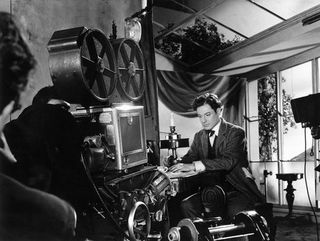
electric light

600

Today, electricity is so inextricably woven into the fabric of our lives that we don’t even think about it: We flick a switch and a light comes on — until, as millions in the Northeast discovered during Hurricane Sandy, it doesn’t, and you learn that it can take days or even weeks to restore the complex electric grid inaugurated more than a hundred years ago. One of the many pleasures of “Age of Edison,” Ernest Freeberg’s engaging history of the spread of electricity throughout the United States, is that he captures the excitement and wonder of those early days, when “a machine that could create enough cheap and powerful light to hold the night at bay” promised “liberation from one of the primordial limits imposed by nature on the human will.” Freeberg sketches electric light’s transformative effect on everything from factory work and home life to shopping and entertainment, painting vivid pictures of this brave new world in evocative prose.

more from Wendy Smith at the LA Times here.

Looking into Ramachandran’s Broken Mirror

Ramapic2

Mo over at Neurophilosophy:

MC: Autism is an umbrella term referring to numerous conditions. Can the broken mirror hypothesis account for all of them?

Ramachandran: Autism is characterized by a specific subset of symptoms. There may be three or four that are lumped together, but by and large it is one syndrome, as good a syndrome as any in neurology. It’s not like dyslexia, where there are half a dozen or a dozen types. With autism, people are debating whether high functioning and low functioning autistics should be lumped together or not. There’s a tendency to group them together rather than saying they’re distinct.

We have suggested that the mirror neuron system is deficient in autism, and there’s mixed evidence of that, but most groups support our view. [Marco] Iaconobi‘s group at UCLA did a brain imaging study showing that the mirror neuron system is deficient, but others claim that it’s normal. That may partly be based on the heterogeneity of autism. The mirror neuron system itself could be normal but its projections, or the regions it’s projecting to, could be abnormal. It’s still up in the air.

One of the things I say in my book [The Tell-Tale Brain] is that the mirror neuron system allows you to take an allocentric view of other peoples’ actions, to view the intentions to their actions. It may even be turning inwards and looking at one’s self from an allocentric perspective, so it may be partly contributing to self-awareness. In addition to an allocentric perceptual view, the same system then evolved into adopting an allocentric conceptual, or metaphorical, view – “I see your point of view”. This could have been an evolutionary step from perception to conception, but we don’t know exactly when than magic line was crossed.

Italy Exposes Wider Crisis of Democracy

750px-Flickr_-_NewsPhoto!_-_Italianen_protesteren_in_Amsterdam

Mark Mazower in the FT (via Crooked Timber) (image from Wikimedia Commons):

The turmoil produced by the Italian elections has directed attention back to where it should have been all along – to the politics of the eurozone crisis. We have had six months of complacency, rising stock markets and wishful thinking. The conventional wisdom was that the crisis had been contained, with Ireland recovering and the risk of a Greek exit from the eurozone reduced. But this view always ignored the politics.

Greece, in particular, showed that even if capital flows might be going in the right direction, the democratic deficit was widening. No one has much cared outside Greece that a neo-Nazi party could shoot to above 10 per cent in the polls. But it is a warning of what can happen to other eurozone members.

There is, fortunately, no parallel to the rise of Golden Dawn in Italy. But the crisis of democratic legitimacy has been shown to be equally deep there. As in Greece, the voters have a reasonably clear view: they want to remain in Europe and – knowing the defects of their own economic system – they may even accept some measure of austerity.

But the Rome-based political class has lost all credibility in their eyes – they were creators of the mess, and of the corruption that accompanied it. They cannot be trusted to clear it up. Those who have made no sacrifice themselves lack the moral credibility to ask them of others.

Panic-driven Austerity in the Eurozone and its Implications

Paul De Grauwe and Yuemei Ji in Vox:

Southern Eurozone countries have been forced to introduce severe austerity programs since 2011. Where did the forces that led these countries into austerity come from? Are these forces the result of deteriorating economic fundamentals that made austerity inevitable? Or could it be that the austerity dynamics were forced by fear and panic that erupted in the financial markets and then gripped policymakers. Furthermore, what are the implications of these severe austerity programs for the countries involved?

The facts: Austerity and spreads

There is a strong perception that countries that introduced austerity programs in the Eurozone were somehow forced to do so by the financial markets. Is this perception based on a reality? Figure 1 shows the average interest rate spreads in 2011 on the horizontal axis and the intensity of austerity measures introduced during 2011 as measured by the Financial Times on the vertical axis. It is striking to find a very strong positive correlation. The higher the spreads1 in 2011 the more intense were the austerity measures. The intensity of the spreads can be explained almost uniquely by the size of the spreads (the R-squared is 0.97). Note the two extremes. Greece was confronted with extremely high spreads in 2011 and applied the most severe austerity measures amounting to more than 10% of GDP per capita. Germany did not face any pressure from spreads and did not do any austerity.

Figure 1. Austerity measures and spreads in 2011

Source: Financial Times and Datastream.

There can be little doubt. Financial markets exerted different degrees of pressure on countries. By raising the spreads they forced some countries to engage in severe austerity programs. Other countries did not experience increases in spreads and as a result did not feel much urge to apply the austerity medicine.

Two theories about spreads

The next question that arises is whether the judgement of the market (measured by the spreads) about how much austerity each country should apply was the correct one. There are essentially two theories that can be invoked to answer this question. According to the first theory, the surging spreads observed from 2010 to the middle of 2012 were the result of deteriorating fundamentals (e.g. domestic government debt, external debt, competitiveness, etc.). Thus, the market was just a messenger of bad news. Its judgement should then be respected. The implication of that theory is that the only way these spreads can go down is by improving the fundamentals, mainly by austerity programs aimed at reducing government budget deficits and debts.

Life, self help-style

Ron Charles in The Washington Post:

APTOPIX_India_Pakistan_0c70c-7092The first thing you notice when you start Mohsin Hamid’s extraordinarily clever third novel is that it’s written in the second person. That’s rare, even rarer than the first-person plural, which we enjoyed in Jeffrey Eugenides’s “The Virgin Suicides” and Eleanor Brown’s The Weird Sisters.” In fact, you can’t remember reading anything narrated in the second person since Jay McInerney’s Bright Lights, Big City” (1984), which you actually only pretended to have read after you saw the Michael J. Foxmovie. Why not just stick with the good old third person? Don’t you find the second person hard to tolerate — the way it constantly reaches off the page and pokes you in the I?

As it turns out, that sense of being directly addressed is what this author exploits so brilliantly in “How to Get Filthy Rich in Rising Asia.” Hamid, who attended Princeton and Harvard and now lives in Pakistan, has taken the most American form of literature — the self-help book — and transformed it to tell the story of an ambitious man in the Third World. It’s a bizarre amalgam that looks like a parody of the genre from one angle and a melancholy reflection on modern life from another. With a wink to Dale Carnegie and Stephen Covey, Hamid’s chapter titles lead us inexorably toward success: “Move to the City,” “Get an Education,” “Learn from a Master.” And he often strikes a perfect imitation of that overconfident, just-between-us tone that has appealed to the desperate for generations: “To be effective, a self-help book requires two things. First, the help it suggests should be helpful. Obviously. And second, without which the first is impossible, the self it’s trying to help should have some idea of what help is needed.”

More here.

The War on Cancer Goes Stealth

From Smithsonian:

Zinceoxidenanoparticles-large1So, we’re 42 years into the War on Cancer, and while the enemy remains formidable, our strategy is shifting into yet another phase. We’ve been through the equivalent of hand-to-hand combat–surgery–carpet bombing–radiation–and chemical warfare–chemotherapy. Now the fight is about stealth. Instead of concentrating on blasting away at cancer cells, or poisoning them, you’re more likely to hear cancer scientists talk about “Trojan horses” or “cloaking strategies” or “tricking” the immune system. All are cell-level ploys hatched through nanomedicine–medical treatment gone very, very small. How small? At the nano level, about 5,000 particles would be as wide as a human hair. Okay, so we’re in beyond comprehension territory here. But let’s not get hung up on size; let’s focus on deception. The latest example of microscopic trickery was laid out last week a paper from researchers at the University of Pennsylvania. One of the most appealing aspects of nanomedicine is that it allows scientists to deliver drugs directly to a tumor instead flooding the whole body with chemotherapy. Unfortunately, the immune system sees the nanoparticles as invaders and tries to clear them away before they can go to work on the tumor cells.

The trick was to make the “sentry cells” of the body’s immune system think that the drug-delivering nanoparticles were native cells, that they weren’t intruders. The researchers did this by attaching to each nanoparticle a protein that’s present in every cell membrane. And put simply, it sent out a “don’t eat me” message to the body’s guard cells. The result, at least in mice, is that this technique dramatically improved the success rate of two different kinds of nanoparticles–one that delivered tumor-shrinking drugs and one filled with dye that would help doctors capture images of cancer cells. Meanwhile, earlier this year, scientists at the Methodist Hospital Research Institute in Houston announced that they had found their own way of letting nanoparticles fool the immune system. They developed a procedure to physically remove the membranes from active white blood cells and drape them over nanoparticles. And that “cloaking strategy” was enough to keep proteins that activate the immune system from doing their job and ordering it to go repel the invaders. The researchers believe it will one day be possible to harvest a patient’s own white blood cells and use them to cloak the nanoparticles, making it that much more likely that they’ll get to their target without being attacked. As magical as all this can sound, nanomedicine is not without risk. Much more research needs to be done on the long-term impact of nanoparticles inside the body. Could they accumulate in healthy body tissues? And if they do, what effect would it have? Can those tiny particles now seemingly so full of promise, eventually turn toxic?

Still plenty of questions about nanomedicine, but it’s feeling more like an answer.

More here.

Friday, March 1, 2013

Godless Yet Good

Sullenberger

Troy Jollimore in Aeon:

[W]hy do so many people believe that morality needs to be grounded in religion, when the arguments in favour of that view are so unconvincing? I suspect that something else is going on, and that in most cases these arguments are just rationalisations for the belief that morality depends on faith in God. The actual explanation, I believe, is something else.

The reality is, no system of secular ethics has managed to displace religious approaches to ethics in the contemporary popular imagination. It is worth asking why. We can start with the fact that the secular approaches that have dominated Western thought since the Enlightenment tend to share certain features. The two most significant post-Enlightenment secular theories are those derived from the work of the Prussian philosopher Immanuel Kant, and utilitarianism, which originates in the work of the British philosophers Jeremy Bentham, James Mill, and John Stuart Mill.

Utilitarian ethics claims that the right thing to do is always the one that will maximise happiness or well-being among the general population. The answers to our moral questions are, thus, to be determined by empirical research — what will make people happiest or best-off, on the whole? Kantian ethics — to put a highly complex theory into a very small nutshell — says that reason commands us to behave morally. Moral truths are, in essence, logical truths, so that the content of morality can and ought to be determined from the philosopher’s armchair.

Rats thousands of miles apart collaborate on simple tasks with their brains connected through the internet

Ian Sample in The Guardian:

ScreenHunter_128 Mar. 01 19.14Scientists have connected the brains of a pair of animals and allowed them to share sensory information in a major step towards what the researchers call the world's first “organic computer”.

The US team fitted two rats with devices called brain-to-brain interfaces that let the animals collaborate on simple tasks to earn rewards, such as a drink of water.

In one radical demonstration of the technology, the scientists used theinternet to link the brains of two rats separated by thousands of miles, with one in the researchers' lab at Duke University in Durham, North Carolina, and the other in Natal, Brazil.

Led by Miguel Nicolelis, a pioneer of devices that allow paralysed people to control computers and robotic arms with their thoughts, the researchers say their latest work may enable multiple brains to be hooked up to share information.

“These experiments showed that we have established a sophisticated, direct communication linkage between brains,” Nicolelis said in a statement. “Basically, we are creating what I call an organic computer.”

The scientists first demonstrated that rats can share, and act on, each other's sensory information by electrically connecting their brains via tiny grids of electrodes that reach into the motor cortex, the brain region that processes movement.

The rats were trained to press a lever when a light went on above it. When they performed the task correctly, they got a drink of water. To test the animals' ability to share brain information, they put the rats in two separate compartments. Only one compartment had a light that came on above the lever. When the rat pressed the lever, an electronic version of its brain activity was sent directly to the other rat's brain. In trials, the second rat responded correctly to the imported brain signals 70% of the time by pressing the lever.

More here.

Splendid Visions: A meditation on the childhood sublime

From Orion Magazine:

Cities are not entirely devoid of nature, I know, but their parks and reserves make it difficult to achieve what Thoreau named “a constant intercourse with nature,” one that leads to “the contemplation of natural phenomenon” and thus to “the preservation of moral & intellectual health.” For Thoreau, that constancy was not negotiable. If he thought he could have achieved the sublime in the Boston Common—the oldest park in the nation—he might have tried, but he didn’t believe it was possible. Consummate immersion in the deep green of Concord was the only method of obtaining the particular brand of clarity that had become so necessary for his sustained contentment.

WHAT WILL BECOME of Ethan, of his “moral & intellectual health,” in the city of Boston without Thoreau’s constancy, without the mountains and meadows, the rivers and forests so integral to his development into a fully feeling adult? Since his birth I have returned again and again to Wordsworth and Thoreau with a kind of hallowed intensity, convinced that their nature-wisdom has something to teach me about raising and loving my son. I’ve been conflicted since day one over the prospect of raising Ethan in the city, because my beloved Wordsworth recommends a life in nature—because Wordsworth wouldn’t have been Wordsworth without it—and because I myself grew up within frolicking distance of forests and streams that taught me about bliss and its first ingredient, beauty. Too much concrete, macadam, and steel—like too much electronic illumination, God help us—must be detrimental to a child’s development. Someone asked me recently, “What do you want Ethan to be? A poet?” And I thought: Indeed. The poets, those unacknowledged legislators, have always been wiser than the philosophers, the politicians, the pundits. If it’s true that children raised in cities often grow into shrewd, incisive adults wise to the crooked ways of the world, that being exposed daily to a wealth of cultures, languages, libraries, bookstores, theaters, and museums can make impressive people, Wordsworth might argue that those individuals lack a “sense sublime / Of something far more deeply interfused”—that is, a sense of the unity, harmony, freedom, and “unwearied Joy” exemplified by nature. Who doesn’t want “unwearied Joy” for his child? Emerson might go a bit further and say that those divorced from nature have a thinking deficiency, because “Nature is the vehicle of thought.”

More here.

the romantic quixote

Images

When Spaniards say, “It’s all the Germans’ fault,” they could be referring to the European debt crisis. When British Hispanists say the same, they are most likely talking about the so-called Romantic interpretation of Miguel de Cervantes’ masterpiece Don Quixote. In his influential book The Romantic Approach to Don Quixote, the late Cambridge don Anthony Close assailed critics who read Cervantes’ work in a philosophical light for imposing “modern stereotypes and preoccupations” on a novel that, in his view, was written exclusively as a parody of the tales of chivalry predominant in the sixteenth century. Close’s Oxford ally P. E. Russell did him one better, asserting that Cervantes should not be considered to have “contributed anything of originality to the history of ideas.” The logic Russell used to support this claim was almost dizzying in its circularity, as it required him to stipulate—as a standard for establishing that someone has had a truly original idea—the presence of a contemporary who had expressed more or less the same idea. The agents-provocateurs of this most British pique were, as I indicated before, Germans. To be more specific, they were the thinkers and poets associated with or influential to the German Romantic movement of the early nineteenth century, most notably Johann Christoph Friedrich von Schiller, Karl Wilhelm Friedrich Schlegel, Friedrich Wilhelm Joseph Schelling, and Georg Wilhelm Friedrich Hegel.

more from William Egginton at Arcade here.

the dark side of britten

Britten-23-Feb

We are only two months into the Britten centenary year and already books, articles and talks (and, of course, performances) swell the flood of existing biographical studies and the six bulky volumes of diaries and letters. Dead for less than 40 years, Britten is as copiously documented as any English composer except Elgar. Have emails wiped out areas of research? I hope that some teenage composer, a latter-day Britten, is even now baring their musical soul writing candid and maybe scurrilous opinions on the current musical scene in a diary as the young Britten did from 1928. ‘The child is father to the man’ rings true in Britten’s case. Britten the man was a Jekyll and Hyde, with Hyde perhaps too often gaining the upper hand. The sophisticated judgments, often couched in schoolboyish jargon, tell us how Britten discovered music, not only by performing and by reading scores but also by attending concerts and listening avidly to the radio and recordings. As well as, of course, by composing ambitious works galore.

more from Michael Kennedy at The Spectator here.

First direct brain-to-brain interface between two animals

From Kurzweil Accelerating Intelligence:

Brain_2_brain_ratsResearchers have electronically linked the brains of pairs of rats for the first time, enabling them to communicate directly to solve simple behavioral puzzles. They even brain-linked two animals thousands of miles apart — one in Durham, North Carolina and one in Natal, Brazil. The researchers think linking multiple brains could form the first “organic computer.” “Our previous studies with brain-machine interfaces had convinced us that the brain was much more plastic than we had thought,” said Duke University Medical Center neurobiologist Miguel Nicolelis . “In those experiments, the brain was able to adapt easily to accept input from devices outside the body and even learn how to process invisible infrared light generated by an artificial sensor. “So, the question we asked was: if the brain could assimilate signals from artificial sensors, could it also assimilate information input from sensors from a different body?” To find out, the researchers first trained pairs of rats to solve a simple problem — to press the correct lever when an indicator light above the lever switched on, to obtain a sip of water. They next connected the two animals’ brains via arrays of microelectrodes inserted into the area of the cortex that processes touch information.

One animal of the dyad was designated as the “encoder” animal. This animal received a visual cue that informed it which lever to press in exchange for a food pellet. Once this “encoder” rat pressed the right lever, a sample of its brain activity that coded its behavioral decision was translated into a pattern of electrical stimulation that was delivered directly into the brain of the second animal of the dyad, known as the “decoder” animal. The decoder rat had the same types of levers in its chamber, but it did not receive any visual cue indicating which lever it should press to obtain a reward. So to press the correct lever and receive the reward it craved, the decoder rat would have to rely on the cue transmitted from the encoder via the brain-to-brain machine interface. The researchers then conducted trials to determine how well the decoder animal could decipher the brain input from the encoder rat to choose the correct lever. The decoder rat ultimately achieved a maximum success rate of about 70 percent, only slightly below the possible maximum success rate of 78 percent that the researchers had theorized was achievable. This maximum rate was what the researchers found they could achieve when they were transmitting regular electrical signals directly to the decoder rat’s brain that were not generated by the encoder.

More here.

Why did Hobbes write Leviathan?

Leviathan

The present-day reputation of Leviathan is somewhat ironic. Modern readers are shocked by the book’s political philosophy, with its seemingly bleak view of human nature and its endorsement of sovereign power with no constitutional constraints. Yet in fact Leviathan offers perhaps the most accommodating version of Hobbes’s political thinking. It adds to the earlier argument of De Cive a novel conception of political representation, which although far removed from the modern democratic understanding of the idea, displays some of the lineaments of it. In De Cive Hobbes envisaged the state as having a democratic foundation in popular consent that must necessarily be abandoned in favour of monarchy for reasons of practicality. In Leviathan he offers an account of politics that is open to multiple different political forms. I suspect one reason Leviathan has retained its fascination is that Hobbes’s attempt to map his idea of sovereignty on to a shifting political landscape gave it an open-ended quality, which has allowed later readers to find what they were looking for in it. Hobbes’s contemporaries were more confused than outraged by his political views: they couldn’t be sure if he was really a monarchist or not. What scandalized them were the parts of the book that modern readers skip over: the assault on religion.

more from David Runciman at the TLS here.

Friday Poem

On a Day When the Wind is Perfect

On a day
when the wind is perfect,
the sail just needs to open
and the world is full of beauty.
Today is such a day.

My eyes are like the sun
that makes promises;
the promise of life
that it always keeps
each morning.

The living heart gives to us
as does that luminous sphere,
both caress the earth with great tenderness.

This is a breeze that can enter the soul.
This love I know plays a drum.
Arms move around me;
who can contain their self before my beauty?

Peace is wonderful,
but ecstatic dance is more fun,
and less narcissistic;
gregarious He makes our lips.

On a day when the wind is perfect,
the sail just needs to open
and the love starts.

Today is such
a day.
.

by Rumi

from Love Poems From God: Twelve Sacred Voices from the East and West
by Daniel Ladinsky

Thursday, February 28, 2013

Muzaffar Al-Nawwab: In the Old Tavern

Translation by Sinan Antoon in Jadaliyyah:

MuzaffarMuzaffar al-Nawwab (b. Baghdad, 1934) is one of Iraq’s most famous and influential poets. He studied literature in Baghdad and worked as a teacher. He joined the Iraqi Communist Party at a very early age and was imprisoned and tortured under the Ba’th. He left Iraq in 1970 and lived in exile until 2011 when he returned to Baghdad for a visit. Al-Nawwab is well known in Iraq and throughout the Arab world, especially among leftists and activist of various generations, for his powerful revolutionary poems and scathing invectives against Arab regimes and dictators. Banned in most Arab countries, his poems circulated widely from the 1970s onward on cassettes. They are widely available nowadays on the Internet. He is also considered one of the most innovative and influential Iraqi poets who composed in the spoken dialect. Although born to an aristocratic family in Baghdad, Al-Nawwab immersed himself in the dialect of southern Iraq in the 1960s and composed some of the most memorable poems in Iraqi collective memory, many of which were put to music and sung by famous contemporary singers. Except for a few editions of his early poems in the Iraqi spoken, Al-Nawwab, who shunned mainstream cultural circles and lived in various exiles for the last four decades, never published, or authorized, a collection of his own works. A critical edition, or any reliable printed diwan (there are many versions and unauthorized collections, in circulation) has yet to appear. “In the Old Tavern” is one of his most famous poems, composed (probably) in late 1970s. Al-Nawwab prefaced one of his famous recitals by saying that the obscenity of the political status quo exceeded the obscenity in his poems. Al-Nawwab’s health has deteriorated in recent years and he has not written any new poems. He lives in Beirut.

In the Old Tavern

The tavern
is not that far
What good is that?
You are like a sponge
Suckling on taverns
But never getting drunk

What is left of this night’s life
In the drunkards’ glasses
Saddens you
Why did they leave them?
Were they lovers?
Were they faggots like those at summit meetings?
Was it a prostitute
With no one in this tattered world?
Had you been here
You would have hidden her desire in your mythical jacket
Whispered warmly in her cold lungs:
Is the cold killing you?
What is killing me more is partly the warmth,
and partly the situation itself!
My lady, we are prostitutes just like you
Misery fornicates with us
False religion, false thought, and false bread and poems
Even the color of blood
is forged and made grey in funerals
And all the people approve
And the ruler is not one-eyed!
My lady, how can one be honorable
When the secret police stick their hands everywhere?
What is yet to come is even worse
We are put in the juice-maker
For oil to come out

More here.

Why average novels are fodder for good movies but great books fail on screen

Madhavankutty Pillai in Open:

11141.angle-piA novel’s quality often does not matter to its movie adaptation because cinema works at the surface level—there is no sophisticated way to depict thought as thought. You can have a voiceover in the background or enactment of emotion or, like the Bollywood shortcut of the 60s and 70s, a reflection in the mirror telling the character what he is thinking. There is always another agency needed to show thought. And absence of thought makes characters shallow. Daniel Day-Lewis is one of the finest actors today and his portrayal of Lincolnis masterful, but it will always be incomplete because the viewer will never know what he is thinking.

A good movie can be made of an ordinary book as long as there are strong plot points or a grand theme or potential for spectacle. In Life of Pi, Ang Lee’s visual grandeur compensates for the book’s clumsiness. Ironically, the reverse is also true—great novels are often not fodder for great cinema. There have been many movie versions ofCrime and Punishment, but who remembers any of them? It is a work that hinges on inner monologue, which cinema cannot depict. Remove that and you have just the skin without the soul.

More here.

Space-based solar farms power up

Emmet Cole at the BBC:

ScreenHunter_126 Feb. 28 16.56“Ex-Nasa scientist seeks visionary billionaire to help change the world. High risk venture. Return not guaranteed. GSOH a plus.”

John Mankins, the scientist in question, has not yet reached the point of placing a classified ad, but it could soon be an option. The 25-year veteran of the US space agency is the man behind a project called SPS-Alpha, which aims to loft tens of thousands of lightweight, inflatable modules into space. Once there, they will be assembled into a huge bell-shaped structure that will use mirrors to concentrate energy from the sun onto solar panels. The collected energy would then be beamed down to ground stations on Earth using microwaves, providing unlimited, clean energy and overnight reducing our reliance on polluting fossil fuels. The snag? It is unproven technology and he estimates it will take at least $15bn- $20bn to get his project off the ground.

Mankins initially had research funding from an advanced concepts arm at Nasa, but that money dried up in September 2012; hence his continuing search for a benefactor.

“I can't think of a better solution than to find somebody who is very wealthy, very visionary and willing to make this happen,” he says.

But not everyone shares Mankins' optimism. Space-based solar power (SBSP) is a topic that divides the scientific world into extremes. On one side are people like Mankins who believe it is the only solution to our ever increasing energy demands, whilst on the other is a sizeable chunk of the scientific community who believe any money put into solar power should remain firmly on the ground.

More here.